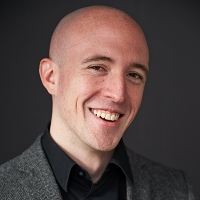
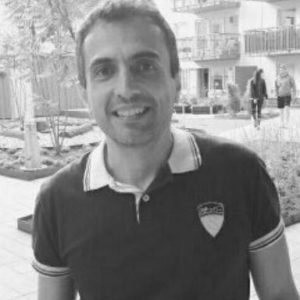
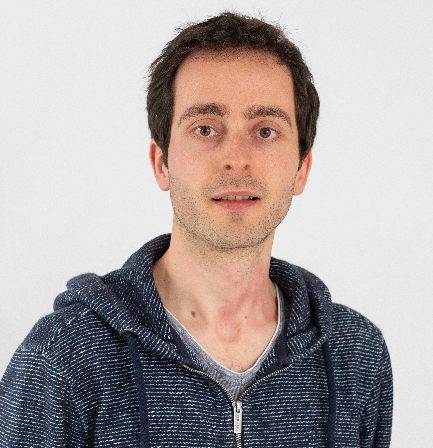
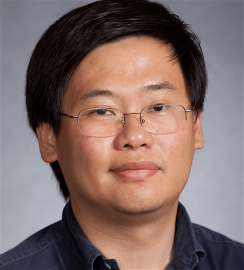
Dr. Daniel Grady is an Assistant Professor at Wichita State University. His research focuses on algebraic topology, mathematical physics, and differential geometry, with a particular emphasis on advanced topics such as K-theory, cobordism, and topological field theories. He explores the interplay between differential cohomology and geometric structures in theoretical physics, including applications to M-theory and string compactifications. His work often involves sophisticated tools like spectral sequences, stacks, and equivariant constructions, reflecting a deep engagement with both pure and applied aspects of topology. Notable contributions include studies on the Freed–Hopkins conjecture, geometric cobordism hypotheses, and twisted differential cohomology theories. Grady’s research bridges abstract algebraic frameworks with concrete geometric and physical models, advancing foundational understanding in modern theoretical mathematics.
Prof. Joachim Schöberl is a faculty member at TU Wien's Faculty of Mathematics and Geoinformation, leading the Scientific Computing and Modelling research group. His academic career includes roles as a university professor (Univ.Prof.) with engineering and technical doctorates (Dipl.-Ing., Dr.techn.). Research focuses on advanced numerical methods, including finite element methods, computational fluid dynamics, and partial differential equations. He has pioneered high-order schemes for fluid-structure interaction, shell mechanics, and electromagnetic simulations. Notable contributions include the NGSolve finite element library and innovative approaches to curvature approximation in discrete geometry. Recent work emphasizes nonlinear elasticity modeling, fractional diffusion problems, and shape optimization for biomembranes. His team collaborates on projects like metascreen upscaling, micromorphic continuum models, and eddy current simulations in laminated materials. Prof. Schöberl advises PhD students researching mixed finite element methods, fractional operators, and computational mechanics. His lab develops open-source tools for high-performance scientific computing.
Nan Chen is an Associate Professor at the Department of Mathematics, University of Wisconsin-Madison, and a faculty affiliate of the Institute for Foundations of Data Science (IFDS), a multi-University TRIPODS Phase II Initiative. His research spans applied mathematics with applications in atmosphere-ocean science, climate dynamics, and data science. Education: PhD from Courant Institute of Mathematical Sciences (CIMS) and Center of Atmosphere and Ocean Science (CAOS), New York University (NYU), May 2016 Postdoc research associate at CIMS, NYU (June 2016-May 2018) Master's degree from School of Mathematical Sciences, Fudan University, Shanghai Undergraduate in Mechanical Engineering, Fudan University, Shanghai Visited Department of Scientific Computing at Florida State University working with Dr. Max Gunzburger and Dr. Xiaoming Wang Nan Chen's research focuses on contemporary applied mathematics, particularly modeling complex systems, stochastic methods, numerical algorithms, and data science. He specializes in uncertainty quantification (UQ), data assimilation, and developing statistically accurate algorithms to address the curse of dimensionality in large-dimensional complex dynamical systems with strong non-Gaussian features. His work has significant applications in atmosphere-ocean science, including predicting phenomena such as the Madden-Julian Oscillation (MJO), monsoons, El Niño Southern Oscillation (ENSO), and sea ice dynamics. He has also extended his research to material science, neuroscience, and other complex systems. His recent publications demonstrate expertise in inverse problems, wave equations, numerical methods, and data compression techniques that blend mathematical theory with practical applications. Dr. Chen has authored a book titled "Stochastic Methods for Modeling and Predicting Complex Dynamical Systems --- Uncertainty Quantification, State Estimation, and Reduced-Order Models" published by Springer, and a tutorial paper "Taming Uncertainty in a Complex World: The Rise of Uncertainty Quantification — A Tutorial for Beginners" in the Notices of the AMS. Professional Activities: Organizing "Data Meets Dynamics: Workshop on Data Assimilation for Complex Systems and Applications" (August 21-22, 2025) Author of two articles in Elsevier's Reference Module in Earth Systems and Environmental Sciences Participant in Wisconsin Science and Computing Emerging Research Stars (WISCERS) program Judge for Outstanding Student Paper Award (OSPA) program at American Geophysical Union (AGU) fall meetings Involved in Madison Experimental Mathematics Lab (MXM Lab) Dr. Chen actively mentors undergraduate students for research during semesters and summers, encouraging them to present at the UW undergraduate symposium. He also offers reading and independent study courses for interested undergraduates. He is currently seeking highly motivated PhD students to join his research group with possible Research Assistantship support.
Tomi Sebastian Koivisto is a Visiting Professor at the University of Tartu, Faculty of Science and Technology, Institute of Physics. His distinguished career includes previous appointments as Associate Professor (2021-2023), Senior Research Fellow (2019-2020), and Assistant Professor at Nordita - Nordic Institute for Theoretical Physics (2013-2019), with postdoctoral experience at leading institutions including the University of Oslo, University of Utrecht, and University of Heidelberg. Dr. Koivisto earned his PhD in theoretical physics from the University of Helsinki in 2006 with his dissertation 'Formation of structure in dark energy cosmologies' supervised by Hannu Kurki-Suonio and Finn Ravndal. His academic credentials include the title of Adjunct Professor (Docent) in Physics at the University of Helsinki (2015). His research focuses on the geometrical foundations of gravitational physics, with groundbreaking work in teleparallel gravity, metric-affine gravity, and the geometrical trinity of gravity. Koivisto investigates how modifications to general relativity can address cosmological tensions and explain dark energy phenomena. His theoretical framework explores the connections between gauge theories and gravity, with applications ranging from black hole physics to cosmological evolution. His approach combines rigorous mathematical formalism with observational implications, making significant contributions to both theoretical foundations and potential experimental tests of alternative gravity theories. Dr. Koivisto has received notable recognition including the Estonian National Research Award in exact sciences (2023, shared with Luca Marzola) for his contributions to theoretical physics. His current research is supported by substantial funding, including the 'Space-Time-Matter' project (PRG2608, 2025-2029) with 270,000 EUR from the Estonian Research Council and his role as principal investigator on the 'Foundations of the Universe' project (2024-2030) with 636,363 EUR funding. He has supervised six postdoctoral researchers and currently advises three doctoral students, establishing a productive research group focused on advancing gravitational theory. His supervision record includes notable researchers such as Miguel Zumalacarregui, now a prominent cosmologist, and current doctoral candidates Luxi Zheng, Ernest Michael Priidik Gallagher, and Roald Heinrich Ivask working on unification theories, gauge gravity, and spacetime thermodynamics respectively. At the University of Tartu, Koivisto leads a research team within the Institute of Physics that collaborates extensively with Nordita and other European theoretical physics centers. His group specializes in developing mathematical frameworks for modified gravity theories while maintaining connections to observational cosmology and potential experimental signatures. The team participates in international collaborations addressing fundamental questions about the nature of spacetime, dark energy, and the early universe.
Keenan Crane is the Michael B. Donohue Associate Professor of Computer Science and Robotics at Carnegie Mellon University , with membership in the Center for Nonlinear Analysis and mentorship in the Geometry Collective . His research bridges differential geometry and computer science to develop fundamental algorithms for geometric data processing. Education : BS from University of Illinois at Urbana-Champaign, PhD from Caltech Fellowships : Google PhD Fellow, NSF Mathematical Sciences Postdoctoral Fellow Research focuses on Discrete Differential Geometry , addressing PDE solutions, mesh processing, and geometric modeling through methods like: Walk on Spheres for PDEs Intrinsic Triangulations for robust geometry Repulsive Energy formulations for collision avoidance Recent publications span 2025–2021 , emphasizing grid-free algorithms , anisotropic mesh generation , and differentiable systems . Scientific accolades include Packard Fellowship and NSF CAREER Award . Students include Nicole Feng , Olga Gutan , and Zoë Marschner . During his 2024 sabbatical at Roblox , he does not accept new researchers. Key software contributions include Penrose (math diagram generation) and I♥Mesh (domain-specific language for mesh algorithms).
Dr. Ali Javili is an Associate Professor at Bilkent University's Department of Mechanical Engineering. He holds a Dr.-Ing. in Mechanics from the University of Erlangen-Nuremberg (2012), M.Sc. in Computational Engineering from Ruhr-University Bochum (2007), and B.Sc. in Mechanical Engineering from Sharif University of Technology (2003). His research focuses on computational multi-physics and multi-scale understanding of complex materials with emphasis on lower-dimensional energetics. Research interests span computational continuum mechanics, interfaces and interphases, instability analysis across scales, nanomechanics, fracture mechanics, surface elasticity theory, multi-scale formulation, multi-physics modeling, biomechanics, smart materials, metamaterials, peridynamics, and applied mathematics. Recent publications demonstrate advanced work in peridynamics, surface elasticity, nonlocal interfaces, and computational frameworks for material modeling. Articles consistently develop theoretical foundations and computational methods for complex material behaviors.
Efthymios N. Karatzas serves as an Assistant Professor in the Department of Mathematics at Aristotle University of Thessaloniki, Faculty of Sciences, within the Computer Science and Numerical Analysis Section. He maintains an active research profile in computational mathematics with strong institutional affiliations including collaborations with SISSA mathLab and FORTH Institute of Applied and Computational Mathematics. His academic credentials include: PhD in Mathematics, National Technical University of Athens (2015) Master's in Applied Mathematical Sciences – Computational Mathematics, NTUA (2009) Master's in Applied Mathematics, University of Patras (2001) Bachelor's in Mathematics (Computational Mathematics), University of Patras (1999) Dr. Karatzas' research program centers on advanced numerical techniques for partial differential equations , with pioneering work in reduced order modeling , embedded boundary methods , and optimal control systems . His expertise spans computational fluid dynamics, uncertainty quantification, and biomechanical applications, characterized by methodological innovation in handling geometrically complex domains through cut finite element approaches and shifted boundary formulations. Analysis of his 15 most recent publications reveals a cohesive research trajectory focused on developing efficient numerical frameworks for parametrized PDE systems. His work consistently bridges theoretical rigor with practical implementation, particularly in advancing reduced basis methods for fluid-structure interaction and biological modeling, demonstrating significant contributions to computational mathematics through high-impact journal publications. No major scientific awards are documented in the available sources. Dr. Karatzas demonstrates research leadership through project management roles including Scientific Manager for the ELIDEK project at NTUA (2019-2021) and Project Manager for the European Social Fund HEaD initiative at SISSA (2017-2019). His grant administration experience encompasses coordinating interdisciplinary teams and securing external funding for computational mathematics research. He maintains active collaborations with the SISSA mathLab in Trieste (particularly with Prof. Gianluigi Rozza's group) and the FORTH Institute in Crete, participating in international workshops including the Reduced Order Methods in CFD Summer School (2019) and SIAM UQ conferences. His research network spans computational mathematics groups across Europe with emphasis on advancing numerical methodologies for real-world engineering and biological applications.
Maxime Fairon is an Assistant Professor (Maître de Conférences) at the Institut de Mathématiques de Bourgogne, Université Bourgogne Europe, affiliated with CNRS. He joined the institute in December 2023 and is a member of the Mathematics-Physics research team. His office is located in the Mirande Building (Office 407). Research interests include Poisson algebras, integrable systems, and non-commutative geometry, with applications to mathematical physics and representation theory. Key focus areas are: Double Poisson brackets and their algebraic/geometric generalizations Connections between quiver varieties and integrable particle systems (e.g., Ruijsenaars-Schneider models) Vertex algebras and non-commutative Hamiltonian structures His publications (2017–2025) demonstrate consistent work on unifying Poisson geometry with dynamical systems, featuring innovations in double multiplicative structures, quiver-based integrability, and morphism theories. Recent articles emphasize classification problems and geometric reductions. Current student supervision includes Master's projects on Poisson vertex algebras (A. Fotiadis, 2024) and degenerate integrable systems (J. Deshan, 2025). He coordinates graduate courses in geometry and algebra, and co-organizes workshops like the 2025 Workshop on Non-Associative Algebras. No awards or grants are mentioned in available materials.
Melvin Leok is a Professor of Mathematics at the University of California, San Diego (UCSD). He directs the Computational Geometric Mechanics group, affiliated with the Center for Computational Mathematics and the Computational Science, Mathematics, and Engineering (CSME) Program. His research focuses on computational geometric mechanics, combining differential geometry and numerical analysis to develop stable and robust methods for modeling and controlling engineering systems. Leok holds a Ph.D. in Control and Dynamical Systems from Caltech (2004). Before joining UCSD in 2009, he was an assistant professor at Purdue University and a visiting researcher at Caltech and the University of Michigan. He has received prestigious awards, including the Simons Fellowship, DoD Newton Award, and NSF CAREER Award. His research interests include numerical differential equations, geometric control theory, and computational methods for interconnected systems. He has authored over 100 publications and serves on editorial boards for journals like Journal of Nonlinear Science . Leok teaches advanced courses such as optimization on manifolds and numerical analysis, emphasizing geometric principles. Key achievements include co-authoring the monograph Global Formulations of Lagrangian and Hamiltonian Dynamics on Manifolds , developing variational integrators for mechanical systems, and leading projects in geometric uncertainty propagation and structure-preserving algorithms for plasma physics. He actively collaborates on NSF-funded initiatives like the TILOS AI Research Institute. Leok advises doctoral students, including Brian Tran, who won the Chancellor's Dissertation Medal. He also mentors postdoctoral researchers through the Alexander von Humboldt Foundation's Feodor Lynen Program.
Robert D Nevels is a Professor in the Department of Electrical & Computer Engineering at Texas A&M University. He holds the rank of Fellow in both the Institute of Electrical and Electronics Engineers (IEEE) and the Electromagnetics Academy (EM). His research focuses on analytical and numerical electromagnetics, nanophotonics, electromagnetic scattering, and antenna design. He has served as President of the IEEE Antennas and Propagation Society (AP-S) in 2010 and has been a member of its Administrative Committee during 1998-2001 and 2011-2014. His teaching excellence has been recognized through multiple awards, including the Region 5 Outstanding Educator Award and the University-level Distinguished Teaching Award from the Association of Former Students. Dr. Nevels earned his Ph.D. in Electrical Engineering from the University of Mississippi, followed by an M.S. from Georgia Institute of Technology and a B.S. from the University of Kentucky. His research interests emphasize advanced computational methods for electromagnetics, including FDTD techniques for nonlinear optics and propagator methods for wave analysis. His work spans theoretical foundations (e.g., Coulomb gauge formulations) and practical applications (e.g., antenna design for high-power systems). Key honors include: Eugene E.Webb'43 Faculty Fellow (Texas A&M) Twice recipient of the Outstanding Professor Award from IEEE Texas A&M Student Chapter Amoco Foundation Award for Distinguished Teaching Nevels has collaborated on grants related to electromagnetic scattering, plasma-based devices, and terahertz technology. His lab focuses on numerical methods and experimental validation of electromagnetic phenomena.
Ralf Hiptmair is a Full Professor at ETH Zürich, serving as Head of the Seminar for Applied Mathematics and Deputy Head of the Department of Mathematics. He also holds the position of Director of Studies for ETH BSc and MSc in Computational Sciences and Engineering (CSE). His research spans computational mathematics, numerical analysis, finite element methods, boundary element methods, computational electromagnetism, multigrid methods, discrete differential forms, shape optimization, wave propagation, and kinetic equations. Hiptmair's work on auxiliary space methods was recognized as a breakthrough in computational science in the 2008 DOE Report on recent significant advancements in computational science. His research focuses on developing and analyzing numerical methods for partial differential equations, with particular emphasis on structure-preserving discretizations, computational electromagnetism, and boundary integral equations. His work has significant applications in engineering, physics, and computational science. Hiptmair's publications demonstrate a strong focus on advancing numerical techniques for electromagnetic problems, wave propagation, and shape optimization. His recent work shows increasing interest in computational topology, geometric numerical integration, and interdisciplinary applications of numerical methods. Featured as breakthrough in computational science in the 2008 DOE Report on recent significant advancements in computational science (for Auxiliary space methods) Hiptmair has supervised numerous doctoral, master's, and bachelor's students across mathematics, computational science and engineering, and related fields. His research group has received funding for developing advanced numerical methods with applications in electromagnetism, fluid dynamics, and computational physics. He is actively involved in teaching numerical methods courses at both undergraduate and graduate levels. Hiptmair leads research efforts in the Seminar for Applied Mathematics, collaborating with industry partners like ABB Corporate Research and Siemens on practical applications of computational methods. His work bridges theoretical numerical analysis with real-world engineering challenges.
Hugo Georges Victor Lavenant serves as Assistant Professor in the Department of Decision Sciences at Bocconi University, Milan, where he has held a faculty position since 2020. Previously, he completed a postdoctoral fellowship at the University of British Columbia (2019-2020) under the Pacific Institute of Mathematical Sciences and earned his PhD in Mathematics from Université Paris-Sud (2016-2019) under Filippo Santambrogio's supervision. His academic foundation includes: PhD in Mathematics, Université Paris-Sud (2016-2019) Studies at École Normale Supérieure (2012-2016) covering mathematics, physics, history, and philosophy of science Classes préparatoires in mathematics and physics (2010-2012) Lavenant's research centers on optimal transport theory and its applications across mathematical disciplines. He investigates geometric structures in Wasserstein spaces, develops numerical methods for dynamical optimal transport, and bridges theoretical advances with Bayesian statistics. His work demonstrates particular innovation in trajectory inference for biological data and dependence measures for random measures, connecting pure mathematics with computational statistics. Recent publications reveal accelerating interdisciplinary impact, with 2024-2025 works extending optimal transport to machine learning (kernel methods, variational inference) and data science (opinion dynamics, single-cell analysis). This trajectory shows increasing methodological sophistication in handling measure-valued mappings and non-smooth geometries while maintaining computational tractability. Award recognition includes: Pacific Institute of Mathematical Sciences Postdoctoral Fellowship Lavenant actively mentors early-career researchers through formal advising relationships and collaborative projects. He currently supervises two PhD candidates (George Kanchaveli and Francesco Mascari, co-advised with Marta Catalano) and has guided Master's students including Mathis Hardion and Niccolò Bargellini. His teaching portfolio spans advanced analysis, optimization, and real analysis courses at Bocconi, reflecting his commitment to mathematical rigor in education. He operates within Bocconi's Decision Sciences ecosystem while maintaining international collaborations with researchers at UBC, Université Paris-Sud, and statistical groups worldwide. Current projects focus on entropy-based transport methods and geometric approaches to nonparametric statistics, positioning his work at the intersection of theoretical mathematics and data-driven applications.
Brenda Ogle is a Professor in the Department of Biomedical Engineering at the University of Minnesota's College of Science and Engineering. She leads the System Regeneration Lab, where her research focuses on cardiac tissue engineering, stem cell differentiation, and advanced 3D bioprinting technologies. Her work bridges multiple disciplines including stem cell biology, extracellular matrix science, and engineering principles to develop novel approaches for cardiovascular regeneration. Dr. Ogle's research interests primarily center on understanding the mechanisms that govern stem cell fate, particularly in the context of the cardiovascular system. Her lab is pioneering 3D bioprinting for cardiac tissue engineering, creating complex model systems that go beyond simple geometric shapes. Key areas of investigation include the role of extracellular matrix proteins in guiding stem cell differentiation, the development of novel tools for analyzing stem cell behavior, and the delivery of stem cells or associated progeny to the body. Her work has led to breakthroughs in creating patch-like structures with micron-scale features that support cardiac cell organization and can be adhered to failing hearts. Dr. Ogle's research has resulted in significant scientific contributions, including the development of unique bioink formulations coupled with multiphoton-based 3D printing to create chambered heart structures based on digital templates. These engineered tissues can sustain flow profiles and exhibit pressure-volume dynamics characteristic of the native heart, making them valuable for studying cardiac disease progression and testing drug efficacy. Her work has received recognition including an NIH R01 award for Epicardial Regulation of Myocardial Function and being named a BMES Fellow. NIH R01 Awarded, Epicardial Regulation of Myocardial Function BMES Fellow (2021) Dr. Ogle mentors a diverse team of researchers including postdoctoral associates, graduate students, and undergraduate researchers. Her lab has produced numerous PhD graduates who have gone on to successful careers in academia and industry. Current research projects in her lab include heart organoid formation using hiPSC-derived cardiomyocytes, investigation of hypertrophic cardiomyopathy mechanisms, cardiomyocyte maturation studies, and development of ECM-based bioinks for cardiac constructs. The lab is also working on creating integrated platforms for high-throughput cardiac organoid production and developing models to study the impact of radiation exposure on cardiac function.
Arnaldo Delli Carri is an Associate Professor at the CEES School of Engineering, serving as Curriculum Lead and actively involved in academic leadership. His research focuses on Nonlinear Dynamics and Finite Element Analysis, with expertise in structural analysis, modal testing, and vibration dynamics. He is currently accepting PhD students in areas like Nonlinear Vibration Analysis and FE model validation. Research interests include advanced topics such as nonlinear system identification, model upgrading, and machine learning applications in structural performance prediction. Notable projects involve analyzing planetary gearboxes, 3D printing opportunities in Africa, and laser vibrometer-based nonlinear detection. His work integrates experimental and computational methods to address challenges in mechanical systems and biomedical engineering. Collaborations span international partnerships, focusing on structural dynamics and nonlinear systems. His contributions include over 17 publications since 2011, with a focus on vibration analysis, finite element validation, and additive manufacturing applications. He currently supervises PhD candidates exploring nonlinear dynamics and FE formulations.
Prof. Bahattin Koç is a Professor at Sabancı University's Faculty of Engineering and Natural Sciences, coordinating the Manufacturing Engineering Program. He holds a Ph.D. and has extensive experience in academia and industry, including roles at The State University of New York at Buffalo. His research focuses on 3D bioprinting, additive manufacturing, computational geometry, and nanotechnology-driven manufacturing processes. Research Interests: 3D bioprinting for tissue engineering, computational geometry for additive manufacturing, heterogeneous and multi-functional object modeling, nano-micro additive manufacturing, and hybrid manufacturing processes. His work integrates advanced design and manufacturing techniques to address challenges in biomedical and industrial applications. Grants and Funding: Secured significant grants including £815,625 from UK EPSRC (2018-2021), €1.4M from DiCoMI H2020 RISE (2018-2022), and $5M from the Turkish Ministry of Development. Projects include bone defect repair, bioprinting of patient-specific scaffolds, and advanced composite manufacturing. Students and Collaborations: Advised over 30 graduate students and researchers. Notable collaborations include work with Penn State University, University of Buffalo, and industry partners like TUSAS Engine Industries. He is a founding member of Sabancı University's Integrated Manufacturing Center and serves on TÜBİTAK advisory boards. Awards and Recognition: Co-inventor of patents such as the 'Method For Three Dimensional Printing Of Heterogeneous Structures' and 'Resorbable Laminated Repair Film'. Recognized for contributions to biofabrication and manufacturing innovation.