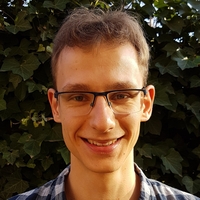
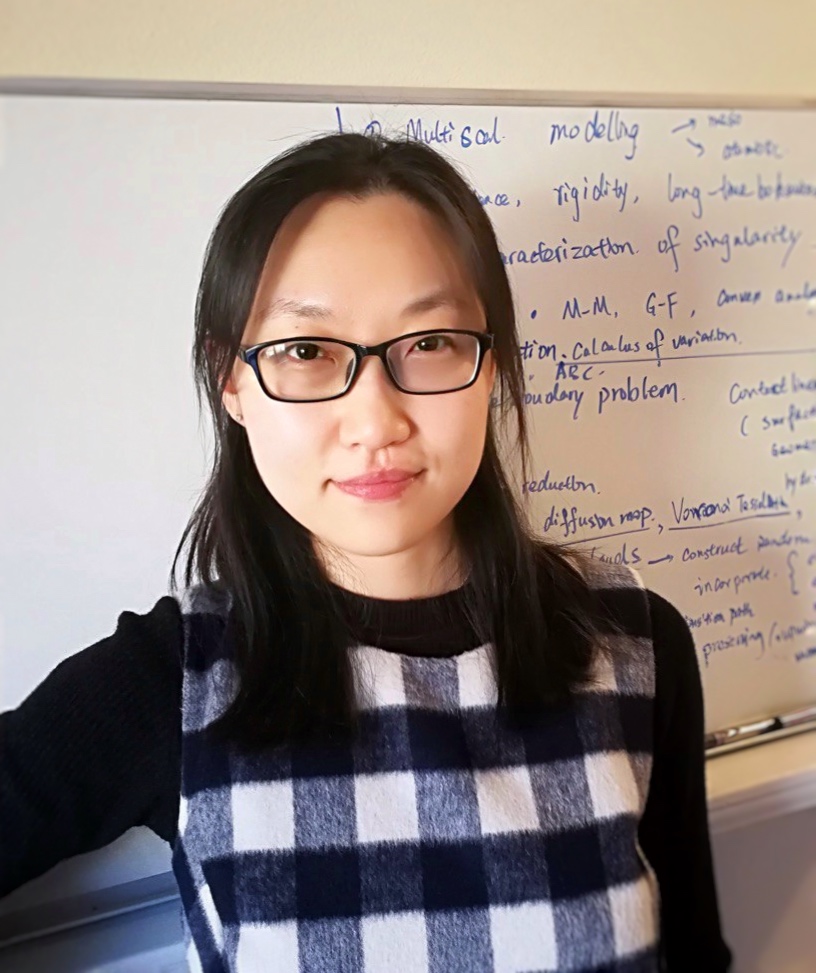
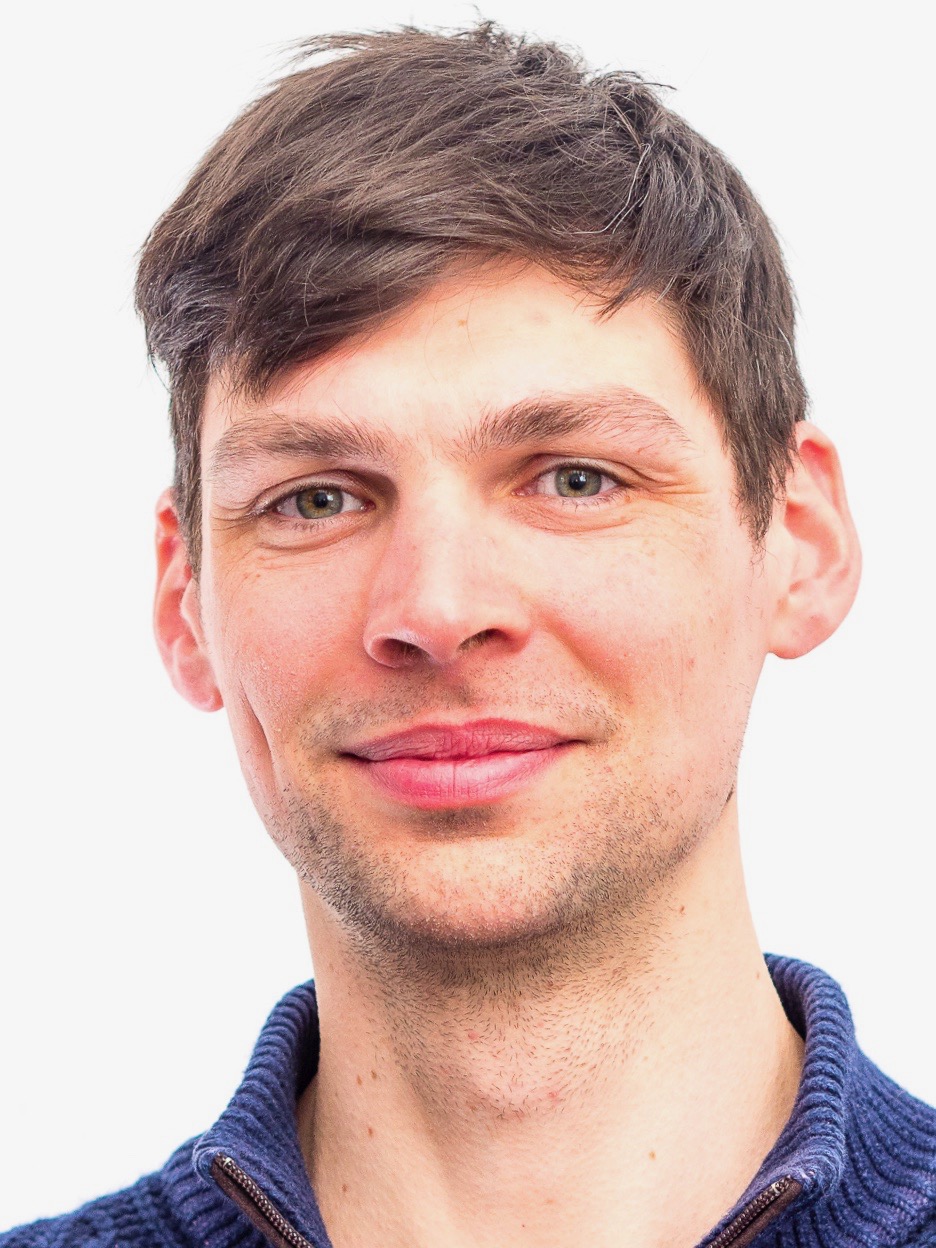
Professor Tony Shardlow is affiliated with the Department of Mathematical Sciences at the University of Bath , UK. His research spans Stochastic Differential Equations , Bayesian Inverse Problems , Statistical Shape Modelling , and Numerical Analysis , with applications in data science, medical imaging, and computational physics. Labs/Teams : IMI (Institute for Mathematical Innovation), Prob-L@b (Probability Laboratory at Bath), SAMBa (EPSRC Centre for Doctoral Training in Statistical Applied Mathematics). Recent Research Trends : Focus on geometric shape analysis using flow fields, stochastic PDEs for particle dynamics, and Bayesian inference techniques in industrial and medical contexts. Collaborative work bridges computational mathematics with applications in hip dysplasia assessment and pesticide delivery systems. Advising : Supervised Fengpei Wang's PhD thesis on dimension reduction and Sinkhorn algorithms. Collaborates with researchers like N. D. F. Campbell and C. Poon. Teaching : Offers MA30170 - Numerical Solution of Elliptic PDEs.
Ilaria Perugia is a University Professor (Univ.-Prof.) and Chair of Numerics of PDEs at the Department of Mathematics, Faculty of Mathematics, University of Vienna. She also serves as Deputy Head of the Research Platform Erwin Schrödinger International Institute for Mathematics and Physics. Her research focuses on numerical methods for partial differential equations with applications in computational physics and engineering. Professor Perugia's primary research interests include: Numerical methods for PDEs Finite element methods Discontinuous Galerkin methods Trefftz methods Virtual element methods Space-time methods Computational electromagnetics Wave propagation problems Nonlinear reaction-diffusion problems Her work spans theoretical analysis, algorithm development, and practical implementation of numerical methods for solving complex physical phenomena. Her recent publications demonstrate a strong focus on space-time methods, virtual element methods, and structure-preserving discretizations for wave equations, heat equations, and other PDEs. She has made significant contributions to the development of stable and efficient numerical schemes that preserve important physical properties of the underlying continuous problems, particularly in the context of wave propagation and computational electromagnetics. Professor Perugia leads a research group comprising several researchers and students including Mattia Corti, Matteo Ferrari, Monica Nonino, Andrea Scaglioni, Paul Stocker, Enrico Zampa, and Marco Zank. Her group actively collaborates on projects related to numerical analysis and scientific computing, with particular emphasis on developing novel discretization techniques for challenging PDE problems.
Guodong Shi is Associate Professor at the University of Sydney's Australian Centre for Robotics, heading the Centre for Robotics and Intelligent Systems. His research develops theoretical frameworks for multi-agent coordination, distributed optimization, and networked control systems. Current projects investigate collective decision-making under information constraints, privacy-preserving optimization, and game-theoretic formulations for social and robotic networks. His group develops algorithms for distributed solution of linear equations, Boolean networks, and equilibrium seeking. Doctoral supervision includes projects on acrobatic legged robots, reinforcement learning for robotic stability, and safe control under dynamic environments. Laboratory capabilities support theoretical and experimental validation. Research has applications in autonomous swarm robotics, smart grid optimization, and social network analysis. Teaching includes graduate courses on networked systems and optimization.
Herman Bruyninckx is a Part-Time Full Professor at Eindhoven University of Technology (TU/e) in the Mechanical Engineering department, specifically within the Control Systems Technology group and EAISI High Tech Systems initiative. He also serves as a professor (Hoogleraar) at KU Leuven in Belgium. Academic focus on robotics, control systems, and multi-agent coordination Active research in model predictive control , semantic mapping , and dynamic constraint algorithms Recent publications address industrial automation , agro-food robotics , and haptic technology Research Highlights : Developed hybrid decision-making frameworks for multi-agent navigation Innovated swing-free control methods for robotic pick-and-place operations Formulated constrained dynamics algorithms with LQR-Gauss principle integration Created ExoTen-Glove for haptic feedback in virtual environments Collaborative Projects : Coordinated with researchers like René van de Molengraft , Elena Torta , and Koen de Vos Contributed to NWO/TTW FlexCRAFT project for cognitive robotics in agro-food technology
Ralph Blumenhagen is a Senior Researcher and Research Group Leader at the Max-Planck-Institut für Physik (Werner-Heisenberg-Institut) in Munich. He holds the position of Privatdozent at the Ludwig Maximilian University of Munich since 2007. His academic career includes a PhD from the University of Bonn (1994), postdoctoral positions at the University of North Carolina, Institute for Advanced Study in Princeton, Humboldt-Universität zu Berlin, and University of Cambridge. Research Interests: Superstring Theory and its various formulations String model building including heterotic strings, D-brane models, and M/F-theory vacua Flux compactifications focusing on moduli stabilization and string cosmology String phenomenology addressing low energy effective actions, D-brane instantons, and swampland conjectures Non-geometric string backgrounds involving double field theory and non-commutative geometry His publications reveal a strong focus on theoretical foundations of string theory with applications to particle physics and cosmology. Blumenhagen's work often bridges abstract mathematical structures with potential physical implications, particularly in connecting string theory to observable phenomena. Advising: Dr. Blumenhagen has supervised numerous PhD and Master's students, with thesis topics spanning swampland conjectures, string inflation, non-geometric backgrounds, flux compactifications, and D-brane physics. His students have produced significant contributions to string phenomenology and mathematical aspects of string theory. Research Group: He leads a research group at the Max Planck Institute focused on theoretical aspects of string theory, with particular emphasis on connecting string theory to observable physics through model building and phenomenological investigations. The group maintains active collaborations with researchers worldwide.
Marc Pollefeys is a Full Professor of Computer Science at ETH Zurich and Director of the Microsoft Mixed Reality and AI Zurich Lab. He has held roles such as Visiting Professor at Stanford University (2007) and Assistant/Associate Professor at UNC-Chapel Hill (2002–2009). His research focuses on 3D computer vision, robotics, machine learning, and augmented reality. Education: PhD in Computer Science from KU Leuven (1999), followed by postdoctoral research there until 2002. He transitioned to academic roles at UNC-Chapel Hill before joining ETH Zurich in 2007. Research interests include 3D reconstruction, visual localization, SLAM, and applications in archaeology, urban modeling, and robotics. Notable projects include real-time 3D scanning, city-scale reconstruction, and autonomous vision-based drones. Key awards include ACM Fellow (2022), IEEE Fellow (2012), and ERC Starting Grant (2008). He advises numerous PhD students and collaborates with institutions like Google and Microsoft. Labs and teams: Leads the Computer Vision and Geometry (CVG) lab at ETH Zurich and directs the Microsoft Mixed Reality and AI Lab. His work bridges academia and industry, focusing on perception for mixed reality and autonomous systems.
Anru Zhang is the tenured Eugene Anson Stead, Jr. M.D. Associate Professor with joint appointments in Biostatistics & Bioinformatics, Computer Science, Electrical and Computer Engineering, and Statistical Science at Duke University. He holds a Ph.D. from the University of Pennsylvania (2015, advised by T. Tony Cai) and a B.S. in Mathematics from Peking University (2010). Current roles: Associate Professor at Duke (2024–present), previously Assistant Professor at UW-Madison (2018–2021) Research focus: Tensor learning, high-dimensional statistics, EHR analysis, and healthcare applications Mentorship: Supervises active research team including postdocs (Jianbin Tan, Qiuyi Wu) and PhD students (Runshi Tang, Yinrui Sun) Research Trends : His recent publications emphasize tensor methods in biomedical data (EHR, microbiome, Alzheimer’s), Riemannian optimization for high-dimensional problems, and hybrid statistical-computational approaches. Key themes include healthcare AI, EHR analysis, and non-convex optimization. Scientific Awards : COPSS Emerging Leader Award (2024) IMS Tweedie New Researcher Award (2022) ASA Gottfried E. Noether Junior Award (2021) NSF CAREER Award (2020) AMIA Data Science Outstanding Paper Award (2023) Advising & Grants : Mentored 16+ students/postdocs, including Yuetian Luo (IMS Lawrence D. Brown Award) and Yuchen Zhou (IMS Hannan Travel Award). Current grants include NIH-funded projects on sepsis detection, mental health AI, precision genetic testing, and telehealth interventions, plus NSF CAREER funding for statistical inference in high-dimensional structures. Labs & Teams : Leads a research group at Duke focusing on tensor learning, statistical theory, and healthcare AI applications. Collaborates with Duke’s AI Health initiative and serves as Associate Editor for leading journals like Annals of Statistics and JASA.
Christoph Hertrich is a tenure-track professor for Applied Discrete Mathematics at University of Technology Nuremberg, where he conducts research at the intersection of discrete mathematics, theoretical computer science, and machine learning. His work particularly focuses on applying polyhedral geometry and combinatorial optimization techniques to neural network theory, with significant contributions to understanding the computational complexity and expressivity of neural networks. Hertrich received his BSc and MSc degrees from TU Kaiserslautern (2013-2018) working with Sven O. Krumke, followed by his PhD at TU Berlin (2018-2022) under the supervision of Martin Skutella. His doctoral thesis, titled "Facets of Neural Network Complexity," laid foundational work for his current research direction. Prior to joining UTN, he held postdoctoral positions at Université libre de Bruxelles (2023-2024) with a Marie Skłodowska-Curie fellowship under Samuel Fiorini, and at LSE London (2022-2023) with László Végh. He also served as a substitute professor for discrete mathematics at Goethe-Universität Frankfurt during the winter semester of 2023/24. Hertrich's research interests center on the mathematical foundations of neural networks, with particular emphasis on polyhedral geometry approaches. His work explores computational complexity questions related to neural network training and architecture, expressivity bounds, and connections to combinatorial optimization problems. He has made significant contributions to understanding the relationship between neural network depth and function representation, the complexity of counting linear regions in ReLU networks, and the application of extended formulations to neural network theory. His approach combines rigorous theoretical analysis with practical implications for neural network design and optimization. His recent publication record reveals a strong trend toward establishing fundamental theoretical limits and connections between deep learning and discrete mathematics. A significant portion of his work examines computational complexity of various neural network problems, often proving hardness results or establishing bounds on expressivity. He has also developed novel connections between polyhedral combinatorics and neural network architecture, demonstrating how techniques from operations research can inform deep learning theory. Marie Skłodowska-Curie fellowship Since February 2025, Hertrich has been supervising PhD student Moritz Stargalla at UTN. His research has been supported by prestigious fellowships including a Marie Skłodowska-Curie fellowship during his postdoctoral period in Brussels. He is organizing a workshop on "Polyhedral Geometry for Neural Networks" in March 2026 in Nuremberg, highlighting his leadership in this emerging interdisciplinary field.
Shawn Xingshan Cui is Associate Professor in the Departments of Mathematics and Physics & Astronomy at Purdue University. His research bridges low-dimensional topology, quantum field theory, and quantum information science, with focus on topological quantum computation and tensor category applications. His work develops mathematical frameworks for topological quantum computing using knot theory, Hopf algebras, and modular tensor categories. Recent publications explore quantum error correction in topological codes (Kitaev model, toric code), non-semisimple invariants of 3-/4-manifolds, and quantum circuit implementations. He leads research on constructing fault-tolerant quantum gates using topological phases and anyonic braiding. Current projects investigate Floquet codes, fracton models, and the application of neural networks to quantum state representation. His SIAM News article 'Fighting Errors with Space' highlights spatial approaches to quantum error correction. He supervises graduate students working on quantum algorithms, topological phases of matter, and mathematical foundations of quantum computation. Teaching includes MA 261: Multivariate Calculus and specialized topics in topological quantum computation.
Yuan Gao is an Assistant Professor of Mathematics at Purdue University's Department of Mathematics (College of Science). His research focuses on analysis and computations of PDEs in materials science, biology, and microfluidics, with recent emphasis on optimal control, Hamilton-Jacobi equations, and non-equilibrium chemical reactions. His work is supported by NSF awards DMS-2204288 and DMS-2440651. Previously, he held the William W. Elliott Assistant Research Professor position at Duke University (2019-2021). Research interests include PDE analysis in materials science (crystal growth, dislocation dynamics), numerical methods for interface dynamics, applied stochastic analysis (Langevin dynamics, transition path theory), and mean-field games for fluid systems. He organizes the PSU-Purdue-UMD Joint Seminar on Mathematical Data Science. Key publications span topics like dislocation evolution, Wasserstein gradient flows, and stochastic algorithms for rare events. Awards include NSF CAREER funding recognizing his contributions to mathematical analysis of non-equilibrium systems.
Max Fathi is a Professor of Mathematics at Université Paris Cité, affiliated with the Laboratoire Jacques-Louis Lions (LJLL) and Laboratoire de Probabilités, Statistique et Modélisation (LPSM). He concurrently holds a part-time teaching position at the Department of Mathematics and Applications (DMA) at École Normale Supérieure (ENS). Since 2023, he has been a member of the Institut Universitaire de France (IUF), a prestigious national research fellowship in France. He completed his PhD in 2013 at Université Pierre et Marie Curie under Cédric Villani, followed by a postdoctoral position at the University of California, Berkeley with Lawrence C. Evans and Fraydoun Rezakhanlou. Previously, he was a CNRS researcher at the Institut de Mathématiques de Toulouse before joining Université Paris Cité. His habilitation thesis (2019) focuses on optimal transport applications in analysis and probability. Fathi's research centers on optimal transport theory, particularly its applications to analysis, probability, and statistical physics. Key topics include interacting particle systems, functional inequalities (e.g., Poincaré, log-Sobolev), high-dimensional phenomena, Ricci curvature in discrete/continuous spaces, Stein's method, concentration of measure, and numerical methods for stochastic dynamics. His work is supported by the ANR project 'Conviviality.' He has delivered courses on functional analysis at ENS and participated in summer schools, including an MSRI course on functional inequalities and localization techniques. His teaching materials include lecture notes on optimal transport and stochastic processes. His contributions have been recognized through awards such as the IUF membership. Notable research collaborations include work with Thomas Courtade, Matthias Erbar, and Gabriel Stoltz on topics ranging from stability estimates of inequalities to hypocoercivity and numerical analysis of stochastic systems.
Prof. Dr. Eugen Hellmann is a full Professor at the Mathematical Institute of the University of Münster , within the Department of Mathematics and Computer Science . He is a leading researcher in arithmetic geometry and representation theory, actively contributing to the CRC 1442 Geometry: Deformations and Rigidity and Mathematics Münster excellence cluster. His work focuses on the p-adic aspects of the Langlands program, moduli spaces of Galois representations, and p-adic Hodge theory. Research Interests: His primary research areas include Arithmetic Algebraic Geometry , the Langlands Program (especially its p-adic and categorical formulations), p-adic Hodge Theory , p-adic Galois Representations , and p-adic Automorphic Forms . His work often involves the study of (phi,Gamma)-modules, eigenvarieties, and deformation spaces, aiming to understand the deep connections between automorphic forms and Galois representations in the p-adic setting. Publication Trends: His most recent publications (2022–2023) show a strong focus on the derived and categorical aspects of the p-adic Langlands program, including the derived category of Hecke algebras and a categorical framework for the entire program. Earlier works established foundational results on the smoothness of eigenvarieties, the geometry of trianguline varieties, and the structure of moduli spaces for Galois representations. His research consistently bridges abstract algebra, number theory, and algebraic geometry. Scientific Awards: No specific awards or fellowships are mentioned in the provided texts. Advising and Grants: While a list of former research group members (e.g., Dr. Claudius Heyer, Dr. Damien Junger) is provided, their exact status as PhD advisees is not explicitly confirmed. He leads significant research projects funded by the DFG, including CRC 1442 - A01: Automorphic forms and the p-adic Langlands programme and CRC 1442 - A02: Moduli spaces of p-adic Galois representations , as well as a project within the EXC 2044 - A1: Arithmetic, geometry and representations cluster. He is also a co-author on a preprint titled "Patching and multiplicities of p-adic eigenforms," indicating active collaboration on grant-funded research. Labs and Teams: He is a central figure in the arithmetic geometry group at Münster. He organizes and leads the Research Seminar "p-adic arithmetic" and the Mittagsseminar "Arithmetic" , which serve as key forums for his research group and collaborators to present and discuss current work. His research team has included several postdoctoral researchers and doctoral students, contributing to a vibrant research environment focused on cutting-edge problems in number theory.
Dr. Werner Bauer is a Lecturer in Mathematics at the University of Surrey, affiliated with the Mathematics at the Interface Group within the School of Mathematics and Physics. His research focuses on numerical analysis and scientific computing, particularly in the Mathematics of Planet Earth. Key areas include parallel-in-time methods for oscillatory PDEs, structure-preserving discretizations for fluid dynamics, stochastic flow models for ensemble prediction, and geometric formulations of fluid and magnetohydrodynamic systems. He also explores finite difference and finite element methods, with prior work on grid adaptation in weather and climate models. His research interests span numerical methods for geophysical flows, stochastic modeling of oceanic and atmospheric dynamics, and energy-conserving computational frameworks. Bauer’s recent work emphasizes uncertainty quantification, ensemble forecasting, and the development of compatible finite element schemes to ensure physical conservation laws in simulations. Bauer’s publications highlight advancements in structure-preserving discretizations, stochastic parameterization of mesoscale eddies, and variational integrators for geophysical equations. His work bridges applied mathematics and computational science with applications in climate modeling and environmental fluid dynamics.
Christopher Woodward is a Professor of Mathematics and Acting Department Chair at Rutgers University . His research focuses on symplectic and algebraic geometry , moduli spaces , Lie groups , and mathematical physics . He actively contributes to Floer theory , quantum cohomology , and symplectic topology , with recent work on Lagrangian surgery and tropical Lagrangians . Woodward has mentored numerous PhD students and postdocs , including Yuka Taylor , Sikimeti Mau , Reza Rezazadegan , and Yuhan Sun . He serves as an associate editor for Selecta Mathematica and organizes academic events like the Rutgers symplectic seminar and workshops on Lagrangian Floer theory at institutions such as the Simons Center and Harvard's CMSA .
Dr. Daniel Grady is an Assistant Professor at Wichita State University. His research focuses on algebraic topology, mathematical physics, and differential geometry, with a particular emphasis on advanced topics such as K-theory, cobordism, and topological field theories. He explores the interplay between differential cohomology and geometric structures in theoretical physics, including applications to M-theory and string compactifications. His work often involves sophisticated tools like spectral sequences, stacks, and equivariant constructions, reflecting a deep engagement with both pure and applied aspects of topology. Notable contributions include studies on the Freed–Hopkins conjecture, geometric cobordism hypotheses, and twisted differential cohomology theories. Grady’s research bridges abstract algebraic frameworks with concrete geometric and physical models, advancing foundational understanding in modern theoretical mathematics.