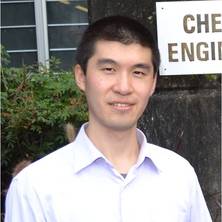
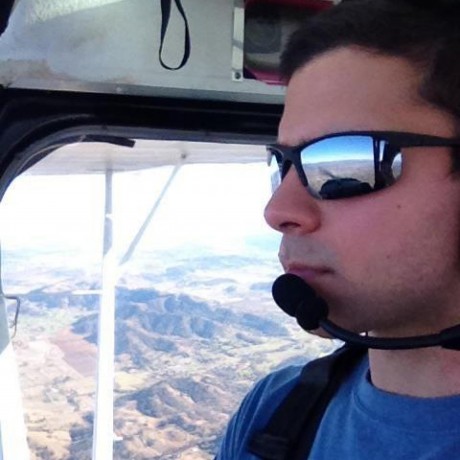
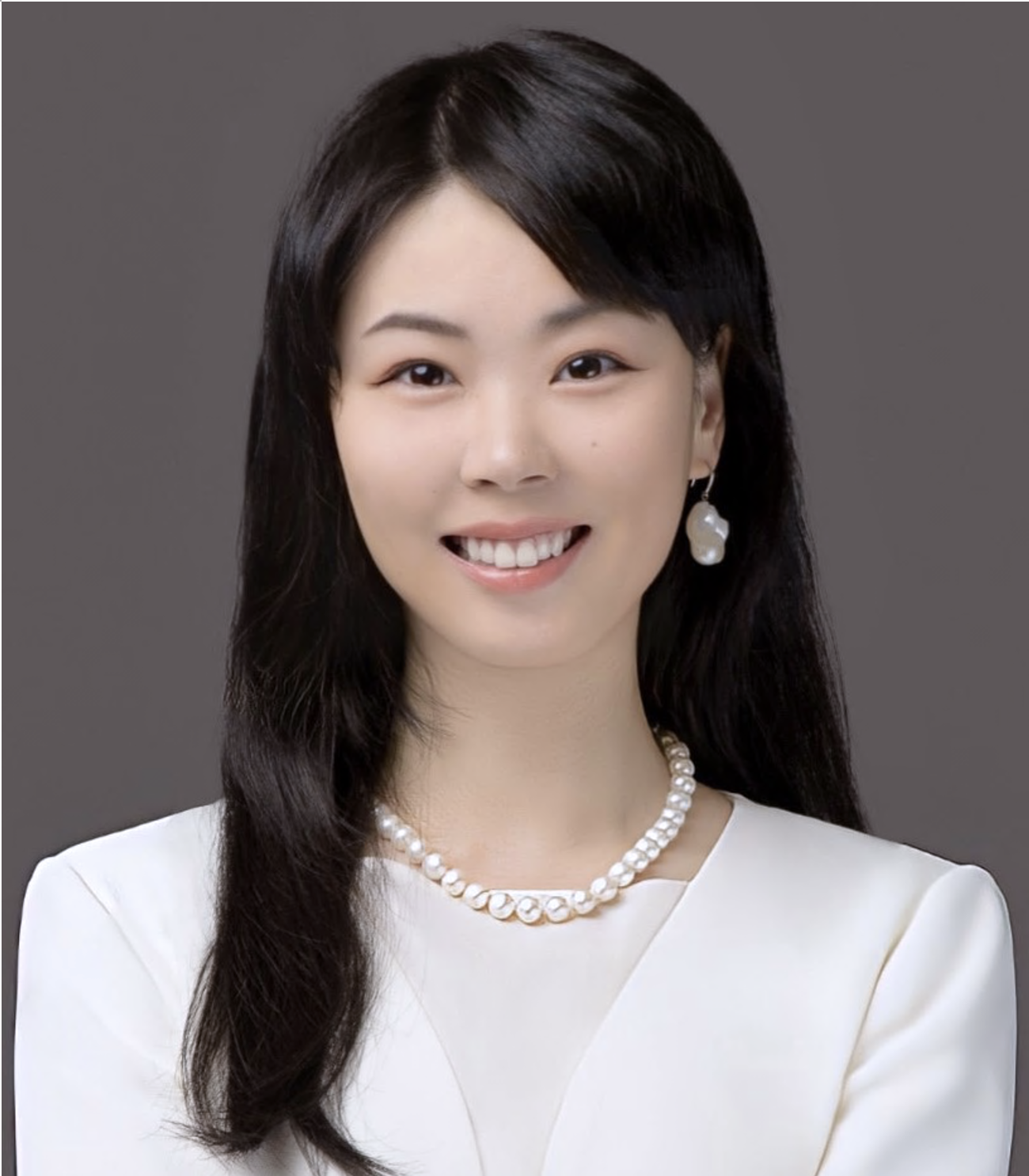
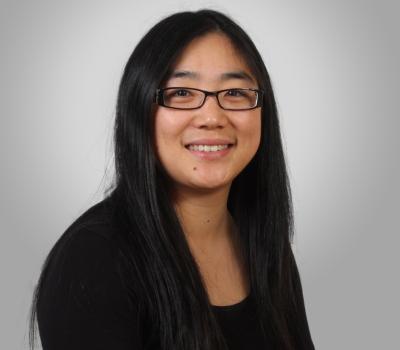
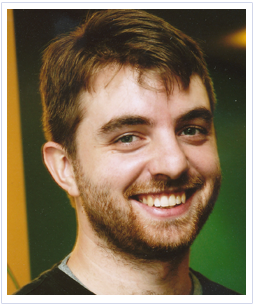
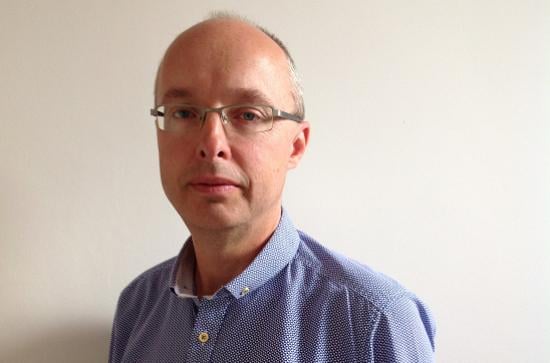
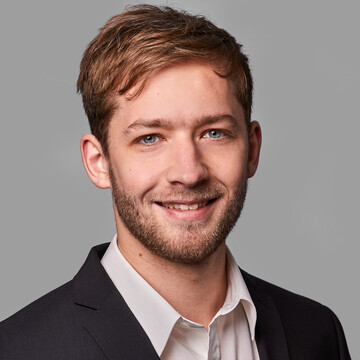
Matteo Pezzulla is an Associate Professor at Aarhus University within the Department of Mechanical and Production Engineering Mechanics and Materials. His research focuses on fluid-structure interactions, soft hydraulics, and elastic instabilities, with applications in biomechanics and solid mechanics. Areas of expertise: Soft hydraulics, Fluid-structure interactions, Elastic instabilities, Biomechanics, Solid mechanics Teaching: Theory of Elasticity (BSc), Slender Structures (MSc) Memberships: American Physical Society (APS), Education Committee at AU Projects: The Architecture of Photosynthesis (2023–2026), Smart Fluidic Channels (2023–2025) His work bridges analytical, numerical, and experimental methods to study shell mechanics and biological systems. Publications highlight fluid-induced buckling, magneto-elastic materials, and biomimetic designs. Contact: matt@mpe.au.dk | +45 20 69 75 22
Dr. Lei Ge is an Honorary Associate Professor at the School of Chemical Engineering , The University of Queensland , with a focus on novel materials for thermal catalysis, membrane separation, and selective gas adsorption. His work spans 1D/2D materials (MOFs, carbon nanotubes, polymers) and MOF-derived catalysts for electrolysis. Qualifications: Doctor of Philosophy, The University of Queensland Research Interests: Dr. Ge investigates materials for CO2 reduction (e.g., electrochemical and photoreduction), gas separation membranes, and coal permeability challenges in coal seam gas production. His expertise includes metal-organic frameworks, carbon nanotubes, and electrocatalyst design. Publication Trends: His recent work emphasizes electrochemical CO2 conversion using advanced electrode configurations, MOF-derived catalysts, and interfacial engineering to enhance reaction efficiency. Topics include gas-diffusion electrodes, heterojunctions for charge transfer, and nanocomposites for biocatalysis. Supervision: Dr. Ge actively supervises PhD candidates in projects related to electrochemical CO2 capture, fuel cell materials, and MOF membranes, collaborating with advisors like Professor John Zhu and Dr. Mike Tebyetekerwa.
Reza Zadeh is a Computational Mathematics professor at Stanford University's School of Engineering and Founder & CEO of Matroid . He previously served as a Technical Advisory Board member for Databricks and leads the Spark Tutorial at Stanford. Research Interests: Specializing in Machine Learning and Distributed Computing , his work bridges theoretical mathematics with practical implementations in big data systems. Key focus areas include Optimization of Apache Spark 3D Convolutional Neural Networks Discrete Mathematics and Graph Theory Medical Imaging Applications Academic Contributions: His publications reveal trends across multiple disciplines: Adapting machine learning for medical diagnostics (2019-2022) Advancing distributed computing frameworks (2014-2016) Developing mathematical foundations for social networks (2009-2013) Creating scalable optimization algorithms (2014-2016) Scientific Awards: Best Paper Award runner-up at KDD 2016 Academic Leadership: He has taught SMACC Consulting and designed courses including CME 323: Distributed Algorithms and Optimization (2015-2024) and CME 305: Discrete Mathematics and Algorithms (2010-2017). His lectures cover graph theory, approximation algorithms, and spectral sparsification. Labs & Teams: Organized Spark Summit workshops and leads Scaled Machine Learning Conference . Collaborates with Stanford's ICME computational consulting services.
Maria Chiara Brambilla is an Associate Professor in the Department of Industrial Engineering and Mathematical Sciences (DIISM) at Università Politecnica delle Marche, Faculty of Engineering. Her research specializes in algebraic geometry, with emphasis on moduli spaces, vector bundles, and secant varieties. She investigates fundamental structures in birational geometry and interpolation theory, contributing to advancements in the classification of geometric objects and their deformations. Research Focus: Her work explores: Birational properties of Mori dream spaces and blowups Defectivity and non-defectivity in Segre-Veronese varieties Terracini loci and their minimality conditions Geometric invariants of flag manifolds and hypersurfaces Algebraic boundaries in tensor rank theory Publication Trends: Recent articles (2021-2025) demonstrate deepening work on Terracini loci, twistor geometry, and movable divisors, frequently employing combinatorial and deformation-theoretic methods to resolve problems in higher-dimensional algebraic geometry.
Dr. Liya Zhao is a Senior Lecturer in the School of Mechanical and Manufacturing Engineering at the University of New South Wales (UNSW Sydney), where she leads the Dynamic Smart Structures and Energy Harvesting Laboratory. She previously held academic positions at the University of Technology Sydney (UTS), first as a Lecturer (2017) and later promoted to Senior Lecturer (2021), before joining UNSW in 2022. Her research is highly interdisciplinary, focusing on smart structures, nonlinear dynamics, and sustainable energy technologies. Education: Ph.D. in Structures & Mechanics, Nanyang Technological University, Singapore (2015) B.Eng. in Civil Engineering, Tongji University, China (2009) Research Interests: Dr. Zhao's work centers on energy harvesting from ambient sources (wind, vibration, human motion, waves), smart materials (piezoelectric, triboelectric), metamaterials, and nonlinear dynamics. She designs adaptive structures for broadband energy harvesting and vibration suppression, with applications in self-powered wireless sensor networks, structural health monitoring, and wearable devices. Her research integrates theoretical modeling, numerical simulation, and experimental validation. Publication Trends: Over the past decade, her research has evolved from fundamental electromechanical modeling toward multifunctional metastructures and real-world deployment. Her recent work emphasizes hybrid energy harvesting, nonlinear tuning for broadband response, and integration with self-powered sensing systems, reflecting a strong trend toward practical, sustainable technologies. Scientific Awards: ARC Discovery Early Career Researcher Award (DECRA), 2021–2024 World's Top 2% Scientists (Stanford University), 2020–2023 Nanyang Engineering Doctoral Scholarship (NEDS), NTU Singapore Grants & Supervision: Dr. Zhao has secured multiple competitive grants, including ARC Discovery Projects and internal university funding, as both sole and chief investigator. She actively supervises research students and welcomes motivated candidates in mechanics, dynamics, and energy systems. Her lab, Dynamic Smart Structures and Energy Harvesting Lab , fosters innovation through experimental and computational research. She also contributes to teaching, including Mechanics of Solids II and Introduction to Aircraft Engineering. Lab & Team: She leads a dynamic research group focused on next-generation smart structures, supported by state-of-the-art facilities at UNSW. Her team develops novel materials and systems for sustainable energy and sensing, aiming to bridge the gap between fundamental science and real-world applications.
Chigo Okonkwo is Full Professor and Chair of Secured Ultra High Capacity Transmission at the Department of Electrical Engineering , Eindhoven University of Technology. He leads the high-capacity optical transmission laboratory at the Institute for Photonics Integration and contributes to the Center for Quantum Materials and Technology Eindhoven (QT/e) . Academic Qualifications: MSc in Telecommunications and Information Systems, University of Essex (2002) PhD in Optical Signal Processing, University of Essex (2010) Research Interests: Professor Okonkwo focuses on: Maximizing capacity of single-mode fiber systems through advanced-coded modulation and Probabilistic/Geometrically shaped signals Developing Space Division Multiplexing (SDM) systems for Petabit/s transmission using multi-mode/multi-core fibers Quantum secure communications and cryptographic protocol development Optical vector network analyzer (OVNA) technology for SDM fiber characterization Free-space optical link deployment in urban environments Low-complexity digital signal processing algorithms Recent Publications Trends: His 15 most recent articles (2023-2025) demonstrate active research in: Quantum-classical network integration Extreme capacity fiber transmission (Petabit/s systems) Machine learning for optical diagnostics SDM fiber measurement technologies Hybrid QKD-PQC security frameworks Free-space optical urban communication Scientific Awards: Asia Communications and Photonics Conference (ACP) 2018 Best Paper Award European Conference on Optical Communications (ECOC) 2018 Student Paper Award Optica Student Paper Awards (2022) Corning Outstanding Student Paper Competition Finalist (2025) Advisory & Collaborations: Advisor to 8+ researchers including Menno van den Hout, Vincent van Vliet, and Thomas Bradley Technical Program Committee Member, European Conference on Optical Communications (ECOC) since 2014 Sub Committee Chair for Digital Signal Processing track at ECOC 2018 General Chair for OSA Advanced Photonics Congress on Signal Processing for Photonics Collaborates with EU projects (HOMTech, PhotonDelta) and industrial partners Co-founder and Chief Technology Officer of CUbIQ Technologies Laboratory & Infrastructure: Maintains the world-class High Capacity Optical Transmission Lab at TU/e, featuring: Advanced SDM fiber testing equipment Quantum communication research infrastructure Free-space optical link experimental setups Multi-core fiber amplification systems Coherent transmission testbeds Machine learning-enabled diagnostic tools
Xiaoli Fern is an Associate Professor in the School of Electrical Engineering and Computer Science at Oregon State University. She holds a Ph.D. in Computer Engineering from Purdue University (2005) and dual degrees (B.S. and M.S.) in Automation and Computer Science from Shanghai Jiao Tong University (2000). Her research focuses on applied machine learning , graph learning , and explainability in AI systems , with applications in microbiome analysis , ecological monitoring , and human-computer interaction . Research Expertise: Unsupervised learning, clustering, correlation analysis, outlier detection, and scientific data mining. Collaborations: Active involvement in the IGERT Ecosystem Informatics program and interdisciplinary projects with ecologists, roboticists, and biologists. Awards: 2011 NSF CAREER Award for early-career excellence in research. Her recent work includes applying deep learning to microbiome data and developing interactive systems that bridge theory with real-world applications in biology and materials science. She mentors students across all academic levels and emphasizes the importance of collaborative, real-world problem-solving in her research lab.
Donald R. Sheehy is an Associate Professor of Computer Science in the College of Engineering at North Carolina State University. His research focuses on the intersection of geometric algorithms and topological data analysis, with significant contributions to computational geometry and persistent homology. Sheehy's research interests span geometric algorithms, topological data analysis, computational geometry, persistent homology, metric spaces, Voronoi diagrams, and Delaunay triangulations. His work bridges theoretical computer science with practical applications in data analysis, where he develops algorithms that extract meaningful topological information from complex datasets. His research has particular relevance for understanding the structure of high-dimensional data through geometric and topological lenses. Analysis of his recent publications reveals a strong focus on developing efficient algorithms for topological data analysis. His work on sparse filtrations, greedy permutations, and metric properties of persistence diagrams has advanced the field by providing computationally tractable methods for analyzing large datasets. Sheehy frequently explores how geometric structures like Voronoi diagrams and Delaunay triangulations can be adapted to topological contexts, creating bridges between classical computational geometry and modern data analysis techniques. Sheehy actively collaborates with researchers across multiple institutions, as evidenced by his extensive publication record in top venues like SOCG (Symposium on Computational Geometry) and SODA (Symposium on Discrete Algorithms). His work demonstrates a consistent trajectory of advancing both theoretical foundations and practical applications of geometric and topological methods in computer science.
David Wraith is a Professor in the Department of Mathematics and Statistics at Maynooth University, Faculty of Science & Engineering. His research focuses on differential geometry and topology, particularly in Ricci curvature, moduli spaces, and geometric analysis of manifolds. University: Maynooth University Department: Mathematics and Statistics Email: david.wraith@mu.ie Wraith’s work explores the interplay between curvature constraints and manifold topology, with significant contributions to Ricci-positive metrics, geometric group actions, and moduli space classifications. His recent publications examine intermediate Ricci curvatures, homotopy groups of moduli spaces, and Ptolemaic metric structures. Key trends in his articles include: Geometric analysis of Ricci curvature and scalar curvature bounds Topological stability of manifolds under curvature conditions Applications of group actions to cohomogeneity and singular orbits Studies on Ptolemaic metrics and their relation to CAT(0) spaces Classifications of exotic spheres and moduli spaces Homotopy-theoretic approaches to geometric deformations
Prof. Dr. Erdem An serves as a full Professor in the Department of Mechanical Engineering at Yeditepe University's Faculty of Engineering. Holding this position since 2016, he previously advanced from Associate Professor (2008) and Doctoral Lecturer (2006) roles within the same department. His academic foundation includes a PhD (1986-1989) and Master's degree (1985-1986) in Mechanical Engineering from California Institute of Technology, where his doctoral research focused on granular materials and convective heat transfer. Dr. An's research spans Heat Transfer , Fluid Mechanics , and Thermal Systems with specialization in supercritical CO 2 flows, microchannel heat transfer, granular material dynamics, and condensation efficiency. His experimental work frequently investigates microtubes, corrugated channels, and granular flows, yielding significant contributions to refrigeration systems and thermal management applications. Current projects focus on supercritical CO 2 behavior near critical points and energy-efficient drying technologies. Analysis of his 15 most recent publications reveals dominant research themes in microscale thermofluid phenomena (73%), supercritical fluid dynamics (54%), and enhanced heat transfer surfaces (36%). His work demonstrates consistent experimental methodology with increasing computational integration since 2015, particularly in flow orientation effects and buoyancy-driven phenomena. Cassini Recognition Award (NASA) Group Achievement Award (The Aerospace Corporation) Program Recognition Award (The Aerospace Corporation) Four Arçelik Buluşma Günü Innovation Awards (XII-XV) Dr. An has secured substantial research funding including TÜBİTAK 1001 projects (625,845 TL) and multiple San-TEZ industrial collaborations (totaling over 550,000 TL) with Arçelik A.Ş. His administrative leadership includes serving as Department Chair since 2019. He has supervised 13 Master's theses and 4 doctoral dissertations, with current students researching supercritical CO 2 flow characteristics and condensation dynamics. His industrial partnerships have yielded 7 patents related to laundry dryer technology.
Sebastian Thiery serves as a Professor in Manufacturing Engineering at Leuphana University of Lüneburg, specifically holding a Ph.D. Professorship for Manufacturing – Innovative Manufacturing. His research focuses on advanced manufacturing processes with particular emphasis on sheet metal forming technologies. Thiery's primary research interests include Incremental Sheet Forming with Active Medium (IFAM) , Deep Drawing Processes , Process Control and Optimization , and the application of Artificial Neural Networks in manufacturing systems. His work bridges theoretical modeling with practical industrial applications, particularly in metal forming operations where geometrical accuracy and process robustness are critical concerns. Analysis of his publication record reveals a clear research trajectory focused on improving manufacturing processes through innovative control strategies. His recent work emphasizes the integration of machine learning techniques with traditional manufacturing processes, particularly using neural networks for friction compensation and draw-in prediction. The publications demonstrate increasing sophistication in process control methodologies, moving from basic IFAM process development to sophisticated closed-loop control systems that incorporate real-time monitoring and adaptive adjustments. Thiery actively collaborates with researchers including Mazhar Zein El Abdine, Jens Heger, and Noomane Ben Khalifa, suggesting participation in a dedicated research group or laboratory focused on advanced manufacturing processes. His work appears to be supported by research grants, including funding from the German Research Foundation (DFG) as indicated in one of his publications.
Louis S. Bouchard is an Associate Professor in the Department of Chemistry at the University of California, Los Angeles (UCLA). His interdisciplinary research spans physical chemistry, biomedical engineering, and quantum computing, with a focus on NMR/MRI technologies, immunotherapy, and materials science. He earned a B.Sc. in Physics and Business Management from McGill University, a M.Sc. in Medical Biophysics from the University of Toronto, and a Ph.D. in Chemistry from Princeton University. His postdoctoral work at UC Berkeley with Alex Pines advanced low-field NMR and hyperpolarization methods. Research Interests : Physical & analytical chemistry, materials for immunotherapy, MRI contrast agents, biosensors, quantum control, machine learning in biomedical imaging. Lab Focus : Operando NMR methods, molecular kinetics, tissue engineering, quantum computing, and machine learning algorithms. His group has developed groundbreaking technologies, including: NMR methods for topological insulator surface states 12% 15N hyperpolarization catalysts for MRI Operando NMR in catalytic reactors Multi-channel 3D tissue bioreactors Scientific awards include the Beckman Young Investigator Award (2012), Dreyfus New Faculty Award (2008), and multiple UCLA faculty development grants. Current projects recruit students in machine learning , molecular kinetics , and quantum computing applications to chemistry and biology.
Devid Maniglio is an Associate Professor at the Department of Industrial Engineering, University of Trento. His research focuses on bioengineering, biomaterials, and tissue engineering, with a particular emphasis on bioprinting, surface modification, and functional materials. He has contributed to advancements in silk fibroin and hydrogel-based systems for medical applications. Research Interests Bioengineering for personalized medicine Biomaterials and surface engineering 3D bioprinting and tissue regeneration Molecular imprinting and biosensors Drug delivery and cell encapsulation Teaching Diagnostic and therapeutic technologies for personalized medicine Engineered materials for precision medicine Fundamentals of biomedical technologies Functional surfaces laboratory Labs & Collaborations Devid Maniglio is affiliated with the Functional Surfaces Laboratory at the University of Trento, collaborating with researchers such as Stefano Rossi and Flavio Deflorian. His work integrates interdisciplinary approaches in biomedical engineering and sustainable medical technologies.
Mark H Lowenberg is Professor of Flight Dynamics at the University of Bristol's School of Civil, Aerospace and Design Engineering, where he heads the Dynamics and Control Research Group. He holds an M.Sc.(Eng.) from Witwatersrand and a PhD from Bristol, with an ORCID ID 0000-0002-1373-8237 . His research focuses on nonlinear flight dynamics , pioneering bifurcation analysis applications in UK flight dynamics through collaborations with DERA, Airbus, and NASA Langley. Key areas include: Wind tunnel experimentation for nonlinear/unsteady aerodynamics Aircraft ground manoeuvres and landing gear shimmy analysis Rotor stability with AgustaWestland Helicopters Development of a 5DOF 'manoeuvre rig' for upset behavior simulation Recent publications emphasize deep-stall phenomena, nonlinear beam dynamics, and aeroelastic modeling of flexible wings, reflecting trends toward computational-experimental integration for aircraft safety and performance. Awarded the 2024 Royal Aeronautical Society Young Persons’ Written Paper Prize, his honors underscore contributions to aerospace innovation. As an educator, he teaches Flight Mechanics, Experimental Aerodynamics, and Aircraft Dynamics & Control, while supervising final-year projects. He has served as Head of Department (2007-2011), Senior Tutor, and 3rd Year Tutor. Active in professional service, he chairs AIAA committees and serves on the EPSRC Peer Review College since 2002. Current projects include EPSRC-funded work on flexible aircraft dynamics and airborne wind energy systems. His collaborative network spans De Montfort University, IIT Kanpur, and NASA, with co-creation of an MSc module on Nonlinear Flight Mechanics.
Reeta Vyas is a tenured Professor of Physics at the University of Arkansas , where she has been affiliated since 1989. She has held consecutive promotions from Assistant (1989–1994), Associate (1994–2002), to full Professor (2002–present). Her research focuses on quantum optics and laser physics, with a particular emphasis on light-matter interactions, beam propagation, and quantum coherence. Research Themes Quantum optics and photon statistics Nonlinear optical phenomena Orbital angular momentum of light Polarization properties of structured beams Her publications from 2017–2024 reveal a sustained focus on advanced optical phenomena including quantum light statistics , vortex beam diffraction , and nonlinear phase analysis . Notable achievements include the Faculty Gold Medal Award (2005) and Senior Membership in the Optical Society of America (2013) . While no student advising information is explicitly documented, her work demonstrates significant contributions to theoretical and experimental quantum optics.