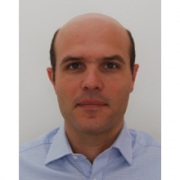
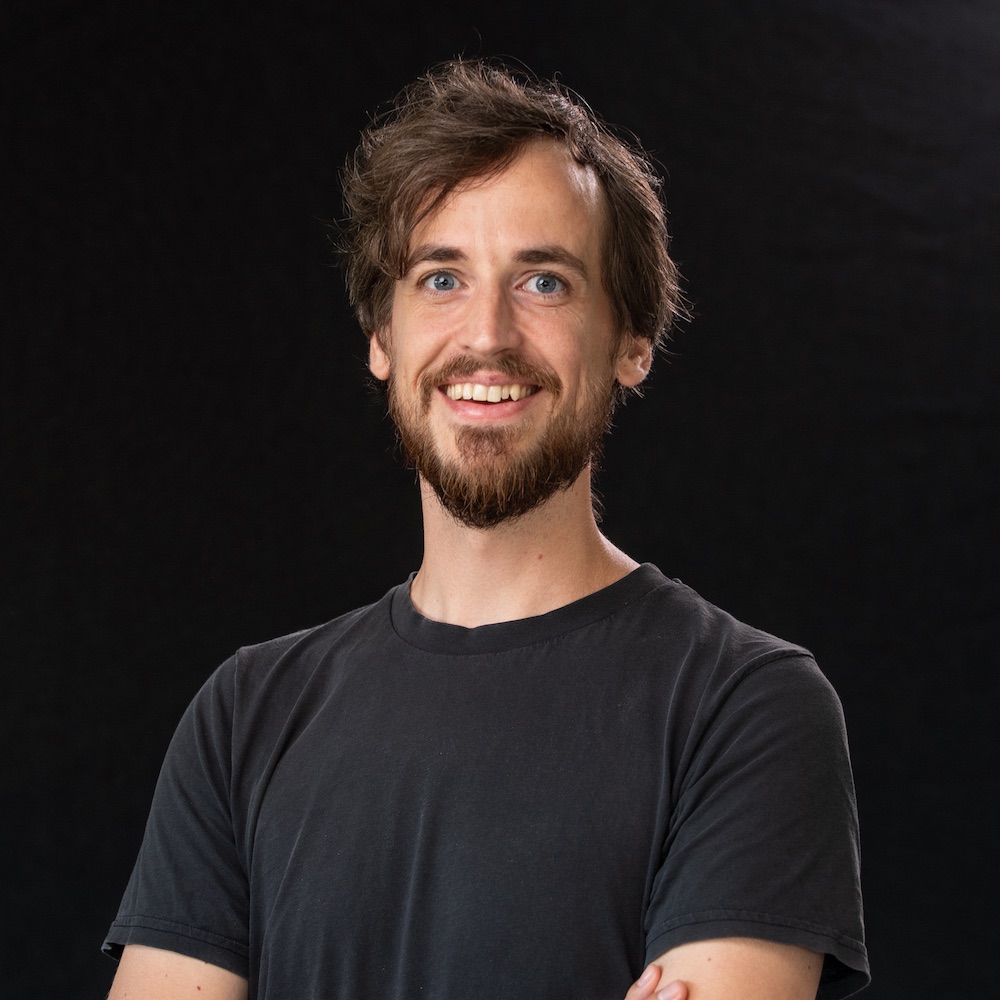
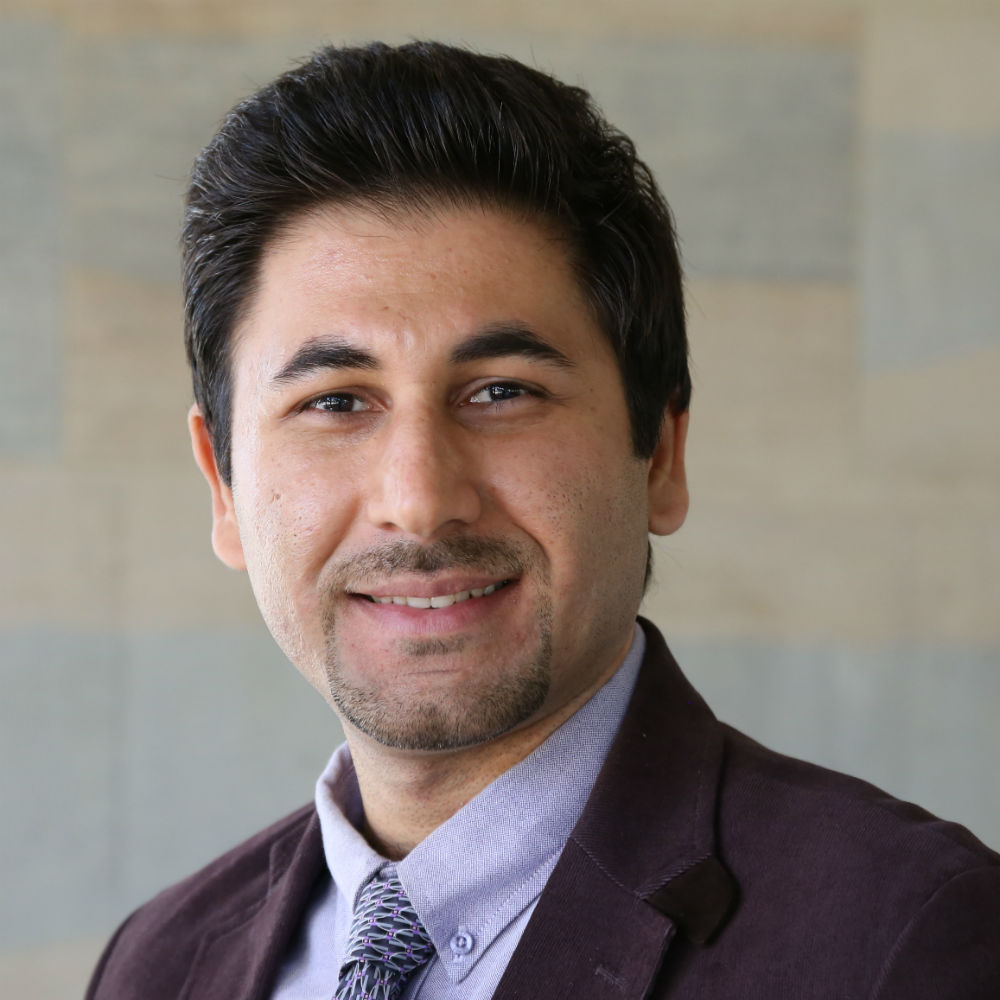
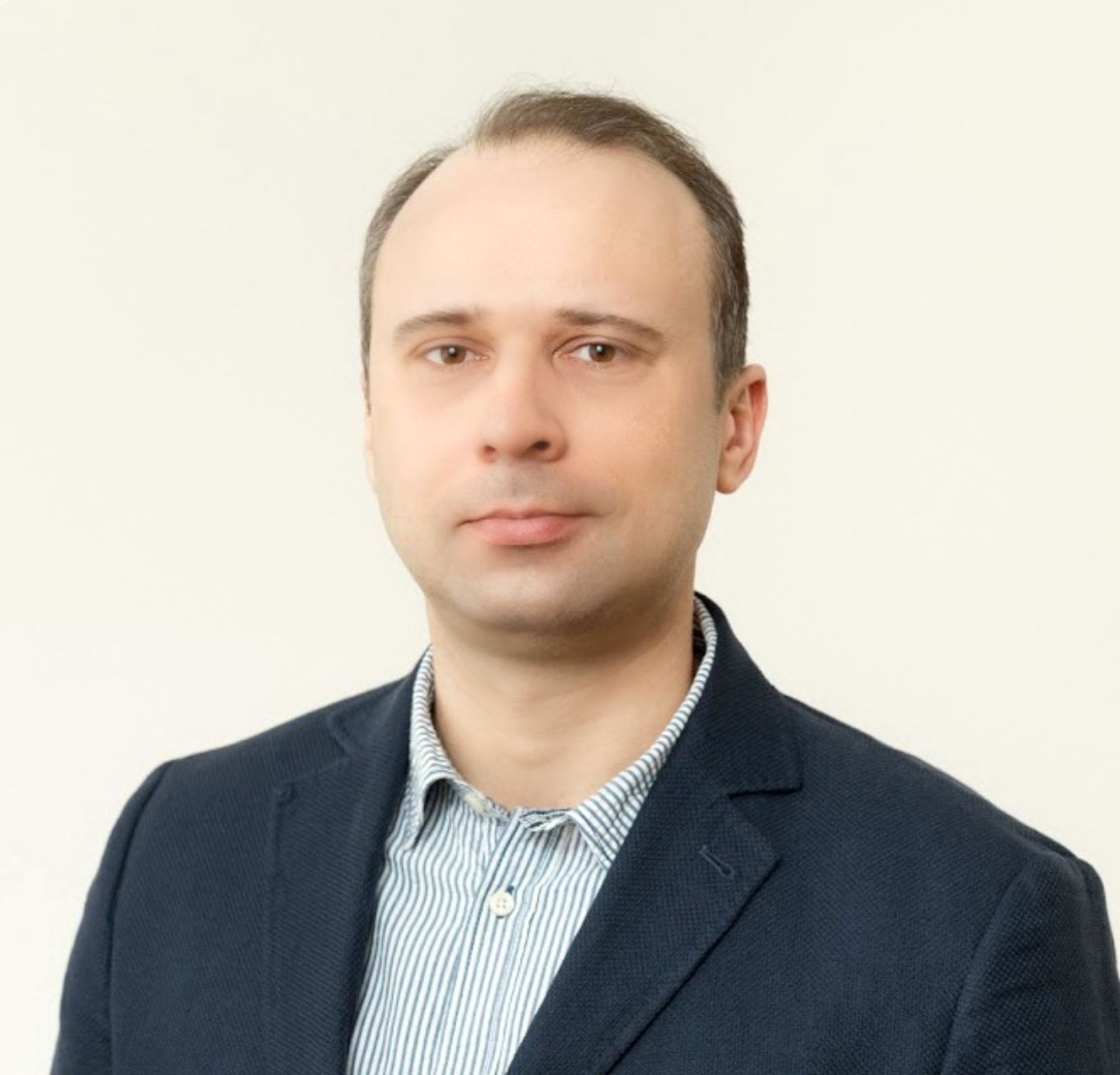
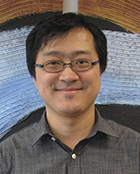
Zico Kolter is a Professor and Director of the Machine Learning Department at Carnegie Mellon University . He also serves on the OpenAI Board of Directors as chair of the safety and security committee, co-founded Gray Swan AI (an AI security company), and acts as a Chief Expert at Robert Bosch, LLC . Research Focus: AI safety and robustness, LLM security, data impact on models, implicit models, and adversarial defense. Teaching: Offers graduate courses in artificial intelligence and deep learning systems. His work investigates robustness in deep learning, constraints in optimization, and security in foundation models. Recent publications address adversarial compression, diffusion models, and prompt engineering. Notable Awards: DARPA Young Faculty Award Sloan Fellowship Best Paper at NeurIPS, ICML (honorable mention), AISTATS (test of time), IJCAI, KDD, and PESGM.
Prof. Dan Raviv is a faculty member at The Iby and Aladar Fleischman Faculty of Engineering , Tel Aviv University, within the School of Electrical Engineering . With a strong background in computer science, mathematics, and geometric machine learning, he leads research at the intersection of data-driven and model-driven methodologies. Postdoctoral Research: Massachusetts Institute of Technology (MIT) Doctorate, Master's, and Bachelor's: Technion, Israel Institute of Technology His research focuses on machine learning with geometric foundations , particularly addressing structured data in computer vision, medical imaging, and robotics. Key contributions include developing affine/scale-invariant metrics and locally rigid averaging techniques for non-rigid observations. Recent publications highlight his work in geometric data analysis and non-rigid shape processing , applying illumination invariants in video gesture recognition and advancing metrics for volumetric datasets. These reflect his commitment to overcoming machine learning limitations through structural exploitation.
Florian De Vuyst is a Full Professor at the Department of Computational Engineering, University of Technology of Compiègne (UTC), where he conducts research at the Biomechanical Bioengineering Laboratory (BMBI UMR 7338). Previously affiliated with the Applied Mathematics Laboratory (LMAC), his work spans Fluid-Structure Interaction (FSI) , Scientific Machine Learning , GPU Computing , and Reduced-Order Modeling (ROM) . His research focuses on multimaterial flows , automotive crash dynamics , and bioengineering applications like microcapsule deformation in Stokes flows. His recent publications highlight machine learning integration with FSI simulations and GPU-accelerated solvers for compressible flows. Collaborations include Renault , Michelin , and ENS Paris-Saclay on projects like tsunami coastal impact modeling (DIGISCOPE EquipEx) and vehicle drag estimation . He has supervised 15+ PhD students, including Azzedine Tiba (non-intrusive ROM) and Vincent Mahy (multimaterial methods). Scientific Awards: Recipient of the Best Applied Paper Award at EGC 2008 Grants & Collaborations: Involved in CNRS Editions' interdisciplinary volume on tsunamis, ERCOFTAC symposia, and industrial partnerships
Erik J. Bekkers is an Associate Professor in Geometric Deep Learning at the University of Amsterdam, affiliated with the Machine Learning Lab (AMLab). Previously, he served as a post-doctoral researcher in applied differential geometry at the Technical University Eindhoven (TU/e) Department of Applied Mathematics, following completion of his PhD cum laude in Biomedical Engineering at TU/e. His educational background includes: PhD in Biomedical Engineering, Technical University Eindhoven (cum laude) Dr. Bekkers' research centers on geometric deep learning principles where data representation preserves physical-world geometry and symmetries. He develops group-equivariant architectures and explores structure-preserving learning through equivariant operators, dynamical systems on manifolds, and geometric algebra. His work bridges theoretical frameworks with applications in medical imaging, computational physics, robotics, and generative modeling of non-Euclidean data. His scientific recognitions include: MICCAI Young Scientist Award 2018 Philips Impact Award (MIDL 2018) NWO VENI grant: "Context-Aware Artificial Intelligence in Medical Image Analysis" NWO VIDI grant: "Neural Ideograms: Shaping AI with Geometry-Grounded Learning" As principal investigator of NWO grants, he leads research on geometry-grounded representation learning while co-organizing the ICML'24 GRaM workshop to advance community collaboration. His GitHub repositories demonstrate active software development in equivariant neural networks. At the AMLab, his team investigates geometric latent variable models, physics-informed neural networks, and methods for generating geometric objects on manifolds, maintaining strong ties to both theoretical foundations and real-world applications.
Dr Hossein Anisi is a Reader (equivalent to Associate Professor) and Head of the Internet of Everything (IoE) Laboratory in the School of Computer Science and Electronic Engineering at the University of Essex, UK. Recognised as the university’s Best Academic 2023 and recipient of the Best Research Impact in Enterprise and Innovation 2023 , he drives interdisciplinary research that bridges IoT, cybersecurity, energy-efficient communications and real-world applications spanning agriculture, transport and healthcare. Education & Career Path Reader (permanent faculty), University of Essex, UK (current) Senior Research Associate, University of East Anglia, UK Senior Lecturer, University of Malaya, Malaysia — awarded Excellent Service Award Research Interests Dr Anisi’s work centres on secure, resilient and energy-efficient architectures for the Internet of Things . His group designs smart sensors, UAVs, edge-cloud frameworks and AI-driven protocols for: Smart agriculture & environmental monitoring Intelligent transportation & autonomous vehicles Healthcare IoT & body-area networks 5G/6G networks & cyber-physical security Publications & Scholarly Impact With over 150 peer-reviewed articles in top-tier IEEE journals, his recent output (2023-2025) demonstrates a clear trajectory toward AI-enhanced security , 6G URLLC , post-quantum federated learning and precision agriculture . Editorial roles include Associate Editor for IEEE Transactions on Cybernetics , IEEE Transactions on Intelligent Transportation Systems and several other flagship periodicals. Scientific Awards & Recognition Best Academic 2023 – University of Essex KTP Celebration of Innovation Best Research Impact in Enterprise & Innovation 2023 – University of Essex Celebrating Excellence Awards Excellent Service Award – University of Malaya Medals for innovation at international expositions Funding & Enterprise As Principal or Co-Investigator, Dr Anisi has secured numerous Innovate UK, Royal Society and institutional grants exceeding £1 million since 2018, translating research into commercial IoT and AI systems for retail, horticulture and smart-building sectors. Teaching & Doctoral Supervision He currently teaches Mathematics for Computing and Team Project Challenge , and supervises three ongoing PhD students—Shafiq Ahmed, Aryan Morteza and Hassan Moin—while having recently graduated Han Yang, Kabo Elliot Pule and Sumit Kumar Singh. Laboratory & Collaboration: Dr Anisi directs the Internet of Everything (IoE) Laboratory , fostering industry partnerships across the UK and maintaining active memberships in IEEE, ACM, the Royal Society and the Higher Education Academy.
Viktor Medvedev is an Associate Professor and Senior Researcher at Vilnius University's Institute of Data Science and Digital Technologies, where he serves as Project Lead Researcher in the Blockchain and Quantum Technologies Group. His work focuses on the intersection of machine learning, data visualization, and cybersecurity applications. Dr. Medvedev earned his Doctor of Science in Computer Science Engineering in 2007 from Vilnius Gediminas Technical University and the Institute of Mathematics and Informatics. His doctoral research centered on 'Research on the application of feedforward neural networks for multidimensional data visualization,' establishing the foundation for his continued work in data analysis and visualization techniques. His research interests span machine learning , deep learning , data visualization , and cybersecurity applications . Specifically, he has made significant contributions to keystroke dynamics authentication , behavioral biometrics , dimensionality reduction techniques , and medical data analysis . His work often bridges theoretical computer science with practical applications in security and healthcare domains. Dr. Medvedev's publication record demonstrates a consistent trajectory of research excellence, with recent work focusing on advanced authentication systems using deep learning, pancreatic cancer detection through machine learning, and innovative approaches to data visualization. His research shows a clear evolution from foundational work in neural networks for data visualization to contemporary applications in cybersecurity and medical diagnostics. ICAISC'06 - Best Presentation Award (The 8th International Conference on Artificial Intelligence and Soft Computing) ICANNGA 2007 - Best Young Researcher Paper Award in Neural Networks DAMSS 2021, 2022, 2023 - Best Poster Awards As a Project Lead Researcher in the Blockchain and Quantum Technologies Group, Dr. Medvedev oversees research initiatives that combine cutting-edge technologies with practical applications. His work in cybersecurity has particular relevance to critical infrastructure protection, where insider threat detection using behavioral biometrics represents a significant contribution to the field.
Lovro Šubelj is an Associate Professor at the University of Ljubljana, Faculty of Computer and Information Science , specializing in Network Science and Machine Learning with Graphs . His work bridges theoretical and applied network analysis, with contributions to community detection, graph convexity, and network simplification. Research focuses on graph algorithms for network abstraction Teaching: MSc/PhD courses on Network Science, BSc programming courses Collaborates with institutions like Leiden University and Imperial College London Research Interests: His primary work explores structural and dynamic properties of complex networks, including community detection via label propagation, convex skeletons for network simplification, and intermediacy metrics for citation analysis. Secondary interests span data mining, stream mining, and statistical network modeling. Publication Trends: Recent work emphasizes scalable network algorithms (2023-2025), graph embeddings (2021), and geometric network properties like convexity (2018-2019). Earlier projects (2012-2017) addressed citation network analysis, social network fraud detection, and database consistency evaluation. Teaching & Outreach: Provides educational materials on YouTube, including courses on network science and programming. Maintains open-access data/code repositories through KONECT, ICON, and GitHub.
Lizhen Lin is a Professor of Statistics in the Department of Mathematics at the University of Maryland. Her research bridges statistical theory, Bayesian methods, and machine learning through theoretical and applied work in statistics on manifolds, deep learning, and network analysis. University: University of Maryland Department: Mathematics Email: lizhen01@umd.edu Office: Kirwan 1107 Her research focuses on: Foundations of deep neural networks via statistical theory Bayesian modeling for infinite-dimensional and high-dimensional data Geometry and statistics for manifold-valued data Network analysis with covariates and topological structures Robust optimization and inference on non-Euclidean spaces Recent publications emphasize: Bayesian community detection and stochastic blockmodels Variational inference and posterior contraction Manifold-adaptive deep generative models High-dimensional change point detection Applications to microbiome networks and DNA topology Teaching includes courses on linear models (STAT 741) and statistical foundations of deep learning (STAT 818).
Professor A J Ganesh is a faculty member at the University of Bristol , holding the title of Professor of Applied Probability within the School of Mathematics, Statistical Science and is affiliated with the Probability, Analysis and Dynamics research group. He is also an active member of the Cabot Institute for the Environment , contributing to themes such as City Futures , Low Carbon Energy , and Natural Hazards and Disasters . Education B.Sc. – Indian Institute of Technology, Madras M.Sc. – (institution not specified) Ph.D. – Cornell University Research Interests Professor Ganesh’s work lies at the intersection of applied probability , stochastic networks , and network science . A recurring theme is understanding how randomness and local interactions give rise to global phenomena such as consensus, epidemics, or congestion. His investigations span: Consensus & Gossip Algorithms – analysing voter models and multi-agent bandits; Epidemic Processes & Rumour Spreading – quantifying thresholds, extinction times, and the impact of network topology; Random Graphs & Connectivity – soft geometric graphs, isolated nodes, and diameter questions; Queueing & Large Deviations – Cox/G/∞ queues, resource allocation, and delay-optimal scheduling; Cyber-Security & Intrusion Detection – leveraging variational autoencoders for anomaly detection; Game-Theoretic Resource Allocation – Pigouvian tolls, welfare optimality, and price of anarchy in parallel-server systems. Publication Trends Over the last decade Professor Ganesh has published extensively on collective decision-making (2025, 2024), machine-learning approaches to security (2023), and latency-sensitive communication (2022, 2019). Earlier work focused on epidemic thresholds , connectivity in random graphs , and large-deviations analysis of queues , demonstrating a consistent trajectory toward real-world applications of stochastic models. Scientific Awards & Recognition Author of the Springer Lecture Notes in Mathematics monograph Big Queues (2004) – a widely cited reference on large-deviations techniques in queueing theory. Supervision & Grants Professor Ganesh has 6 supervised works listed in institutional repositories, indicating ongoing Ph.D. or post-doctoral mentoring. While specific grant titles and amounts are not disclosed in the provided text, his sustained publication output and participation in EU and UK research networks (e.g., Horizon 2020, EPSRC) suggest active grant funding. Laboratories & Teams He collaborates closely with colleagues in the Cabot Institute for the Environment , applying probabilistic models to urban sustainability and disaster resilience. Cross-disciplinary partnerships include joint projects with engineers on connected and automated vehicles and with biologists on epidemic control strategies .
Chao Chen is an Assistant Professor in the Department of Biomedical Informatics at Stony Brook University, focusing on topological data analysis (TDA) and its applications in machine learning and biomedical imaging. His work bridges theoretical insights from persistent homology and discrete Morse theory with practical challenges in robust learning and graph neural networks. Interests: Machine Learning, Biomedical Informatics, TDA, Persistent Homology Publications: Published in major machine learning and medical imaging conferences like MICCAI, NeurIPS, and CVPR. Service: Area chair for MICCAI, AAAI, CVPR, and NeurIPS. His research emphasizes the geometric and topological structures of data to enhance model robustness and interpretability, particularly in digital pathology and cancer analysis. Recent work includes TopoTxR for breast cancer imaging and MERGE for gene expression prediction using hierarchical graph-based GNNs. Key trends in his articles include leveraging TDA for adversarial robustness, spatially aware models for histopathology, and security analysis of AI systems. His methodologies often integrate theoretical guarantees with real-world biomedical applications. Chao Chen serves as an area chair in top-tier AI conferences and contributes to advancing topological and robust machine learning paradigms in biomedical research.
Daniele Nardi is a Full Professor at Sapienza University of Rome, affiliated with the Faculty of Information Engineering, Computer Science, and Statistics, and the Department of Computer, Control, and Management Engineering "A. Ruberti". He has held this position since 2000 and previously served as a researcher (1988) and associate professor (1992) at the same institution. His academic journey began with a Laurea in Electronic Engineering from Politecnico di Torino (1981) and a Specialization in Control Systems Engineering from Sapienza (1984). Research interests include: Cognitive Robotics Robotic Soccer Emergency Response Robotics Assistive Robotics for Elderly Precision Agriculture Robotics Recent article trends focus on: Synthetic data generation for agricultural monitoring LLM-driven multi-agent planning systems Signal temporal logic applications in robotics Self-supervised learning techniques Virtual reality-based HRI evaluation Embodied AI and online grounding Scientific recognition includes: IJCAI Publisher's Prize 1991 Intelligenza Artificiale award 1993 RoboCup Mid-Size II Place 1998 AAMAS Best Robotic Demo 2008 ECCAI Fellow 2009 He leads the Cognitive Robot Teams laboratory and serves as President of the RoboCup Federation since 2011. As Presidente del Consiglio d'Area in Computer Engineering since 2004, he has shaped academic governance. His teaching includes Seminars in Artificial Intelligence and Robotics at the Master in AI and Robotics program, and Complements of Programming at the undergraduate level.
Martin Roth is a Postdoctoral Researcher in the Geometry Assurance & Robust Design research group at Chalmers University of Technology, working within the Product Development department under the School of Mechanics and Maritime Sciences. His research focuses on geometry assurance of products with mega-cast parts, collaborating with the automotive industry to optimize methods and tools for advanced variation simulation and geometry assurance of complex assemblies. Dr. Roth's primary research interests include: Product Design Geometry Assurance Tolerancing Optimization Simulation His recent scholarly output demonstrates a strong trend toward integrating advanced computational methods with industrial applications, particularly in developing holistic frameworks for tolerancing in product design and closing gaps in the digital thread using the Quality Information Framework standard. His work combines sampling-based tolerance-cost optimization techniques with practical manufacturing challenges, especially for mega-cast aluminum parts in automotive applications. Dr. Roth is actively involved in two major VINNOVA-funded research projects: Digital synchronization of geometry data for efficient value chains (DigiSync) (2024-2027) Geometrical robustness for mega casted aluminum part (GROMCAP) (2023-2026)
Magnus Karlsson is a Professor of Photonics at Chalmers University of Technology and serves as Deputy Dean of the Department of Microtechnology and Nanoscience (MC2), responsible for research and graduate education. He co-leads the fiber optics research group with Prof. Peter Andrekson and co-founded the Chalmers Center for Optical Communication (FORCE) in 2010 alongside Prof. Erik Agrell. Karlsson teaches courses in Wireless and Photonics System Engineering and Photonics and Lasers, and holds editorial leadership as Editor-in-Chief of the IEEE/Optica Journal of Lightwave Technology. His research centers on optical fiber communication systems with expertise in light propagation, polarization dynamics, and nonlinear optical effects. Current investigations focus on capacity-enhancing techniques including Voronoi constellation geometric shaping, silicon nitride integrated photonics for microwave applications, and machine learning-driven polarization sensing. His work bridges theoretical modeling of phase-noise channels with experimental validation of novel receiver architectures for deep-space communication through atmospheric turbulence. Recent publications reveal strong trends in overcoming nonlinear transmission limits through multidimensional modulation and MIMO processing for coupled-core fibers. His group pioneers integrated photonic solutions for high-frequency signal generation while advancing real-time network monitoring capabilities in operational fiber infrastructure. Key themes include power-efficient signaling, distributed sensing, and computational methods for channel compensation. Karlsson's leadership in the fiber optics group and FORCE drives collaborative research in next-generation optical networks. His editorial role and ECOC program committee membership position him as a key influencer in shaping global optical communication standards and disseminating cutting-edge research advancements.
Tito Pradhono serves as an Assistant Professor and Junior Researcher at the Future Robotics Organization under the Research Council, specializing in advanced robotics research with 34 publications and significant scholarly impact (884 Google Scholar citations, h-index 12). His work bridges hardware innovation and algorithmic development to solve critical challenges in robotic perception and interaction. His primary research focuses on tactile sensing systems and soft robotics, where he has pioneered novel sensor technologies including Halbach array-based robot skin (H-PME), interchangeable fingertip sensors (Fingertac), and low-cost proximity-force fusion systems ("Safe Skin"). These innovations enable enhanced human-robot interaction through precise force measurement, slip detection, and grasping stability prediction. His methodology consistently integrates machine learning—particularly spatio-temporal attention networks and ensemble learning—with physical sensor design to create practical, deployable solutions. Analysis of his 15 most recent publications reveals a clear trajectory toward multimodal perception systems (vision-touch fusion), geometric data augmentation techniques, and culturally contextual robotics (anime embodiment). His work demonstrates exceptional consistency in developing cost-effective, real-world applicable technologies while maintaining theoretical rigor in sensor fusion and deep learning architectures. He received the Integrated Doctoral Tuition Support Scholarship in 2015, which supported his foundational research. His scholarly impact is evidenced by sustained citation growth across Scopus (612 citations) and Google Scholar (884 citations) platforms. Dr. Pradhono's research is conducted within the Future Robotics Organization, which appears to focus on socially engaged robotics development including the darumato-3 social robot platform and culturally specific implementations like Wayang puppet theater robots with Gamelan music recognition. His work emphasizes participatory design and real-world deployment rather than purely theoretical exploration.
Ozgur S. Oguz is an Assistant Professor in the Department of Computer Engineering at Bilkent University, leading the Learning for Intelligent Robotic Agents (LiRA) Lab. His research focuses on developing algorithms for autonomous agents, emphasizing learning, reasoning, and planning capabilities in robotics and decision-making domains. Prior to joining Bilkent, he was a postdoctoral researcher at the Max Planck Institute for Intelligent Systems and Stuttgart University, and earned his PhD from TU Munich in Human-Robot Interaction (HRI). He holds degrees from UBC and Koç University. His research interests span AI, robotics, reinforcement learning, and robotic manipulation planning. Notable contributions include work on curriculum-based reinforcement learning, safe learning frameworks for dynamical systems, and hybrid planning algorithms for sequential manipulation tasks. He actively teaches courses such as Learning for Robotics (CS 449/549) and Artificial Intelligence (CS 461). Recent publications highlight advancements in diffusion-based curriculum learning, corrected experience replay methods, and neural field representations for articulated object manipulation. His work frequently appears in top venues like NeurIPS, ICRA, and IROS. He mentors graduate and undergraduate students in AI and robotics, with current opportunities for postdoctoral researchers. Key collaborations include projects with the Cluster of Excellence IntCDC and the LiRA Lab’s focus on interdisciplinary robotics research.