Michalis Vazirgiannis is a Professor at LIX, École Polytechnique (France) leading the Data Science and Mining (DaSciM) group. With academic backgrounds in Physics (Athens University), AI (Heriot-Watt University), and Informatics (Athens University), he has conducted research at Fraunhofer, Max Planck MPI, and INRIA/FUTURS while teaching at institutions across Greece, France, China, and Spain. His research spans Machine/Deep Learning for Graphs (GNNs, graph kernels, embeddings) Text Mining & NLP (Graph-of-Words, biomedical text analysis) Combinatorial Optimization for pandemic forecasting and energy systems Event/Anomaly Detection in time series and sensory data Industrial collaborations with Airbus, Google, Tencent, and BNP . He has supervised 29 completed PhD theses, published over 250 papers, and received prestigious awards including Marie Curie and Tencent Rhino-Bird Fellowships. His team leads the ANR-HELAS Chair (2020-2025) focusing on heterogeneous data deep learning.
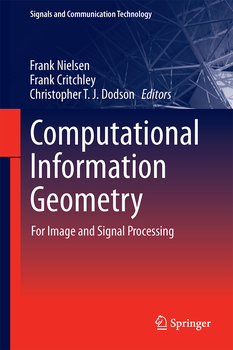
Frank NIELSEN is a Professor at École Polytechnique with expertise in information geometry, data science, and machine learning. He holds a PhD (1996) and HDR (2006) in computer science and has established himself as a leading researcher in geometric approaches to information science. His educational background includes a PhD in computer science (1996) followed by a Habilitation à Diriger des Recherches (HDR) in 2006, the highest academic qualification in France that qualifies one to supervise doctoral candidates. Dr. NIELSEN's research focuses on the Geometric Science of Information , where he develops theoretical frameworks for understanding data through geometric and information-theoretic lenses. His work bridges Computational information geometry Statistical manifold theory Bregman divergences and their applications Machine learning with geometric foundations High-dimensional data analysis He aims to address the challenge of inappropriate data representation in current Data Science by building a theory of Computational Information Geometry to enable Intrinsic Data Science with principled distances. His extensive publication record shows a clear trend toward developing geometric frameworks for understanding statistical divergences, with recent work focusing on Bregman geometry, Fisher-Rao metrics, and their applications in machine learning. His research spans theoretical developments in information geometry to practical implementations like the pyBregMan Python library, demonstrating both theoretical depth and practical relevance. Dr. NIELSEN has made significant contributions through his teaching and publications. He has taught courses at École Polytechnique including INF442, INF517, and INF591. His authored textbooks include Introduction to HPC with MPI for Data Science (2016), A Concise and Practical Introduction to Programming Algorithms in Java (2009), and Visual Computing: Geometry, Graphics, and Vision (2005). He has also edited influential volumes such as Computational Information Geometry for Image and Signal Processing (2016) and Geometric Theory of Information (2014). He actively organizes and participates in academic events, serving on program committees for major conferences including GSI (Geometric Science of Information), CVPR, and ICCV. His work has established him as a key figure in the growing field of geometric approaches to information science.
Carlos Antonio Andújar Gran is a faculty member at the Faculty of Informatics of Barcelona (FIB), Universitat Politècnica de Catalunya (UPC), where he is affiliated with the Department of Computer Science. He actively contributes to the academic community through teaching and supervising numerous student projects, particularly in advanced computing domains. His research interests center on the application of computer graphics, virtual reality, and artificial intelligence to real-world problems. Key areas include the 3D visualization and virtual reconstruction of cultural heritage, physically accurate rendering, intelligent segmentation of images, and the use of machine learning and reinforcement learning in sports analytics, particularly for padel. His work bridges technical innovation with practical applications in cultural preservation and sports technology. The recent publications under his supervision reflect a strong trend in digital cultural heritage, with multiple projects focused on tools for virtual visits, reconstruction, lighting simulation, and web-based 3D visualization of heritage models. Another significant trend is the application of AI to padel, including ball and player tracking, virtual coaching, and training virtual agents using reinforcement learning. These projects demonstrate a consistent focus on computer vision, interactive systems, and data-driven modeling. Carlos Antonio Andújar Gran has supervised a substantial number of students, guiding both undergraduate and master's theses. While specific grant information is not available in the text, his sustained supervision across many years suggests active involvement in research projects. He plays a key role in mentoring the next generation of computer scientists at UPC. His work is closely tied to the Department of Computer Science at FIB, where he collaborates with other faculty members such as Imanol Muñoz Pandiella, Núria Pelechano Gómez, and Mohammadreza Javadiha on various student projects, indicating a collaborative research environment focused on graphics, AI, and VR applications.
Juan Antonio Corrales Ramón is a Research Fellow at the University of Santiago de Compostela's CiTIUS laboratory under the prestigious Beatriz Galindo program. Previously, he served as an Associate Professor at Sigma Clermont Engineering School (2014-2020) and conducted research at UPMC/ISIR in France. His academic credentials include a PhD in Automatic Control and Robotics (2011) and a Computer Engineering degree (2005) from the University of Alicante. Dr. Corrales' research centers on robotics with specialized interests in: Human-robot physical interaction for industrial applications Deformable object manipulation and control theory Tactile sensing technologies and sensor fusion Robotic grasping and in-hand manipulation Multi-robot coordination systems His recent publications demonstrate strong focus on adaptive control systems for deformable objects, tactile sensor development, and human-robot collaboration frameworks. He has participated in significant EU projects including: H2020 SoftManBot (soft material handling) H2020 Bots2Rec (recycling robotics) FUI Aerostrip (aerospace applications) Sudoe Commandia (service robotics) Honors include competitive fellowships: FPU Program Fellowship (Spanish Ministry of Education) Beatriz Galindo Program Fellowship (research excellence) At CiTIUS laboratory, he contributes to advanced robotics research with applications in industrial automation, healthcare, and agricultural robotics.
Álvaro Heredia Lidón serves as an Associate Professor in the Department of Engineering at Universitat Ramon Llull, specializing in Human-Environment Research with a focus on advanced computational methods for medical applications. His academic position bridges engineering, computer science, and clinical research, with particular emphasis on developing accessible diagnostic tools through innovative image analysis techniques. Dr. Heredia Lidón's research centers on the development and application of computer vision and deep learning methodologies for 3D facial biomarker analysis in medical diagnostics. His work addresses critical challenges in rare genetic disorders, particularly Turner syndrome and Down syndrome, through advanced facial phenotyping techniques. He has pioneered approaches for automated 3D landmarking of anatomical structures, orientation detection of head reconstructions, and the extraction of diagnostic biomarkers from various imaging modalities including MRI and smartphone-based 3D reconstructions. His publication portfolio reveals a strong trend toward creating low-cost, accessible diagnostic solutions that can be deployed in resource-limited settings. The research demonstrates significant interdisciplinary collaboration between engineering, genetics, and clinical medicine, with particular focus on translating computational advances into practical clinical applications. His work on multi-view consensus networks and geometric morphometric methodologies represents cutting-edge innovation in the field of medical image analysis. Dr. Heredia Lidón has secured substantial research funding, including serving as Principal Investigator for the FI-2022 Joan Oró grant for predoctoral researcher training (2022-2025) from the Catalan Department of Research and Universities. He is actively involved in multiple collaborative research projects, most notably the BeNeXT project which uses Turner syndrome as a model for developing biomarker-enhanced diagnostic tools for rare disorders. His laboratory work focuses on the Human-Environment Research group at Universitat Ramon Llull, where he collaborates with an extensive interdisciplinary team including medical researchers, geneticists, and computer scientists. This collaborative environment fosters innovation at the intersection of engineering and healthcare, with particular emphasis on making advanced diagnostic capabilities more widely accessible through cost-effective imaging solutions and automated analysis pipelines.
Dr. Anna Puig Puig is a Professor at the University of Barcelona, affiliated with the Faculty of Mathematics and Computer Science within the Department of Mathematics and Computer Science. Her research focuses on gamification in education, 3D point cloud processing, data visualization, and biomedical applications of computer science. Key research areas include: Gamification and serious games for education 3D point cloud segmentation and analysis Machine learning applications in geospatial and biomedical domains Interactive visualization systems Virtual reality for archaeological and educational purposes Notable projects include: INDOMAIN - Pedagogical Module in Intelligent Tutoring Systems HORIZON 2020 European Cancer Image Platform GRAPES - Machine Learning for Shape Processing CLiC Research Group in Language and Computing Digital Reconstruction of Neolithic Social Life
Maks Ovsjanikov is Professor of Computer Science at École Polytechnique and Visiting Research Scientist at Google DeepMind. Leading the GeomeriX team, his ERC-funded research develops deep learning methods for 3D shape analysis with applications in protein modeling and computer vision. Recent breakthroughs include CrAI for antibody detection in cryo-EM data and surface-based protein representations. His group pioneers neural approaches for non-rigid shape matching and geometric deep learning fundamentals. Collaborations span structural biology, with work featured at top venues including SIGGRAPH, CVPR, and Nature journals.
Dr. Marcos Loureiro Garcia is an Assistant Professor at the University of Vigo, affiliated with the Department of Mathematics within the Faculty of Education and Sport Sciences. He obtained his PhD in 2020 with a thesis on "Modeling and numerical approach of aortic valve stages: healthy, stenotic and transcatheter replaced (TAVI)". His career demonstrates interdisciplinary expertise combining mathematics, cardiology, and educational innovation. Doctorate in Mathematics Applied to Cardiology (2020) Master's in Industrial Mathematics Master's in Teacher Training Bachelor's Degree in Mathematics His research focuses on applying mathematical methods to cardiology, particularly for simulating aortic valve pathologies and transcatheter aortic valve implantation (TAVI) procedures. He has developed biomechanical models of aortic valves, investigated TAVI outcomes through numerical simulation, and explored educational technology applications for mathematics teaching. His academic work spans both computational cardiology and mathematics education. He has published on topics including deep learning for TAVI characterization, digital valve twins, and augmented reality applications in teacher training. His research addresses clinical challenges through mathematical modeling while contributing to innovative teaching methodologies. Scientific achievements include: Best Poster Prize in Numerical Simulation at ESC Congress (2018) Six-Year Research Career Recognition Grants from Ministry of Science, Xunta de Galicia, GAIN He collaborates with leading institutions like the Czech Technical University in Prague and the Center for Computational Medicine in Cardiology (Lugano), developed his doctoral research at the Galicia Sur Health Research Institute (IISGS), and currently participates in the RITME research group focused on educational innovation and mathematical modeling.
ABDERRAHIM FICHOUCHE, MOHAMED is an Associate Professor in the Department of Systems Engineering and Automation at the Carlos III University of Madrid (UC3M), where he also serves as Deputy Director of the Doctorate. He is affiliated with the Robotics Lab research group and the Pedro Juan de Lastanosa Institute of Technology Development and Innovation. His academic and research profile spans robotics, control systems, biomedical engineering, and power systems. His research interests include robotics , automation , control systems , biomedical signal processing , computer vision , and renewable energy integration . His work focuses on intelligent robotic systems, rehabilitation robotics, EEG-based brain-computer interfaces, fault detection in power systems, and advanced control strategies for industrial and autonomous systems. The recent publications reflect a strong trend in interdisciplinary research, combining machine learning with signal processing for applications in medical diagnostics , robotic control , and smart grid monitoring . His work increasingly integrates deep learning , wavelet analysis , and adaptive control across domains. He has led major research projects such as: HANDLE (EU and national funding): Focused on dexterous in-hand manipulation. SARAH: Enhancing robot autonomy with artificial hands. PAPREC: Automatic grasping of disordered parts. PROSAVE: Eco-efficient aircraft systems. GRAND-PA: Assistive technologies for the elderly. He currently participates in ongoing projects including: SEGVAUTO5G-CM (2025–2028): Future mobility innovation. RoboCity2030-DIH-CM (2019–2023): Madrid Robotics Digital Innovation Hub. HYPER: Neuroprosthetic and neurorobotic devices for rehabilitation. He has supervised several theses on topics such as transmission line fault detection , autonomous decision-making in robots , and 3D perception . His research is conducted primarily within the Robotics Lab at UC3M, a multidisciplinary team focusing on advanced robotic systems for industrial, medical, and service applications.
Josefa Gómez Pérez is a Professor in the Department of Computer Science at Universidad de Alcalá. She holds a PhD in Computer Science from the same institution (2011), focusing on CAD tools for electromagnetic analysis of complex structures under supervision of Dr. Manuel Felipe Cátedra Pérez and Dr. Iván González Diego. Her research spans multiple areas including antenna design optimization, numerical methods for engineering problems, gamification in education, medical image analysis, and computer vision applications. She is affiliated with research groups such as the Climate Physics Group (CPG), Group of Advanced Numerical Techniques (GTNA), and TIFyC (Information Technologies for Training and Knowledge). Her work frequently integrates bio-inspired algorithms and web-based tools for solving engineering challenges. Key areas of contribution include developing simulation tools for radio propagation using OpenStreetMap data, optimizing antenna positioning with genetic algorithms, and enhancing educational engagement through gamified platforms. She has also explored interdisciplinary topics like class imbalance mitigation in medical AI and gender perspectives in engineering career choices. Josefa has authored numerous publications in top venues, with recent focus on AI-human interaction, 3D reconstruction techniques, and educational technology innovations. Notable tools she has developed include the NewFasant Suite, DSEXAMS automated questionnaire system, and LearningRlab educational package.
Estefania Peña is a Researcher at the University of Zaragoza, specializing in computational biomechanics and vascular tissue modeling. Her work focuses on the biomechanical analysis of cardiovascular systems, atherosclerosis progression, and medical device modeling. She has contributed extensively to understanding the mechanical properties of vascular tissues and their implications in diseases such as abdominal aortic aneurysms and coronary artery disorders. Her research integrates experimental and numerical methods, including finite element analysis and computational fluid dynamics (CFD). She co-authored studies on the vulnerability of atherosclerotic plaques, the impact of mechanical properties on aneurysm outcomes, and the development of biomimetic myocardial tissues using advanced fabrication techniques. Her work bridges computational modeling with clinical applications, emphasizing the translation of biomechanical insights into medical practice. Key research areas include: Biomechanics of vascular tissues Computational modeling of atherosclerosis Medical device design and evaluation Cardiac tissue engineering Her recent articles (2025–2023) explore topics such as aneurysm mechanics, myocardium modeling, and the integration of machine learning in cardiovascular research. She collaborates widely, with contributions to international journals like Frontiers in Bioengineering and Biotechnology and Biomechanics and Modeling in Mechanobiology .
Riccardo Marin is a Postdoctoral Researcher at the Technical University of Munich (TUM) within the Computer Vision Group. His research focuses on Spectral Shape Analysis, Geometric Deep Learning, and 3D Human Modeling. He holds affiliations with ELLIS Society and is an alumni of the Alexander von Humboldt Foundation and Marie Skłodowska-Curie Actions. Marin's work bridges computational geometry and deep learning, addressing challenges in 3D human registration (NICP), avatar creation (Human-3Diffusion), and neural surface modeling (NSF). He has contributed to open-source tools for spectral shape analysis and maintains active GitHub repositories showcasing his research implementations. His research interests span 3D reconstruction, neural fields, and implicit representations, with applications in virtual humans and human-object interaction analysis. Marin's recent work emphasizes scalable registration pipelines and diffusion models for 3D generation. Awards: ELLIS Member, Alexander von Humboldt Alumni, Marie Skłodowska-Curie Fellow Key Contributions: NICP, Human-3Diffusion, NSF framework Education: PhD background (implied from postdoc status), involvement in a Spectral Shape Analysis course at University of Verona
Dr. Onofre Martorell Nadal is an Assistant Professor in the Department of Applied Mathematics at the School of Mathematical Sciences and Computer Science, University of the Balearic Islands (UIB). He earned his PhD in 2022 from UIB's Information and Communication Technologies program, supported by an FPI-CAIB predoctoral fellowship. His research focuses on computer vision, digital image processing, and mathematical analysis, particularly in detecting geometric structures in images and image registration techniques. Education: BSc in Mathematics (2016), University of the Balearic Islands MSc in Computer Vision (2017), Autonomous University of Barcelona Research Interests: He specializes in image reconstruction for inverse problems and is a member of UIB's Image Processing and Mathematical Analysis (TAMI) research group. His work includes collaborations with the Computer Vision group at the University of Siegen (Germany). Teaching: Currently teaches Mathematics II - Calculus (Computer Science degree) and Software Laboratory and Problems I (Mathematics degree). Previously taught Linear Algebra II and optimization techniques for deep learning at the master's level. Scientific Awards: FPI-CAIB Predoctoral Fellowship for PhD research Labs & Teams: Active in MIA (Mathematics, Images and Learning) research group and TAMI (Image Processing and Mathematical Analysis) at UIB, focusing on mathematical models for image restoration.
Xosé Ramón Fernández Vidal is a Professor at the University of Santiago de Compostela, affiliated with the Department of Applied Physics within the Higher Polytechnic School of Engineering. His research focuses on Computer Vision, Image Processing, and Machine Learning, with applications in robotics, medical imaging, and environmental analysis. He holds a Doctorate from the same university (1996), specializing in geometric recognition methodologies. His work bridges computational models of visual attention and practical systems like UAV navigation, wireframe modeling for 3D reconstruction, and synthetic image generation for AI training. He is part of the Artificial Vision group at the Center for Research in Intelligent Technologies (CITIUS). Key research themes include visual saliency modeling, robust feature matching in low-textured environments, and algorithmic approaches to scene recognition. His contributions span over 40 publications since 1997, emphasizing interdisciplinary applications such as flour quality assessment via neural networks and environmental variable analysis in agricultural settings. While no formal awards are listed, his sustained output reflects impactful contributions to computational vision systems. His current projects involve developing biologically inspired vision systems (e.g., BIVSEE) and advancing datasets like Sid4vam for attention modeling. He collaborates with industry and academic partners in robotics, medical imaging, and environmental monitoring. No doctoral students are explicitly listed, though his research groups likely involve postgraduate researchers. His address is in Compostela, Galicia, Spain.
Jose Rafael Magdalena Benedicto is an Associate Professor in the Department of Electronic Engineering at the School of Engineering, University of Valencia, Spain. He is a core member of the Intelligent Data Analysis Laboratory (IDAL), where he leads research in machine learning, biomedical signal processing, and data science applications in health and industry. Doctorate: Universitat de València (2000) His research interests span machine learning , intelligent data analysis , biomedical engineering , neurocognitive disorders in metabolic and psychiatric diseases , algebraic geometry , and quantum machine learning . His work bridges theoretical advances in symbolic computation and applied AI with real-world problems in medicine and industrial systems. Recent publications show a strong trend in applying machine learning to anomaly detection in enterprise systems, asymptotic analysis of algebraic curves and surfaces, and identifying inflammatory and metabolic biomarkers for cognitive impairment in diabetes and psychiatric disorders. He also explores multimodal video analysis for public safety and quantum reinforcement learning. While no scientific awards are listed in the provided text, his extensive publication record and leadership in research projects indicate significant scholarly contributions. He has supervised doctoral students, including Dr. Juan Francisco Guerrero Martínez and Dr. Javier Calpe Maravilla. His research is supported by ongoing projects in intelligent data analysis, though specific grants are not detailed. He contributes to educational innovation, having developed tools like BiomedChallenge to enhance data science learning. He is actively involved in the Intelligent Data Analysis Laboratory (IDAL) , which focuses on developing and applying advanced data analysis techniques to real-life applications in biomedicine, education, and industry.