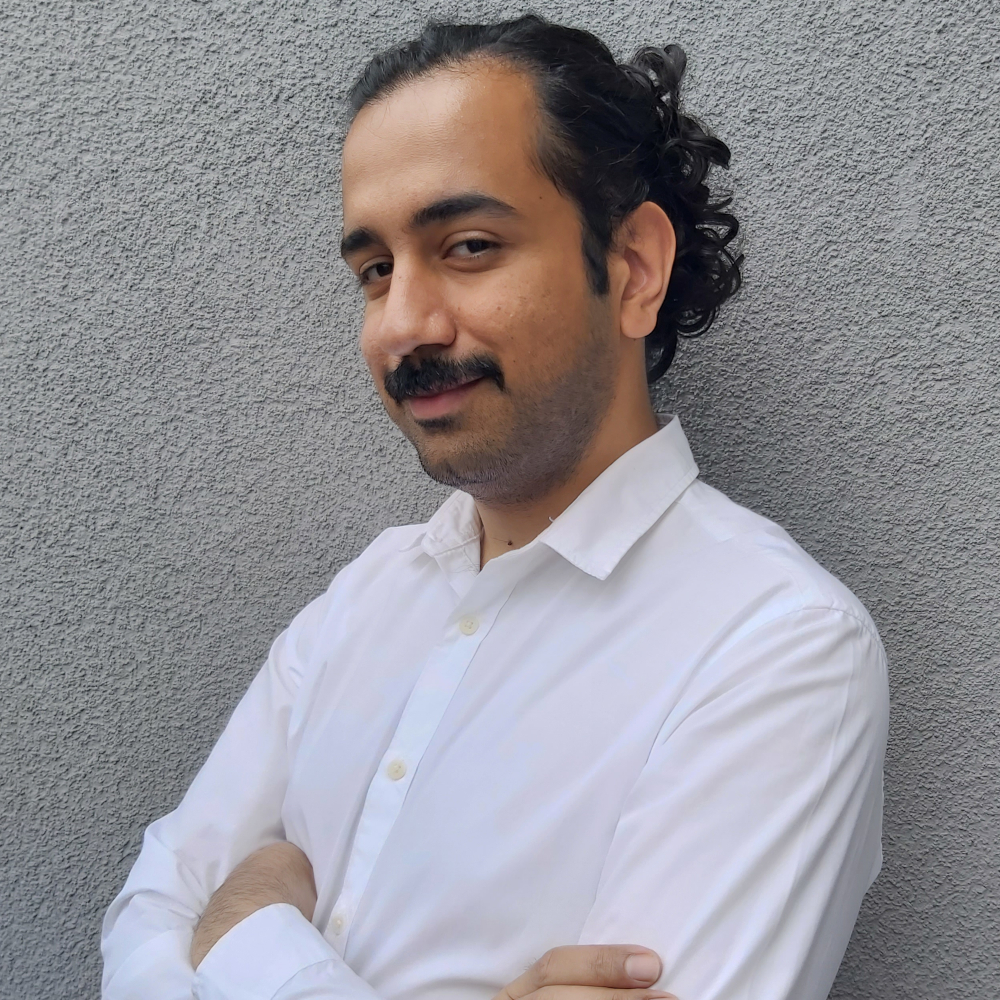
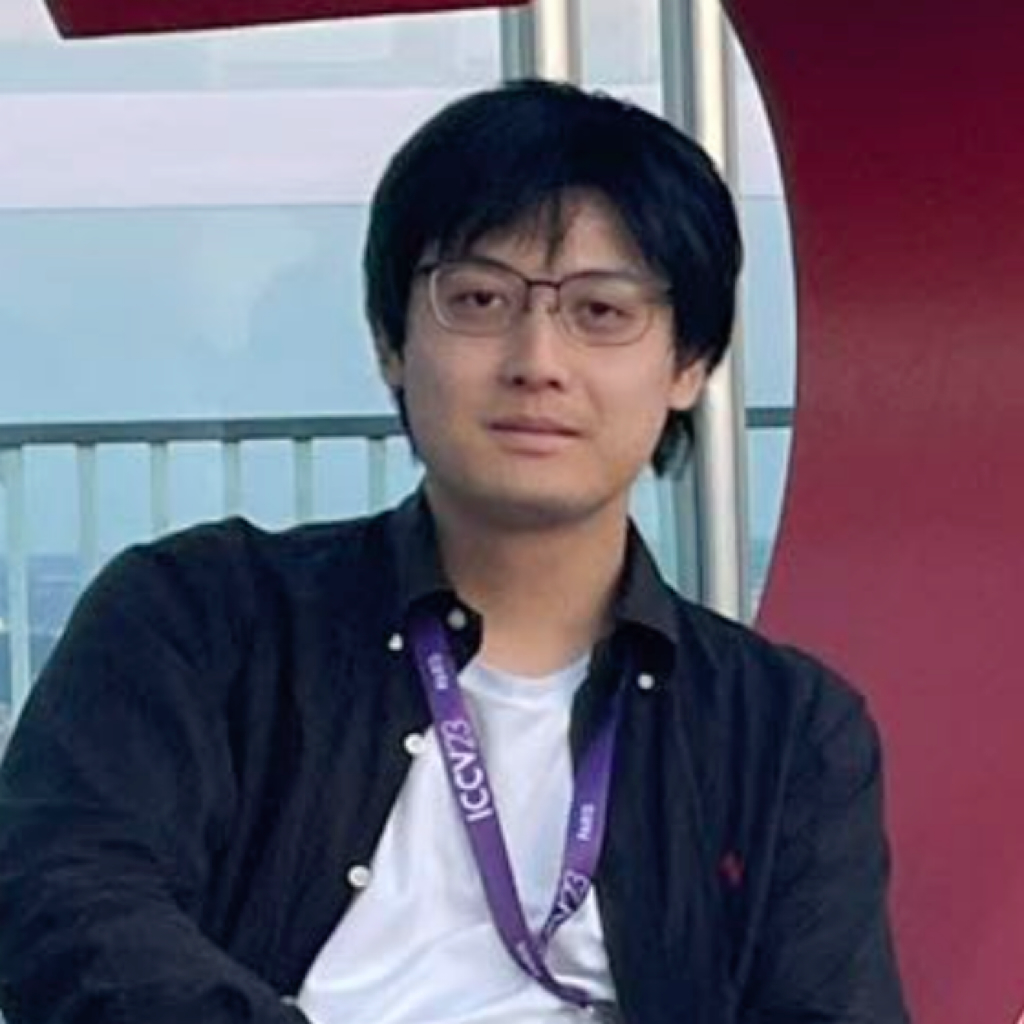
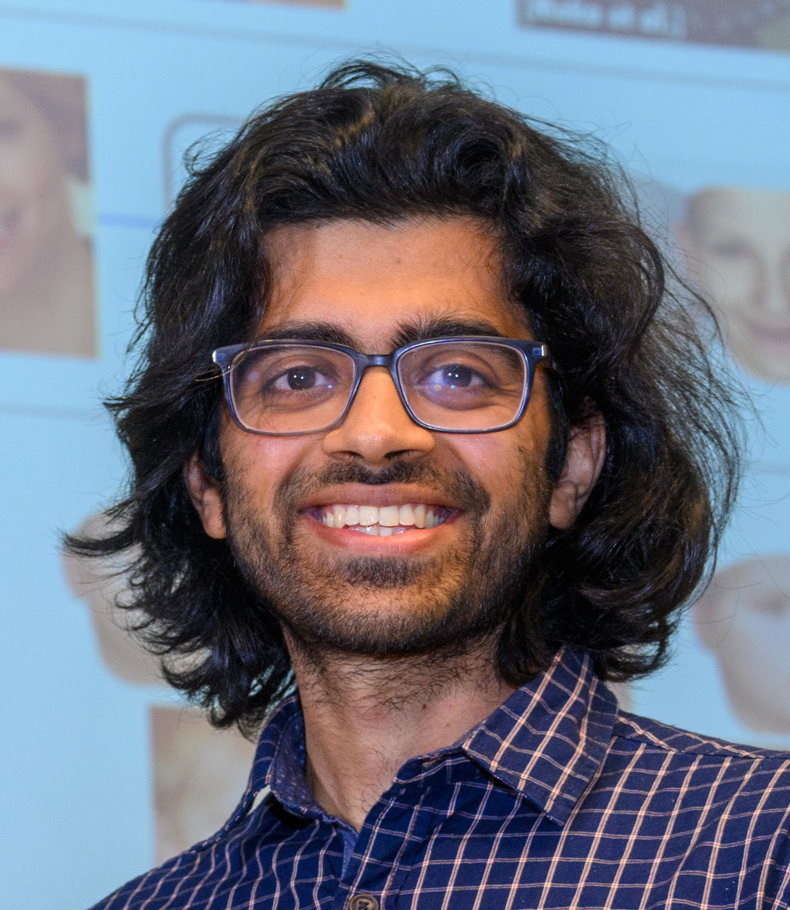
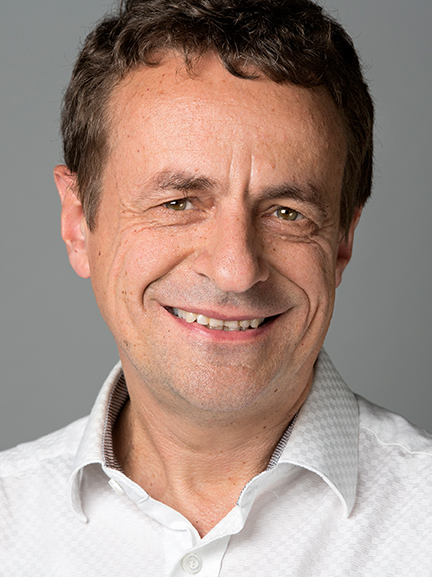
Aman Saxena is a researcher at the Department of Computer Science in the TUM School of Computation, Information and Technology at Technical University of Munich. His work focuses on geometric/categorical deep learning, robust machine learning, and quantum machine learning. Education: M.Sc. Computational Sciences and Engineering (2019-2023) Location: Boltzmannstr. 3, 85748 Garching b. Munich, Germany (Room 00.11.062) Research Interests: Geometric/Categorical Deep Learning Robust Machine Learning Quantum Machine Learning Bayesian Learning Efficient Machine Learning Code Analysis Recent Publications: Certifiably Robust Encoding Schemes (IEEE International Conference on Quantum Computing and Engineering - QCE 2024) Discrete Randomized Smoothing Meets Quantum Computing (IEEE International Conference on Quantum Computing and Engineering - QCE 2024)
Dr. Antonio Ortiz is a Researcher at the University of Bonn, affiliated with the Life and Medical Sciences Institute (LIMES) and the IRU Mathematics and Life Sciences group. He works under the supervision of Professors Alexander Effland and Jan Hasenauer. His research focuses on Computer Vision in Medical Imaging and Machine Learning applications. He holds a Ph.D. in Electric and Electronics Engineering from Cinvestav, Mexico (2023), a Master's in Computer Science from Cicese, Mexico (2019), and a Bachelor's in Mechatronic Engineering (2017). His research integrates Bayesian methods, deep learning, and optical flow techniques for cardiac MRI segmentation, visual-inertial SLAM systems, and 3D shape measurement. Recent work emphasizes adaptive algorithms for medical imaging and robotics applications. Publications span medical imaging, robotics, and materials science, with a focus on algorithmic innovation and interdisciplinary applications. No scientific awards are explicitly mentioned, but his work demonstrates strong academic contributions. His advising activities and grants are not detailed in the provided text. He collaborates within the Effland Lab and IRT Mathematics and Life Sciences team.
Iman Nematollahi is a PostDoc in Robot Learning at the University of Freiburg under Prof. Dr. Abhinav Valada, having completed his PhD under Prof. Dr. Wolfram Burgard. He holds a MSc in Embedded Systems from the University of Freiburg and a BSc in Electrical Engineering from Shahid Beheshti University. His research focuses on robot learning, world models, and reinforcement learning, particularly in enabling robots to understand physics through world models and adapt skills in unstructured environments. Education: PostDoc in Robot Learning, University of Freiburg (2025–Present) PhD in Robot Learning, University of Freiburg (2019–2024) MSc in Embedded Systems, University of Freiburg (2015–2018) BSc in Electrical Engineering, Shahid Beheshti University (2010–2015) Research Interests: Robot manipulation, world models, reinforcement learning, computer vision, and self-supervised learning. His work emphasizes intuitive physics understanding, skill generalization, and sample-efficient policy improvement. Key Articles: Recent work includes LUMOS (language-conditioned imitation learning), Bayesian optimization for policy refinement, and 3D video prediction (T3VIP). These contributions bridge theory and real-world robotic applications, emphasizing long-horizon tasks and cross-environment adaptation. Awards & Grants: No explicit awards mentioned. His research has been supported through projects like OML (Organic Machine Learning). Teaching: Taught Deep Learning Lab (2020–2022) and Introduction to Mobile Robotics (2019).
Currently a Research Fellow at Harvard University & MIT , Fangneng Zhan specializes in Neural Rendering and Generative AI . His research focuses on developing evolutive rendering frameworks, 3D-aware generative models, and multimodal synthesis techniques. Previously, he was a postdoctoral researcher at the Max Planck Institute for Informatics under Prof. Christian Theobalt. He earned his Ph.D. in Computer Science & Engineering from Nanyang Technological University, Singapore and a Bachelor's in Communication Engineering from the University of Electronic Science and Technology of China . His work spans 3D reconstruction, robotics applications , and lighting estimation , with significant contributions to SIGGRAPH , NeurIPS , and CVPR conferences. Recent research highlights include evolutive gauge transformations for neural fields, generalizable 3D style transfer via Gaussian splatting, and multimodal synthesis frameworks leveraging pre-trained models like CLIP and Stable Diffusion. He has co-authored Top50 Popular Paper in TPAMI 2023 and organized workshops at CVPR 2024 on generative models. Scientific Awards: Top50 Popular Paper, IEEE Transactions on Pattern Analysis and Machine Intelligence (TPAMI) 2023 Collaborative Network: Mentored students at institutions like Harvard, NTU, and ETH Zurich. His projects include datasets for lighting estimation and real-time scene text detection systems.
Johannes Maly is an Assistant Professor at the Bavarian AI Chair for Mathematical Foundations of Artificial Intelligence at LMU Munich. He previously held postdoctoral positions at Catholic University of Eichstaett-Ingolstadt and RWTH Aachen University, and completed his PhD at TUM Munich under Prof. Massimo Fornasier. PhD in Mathematics (2019, TUM Munich) M.Sc. in Mathematics (2015, TUM Munich) B.Sc. in Mathematics (2013, TUM Munich) His research focuses on mathematical data science and machine learning, specifically addressing: Robust covariance estimation under quantization Neural network approximation properties Implicit bias in gradient descent training Multi-structured signal recovery Quantization effects in deep learning and compressed sensing His recent publications analyze dithered quantization in covariance estimation, implicit regularization in overparameterized models, and multi-structured data recovery. He applies mathematical rigor to practical challenges in wireless communications (e.g., MIMO systems) and neural network training. Scientific recognition includes: relAI Fellow MCML Associate He supervises code/toolbox development for reproducibility and teaches graduate courses in convex optimization, high-dimensional probability, and mathematical data science. His work bridges theoretical mathematics and applied signal processing.
Ayush Tewari is an Assistant Professor at the University of Cambridge. Previously, he was a postdoctoral researcher at MIT CSAIL under Bill Freeman, Josh Tenenbaum, and Vincent Sitzmann, and completed his Ph.D. at the Max Planck Institute for Informatics under Christian Theobalt. His research focuses on visual perception, developing methods to infer 3D structured representations from images and videos, aiming to bridge the gap between human perceptual capabilities and machine learning systems. Key research interests include neural rendering, inverse rendering, 3D reconstruction, and generative models. Notable contributions include advancements in Neural Radiance Fields (NeRF), diffusion models for inverse problems, and human-centric perception studies. His work has been published in top venues such as SIGGRAPH, CVPR, ICCV, and NeurIPS. Recent research trends emphasize ambiguity-aware inverse rendering, stochastic inverse problem solving using diffusion models, and integrating forward models for 3D scene inference. His work on Diffusion with Forward Models (NeurIPS 2023) proposes a novel framework for solving inverse problems without direct supervision. Awards: Best Paper Honorable Mention at BMVC 2022 (VoRF: Volumetric Relightable Faces). Labs/Projects: Core contributor to the DFM (Diffusion with Forward Models) project, advancing 3D scene understanding via probabilistic methods.
Bernd Sturmfels is a leading mathematician serving as Director of the Max Planck Institute for Mathematics in the Sciences in Leipzig since 2017. He is also Professor Emeritus of Mathematics, Statistics, and Computer Science at the University of California, Berkeley, and holds honorary professorships at the Technical University of Berlin and the University of Leipzig. His research bridges pure and applied mathematics, with foundational contributions to algebraic geometry, combinatorics, and computational biology. Education: Sturmfels earned dual Ph.D. degrees in 1987 from the University of Washington and Technische Universität Darmstadt, followed by an honorary doctorate from Goethe University Frankfurt in 2015 and additional honorary doctorates from the University of Bern (2023) and the University of Chicago (2024). Research Interests: His work spans algebraic geometry , combinatorics , commutative algebra , algebraic statistics , convex optimization , and computational biology . He explores deep connections between abstract algebraic structures and practical applications in statistics, optimization, and the life sciences. Publications and Trends: With over 300 research articles and 11 books, his recent work (2022–2025) focuses on advanced topics like Grassmannian geometry, tropical implicitization, quantum chemistry applications, and algebraic statistics. His research increasingly integrates computational methods with theoretical insights, addressing problems in machine learning, phylogenetics, and optimization. Awards and Honors: Sturmfels has received numerous prestigious awards, including: George David Birkhoff Prize in Applied Mathematics (2018) SIAM von Neumann Lecturership (2010) Humboldt Senior Research Prize (2007–2008) David and Lucile Packard Fellowship (1992–1997) Fellowships of the AMS and SIAM Membership in the Berlin-Brandenburg Academy of Sciences and Humanities Mentoring and Grants: He has supervised 60 doctoral students and numerous postdocs, with many securing positions at leading institutions. His mentoring philosophy emphasizes diversity and excellence, as highlighted in his Notices of the AMS article. Funding sources include the NSF, DARPA, and the German National Science Foundation (DFG). Labs and Teams: At the Max Planck Institute, he leads the Nonlinear Algebra group, fostering interdisciplinary collaboration between mathematics and the sciences. His team focuses on developing algebraic methods for data analysis, optimization, and theoretical physics.
Ana Lucic is an Assistant Professor in Artificial Intelligence at the University of Amsterdam , with a joint appointment between the Institute for Logic, Language and Computation and the Informatics Institute . Her research focuses on interpretable machine learning applications for scientific discovery and societal impact. Formerly at Microsoft Research AI for Science and Partnership on AI PhD in Explainable Machine Learning from University of Amsterdam (2022) BSc/MSc in Mathematics from McMaster University Research Highlights: Develops mechanistic interpretability methods for deep learning architectures. Created Aurora , a foundation model for Earth system forecasting outperforming traditional operational models in air quality prediction and tropical cyclone tracking. Pioneers Clifford-Steerable CNNs for geophysical data analysis. Actively hiring PhD students for AI transparency research . Collaborative Networks: Contributions to ELLIS Summer School and ICML workshops . Collaborates with Microsoft Research AI for Science team on climate-related ML projects. Involved in organizing TerraBytes workshop at ICML 2025. Recent Advancements: Key role in publishing Aurora model in Nature (2025), demonstrating superior performance in Earth system forecasting. Supervises Ege Erdogan , new PhD student focused on mechanistic interpretability. Actively contributes to open-source AI development through GitHub repositories and technical discussions.
Sven Schewe is a Professor in the Department of Computer Science at the University of Liverpool, affiliated with the School of Electrical Engineering, Electronics and Computer Science. He leads the AI Section and is a founding member and former leader of the Verification Group. He also has secondary affiliations with the Algorithms, Complexity Theory and Optimisation Group and the Institute for Risk and Uncertainty. Research Interests: His research centers on automata theory and game theory, particularly their applications in the verification and synthesis of reactive and safety-critical systems. He investigates infinite-duration games, automata over infinite words and trees, and develops algorithms and tools for automated verification, synthesis, and learning of optimal control strategies. His work extends to reinforcement learning with formal guarantees, cyber-physical systems, and AI safety. Recent Research Trends: His recent publications demonstrate a strong integration of formal methods with machine learning, particularly in adversarial training, neural network robustness, and model-free reinforcement learning under omega-regular objectives. He also applies formal reasoning to interdisciplinary domains such as chemical space exploration and materials science. Scientific Awards: Finalist for the ERCIM Cor Baayen Award 2010 Dr. Eduard Martin Preis 2009 GI Dissertation Award 2008 Advising and Grants: He actively supervises numerous PhD students and postdoctoral researchers. He is Principal Investigator (PI) or Co-Investigator (CI) on multiple major grants, including EPSRC Programme Grants, Royal Society Fellowships, and Horizon Europe projects. His funded research spans topics such as game theory, verification, synthesis, reinforcement learning, and risk analysis. He has hosted visiting researchers and collaborated internationally with institutions in Germany, France, India, Taiwan, and the US. Labs and Teams: He co-founded and led the Verification Group and previously led the AI Section at the University of Liverpool. These groups focus on formal methods, automata, games, and their applications in AI and safety-critical systems.
Sebastian Thiery serves as a Professor in Manufacturing Engineering at Leuphana University of Lüneburg, specifically holding a Ph.D. Professorship for Manufacturing – Innovative Manufacturing. His research focuses on advanced manufacturing processes with particular emphasis on sheet metal forming technologies. Thiery's primary research interests include Incremental Sheet Forming with Active Medium (IFAM) , Deep Drawing Processes , Process Control and Optimization , and the application of Artificial Neural Networks in manufacturing systems. His work bridges theoretical modeling with practical industrial applications, particularly in metal forming operations where geometrical accuracy and process robustness are critical concerns. Analysis of his publication record reveals a clear research trajectory focused on improving manufacturing processes through innovative control strategies. His recent work emphasizes the integration of machine learning techniques with traditional manufacturing processes, particularly using neural networks for friction compensation and draw-in prediction. The publications demonstrate increasing sophistication in process control methodologies, moving from basic IFAM process development to sophisticated closed-loop control systems that incorporate real-time monitoring and adaptive adjustments. Thiery actively collaborates with researchers including Mazhar Zein El Abdine, Jens Heger, and Noomane Ben Khalifa, suggesting participation in a dedicated research group or laboratory focused on advanced manufacturing processes. His work appears to be supported by research grants, including funding from the German Research Foundation (DFG) as indicated in one of his publications.
Prof. Laura Leal-Taixé is an Associate Professor at the Technical University of Munich (TUM) leading the Dynamic Vision and Learning group. She holds the Rudolf Mößbauer Tenure Track Chair, promoted from a 2017 Tenure Track Assistant Professorship. Her work focuses on advancing computer vision and machine learning, particularly in video analysis, multi-object tracking, and autonomous systems. She received a Sofja Kovalevskaja Award (2017) for her project socialMaps, which integrates dynamic social data into traffic modeling. Education: B.Sc./M.Sc. in Telecommunications Engineering, Technical University of Catalonia (UPC), Barcelona Ph.D. in Information Processing, Leibniz University Hannover (2014) Postdoc at ETH Zurich (2014–2016), and Senior Researcher at TUM’s Computer Vision Group (2016–2019) Research Interests: Multi-object tracking and segmentation in videos Motion analysis and semantic segmentation for autonomous driving Deep learning for video understanding Social dynamics modeling in urban environments Awards & Grants: €1.65M Sofja Kovalevskaja Award (Humboldt Foundation, 2017) DAAD Australia-German Joint Research Scheme (2017) Multiple travel grants from CVPR and Women in Computer Vision Labs & Collaborations: Dynamic Vision and Learning Group at TUM Collaborations with ETH Zurich, Northeastern University, and NVIDIA
Riccardo Marin is a Postdoctoral Researcher at the Technical University of Munich (TUM), affiliated with the School of Computation, Information and Technology and the Computer Vision Group . His research focuses on Spectral Shape Analysis , 3D Shape Matching , Geometric Deep Learning , and Virtual Humans . PhD from University of Verona Postdoctoral experience at GLADIA (Sapienza University of Rome) and Tuebingen University's AI Center His work bridges geometric modeling and deep learning, with notable contributions to neural surface fields, diffusion-based avatar creation, and scalable 3D human registration. He has authored publications in top venues like CVPR, ECCV, and NeurIPS, with a focus on geometric consistency and implicit representations in 3D vision. Scientific awards : Humboldt Research Fellowship Marie-Curie Postdoctoral Fellowship ELLIS Membership His research often involves collaboration with institutions such as MPI-INF and Tuebingen AI Center, with GitHub repositories like NICP, Diff-FMAPs-PyTorch, and FARM demonstrating his technical contributions in spectral analysis and 3D reconstruction.
Yan Xia is a Senior Researcher at the Computer Vision Group of the Technical University of Munich (TUM) and a Research Scientist at the Munich Center for Machine Learning. She collaborates with Prof. Daniel Cremers and previously completed her PhD at TUM under supervision of Prof. Uwe Stilla and Prof. Daniel Cremers, with a visiting period at the Visual Geometry Group of the University of Oxford under Dr. João Henriques.
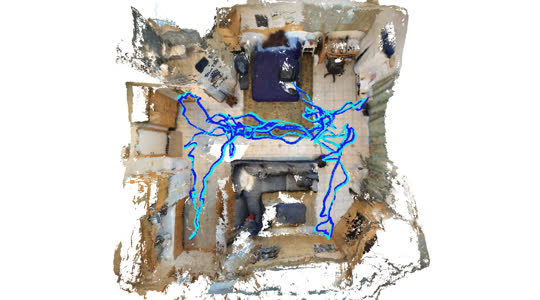
Ganlin Zhang is a PhD researcher at the Technical University of Munich (TUM) within the Computer Vision Group (Informatics 9). His work focuses on 3D Vision , Visual SLAM , and 3D Reconstruction using deep learning and geometric processing techniques. Key research areas: 3D Vision, Visual SLAM, Structure from Motion, 3D Reconstruction, Deep Learning Recent publications highlight advancements in RGB-only SLAM systems with implicit encodings, dynamic scene bundle adjustment, and robust rotation averaging methods. His work bridges classical geometry processing with modern AI approaches for spatial AI applications. He collaborates with leading researchers in the field, including Luc Van Gool and Michael R. Oswald , and contributes to cutting-edge developments in computer vision through active participation in conferences like CVPR and ICCV . The Computer Vision Group at TUM provides a vibrant research environment for his work, with access to state-of-the-art facilities at Boltzmannstrasse 3, Garching, Germany.
Professor Javier Villalba-Diez serves at the Faculty of Business of Heilbronn University of Applied Sciences, Germany, where he integrates artificial intelligence with lean management principles in industrial and business contexts. His international collaborations include a cooperative doctoral program with Technical University of Madrid and Erasmus exchanges with Universidad Politécnica de Madrid. Dr. Villalba-Diez earned dual engineering degrees: Mechanical Engineering from Technische Universität München and Industrial Engineering from Universidad Politécnica de Madrid (2003). His PhD in Engineering, Economics and Organizational Innovation (2016) from Universidad Politécnica de Madrid received the institution's best doctoral thesis award. His research spans Artificial Intelligence (particularly Deep Learning applications), Hoshin Kanri strategic planning, Business Intelligence , and Lean Manufacturing . He pioneers sensor-based methodologies for organizational design, using EEG and industrial IoT to analyze problem-solving patterns and network resilience. His work bridges theoretical models with practical implementations across German, American, Japanese, and Spanish manufacturing facilities. Recent publications demonstrate a clear trajectory toward Industry 4.0 integration , with 60% of his 2019-2020 work focusing on deep learning applications in quality control, sensor networks, and cyber-physical systems. The journal Sensors (MDPI) serves as his primary publication venue, reflecting his emphasis on data-driven industrial analytics. His recognition includes: Prize for best doctoral thesis by Universidad Politécnica de Madrid (2016) As Guest Editor for Sensors and reviewer for journals like Sustainability and Journal of Manufacturing Systems , he shapes discourse in industrial AI. His doctoral supervision with Madrid focuses on AI-driven strategic organizational design, while industry collaborations with manufacturing facilities worldwide translate research into operational frameworks. He maintains active roles in curriculum development for Industry 4.0 education through the PROFH4 digital initiative. Dr. Villalba-Diez operates within international research networks, leveraging his multilingual capabilities (German, English, Spanish) to facilitate transnational projects. His work with Neo4j for Hoshin Kanri visualization exemplifies his approach to making complex organizational networks actionable for industry leaders.