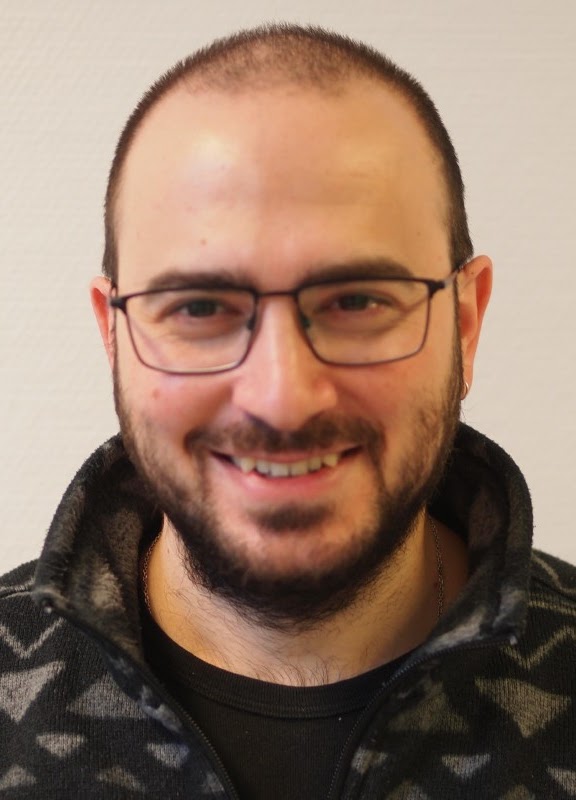
Ole Winther is Professor in High dimensional biological data analysis/Machine learning at the Department of Biology, University of Copenhagen and Professor in Data science and complexity at DTU Compute, Technical University of Denmark. He serves as CRO and co-founder of raffle.ai, CTO and co-founder of FindZebra, Head of ELLIS Unit Copenhagen, and co-PI of the Machine Learning for Life Science Center. His research spans Bioinformatics , Machine Learning , and AI for Science , focusing on applying deep learning to biological sequence analysis, latent variable models, and medical NLP. Winther's work develops predictive and generative models for bioinformatics, with significant contributions to protein localization tools (SignalP, DeepLoc, DeepTMHMM), single-cell genomics, and novel deep learning architectures like variational autoencoders and diffusion models. Analysis of Winther's recent publications (2023-2025) reveals a strong trend toward integrating protein language models with traditional bioinformatics approaches and applying diffusion models to scientific problems. His work bridges theoretical machine learning advancements with practical applications in biology and medicine, particularly in protein sequence analysis, medical search engines, and scientific simulation acceleration. Winther currently supervises a diverse research group including Panagiotis Antoniadis, Rachael M. DeVries, Jun Wang, Beatrix M. G. Nielsen, Felix G. Teufel, Irene R. Rodriguez, Anders Christensen, and Christopher Heje Grønbech. His former students have established successful careers at institutions including Google, Apple, and various startups, with notable alumni like Casper Sønderby (Google Brain) and Søren Sønderby (Apple). He leads significant research initiatives including the ELLIS Unit Copenhagen and the Machine Learning for Life Science Center, while maintaining active industry partnerships through his co-founded companies raffle.ai (enterprise search using NLP) and FindZebra (search engine for rare diseases). His teaching includes Deep Learning courses at both DTU (02456) and University of Copenhagen (NDAK24002U).
Ole Winther is a Professor at the Department of Biology, University of Copenhagen, specializing in Computational and RNA Biology. He also holds a joint appointment as Professor at DTU Compute, Technical University of Denmark. His research bridges machine learning, bioinformatics, and natural language processing with applications in biological sequence analysis, transcriptomics, and health informatics. Education: 1998: PhD in Physics, University of Copenhagen 1994: Master of Science in Physics, University of Copenhagen Winther's research focuses on developing advanced machine learning methodologies for biological applications. He has pioneered protein language models for sequence analysis (DeepLoc, SignalP, DeepTMHMM), interpretable deep learning for RNA subcellular localization, and benchmarking frameworks for DNA language models. His work spans latent variable models, variational inference, diffusion models, and novel architectures for deep generative modeling, with increasing emphasis on practical healthcare applications including rare disease diagnosis through findzebra.com and medical question answering with large language models. Scientific Recognition: ELLIS Fellow (2021) Head of ELLIS Copenhagen Unit H-index of 61 (Google Scholar, May 2023) 19,700+ citations (Google Scholar, May 2023) Winther has supervised 25+ PhD students to completion with 7 currently in progress, along with over 100 master's projects. He frequently serves as PhD opponent and committee chairman across European institutions. His research is supported by substantial funding including multiple Novo Nordisk Foundation grants totaling over 60 million DKK for the Center for Basic Machine Learning Research in Life Science and CAZAI projects, plus significant funding from the Danish Independent Research Fund. He leads an active research group developing cutting-edge machine learning approaches for bioinformatics and NLP challenges. Winther co-founded two spin-out companies: findzebra.com (2014, 2018), a search engine for rare diseases, and raffle.ai, an NLP startup for enterprise search. He initiated DTU's popular BSc in AI and Data program and teaches the highly enrolled MSc course in Deep Learning (450+ students) and PhD course in Bayesian Data Analysis.
Georgios Arvanitidis is an Associate Professor at the Technical University of Denmark (DTU) in the Department of Applied Mathematics and Computer Science, specifically within the Section for Cognitive Systems (CogSys). He has established himself as a leading researcher in geometric machine learning, focusing on the application of differential geometry principles to enhance machine learning models. His work bridges theoretical mathematics with practical applications in artificial intelligence, with particular emphasis on understanding the geometric structure of data manifolds and latent spaces. Dr. Arvanitidis completed his educational journey with a Bachelor's degree from the Department of Informatics at the Aristotle University of Thessaloniki, followed by a Master's degree in Computer Science from Saarland University supported by the Max Planck Institute for Informatics. He earned his PhD at DTU's Cognitive Systems section under the supervision of Søren Hauberg, with additional research experience at Philipp Hennig's Probabilistic Numerics group. Prior to his current position as associate professor, he was a PostDoc at the Max Planck Institute for Intelligent Systems working with Bernhard Schölkopf. Dr. Arvanitidis's research primarily focuses on differential geometry in machine learning , where he explores how geometric structures can enhance representation learning and statistical modeling. His work in generative models investigates how learning the geometry of data manifolds can improve deep learning architectures. In the domain of deep learning theory , he examines why deep learning models generalize effectively on unseen data, with particular attention to the curvature properties of loss landscapes. His research in approximate Bayesian inference applies geometric principles to improve uncertainty quantification in neural networks. Through his innovative approaches, Dr. Arvanitidis has established himself as a leading researcher in geometric machine learning, contributing to both theoretical foundations and practical applications across various domains including robotics and life sciences. The publication trends of Dr. Arvanitidis reveal a consistent and evolving focus on geometric approaches to machine learning problems. His recent work (2023-2025) demonstrates increasing sophistication in applying Riemannian geometry to deep learning architectures, with particular emphasis on latent space geometry, optimization on manifolds, and geometric interpretations of neural network behavior. A notable pattern is the progression from foundational work on geometric representations to more applied research in areas like robotics and causal inference. His publications span top-tier conferences including NeurIPS, ICML, ICLR, and AISTATS, reflecting the high impact of his research. The interdisciplinary nature of his work is evident in collaborations across mathematics, computer science, and robotics domains, with recent papers addressing challenges in multimodal sampling, safety guarantees for dynamical systems, and counterfactual explanations. Dr. Arvanitidis has received several notable scientific awards and recognitions: Sapere Aude starting grant from the Independent Research Fund Denmark (DFF) GADL funding i-Rase, Pathfinder, and EIC (European Innovation Council) funding Best reviewer award for NeurIPS 2019 Best reviewer award for NeurIPS 2018 Best student paper award at Robotics: Science and Systems (R:SS) 2021 Dr. Arvanitidis actively mentors PhD students and researchers, currently supervising Alejandro Valverde, Johanna Gegenfurtner, and Albert Kjøller Jacobsen. He has previously co-supervised Alison Pouplin's PhD and worked with research assistant Georgios Pantis. His group receives substantial funding through multiple prestigious grants including the Sapere Aude starting grant from the Independent Research Fund Denmark, as well as European Innovation Council funding. He has been instrumental in creating opportunities for students interested in geometric machine learning, offering BSc and MSc thesis projects focused on generative models, deep learning theory, and optimization techniques. Dr. Arvanitidis also contributes significantly to the academic community as a reviewer for top conferences including ICLR and TMLR, and as an area chair for NeurIPS, ICML, AISTATS, and UAI. He co-organized the Machine Learning Summer School 2020 in Tübingen, further demonstrating his commitment to education and community building. Dr. Arvanitidis leads a vibrant research group focused on geometric machine learning within the Cognitive Systems section at DTU. His team includes multiple PhD students working on cutting-edge research at the intersection of differential geometry and artificial intelligence. The group has developed notable software tools, including the "geometric_ml" GitHub repository with over 70 stars, which contains implementations for applying Riemannian geometry in machine learning. His research has practical applications in robotics, where geometric approaches enable more robust motion planning, as evidenced by his work on "Reactive Motion Generation on Learned Riemannian Manifolds" which received a best student paper award. Additionally, his methodologies have found applications in life sciences, as mentioned in his 2022 AISTATS paper. The collaborative nature of his work is evident through extensive partnerships with researchers at institutions including the Max Planck Institute for Intelligent Systems, University of Cambridge, and various European universities. His recent news items indicate active engagement with the academic community through talks, conference presentations, and ongoing supervision of new PhD students joining his group.
Luka Radic is a Researcher in the Machine Learning Section at the Department of Computer Science, University of Copenhagen. His work bridges theoretical and applied research in machine learning, with a focus on quantum machine learning , large language models , and fairness in AI systems.
Christian Pascal Hirsch is an Associate Professor for Data Science and Statistics at the Department of Mathematics, Aarhus University. His research focuses on random networks inspired by biology and health sciences, utilizing techniques from topological data analysis and stochastic geometry. He is affiliated with the Stochastics group, AU DIGIT Centre, and AU Quantum Campus. Research Interests: Topological data analysis, large deviations theory, spatial random networks, and stochastic geometry. His work includes studies on percolation theory, Gibbs measures, and applications to neural networks and geometric functionals. Publications span journals such as the Journal of Applied and Computational Topology, Journal of Statistical Physics, and Stochastic Processes and Their Applications, covering topics from network topology to Poisson approximation.
Jes Frellsen is an Associate Professor at the Department of Applied Mathematics and Computer Science (DTU) since 2016. Previously, he held academic positions at the IT University of Copenhagen (2016-2019), postdoctoral roles at University of Cambridge (2013-2016) and University of Copenhagen (2011-2013). Education: PhD in Bioinformatics (2011), University of Copenhagen MSc in Bioinformatics (2007), University of Copenhagen BSc in Mathematics and Computer Science (2005), University of Copenhagen EAP Exchange at University of California, Santa Cruz (2004-2005) Research Focus Jes Frellsen specializes in statistical machine learning , particularly generative AI and deep generative models with applications in bioinformatics . His work integrates Bayesian inference , directional statistics , and Markov chain Monte Carlo methods to address challenges in macromolecular structure prediction and missing data imputation . Recent efforts explore uncertainty quantification in image segmentation and generative modeling for materials science. Advising & Collaborations He actively supervises PhD students and postdoctoral researchers in projects spanning news recommendation systems , medical imaging , and 3D structure generation . Collaborations include work with Zoubin Ghahramani (Cambridge) and Thomas Hamelryck (Copenhagen), with contributions to protein structure prediction and statistical methods in structural bioinformatics .
Tuukka Ruotsalo serves as Associate Professor in the Machine Learning Section at the Department of Computer Science, University of Copenhagen. His research bridges human cognition with computational systems through brain-computer interfaces and physiological computing. As Academy Research Fellow at University of Helsinki (2019-2024), he maintained dual institutional affiliations while leading cutting-edge work in neuro-linguistic modeling and affective relevance. His research focuses on brain-computer interfaces for information retrieval , where he pioneers methods to decode cognitive states from neural signals to improve search systems. Key areas include affective relevance modeling that integrates emotional states into search algorithms, and neuro-linguistic reconstruction that translates brain activity into language. His work on fairness-relevance tradeoffs in recommender systems established Pareto frontier evaluation frameworks now widely adopted in ethical AI research. Recent publications demonstrate how physiological signals like EEG and galvanic skin response can create more adaptive human-information interaction systems. Ruotsalo's scientific recognition includes the prestigious Academy Research Fellow position. His publications in IEEE Transactions on Human-Machine Systems , Journal of the Association for Information Science and Technology , and Communications Biology reveal growing interdisciplinary impact. His advising spans cognitive neuroscience and machine learning students, with notable collaborations across the SCIENCE AI Centre. Current projects include the TreeSense initiative for remote sensing of global tree resources and development of quantum-inspired neural architectures. His lab leverages the department's powerful compute cluster for large-scale physiological data analysis.
Matthias Oliver Wilhelm is an Associate Professor in the Department of Mathematics and Computer Science at the University of Southern Denmark, affiliated with the Quantum Mathematics research group. His work focuses on advanced theoretical physics topics including scattering amplitudes in gauge/gravity theories, Feynman integrals, special functions, and applications of machine learning in physics. He has contributed to groundbreaking research at the intersection of quantum field theory and mathematical physics, particularly in understanding gravitational wave phenomena and high-energy particle interactions. Research Interests: His research combines quantum field theory with algebraic geometry and computational methods, exploring topics like elliptic Feynman integrals, post-Minkowskian expansions, and machine learning-driven amplitude calculations. Recent work includes leveraging Calabi-Yau manifolds for gravity-related Feynman integrals and developing transformer-based algorithms for scattering amplitude computations. Awards: He received the Velux Grant - Villum Young Investigator in 2018, recognizing his innovative contributions to theoretical physics. Projects: Leveraging Algebraic Geometry for High-Precision Fundamental Physics (2024-2028, DFF-funded) Thermodynamics of strongly coupled Quantum Field Theory (2019-2027, private foundation-funded) Key Themes in Recent Work: His articles emphasize novel computational techniques (e.g., machine learning for integration-by-parts reduction), formal developments in scattering amplitude theory, and geometric approaches to quantum gravity problems. Notable contributions include classifying Feynman integral geometries for black-hole scattering and advancing elliptic function methodologies in perturbative QFT.
Maria Sinziiana Astefanoaei is an Assistant Professor at the IT University of Copenhagen , affiliated with the Data, Systems, and Robotics department. Her research focuses on spatiotemporal data analysis, urban computing, and graph algorithms using machine learning techniques. Research Interests: Spatial data analysis, Time series data processing, Large-scale visualizations, Machine learning, Human mobility modeling, and Embeddings. Projects: Principal Investigator for CCAI: Towards greener last-mile operations (2022-2023), contributing to cargo-bike logistics optimization, and Co-Investigator for the Pilot Hub project (2020-2022) funded by the Danish Agency for Research and Education. Publications: 2021 conference paper at CIKM '21 on spatiotemporal signal processing frameworks with neural machine learning models. Her work intersects computer science , urban logistics , and environmental sustainability , with applications in smart city technologies and multi-modal transportation systems.
Sune Darkner is a Professor at the Department of Computer Science (DIKU) at the University of Copenhagen, specializing in the Image Analysis, Computational Modelling, and Geometry research section. His work focuses on medical image processing with particular emphasis on neuro-imaging data including MRI and PET scans. His primary research interests include Image Registration, Segmentation and Classification of Medical Image Data , with a specific focus on estimation of image similarity as his main research interest. Darkner strongly believes that the implementation of image processing algorithms should be thoroughly tested and reflect the theoretical properties as accurately as possible. His work primarily centers on neuro-imaging data such as MRI and PET. His recent publications (2024-2025) reveal a strong focus on medical image analysis, with particular emphasis on tumor volume delineation, deformable image registration with physics constraints, and applications of deep learning in medical imaging. His work spans both theoretical foundations of image processing and practical clinical applications. Darkner previously held a Post Doc position at the Technical University of Denmark from February 2009 to January 2010, demonstrating his longstanding engagement with image analysis research in the Danish academic community.
Francois Lauze is an Associate Professor at the Department of Computer Science , University of Copenhagen, affiliated with the Image Analysis, Computational Modelling and Geometry research group. His work bridges mathematical rigor and practical applications in image processing and shape analysis. Research Focus: Mathematical Image Analysis (variational/PDE methods) Differential and Riemannian geometry for shape statistics Applications: image inpainting, motion estimation, segmentation, medical imaging Contact: Email: francois@di.ku.dk Phone: +4535335671, +4521553933 Location: Universitetsparken 1, 2100 Copenhagen Ø Recent publications highlight advancements in SE(3) group CNNs for diffusion imaging, locally orderless networks for efficient processing, and refractive multi-view stereo techniques. His work integrates geometric modeling with computational implementations, emphasizing medical and video applications.
Anders Bjorholm Dahl is a Professor at the Department of Applied Mathematics and Computer Science , DTU Compute , Technical University of Denmark (DTU). His research focuses on medical imaging, computer vision, and biomedical engineering. He leads projects in ultrasound imaging, AI-driven medical diagnostics, and advanced imaging technologies for healthcare applications. Education: Ph.D. in Computer Science (Image Analysis and Computer Vision), DTU (2005–2009) Forestry, Royal Veterinary and Agricultural University (1997–2004) Research Interests: Combines machine learning and advanced imaging techniques to address challenges in medical diagnostics, including ultrasound super-resolution, stenosis detection in coronary angiographies, and material anisotropy analysis. His work bridges anatomy and histology using X-ray tomography and explores AI applications in healthcare. Key Projects: Crowd Counting through Remote Sensing (2025–2027) AI for Extreme Super-Resolution CT (2024–2026) Fighting Cancer with Generative AI (2024–2027) Labs/Teams: Leads the UltraSound and Biomechanics Visual Computing Center for Fast Ultrasound Imaging , focusing on real-time medical imaging solutions.
Gert Frølund Pedersen is a Professor at the Department of Electronic Systems , Aalborg University , within the Technical Faculty of IT and Design . His research focuses on antennas, propagation, and millimeter-wave systems. He leads projects like DRONES (30 million DKK from Innovationsfonden) for drone-based electromagnetic signature analysis and EcoSurf6G for energy-efficient reconfigurable surfaces in 6G networks. With over 758 research outputs and 21 PhD students supervised, he contributes extensively to wireless communication advancements. Antenna Engineering Millimeter-Wave Systems Reconfigurable Intelligent Surfaces Deep Learning in Antenna Design His recent work emphasizes millimeter-wave IoT applications , UWB propagation channels , and 5G/6G antenna arrays . Publications highlight innovations in transmitarray antennas , liquid crystal polarization control , and metasurface design using AI. His research spans from fundamental electromagnetic safety to cutting-edge wireless infrastructure. Notable awards include Best Reading Paper of the Issue (IEEE Transactions on Microwave Theory and Techniques, 2020), ESI Highly Cited Paper (2019), and Ridder af Dannebrog (2021). He frequently engages with media to address public concerns about mobilstråling (mobile radiation) and its safety.
William Henrich Due serves as a Lecturer at the Department of Computer Science (DIKU), University of Copenhagen, within the Machine Learning section. His work intersects with the SCIENCE AI Centre and leverages the department's high-performance compute cluster for research in quantum computing, sustainable AI, and medical applications. Research focuses span quantum machine learning (biomolecular simulations, photonic processors), sustainable AI systems (energy efficiency, climate impact), and clinical applications (EEG analysis, medical imaging). His recent publications reveal strong activity in quantum-classical hybrid systems, with 8/15 recent papers addressing quantum computing challenges. The work emphasizes practical implementations in medical imaging and resource-constrained environments. His research aligns with DIKU's Machine Learning section priorities including medical imaging biomarkers and sustainable computing. Key infrastructure includes TreeSense for remote sensing and the department's dedicated compute cluster. No scientific awards were explicitly documented in the provided materials. Due contributes to DIKU's teaching mission as a Lecturer while engaging with the SCIENCE AI Centre's interdisciplinary initiatives. His work connects with medical imaging applications and quantum computing infrastructure development. Active in the Machine Learning section's research ecosystem, his work intersects with medical imaging analysis and quantum computing applications, utilizing specialized resources like TreeSense for environmental monitoring.
Jon Sporring is a Professor at the Department of Computer Science, University of Copenhagen, specializing in theoretical and applied image processing, stochastic geometry, and biomedical imaging. He leads research in mathematical and medical image analysis, computer graphics, and pattern recognition. Education: Ph.D. in Computer Science (1998), Master in Computer Science (1995), both from University of Copenhagen Affiliations: Pioneer AI section, Applied Geometry Lab, and Faculty of Science External Roles: Visiting professor at McGill University (2012-13), co-founder of DigiCorpus Aps (2012-16) His research integrates scale-space theory, statistical shape analysis, and advanced imaging techniques for applications in medical diagnostics, materials science, and neuroscience. Recent work focuses on 3D reconstruction, persistent homology for bias correction, and AI-driven biomedical analysis. Jon teaches computer science at all academic levels, currently offering courses in bioimaging, signal processing, and deep learning. He emphasizes collaborative projects with external partners and has held administrative roles including Vice-Chair for Research at DIKU. His 15 most recent publications reflect expertise in medical imaging, 3D modeling, and AI applications, with subfields spanning neurodegenerative disease analysis, mitochondrial ultrastructure, and multi-scale image processing. Articles demonstrate interdisciplinary impact across medicine, biology, and materials science.