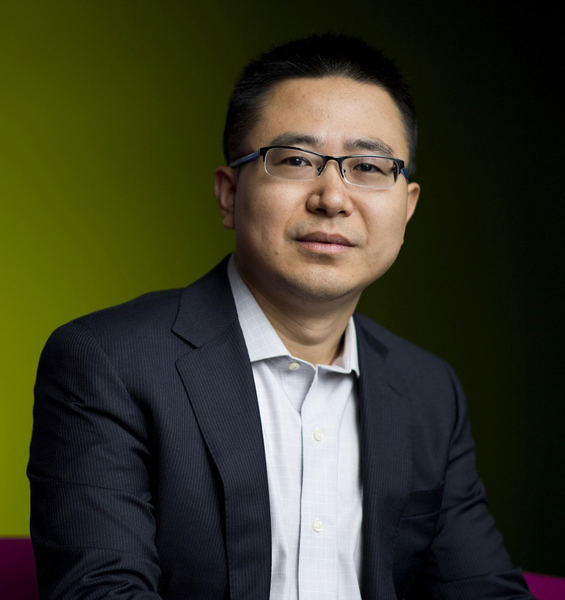
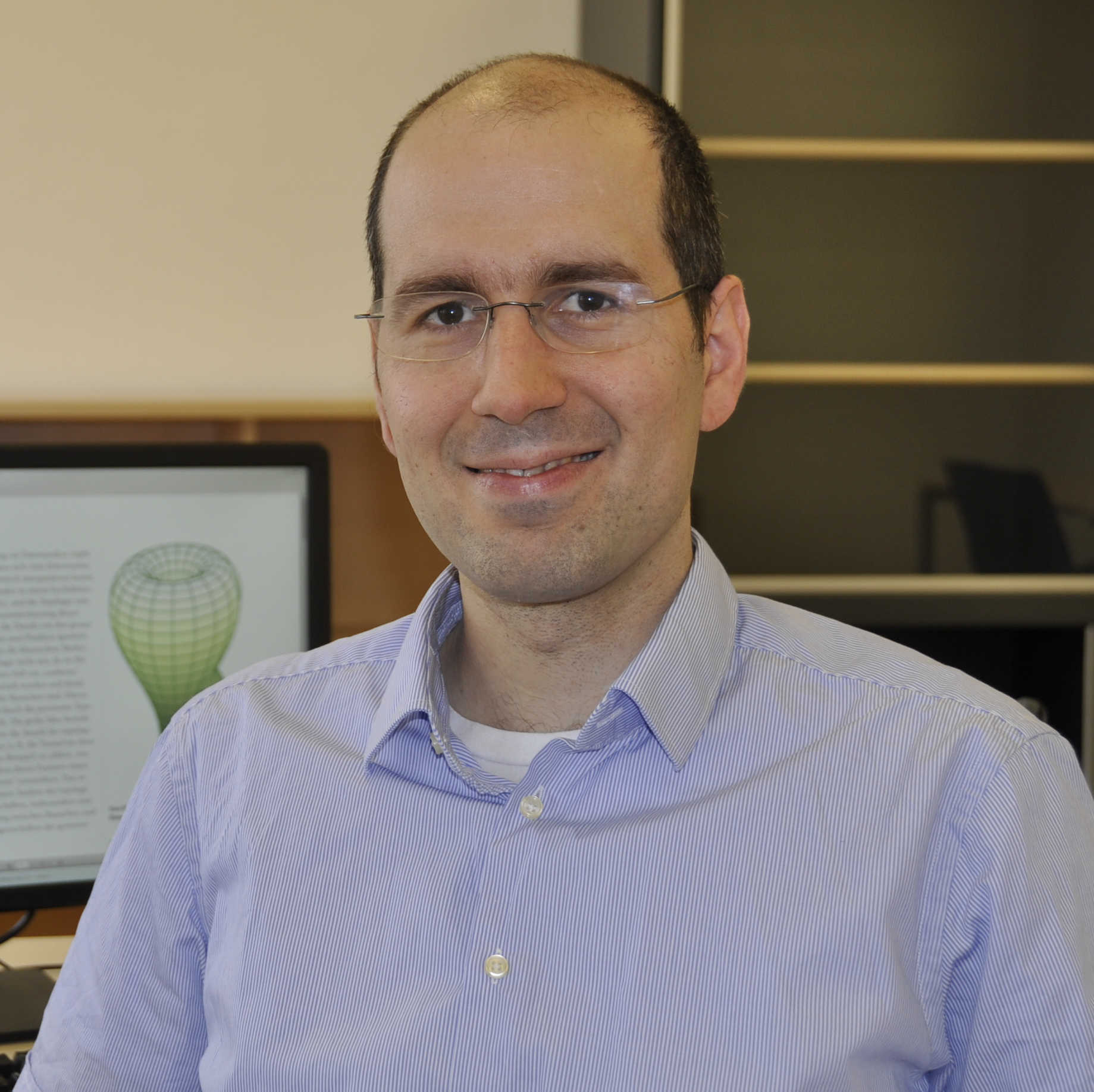
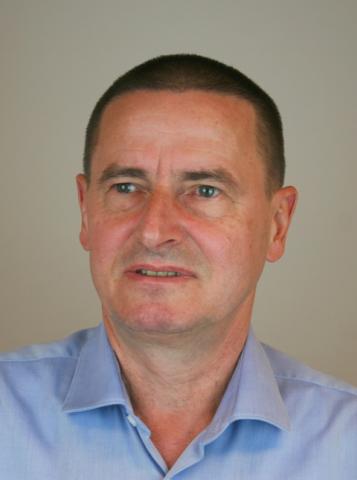
Ian Horrocks is a Professor of Computer Science at the University of Oxford and a Fellow of Oriel College. His research focuses on knowledge representation, description logics, automated reasoning, and semantic web technologies. He has held academic positions at the University of Manchester (2003–2007) and served as Chief Scientist at Cerebra Inc. (2001–2006). Horrocks earned his BSc (1st class), MSc, and PhD in Computer Science from the University of Manchester (1981–1997). His work includes foundational contributions to ontology languages (e.g., OWL) and reasoning systems such as HermiT and ELK. He has supervised over twenty doctoral students and postdoctoral researchers. His honors include Fellowships from the Royal Society (2011), ECCAI (2009), and the British Computer Society (2005). He serves as Editor-in-Chief of the Transactions on Graph Data and Knowledge and leads initiatives in semantic web standards and knowledge graph applications. Key Roles: Editor-in-Chief (Journal of Web Semantics), Co-Chair (W3C OWL Working Group) Grants: EPSRC Senior Research Fellowship (2005), numerous international collaborations Labs: Oxford Semantic Technologies, involvement in projects like RDFox and PAGOdA
Markus Vincze is an Associate Professor at the Institute of Automation and Control Engineering (ACIN) at Vienna University of Technology (TU Wien). He founded the Vision for Robotics (V4R) group in 1996 to advance robotic perception, particularly in real-world environments and homes. His work focuses on cognitive computer vision techniques for robotics. Education: Diplom in Mechanical Engineering (1988) and PhD (1993) from TU Wien; M.Sc. (1990) from Rensselaer Polytechnic Institute. V4R coordinates EU projects like ActIPret, robots@home, HOBBIT, and national initiatives like vision@home. Markus has edited a book on Robust Vision with Gregory Hager and authored 62 peer-reviewed journal articles and over 400 reviewed publications. His recent research explores zero-shot 6D pose estimation, sim-to-real transfer, and transparent object detection. Markus has served as program chair for ICRA 2013 and organized HRI 2017 in Vienna. He has advised numerous students and secured grants from the Austrian Academy of Sciences for work at HelpMate Robotics and Yale's Vision Laboratory. The V4R group leads innovations in robotic vision, including frameworks for synthetic data generation (Unrealgensyn), depth completion (CAGT), and educational robotics applications for sustainability. Their work spans household robotics (RH3), agricultural robotics (EdgeSoil), and human-robot collaboration.
Johannes Brandstetter is an Associate Professor at the Institute for Machine Learning at Johannes Kepler University Linz (JKU) where he leads the "AI for data-driven simulations" research group. He is also Co-founder and Chief Scientist at Emmi AI, bridging academic research with industrial applications in AI-driven physics simulation. Brandstetter earned his PhD after working at CERN's CMS experiment on Higgs boson physics. In 2018, he transitioned to machine learning, joining Sepp Hochreiter's research group in Linz. From 2021-2023, he worked at the Amsterdam Machine Learning Lab under Max Welling and Microsoft Research, developing expertise in Geometric Deep Learning and neural surrogates for partial differential equations. He returned to JKU in October 2023 to establish his own research group. His research spans Machine Learning, Deep Learning, and Physics-Informed Machine Learning with focus areas including Neural PDE solvers, Computational Fluid Dynamics, and Climate Modeling. Brandstetter believes AI is poised to revolutionize industrial-scale simulations, potentially saving thousands of compute hours across engineering domains. His work integrates computer vision, numerical simulation, and engineering components to advance data-driven approaches. Recent publications reveal a strong trend toward foundation models for scientific applications, particularly in atmospheric modeling (Aurora), geometric deep learning, and neural surrogates for complex physical systems. His interdisciplinary work spans computer vision, climate science, computational physics, and engineering, demonstrating the versatility of his research approach. Principal Investigator for "AlKa-DL: Alpine karst spring discharge prediction" (FWF-funded, 2024-2027) Principal Investigator for Cluster of Excellence "Bilateral Artificial Intelligence" (FWF-funded, 2024-2029) Co-PI for "Fast, efficient and flexible CFD simulation through generative AI" (FFG-funded, 2025-2026) As an educator and researcher, Brandstetter actively engages with the scientific community through invited talks at major conferences including presentations on "Closing the Gap Between Scientific Foundation Models and Real-World Applications" (March 2025) and "Scientific Machine Learning for Science and Engineering" (February 2025).
Jean Ponce is a Professor of Computer Science at Ecole Normale Superieure (ENS) in Paris and a Part-Time Global Distinguished Professor at New York University's Courant Institute of Mathematical Sciences and Center for Data Science (CDS). He previously served as Director of the ENS Computer Science Department (2011-2017) and held positions at Inria (2017-2022), University of Illinois at Urbana-Champaign (1998-2006), MIT, Stanford, and Inria (1982-1985). Academic Leadership: Scientific Director of PRAIRIE Interdisciplinary AI Research Institute in Paris Startup Involvement: Co-founder and CEO of Enhance Lab (2022) Editorial Roles: Senior Editor-in-Chief of International Journal of Computer Vision (2019-2022) Conference Leadership: Chair of IEEE CVPR (1997,2000), ECCV (2008), and upcoming ICCV (2023) Research Focus: Computer vision, machine learning, robotics, and AI with applications in exoplanet imaging, 3D reconstruction, and image quality assessment. His work bridges statistical learning and deep learning approaches. Awards: IEEE Fellow (2003) ELLIS Fellow (2019) ERC Advanced Grant (2011) IEEE CVPR Longuet-Higgins Prizes (2016,2020) ICML Test-of-Time Award (2019) Patents & Publications: Co-author of influential textbook Computer Vision: A Modern Approach (translated into Chinese, Japanese, Russian). Holds two US patents and one pending French patent. Google Scholar h-index of 78 with over 55,000 citations.
Michael Bronstein is a Professor & Chair in Machine Learning and Pattern Recognition at the Department of Computing, Imperial College London (2018–present). He previously held academic roles including Professor at the University of Lugano, Switzerland (2010–present, on leave since 2019), Visiting Associate Professor at Tel Aviv University (2015–2017), and Visiting Lecturer at Stanford University (2008–2009). His research focuses on geometric methods for data analysis, with applications in machine learning, computer vision, and social networks. PhD in Computer Science (2007), Technion – Israel Institute of Technology His expertise spans geometric machine learning , deep learning on graphs, manifolds, and point clouds , 3D shape analysis , and geometry processing . His work bridges theoretical and computational approaches to solving problems in computer vision , pattern recognition , and 3D depth sensors . 2020 Royal Academy of Engineering Silver Medal 2018 Fellow, IEEE and IAPR 2016 ERC Consolidator Grant 2014 Young Scientist, World Economic Forum He has led high-impact industrial projects, including the development of Intel RealSense 3D camera technology, and founded startups like Fabula AI (acquired by Twitter in 2019). His academic and entrepreneurial career includes over 150 publications, 30 patents, and leadership roles in both academia and industry.
Yun Fu is a tenured Professor in the Department of Electrical and Computer Engineering at Northeastern University, with a joint appointment in the Khoury College of Computer Science. He has established himself as a leading researcher in Artificial Intelligence, with over 500 publications in top-tier venues including IEEE/ACM transactions and major AI conferences. His work spans both theoretical foundations and practical applications, with significant impact in computer vision and machine learning. Professor Fu earned his Ph.D. in Electrical and Computer Engineering from the University of Illinois at Urbana-Champaign. His academic career progressed from Assistant Professor at SUNY Buffalo to his current position as tenured Professor at Northeastern University, where he has held appointments since 2012. His educational background includes a Beckman Graduate Fellowship at UIUC (2007-2008). His research focuses on advancing Artificial Intelligence with particular emphasis on Computer Vision, Pattern Recognition, and Machine Learning. His seminal work includes the "Residual Dense Network for Image Super-Resolution" presented at CVPR 2018, which was ranked among the Top 10 Most Influential CVPR papers. His research interests span image processing, anomaly detection, multimodal learning, and trajectory prediction, with applications ranging from healthcare to consumer technology. Analysis of his recent publications reveals a strong trend toward developing efficient and robust AI systems that bridge computer vision with language understanding. His work increasingly focuses on multimodal learning, trajectory prediction for multi-agent systems, anomaly detection in complex environments, and model validation techniques for black-box systems, while maintaining practical applications in real-world scenarios. Professor Fu's extensive recognition includes: Fellow of IEEE (2018), OSA (2019), SPIE (2018), IAPR (2016), AAIA (2021), and AAAI (2025) Member of Academia Europaea (2022) and European Academy of Sciences and Arts (2023) Fellow of National Academy of Inventors (2023) Multiple Young Investigator Awards from NAE, ONR, ARO, IEEE, ACM, and INNS 12 Best Paper Awards from major conferences Industrial Research Awards from Google, Amazon, Samsung, JPMorgan, and others Professor Fu has successfully mentored numerous Ph.D. students who now hold prominent positions in academia and industry at institutions including Amazon, Microsoft, Meta, Adobe, and major universities. His entrepreneurial ventures include founding Giaran (acquired by Shiseido in 2017) and co-founding TVision Insights, demonstrating his commitment to translating research into real-world impact. He has secured significant research funding from both government agencies and industry partners. As the PI and Founding Director of the SmiLe Lab at Northeastern University, Professor Fu leads a dynamic research group focused on advancing the state-of-the-art in AI and Computer Vision. The lab fosters interdisciplinary collaboration across computer science, electrical engineering, and applied mathematics, with ongoing projects in efficient deep learning, multimodal understanding, and practical AI applications.
Thomas Gärtner is a Professor at the Institute of Logic and Computation within the Faculty of Informatics at Vienna University of Technology, leading the Machine Learning research group (E194-06). His work bridges theoretical machine learning with practical applications in chemistry, biology, and network analysis. His primary research focuses on graph neural networks (GNNs) and geometric deep learning, with significant contributions to GNN expressivity, graph transformations, and kernel methods for structured data. He explores fundamental questions about the limitations of message-passing architectures while developing practical enhancements like path-based extensions and expectation-complete representations. His chemical informatics work applies these techniques to binding affinity prediction, reaction classification, and solvent selection, demonstrating real-world impact in computational chemistry. Analysis of his 15 most recent publications (2023-2025) reveals three dominant research thrusts: theoretical GNN advancements (35% of articles), chemical informatics applications (40%), and novel learning frameworks (25%). The theoretical work increasingly addresses expressivity limitations through graph transformations and path-based approaches, while chemical applications show growing sophistication in molecular representation. Recent publications also indicate expanding interest in foundation models for graphs and robustness verification. He actively supervises master's students including Fabian Traxler (binding affinity prediction), Maximilian Plattner (SGD optimization), Fabian Jogl (graph transformations), and Thomas Schmied (reinforcement learning). His research is conducted through the Network Lab at TU Wien, where he serves as Principal Investigator for the Structured Data Learning with Generalized Similarities project.
Stefan Lengauer is a Senior Researcher at the Institute of Visual Computing (IVC), Graz University of Technology. His work bridges cultural heritage analysis and health informatics through advanced visualization techniques. PhD in Computer Science (2022), Graz University of Technology MSc in Space Sciences (2018), TU Graz BSc in Computer Science (2014-2022) and Aviation (2015), FH JOANNEUM Research focuses on visual analytics , 3D object retrieval , and cross-modal search , with applications in: Medical domains (diabetes care, health information systems) Cultural heritage (pottery analysis, fragment matching, digital restoration) Pattern recognition (geometric motifs, surface textures) Recent publications highlight trends in adaptive visualization (2024-2025) and 3D cultural heritage analysis (2021-2023). Key projects include: HEREDITARY (2024-present): HORIZON Europe project on gut-brain interaction A+CHIS (2020-present): FWF research group on adaptive health information systems CrossSAVE-CH (2019-2022): Cross-modal search in cultural heritage Scientific recognition includes: Best Challenge Entry (2024) Honorable Mention (2020) PhD distinction (2022) Mentored 12+ students in topics ranging from medical chatbots to 3D pottery analysis . Reviewing activities span journals like Springer Nature and conferences including WSCG.
Dieter Schmalstieg is the Alexander von Humboldt Professor of Visual Computing at the University of Stuttgart and an adjunct professor at Graz University of Technology. He leads research in augmented reality (AR), virtual reality (VR), and visualization, with contributions to tracking, rendering, and medical applications. His work spans academia and industry, with over 400 publications and numerous awards, including the IEEE ISMAR Career Impact Award and Fellow of the IEEE. Education: PhD (1997), Habilitation (2001) from Vienna University of Technology. Research: Focuses on AR/VR systems, medical visualization, and real-time graphics. Key projects include the Christian Doppler Laboratory for Handheld AR and collaborations with Qualcomm and VRVis. Awards: START Prize (2002), IEEE Technical Achievement Award (2012), Humboldt Professorship (2023). His teaching includes courses on computer graphics, VR, and real-time rendering. He has advised over 30 PhD students, many of whom hold academic or industry leadership roles. Current research explores situated analytics, mixed reality telepresence (MRUnion), and AR applications in mining and medicine (MiReBooks).
Michael Kerber is a Professor at Graz University of Technology, Institute of Geometry, specializing in computational topology and geometry. His research bridges mathematical theory with applications in data analysis, focusing on persistent homology and geometric algorithms. PhD from Max Planck Institute for Informatics (2009) Postdoc positions: Max Planck Institute, Stanford University, IST Austria His work centers on designing efficient algorithms for topological data analysis, particularly: Persistent Homology 2-Parameter Persistence Geometric Filtrations Algebraic Curve Analysis High-Dimensional Sphere Packing Recent publications emphasize: Improved Delaunay bifiltration methods NP-hardness of interleaving distance computation Sparse Čech filtrations for big data Integration with graph neural networks He has co-developed key software tools: PHAT DIPHA HERA SOPHIA
Fabian Jogl is a PreDoc Researcher at the Vienna University of Technology (TU Wien) within the Faculty of Informatics, holding dual affiliations in the Department of Databases and Artificial Intelligence (Institute E192) and the Department of Machine Learning (Institute E194). His work centers on theoretical and applied aspects of graph neural networks under the StruDL (2023–2027) and VHH (2019–2023) research projects. His research focuses on the expressivity limits of graph neural networks, particularly investigating whether enhanced expressivity translates to better predictive performance. Key areas include outerplanar graph analysis, path-based GNN architectures, global feature integration, and connections to the Weisfeiler-Lehman hierarchy. He examines structural properties of GNNs through homomorphisms and graph transformations to advance graph representation learning. Recent publications reveal trends toward unifying theoretical expressivity frameworks with empirical validation across diverse graph datasets. His work bridges geometric deep learning for cell complexes and practical applications like historical film analysis via the Historian dataset. Jogl actively contributes to major conferences including NeurIPS, ICML, and LoG while co-supervising student projects in machine learning algorithms. As a core member of the StruDL project, he investigates deep learning model structures for graph data, extending prior work on historical film annotation under the VHH project. His technical contributions include novel GNN simulation techniques and methods for enhancing message-passing architectures through graph transformations.
Eduard Gröller is a Full Professor of Visualization at the Vienna University of Technology (TU Wien), leading the Research Unit of Computer Graphics and the Visualization Group within the Institute of Visual Computing & Human-Centered Technology (VC&HCT). He holds adjunct professorships at the University of Bergen, Norway, and chairs several academic committees. His academic journey began with a PhD in 1993 from TU Wien, followed by extensive contributions to visualization research. His research focuses on visual computing, scientific visualization, and medical imaging, with applications in energy modeling, climate analysis, and molecular biology. Gröller has pioneered methods like BEMTrace for BIM-based energy models and HORA 3D for flood risk visualization. He co-authored over 300 publications, including foundational work in IEEE Transactions on Visualization and Computer Graphics and Computer Graphics Forum . Gröller's awards include the IEEE VGTC Technical Achievement Award (2019), Eurographics 2015 Outstanding Technical Contributions Award, and Fellow of the Eurographics Association (2009). He actively contributes to conferences like EuroVis and IEEE Visualization as program chair and reviewer. His educational efforts span courses in visual computing, graphics, and data analysis, with a focus on immersive tools like ImNDT for material data exploration. Current projects include Climate-Sensitive Adaptive Planning for Resilient Cities, Visual Analytics in Radiation Therapy, and scalable web-based visualization techniques. He leads teams in VRVis, a research center for applied visualization, and collaborates internationally on medical imaging and environmental data challenges.
Alexander Steinicke is a Professor in the Department of Applied Mathematics, specializing in stochastic analysis and measure theory. His research bridges pure mathematics with applications in finance and fractal geometry, evidenced by 17 publications in high-impact journals including Advances in Mathematics and Stochastic Analysis and Applications . His primary research interests include: Stochastic Analysis Measure Theory Fractal Geometry Mathematical Finance Probability Theory Stochastic Processes Steinicke's recent work reveals a cohesive trajectory in geometric measure theory, particularly through his development of permeable set theory and its applications to fractal structures. His 2025 article on dimension theory represents a significant advancement, while his finance-related publications demonstrate practical extensions of stochastic calculus to market incompleteness problems. The integration of Lévy processes and semimartingale SDEs forms a consistent methodological thread across his publications. As an active academic, Steinicke regularly participates in conferences including the Austrian Stochastics Days and delivers invited talks on stochastic analysis. His consultancy work for research evaluations demonstrates engagement with broader academic governance.
Philipp Grohs is a Professor at the Faculty of Mathematics, Department of Mathematics (University of Vienna). His research spans Deep Learning , Computational Mathematics , and Applied Harmonic Analysis . Research Areas: Phase Retrieval, Neural Network Approximation, High-Dimensional PDEs, Manifold-Valued Data, Signal Processing Projects: 5 active projects (2021-2025) including deep learning for quantum chemistry and phaseless sampling He has authored 109 peer-reviewed publications (2007-2025) with significant contributions to Gabor Phase Retrieval , Deep Neural Network Approximation , and Nonlinear Data Analysis on Manifolds . Recent work focuses on overcoming the curse of dimensionality in PDE approximations. Scientific Prizes: Recipient of 2 undisclosed scientific awards (2021-2025) Collaborations include institutions like MIT, ETH Zurich, and University of Vienna. His work appears in top venues (Nature Computational Science, Foundations of Computational Mathematics) and involves interdisciplinary applications in quantum physics and biomedical imaging.
Shahzad Ahmad is a Researcher at the Institute of Networks and Security within Johannes Kepler University Linz (JKU), actively affiliated with the LIT Secure and Correct Systems Lab. His work bridges theoretical cryptography and practical security implementations with geometric data applications. Master of Science (MSc) degree holder His research concentrates on cryptographic security mechanisms, including control flow integrity verification and deniable encryption systems, while also advancing geometric algorithms for point cloud manipulation. This dual focus demonstrates significant interdisciplinary contributions to both computer security and spatial data processing domains. Publication analysis reveals consistent innovation in cryptographic protocol design, particularly in malware-resistant instruction chaining and plausibly deniable storage systems. His geometric research shows methodological evolution from Euclidean foundations toward customized metric spaces for complex point cloud relationships. No scientific awards were documented in the source materials. Available records indicate no formal student advising responsibilities or grant funding disclosures. As a core contributor to JKU's LIT Secure and Correct Systems Lab, Ahmad participates in developing formally verified security architectures and cryptographic implementations resistant to side-channel attacks.