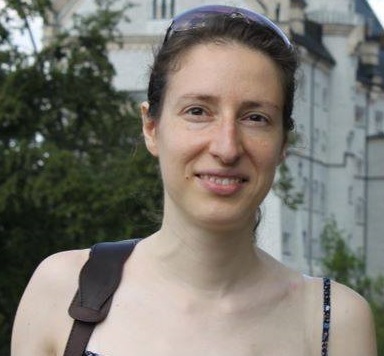
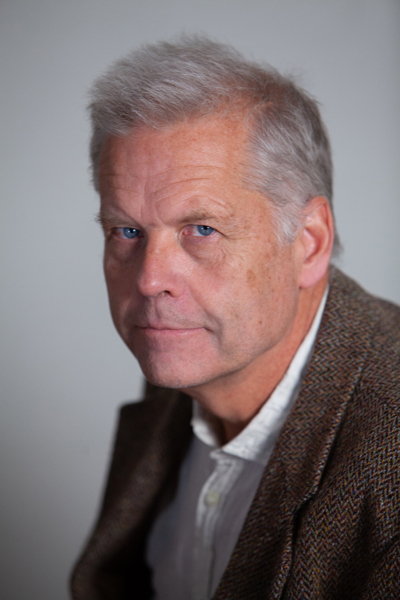
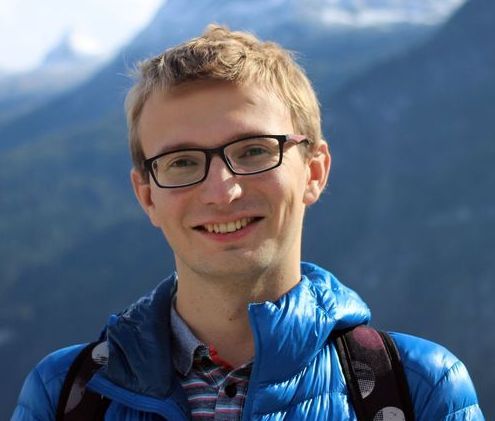
Joseph J. LaViola Jr. is a Professor at the University of Central Florida , specializing in Human-Computer Interaction , Virtual Reality , and 3D User Interface Design . With over two decades of research, his work bridges computer graphics and immersive technologies for applications in gaming, education, and engineering.
Fani Deligianni is a Senior Lecturer in Computing Science at the University of Glasgow, leading the Biomedical AI and Imaging Lab. Her research develops machine learning methods for healthcare applications including medical image segmentation, human motion analysis, and privacy-preserving neurophysiological data processing. She holds a PhD in Medical Image Computing from Imperial College London. Key projects include Riemannian geometry approaches for ECG-based congenital heart disease diagnosis, federated learning frameworks for distributed medical data, and VR-based cognitive workload assessment using eye-tracking. She received an EPSRC New Investigator Award for privacy-preserving radar-based human activity recognition. Dr. Deligianni coordinates Glasgow Women in Computing (GWiCS) and supervises 13 PhD students in AI and healthcare applications.
Assoc. Prof. Kappos Efthimios is affiliated with the School of Mathematics at Aristotle University of Thessaloniki, within the Faculty of Sciences. His academic journey includes roles at Northeastern University, City University London, and the University of Sheffield before joining AUTh in 2005. He holds a PhD in Mathematics from UC Berkeley (1986) and advanced degrees from MIT and Oxford. Education : MA (First Class Honours), University of Oxford, 1980 MS, Massachusetts Institute of Technology, 1983 MA, University of California, Berkeley, 1985 PhD, University of California, Berkeley, 1986 Research Interests focus on Geometric Control Theory , Bifurcation Analysis , and Differential Topology , with applications to power systems and mathematical biology. His work employs algebraic-topological methods to study global dynamics and stability. Advising & Grants : Supervised doctoral and postgraduate research projects (e.g., geometric control theory, Lyapunov-based control design). Coordinated a 2017 grant for the Postgraduate Mathematics Program at AUTh. Serves as ERASMUS Coordinator for incoming students. Teaching includes courses like Dynamical Systems , Algebraic Topology , and Classical Differential Geometry . Recent teaching roles span 2023–2025.
Joshua A. Levine is an Associate Professor in the Department of Computer Science at the University of Arizona. His research focuses on visualization, topological data analysis, and high-performance computing, with applications in quantum-inspired computing and geometric modeling. He leads the HDC Lab and has previously held postdoctoral and faculty positions at the University of Utah’s Scientific Computing and Imaging Institute and Clemson University. Education: PhD in Computer Science, The Ohio State University (Advisor: Tamal K. Dey) BS and MS in Computer Science, Case Western Reserve University (Advisor: Michael S. Branicky) Research Interests: Levine's work spans visualization algorithms, topological methods for scientific data, and computational tools like TTK, Cleaver, and DelPSC. He integrates high-performance computing and acoustic metamaterials for quantum-analogue systems, addressing challenges in nonlinear dynamics and scalable data processing. Grants & Funding: NSF New Frontiers of Sound (NewFoS) Center (DMR-2242925) DOE Neural Field Processing for Visual Analysis (DE-SC-0023319) NSF Collaborative Research: Neural Volume Visualization (IIS-2006710) Awards: 2024-2025 Faculty Teaching Award 2023-2024 Faculty Service Award 2020-2021 DEI Award Teaching: Levine teaches advanced visualization courses (CSC 544/444), emphasizing d3.js, SVG, and data-driven design. Recent courses include Spring 2025's CSC 544 with topics like flow visualization and transfer functions. Labs & Collaborations: His group collaborates on projects like TTK (Topology ToolKit) and explores applications in acoustic computing, leveraging interdisciplinary approaches to advance visualization and computational methods.
Hans Zanna Munthe-Kaas is a Professor at the Department of Mathematics, University of Bergen since 2005 and an Adjunct Professor (Prof. II) at UiT - The Arctic University of Norway since 2022. He has held previous academic roles at NTNU and the University of Bergen. Education Dr.Ing. (PhD), Department of Mathematical Sciences, NTNU (1989) Siv.Ing. (MSc), Department of Mathematical Sciences, NTNU (1986) Research Interests focus on Differential Geometry , Lie Group Techniques in Geometric Integration , and Computational Mathematics , with applications to numerical methods and parallel computing. His work explores algebraic structures like Post-Lie and pre-Lie-Rinehart algebras, and their role in geometric integration and manifold integration. Scientific Awards and Memberships 1995 Carl-Erik Fröberg Prize in Numerical Analysis 1990 Exxon Mobile Research Award for Best PhD, NTNU 1986–1989 Jubilee Scholar Scholarship, NTNU 2016 Elected Member, The Norwegian Academy of Science and Letters 2012 Elected Member, The Royal Norwegian Society of Sciences and Letters (DKNVS) 2007 Elected Member, The Norwegian Academy of Technological Sciences (NTVA) Advising and Leadership includes supervising 9 PhD students, organizing 25 international scientific meetings, and serving as Editor-in-Chief of Foundations of Computational Mathematics , President of the Norwegian Mathematical Society, and Director of the Lie–Størmer Center .
Eva Kopfer is an Associate Professor at the University of Bonn's Institute for Applied Mathematics, Department of Stochastic Analysis. Her research focuses on stochastic analysis, optimal transport theory, Ricci flows, and geometric analysis. She has led courses on stochastic analysis, financial mathematics, and advanced calculus. Notable contributions include work on exponential ergodicity for kinetic SDEs, stochastic homogenization of transport problems, and quantum gravity measures on manifolds. Her research interests bridge probability theory, differential geometry, and functional analysis, with applications to geometric flows and metric measure spaces. Recent work explores conformally invariant random fields, polyharmonic structures in quantum gravity, and generalized Ricci flow dynamics. She has collaborated extensively on projects involving discrete-to-continuous limits in optimal transport and Liouville quantum gravity measures. Publications highlight advancements in stochastic differential equations, ergodic theory, and geometric PDEs. Her work often integrates probabilistic methods with geometric analysis, yielding insights into transport phenomena and manifold structures. Current research themes include non-equilibrium systems, functional inequalities, and random geometric structures. Eva Kopfer's academic contributions are evident in high-impact journals like Journal of Functional Analysis and Communications in Pure and Applied Mathematics. She actively engages in seminar series and lecture series at the University of Bonn, covering topics from stochastic calculus to frontiers in economics and mathematics.
Prof. Dr. Manfred Lein is a Professor at the Institute of Theoretical Physics within the Faculty of Mathematics and Physics at Leibniz University Hannover. He holds key roles including Dean of Studies in the Faculty and membership in the Executive Board of the Institute. His research focuses on ultrafast quantum phenomena, strong-field ionization, and high-order harmonic generation (HHG), with contributions to attosecond science and machine learning applications in quantum systems. His work bridges theoretical modeling and experimental techniques, including the use of bicircular attoclocks and neural networks for molecular imaging. Positions: Dean of Studies (Faculty of Mathematics and Physics), Executive Board Member (Institute of Theoretical Physics), Professor Contact: manfred.lein@itp.uni-hannover.de | +49 511 762 3291 Lab: Group website: lein group Research interests emphasize electron dynamics in strong laser fields, molecular structure retrieval via HHG, and ultrafast processes. His articles highlight advancements in attosecond timing, Coulomb effects, and quantum control using THz and bicircular fields.
Dr Jiacheng Tan is a Senior Lecturer in the School of Computing at the University of Portsmouth , where he has been a faculty member since 2002. He is actively involved in research and PhD supervision, with a strong focus on intelligent systems and robotics. Dr Tan earned his BEng in Mechanical Engineering from Jilin University of Technology (1983), an MSc in Mechatronics from Xidian University (1989), and a PhD in Computer Graphics from De Montfort University (2001). Prior to joining Portsmouth, he served as a Visiting Researcher in robotics at the University of Salford (1996–1997) and a Research Fellow in artificial intelligence at the Open University (2000–2002). His research centers on computer vision, intelligent robot control, 3D graphics, and human-robot interaction . He investigates how robots can understand and act upon natural language commands by grounding spatial relations, recognizing objects, and reasoning about tasks in unstructured environments. His work integrates fuzzy logic, knowledge engineering, and machine learning to enable robots to learn from demonstrations and interact meaningfully with humans. The trends in his publications reveal a consistent focus on robotics and intelligent systems , evolving from early work in virtual environments and telerobotics to recent contributions in cloud-based scientific visualization and machine learning applications in astrophysics. His interdisciplinary research spans computer science, control theory, and cognitive systems. Dr Tan has not received any explicitly mentioned scientific awards in the provided text. He serves as a PhD supervisor and has contributed to multiple research projects, including the development of integrated AI frameworks for robotic manipulation. While specific grant details are not listed, his collaborations and publications suggest active involvement in funded research initiatives. He has worked with researchers across institutions on topics ranging from scientific visualization to intelligent interfaces. Dr Tan is affiliated with the Computational Intelligence Research Group at the University of Portsmouth. His lab work involves developing virtual environments, symbolic representations of 3D scenes, and natural language interfaces for robot control, supporting both academic research and practical applications in automation.
Emma Frosina is an Associate Professor at the Department of Engineering (DING) of the University of Sannio, Italy. Her research focuses on fluid machinery, thermal management systems, and computational fluid dynamics (CFD) with applications in automotive and railway sectors. Academic Rank: Associate Professor Department: Engineering (DING) Email: frosina@unisannio.it Her work emphasizes fault detection in pumps using machine learning, optimization of liquid cold plates via DOE and CFD, and analysis of cavitation in spool valves. Recent publications highlight collaborations with researchers like Senatore, Romagnuolo, and Borriello. Key themes from her 15 most recent publications include: Advancements in condition monitoring for electric gear pumps Innovations in pressure ripple reduction via CFD Development of vibroacoustic tools for fault detection Optimization of thermal management systems in railway and automotive contexts
Berend Willem Martijn Kuipers is affiliated with Universidade Lusófona in Lisbon, Portugal, where he contributes to research in telecommunications and network systems. He holds a doctoral degree from Aalborg University of Technology, Denmark, a Master's from Delft University of Technology, Netherlands, and a Bachelor's from Rijswijk Institute of Technology. Bachelor of Science, Rijswijk Institute of Technology, The Netherlands Master of Science, Delft University of Technology, Delft, The Netherlands Doctor of Philosophy, Aalborg University of Technology, Aalborg, Denmark His research focuses on wireless communication technologies, particularly in the areas of MIMO systems, video quality optimization over IP networks, and robust communication for emergency services. His work bridges theoretical modeling and practical implementation in real-world network environments. Key interests include channel modeling, signal processing, and AI applications in networking. The publication timeline from 2002 to 2022 shows a consistent research trajectory centered on enhancing wireless network performance. Early work focused on Bluetooth and MIMO channel modeling, while later contributions address video quality, substation network delays, and the integration of artificial intelligence in communication systems. These works reflect expertise in both fundamental wireless principles and modern network challenges. No scientific awards were mentioned in the provided text. No information is available regarding student supervision, research grants, or funding sources. No specific laboratory or research team affiliations are mentioned in the provided content.
Professor Andrea Da Ronch is a faculty member at the University of Southampton's School of Engineering, holding the academic rank of Professor and serving as Director of the Boeing Flight Simulators Laboratory. She maintains active research leadership and teaching responsibilities within the Aeronautics and Astronautics program, with a demonstrated commitment to high-quality education evidenced by two nominations for "Outstanding Lecturer" and Fellowship of the Higher Education Academy. Her research spans Air Vehicle Design (Derivative and Unconventional), Computational Aerodynamics, Aeroelasticity, Weather Modeling, and Multidisciplinary Optimisation. She develops scalable computational methods at the intersection of aerospace engineering, mathematics, and computer science to support next-generation sustainable air transportation, targeting aviation decarbonization, Advanced Air Mobility (AAM) connectivity, and accelerated industry product development through physics-informed machine learning approaches. Recent publications (2024-2025) reveal a pronounced trend toward geometric deep learning and graph neural networks for transonic flow prediction, morphing wing analysis, and propeller-wing interaction. These works emphasize computational efficiency in unsteady aerodynamics while addressing critical challenges in aircraft design validation and dynamic maneuver simulation. Scientific awards include: Rotary International Award (2012) Aerospace Speakers Travel Grant (2010) T.I.M.E. Double Degree Award (2008) AIAA Atmospheric Flight Mechanics Best Paper Award (2019) Fellow of the Higher Education Academy (2014) Senior Member of AIAA (2017) She currently supervises three PhD students (Declan Salazar Clifford, Gabriele Immordino, Giuseppe Morichetti) with funding secured from EPSRC, European Union H2020, US Air Force Office of Scientific Research, and Royal Academy of Engineering projects including IMPACT anti-ice coatings optimization, Sparsified Reduced Modeling, and transonic buffet analysis. As Director of the Boeing Flight Simulators Laboratory, she provides hands-on curriculum enhancement for engineering students. Her active membership in the Aerodynamics and Flight Mechanics Research Group facilitates collaboration on sustainable aviation initiatives while supporting her leadership in major projects like HOMER- with Professor Bharath Ganapathisubramani.
Kjell Gunnar Robbersmyr is a Professor at the University of Agder's Department of Engineering Sciences and director of the Top Research Center in Mechatronics. With a Ph.D. in mechanical engineering from NTNU (1992), his career spans academic leadership, research management at Agder Research, and active contributions to IEEE. His work focuses on mechatronics, machine design, and condition monitoring, with special emphasis on fault diagnosis in electric motors and vehicle crash modeling. Senior Member of IEEE Member of Norwegian Academy of Technical Sciences Member of Agder Academy of Sciences Research interests include: Advanced fault diagnosis in electric drives using AI and signal processing Vehicle crashworthiness modeling with lumped parameter and finite element methods Optical measurement technology for machine monitoring Digital twin applications for infrastructure and wind energy systems Condition monitoring of low-speed bearings and rotating machinery Recent publications demonstrate expertise in: Deep learning for imbalanced motor fault datasets Transformer networks in power electronics diagnostics 3D reconstruction techniques for mechanical systems Multi-classifier decision fusion in power systems Dynamic operations modeling for electric vehicles Scientific contributions include: Over 50 peer-reviewed articles Leadership in the Intelligent Monitoring research group Development of novel inverter topologies Innovations in wind turbine condition monitoring Advancements in laser-based mechanical diagnostics
Gleb Pogudin is an Assistant Professor at École Polytechnique, Institute Polytechnique de Paris, where he is a member of the MAX team within the Laboratoire d'informatique. His research focuses on the intersection of symbolic computation, differential equations, and algebraic methods with applications across multiple scientific domains. Dr. Pogudin's primary research interests span several interconnected areas: Symbolic computation and computer algebra algorithms Theory and applications of differential and difference equations Nonlinear algebra and polynomial systems Structural identifiability of dynamical models Model reduction techniques for complex systems His recent publications (2024-2025) demonstrate a strong focus on developing theoretical foundations for differential elimination, structural identifiability analysis, and model reduction. These works span applications in systems biology, epidemiology, pharmacology, and optics. Notably, his research bridges pure mathematical theory with practical computational implementations, creating tools that address real-world scientific challenges. Dr. Pogudin has developed several significant software tools that implement his theoretical advances: StructuralIdentifiability.jl: A Julia package for assessing structural identifiability CLUE: Software for exact model reduction of ODE models via constrained lumping SIAN: Software for structural identifiability analysis of ODE models His GitHub repositories contain numerous implementations of algorithms from his papers on differential elimination and related topics, demonstrating his commitment to making theoretical advances practically accessible to researchers across disciplines.
Professor Ewald Langer serves as Head of the Department of Ecology at the Faculty of Biology, University of Kassel, Germany. With a distinguished career spanning over three decades, he has established himself as a leading authority in mycology, fungal ecology, and forest pathology. His research focuses on wood-inhabiting fungi, particularly their taxonomy, ecological roles, and relationships with forest trees. Professor Langer's research interests encompass fungal biodiversity across diverse ecosystems, from European old-growth forests to tropical regions in Africa and South America. He specializes in the systematics of Hymenochaetales and related wood-decay fungi, employing both traditional morphological approaches and modern molecular techniques. A significant portion of his work addresses forest health issues, particularly emerging diseases affecting economically important tree species like European beech (Fagus sylvatica) and ash (Fraxinus excelsior). His recent publications reveal a strong emphasis on fungal pathogenesis, with particular attention to ash dieback caused by Hymenoscyphus fraxineus and sooty bark disease (Cryptostroma corticale). Professor Langer's research integrates field studies with laboratory analyses, including next-generation sequencing for mycobiome characterization and geometric morphometrics for spore shape analysis to improve fungal identification. Professor Langer maintains an extensive international collaboration network, with co-authors from institutions across Europe, Africa, Asia, and the Americas. His work bridges fundamental taxonomic research with practical applications in forest management and conservation biology, contributing significantly to our understanding of forest ecosystem health and resilience in the face of emerging diseases and environmental change.
Giancarlo Cantarelli is an Associate Professor at the Department of Industrial Engineering (DISTI), University of Parma. He teaches Rational Mechanics (2nd year) and Complements of Rational Mechanics (3rd year) in Mechanical Engineering and Civil & Environmental Engineering programs across multiple academic years (2013-2025). Research Focus: Structural mechanics, stability analysis, and geotechnical engineering Contact: giancarlo.cantarelli@unipr.it Phone: 905839