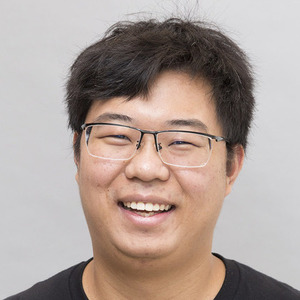
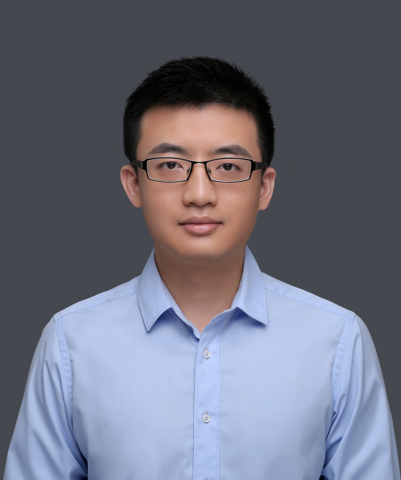
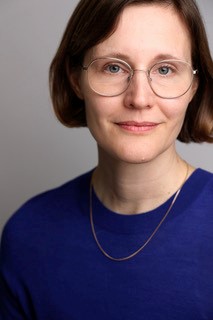
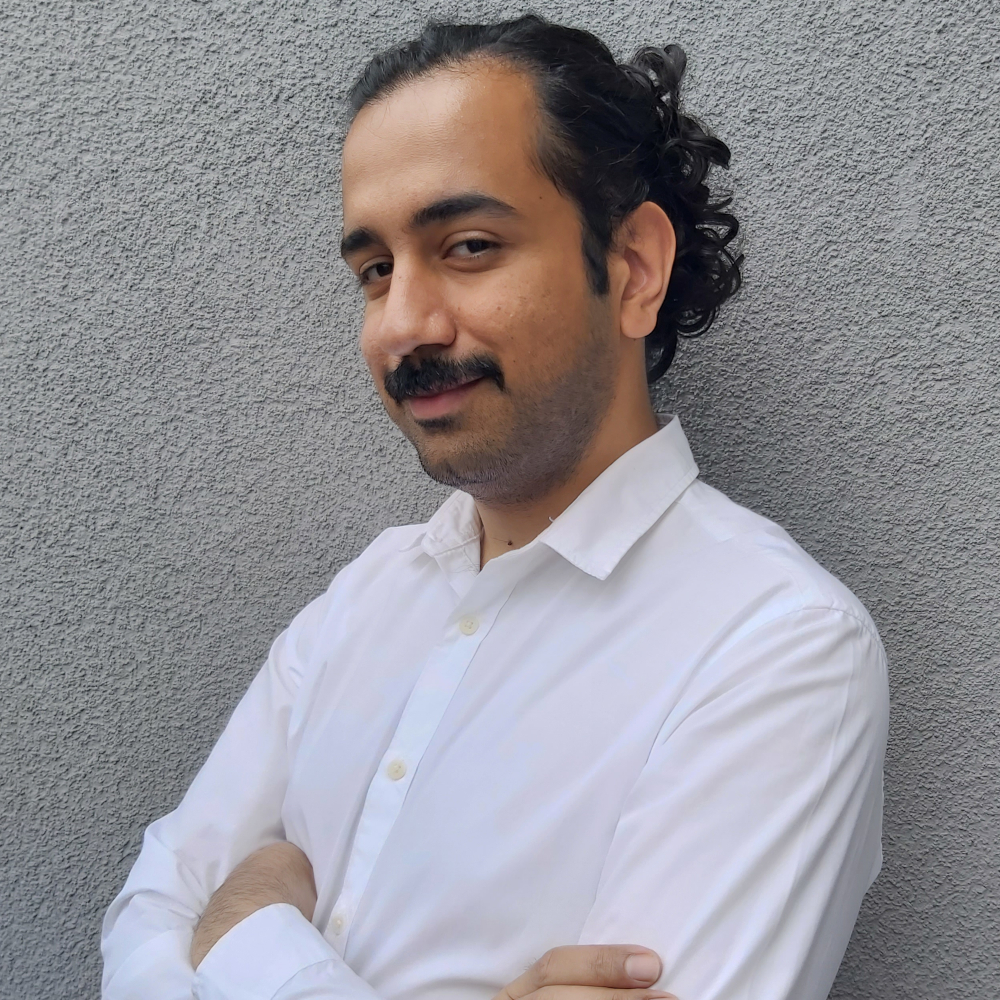
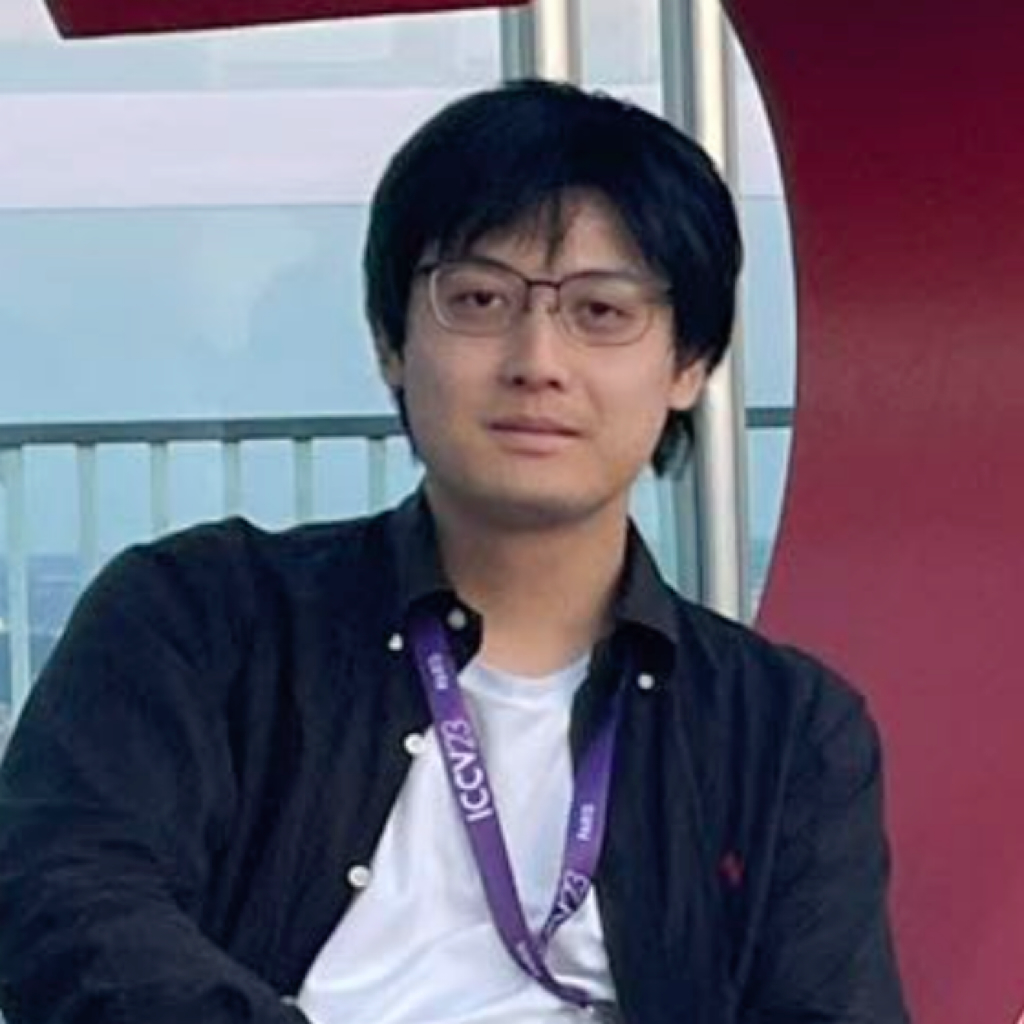
James Urquhart Allingham is a Research Scientist at Google DeepMind , working on the Gemini project. He completed his PhD in the Machine Learning Group at the University of Cambridge under the supervision of José Miguel Hernández-Lobato, with funding from EPSRC, the Michael E. Fisher Studentship in Machine Learning, and the Qualcomm Innovation Fellowship. He was also part of the ELLIS PhD program, advised by Eric Nalisnick at AMLab UvA. Current affiliation: Google DeepMind (Research Scientist) PhD: University of Cambridge (Machine Learning Group) Academic networks: ELLIS PhD program, Darwin College His research focuses on the intersection of Bayesian deep learning and probabilistic methods in deep learning. Key areas include deep generative models , zero-shot classification , prompt engineering , Monte Carlo gradient estimation , and applications to sustainability and climate change . His work has explored energy-based models , neural architecture search , and equivariance in convolutional networks . Selected scientific awards and grants include the Michael E. Fisher Studentship , Qualcomm Innovation Fellowship , and MPhil in Advanced Computer Science with Distinction . He has collaborated with institutions such as the Amsterdam Machine Learning Group (AMLAB) and University of the Witwatersrand .
Zhen Liu is an Assistant Professor at the School of Data Science, CUHK-Shenzhen. His research focuses on generative models, 3D representations, and the synergy of spatial and semantic understanding in AI systems. With a PhD from Mila and Université de Montréal, he develops foundational methods for physics simulation, 3D assembly, and semantic reasoning in neural networks. His work bridges machine learning with applications in computer vision and graphics, emphasizing: Generative architectures for 3D content creation Diffusion model alignment techniques Efficient parameter finetuning strategies Dr. Liu mentors students in AI research and contributes to advancing 3D generative modeling paradigms.
Kede Ma is an Associate Professor in the Department of Computer Science at City University of Hong Kong (CityUHK). He received his B.E. from the University of Science and Technology of China (USTC) in 2012, and MASc and Ph.D. degrees from the University of Waterloo in 2014 and 2017, respectively. From 2018 to 2019, he was a Research Associate with the Howard Hughes Medical Institute and New York University. Prof. Ma has been named to the Highly Cited Researchers list by Clarivate Analytics in 2024 and currently serves on the editorial boards of IEEE Transactions on Image Processing, IEEE Transactions on Information Forensics and Security, and IEEE Signal Processing Letters. Prof. Ma leads the Multimedia Analytics (MA) Laboratory, an interdisciplinary research group focused on computational vision, computational modeling of human visual perception, perceptual multimedia signal processing, quality assessment, and multimedia forensics. His research spans computational photography, high dynamic range imaging and rendering, omnidirectional video analysis, camera processing pipeline design, and artificial intelligence safety in multimedia systems. His work integrates machine learning techniques including reinforcement learning, generative modeling, self-supervised learning, and continual learning for multimedia signal processing applications. His recent publications demonstrate a strong focus on image quality assessment, deep learning for multimedia processing, and multimedia forensics. His work bridges theoretical computer vision principles with practical applications in multimedia systems. The research trends show increasing integration of foundation models with specialized multimedia processing tasks, particularly in quality assessment and security applications. Highly Cited Researchers list by Clarivate Analytics (2024) Best Paper Award at IEEE International Conference on Virtual Reality and Visualization (2021) Best Paper Runner-Up at International Joint Conference on Artificial Intelligence Workshop (2021) Top 10% Award at IEEE International Conference on Image Processing (2015) Finalist for the Governor General's Gold Medal, University of Waterloo (2017) Spotlight presentation at NeurIPS (2022) Highlight paper at ICCV (2025) Oral presentation at ICLR (2025) Prof. Ma advises numerous PhD students and postdoctoral fellows in the MA Laboratory. His research is supported by various grants enabling work in multimedia analytics, image processing, and computer vision. The laboratory maintains active collaborations with researchers at institutions including SUSTech, ZJU, and HIT. Current projects focus on advancing image quality assessment methodologies, developing more robust deep learning techniques for multimedia forensics, and exploring new approaches to HDR imaging and omnidirectional video processing. The Multimedia Analytics Laboratory maintains a strong focus on both theoretical foundations and practical applications of multimedia processing. Current research directions include integrating large language models with image quality assessment, developing more robust deepfake detection methods, and advancing techniques for continual learning in multimedia applications. The lab emphasizes rigorous evaluation methodologies and maintains multiple datasets for multimedia quality assessment research.
Andreas Holzinger is a Professor at Graz University of Technology, with additional affiliations at Medical University Graz and University of Natural Resources and Life Sciences Vienna in Austria. He is recognized as an IFIP Fellow (2021) for his significant contributions to information processing and computer science. His work spans multiple institutions across Europe, with notable collaborations extending to the University of Alberta in Canada. Professor Holzinger's research focuses on Human-Centered AI, Explainable AI (XAI), and their practical applications across diverse domains. His work bridges theoretical AI advancements with real-world implementations in healthcare, forestry, and human-robot interaction. He has pioneered approaches in counterfactual explanations, graph neural networks, and human-in-the-loop systems that emphasize transparency and trustworthiness in AI decision-making processes. His recent publications demonstrate a strong trend toward integrating large language models with traditional AI systems while maintaining explainability. Holzinger's work consistently emphasizes the human element in AI systems, ensuring that technological advancements serve human needs rather than obscuring decision processes. His research in medical AI, smart forestry, and agricultural applications shows a commitment to solving practical problems with human-centered technological solutions. Scientific Awards: IFIP Fellow (2021) Professor Holzinger has been instrumental in establishing design guidelines for explainable AI systems, particularly through his work on post-hoc versus ante-hoc explanations. His research on Kandinsky Patterns has provided valuable experimental frameworks for pattern analysis and machine intelligence. He has secured significant research funding for projects bridging AI with practical applications in healthcare and environmental monitoring. His leadership extends to the organization of major conferences and workshops, including the CD-MAKE conference series, where he has fostered interdisciplinary collaboration between AI researchers and domain experts. His work on the CLARUS platform demonstrates practical implementations of interactive explainable AI for medical applications.
Prof. Dr.-Ing. Reimar Lenz is an Associate Professor at the Technical University of Munich (TUM) within the TUM School of Computation, Information and Technology. His research focuses on digital image acquisition, cooled cameras for microscopy, color image reconstruction, and videometry. He founded CCD Videometrie GmbH in 1999 and co-developed the 'Arriscan' film scanner, earning a Technical Oscar in 2010. Education: Studied electrical engineering at Technical University of Stuttgart and TUM (diploma 1980). PhD in 1986, habilitation in videometry/image processing (1989). IBM postdoc (1987-1988). Key achievements include the microscanning patent (1990), high-resolution museum cameras (MARC project), and CMOS sensor innovations. Awards include the Academy Scientific & Engineering Award (2010) and Heinz Maier-Leibnitz Medal. Manages CCD Videometrie GmbH and holds adjunct roles. Active in both academia and industry, bridging sensor technology and digital imaging applications.
Leif Kobbelt serves as a University Professor at RWTH Aachen University, leading the Computer Graphics Group within the Department of Computer Science (Informatik 8). His research focuses on advancing geometry processing, interactive visualization, and computer graphics through innovative algorithmic solutions and interdisciplinary collaborations. Professor Kobbelt's research program centers on geometry acquisition and processing, with significant contributions to mesh generation, surface reconstruction, and neural rendering techniques. His work bridges theoretical geometry with practical applications in computer vision, photo-realistic image synthesis, and multimedia data transmission, often involving collaborations with industry partners and international research teams funded by DFG and EU sources. Recent publications (2023-2025) reveal a strategic integration of deep learning with traditional geometry processing, particularly in Gaussian splatting for real-time rendering, NeRF-based 4D content generation, and robust mesh Boolean operations. His group maintains leadership in quad mesh optimization and surface mapping while expanding into immersive visualization techniques for complex data analysis. The group has earned recognition through prestigious awards: Günter Enderle Best Paper Award at Eurographics 2023 Best Paper Award (1st place) at Symposium on Geometry Processing 2022 Honorable Mention for Best Paper at ACM Symposium on Virtual Reality Software and Technology Funding from Deutsche Forschungsgemeinschaft and European Union programs supports the group's research infrastructure and international collaborations. The team actively supervises graduate theses while developing open-source software tools that translate theoretical advances into practical industry applications, particularly in digital fabrication and immersive visualization systems. The Computer Graphics Group operates as a central hub for visual computing research at RWTH Aachen, maintaining strong ties with both academic institutions and technology companies. Their recent work on virtual reality educational tools and high-fidelity 3D reconstruction systems demonstrates commitment to knowledge transfer and real-world impact beyond traditional publication venues.
Michael Bronstein is a Professor at Università della Svizzera italiana (USI Lugano) in Switzerland and Imperial College London in the UK, where he holds the Chair in Machine Learning and Pattern Recognition. He serves as Head of Graph Learning Research at Twitter following the acquisition of his startup Fabula AI, and maintains a principal engineer position at Intel Perceptual Computing. His research focuses on the interplay between geometry, machine learning, and computer vision, with particular emphasis on non-Euclidean structured data. Professor Bronstein received his Ph.D. with distinction in Computer Science from the Technion in 2007. He has held visiting appointments at Stanford University, MIT, Harvard University (as a Radcliffe Fellow), and Tel Aviv University, and has been affiliated with multiple Institutes for Advanced Study including TUM-IAS where he was a Rudolf Diesel Industry Fellow (2017). He is a Fellow of IAPR, Senior Member of the IEEE, and a member of the Young Academy of Europe. His research program centers on theoretical and computational methods in spectral and metric geometry applied to computer vision, pattern recognition, and machine learning. He pioneered the field of geometric deep learning, developing novel neural network architectures that process non-Euclidean data structures like graphs and manifolds. His work spans from theoretical foundations to practical applications, with over 100 publications in top scientific journals and conferences, and has been featured in international media including CNN. Analysis of his recent publications reveals a strong trajectory in geometric deep learning with applications spanning computer vision, 3D shape analysis, social network analysis, and bioinformatics. His research consistently bridges theoretical innovation with real-world applications, developing novel neural architectures for processing complex data structures. The work demonstrates increasing interdisciplinary reach, connecting machine learning with fields from particle physics to molecular biology. Dalle Molle Prize (2018) Royal Society Wolfson Research Merit Award (2018) ERC Proof of Concept Grant (2018) Amazon AWS Machine Learning Research Award (2018) Fellow, International Association for Pattern Recognition (IAPR) Google Faculty Research Award (2017) Radcliffe fellowship, Harvard University (2017) Rudolf Diesel industrial fellowship, TU Munich (2017) ERC Consolidator Grant (2016) World Economic Forum Young Scientist (2014) Professor Bronstein has secured multiple ERC grants (Starting Grant 2012, Proof of Concept Grants 2016 and 2018, Consolidator Grant 2016) and has mentored numerous students who have contributed to over 30 granted patents. He has chaired more than a dozen conferences and workshops in his field and served as area chair at major computer vision conferences including ECCV 2016 and ICCV 2017. His research group at USI Lugano collaborates extensively with industry partners including Intel and Twitter. As a serial entrepreneur, Professor Bronstein co-founded Novafora (2005-2009) developing large-scale video analysis, Invision (2009-2012) which created low-cost 3D sensors and was acquired by Intel, and Fabula AI (2018-2019) focused on fake news detection which was acquired by Twitter. His work bridges theoretical research with commercial applications, with his technology contributing to Intel RealSense and Twitter's graph learning infrastructure.
Rainer Sinn is a University Professor (on leave) at Leipzig University, specializing in Applied Algebra within mathematics. His research centers on real algebraic geometry, convex optimization, and sums of squares, with significant contributions to spectrahedra, amplituhedra, and nonnegativity certificates. His primary research interests include real algebraic geometry (focusing on nonnegative polynomials and quadratic forms), convex algebraic geometry (studying convex hulls of algebraic varieties), and combinatorial applications in optimization. He explores geometric structures like amplituhedra in theoretical physics and investigates algebraic solutions to optimization problems. Recent publications (2022-2025) demonstrate a cohesive focus on algebraic approaches to optimization, with recurring themes in nonnegativity certificates, tropical geometry, and combinatorial aspects of algebraic varieties. His German-language works also address the philosophy and public understanding of mathematics, highlighting interdisciplinary impact. No scientific awards were documented in the provided sources. Details regarding academic advising, research grants, laboratories, or collaborative teams were not specified in the available information.
Nina Franz is a Researcher at the Institute of Media Studies, Braunschweig University of Fine Arts, specializing in the Theory and History of Technology. She holds a doctorate in Cultural Studies from Humboldt University of Berlin and has held research positions at Bauhaus University Weimar and Humboldt University Berlin. Her research spans military imaging technologies from early modern period to computer age, climate catastrophe narratives in humanities and contemporary art, history of automation, and critical analysis of technological destruction narratives. She examines how imaging systems mediate power relations in warfare, medicine, and colonial contexts, with particular focus on ultrasound, drone warfare, and military surveillance systems. Her recent publications reveal strong interdisciplinary trends across Media Studies, Cultural History, and Critical Military Studies, with recurring themes of visual epistemology, technological mediation, and the weaponization of perception. Key subfields include drone warfare protocols, medical imaging interfaces, algorithmic control systems, and climate catastrophe representations. Doctoral Scholarship, Gerda Henkel Foundation (2015-2018) As a curator and educator, Franz has organized international conferences including 'Remote Control. Scales of Mediated Intervention' (2017) and co-curated exhibitions like 'A Better Version of You' (2016-2018) with Goethe-Institut Seoul. Her current teaching includes courses on military imaging and rearmament discourses, with mandatory participation in the 'Fascism and Mediality' workshop (2025). She regularly presents at academic conferences on military imaging technologies, including upcoming lectures at Staatliche Hochschule für Gestaltung Karlsruhe and Johannes Gutenberg-Universität Mainz. Her work bridges academic research with contemporary art curation, examining how military technologies permeate civilian perception through screen media and imaging systems.
Prof. Dr.-Ing. Philipp Lensing serves as a Professor in the Faculty of Engineering and Computer Science at Osnabrück University of Applied Sciences. His academic work focuses on cutting-edge developments in virtual and augmented reality systems, computer graphics, and game programming. His research interests span Virtual Reality , Augmented Reality , Mixed Reality , Game Programming , Computer Graphics , and Natural User Interfaces . Prof. Lensing has pioneered work in real-time global illumination techniques, avatar calibration systems, and the integration of virtual content with real environments. His research has been applied across diverse domains including landscape planning, physics education, medical rehabilitation, and industrial engineering. Prof. Lensing's recent publications reveal a strong trend toward practical applications of VR/AR technologies in scientific, educational, and industrial contexts. His work increasingly focuses on multimodal interaction, haptic feedback systems, and the integration of VR with complex scientific instrumentation like scanning probe microscopy. He has supervised numerous student projects focused on VR/AR applications, game development, and 3D modeling. His teaching includes courses on Computer Graphics, 3D Game Programming, Virtual and Augmented Realities, and 3D Modeling and Animation. Prof. Lensing leads several research projects including GROWTH (funded by BMBF), VRnano (BMBF), VRFlow Suite, VR-Physio-BOX, and MoDal-MR, all exploring innovative applications of immersive technologies in various practical contexts.
James F. Peters is a faculty member in the Department of Electrical and Computer Engineering at the University of Manitoba, Winnipeg, Canada. His research lies at the intersection of computational topology, proximity theory, rough sets, and digital image analysis, with applications in computer vision, pattern recognition, and biologically-inspired computing. He has made foundational contributions to the theory of near sets and computational proximity, publishing extensively in journals and book series by Springer. His research interests include computational proximity, near sets, rough sets, digital image analysis, pattern recognition, and topological models of perception. These are evident from his numerous publications in theoretical and applied computer science, often in collaboration with researchers such as Andrzej Skowron, Sheela Ramanna, and Arturo Tozzi. His work spans mathematical foundations, computational models, and real-world applications in biomedical imaging and rehabilitation systems. The recent articles (2017–2025) show a strong trend toward integrating topology, physics, and neuroscience in the analysis of digital images and brain activity. Topics include proximal nerves, optical vortices, thermodynamics of emotions, and entropy in cosmology, indicating a broad interdisciplinary approach. His publications frequently appear in journals such as Entropy , Information Sciences , and Transactions on Rough Sets , as well as in Springer’s Lecture Notes in Computer Science and Intelligent Systems Reference Library series. He has authored or co-authored several books and special issues, notably in the Transactions on Rough Sets series, and has contributed to encyclopedic works on rough sets and computational intelligence. His editorial and collaborative roles highlight his leadership in the rough and near sets research community. Dr. Peters has advised or collaborated with several researchers, though specific student names are not listed in the provided text. He has been involved in projects related to adaptive learning, telerehabilitation gaming systems, and image classification using tolerance near sets. His work often involves grants and interdisciplinary teams, especially in computational intelligence and biomedical applications. He is associated with research groups and labs focused on computational intelligence, rough sets, and digital image analysis, often in collaboration with the University of Warsaw and other international institutions. His ongoing work continues to explore the mathematical foundations of perception and proximity in both artificial and biological systems.
Prof. Dr. Marcus Vetter is the founder and director of the Institute for Applied Artificial Intelligence and Robotics (A²IR) at Mannheim University of Technology's Faculty of Information Technology. His work bridges Deep learning Medical imaging and navigation Embedded systems Real-time computing Software engineering for medical devices He has taught courses including Deep Learning Methods, Image-Guided Medicine, and Embedded Systems. Education Computer Science, Technical University of Mannheim, 1999 Doctorate ('summa cum laude superato') in 'Image-based navigation systems', University of Heidelberg, 2003 Research focuses on AI-driven medical imaging tools, real-time deformation models, and open-source frameworks like MITK. His 15 most recent publications span 6D pose estimation for medical robotics Spectroscopy-based diagnostics Formal software verification Gesture and gaze recognition interfaces UAV drive train optimization Scientific achievements Doctorate with distinction (2003) Co-founder of MITK open-source project Director of A²IR institute since 2007 He has received BMBF grants for real-time deformation models and tracking systems, and has led development of navigation systems for laparoscopic surgery and cardiac ablation procedures.
Dr. Antonio Ortiz is a Researcher at the University of Bonn, affiliated with the Life and Medical Sciences Institute (LIMES) and the IRU Mathematics and Life Sciences group. He works under the supervision of Professors Alexander Effland and Jan Hasenauer. His research focuses on Computer Vision in Medical Imaging and Machine Learning applications. He holds a Ph.D. in Electric and Electronics Engineering from Cinvestav, Mexico (2023), a Master's in Computer Science from Cicese, Mexico (2019), and a Bachelor's in Mechatronic Engineering (2017). His research integrates Bayesian methods, deep learning, and optical flow techniques for cardiac MRI segmentation, visual-inertial SLAM systems, and 3D shape measurement. Recent work emphasizes adaptive algorithms for medical imaging and robotics applications. Publications span medical imaging, robotics, and materials science, with a focus on algorithmic innovation and interdisciplinary applications. No scientific awards are explicitly mentioned, but his work demonstrates strong academic contributions. His advising activities and grants are not detailed in the provided text. He collaborates within the Effland Lab and IRT Mathematics and Life Sciences team.
Iman Nematollahi is a PostDoc in Robot Learning at the University of Freiburg under Prof. Dr. Abhinav Valada, having completed his PhD under Prof. Dr. Wolfram Burgard. He holds a MSc in Embedded Systems from the University of Freiburg and a BSc in Electrical Engineering from Shahid Beheshti University. His research focuses on robot learning, world models, and reinforcement learning, particularly in enabling robots to understand physics through world models and adapt skills in unstructured environments. Education: PostDoc in Robot Learning, University of Freiburg (2025–Present) PhD in Robot Learning, University of Freiburg (2019–2024) MSc in Embedded Systems, University of Freiburg (2015–2018) BSc in Electrical Engineering, Shahid Beheshti University (2010–2015) Research Interests: Robot manipulation, world models, reinforcement learning, computer vision, and self-supervised learning. His work emphasizes intuitive physics understanding, skill generalization, and sample-efficient policy improvement. Key Articles: Recent work includes LUMOS (language-conditioned imitation learning), Bayesian optimization for policy refinement, and 3D video prediction (T3VIP). These contributions bridge theory and real-world robotic applications, emphasizing long-horizon tasks and cross-environment adaptation. Awards & Grants: No explicit awards mentioned. His research has been supported through projects like OML (Organic Machine Learning). Teaching: Taught Deep Learning Lab (2020–2022) and Introduction to Mobile Robotics (2019).
Currently a Research Fellow at Harvard University & MIT , Fangneng Zhan specializes in Neural Rendering and Generative AI . His research focuses on developing evolutive rendering frameworks, 3D-aware generative models, and multimodal synthesis techniques. Previously, he was a postdoctoral researcher at the Max Planck Institute for Informatics under Prof. Christian Theobalt. He earned his Ph.D. in Computer Science & Engineering from Nanyang Technological University, Singapore and a Bachelor's in Communication Engineering from the University of Electronic Science and Technology of China . His work spans 3D reconstruction, robotics applications , and lighting estimation , with significant contributions to SIGGRAPH , NeurIPS , and CVPR conferences. Recent research highlights include evolutive gauge transformations for neural fields, generalizable 3D style transfer via Gaussian splatting, and multimodal synthesis frameworks leveraging pre-trained models like CLIP and Stable Diffusion. He has co-authored Top50 Popular Paper in TPAMI 2023 and organized workshops at CVPR 2024 on generative models. Scientific Awards: Top50 Popular Paper, IEEE Transactions on Pattern Analysis and Machine Intelligence (TPAMI) 2023 Collaborative Network: Mentored students at institutions like Harvard, NTU, and ETH Zurich. His projects include datasets for lighting estimation and real-time scene text detection systems.