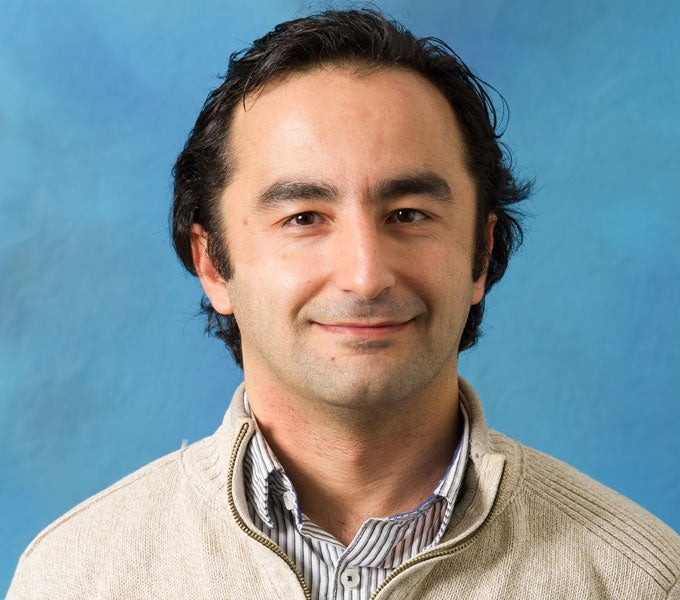
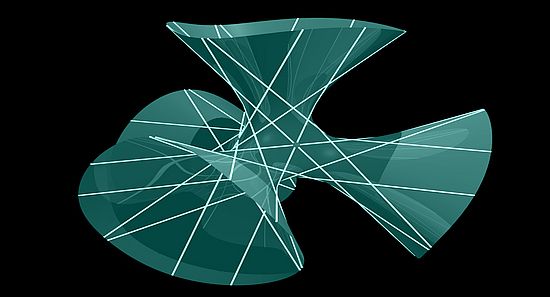
Kiumars Kaveh is a Professor of Mathematics at the University of Pittsburgh, affiliated with the Dietrich School of Arts and Sciences. He holds a PhD from the University of Toronto and a B.Math from Sharif University of Technology. His research focuses on algebraic geometry, Lie theory, and combinatorics, with particular emphasis on the interplay between geometric structures and convex polytopes. He has taught advanced courses such as Algebraic Geometry, Combinatorial Algebraic Geometry, and Lie Groups. Education : PhD, University of Toronto (2002) B.Math, Sharif University of Technology (1996) Research interests include toric varieties, flag varieties, Schubert calculus, Newton-Okounkov bodies, and applications to quantum information. His work bridges algebraic geometry with convex geometry and combinatorics, as seen in his exploration of tropical geometry and Bruhat-Tits buildings. He has published extensively in top-tier journals, with notable contributions to the theory of toric vector bundles and equivariant cohomology. Teaching responsibilities include graduate-level courses in algebra and geometry. While no specific awards are listed, his prolific publication record reflects significant scholarly impact. His research often involves collaborations, as evidenced by projects like 'Collaborative Research: Toric Geometry, Tropical Geometry, and Combinatorial Buildings.'
Robert MacKay is a Professor of Mathematics and Director of Mathematical Interdisciplinary Research at the University of Warwick. His work bridges pure and applied mathematics, focusing on dynamical systems, mathematical physics, and complexity science with applications to economics, engineering, and fusion energy. He leads the Warwick team in the Simons collaboration on Hidden Symmetry and Fusion Energy, addressing challenges in stellarator design. He teaches advanced courses like MA4H0 Applied Dynamical Systems and TCC Thermal Economics, the latter pioneering a thermodynamic approach to macroeconomics. His research interests include nonlinear dynamics, bifurcation theory, and applications to physics (e.g., plasma confinement), biology, and finance. Collaborations include work on magnetohydrodynamic equilibria and single-particle motion in non-axisymmetric magnetic fields. He has secured grants from EPSRC, Royal Society, and the Simons Foundation, supporting interdisciplinary projects such as the Mathematics of Complexity Science and Systems Biology (2009–2011). MacKay holds prestigious awards including Fellowships from the Royal Society (FRS), Institute of Physics (FInstP), and Institute of Mathematics and its Applications (FIMA). His recent work explores thermal macroeconomics, financial market dynamics, and geometric approaches to plasma confinement. He advises PhD students and postdocs in nonlinear dynamics and PDE theory, fostering the next generation of complexity scientists.
Robert V. Kohn is the Silver Professor of Mathematics at New York University, affiliated with the Courant Institute of Mathematical Sciences (CIMS). He holds academic positions within the Department of Mathematics at the College of Arts & Science and the Graduate School of Arts & Science. His research focuses on nonlinear partial differential equations (PDEs), calculus of variations, and their applications to materials science, thin elastic sheets, and machine learning. Education: Ph.D. in Mathematics from Princeton University (1979), M.Sc. from the University of Warwick (1975), and A.B. from Harvard University (1974). Research interests span elastic energy-driven pattern formation (e.g., wrinkling, folding), PDEs in machine learning (e.g., prediction with expert advice), and continuum mechanics. Recent work includes variational analysis of thin film mechanics and PDE-based approaches for binary sequence prediction. His articles explore topics ranging from metamaterials to stochastic growth models. Notable themes in his publications include energy minimization in materials, optimal control analogies in learning algorithms, and mathematical modeling of physical phenomena. While no formal awards are listed, his contributions to PDE theory and applied mathematics are widely recognized. Advising and grants details are not explicitly documented here.
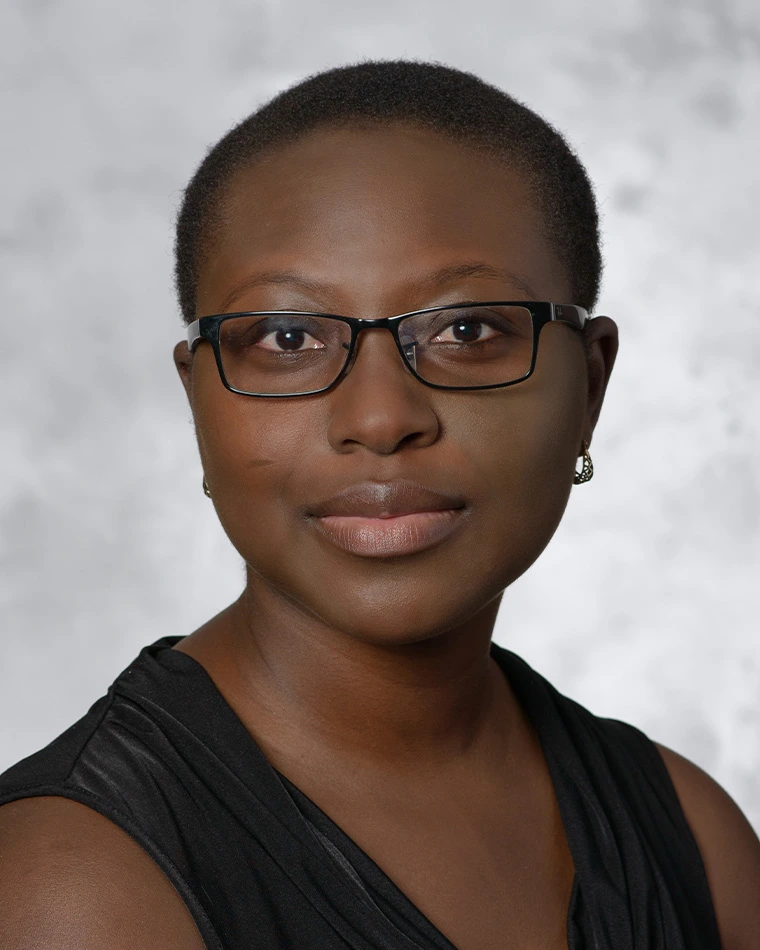
Dr. Angelina Anani is an Associate Professor in the Department of Mining & Geological Engineering at the University of Arizona, College of Engineering. She is also a member of the Graduate Faculty and actively contributes to research and teaching in mining systems optimization, mine planning, and sustainable mining practices. Education: PhD in Mining Engineering, Missouri University of Science and Technology, Rolla, Missouri, United States BS in Mining Engineering (Summa cum laude), Missouri University of Science and Technology, Rolla, Missouri, United States Research Interests: Dr. Anani's research spans a broad spectrum of mining engineering challenges, focusing on modeling and optimization of mining systems , mine planning and production scheduling , and sustainable mining system design . She investigates mine equipment reliability , tunneling and underground works , and energy and water efficiency . A significant portion of her recent work integrates machine learning and data-driven approaches into mine safety and planning, including 3D/4D/VR applications and digital twin systems . Her interdisciplinary approach also includes ethnographic research in mining communities and supply chain management in the mining sector. Publications Trends: Her recent publications reflect a strong shift toward intelligent systems in mining, with increasing focus on machine learning for safety, process mining for maintenance, and digital twin deployment. She combines traditional optimization techniques like discrete event simulation with modern AI to solve complex mining challenges, particularly in underground and transition mines. Scientific Awards: Freeport-McMoRan, Inc. Career Development Grant Society for Mining, Metallurgy and Exploration, Fall 2022 Faculty Core Advising and Grants: Dr. Anani supervises graduate research through MNE 900 (Research), MNE 910 (Thesis), and MNE 920 (Dissertation) courses. She has secured external funding such as the Freeport-McMoRan Career Development Grant, supporting her innovative work in mine optimization and safety. While current students are not listed, her active supervision load indicates ongoing mentorship of master’s and PhD candidates. Labs and Teams: She is actively involved with the San Xavier Underground Mine Laboratory, where she contributes to monitoring systems and digital twin development. Her collaborative work with researchers from Chile and Ghana highlights her international engagement. She is also affiliated with professional societies including the Society of Mining, Metallurgy and Exploration (SME), Society of Mining Professors, and Women in Mining (WIM), contributing to both technical and diversity initiatives in the field.
Michael Shelley is the Lilian and George Lyttle Professor of Applied Mathematics at New York University's Courant Institute of Mathematical Sciences. He holds additional roles as Professor of Mathematics, Neural Science, and Mechanical Engineering. His research focuses on fluid dynamics, active matter, and biophysical systems, with notable contributions to microswimmer dynamics, cytoplasmic flows, and fluid-structure interactions. Shelley leads the Applied Mathematics Laboratory at Courant and directs the Center for Computational Biology at the Flatiron Institute. His work bridges theoretical, computational, and experimental approaches to understand complex biological and physical phenomena. Research interests include nonlinear dynamics of fluids, collective behavior in active matter systems, and biomechanical processes such as mitosis and cellular transport. Recent studies involve modeling microtubule networks, cytoplasmic stirring, and spindle positioning in cells. His publications span topics like fluid-structure interactions, viscoelastic flows, and the mechanics of swimming organisms. Key projects include the dynamics of erodible bodies in fluid flows, optimization of microswimmer designs, and the rheology of active suspensions. Shelley collaborates across disciplines, integrating applied mathematics with biology, physics, and engineering. His work has advanced understanding of self-organization in living systems and fluid-driven morphological changes.
**Dan Abramovich** is a Professor in the Department of Mathematics at Brown University, affiliated with the College of Arts and Sciences. His research focuses on algebraic geometry, particularly in resolution of singularities, logarithmic geometry, moduli spaces, and birational geometry. He has authored numerous papers and contributed to foundational work in these areas, supported by NSF and BSF grants. **Teaching**: He teaches courses like Math 1540 (Galois theory and representations of finite groups) and has extensive past teaching records dating back to 2015. His seminars include Algebraic Geometry and Topology. **Research**: Abramovich's work bridges algebraic structures and geometric applications, with notable contributions to logarithmic geometry and moduli theory. His recent articles address weighted blow-ups, dynamical systems in resolution, and functorial monomialization. **Grants & Collaboration**: He collaborates internationally, organizing conferences like AGNES and BATMoBYle. His work is disseminated via arXiv, with over 50 publications since the 1990s.
Prof. Michael Schneider is Universitätsprofessor and Chair of Computational Logistics at RWTH Aachen University since 2016. Previously, he held positions at TU Darmstadt (2013-2016) and earned his doctoral degree from TU Kaiserslautern (2012). His research focuses on logistics optimization, including transportation routing, warehouse management, and metaheuristic methods for solving complex operational challenges. He leads the Global Challenges Lab and serves as communication chair of VeRoLog (EURO's vehicle routing group). Research interests include: quantitative modeling for supply chains, heuristic/exact optimization methods, electric vehicle routing, territory design, and production planning. Notable achievements include the INFORMS Journal on Computing Meritorious Paper Award (2021) and editorial roles in journals like Applied Mathematical Modelling. Publications span topics like vehicle routing with time windows, electric logistics networks, and warehouse automation strategies. His work integrates advanced algorithms with real-world industry applications (e.g., DHL, Picnic). The Computational Logistics group collaborates on projects addressing sustainability, autonomous systems, and modern warehousing challenges. Education: Business Admin & Computer Science (University of Mannheim), PhD (TU Kaiserslautern) Professional Roles: VeRoLog Communication Chair, EURO Working Group Key Projects: Electric vehicle routing optimization, warehouse automation, and sustainable logistics networks
Alexander S. Merkurjev is a Professor of Mathematics at the Department of Mathematics, University of California, Los Angeles (UCLA). He specializes in algebraic K-theory, Galois cohomology, quadratic forms, and cohomological invariants of algebraic groups. His work bridges algebraic geometry, number theory, and representation theory. Research interests include: algebraic groups, motivic cohomology, essential dimension, degenerate Massey products, and rationality problems of classifying spaces. He investigates questions related to Galois representations, invariants of algebraic structures, and geometric aspects of algebraic K-theory. Recent work focuses on Massey vanishing conjectures, cohomological invariants of spinor groups, and p-adic Galois representation theory. His 2025 papers address advanced topics in non-Abelian cohomology and lifting problems, while 2023-2024 publications explore fourfold Massey products and connective K-theory operations. Earlier contributions include foundational work on essential dimension and cohomological invariants of algebraic tori. His research has been published in leading mathematics journals and includes collaborations with top specialists in algebraic geometry and number theory. Notable results include the proof of Suslin's conjecture on reduced Whitehead groups and the establishment of cohomological frameworks for studying algebraic groups.
Neil Lutz is a Visiting Assistant Professor at Swarthmore College and an Affiliate Assistant Professor at Iowa State University, specializing in Theoretical Foundations. His research focuses on algorithmic information theory, computational complexity, and fractal geometry. Key contributions include work on algorithmic dimensions, point-to-set principles, and fairness in facility location. Lutz has published extensively in top venues such as STACS, TOCT, and SODA. His work bridges theoretical computer science with applications in molecular programming and distributed computing.
Matt Allen is a Professor in the Department of Mechanical Engineering at Brigham Young University (BYU), within the College of Engineering. He previously held faculty positions at the University of Wisconsin-Madison in the Engineering Physics Department, progressing from Assistant to Associate to Full Professor. His research group, the BYU Structural Dynamics Research Group, is actively engaged in experimental and analytical studies of complex dynamic systems. Ph.D. and M.S. in Mechanical Engineering, Georgia Institute of Technology (2005) B.S. in Mechanical Engineering, Brigham Young University (2001) Postdoctoral Appointee, Sandia National Laboratories (2005–2006) Dr. Allen’s research centers on structural dynamics, with a strong emphasis on nonlinear dynamics , experimental mechanics , and vibrations . His team develops innovative methods to characterize and model systems where traditional modeling fails—such as structures with large deformations, frictional joints, or complex interfaces. Key research thrusts include nonlinear normal modes, substructuring for nonlinear systems, damping characterization in bolted joints, and test-based model updating. His work bridges engineering structures and biomechanical systems, such as human gait dynamics. The research publications reflect a consistent focus on nonlinear structural dynamics , experimental system identification , and model validation . Trends show increasing integration of computational methods like harmonic balance and reduced-order modeling with experimental data, particularly for spacecraft, aircraft, and mechanical joints. The work is highly interdisciplinary, intersecting mechanical, aerospace, and civil engineering. Dominick J. DeMichele Award, Society for Experimental Mechanics B. J. Lazan Award, Society for Experimental Mechanics NASA NESC Group Achievement Award for work on nonlinear joints in the MPCV Young Investigator Award, Air Force Office of Scientific Research Dr. Allen has advised numerous graduate students, many of whom appear as co-authors on publications. He has secured over $3.3 million in research funding as principal investigator, with total project funding exceeding $5.5 million when including funds managed by collaborators. He is actively involved in professional service, including editorial roles for Experimental Mechanics and Experimental Techniques , and leadership in the Society for Experimental Mechanics. He teaches core courses in dynamics, vibrations, and modeling at both BYU and previously at UW-Madison. He leads the BYU Structural Dynamics Research Group, which focuses on developing experimental and analytical tools for understanding complex dynamic behavior in engineering and biological systems. The group emphasizes rigorous validation, interdisciplinary collaboration, and real-world application in aerospace, automotive, and biomechanical domains.
Stephen J. Wright holds the George B. Dantzig Professorship, Sheldon Lubar Chair, and Amar and Balinder Sohi Professorship as a Professor of Computer Sciences at the University of Wisconsin-Madison. His research focuses on computational optimization with broad applications across scientific and engineering disciplines. His expertise spans computational optimization, mathematical optimization, and optimization algorithms, with significant contributions through widely adopted textbooks like Primal Dual Interior-Point Methods and Numerical Optimization . His work bridges theoretical foundations with practical implementations for complex scientific computing challenges. Notable honors include: W.R.G. Baker award from IEEE (2014) SIAM Fellow designation Wright serves as editor-in-chief of the SIAM Journal on Optimization and has held editorial leadership roles for Mathematical Programming (Series A/B), SIAM Review , and SIAM Journal on Scientific Computing . His academic career includes prior positions at North Carolina State University (1986-1990), Argonne National Laboratory (1990-2001), and the University of Chicago (2000-2001), followed by continuous service at UW-Madison since 2001. He has chaired the Mathematical Optimization Society and served as SIAM Trustee, with recent program participation at the Simons Institute including Fall 2021's Geometric Methods in Optimization and Sampling.
Matthew P. Young is a Harold H. Martin Professor of Mathematics at Rutgers University , specializing in Analytic Number Theory and Automorphic Forms . His research focuses on L-functions, modular forms, and spectral theory, with a strong emphasis on moments and subconvexity bounds. Research Trends: Recent publications highlight advancements in cubic and fourth moments of L-functions, reciprocity laws for Dedekind sums, and spectral large sieve inequalities. His work bridges classical number theory with modern automorphic form analysis. Teaching: Has taught a wide range of courses at Rutgers, including advanced topics in number theory and graduate-level mathematics, from 2007 to 2023.
Alessandra Iozzi is a Professor in the Department of Mathematics at ETH Zurich, where she has been an active faculty member for many years. Her office is located in HG G 37.4 at ETH Zentrum, and she maintains a strong research and teaching presence at one of the world's leading technical universities. She regularly organizes academic activities including workshops, seminars, and conferences related to her research interests. Professor Iozzi's research focuses on bounded cohomology, Lie groups, symmetric spaces, geometric group theory, Teichmüller theory, and representation theory . Her work often involves deep connections between geometric structures and algebraic representations, with significant contributions to understanding rigidity phenomena in mathematics. She has developed important results in the theory of maximal representations and their geometric interpretations, particularly in relation to Hermitian symmetric spaces. Her recent publications demonstrate a strong focus on character varieties, compactifications, and the geometric structures underlying representation theory. The trend in her work shows increasing sophistication in connecting bounded cohomology with geometric structures, particularly through the study of maximal representations, geodesic currents, and their compactifications. Her research has evolved from foundational work in bounded cohomology to sophisticated applications in geometric group theory and higher Teichmüller theory. Professor Iozzi has been actively involved in organizing numerous academic activities including the Geometry Seminar at ETHZ, the "goMATH, Frauen machen Mathematik" initiative, and various international workshops on geometric group theory, Teichmüller theory, and related topics. She has collaborated extensively with leading mathematicians including Marc Burger, Anna Wienhard, and Nicolas Monod, among others.
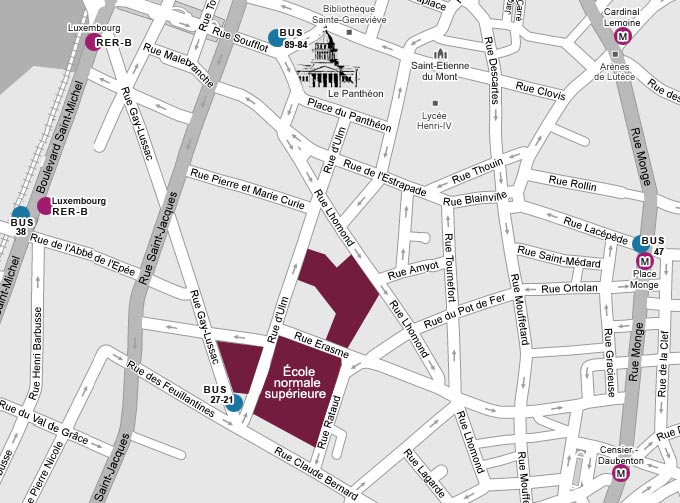
Phong Nguyen is a Research Professor at Inria (Directeur de recherche) and a part-time professor at the Computer Science Department (DI ENS) of École Normale Supérieure (ENS), PSL University in Paris. He leads the ENS Crypto Team (Inria Equipe Projet Cascade) and serves as the principal investigator for the ERC Advanced Grant PARQ (2020) focused on lattices in parallel and quantum computing. He holds a PhD (1999) and Habilitation (2007) from ENS-Lyon, with an agrégation de mathématiques (1997). His research integrates cryptography, algorithmic number theory, and lattice-based computations, emphasizing: Cryptanalysis : Deconstructing cryptographic protocols, especially lattice-based systems Post-quantum cryptography : Developing quantum-resistant solutions Lattice algorithms : Optimization of reduction, enumeration, and sieving techniques Real-world applications : Bridging theoretical constructs with practical security implementations His publications (spanning Eurocrypt, Asiacrypt, and Journal of Cryptology) demonstrate deep expertise in lattice cryptography, with recurring themes in algorithm efficiency, cryptanalysis of NTRU/GGH systems, and theoretical advancements in lattice reduction. Recent work (2024) continues this trajectory with improved BKZ analysis and hypercubic lattice optimizations. Awards include : ERC Advanced Grant (2020) for PARQ project Best Paper Award at EUROCRYPT 2006 Cor Baayen Award (2001) He advises PhD students (e.g., Henry Bambury, Leo Ducas) and interns from institutions like École Polytechnique and ENS. He directs the ENS Crypto Team and previously held leadership roles as: French Director of the Japanese-French Laboratory for Informatics (2015-2019) European Director of LIAMA (Sino-European Computer Science Lab, 2013-2015) Coordinator of ECRYPT II virtual labs (2008-2012)
Martin Michael Hanczyc is an Associate Professor in the Department of Cellular, Computational, and Integrative Biology (CIBIO) at the University of Trento, Italy. His research program bridges biochemistry, biophysics, and synthetic biology to explore the fundamental principles of life through artificial systems. Dr. Hanczyc's primary research interests focus on synthetic biology and artificial life , particularly the creation and study of artificial cell systems using vesicles and droplets as model compartments. His work explores how simple chemical systems can exhibit life-like behaviors including self-organization, compartmentalization, and survival strategies. He investigates the physical and chemical principles underlying the formation of primitive cell-like structures, with implications for understanding the origin of life. His recent publications reveal a strong trend toward quantitative analysis of dynamic systems, with increasing focus on network formation, computational modeling, and high-throughput methods for studying artificial cell behaviors. The research spans from fundamental studies of vesicle and droplet dynamics to more complex investigations of artificial ecosystems and chemical networks that mimic biological processes. As an educator, Dr. Hanczyc teaches in the Biotechnology Engineering program and contributes to the RNA Biology and Biotechnology course, focusing on advanced biomaterials, tissue engineering, and regenerative medicine applications. His teaching emphasizes the integration of theoretical principles with practical applications in biomedical technologies.