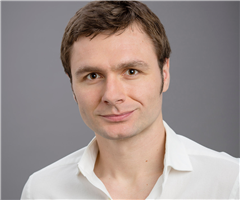
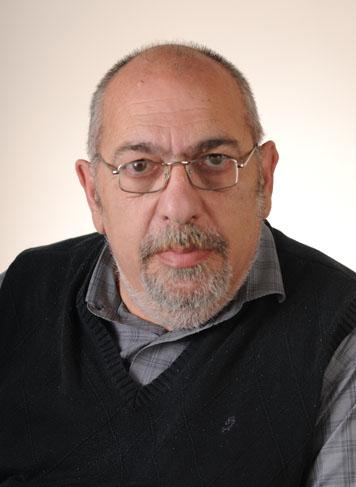
Ivan Dokmanic is an Assistant Professor at the Coordinated Science Laboratory (CSL) within the University of Illinois . His research bridges signal processing , machine learning , and applied inverse problems , with a focus on acoustics, biomedical imaging, and distance geometry. Current Role : Assistant Professor, CSL Email : dokmanic@illinois.edu Research Interests : Dokmanic explores machine learning applications in inverse problems , particularly distance geometry for molecular imaging and acoustics . His work includes unlabeled sensing , where distances between points are known but their arrangement is not. This has implications for powder diffraction , indoor localization , and echo modeling . Article Trends : His recent publications emphasize distance geometry in machine learning , acoustic signal processing , and inverse problem theory . Key areas include molecular imaging , audio encryption , and sensor positioning . Collaborative work spans medical imaging , cyberphysical systems , and geometric invariants . 2016 Google Faculty Award NSF Grant (1 year, $157,079) Students and Grants : Dokmanic mentors PhD students like Puoya, Shuai, and Anadi. His research is funded by the National Science Foundation , Google , VISA , and nVidia .
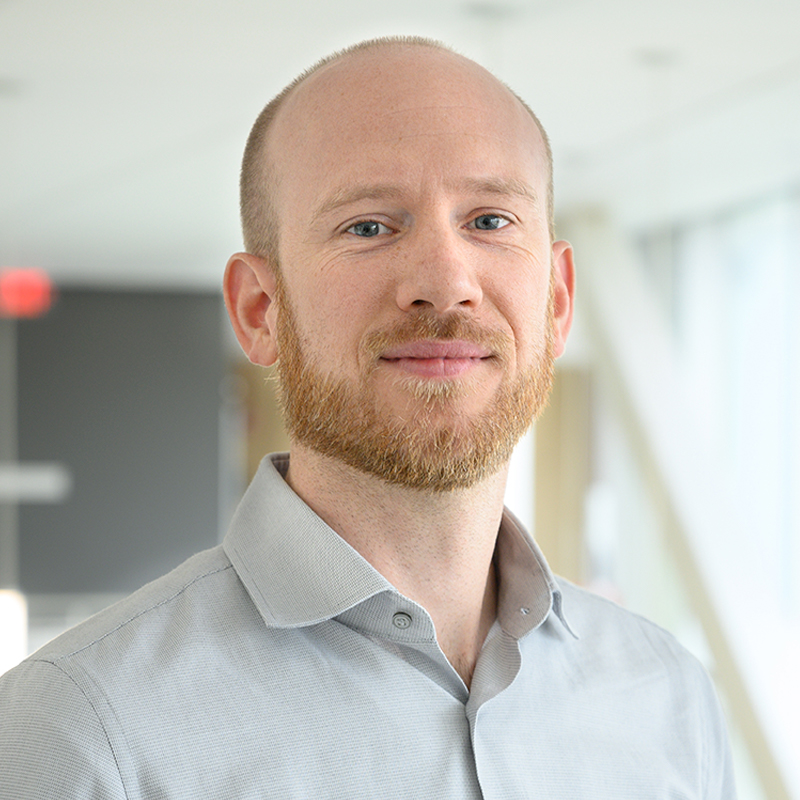
Andrea Marchese is an Associate Professor in the Department of Mathematics at the University of Trento since 2019. He holds a PhD from the University of Pisa (2013) and has held academic positions at the University of Pavia, University of Zurich, and Max Planck Institute for Mathematics in the Sciences (Leipzig). His research focuses on Geometric Measure Theory, Calculus of Variations, and Optimal Transport, with contributions to minimal surfaces, branched transportation networks, and singular measure analysis. Education: PhD in Mathematics, University of Pisa (2013), Thesis: 'Two applications of the theory of currents' Master's in Mathematics, University of Milan (2008), Thesis: 'Singular points for coverings of Banach spaces' Bachelor's in Mathematics, University of Milan (2006), Thesis: 'Weak topologies and their metrizability in Banach spaces' Research Interests: Geometric Measure Theory, Calculus of Variations, Optimal Transport, Minimal Surfaces, and their applications to real analysis and geometric flows. Awards & Grants: Habilitation for Full Professor in Mathematical Analysis (2022) ERC Starting Grant (2020, ranked A with a score of 484/3272 proposals) Coordinated multiple INdAM/GNAMPA projects totaling over €25,000 Awarded grants from the University of Pavia, SNF, and Marie Sklodowska-Curie Actions Teaching: Has taught courses on Mathematical Analysis, Geometric Measure Theory, and Functional Analysis at the University of Trento, Pavia, Zurich, and Freiburg. Professional Activities: Organized international workshops, served as referee for over 30 journals (e.g., Inventiones Mathematicae , Journal of Differential Geometry ), and contributed to conferences worldwide.
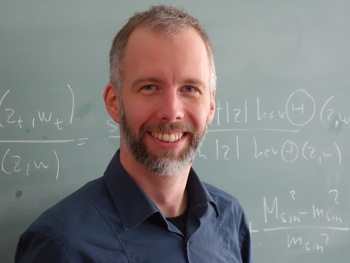
Matthew Lakin is an Associate Professor with tenure in the Department of Computer Science at the University of New Mexico, with a courtesy appointment in the Department of Chemical & Biological Engineering. He is affiliated with the UNM Center for Biomedical Engineering and the School of Engineering, and collaborates extensively with the UNM Health Sciences Center and external institutions. Education: Ph.D., Computer Science, University of Cambridge, 2010 M.A. (Cantab), University of Cambridge, 2009 B.A. (Hons), Computer Science, University of Cambridge, 2005 Dr. Lakin's research focuses on molecular computing, DNA nanotechnology, synthetic biology, and formal verification of biomolecular circuits. He develops computational models and experimental systems for programmable biological devices, especially using heterochiral DNA to enhance stability in living cells. His work spans software tools for biodesign and experimental validation in mammalian systems, with applications in nanomedicine and biosensing. The recent publications highlight a strong trend in engineering robust, intelligent biomolecular systems. His work integrates machine learning concepts into chemical reaction networks, advances geometric modeling of DNA systems, and pioneers L-DNA-based circuits for intracellular applications. The research spans theoretical foundations, software tools, and wet-lab experimentation, emphasizing interdisciplinary innovation. Scientific Awards: Presidential Early Career Award for Scientists and Engineers (PECASE), 2025 NSF CAREER Award, 2021 UNM School of Engineering Junior Faculty Research Excellence Award, 2021 Multiple student awards under his mentorship, including the Outstanding Graduate Student Award and DNA28 Best Student Presentation recognition Dr. Lakin has advised numerous graduate and undergraduate students, including Ph.D. graduates in Biomedical Engineering and Computer Science. He leads major funded projects such as the NSF CAREER grant on heterochiral molecular computing, an EPSCoR Research Fellowship, and a $3M NSF grant on heavy metal biosensing in collaboration with Native American communities. He is also PI on multiple NSF grants related to synthetic cells and nucleic acid technologies. He directs the Lakin Lab for Programmable Biology, which operates within the Department of Computer Science and collaborates with Chemical & Biological Engineering and the Center for Biomedical Engineering. The lab emphasizes both computational modeling and experimental molecular biology, and runs an NSF-funded biotechnology summer camp in partnership with ¡Explora! science museum to strengthen STEM education in New Mexico.
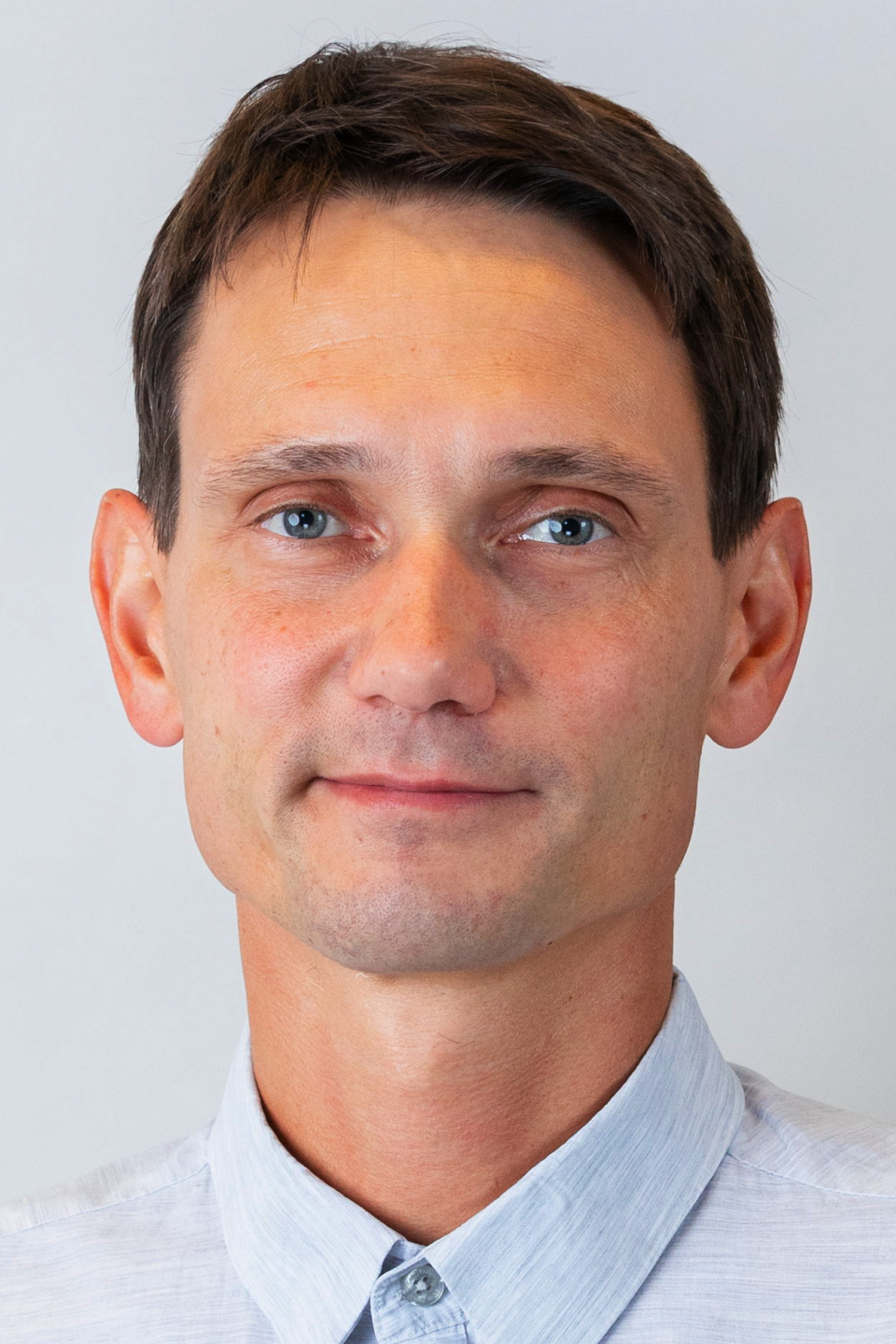
Warut Suksompong is an Assistant Professor in the School of Computing at the National University of Singapore (NUS), where he holds the NUS Presidential Young Professorship. Previously, he was a postdoctoral researcher at the University of Oxford, hosted by Edith Elkind, and completed his PhD at Stanford University under Tim Roughgarden. He holds bachelor's and master's degrees from MIT. His research focuses on algorithmic game theory, computational social choice, mechanism design, and interdisciplinary problems at the intersection of computer science, economics, mathematics, and operations research. He is particularly known for contributions to fair division, including envy-freeness, proportionality, and maximin fairness in both divisible and indivisible resource allocation contexts. Key awards include the IJCAI 2021 Distinguished Paper Award for work on dividing land with geometric constraints and the WINE 2021 Best Student Paper Award for research on funding public projects via the Nash product rule. His work bridges theoretical foundations with practical applications, addressing challenges such as connectivity constraints, budget allocation, and social choice mechanisms. He has authored over 100 publications in top conferences and journals, including SIAM Journal on Discrete Mathematics, Artificial Intelligence, and Games and Economic Behavior. His research has been supported by grants from NUS and international collaborations.
Paata Ivanisvili is an Associate Professor at the University of California, Irvine (UCI), Department of Mathematics, School of Physical Sciences. His research focuses on Analysis, Probability, Harmonic Analysis, and Functional Analysis, with a particular emphasis on isoperimetric inequalities, functional inequalities, and discrete structures such as the Hamming cube. He has held visiting positions at institutions including the Hausdorff Research Institute for Mathematics and Princeton University. Ivanisvili has organized conferences such as the Dual Trimester Program at the Hausdorff Institute on Boolean Analysis in Computer Science (2024) and annual Summer/Fall Schools since 2021. He earned his PhD in Mathematics from Michigan State University (2015) and a BS from Saint Petersburg State University (2011). His research interests include sharp inequalities in analysis (e.g., Poincaré, Beckner, Ehrhard), hypercontractivity, and applications to discrete mathematics and probability. He has collaborated with prominent mathematicians such as Fedor Nazarov, Alexander Volberg, and Roman Vershynin. Notable awards include the NSF CAREER Award (2021–2025) and Simons Fellowship in Mathematics (2025–2026). Ivanisvili’s recent work explores the interface between harmonic analysis and discrete mathematics, including studies on additive energies, convex hulls of space curves, and learning theory. His articles frequently address foundational questions in geometric functional analysis, often using tools like Bellman functions and optimal control theory. He actively advises PhD students and has mentored visiting researchers at UCI.
Martin Larsson is a Professor in the Department of Mathematical Sciences at Carnegie Mellon University (CMU), affiliated with the Mellon College of Science. He holds a Ph.D. from Cornell University and completed a postdoctoral appointment at the Swiss Finance Institute at EPFL, Lausanne, Switzerland. His research focuses on Mathematical Finance, stochastic analysis, probability, and statistics, with emphasis on affine and polynomial processes, stochastic portfolio theory, and sequential statistics. Key research domains include modeling interest rate term structures, large-scale equity market dynamics, and statistical testing in online settings. He serves as the Departmental representative for the Master of Science in Computational Finance (MSCF) program at CMU. Larsson has received the Bruti-Liberati Visiting Fellowship from the University of Technology Sydney. His work bridges theoretical probability with applications in finance, including contributions to stochastic volatility modeling, optimal contracts in trading, and robust portfolio optimization under uncertainty. Publications span topics such as martingale exit times, Wasserstein distance convergence, and ergodic control in stochastic systems, reflecting his interdisciplinary approach to mathematical finance and probability theory. His research often combines analytical techniques with stochastic control and geometric flows.
Michał Pilipczuk is an Associate Professor at the Institute of Informatics, Faculty of Mathematics, Informatics and Mechanics of the University of Warsaw. His research focuses on theoretical computer science, particularly algorithms on discrete structures, parameterized algorithms, structural graph theory, and logic in computer science. He leads the ERC-funded project "BOBR: Decomposition Method for Discrete Problems" and previously led a grant on optimality in parameterized complexity funded by the Polish National Science Center. His research interests include parameterized algorithms , structural graph theory , graph algorithms , and computational complexity . He has made significant contributions to the understanding of problems such as Independent Set in restricted graph classes, graph editing problems, and structural decompositions. The recent publications highlight a strong focus on structural graph theory and exact algorithms . Key themes include quasi-polynomial time algorithms for Independent Set in claw-free graphs, diameter computation in bounded genus graphs, and kernelization in trivially perfect graphs. His work often bridges combinatorial insights with algorithmic applications, particularly in the context of parameterized complexity. Principal Investigator, ERC Grant BOBR: Decomposition Method for Discrete Problems (2021–2026) Principal Investigator, Polish National Science Center Grant on Optimality in Parameterized Complexity (2014–2017) He has advised or collaborated with several researchers, including Marcin Wrochna and Marcin Pilipczuk. His work is published in top venues such as STOC, SODA, ESA, and ICALP.
Christian Bargetz is a Professor of Functional Analysis at the University of Innsbruck, Austria, affiliated with the Faculty of Mathematics, Computer Science, and Physics (MIP). His primary research focuses on nonlinear functional analysis, Banach space theory, and distribution theory. He teaches advanced courses such as Optimization, Distribution Theory, and Functional Analysis, demonstrating his expertise in both theoretical and applied aspects of his field. Education: Completed his PhD in 2012 at the University of Innsbruck under the supervision of Norbert Ortner. His diploma thesis (2008) explored differential behaviors with Ulrich Oberst. Bargetz has held continuous academic positions since 2008, including roles as a lecturer and researcher. Research Interests: Specializes in iterative projection methods, generic properties of nonexpansive mappings, Fréchet spaces, and vector-valued distributions. His work bridges functional analysis with geometric measure theory and optimization, with applications in metric geometry and topological tensor products. Publications: Over 30 peer-reviewed articles in prestigious journals such as Canadian Journal of Mathematics , Journal of Mathematical Analysis and Applications , and Proceedings of the American Mathematical Society . Recent work includes studies on extremal nonexpansive mappings and Lipschitz function spaces. Grants & Projects: Principal investigator in FWF-funded projects on nonexpansive mappings and Banach spaces. Collaborates internationally, including with institutions in Israel, Poland, and Serbia. Teaching: Leads advanced courses in functional analysis, optimization, and distribution theory. Supervises bachelor's theses and master's projects on topics like extension operators for Lipschitz functions. Affiliations: Active member of the Functional Analysis working group and regularly participates in international conferences such as the Banach Afternoon, Winter School in Abstract Analysis, and DMV-ÖMG Annual Conferences.
Dr. Arnab Bhattacharya is a Professor in the Department of Computer Science and Engineering at the Indian Institute of Technology (IIT) Kanpur since December 2020. He previously served as Associate Professor (2014–2020) and Assistant Professor (2007–2014) at IIT Kanpur. Education: PhD in Computer Science (2007), University of California, Santa Barbara MS in Computer Science (2007), University of California, Santa Barbara Bachelor of Computer Science and Engineering (2001), Jadavpur University Research Focus spans Databases , Data Mining , Information Retrieval , and Artificial Intelligence . His work emphasizes graph analytics , skyline queries , probabilistic data , and knowledge graph management . Article Trends reveal expertise in graph neural networks , trajectory-aware systems , statistical significance in databases , and legal/medical data mining . His methodologies often integrate chi-square statistics , approximate indexing , and provenance tracking . Scientific Awards: IBM Faculty Research Award Yahoo! Faculty Research and Engagement Program Award Best Paper at COMAD 2011 Best Student Paper at COMAD 2010 Top-Five Student Paper at ICDM 2005 ICDM Student Travel Award sponsored by IBM Contact: Office RM 409, Department of Computer Science and Engineering, IIT Kanpur Email: arnabb@iitk.ac.in | Phone: +91-512-259-7650
Andre Berger is an Associate Professor of Operations Research at Maastricht University, affiliated with the QE Operations Research department within the School of Business and Economics. He holds a PhD in Mathematics from Emory University (2006) and completed a postdoc at Technical University Berlin. His research focuses on optimization algorithms, combinatorial optimization, and their applications in scheduling, network design, and operations research. Notable contributions include work on the many-visits Traveling Salesman Problem and cluster editing algorithms. Berger’s recent publications span scheduling theory, MRI-based clinical research collaborations, and theoretical advancements in facility location models. He is based at Tongersestraat 53, Maastricht, and can be reached via a.berger@maastrichtuniversity.nl. Education: MSc in Mathematics, Emory University (2003) PhD in Mathematics, Emory University (2006) Research Interests: Berger’s work bridges theoretical computer science and practical applications in operations research, emphasizing algorithm design for complex optimization problems. Key areas include scheduling algorithms, network flow optimization, and geometric optimization challenges such as the Apollonius problem in facility location. His interdisciplinary approach integrates mathematical programming with real-world scenarios in telecommunications and healthcare.
Hanbyul Joo is an Assistant Professor in the Department of Computer Science and Engineering at Seoul National University (SNU). Prior to joining SNU, he was a Research Scientist at Facebook AI Research (FAIR) in Menlo Park. He completed his Ph.D. in the Robotics Institute at Carnegie Mellon University, working with Yaser Sheikh, and received his M.S. in Electrical Engineering and B.S. in Computer Science from KAIST, Korea. Dr. Joo's educational journey began at KAIST, where he earned both his Bachelor's and Master's degrees. He then pursued his Ph.D. at Carnegie Mellon University's Robotics Institute, completing his dissertation titled "Sensing, Measuring, and Modeling Social Signals in Nonverbal Communication." His doctoral work focused on developing the Panoptic Studio, a unique sensing system with over 500 synchronized cameras for capturing social interactions. Dr. Joo's research primarily focuses on endowing machines and robots with the ability to perceive and understand human behaviors in 3D . His goal is to build "social Artificial Intelligence" that can interact with humans using social signals (body languages). He pursues this direction using data-driven methods where data is collected by measuring the wide spectrum of social signals transmitted during interpersonal social interaction. His research spans computer vision, machine learning, computer graphics, and robotics , with particular emphasis on 3D human pose estimation, human-object interaction, and social signal processing. His recent publications demonstrate a clear trend toward leveraging diffusion models for 3D reconstruction and generation tasks, with a focus on human-centric applications. His work bridges the gap between 2D image understanding and 3D scene reconstruction, often utilizing pre-trained models to overcome data limitations. The research consistently addresses fundamental challenges in understanding human behavior, interaction with objects, and social dynamics in 3D space. Dr. Joo is a recipient of several prestigious awards including the Samsung Scholarship and the CVPR Best Student Paper Award in 2018 . His paper "Total Capture: A 3D Deformation Model for Tracking Faces, Hands, and Bodies" received this honor at CVPR 2018. His research has been widely recognized in top computer vision and AI conferences, with multiple oral presentations at venues like CVPR, ICCV, and ECCV. Dr. Joo actively mentors a large group of students, with approximately 15 current students working toward MS/PhD degrees under his supervision. His lab, the SNU VCLab, focuses on cutting-edge research in computer vision and graphics. He has secured significant research funding through his work, though specific grant details aren't provided on his website. Dr. Joo frequently serves as an area chair for major conferences including CVPR, ICCV, and NeurIPS, demonstrating his standing in the academic community. Dr. Joo leads the SNU VCLab, which has developed several notable datasets and tools including SNU ParaHome, FrankMocap, and the CMU Panoptic Studio Dataset. His lab maintains strong industry connections, with students interning at leading companies like Meta. The lab's research focuses on building the infrastructure and algorithms needed for social AI, with an emphasis on practical applications that can be deployed in real-world settings.
Arkadi Nemirovski is the John P. Hunter, Jr. Chair and Professor at the H. Milton Stewart School of Industrial and Systems Engineering, Georgia Tech. He holds a Ph.D. in Mathematics (1974) from Moscow State University, a Doctor of Sciences in Mathematics (1990) from the USSR Supreme Attestation Board, and an honorary Doctor of Mathematics from the University of Waterloo (2009). Ph.D. in Mathematics, Moscow State University (1974) Doctor of Sciences in Mathematics, USSR Supreme Attestation Board (1990) Doctor of Mathematics (Honoris Causa), University of Waterloo (2009) His research focuses on Optimization Theory and Algorithms , with emphasis on complexity analysis, efficient methods for nonlinear convex programs, robust optimization, optimization under uncertainty, and applications in engineering and nonparametric statistics. He has pioneered advancements in interior-point methods, semidefinite programming, and stochastic approximation, shaping modern convex optimization. His article trends highlight a trajectory from foundational interior-point algorithms (1990s) to robust optimization (2000s) and recent works on first-order methods, polyhedral estimates, and applications in machine learning, signal processing, and tomography. Key subfields include matrix norms , large-scale optimization , and stochastic uncertainty handling . Scientific awards include: 1982 Fulkerson Prize (joint with L. Khachiyan and D. Yudin) 1991 Dantzig Prize (joint with M. Grotschel) 2003 John von Neumann Theory Prize (joint with M. Todd) 2017 Member, National Academy of Engineering 2018 Fellow, American Academy of Arts and Sciences 2020 Norbert Wiener Prize (joint with M. Berger) He has supervised students like Dmitry Gabelev (polynomial-time cutting plane algorithms), Daureen Steinberg (matrix norms in robust optimization), and Eitan Rubinstein (SVMs via advanced optimization), with their works later formalized in academic journals.
Hau-Tieng Wu is a Professor in the Department of Mathematics at the Courant Institute of Mathematical Sciences, New York University. Originally from Kaohsiung, Taiwan, he holds an MD from National Yang-Ming University (2003) and a PhD in Mathematics from Princeton University (2011). His research focuses on developing mathematical foundations for biomedical signal analysis, particularly in high-frequency and heterogeneous physiological signals such as ECG, EEG, and PPG. He leads the MISTA Lab, which bridges theoretical advancements with clinical applications in areas like sleep dynamics, surgical monitoring, and wearable device data analysis. Key academic roles include tenured positions at Duke University (2017–2023) and the University of Toronto (2014–2017). Notable awards include the Sloan Research Fellowship (2015) and PIMS Early Career Award (2017). His lab actively collaborates with physicians and engineers to advance interpretable medical AI systems. Research interests span nonlinear time-frequency analysis, manifold learning, and spatiotemporal data processing. Over 100+ journal publications and 10 conference proceedings highlight contributions to signal processing theory and clinical applications. The lab is recruiting PhD students/postdocs with backgrounds in applied math, statistics, or biomedical engineering.
Kord Eickmeyer is a Lecturer at Technische Universität Darmstadt in the Department of Mathematics, specializing in the mathematical logic group. He holds a PhD in mathematics from Humboldt University Berlin and has held postdoctoral positions at TU Darmstadt (2011–2017) and the National Institute of Informatics in Tokyo (2011–2013). His research focuses on finite model theory, graph structure theory, and computational complexity, particularly in descriptive and parameterized complexity, as well as randomization and derandomization techniques. Research interests include exploring the boundaries of computational complexity through logical frameworks, analyzing graph structures for efficient algorithm design, and investigating the role of randomness in computation. His work bridges theoretical computer science and mathematical logic, with applications in algorithm design and formal methods. Publications span topics from model-checking on ordered structures to gap-planar graphs and randomized logics. Collaborations include prominent institutions like the National Institute of Informatics and Humboldt University Berlin. No scientific awards are explicitly listed, but his extensive academic contributions reflect a strong research trajectory. Advising and grants are not detailed in the provided text, though his academic career includes supervision roles during his PhD and postdoctoral phases. His involvement with the mathematical logic group at TU Darmstadt highlights collaborative research efforts in foundational areas of computer science and mathematics.
Antonio De Rosa is an Associate Professor in the Department of Decision Sciences at Bocconi University, Italy. Previously, he held positions at the University of Maryland, College Park (2020–2024), and the Courant Institute of Mathematical Sciences, New York University (2017–2020). He earned his Ph.D. in Mathematics from the University of Zurich in 2017 under Camillo De Lellis and Guido De Philippis. Education: Ph.D. in Mathematics, University of Zurich (2017). His research spans Geometric Analysis , Partial Differential Equations , Calculus of Variations , Geometric Measure Theory , Optimal Transport , and Non-convex Optimization . Recent work focuses on anisotropic geometric variational problems, including existence, regularity, and uniqueness of anisotropic minimal surfaces and CMC (constant mean curvature) surfaces. He has also contributed to interdisciplinary applications in Explainable Risk Assessment and Data Analysis . The 15 most recent articles highlight advancements in anisotropic surfaces , min-max theory , optimal transport , and mathematical programming (e.g., K-means clustering, linear programming). Key trends include the intersection of geometric measure theory with nonlinear PDEs and applications in machine learning and transportation networks . Scientific Awards and Grants: 2023 Maryland Research Excellence Carlo Ciliberto Prize (2019) ERC Starting Grant ANGEVA (101076411, 2023–2028) Air Force Office of Scientific Research (AFOSR) grant (FA9550-23-1-0123) NSF CAREER Award (DMS-2143124) NSF DMS Awards (DMS-1906451, DMS-2112311) AMS Simons Travel Grant Antonio actively supervises research and teaches courses such as Optimization and Introduction to Partial Differential Equations . His work is supported by significant funding totaling approximately €3 million.