Junqi Tan serves as a Researcher in the Theoretical Computer Science working group at the Department of Mathematics and Computer Science, Free University of Berlin, with his office located at Takustraße 9, Room 121, 14195 Berlin. His position as scientific Assistant indicates active engagement in academic research within the institution. His research centers on Theoretical Computer Science, specializing in Algorithms and Computational Geometry. This focus is substantiated by his involvement in the working group and associated projects such as Lexicographic Fréchet Matchings with Degenerate Inputs, reflecting contributions to geometric matching algorithms and theoretical foundations. As part of the department's academic staff, Tan contributes to the Lunchtime seminar on theoretical computer science and collaborates within the broader research ecosystem of the university, though specific labs or teams beyond the working group are not detailed in available information.
Torsten Sattler is a Senior Researcher at the Czech Institute of Informatics, Robotics and Cybernetics (CIIRC) at the Czech Technical University in Prague (CTU), where he heads the Spatial Intelligence group. Previously, he was a tenured Associate Professor at Chalmers University of Technology in Sweden and spent five years as a PostDoc and Senior Researcher at ETH Zurich in Switzerland. He received his PhD from RWTH Aachen University in Germany. His research focuses on the intersection of 3D computer vision and machine learning, with specific interests in image-based localization, 3D mapping and reconstruction, neural scene representations, and applications in robotics and AR/VR. He aims to make localization and mapping algorithms more robust by incorporating higher-level scene understanding. Dr. Sattler has published extensively at top computer vision conferences including CVPR, ICCV, and ECCV, with recent papers focusing on robust visual localization in changing environments, neural scene representations, and 3D reconstruction. His work has direct applications in autonomous systems and augmented reality. Best Paper Candidate at CVPR 2021 Best Paper Award at Photogrammetric Image Analysis 2019 Multiple Outstanding Reviewer Awards from 2015-2021 Ranked among top-10 computer scientists in Czech Republic by Research.com He currently supervises five PhD students and has served in various leadership roles including program chair for ECCV 2024, general chair for 3DV 2022, and area chair for multiple major conferences. His lab benefits from connections to the RICAIP Centre, one of the largest EU projects in AI and Industry 4.0, providing access to state-of-the-art infrastructure and industrial collaborations.
Colin Reiff serves as a Research Assistant at the Institute for Control Engineering of Machine Tools and Manufacturing Units at the University of Stuttgart, focusing on advanced manufacturing systems and process optimization. His work bridges theoretical research with industrial applications in automotive, aerospace, and general production contexts. His research interests center on process control and optimization in multi-stage production systems and Additive Manufacturing (Powder Bed Fusion Processes) . Reiff has developed innovative approaches for zero-defect manufacturing, particularly through smart centering methods for rotation-symmetric parts and automated vision data systems using collaborative robots. His work demonstrates how dimensional deviations can be compensated during production rather than detected at final inspection. Analysis of his publication record from 2018-2024 reveals consistent focus on manufacturing innovation, with increasing emphasis on data-driven approaches, software-defined manufacturing, and sustainable production. His research spans both theoretical frameworks and practical implementations, with several solutions transitioning to industrial applications. Reiff actively supervises student theses and practical experiments, including the "Simulation of a feed axis closed loop control with MATLAB/Simulink" laboratory course. His work has been supported through EU-funded projects like ForZDM under Horizon2020 and the High-Performance Center "Mass Personalization" in Stuttgart. His research group operates within the University of Stuttgart's manufacturing ecosystem, contributing to initiatives like the "Stuttgarter Maschinenfabrik" - a fully digitalized production environment for customer-individualized products. This environment leverages digital twins and new technological infrastructure to enable application development freedom and machine park flexibility.
Prof. Dr. Hartmut Prautzsch serves as Professor of Applied Geometry and Computer Graphics at Karlsruhe Institute of Technology (KIT), where he has held a faculty position since 1990. He concurrently serves on the board of KIT's Institute for Scientific Computing and Mathematical Modelling and acts as co-editor-in-chief of the journal Computer Aided Geometric Design since 2002. His academic foundation includes Mathematics and Computer Science studies at TU Braunschweig (1978-1983) and a 1984 doctorate under W. Boehm. Prior appointments comprised assistant professorship at Rensselaer Polytechnic Institute and IBM Research Lab postdoctoral fellowship. Prof. Prautzsch's research centers on Computer Aided Geometric Design with pioneering contributions to subdivision methods analysis. His work bridges theoretical mathematics and practical applications in geometric modeling, influencing both academic research and industrial CAD systems. Key interests include curve/surface representations, refinement algorithms, and computer graphics foundations. He has mentored several PhD students including professors Leif Kobbelt, Georg Umlauf, and Lars Linsen. His career demonstrates sustained impact through editorial leadership, institutional governance, and fundamental algorithmic contributions that remain relevant in modern geometric processing pipelines. The Applied Geometry Group he leads operates within KIT's mathematical modeling ecosystem, focusing on advancing geometric computation techniques while maintaining connections to real-world design and manufacturing applications.
Tales de Vargas Lisboa serves as a Researcher in the Tailored Lightweight Composites Department within the Polymer Materials Engineering Division at Leibniz Institute of Polymer Research Dresden. His work focuses on advanced computational methods for composite material design and analysis. His research spans Numerical and analytical modeling of composite structures Design optimization of Tailored Fiber Placement (TFP) components Nonlinear bending analysis of anisotropic plates Filament winding pattern generation with particular expertise in decomposition methods for solving complex structural mechanics problems. His publication record shows consistent contributions to mechanical engineering journals between 2017-2020, primarily addressing computational challenges in composite material behavior under various loading conditions. Key projects include International ZIM 'AniDo' and DAAD 'PROBRAL' collaborations. Led by Prof. Dr.-Ing. Axel Spickenheuer, the Tailored Lightweight Composites Department develops material-specific adaptations for continuous fiber-reinforced composites in extreme lightweight applications, with Lisboa contributing specialized computational expertise to the Advanced Composite Modeling research group. His technical capabilities bridge theoretical modeling and practical engineering applications, particularly in optimizing fiber paths and structural responses for high-performance composite components.
Professor Günter Barczik serves as a Full Professor at the University of Applied Sciences Erfurt within the Faculty of Architecture and Urban Planning, holding the Professorship for Design, Digital Representation Theory and Computational Design. He has been in this position since September 2011 and previously served as an Assistant Professor at Brandenburg University of Technology Cottbus-Senftenberg from October 2004 to October 2010. His office is located at Schlüterstraße 1, Room 414, and he also serves as the Equal Opportunities Officer for the institution. Barczik's research interests center on computational approaches to architectural design, with particular focus on digital representation theory, immersive technologies, and the application of algebraic geometry in architectural contexts. His work explores how mathematical concepts can expand architectural vocabulary and how new technologies can transform traditional design processes. He investigates the intersection of computational tools with creative thinking, sustainable architecture practices, and visual communication methods. Analysis of Barczik's publication history reveals a consistent trajectory exploring the integration of computational methods with architectural design. His work demonstrates a progression from fundamental explorations of algebraic surfaces in architecture (2009-2012) toward more applied investigations of immersive technologies, team dynamics in design processes, and the evolving relationship between designers and digital tools. A recurring theme throughout his research is the examination of how computational techniques can enhance traditional design thinking while addressing contemporary challenges in urban planning and architectural representation. With 22 publications accumulating 5,886 reads and 65 citations, Barczik has established himself as a significant contributor to computational design discourse. His work connects architecture with mathematics, computer science, and interdisciplinary team dynamics, reflecting a holistic approach to design education and practice. His research demonstrates consistent engagement with both theoretical frameworks and practical applications of computational design methods in architectural education and professional practice.
Dominik Stöger is an Assistant Professor (tenure-track) in the Department of Mathematics at KU Eichstätt-Ingolstadt since 2021, affiliated with the Mathematical Institute for Data Science and Machine Learning (MIDS). His research bridges mathematical theory and data science applications. His educational background includes: B.Sc. in Mathematics, Technical University of Munich (2013) M.Sc. in Mathematics, Technical University of Munich (2015) Ph.D. in Mathematics, Technical University of Munich (2019) Stöger's research centers on mathematical foundations of data science, with emphasis on non-convex optimization in machine learning, theoretical analysis of overparameterized models, and low-rank matrix recovery. He combines optimization theory and high-dimensional probability to develop rigorous guarantees for modern algorithms, addressing critical challenges in deep learning theory. His recent publications (2020-2025) demonstrate consistent output in top venues including COLT, NeurIPS, and ICLR, with particular focus on implicit regularization phenomena and non-convex recovery guarantees. The 2025 pipeline shows active work extending theoretical boundaries in matrix sensing and neural network analysis. Stöger has received significant recognition: NeurIPS 2021 Spotlight Paper (top 3% of submissions) COLT 2025 paper presentation As a tenure-track faculty member, he maintains active collaborations across institutions (USC, TUM) and likely advises graduate students. His research program shows strong momentum with multiple concurrent projects advancing theoretical machine learning. He contributes to the research ecosystem through affiliation with MIDS, fostering interdisciplinary work in mathematical data science at KU Eichstätt-Ingolstadt.
Smita Krishnaswamy is an Associate Professor of Genetics and Computer Science at Yale University with joint appointments in both departments. She is affiliated with multiple interdisciplinary programs including the Applied Mathematics Program, Computational Biology and Bioinformatics Program, Yale Center for Biomedical Data Science, Yale Cancer Center, and the Wu Tsai Institute. Her research bridges computational methods development with biomedical applications, focusing on unsupervised machine learning approaches for high-dimensional data analysis. Associate Professor of Genetics, Yale School of Medicine Associate Professor of Computer Science, Yale University Affiliated Faculty, Applied Mathematics Program Affiliated Faculty, Computational Biology and Bioinformatics Member, Yale Center for Biomedical Data Science Member, Yale Cancer Center Member, Wu Tsai Institute Dr. Krishnaswamy's research focuses on developing unsupervised machine learning techniques, particularly manifold learning and deep learning methods, to analyze high-dimensional biomedical data. Her lab creates algorithms for non-linear dimensionality reduction, data geometry learning, denoising, imputation, and inference of multi-granular structures from complex datasets. These methods are applied to diverse data types including single-cell RNA-sequencing, mass cytometry, electronic health records, and connectomic data across multiple biological systems. Her work spans several key application areas including immunology and immunotherapy, cancer research, neuroscience, developmental biology, and health outcomes analysis. The lab employs approaches from geometric deep learning, multiscale graph signal processing, and topological data analysis to extract meaningful biological insights from complex datasets. Recent publications demonstrate the lab's leadership in developing methods for spatial transcriptomics, brain-state trajectory modeling, and organ donation prediction. Excellence in Science Early-Career Investigator Award from FASEB (2022) Yale Cancer Center Class of '61 Cancer Research Award (2025) Dr. Krishnaswamy maintains active collaborations across Yale and secures research funding supporting her work in computational biomedicine. She advises students through multiple programs including Genetics, Computer Science, and the Biological and Biomedical Sciences Graduate Program, fostering interdisciplinary training at the intersection of computation and biomedicine. The Krishnaswamy Lab operates at the forefront of computational biomedicine, developing mathematical approaches that enable new biological discoveries from complex datasets.
Mathias Sablé-Meyer is a Postdoctoral Researcher at University College London's Sainsbury Wellcome Centre, working in Tim Behrens's lab. He completed his PhD under the supervision of Stanislas Dehaene at PSL/Collège de France and NeuroSpin, CEA, where he investigated humans' ability to manipulate highly abstract structures, particularly focusing on the perception of geometry. His research spans cognitive neuroscience, computational modeling, and experimental psychology, with a focus on understanding the mechanistic implementation of compositional mental representations. He employs methodologies including MEG, fMRI, behavioral experiments, and computational models to investigate how humans mentally represent abstract structures like geometric shapes, language, and mathematical concepts. Sablé-Meyer's work reveals fascinating insights about human cognitive uniqueness, particularly in geometric perception compared to non-human primates. His recent research examines sequence processing mechanisms and aims to establish foundations for mechanistic implementations of Language of Thought models. He has published in top journals including Cognitive Psychology , Trends in Cognitive Sciences , PNAS , and Journal of Neuroscience . Glushko Dissertation Prize from the Cognitive Science Society (2023) As a supervisor, he co-advises Master's students including Maxime Cauté, who is exploring cross-modal representation of sequences, and is involved with several other students including Svenja Kuchenhoff, Amy Wong, and others. His lab follows open science principles, with code systematically published on the Open Science Framework alongside articles. His research program bridges cognitive science, neuroscience, and artificial intelligence, with implications for understanding both human cognition and developing more human-like AI systems. He maintains active collaborations across institutions including UCL, Collège de France, MIT, and École Normale Supérieure.
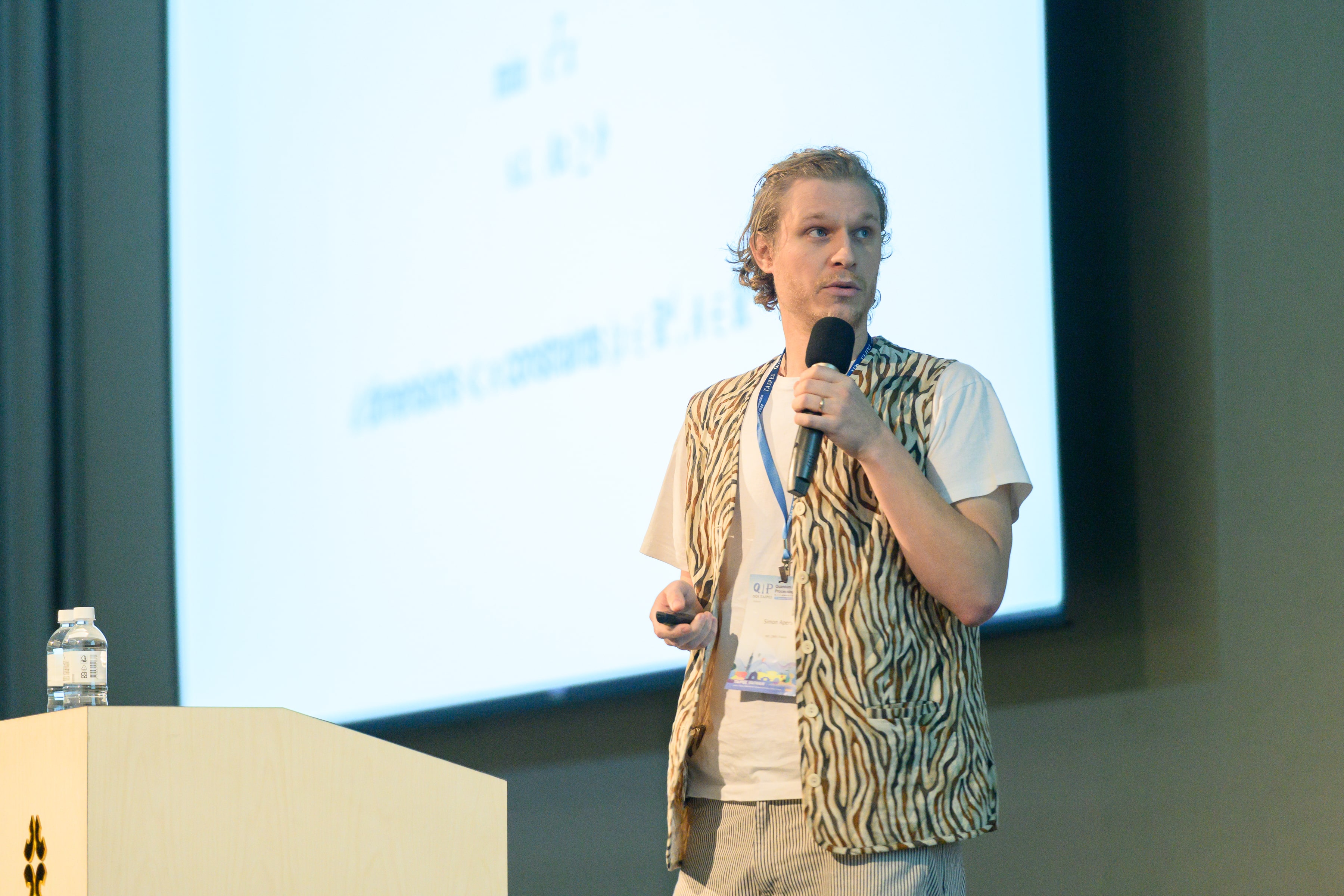
Simon Apers is a CNRS researcher at IRIF (Institut de Recherche en Informatique Fondamentale) at Université Paris Cité. He focuses on quantum algorithms with broader interests in theoretical computer science, including random walks, graph theory, and combinatorial optimization. His primary research interests span quantum computing, theoretical computer science, and algorithms. Apers has made significant contributions to quantum walks, quantum property testing, graph algorithms, and computational complexity. His work often bridges quantum information with classical theoretical computer science, exploring how quantum techniques can improve classical algorithms and solve problems more efficiently. He has developed quantum speedups for various computational tasks including sampling, optimization, and graph problems. Simon Apers serves as a program committee member for prestigious conferences including TQC'25, QIP'25, TQC'23, SODA'23, and ESA '21. He also serves as an editor for the journal Quantum. His teaching activities include courses at Sorbonne University (2022-present) on Advanced Quantum Algorithms, MPRI (2021-present) on Quantum Algorithms and Complexity, and Bad Honnef (2022). His publication record shows a strong trend toward quantum algorithms for graph problems, quantum walks, and connections between quantum computing and classical theoretical computer science. He frequently collaborates with researchers from various institutions across Europe and has published in top venues including FOCS, STACS, ESA, PRL, and JMLR. Simon Apers actively mentors students and has open positions for PhD students and postdocs in quantum algorithms at IRIF. His research group is involved in cutting-edge work at the intersection of quantum computing and theoretical computer science, with significant contributions to quantum walks, property testing, and computational complexity.
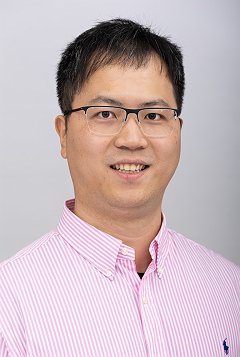
Dr. Huaming Chen is a Senior Lecturer in the School of Electrical and Computer Engineering at The University of Sydney, Australia. His work focuses on trustworthy machine learning systems, software engineering, and software security. With numerous publications in top-tier conferences and journals, Dr. Chen has established himself as a significant contributor to the fields of AI security and software engineering. Dr. Chen's primary research interests lie at the intersection of software engineering and artificial intelligence, with a strong emphasis on trustworthy AI systems. His work spans several key areas including: Software Security for AI-enabled systems Trustworthy and Responsible AI development Computational biology applications Industrial 4.0 implementations Federated learning and privacy-preserving techniques Large language model verification and uncertainty analysis His research addresses critical challenges in ensuring AI systems are secure, reliable, and ethically sound. Dr. Chen's recent publications demonstrate a strong trend toward addressing security and trustworthiness challenges in AI systems. His work spans multiple domains including software security (particularly for AI systems), trustworthy AI development, and applications in computational biology. A significant portion of his recent work focuses on large language models, examining their vulnerabilities, verification methods, and uncertainty analysis. He also maintains active research in federated learning, adversarial machine learning, and software security techniques. Dr. Chen has received several notable awards and recognitions: 2020 IEEE CIS Student Grant for IEEE WORLD CONGRESS ON COMPUTATIONAL INTELLIGENCE (WCCI) 2017 Student and Early Career Travel Fellowship for The 16th International Conference on Bioinformatics (InCoB 2017) 2017 Student Travel Award for 2017 IEEE World Congress on Services Dr. Chen actively supervises multiple research students working on cutting-edge projects related to trustworthy AI and software security. His current students are exploring topics ranging from blockchain-based governance frameworks to open-source AI security and digital twin platforms. He also serves in numerous committee roles at top conferences including area chair for ACM MM, and PC member for ACM CCS, IJCAI, KDD, and many others. His service as a Guest Editor for journals like Computers & Security and as a Grant Reviewer for UKRI demonstrates his standing in the research community. Dr. Chen organizes workshops focused on Trustworthy and Responsible AI, reflecting his commitment to advancing the field. His research group appears to focus on practical applications of AI security techniques, with projects spanning multiple domains including healthcare, finance, and industrial systems. He maintains active collaborations with researchers across multiple institutions, as evidenced by his co-authorship on diverse publications.
Professor Kristina Schädler is a faculty member at the West Coast University of Applied Sciences (FH Westküste), where she serves as Professor of Data Processing within the School of Technology. She has been with the university since 2005 and also served as Dean of the Department of Technology. Her academic background includes a PhD in machine learning from TU Berlin, where she was awarded the Chorafas Research Prize for young scientists. West Coast University of Applied Sciences (since 2005) TU Berlin, Institute of Computer Science (1994-1999) Martin Luther University Halle/Wittenberg (1990-1994) Professor Schädler's research focuses on artificial intelligence and machine learning applications, particularly in image processing and data analysis. Her work spans multiple domains including industrial automation, agricultural technology, renewable energy, and animal husbandry. She has led numerous research projects that bridge academic theory with practical industrial applications, with particular emphasis on developing robust image processing systems that can be deployed in real-world settings. Her research portfolio demonstrates a consistent pattern of applying advanced machine learning techniques to solve practical problems across diverse industries. The ANIMET project, which developed facial recognition for horses, and the MaviSeg system for multichannel image segmentation represent her innovative approach to adapting computer vision technologies for specialized applications. Her work often involves close collaboration with industry partners to ensure practical relevance and implementation. Chorafas Research Prize for young scientists Innovationspreis at Equitana (2013) for the ANIMET project Professor Schädler has supervised numerous student theses that have resulted in practical applications across various domains. Her research group has secured funding from multiple sources including the European Commission, BMBF, and regional development agencies. She has established the CICAD project as a sustainable competence center for industrial image processing, which has trained multiple doctoral students through cooperative programs with the University of Lübeck. Her work demonstrates strong industry connections with companies like HIT Hinrichs Innovation + Technik, MBJ Solutions, and Fischer und Tausche Kondensatoren. Her research laboratory focuses on industrial image processing applications, with specialized equipment for 2D/3D imaging, spectral analysis, and machine learning implementation. The CICAD project established a dedicated competence center that continues to develop new applications of image processing technology across multiple industries.