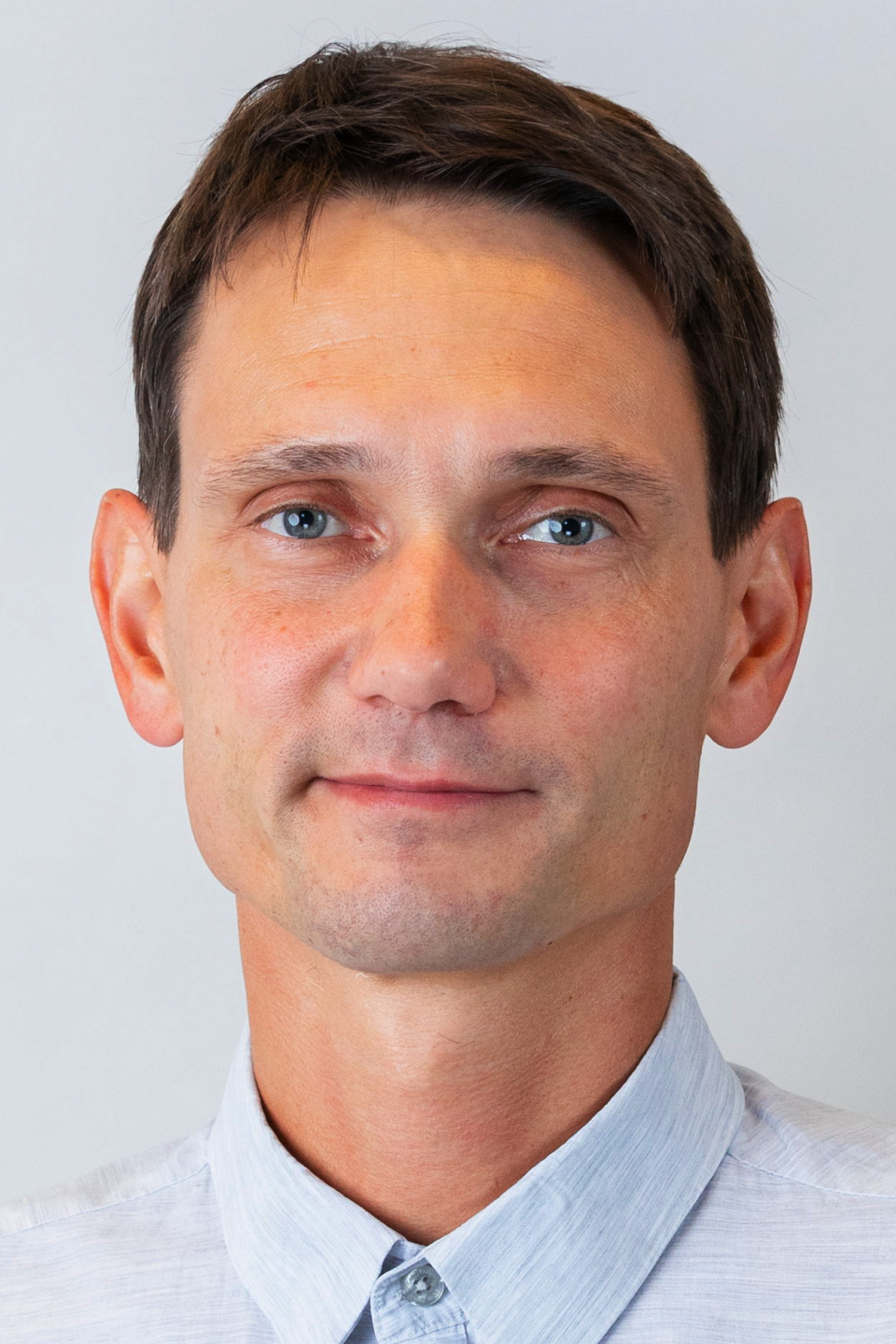
Andre Berger is an Associate Professor of Operations Research at Maastricht University, affiliated with the QE Operations Research department within the School of Business and Economics. He holds a PhD in Mathematics from Emory University (2006) and completed a postdoc at Technical University Berlin. His research focuses on optimization algorithms, combinatorial optimization, and their applications in scheduling, network design, and operations research. Notable contributions include work on the many-visits Traveling Salesman Problem and cluster editing algorithms. Berger’s recent publications span scheduling theory, MRI-based clinical research collaborations, and theoretical advancements in facility location models. He is based at Tongersestraat 53, Maastricht, and can be reached via a.berger@maastrichtuniversity.nl. Education: MSc in Mathematics, Emory University (2003) PhD in Mathematics, Emory University (2006) Research Interests: Berger’s work bridges theoretical computer science and practical applications in operations research, emphasizing algorithm design for complex optimization problems. Key areas include scheduling algorithms, network flow optimization, and geometric optimization challenges such as the Apollonius problem in facility location. His interdisciplinary approach integrates mathematical programming with real-world scenarios in telecommunications and healthcare.
Theo Hofman is an Associate Professor and Program Director in the Mechanical Engineering Department at Eindhoven University of Technology (TU/e). He specializes in integrated design methods for complex engineering systems, focusing on powertrain systems for automotive, maritime, and aerospace applications. His work emphasizes computational design synthesis, machine learning, and model-based optimization. Education: Hofman holds an MSc (1999) and PhD (2007) in Mechanical Engineering from TU/e. He has held roles at Thales Cryogenics and Drivetrain Innovations before joining TU/e. He also served as an Invited Professor at ETH Zurich and Université Polytechnique Hauts-de-France. Research Interests: His research spans hybrid electric vehicles, powertrain design, energy management systems, and sustainable transportation. Key areas include automated design tools, thermal management, and co-design of plant and control systems. Applications include electric trucks, ships, and aircraft. Articles Trends: His recent publications (2021–2025) emphasize electric vehicle infrastructure optimization, battery systems, and control strategies. Key themes include energy efficiency, thermal management, and co-design methodologies for automotive and mobility systems. Scientific Awards: IEEE VPPC 2024 Best Paper Award. Advising & Grants: He has supervised over 104 MSc, 14 PDEng, and 10 PhD students. Active projects include the 'Green Transport Delta' initiative (2021–2024) and Bosch Transmission collaborations. His courses include 'Electric and Hybrid Vehicle Powertrain Design' and 'Automotive Systems Engineering Project.' Labs/Teams: He leads the Group Hofman and collaborates with the MEGEVH (France) and TU/e’s EAISI Mobility initiative. His work contributes to UN Sustainable Development Goals related to affordable and clean energy, industry innovation, and climate action.
Prof. Tobias Müller is a Professor at the Bernoulli Institute for Mathematics, Computer Science and Artificial Intelligence at the University of Groningen. His academic journey includes previous positions at Utrecht University, CWI (Centrum Wiskunde & Informatica), Tel Aviv University, and Eindhoven University of Technology, with a doctorate from the University of Oxford under Colin McDiarmid. His research focuses on combinatorics, probability theory, random graphs, percolation, discrete and stochastic geometry, and combinatorial game theory. He has contributed extensively to understanding complex networks, hyperbolic models, and geometric random structures. Research Interests: Random Graphs and Percolation Theory Discrete and Stochastic Geometry Hyperbolic Network Models Probabilistic Combinatorics Geometric Probability Graph Algorithms and Connectivity Notable Contributions: Analysis of Voronoi and Poisson-Voronoi percolation in hyperbolic planes. Studies on Mallows random permutations and their cycle structures. Research on component games and logical limit laws in graph theory. Investigations into the geometry and properties of random geometric graphs. Grants & Collaborations: Active in organizing workshops and conferences on random graphs and geometric networks, including the BIRS Workshop on Random Geometric Graphs and the STAR Workshops series. Labs/Teams: Member of the Bernoulli Institute’s research groups, focusing on stochastic studies, combinatorics, and algorithmic methods.
Herman Bruyninckx is a Part-Time Full Professor at Eindhoven University of Technology (TU/e) in the Mechanical Engineering department, specifically within the Control Systems Technology group and EAISI High Tech Systems initiative. He also serves as a professor (Hoogleraar) at KU Leuven in Belgium. Academic focus on robotics, control systems, and multi-agent coordination Active research in model predictive control , semantic mapping , and dynamic constraint algorithms Recent publications address industrial automation , agro-food robotics , and haptic technology Research Highlights : Developed hybrid decision-making frameworks for multi-agent navigation Innovated swing-free control methods for robotic pick-and-place operations Formulated constrained dynamics algorithms with LQR-Gauss principle integration Created ExoTen-Glove for haptic feedback in virtual environments Collaborative Projects : Coordinated with researchers like René van de Molengraft , Elena Torta , and Koen de Vos Contributed to NWO/TTW FlexCRAFT project for cognitive robotics in agro-food technology
Prof. Sofía Calero is a Full Professor at the Eindhoven University of Technology (TU/e) and Vice Dean of the Department of Applied Physics & Eindhoven School of Education. She leads the Materials Simulation & Modelling group, focusing on computational methods for renewable energy and nanostructured materials. MSc (1995) and PhD (2000), University Complutense of Madrid Marie Curie Fellow (2001–2003), University of Amsterdam Ramón y Cajal Fellow (2004) and Full Professor (2017) at University Pablo de Olavide (Spain) Her research bridges computational physics-chemistry and industrial applications, developing force fields, algorithms, and simulation methods to reverse-engineer material properties. She specializes in adsorption , metal-organic frameworks , zeolites , and molecular simulation , contributing to SDGs like climate action and clean energy. Recent publications focus on halide perovskites , carbon dioxide capture , and nanostructured materials , with software tools like RASPA and iRASPA as key outputs. Articles span Nano Letters , Chem , and Journal of Physical Chemistry C . ERC Proof of Concept Grant (2018) Marie Curie Excellence Award (2005) Fellow of the Royal Society of Chemistry (2024) She has supervised 36 research works and taught courses like Advanced Materials Modelling and Mechanics . Her work involves collaborations with industries and institutions across Europe.
Guy G. Drijkoningen is an Associate Professor in Applied Geophysics at Delft University of Technology (TU Delft), Faculty of Civil Engineering and Geosciences. He is actively involved in teaching and research within the Department of Applied Geophysics & Petrophysics. Education: MSc, Delft University of Technology, The Netherlands PhD, Cambridge University, UK Research Focus: His work centers on Seismic Experiments & Modelling , particularly in exploration and shallow-subsurface contexts. Key areas include: Seismic data acquisition on land Continuous seismic monitoring Shallow shear-wave imaging (land and marine) Seismic wave propagation in porous media Current projects leverage advanced sensor networks (e.g., LOFAR), full-waveform inversion for tunnel-boring machines, and novel vibrator technologies. Publications Trend: Recent works (2011–2016) emphasize seismic modeling, inversion techniques, and experimental validation across marine and terrestrial environments. Topics span poroelastic wave theory, ambient-noise interferometry, and innovative seismic source design, reflecting a blend of theoretical and applied geophysics. Scientific Awards: Best-paper award Geophysics 2015 for "A seismic vertical vibrator driven by linear synchronous motors" Professional Memberships & Editorial Roles: Member: Society of Exploration Geophysicists (SEG) Member: European Association of Geoscientists and Engineers (EAGE) Associate Editor: Geophysics Teaching: He teaches undergraduate and graduate courses including Introduction to Geophysics, Reflection Seismology, and specialized PhD-level modules on seismic data analysis.
Gabriele Liga is an Assistant Professor at the Department of Electrical Engineering, Eindhoven University of Technology (TU/e), affiliated with the Signal Processing Systems (SPS) Group. He holds a Marie Curie Eurotech Fellowship focusing on signal shaping techniques for nonlinear optical fiber channels. His academic journey includes a Ph.D. in optical communications from University College London, followed by postdoctoral research in digital signal processing and nonlinearity compensation. Education: B.Sc. in Telecommunications Engineering from Università degli Studi di Palermo (2005), M.Sc. in Telecommunications Engineering from Politecnico di Milano (2011), and a Ph.D. in Optical Communications from University College London (2017). Research Interests: Digital communications, information theory, fiber-optic systems, nonlinearity compensation, channel coding, and multi-user optical communication theory. His work emphasizes achieving transmission limits through signal shaping and advanced signal processing techniques. Projects: Active roles in NESTOR (Next-gen optical networks), QuNEST (quantum communication security), Fun-NOTCH (nonlinear optical channel fundamentals), and SSTOC (signal shaping tailored to optical channels). Collaborations span institutions globally, focusing on optical fiber communication challenges. Awards: 2023 ACP/POEM Best Student Paper Award and 2019 OECC Best Paper Award. Serves as a reviewer for IEEE journals and OSA publications. Labs/Teams: Core member of the SPS Group and involved in interdisciplinary projects blending theory and experimental validation.
Ross J. Kang is a Canadian mathematician currently serving as an Associate Professor at the Korteweg–de Vries Institute for Mathematics within the Faculty of Science at the University of Amsterdam since 2022. He is an active member of the Discrete Mathematics and Quantum Information group and the NETWORKS consortium. Previously, he held positions as Assistant/Associate Professor at Radboud University Nijmegen (2014-2022), Assistant Professor at Utrecht University (2013), and Researcher at Centrum Wiskunde & Informatica (2012-2013). His academic journey includes postdoctoral positions at Durham University (2010-2012) and McGill University (2008-2010), where he was advised by Bruce Reed and Louigi Addario-Berry. DPhil in Mathematics, University of Oxford (2008) - Thesis: 'Improper colourings of graphs', advised by Colin McDiarmid BSc (Hons) in Mathematics and Computer Science, University of Victoria (2003) - Governor General's Silver Academic Medal recipient Ross J. Kang's research focuses on probabilistic and extremal combinatorics, random discrete structures, graph coloring, geometric graphs, and algorithms. His work bridges theoretical mathematics with practical applications, exploring fundamental questions in discrete mathematics. He has made significant contributions to understanding graph coloring problems, particularly in the contexts of list coloring, distance coloring, and strong coloring. His research often employs probabilistic methods to establish bounds and structural properties in graph theory. Kang's work on the hard-core model, local occupancy method, and triangle-free graphs has advanced our understanding of the interplay between local constraints and global structure in discrete systems. Analysis of his recent publications reveals a strong emphasis on graph coloring problems, particularly list coloring variants and their extensions. His work frequently explores the relationship between graph structure (such as degree constraints, girth, or forbidden subgraphs) and coloring properties. A notable trend is his development and application of the local occupancy method to establish improved bounds for chromatic numbers in various graph classes. His research also demonstrates a consistent interest in extremal problems, seeking optimal configurations under specific constraints, particularly in the context of triangle-free graphs and geometric representations. NWO Open Competition M-1 grant entitled 'Asymptotic triangle-free structure (3Free)', 2022-2026 NWO Vidi grant entitled 'On the edge: theory and techniques at the frontiers of edge-colouring', 2017-2023 NWO Veni grant entitled 'Generalised colouring for random graph models', 2012-2015 Van Gogh travel grants (2020-2021 with Marthe Bonamy; 2016-2017 with Louis Esperet) Governor General's Silver Academic Medal (2003) Ross J. Kang has successfully supervised multiple PhD students including Eoin Hurley (defending May 2025), Stijn Cambie (defended April 2022), and François Pirot (winner of 2020 prix Charles Delorme). His research is supported by significant grants from the Netherlands Organisation for Scientific Research (NWO), including the prestigious Open Competition M-1 grant. Kang is actively involved in the academic community through his editorial role at Combinatorial Theory, co-organization of conferences like the Dutch Days of Combinatorics, and leadership in initiatives such as Innovations in Graph Theory, a diamond open access journal he helped launch in August 2023. As a member of the Discrete Mathematics and Quantum Information group at the University of Amsterdam and the NETWORKS consortium, Kang collaborates with researchers across various institutions. He has established strong international connections through his Van Gogh travel grants and participation in collaborative projects like the Sparse (Graphs) Coalition sessions. His research group focuses on theoretical aspects of discrete mathematics with connections to quantum information science, and he maintains active collaborations with researchers across Europe and North America.
Tom Verhoeff is an Assistant Professor at the Faculty of Mathematics and Computing Science of Eindhoven University of Technology (TU/e) , working within the Software Engineering & Technology group. His research focuses on Model-Driven Engineering (MDE) , Domain-Specific Languages (DSLs) , and the intersection of mathematics, computing, and the arts . He teaches courses in data analytics, programming, algorithms, theoretical computer science , and logic . Verhoeff earned both his MSc and PhD in Technical Science (Mathematics and Computer Science) from TU/e. He is actively involved in promoting mathematics and informatics through initiatives like the annual Bridges conference , and serves as board member and treasurer of the Dutch Mathematics Olympiad , as well as chair of the Koos Verhoeff MathArt foundation . He has also held roles as guest lecturer in Lithuania and Finals Director for the ACM International Collegiate Programming Contest . Research Interests: Verhoeff’s work spans Model-Driven Engineering , domain-specific language development , and 3D geometric modeling . His scholarship often explores symmetry, recursion, and mathematical visualization , particularly through computational art and algorithmic puzzles . Recent publications highlight 3D rotation methods , knot theory , and mathematical art using lattice paths and geometric transformations . Scientific Awards: ACM ICPC European Founders Award (2004) IOI Distinguished Service Award (2007) Second Place in the 2022 Wolfram Computational Art Contest Notable Collaborations and Affiliations: He is affiliated with the Esprit Working Group on Asynchronous Circuit Design (ACiD-WG) , WIRE (TUE Mathematics Alumni) , ACM (Senior Member) , CSTA , IEEE Computer Society , and Royal Dutch Mathematical Society (KWG) .
Nikhil Bansal holds the prestigious Patrick C. Fischer Professorship of Theoretical Computer Science in the Department of Computer Science & Engineering at the University of Michigan's College of Engineering. His research program has established him as a leading figure in theoretical computer science, with significant contributions to algorithm design and analysis, particularly in discrete optimization problems. Bansal's research focuses on theoretical computer science with emphasis on design and analysis of algorithms for discrete optimization problems. His work spans multiple areas including discrepancy theory, approximation algorithms, randomized algorithms, combinatorial optimization, complexity theory, machine learning theory, and probability. He has made significant contributions to understanding the limits of approximation algorithms and developing novel techniques for combinatorial optimization problems. Analysis of Bansal's recent publications reveals a strong focus on discrepancy theory, online algorithms, and combinatorial optimization. His work often bridges theoretical computer science with discrete mathematics and probability theory. A recurring theme across his publications is the development of novel algorithmic techniques for solving NP-hard problems with provable guarantees. His research has evolved from foundational work in approximation algorithms to more recent contributions in quantum computing complexity and stochastic optimization. Patrick C. Fischer Professor of Theoretical Computer Science Bansal has advised numerous PhD students including Marek Elias, Shashwat Garg, and Greg Koumoutsous, as well as mentoring several postdoctoral researchers. He has served on editorial boards for top journals including Journal of the ACM, Theory of Computing, and Stochastic Models, and has been active on program committees for major conferences such as STOC, FOCS, SODA, and ICALP, including serving as chair for ICALP 2021. Bansal has organized multiple academic workshops including the STOC 2020 Workshop on Recent Advances in Discrepancy and Applications, several SDP Days at CWI Amsterdam, and the Semester on Bridging Continuous and Discrete Optimization at UC Berkeley in Fall 2017.
Rudi A. Pendavingh is an Assistant Professor at Eindhoven University of Technology's Mathematics and Computer Science department, specializing in Combinatorial Optimization. He earned his PhD at the University of Amsterdam in topological graph theory and has since contributed to diverse areas of combinatorics and geometry, with recent focus on matroid theory. His teaching spans mathematical programming topics including linear, integer, and semidefinite optimization. Education: PhD in Topological Graph Theory (University of Amsterdam) His research integrates combinatorial structures with geometric and algebraic methods, particularly in matroid theory, graph embeddings, and tropical geometry. Key publication themes include optimization algorithms, excluded matroid minors, and geometric invariants. Collaborations extend to institutions in mathematics and applied sciences, with notable academic output (67 research items) and external partnerships. Recent research outputs (2022-2025) highlight his work on the Colin de Verdière parameter, Dressian bounds, and tropical amoebas. While no explicit awards are mentioned in the provided text, his contributions to combinatorial optimization and network collaborations underscore his academic impact. He has supervised 29 students and contributed to 7 courses, including Discrete Optimization Modeling and Mathematics II.
Gaurav Rattan is an Assistant Professor in the Department of Applied Mathematics at the University of Twente's Faculty of Electrical Engineering, Mathematics and Computer Science (EEMCS), where he joined in May 2024. His research focuses on the mathematical foundations of machine learning on graphs and discrete structures, with particular emphasis on theoretical aspects of graph neural networks. University of Twente, Department of Applied Mathematics (May 2024-present) TU Darmstadt, Postdoctoral Researcher in Pascal Schweitzer's group RWTH Aachen, DFG Eigene Stelle Researcher in Martin Grohe's group Dr. Rattan completed his PhD at IMSc Chennai under V. Arvind and earned his B. Tech. from IIT Bombay, establishing a strong foundation in theoretical computer science and mathematics. His research spans graph theory, algorithms, and machine learning on graphs, with specific expertise in graph isomorphism, graph homomorphisms, and the theoretical underpinnings of graph neural networks. He applies mathematical techniques from logic and algebra to develop theory-driven approaches for graph learning systems, with practical applications in optimization, bioinformatics, and databases. Dr. Rattan's publication record reveals a consistent focus on the intersection of theoretical computer science and machine learning. His recent work explores Weisfeiler-Leman algorithms, symmetry breaking techniques, and parameterized complexity of graph problems, demonstrating how classical graph algorithms connect with modern graph learning methodologies. His research provides crucial theoretical foundations for understanding the capabilities and limitations of graph neural networks. Active in the academic community, Dr. Rattan regularly presents at conferences including the Netherlands Mathematical Congress, SIGAlgo, LOGAMS, and specialized workshops on graph learning. Recent presentations include "From Graph Homomorphisms Densities to Graph Learning" at the Graph Learning Workshop at NITMB Chicago and "Color Refinement: One Algorithm, Many Facets" at SIGAlgo 2024.
Chigo Okonkwo is Full Professor and Chair of Secured Ultra High Capacity Transmission at the Department of Electrical Engineering , Eindhoven University of Technology. He leads the high-capacity optical transmission laboratory at the Institute for Photonics Integration and contributes to the Center for Quantum Materials and Technology Eindhoven (QT/e) . Academic Qualifications: MSc in Telecommunications and Information Systems, University of Essex (2002) PhD in Optical Signal Processing, University of Essex (2010) Research Interests: Professor Okonkwo focuses on: Maximizing capacity of single-mode fiber systems through advanced-coded modulation and Probabilistic/Geometrically shaped signals Developing Space Division Multiplexing (SDM) systems for Petabit/s transmission using multi-mode/multi-core fibers Quantum secure communications and cryptographic protocol development Optical vector network analyzer (OVNA) technology for SDM fiber characterization Free-space optical link deployment in urban environments Low-complexity digital signal processing algorithms Recent Publications Trends: His 15 most recent articles (2023-2025) demonstrate active research in: Quantum-classical network integration Extreme capacity fiber transmission (Petabit/s systems) Machine learning for optical diagnostics SDM fiber measurement technologies Hybrid QKD-PQC security frameworks Free-space optical urban communication Scientific Awards: Asia Communications and Photonics Conference (ACP) 2018 Best Paper Award European Conference on Optical Communications (ECOC) 2018 Student Paper Award Optica Student Paper Awards (2022) Corning Outstanding Student Paper Competition Finalist (2025) Advisory & Collaborations: Advisor to 8+ researchers including Menno van den Hout, Vincent van Vliet, and Thomas Bradley Technical Program Committee Member, European Conference on Optical Communications (ECOC) since 2014 Sub Committee Chair for Digital Signal Processing track at ECOC 2018 General Chair for OSA Advanced Photonics Congress on Signal Processing for Photonics Collaborates with EU projects (HOMTech, PhotonDelta) and industrial partners Co-founder and Chief Technology Officer of CUbIQ Technologies Laboratory & Infrastructure: Maintains the world-class High Capacity Optical Transmission Lab at TU/e, featuring: Advanced SDM fiber testing equipment Quantum communication research infrastructure Free-space optical link experimental setups Multi-core fiber amplification systems Coherent transmission testbeds Machine learning-enabled diagnostic tools
Alex Alvarado is a Full Professor in the Signal Processing Systems department at Eindhoven University of Technology (TU/e), leading the Information and Communication Theory Lab (ICT Lab). He is also affiliated with TU/e's Center for Wireless Technology in Eindhoven. His academic career includes roles as a Senior Research Associate at University College London (2014–2016), Marie Curie Intra-European Fellow (2012–2014), and Newton International Fellow (2011–2012) at the University of Cambridge. Alvarado is a Senior Member of the IEEE and has held editorial and committee positions in major conferences like OFC and ECOC. Alvarado holds an Electronics Engineer degree (2003) and MSc (2005) from Universidad Técnica Federico Santa María, Chile, followed by a Licentiate of Engineering (2008) and PhD (2011) from Chalmers University of Technology, Sweden. His research focuses on high-speed secure data transmission in optical and wireless systems, emphasizing energy-efficient algorithms and theoretical limits of telecommunication systems. Key areas include communication theory, information theory, optical fiber systems, and nonlinear interference mitigation. His recent articles explore advanced modulation formats, machine learning applications for channel estimation and decoding, and innovations in free-space optics and MIMO systems. This work contributes to UN Sustainable Development Goals related to affordable and clean energy, industry innovation, and responsible consumption through energy-efficient communication solutions. Scientific Awards: ERC Starting Grant (2018) NWO VIDI Grant (2016) 2015 Journal of Lightwave Technology Best Paper Award 2015 IEEE Exemplary Reviewer Award 2018 and 2023 Asia Communications and Photonics Conference Best Paper Awards 2019 Optoelectronics and Communications Conference Best Paper Award Alvarado's advising contributions include supervising 12 research works. His grants include NWO VIDI and ERC Starting funding. He leads projects like NESTOR (Next-gen optical networks) and LaiQa (Quantum Key Distribution). His lab, the ICT Lab, drives theoretical and applied research in communication systems.
Bert de Vries is a Professor at the Signal Processing Systems Group at Eindhoven University of Technology (TU/e), where he has been employed since January 2012. He maintains a dual career, also working at GN Hearing in the hearing aids industry since April 1999, where he holds both research and managerial roles. His academic journey began at TU/e, where he earned his MSc in Electrical Engineering in 1986, followed by a PhD from the University of Florida in 1991. Between 1992 and 1999, he worked at Sarnoff Research Center in Princeton, NJ, contributing to diverse signal and image processing projects. Professor de Vries's research centers on Bayesian Machine Learning, with particular focus on the Free Energy Principle and its applications to engineering problems. His work bridges theoretical neuroscience with practical signal processing systems, especially in biomedical applications. He directs the BIASlab research team at TU/e, which develops probabilistic programming tools including RxInfer.jl, ForneyLab.jl, GraphPPL.jl, ReactiveMP.jl, and Rocket.jl. His research spans active inference, variational message passing, probabilistic programming, and Bayesian neural networks, with applications ranging from hearing aids to multi-agent systems. Analysis of his recent publications reveals a strong trend toward practical implementations of Bayesian inference frameworks, particularly through Julia-based probabilistic programming tools. His work shows increasing focus on active inference applications, message passing algorithms, and the intersection of Riemannian geometry with probabilistic modeling. The research demonstrates consistent progression from theoretical foundations toward real-world engineering applications, particularly in biomedical signal processing and autonomous systems. Professor de Vries teaches a graduate-level course on Bayesian Machine Learning at TU/e and actively contributes to open-source software development through his GitHub profile (bertdv), with recent activity as recent as August 2025. His research team has developed several influential probabilistic programming libraries that have gained significant attention in the machine learning community. The BIASlab research group continues to advance the state of the art in Bayesian inference methods with applications in hearing technology, robotics, and signal processing.