Mohammed Al Dushaishi is an Associate Professor in the School of Chemical Engineering at Oklahoma State University , focusing on subsurface drilling and geothermal energy. He holds a Ph.D. in Petroleum Engineering (2015), an M.S. in Petroleum Engineering (2012), and a B.S. in Mechanical Engineering (2010) from Missouri University of Science and Technology, with postdoctoral work in Geosciences and Geological Engineering (2016). Research Interests: Subsurface drilling, drillstring vibrations, drilling hydraulics, wellbore integrity, data analytics, and geothermal energy systems. Recent Article Trends: 2025 work on ANN-driven drilling optimization , 2024 studies on ionic liquid rheology and nanoparticle-enhanced cementing , and 2023 projects analyzing hard rock drilling efficiency and earth dam seepage . Funding: Secured $2.5M+ in grants, including US Department of Energy (2022-2025) and Helmerich & Payne, Inc. (2024-2025) for geothermal drilling and cuttings analysis projects. Laboratory: Leads the Subsurface Energy Extraction & Drilling Dynamics Laboratory , combining theoretical and experimental approaches to drilling challenges.
Eric Pyle is a Professor in the Department of Geology and Environmental Science at James Madison University . With expertise in geology, science education, and planetary geology, he focuses on earth phenomena, teacher education, and field-based learning approaches. Education : Doctorate in Science Education (University of Georgia), Master’s in Geology (Emory University), Bachelor’s in Earth Science (University of North Carolina-Charlotte) His research integrates traditional geological field methods with modern technologies like GPS and ground-penetrating radar to enhance teacher training and student engagement. He has contributed to programs like the St. Catherines Island Sea Turtle initiative, emphasizing "conservation, research, and education" for K-12 educators. Recent work includes publications on curriculum development for pre-service teachers and historical perspectives on field geology education. Collaborative efforts with education professors, teacher mentors, and local experts have established him as a leader in geology-related pedagogy and teacher support programs.
Weixian Pan is Assistant Professor in the Department of Film and Media at Queen's University. Previously, she served as Assistant Professor of Interactive Media Arts at NYU Shanghai and was affiliated faculty at the Center for Global Asia. She also taught at the Mel Hoppenheim School of Cinema and was the coordinator and researcher in the Global Emergent Media Lab. Dr. Pan holds a PhD in Film and Moving Image Studies from Concordia University, Montreal. Her research centers on the politics of visuality (including cinema, television, video, and other new media/art forms), critical media infrastructure, and environmental media. She examines media's textual, material, and socio-political dynamics through China's situated experience while expanding to explore trans-regional linkages across Asia. Her current book project, Frontier Vision: The Geopolitics of Seeing China's Borderlands , examines how China's geopolitical aspirations have been hyper-mediated and entangled with frontier-making logic from the mid-twentieth century to present. This work analyzes visual regimes that recalibrate natural environments through geological extraction, televisual mediation of hydropower, and maritime signal sovereignty. The project was supported by the Luce/ACLS Early Career Fellowships in China Studies (2024-2025). Dr. Pan's scholarly work has appeared in Television and New Media, Culture Machine, Asiascape: Digital Asia, Journal of Cinema and Media Studies, and Journal of Environmental Media. She has led curatorial projects including 'Elemental Relations: Thinking Ecologically through Artist Film and Video' (2021) and 'China Now: Independent Visions' (2016), and co-organizes the 'Strata of the Asia Pacific: Mediating the Geologic and Aquatic Environment' workshop fostering interdisciplinary conversations. Luce/ACLS Early Career Fellowships in China Studies (2024-2025) from the American Council of Learned Societies As an educator, Dr. Pan serves as both MA Supervisor and PhD Supervisor at Queen's University. She is currently working on a collaborative video project on hydraulic and infrastructural landscapes along the Pearl River in southern China. Her next research aims to theorize Asia's transboundary linkages through aquatic mediation, including vernacular water imagination, underwater technology history, and the emerging blue carbon economy.
Christof Kneisel is a Professor in Physical Geography at the University of Würzburg's Institute of Geography and Geology. As a leading researcher in permafrost and alpine geomorphology, he focuses on frozen ground dynamics, glacial-permafrost interactions, and geophysical methods for subsurface characterization across the Swiss Alps, Austria, Northern Sweden, and Iceland. His research integrates field data, GIS analysis, and 3D resistivity imaging to model environmental system responses to climate change. Key research areas include: Permafrost mapping and monitoring Application of geophysical techniques Soil science in cold climates Natural hazard assessment in alpine zones Climate-landform interactions His recent publications emphasize 3D electrical resistivity applications, permafrost dynamics in talus slopes, and carbon pool formation in alpine soils. Current projects funded by the German Research Foundation (DFG, KN 542/21-1) and federal ministries explore climate resilience in Bavarian agriculture through geospatial big data integration. Notable scientific contributions include: Advancing 3D geophysical monitoring for frozen ground Conceptual models of periglacial systems Key textbook co-authorship in physical geography International collaborations with Canada's Geological Survey
Magnus Bruaset is a Professor and Director of the Software & AI Department at Simula Research Laboratory , with expertise in computational geosciences, numerical methods, and quantum computing. His work spans geological modeling, PDE solvers, and software development frameworks like Diffpack. Education : PhD in preconditioned iterative methods for elliptic problems (1992), Master's in preconditioning symmetric systems (1988). Research Interests : Focus on numerical analysis, GPU acceleration of geological simulations, stochastic modeling for uncertainty quantification, and quantum computing strategy. Key projects include Hamilton-Jacobi solvers, particle-based flow models, and contributions to digital contact tracing systems. Advising & Collaboration : Co-developed PhD training workshops for scientific communication and contributed to industrial-academic partnerships. Collaborated with institutions including ChevronTexaco, Wolfram Research, and University of Oslo.
Mahdi Khodadadzadeh is an Assistant Professor in the Department of Geo-information Processing, specializing in machine learning, data mining, and geospatial analysis. His work bridges traditional and deep learning methods with applications in mineral exploration, environmental modeling, and circular economy initiatives. Research outputs include novel cross-validation techniques for geospatial machine learning (Spatial+, dissimilarity-adaptive methods), hyperspectral mineral mapping for ore characterization, and hybrid models combining artificial neural networks with optimization algorithms. He actively contributes to open-access datasets and methodologies, particularly in drill-core analysis and multi-source data fusion. Collaborations with researchers like R. Zurita-Milla and R. Gloaguen are evident through co-authored publications and shared datasets. His work impacts domains such as mineral exploration, geospatial modeling, and sustainable resource management, with a focus on robust statistical evaluation frameworks and spectral-spatial analysis.
Prof. Dr. Philipp Lepenies is Professor of Politics (Sustainability) and Director of the Research Center for Sustainability at Freie Universität Berlin. His work bridges political science, economics, and the history of ideas, focusing on sustainable development, poverty, inequality, and the political economy of statistics. Doctorate in Economics (2001, Freie Universität Berlin) Master of Science in Development Studies (1998, London School of Economics) Habilitation in Political Science (2011, Goethe-Universität Frankfurt) Lepenies’ research explores how metrics like GDP shape policy, the role of expertise in governance, and the historical roots of development concepts. He critiques the dominance of economic indicators in political discourse and advocates for more holistic sustainability frameworks. His recent publications analyze well-being indicators, poverty definitions, and the legacy of Albert O. Hirschman. Articles often intersect political theory with empirical case studies in Latin America and Southeast Asia, emphasizing the need to balance technical metrics with social context. He supervises theses on sustainability, poverty, and development policy, requiring exposés aligned with his research. Lepenies also leads courses like "Politics at Tintin" and "Growth, Capitalism, Degrowth" at Freie Universität Berlin. Lepenies previously held academic positions at the Freie Universität Berlin (2016-2022 as Guest Professor), the Institute for Advanced Sustainability Studies (2012-2015), and the Swedish Collegium for Advanced Study (2009-2010). His non-academic experience includes a decade at KfW Entwicklungsbank as Senior Economist.
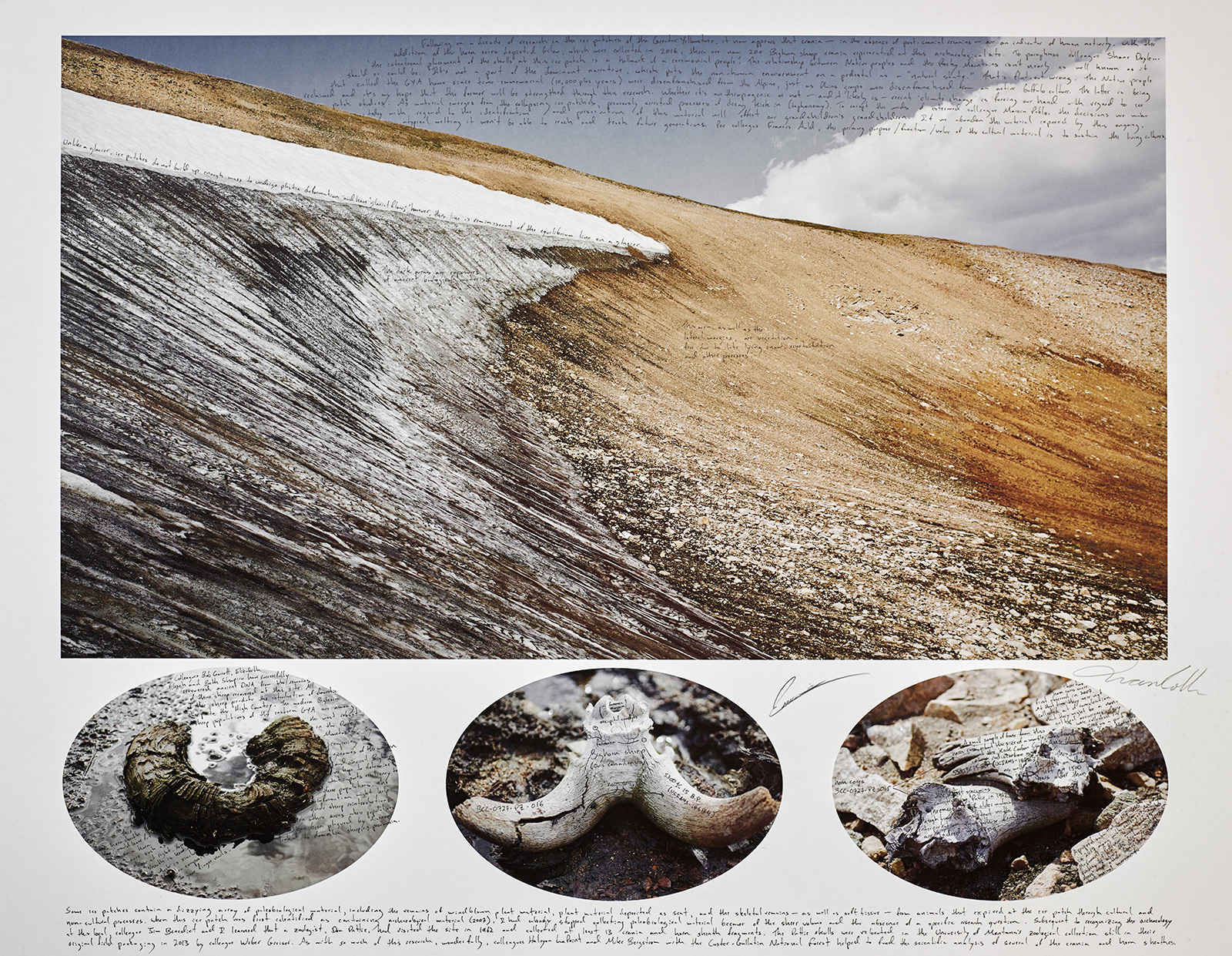
Ian van Coller is a Professor of Photography at Montana State University (2006–Present) and a 2018 Guggenheim Fellow. His affiliations include the Piece of Cake Collective, The Last Glacier Collective (since 2012), and the Antarctic Artists and Writers Collective (since 2020). His research examines climate change and deep time through photography and artist books, collaborating with paleo-climatologists globally. Key research interests include: Visualizing glacial retreat and paleoclimate data Interdisciplinary art-science methodologies Environmental advocacy through large-scale artist books Cultural impacts of ecological change His publications emphasize: Glaciology and cryosphere dynamics Intersections of art, science, and public engagement Decolonial perspectives on environmental narratives Awards: 2018 John Simon Guggenheim Fellowship Collaborations involve fieldwork in extreme environments (Antarctica, Kilimanjaro, Svalbard) and partnerships with institutions like the Long Now Foundation. His work is archived in major museums and libraries worldwide.
Rachel N. Bara serves as an Adjunct Assistant Professor in St. Lawrence University's First-Year Program, where she teaches and advises undergraduate students. Her academic career includes prior service as a post-graduate teaching fellow at The Pennsylvania State University, instructing technical writing and business communication courses. Her educational background comprises: M.F.A. in English and Creative Writing, The Pennsylvania State University (2011) B.A. in English Language and Literature, Smith College Bara's professional identity bridges journalism and creative writing, with a distinctive focus on environmental narratives. She examines how scientific concepts manifest in human experiences—from children's remote learning adaptations to carbon sink discoveries in geological formations. Her work consistently explores 'the margin of what is known,' highlighting stories where scientific frontiers intersect with personal and community identity. This approach manifests in both her Earth Island Journal contributions and current book projects, including a creative biography of physicist Laura Fermi. Scientific awards and honors are not documented in available sources. As an advisor, Bara guides first-year students through St. Lawrence's orientation program, leveraging her expertise in communication to develop foundational academic skills. While her adjunct position doesn't involve research grants or graduate supervision, her classroom integrates real-world science communication challenges, connecting students with contemporary environmental discourse through her journalistic work. No research laboratory or dedicated team structure is associated with her academic role; her creative and journalistic output represents individual scholarly work.
Sandra McEwan is a Sessional Lecturer in the Department of Curriculum, Teaching & Learning at the Ontario Institute for Studies in Education (OISE), University of Toronto, where she teaches Elementary Science and Environmental Education in the Master of Teaching Program. With over four decades of experience spanning K-12 teaching, teacher education, and educational leadership, she brings extensive practical knowledge to preparing future educators in science and environmental pedagogy. Her educational background includes: MEd in Science Education, University of Toronto/OISE (2000) BEd in Science and Environmental Science Education, University of Toronto/FEUT (1984) BSc in Biology, University of Toronto (1983) McEwan's research centers on nature-based learning, outdoor and environmental education, and differentiated instruction. She develops practical strategies for integrating environmental awareness into science curricula through hands-on, experiential learning in natural settings. Her work emphasizes making complex ecological concepts accessible to diverse learners while addressing real-world environmental challenges through classroom applications. Her publication record spans 30+ years with over 30 scholarly works, showing consistent focus on practical educational resources. Recent publications address contemporary issues like food systems education and acid rain impacts, while maintaining strong emphasis on outdoor learning methodologies and curriculum development for K-12 settings. The body of work demonstrates evolution from foundational environmental science resources toward integrated, systems-thinking approaches. As a Sessional Lecturer and former Faculty Advisor in the MT Program (2016-2023), she has mentored numerous pre-service teachers. Her extensive experience as both K-12 educator and teacher trainer provides unique perspective for guiding new educators in implementing effective science and environmental education practices.
Professor Kenneth Mccaffrey is Head of Department and Chair of the Board of Studies in the Department of Earth Sciences at Durham University. He has served in this department since 2000, progressing from Lecturer to Senior Lecturer (2004), Reader (2008), and Professor (2013). Previously, he was at Kingston University (1995-2000) and Trinity College Dublin (1991-1995). He also served as Director of the Centre for Research in Earth Energy System (CeREES) from 2011-2014 and as a Royal Society Industrial Fellow (50% FTE) from 2006-2009. His research spans geoinformatics methods , 3D/4D modeling of continental margins , magma and mineralized systems , and structural characterization of fault and shear zones . His work integrates field observations with digital technologies to understand tectonic processes, fracture systems in reservoir analogues, and the mechanical evolution of deformation zones. He has pioneered the use of terrestrial laser scanning and digital mapping techniques for geological applications. Analysis of his recent publications reveals a strong focus on helium resource systems , rift basin evolution , and fault mechanics , with increasing integration of computational methods including deep learning for structural interpretation. His work bridges fundamental geological processes with practical applications in resource exploration. 2021 Dewey Medal from the Geological Society of London for fieldwork and mentoring contributions 2005 Murchison Fund from the Geological Society 2001 Durham University Excellence in Teaching Award 1993 Ramsay Medal Professor Mccaffrey has supervised multiple PhD students including Adam Welsh, Lewis Mackenzie, Rhiannon Morgan, and Zak Milner. He has served on the Petroleum Group Committee of the Geological Society of London since 2013 and previously on their Science Committee (2000-2002). He was 'Specials' editor for the Geological Society of London from 2006-2012 and has convened numerous significant conferences including the 2016 event marking fifty years of the Wilson Cycle Concept in Plate Tectonics. He leads research in the Centre for Research in Earth Energy System (CeREES) and has been instrumental in developing digital field methods and virtual outcrop technologies that have transformed geological data acquisition and analysis.
Roland Barthel serves as Professor in the Department of Geosciences at the University of Gothenburg's Faculty of Science and concurrently holds the position of Vice-Dean for the Faculty Office of Natural Sciences and Technology. Previously Head of Department (2018-2022), he specializes in groundwater resources within the context of climate change impacts across Sweden and Europe. His research integrates hydrological science with socioeconomic factors to address critical water challenges including drought, scarcity, and extreme weather events. Barthel emphasizes the societal dimensions of water management, particularly regarding unregulated private wells that constitute a significant portion of Sweden's drinking water supply. His interdisciplinary approach bridges natural and social sciences to develop implementable solutions requiring consideration of economic, political, and social frameworks alongside physical system understanding. Analysis of his publication record reveals a dominant focus on data-driven methodologies for groundwater dynamics assessment, drought propagation analysis, and climate adaptation strategies. His work consistently emphasizes regional-scale studies in temperate and high-latitude environments, with increasing attention to interdisciplinary collaboration frameworks. Scientific recognition includes: Student Union's Pedagogical Award (2014) Student Union's Pedagogical Award (2016) As an educator, Barthel pioneered hydrology instruction at the university by developing the master's course Applied Hydrology (GVG460) and undergraduate Hydrology and Hydrogeology (GV2002). He leads Earth Sciences thesis supervision, chairs the program committee, and contributes to multiple geoscience courses. His teaching excellence earned three consecutive pedagogical award nominations with wins in 2014 and 2016. He currently participates in an EU Erasmus+ project developing digital teaching tools with European partners, addressing high market demand for groundwater specialists in Swedish infrastructure and environmental sectors.
Dr. Markus Nielbock serves as Head of Science Media Service at the Center for Astronomical Education and Public Relations, part of the House of Astronomy (HdA) affiliated with the Max Planck Institute for Astronomy (MPIA) in Heidelberg. With a background in physics and astronomy research, he transitioned to focus on science communication and education after serving as project scientist for the Herschel Space Telescope. His research interests center on astronomy education, particularly the development of didactic materials for secondary schools, public relations for astronomical institutions, and the ESO Science Outreach Network. He actively supervises students teaching physics and organizes numerous public lectures and events to engage the community with astronomy. Dr. Nielbock's publication record shows a strong focus on educational materials, with recent work emphasizing exoplanet science, celestial navigation techniques, and space exploration education. His 15 most recent publications (2018-2024) demonstrate consistent output in reputable educational journals like Science in Schools and astroEDU, covering diverse topics from exoplanet atmospheres to historical navigation methods. As an educator, he has taught the block course 'Introduction to Astronomy for Secondary School Teachers' annually since 2016, developed numerous instructional videos on astronomical concepts, and created extensive teaching materials through the 'Space for Education' project. His outreach extends to radio interviews discussing recent astronomical discoveries and maintaining an active social media presence focused on astronomy communication.
Dr. Carolin Liefke serves as Deputy Managing Scientist at the Haus der Astronomie (Center for Astronomy Education and Outreach) in Heidelberg and Deputy Director of the International Astronomical Union Office of Astronomy for Education. With over 20 years of experience in astronomy education and outreach, she has been a research associate at Haus der Astronomie since 2010 and became Germany's National Outreach Coordinator for the IAU in 2020. Dr. Liefke's work focuses on bridging professional astronomy with educational practice through multiple initiatives including astronomy courses for pre-service physics teachers at the University of Heidelberg, the 'Telescope Driver's Licence' teacher training program, the HdA partner school network, and the IASC Pan-STARRS asteroid search program that enables students to discover asteroids using telescope time in Hawaii. She also coordinates programs for gifted students, high school research opportunities, and public events at Haus der Astronomie. Her research background in stellar activity and X-ray astronomy informs her educational approach, though her current work emphasizes translating astronomical research into accessible educational content. The 15 most recent publications in her portfolio demonstrate a clear shift from refereed astronomy research papers to educational materials, reflecting her career transition toward specializing in astronomy education. National Outreach Coordinator for Germany of the International Astronomical Union (since 2020) Executive board member of Vereinigung der Sternfreunde (German amateur astronomy association) Regular contributor to astronomy education journals and publications Author of numerous educational materials for teachers and students Active science communicator through social media and public events Dr. Liefke teaches multiple seminars annually at the University of Heidelberg for pre-service physics teachers, covering topics from basic astronomy concepts to current research headlines. Her educational philosophy emphasizes hands-on experience with real astronomical data and equipment, as evidenced by her development of the 'Telescope Driver's Licence' program that trains teachers to use school telescopes effectively. At Haus der Astronomie, she works within the MPIA-Campus infrastructure to create educational experiences that connect students and teachers with cutting-edge astronomical research while making complex concepts accessible to diverse audiences.
Arne Solli is an Associate Professor in History at the Department of Archaeology, History, Cultural Studies and Religion, University of Bergen. His academic work bridges historical scholarship with digital methodologies, with a particular focus on historical demography, urban history, and GIS applications in historical research. Dr. Solli's research spans multiple interconnected domains including historical demography, urban development of Bergen, historical GIS applications, and the evolution of property registration systems. His work often combines microhistorical approaches with macrohistorical perspectives, creating innovative frameworks for understanding historical population patterns. He has made significant contributions to the study of 19th century cholera epidemics in Norway, examining how factors like topography, social status, and water supply affected mortality rates. His research demonstrates a consistent focus on spatial and temporal analysis of historical phenomena, with particular attention to Bergen's urban development over centuries. Dr. Solli has pioneered the integration of GIS technology with historical research through his development of BerGIS, a map portal for historical maps of Bergen that has become an essential resource for urban historians. Historical demography and population structures Urban history and development of Bergen Historical GIS applications Property registration systems through time 19th century Norwegian social and health history Cholera epidemiology and public health Dr. Solli has received recognition for his innovative approaches to historical research, particularly in developing digital tools that transform how historical data can be analyzed and visualized. His work on BerGIS has provided valuable resources for researchers studying urban development patterns over time. As an educator, Dr. Solli has contributed to the development of digital history methodologies and has supervised numerous students in historical research. His publications span from the 1990s to present, demonstrating a sustained commitment to advancing historical scholarship through technological innovation.