Dr. Obinna Abah is a researcher at Newcastle University, focusing on advanced quantum thermodynamic systems and nonadiabatic quantum processes. His work spans theoretical and experimental aspects of quantum engines, refrigerators, and critical phenomena. Quantum thermodynamics and critical metrology Optomechanical and magnomechanical systems Quantum state engineering and control He has published extensively since 2014, with recent studies (2024) exploring entropy production in cavity magnomechanical systems and irreversibility in parametrically driven optomechanics. His research bridges fundamental quantum principles with practical thermodynamic devices. Dr. Abah's scientific contributions include developing theoretical frameworks for quantum heat engines at relativistic energies and optimizing Otto cycles for enhanced efficiency. He also investigates geological structures like dolostone lithons in tectonic fault zones, demonstrating interdisciplinary research interests.
Paula Kozlowski Pitombeira Reis is currently a Researcher at the Department of Physics , University of Oslo, affiliated with the Porous Media Laboratory SFF . Her work focuses on fundamental and applied aspects of fluid dynamics in porous materials. Her research interests center on porous media , fluid dynamics , and environmental science , particularly through computational and experimental studies of drainage processes in granular materials. Recent publications analyze corner/bulk flow interactions (2025, 2024), film-flow effects (2023), and controlled disorder in porous media (2025). Dr. Reis holds a permanent position with no indication of part-time status or former employment. She collaborates with researchers like Gaute Linga, Marcel Moura, and Eirik Grude Flekkøy on hydrodynamic modeling projects.
Jelke Dijkstra is an assistant professor at Chalmers University of Technology, working within the Department of Geology and Geotechnology's Geotechnics research group. His academic career focuses on experimental approaches to geomechanics, with particular emphasis on understanding soil behavior through innovative testing methodologies. Dr. Dijkstra's research interests center on experimental geomechanics, especially in capturing and understanding fundamental properties of granular materials using unconventional methods. He has developed new experimental techniques for handling and probing (loose) soils and is an expert in designing and conducting non-standard material testing and physical model experiments, including geotechnical centrifuge tests. His work extensively utilizes 2D imaging techniques for deformation and stress analyses, and he has pioneered the use of geo-electrical techniques to track significant changes in soil samples. His research bridges fundamental soil mechanics with practical engineering applications. Analysis of his recent publications (2024-2025) reveals a strong focus on critical geotechnical challenges, particularly related to sensitive clays, railway infrastructure, and soil-structure interaction. His work spans multiple scales from nanometric clay analysis to full-scale infrastructure modeling. Key themes include quick clay genesis, pile foundation behavior in soft soils, concrete corrosion mechanisms, and advanced monitoring techniques for infrastructure performance. His research demonstrates a consistent interdisciplinary approach combining experimental methods with numerical modeling. Dr. Dijkstra actively participates in numerous collaborative research projects funded by various organizations including Formas, Vetenskapsrådet (VR), Trafikverket, and EU programs. His work addresses critical infrastructure challenges related to climate change adaptation, sustainable transportation systems, and improved geotechnical design methodologies for soft soil conditions.
Scott McCoy is an Associate Professor and holder of the Peter Vardy Endowed Professorship in Engineering Geology at the Mackay School of Earth Sciences and Engineering, University of Nevada, Reno. His research integrates Earth science and engineering to develop predictive models for surface processes like floods, landslides, and debris flows across multiple timescales. Contact: scottmccoy@unr.edu | Office: LME 411 | Mail Stop: 0172 Ph.D., University of Colorado, Boulder (2012) in Geological Sciences B.S. & B.A., University of Washington, Seattle (2005) in Geology & Business Administration McCoy's work addresses fundamental questions about hazardous surface processes: Why do they occur? When? How large? What areas are vulnerable? How do they shape landscapes? How will climate, land use, and tectonic changes affect them? His projects combine: Field mapping and environmental sensor networks Geochemical dating and digital elevation analysis Continuum/fluid/granular mechanics Scientific programming and computational modeling Discrete element simulations and lab experiments Recent publications focus on postfire debris flow prediction, waterfall erosion dynamics, ice-dammed lake outbursts, and steepland morphology. His research bridges immediate hazard mitigation with long-term landscape evolution studies. Peter Vardy Endowed Professorship in Engineering Geology (2017) McCoy's group investigates sediment entrainment mechanics, drainage network evolution, and climate-landform interactions through field measurements, computational models, and controlled experiments. Their work reveals how surface processes transport mass/energy across Earth's surface while addressing practical risks to communities.
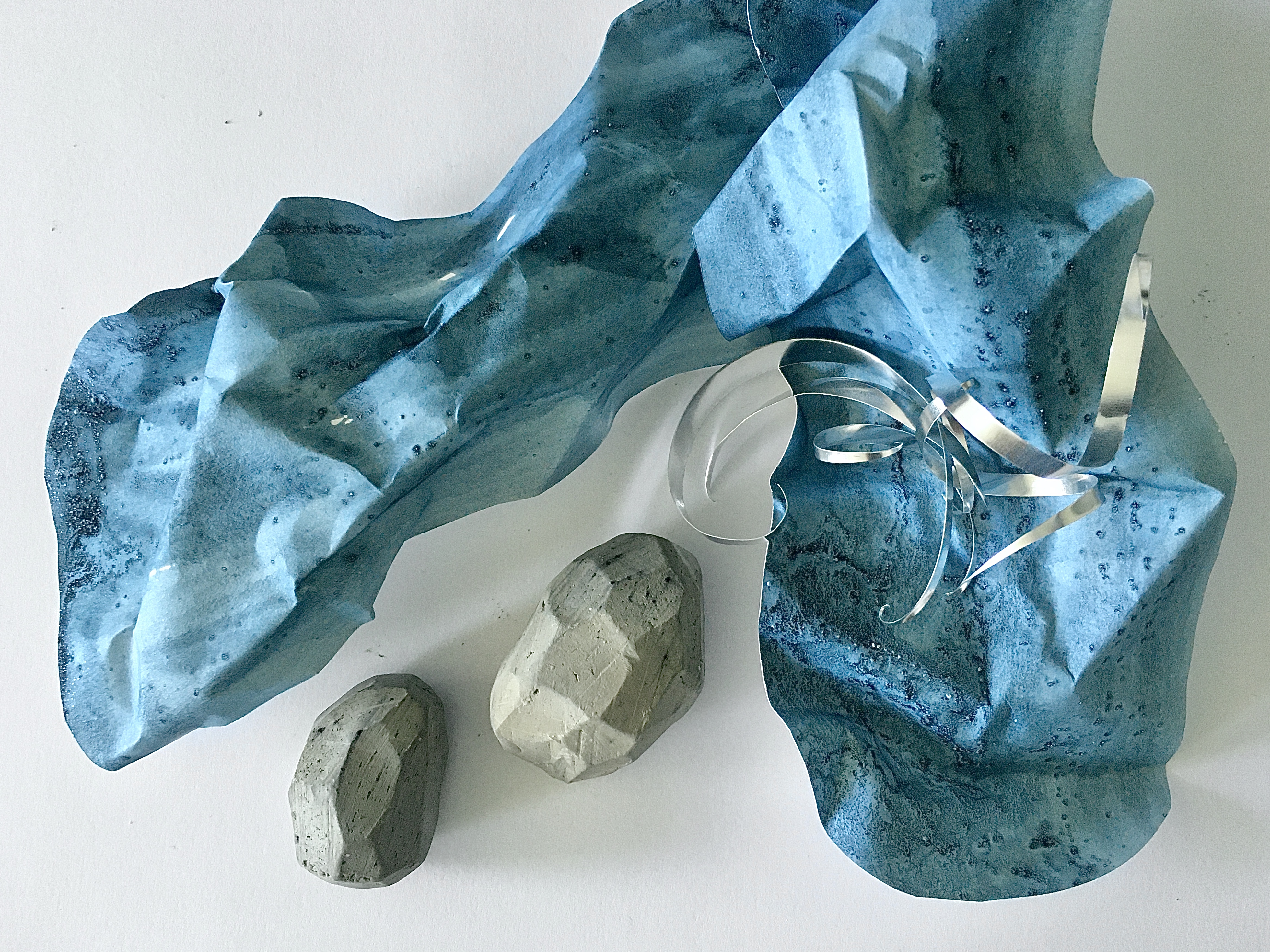
Lydia Brockless is a tutor for Future Creatives short courses at University of the Arts London (UAL), teaching art classes for children and teenagers. She is concurrently pursuing a Master's in Sculpture while maintaining a diverse portfolio career that includes freelance projects and brewery work. Her artistic practice centers on material transformation, using paper, plaster, and wire to reinterpret natural elements like rocks, water, and plants. She explores profound themes including humanity's relationship with Earth, geological time, archaeology, memory, and surface pattern theory—drawing specific inspiration from William Morris' Willow Bough print. Her work emphasizes how basic materials gain new identities through manipulation, such as crumpled paper mimicking fabric or metal. Lydia champions experimental approaches in creative education, advocating that mistakes drive authentic learning. She encourages students to deconstruct perfectionism through iterative processes and scale manipulation, while advising emerging artists to cultivate diverse skills and find inspiration beyond traditional galleries in everyday environments.
Edouard Bard, Professor at the Collège de France and affiliated with CEREGE Aix-en-Provence , is a leading figure in paleoclimatology, oceanography, and geology. His research focuses on reconstructing climate variations over diverse time scales using geochemical methods (organic, inorganic, isotopic) and isotopic geochronology. He teaches courses on climate history, human societies, and climate dynamics at the Collège de France. Research : Studies natural climate system mechanisms across geological to anthropogenic time scales Methods : Uses ocean sediments, corals, stalagmites, and polar ice archives Scientific Recognition : Elected to the German National Academy of Sciences Leopoldina in 2025.
Paola Manzotti is an Associate Professor of Geochronology and Tectonics at the Department of Geological Sciences, Stockholm University. She specializes in the study of mountain building processes, particularly focusing on the rock record of burial and exhumation cycles. Her research combines geological mapping, structural analysis, metamorphic petrology, and geochronology to understand the dynamics of orogenic systems. Dr. Manzotti's educational background includes: Bachelor's/Master's degree from the University of Milano (Italy), completed in 2007 PhD from the University of Bern (Switzerland), completed in 2012 under the supervision of Prof. M. Engi Her primary research interests center on mountain building mechanisms and the rock record of burial and exhumation cycles. Metamorphic rocks serve as windows into Earth's interior, documenting their journey toward the planet's center and subsequent return. Dr. Manzotti investigates the deformational and petrological history of the Alpine belt, the timing of burial and exhumation relative to mountain-building cycles, the geometry and kinematics of major crustal-scale shear zones, and the role of inherited structures in new mountain belt formation. Her current work focuses on temporal variations in exhumation rates across mountain belts, particularly in the Alps and Swedish Caledonides. Analysis of Dr. Manzotti's recent publications reveals a strong focus on Alpine geology, particularly the Dora-Maira Massif in the Western Alps. Her work integrates field observations with geochronological data to understand tectonic architecture, burial and exhumation timing, and metamorphic processes. A recurring theme is the study of garnet growth and textures as records of polycyclic rock histories. Her research spans multiple disciplines including structural geology, petrology, geochronology, and tectonics, with applications to understanding both ancient and modern orogenic systems. Scientific recognition includes: Swiss NSF postdoctoral fellowship at the University of Rennes (France, 2012-2015) Swiss NSF Ambizione Fellowship at the University of Lausanne (Switzerland, 2016-2018) Dr. Manzotti was appointed as Assistant Professor at Stockholm University in 2019 and promoted to Associate Professor in August 2022. Her research is supported by various grants that have enabled her to conduct fieldwork in the Alps and develop advanced analytical approaches. She is an active member of the IGV's Geology group at Stockholm University, which studies planet Earth as a dynamic system through integrated applications of geological, geochemical and geophysical methods. Her laboratory work focuses on detailed petrological and structural analysis of metamorphic rocks, particularly from Alpine tectonic units. Dr. Manzotti's team employs advanced techniques including microstructural mapping, mineral chemistry analysis, and geochronological methods to unravel complex tectonometamorphic histories.
Xiaoping JIA is a Professor at Gustave Eiffel University , affiliated with the Langevin Institute . His work bridges acoustics , granular physics , and geophysics , with a focus on understanding wave propagation, frictional dynamics, and seismic triggering mechanisms in complex media. PhD in Physical Acoustics from Pierre and Marie Curie University (Paris 6) B.Sc. in Physics from Nanjing University His research explores: Multi-scale granular acoustics : Investigating how ultrasound interacts with granular materials to induce flow and measure internal states Nonlinear wave behavior : Time-reversal focusing, velocity weakening/strengthening, and scattering in heterogeneous media Dynamic triggering mechanisms : Linking seismic waves to landslides, slope instabilities, and frictional failure Key article trends include: Developing ultrasonic monitoring for granular compaction and damage Modeling acoustic lubrication at grain contacts Characterizing stick-slip dynamics with high-resolution acoustic emission analysis Simulating two-time scale granular flow under vibro-acoustic stress Publications span geophysical journals (PNAS, JGR, GRL) and physics/soft matter outlets (Phys. Rev. E, Soft Matter, Europhys. Lett.), emphasizing ultrasound as a tool for probing granular rheology and failure precursors.
Mark Williams is a Professor in the Department of Geology at the University of Leicester. He is affiliated with Jan Zalasiewicz's Lab and has published 447 scientific papers that have received over 303,212 reads and 19,518 citations. His research spans multiple geological disciplines with a particular focus on the Anthropocene concept and its implications for Earth science. Dr. Williams holds a BSc and PhD, though specific details about his educational institutions are not provided in the available information. Williams' research interests are centered around climate change, stratigraphy, geology, sedimentology, sequence stratigraphy, isotope geochemistry, ecology, environmental science, sediments, and sedimentary basins. His work particularly focuses on the Anthropocene epoch, examining how human activities have transformed Earth's geological and ecological systems. He investigates the stratigraphic signatures of human impact, including changes to biodiversity, sedimentation patterns, and geochemical markers that define this proposed new geological epoch. His research also extends to paleontological studies of Cambrian and Ordovician periods, examining early animal evolution and fossil records. Analysis of Williams' recent publications reveals a strong emphasis on the Anthropocene concept, with numerous papers addressing its stratigraphic definition, geological signatures, and implications for Earth system science. His work frequently examines fossil records as markers of human impact, particularly focusing on changes in species distribution, extinction patterns, and the introduction of non-native species. He has also published extensively on Cambrian and Ordovician paleontology, studying early animal evolution and fossil assemblages from sites like the Chengjiang biota in China. Williams is a key contributor to the Anthropocene Working Group, which has been instrumental in proposing the formal recognition of the Anthropocene as a geological epoch. His collaborative work spans multiple international research teams and has significantly advanced the scientific understanding of human impacts on Earth's geological record.
Giampiero Iaffaldano serves as Associate Professor in Solid Earth Geophysics at the Department of Geosciences and Natural Resource Management within the Faculty of Science at the University of Copenhagen, Denmark. He has held this position since June 2015, following a tenured Assistant Professor role at the Australian National University's Research School of Earth Sciences (2010-2015) and a Reginald A. Daly Postdoctoral Fellowship at Harvard University (2008-2010). His academic journey reflects an international career spanning European, North American, and Australian institutions. His educational credentials include: PhD in Natural Sciences - Geophysics (summa cum laude), Ludwig–Maximilians University Munich, Germany (2007) MSc in Physics (summa cum laude), University of Rome "La Sapienza", Italy (2003) Iaffaldano specializes in observational geodynamics, developing computational models constrained by geological and geophysical observations to understand forces controlling the coupled lithosphere-mantle system. His research integrates forward and inverse modeling approaches with empirical data to address fundamental questions about Earth's dynamic processes across spatial and temporal scales. His work bridges theoretical geophysics with practical applications in hazard assessment and resource management. His recent publication record (2023-2025) reveals a strong thematic focus on plate boundary dynamics, mantle plume influences on plate motions, and earthquake cycle processes. His research spans global to regional scales with particular emphasis on the North Atlantic region (Icelandic plume effects), South American plate boundaries, and microplate systems in Asia and Europe. The consistent presence of high-impact journals like Earth and Planetary Science Letters and Geophysical Journal International demonstrates his standing in the geophysics community. Among his significant scientific recognitions: Elected member of the Young Academy of Europe (2017) Ringwood Fellowship at Australian National University (2010) Reginald A. Daly Postdoctoral Fellowship at Harvard University (2007) Elite Netzwerk PhD scholarship of the Bavarian Government (2005) Professor Iaffaldano has secured approximately DKK 14,000,000 in research funding from major international sources including the Independent Research Fund Denmark, Villum Foundation, National Science Foundation (USA), and Australian Research Council. He chairs the steering committee for DanSeis – Danish National Center for Seismic Instrumentation. His teaching portfolio includes Geodynamics (MSc), Quantitative Problem-Solving in Geosciences (BSc), and specialized PhD courses on plate kinematics. He serves as Associate Editor for Geosphere and has reviewed for premier journals including Nature, Science, and Journal of Geophysical Research. His extensive international collaborations with institutions in Denmark, Australia, USA, Chile, and Europe reflect the global nature of contemporary geophysical research and his leadership in the field.
Nicolas Rudolph Thibault is an Associate Professor in Paleontology at the Department of Geosciences and Natural Resource Management, University of Copenhagen, Denmark, specializing in micropaleontology (calcareous nannofossils) and stratigraphy with expertise in orbital climate change and carbon-isotope stratigraphy. His educational background includes: PhD in Earth Sciences, Université Pierre et Marie Curie, Paris 6, France (2005) Thibault's research focuses on three core areas: precise dating and improvement of the Geologic Time Scale, paleoclimate and paleoenvironmental reconstruction, and evolution of marine life. He specializes in the Cretaceous, Early Jurassic, late Triassic, late Eocene, and Early Paleozoic of Baltoscandia, utilizing calcareous nannofossils and stable isotope records to analyze orbital-scale climate dynamics and biotic responses. His recent publications (2024-2025) reveal a concentrated effort on integrated stratigraphy across critical geological intervals, particularly the Cretaceous. Key themes include chronostratigraphic refinement of the Campanian-Maastrichtian, paleoenvironmental shifts during the Coniacian-Santonian, and biotic collapse across the Cretaceous-Paleogene boundary, frequently employing multi-proxy approaches and international collaboration networks. Thibault has supervised 8 PhD students, 9 Master's students, and 1 post-doc. He has secured substantial research funding, contributing approximately 4 million kr as Principal Investigator and 70 million kr as co-PI and collaborator. He maintains an extensive global collaboration network spanning Switzerland, France, the United Kingdom, Iran, Poland, the United States, and Germany, focusing on micropaleontology and stratigraphic challenges in diverse geological settings.
Christoph Korte is an Associate Professor in the Department of Geosciences and Natural Resource Management within the Faculty of Science at the University of Copenhagen. His research focuses on reconstructing Earth's past climate and environmental conditions through geochemical analysis of sedimentary records, with particular expertise in stable isotope techniques applied to fossil carbonate shells. His educational background includes a Dipl. Geol. (1993), Ph.D. (1999), and Habilitation (2008, Priv. Doz.) from Ruhr-University Bochum and Freie Universität Berlin. His career path includes research positions at Ruhr-University Bochum, Netherlands Institute for Sea Research, University Innsbruck, University of Oxford, and Freie University Berlin before joining the University of Copenhagen in 2009. Korte's research centers on paleoclimatology using stable isotopes ($$\delta^{18}\text{O}$$, $$\delta^{13}\text{C}$$, $$^{87}\text{Sr}/^{86}\text{Sr}$$, $$\delta^{34}\text{S}$$) to reconstruct seawater temperatures and atmospheric $$\text{CO}_2$$ levels across geological time scales. His work spans mass extinction events including Permian/Triassic, Triassic/Jurassic, and Cretaceous/Paleogene boundaries, with notable discoveries regarding non-correlation between temperature fluctuations and $$\text{CO}_2$$ variations during certain geological periods. His recent publications reveal connections between volcanic activity, mercury cycling, and extinction events, particularly during the Ordovician-Silurian transition and Early Jurassic Karoo-Ferrar volcanism. His scientific network shows extensive international collaboration, with research output including 235 publications across journals, conference abstracts, book chapters, and reviews. Current research projects investigate orbital-scale climate changes during the Late Maastrichtian and chemostratigraphic signatures across major geological boundaries.
Solveig Gade is an Associate Professor in Theatre and Performance Studies at the Department of Arts and Cultural Studies, University of Copenhagen. Her research interrogates the intersections of performance with urgent global crises, particularly through documentary practices in war contexts and ecological emergencies. She maintains dual expertise as both an academic researcher and active dramaturge in Copenhagen's leading theatres. Her research interests center on new dramaturgical paradigms that challenge conventional representations of conflict and climate collapse. Gade examines how artists navigate the tension between documentary evidence and imaginative world-making, with particular focus on war aesthetics, archival interventions, and care practices in crisis. Her work bridges performance theory with political philosophy, emphasizing how theatrical forms can reconfigure public perception of intractable conflicts. Analysis of her recent publications reveals consistent engagement with three interconnected trajectories: 1) War documentation through artistic lenses (evident in her book on documentary art and conflict), 2) Climate crisis dramaturgies exploring geological time scales and nonhuman agents, and 3) Care ethics in collaborative performance practices. These threads converge in her current Velux-funded project "Oikos: Care and Crisis in the 21st Century". Scientific awards received: Routledge Prize for best PhD paper (2008) Teacher of the Year at the Faculty of Humanities, University of Copenhagen (2016) Statens Kunstfond prize for dramaturgical work (2018) Statens Kunstfond prize for dramaturgical work (2019) Her advising extends beyond academia through dramaturgical mentorship at the Betty Nansen Theatre and Royal Danish Theatre, where she has guided productions by major Scandinavian artists. Significant research grants include multiple Velux Foundation awards for collective projects examining war aesthetics and care economies. Current teaching encompasses BA-level Theatre History and Complex Dramaturgy, and MA-level Research Practices in Performance Studies. Gade operates at the nexus of academic research and theatrical practice through her artistic board position at Betty Nansen Theatre and collaborations with the Center for Spatial Art. Her work manifests in both scholarly publications and embodied performance interventions, demonstrating how theoretical frameworks inform live artistic creation.
Prof. Dr. Joachim Haug serves as a Professor in the Faculty of Biology at Ludwig Maximilian University of Munich (LMU), where he leads the Evolutionary Developmental Palaeobiology research group. His work bridges deep-time evolutionary analysis with modern biological systems, primarily utilizing exceptionally preserved fossils and contemporary arthropod specimens. His core research investigates: Evolutionary shifts in developmental timing (heterochrony) across geological time scales Origins and evolution of larval forms and post-embryonic novelties Mechanisms driving metamorphosis through developmental timing combinations Advanced 2D/3D imaging methodologies for fossil-morphological analysis Computer-based 3D modeling of extinct organism functionality Scientific Awards: No awards, fellowships, or medals are referenced in the provided materials. Advising and Grants: The source text contains no information regarding student supervision, grant funding, or research collaborations. His laboratory focuses on integrating palaeontological evidence with developmental biology, with ongoing projects detailed through the Evolutionary Developmental Palaeobiology research portal ( palaeo-evo-devo.info ), emphasizing comparative ontogenetic analyses of euarthropods and extinct relatives.
Tara Smiley is an Assistant Professor in the Department of Ecology and Evolution at Stony Brook University. Her research integrates fossil records, modern ecological data, and geological modeling to explore how climate and landscape history shape mammalian diversity, biogeography, and ecological structure across spatio-temporal scales. She works in dynamic regions like western North America and the East African Rift, focusing on small mammals during the Cenozoic. Academic Rank: Assistant Professor University: Stony Brook University Department: Department of Ecology and Evolution Collaborations: Turkana Basin Institute, Katharine Loughney, Ethan Hyland, Jennifer Cotton Her research emphasizes stable isotope ecology, paleoenvironmental reconstructions, and diversification analysis. Key themes include ecological dynamics , mountain biodiversity gradients , mice-oscapes (modern/historical isotope ecology), and conservation paleobiology . She employs tools like 2D/3D morphometrics, isotopic niche modeling, and multi-proxy environmental reconstructions. Recent publications highlight interdisciplinary approaches in paleobiology, including enamel proteomics (2025), climate-disease interactions (2025), and tectonic impacts on biodiversity (2024). Her work spans field studies in Turkana Basin and Mojave Desert, with NSF-funded projects on macrosystems biology and tectonic-climate coupling. NSF Biological Collections Postdoctoral Fellowship NSF Macrosystems Biology Grant NSF Research Coordination Grant (co-led) Best Student Talk Award (2015) She mentors PhD students Megan Wyatt and Imogene Welles and collaborates with researchers like Rebecca Terry, Jennifer Cotton, and Ellen Ketterson. The Smiley Lab also engages in isotopic analysis of avian migration resilience and geohistorical biodiversity modeling.