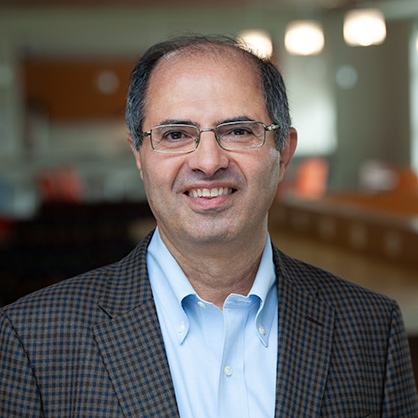
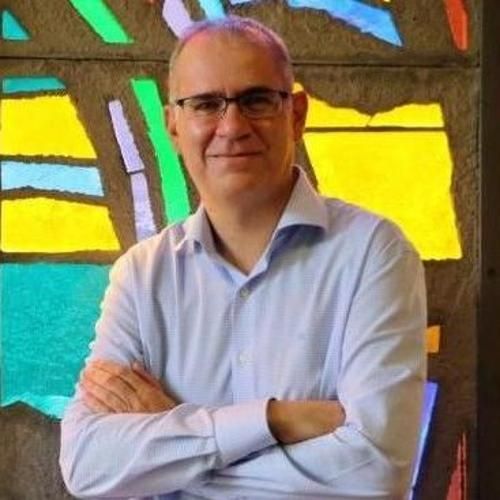
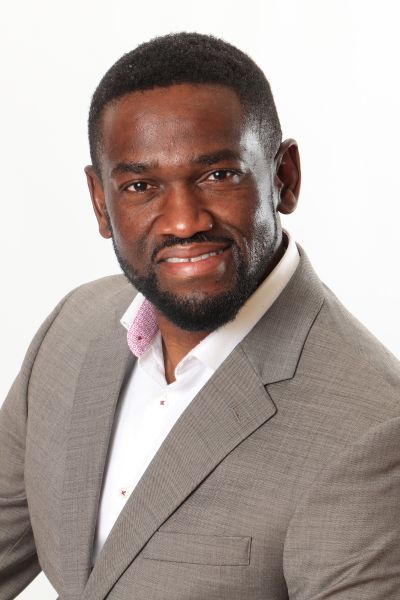
Ben Light is Professor at the University of Salford's School of Health & Society, where he researches digital media's impact on gender, sexuality, and social interactions. He directs research at the Centre for Research on Inclusive Society and Centre for Applied Health Research. His research examines: Digital intimacy and dating/hookup app cultures Algorithmic governance of sexual content Social media ethics and platform politics Digital methods for studying online behavior LGBTQ+ experiences in digital spaces Publication trends show consistent focus on: Sexuality and digital platforms (55% of recent works) Algorithmic content moderation (30%) Digital health communication (15%) Awards include: Nancy Baym Book Award for NSFW: Sex, Humor and Risk (2020) Claudio Ciborra Award for Most Provocative Paper (2011) Finalist for KTP Awards (2003) Supervises doctoral students in digital society studies and directs interdisciplinary projects with NHS Cancer Screening Programme, LGBT Foundation, and Imperial War Museums.
Mohsen Sarraf is a Senior Lecturer and Visiting Assistant Professor in Electrical Engineering at the Tagliatela College of Engineering, University of New Haven. He holds a Ph.D. in Electrical Engineering from the University of Southern California, specializing in Computer Networks and Communications, along with M.S. and B.S. degrees from the same institution. His research focuses on wireless communications, signal processing, network security, multimedia systems, and embedded technologies. With extensive industry experience at Bell Labs and Telcordia, Sarraf possesses deep expertise in real-time system design, RF planning, and hardware implementation. Sarraf holds 22 US patents and 3 European patents covering innovations in OFDM transmission, error correction, watermarking, and wireless systems. His publications demonstrate consistent focus on optimizing network performance in wireless sensor networks, with recent work emphasizing collision detection algorithms, power efficiency, and IoT applications. He co-authored 'W-CDMA, cdma2000 and 3G Mobile Networks' (McGraw Hill, 2002), which was translated into Chinese. Professional skills include MATLAB simulation, C/C++ programming, RF planning, and project management.
Dr. Diego López-de-Ipiña is a Full Professor and Principal Researcher at the DEUSTEK/MORElab – ICT for Good group (University of Deusto, Spain). His roles include leading the Faculty of Engineering’s PhD program (2013–2018) and teaching modules in software engineering, web development, and internet technologies. His research focuses on pervasive computing, IoT, semantic middleware, smart cities, and sustainable computing, emphasizing ICT’s role in addressing societal challenges. He has supervised 17 PhD theses and directed over 100 final-year projects. Education: PhD in Computer Science from the University of Cambridge (2002). Research Interests: Pervasive computing and IoT for smart communities Knowledge graphs and semantic web technologies Human-AI collaboration and ethical computing Sustainable computing and environmental citizen science Projects: Principal investigator in EU projects like SOCIO-BEE, AURORAL, and CITY4AGE, focusing on smart cities, citizen engagement, and environmental sustainability. He has led over 20 research projects, blending IoT, blockchain, and AI for real-world applications. Awards: ATLAS Elsevier Research Prize (social impact of scientific papers) Corresponding Member of JAKIUNDE – Basque Science and Arts Academy Advising & Grants: Supervisor of 17 PhD students and mentor for over 100 theses. Secured funding through European and Spanish grants, emphasizing collaborative, community-driven research. Labs & Teams: Founder of DEUSTEK/MORElab, a hub for ICT innovations in sustainability, smart environments, and human-centric technologies.
Didem Özkul is an Assistant Professor in the Department of Communication and Design (COMD) at Bilkent University, Ankara, Turkey. She holds a Ph.D. from the Communication and Media Research Institute at the University of Westminster, London. Previously, she held academic positions at institutions including University College London (UCL), the University of the Arts London, and the London School of Economics (LSE). Her research focuses on emerging technologies, particularly mobile and locative media, geolocation systems, big data, algorithms, and their societal implications. She is affiliated with the Alan Turing Institute and contributes to UK Government Science and Innovation Network robotics/AI collaborations. Education : Ph.D., Communication and Media Research Institute, University of Westminster, 2014 M.A., Communication and Design, Bilkent University, 2007 B.Sc., Business Administration and Management, Bilkent University, 2004 Research & Projects : She is writing a monograph, The Politics of Location Tracking and Profiling (Routledge), and editing a Journal of Computer-Mediated Communication special issue on sensor-mediated communication. Her work addresses ethical and societal challenges of data practices and automation. Collaborations : Editorial board member of Mobile Media & Communication and Online Media and Global Communication . Policy advisor to the Alan Turing Institute’s responses on data ethics and algorithmic bias. Personal : Enjoys cycling, hiking, and spending time with her pets.
Anna Jensen is a Professor of Geodesy at KTH Royal Institute of Technology, specializing in atmospheric effects on Global Navigation Satellite Systems (GNSS). Her research focuses on modeling ionospheric and tropospheric influences on GPS signals, particularly how weather parameters and electric currents impact signal transmission. Applications of her work include precision surveying, aviation navigation, and construction site monitoring. She has contributed to projects such as the Fehmarnbelt Fixed Link positioning system and Arctic navigation challenges. Her research interests span geodesy, satellite navigation, and remote sensing, with a strong emphasis on improving GNSS accuracy in challenging environments like urban areas and polar regions. Jensen’s studies address issues like ionospheric scintillation, RFI geolocation with smartphones, and robust positioning in jamming conditions. Jensen has published extensively on topics including network RTK data screening, GNSS network optimization, and ionospheric modeling. Her work often integrates statistical methods and geostatistical techniques to enhance positioning reliability. No scientific awards or grants are explicitly mentioned in the provided texts. She has advised no formal students, though her involvement in the Fehmarnbelt project and other large-scale infrastructure initiatives highlights her role in applied geodetic engineering. No specific labs or teams are detailed, but her collaborations likely involve KTH’s geomatics and geophysics groups.
Dr. Frederic Maire is a Senior Lecturer at the QUT Centre for Robotics, Queensland University of Technology. His research focuses on robotics, computer vision, and machine learning, with applications in environmental monitoring, autonomous systems, and driver safety. He holds a PhD from Université de Paris VI and has been at QUT since 1995. Key projects include the Dugong Detector for seagrass health monitoring, textile recycling robotics, and rail safety systems. Expertise spans soft robotics, environmental robotics, and AI-driven solutions for complex real-world challenges. Research interests include underwater imagery segmentation, UAV navigation, and multimodal driver stress detection. He has supervised numerous PhD and Master’s students on topics like autonomous decision-making and vision-based robotics. Publications span over 118 articles in top venues like IEEE/CVF WACV and IROS, focusing on robotics, computer vision, and environmental applications.
Radu Grosu is a Full Professor and Head of the Cyber-Physical Systems Research Unit at TU Wien. His research focuses on modeling, analysis, and control of cyber-physical and biological systems, with applications in robotics, autonomous systems, medical imaging, and formal verification. He leads the Scuderia Segfault team for autonomous F1TENTH racing and has extensive collaborations with industry partners like TTTech Auto AG and FFG. His work integrates machine learning, control theory, and formal methods to address challenges in safety-critical systems and autonomous decision-making. Roles: Full Professor, Head of Research Unit, Faculty Council Substitute Member Affiliations: TU Wien, Scuderia Segfault, Austrian Science Fund (FWF) projects Research interests span cyber-physical systems (CPS), cardiac-cell networks, genetic regulatory networks, and AI-driven solutions for healthcare and manufacturing. He has pioneered methods in neural circuit policies, flocking control, and real-time reinforcement learning. His projects include EdgeAI for embedded systems, radiation treatment optimization in glioblastoma, and autonomous vehicle testing frameworks. Key contributions include: Developing Lagrangian reachability analysis for safety verification Advancing neuromorphic IoT architectures and sensor networks Creating tools like DeepSTL for translating requirements into specifications Grants include FFG-funded projects on autonomous driving examiners and energy-efficient neuromorphic systems. His work bridges theoretical foundations with practical implementations in CPS resilience, medical diagnostics, and industrial automation.
Dr. Yashar Moshfeghi is an Honorary Senior Research Fellow at the University of Glasgow's School of Computing Science. He holds a Ph.D. in Information Retrieval and specializes in neuropsychological models of information need, geolocalisation of social media data, and neural correlates of cognitive processes. His research bridges cognitive neuroscience with information science. His work investigates how brain signals can predict information needs, the neural basis of search behavior, and fine-grained geolocalisation techniques for urban informatics. He develops models that connect cognitive processes with information retrieval systems. Moshfeghi's publications demonstrate innovative interdisciplinary approaches combining fMRI studies with information retrieval, geospatial analysis of social media, and cognitive modeling of search behavior. His research has practical applications in urban planning, traffic management, and adaptive information systems.
Jennifer Fisher is a Professor in the Department of Visual Art and Art History at York University's School of the Arts, Media, Performance & Design (AMPD). She holds a BFA from NSCAD University, and MA and PhD degrees from Concordia University. Her academic work integrates curatorial practice with research in contemporary art, sensory aesthetics, and feminist theory. Research Focus Fisher's research explores interdisciplinary intersections including: Exhibition studies and archival reinterpretation Affect theory and non-visual sensory aesthetics Feminist performance and display practices Curatorial methodologies and artist archives Professional Recognition Contemporary Art Fellow at the National Gallery of Canada Research affiliations at Cornell University and NYU Tisch School of the Arts Co-founder of the Journal of Curatorial Studies Founding member of DisplayCult curatorial collective Notable Projects Fisher co-curated 'Archives by Artists' (2024) at the Archives of Ontario, featuring 18 international artists who reconceptualize archival practice through interactive multiples. The exhibition engaged AMPD students in hands-on curation and will travel to Québec in 2025. Her work frequently integrates academic research with public-facing curation.
Dr. Shangqing Zhao is an Assistant Professor in the School of Computer Science at the University of Oklahoma, with campuses in Norman and Tulsa. He earned his Ph.D. in Systems and Security from the University of South Florida in 2021. His research focuses on novel mobile system design, network security, and machine learning applications in security. He has published in top-tier venues like MobiCom, NSDI, and IEEE Transactions. Awards include the IEEE ICCCN 2023 Best Paper Award and an NSF grant for adversarial-driven physical layer security. Education Ph.D., Systems and Security, University of South Florida (2021) M.S., Communication and Information Systems, Henan Polytechnic University B.A., Business Administration, Fujan Agriculture and Forestry University Research Interests Dr. Zhao’s work spans mobile system design , network security , and machine learning for security . He explores data-driven approaches to improve system resilience against adversarial attacks, including spectrum attacks, wireless authentication vulnerabilities, and AI-driven security solutions. His research bridges theory and practice, with impactful contributions to IEEE conferences and journals. Publication Trends His articles emphasize adversarial machine learning , wireless security protocols , and AI applications in healthcare . Recent work tackles quantum ML security, breath inference defenses, and mmWave network optimization. The 2023 Best Paper Award highlights his innovation in dynamic routing protocols against network inference attacks. Grants & Awards NSF SaTC Grant (Adversarial-Driven Physical Layer Security) OU DISC Grant (Capsule Forensics) IEEE ICCCN 2023 Best Paper Award Advising & Students He currently advises Ph.D. students Jinmiao Chen, Xinyu Cao, Yu Cai, and Reza Babaei (co-advised), along with master’s student Yanyan Luo. His lab focuses on practical security solutions for emerging technologies like mmWave and IoT.
Darren Hayes , Associate Professor at Pace University 's Seidenberg School of Computer Science and Information Systems, specializes in Information Technology with a focus on Cybersecurity and Digital Forensics . As Director of the Cybersecurity Program, he bridges academic research with industry needs through grants like the National Science Foundation award (2021-2026). Education : PhD in Industrial Engineering (Sapienza Università di Roma, 2019), DPS (Pace University, 2008), MS in Information Systems (Pace University, 2001), H.D.B.S in Banking & Finance (University College Dublin, 1993) His research explores machine learning applications in forensic analysis , mobile payment security , and cybersecurity education frameworks . Recent publications span digital artifact detection and optical sensor development . Awards include the 2024 Homeland Security International Digital Investigation Award and recognition as one of the Top 10 Computer Forensics Professors (2013). 2024: Finding Forensic Artefacts... (Digital Forensics, Machine Learning) 2023: Optimizing Reward-Based Crowdfunding (FinTech, AI) As High Technology Crime Investigation Association First Vice President and FBI Academic Alliance Program Coordinator, he actively shapes professional standards. His 2022 Compliance Week presentations address ransomware mitigation and third-party risk management .
Roberto Fernández Fernández serves as Associate Professor at the University of León's Faculty of Law within the Department of Private and Business Law, specializing in Labour and Social Security Law as core member of the DTSS DERECHO DEL TRABAJO Y DE LA SEGURIDAD SOCIAL research group. His academic career centers on contemporary labor jurisprudence and technological impacts on employment relations. He earned his Doctorate from the University of León in 2003 with the thesis Las mutualidades voluntarias de previsión social de naturaleza empresarial under Dr. Juan José Fernández Domínguez's supervision, establishing his expertise in business-oriented social security systems. Research focuses on labor law evolution , social security frameworks , and technology-driven workplace transformations , with significant contributions to algorithmic recruitment ethics, geolocation monitoring boundaries, and social media expression rights. His work bridges traditional labor jurisprudence with digital age challenges through rigorous analysis of Supreme Court rulings and European jurisprudence. Recent publications reveal strong thematic convergence in labor law's adaptation to technological disruption, particularly examining big data in hiring, digital occupational risks, and regulatory gaps in social media usage. Concurrently, his educational research advances formative assessment methodologies across university teaching levels. Scientific awards: No documented honors in provided materials. Advising activities remain undocumented regarding specific students, though his extensive publications on Master's program evaluation (particularly Teacher Training rubrics and triadic assessment) confirm active graduate mentorship. Grant details are absent from available sources. As integral member of the DTSS research group, he contributes to seminal academic events including the Desafíos de las Relaciones Laborales ante los Cambios Tecnológicos seminar series and digital workplace risk prevention workshops, driving discourse on labor law modernization through collaborative knowledge production.
Emmanuel Agu is a Professor in the Computer Science Department at Worcester Polytechnic Institute. He leads the Clinical AI Research (CARE) Lab and has advised numerous Major Qualifying Projects (MQPs) and Interactive Qualifying Projects (IQPs) focused on mobile computing, wireless networking, and computer graphics. Agu's work bridges academic research with practical applications, including collaborations with industry sponsors like Fidelity and Endicia. Current affiliations: Professor, Computer Science Department, WPI Research Lab: CARE Lab Research Interests His research primarily addresses challenges in wireless networks, mobile graphics optimization, and location-aware systems. Key themes include latency analysis in networked games, signal strength calibration for indoor geolocation, and efficient rendering techniques for resource-constrained devices. Scientific Awards Best MQP in Computer Science Department, 2003-2004 (Locus: Wireless LAN Location Sensing) Nominated for Best MQP in Computer Science Department, 2003-2004 (Rendering Structural Colors) Advising and Collaborations Agu has mentored over 40 students across interdisciplinary MQPs/IQPs since 2002. Projects include Mobile Social Networking , Financial Computations on the GPU , and Emergency Medical Services Workflow Automation . Collaborations span departments (e.g., Electrical and Computer Engineering, Management and Information Systems) and industry partners.
Lecturer Sarvas Risto is affiliated with Aalto University's Department of Computer Science within the School of Science. His research focuses on digital media studies, human-computer interaction (HCI), and the societal implications of technology. Key areas include social media analysis, digital saturation, metadata creation, and citizenship in the digital age. Risto has contributed to over 20 peer-reviewed publications since 2001, with notable work exploring photography's technological evolution, mobile social interaction platforms, and user-centric design principles. His research activities include organizing academic events like the 2021 Final Seminar of the 'Everyday Media Imagined by Teenagers' project and presenting at international conferences on topics such as digital natives' connectivity experiences and citizenship skills. While primarily focused on academic contributions, his work bridges technical innovation with sociocultural analysis, addressing both practical and ethical dimensions of emerging technologies. Risto has collaborated on projects like the RISE initiative, which explored semantically supported media services, and the DIMAS system for distributing multimedia content on peer-to-peer networks. His ongoing interests span future print media design, metadata systems for digital photography, and the legal aspects of user-generated content.
Hongyu Zhang is a Lecturer in the Department of Earth, Geographic, and Climate Sciences at the University of Massachusetts Amherst, where he contributes to the Geographic Information Science and Technology (GIST) program. He is based at the Mount Ida Campus and is actively engaged in research and teaching at the intersection of geography, technology, and ethics. Education: PhD in Geography, McGill University, 2024 MSc in Geography, Western University, 2017 Bachelor of Environmental Studies (BES) in Geomatics, University of Waterloo, 2015 (with minor in Computer Science and Diploma of Excellence in GIS) Hongyu's research focuses on geoprivacy , GeoAI , and the ethical dimensions of spatial data . He investigates how individuals disclose location information on social media, particularly in Chinese digital environments like Weibo, using mixed methods to understand the sociotechnical dynamics of privacy. His work aims to promote responsible spatial data science by bridging GIScience with human behavior and digital ethics. His recent publications and open-source contributions reflect a strong trend in social media analysis , geoprivacy discourse , and computational ethics . He develops tools and datasets to analyze privacy-related language and behavior online, with a focus on Chinese platforms. His work also extends to GIS education , where he emphasizes project-based learning to improve student employability in geospatial fields. Scientific Contributions: Development of lexicons for analyzing geoprivacy in Chinese social media Creation of datasets on microblog content and user comments Open educational resources in data science and GIS Research on algorithmic price discrimination and digital surveillance Hongyu is committed to open science and student mentorship. While no formal list of advisees is available, his teaching and project-based approach suggest active engagement with students. He has no listed scientific awards, but his research output and GitHub activity indicate a growing scholarly presence in geospatial ethics and digital society. He maintains an active research website and GitHub profile, where he shares code, datasets, and educational materials, reflecting a transparent and collaborative research philosophy.