Michela Bertolotto is a Professor in the School of Computer Science at University College Dublin (UCD). Her research focuses on spatio-temporal data modeling, GIScience, and applications of geospatial technologies in fields like urban planning and health informatics. She leads a research group and has supervised 19 PhD and 8 MSc students. Her work includes innovations in LiDAR-based flood risk visualization, semantic web quality assurance, and open-source spatial data analysis. Bertolotto has held roles including College Lecturer at UCD (2000–2006) and postdoctoral research positions at the University of Maine and University of Genoa. Education: BSc and PhD in Computer Science from the University of Genoa (1993, 1998). Professional achievements include over 100 publications, 24 grants (e.g., Science Foundation Ireland-funded Urban ARK project), and editorial roles at journals like the International Journal of Geographical Information Science. Awards include the UCD President's Research Award (2001) and NATO Postdoc Fellowship (1998–1999). Research interests span map personalization, volunteered geographic information (VGI), and geospatial data quality. Her lab develops tools like the LAMSkyCam (low-cost sky imaging system) and dynamic flood risk viewers. She chairs international conferences and serves on program committees for GIScience events.
Mischa Billing is a Senior Lecturer at Örebro University specializing in Culinary Arts and Meal Science. She is actively involved in research on sensory experiences, wine studies, and food pairing. Her work spans across multiple disciplines including haptics, olfaction, and culinary traditions. Her research interests focus on the intersection of sensory perception and culinary practices. Billing explores how sound affects taste perception, develops haptic attribute models for food design, and investigates improved sensory experiences for the elderly. Her work in sommelier training and critical attribute techniques bridges traditional culinary knowledge with scientific approaches to sensory evaluation. Analysis of her publications reveals a strong focus on practical applications of sensory science in culinary contexts. Her work spans from theoretical explorations of wine tasting as embodied knowledge to practical guides for food and beverage pairing. The recurring themes include sensory integration, cultural contexts of food consumption, and innovative methods for enhancing meal experiences. Gastronomic Academy's Silver Medal Wine Profile of the Year Nose of the Year Honorary Truffle of the Year Billing has served as general secretary of the International Sommelier Association (ASI) and is a member of the Wine Academy in Sweden. She has extensive experience in evaluating diverse products including Swedish tap water and apple juice. Her media presence includes serving as a jury member on TV4's Sweden's Master Chef and delivering radio talks for Sveriges Radio. She leads several research initiatives including the Sense Lab, which focuses on future sensory experiences, and participates in research groups examining meals from social and cultural perspectives. Her projects like 'Rewine The World' demonstrate interdisciplinary approaches to reducing food waste through innovative culinary methods.
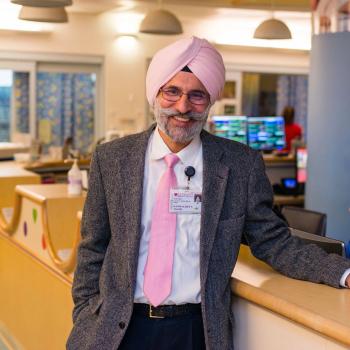
Dr. Kanwaljeet S. Anand is a dual-appointed Professor of Pediatrics (Pediatric Critical Care) and Anesthesiology, Perioperative & Pain Medicine at Stanford University School of Medicine. As director of the Pain/Stress Neurobiology Lab and Jackson Vaughan Critical Care Research Fund, he serves as Editor-in-Chief of Pediatric Research and maintains active membership in Bio-X, MCHRI, and Wu Tsai Neurosciences Institute. Rhodes Scholar with D.Phil from University of Oxford Harvard postdoctoral fellowship and Boston Children's Hospital residency Founded Harmony Health Clinic - Arkansas' largest charitable medical-dental facility A translational researcher with 30+ years of impact, Dr. Anand established the first scientific framework for infant pain perception and developed novel pain assessment methodologies. Current research focuses on: Hair biomarker analysis for stress and social affiliation (cortisol/oxytocin) Machine learning systems for objective pain detection in non-verbal infants Biopsychosocial interventions for stress reduction in disadvantaged youth Neurotoxicity mechanisms of sedatives in developing brains Global NICU opioid usage patterns through the NeoOpioid Consortium His work has yielded over 260 publications and significant advances in: Pediatric pain management protocols Neonatal stress biomarker development Critical care neurobiology insights Community health initiatives AI-driven clinical decision support systems Scientific Recognition 9th Annual 'In Praise of Medicine' Public Address, Erasmus University (2014) Nightingale Excellence Award (2016) Honorary Doctorate from University of Örebro (2019) NIH SBIB-H82 Study Section Chair (2018) Multiple IASP and American Pain Society awards Swedish Academy of Medicine's Nils Rosén von Rosenstein Award (2009) St. Jude Endowed Chairholder (2010) As mentor to Med Scholar Anjali Gupta and advisor to numerous professional bodies, Dr. Anand maintains active clinical leadership in Pediatric Intensive Care while advancing computational approaches to pain detection through collaborations with Stanford's AI researchers.
James Rothwell is a Professor of Physical Geography at The University of Manchester, specializing in environmental pollution and hydrology. He leads the MSc in Green Infrastructure and has held senior academic roles including Deputy Head of Geography and Co-Director of the Manchester Environmental Research Institute. His research focuses on urban challenges, microplastics, and peatland ecosystems, supported by over £15M in grants from NERC, EU, and others. He has supervised 8 PhD students and teaches courses on pollution, hydrology, and sustainable cities. Education: PhD (2006) and BSc (2002) in Geography from The University of Manchester. Professional roles include Lecturer (2008-2014), Senior Lecturer (2014-2017), Reader (2017-2019), and current Professorship since 2019. Research interests include green infrastructure for urban flooding, microplastic transport, and heavy metal dynamics in peatlands. Major projects include EU-funded GrowGreen (€11M+) and UK-based flood management initiatives. Over 50 peer-reviewed articles address environmental challenges in cities, peatlands, and global ecosystems. Grants highlight interdisciplinary work across continents, with notable projects like the Manchester Sky Garden Challenge (2024) and studies on peatland restoration. Media coverage includes high-profile reports on UK microplastic pollution in rivers. Teaching spans undergraduate to postgraduate levels, integrating research into courses like Environmental Pollution and Green Infrastructure Planning. Administrative roles include leading admissions and undergraduate programs in Geography.
Onur Varol is an Assistant Professor at Sabanci University's Computer Science Department and leads the VIRAL Lab, which focuses on computational social science, network science, and machine learning. He has affiliations with the Center of Excellence for Data Analytics. His research spans social bot detection, misinformation analysis, and online behavior modeling.
Nico Trocmé is the Philip Fisher Chair in Social Work and Director of the School of Social Work at McGill University. He holds a PhD and MSW from the University of Toronto and has over 30 years of leadership in child welfare research, policy, and practice. His work focuses on child abuse/neglect, First Nations service collaboration, and systemic inequities in child protection systems. Education: PhD, University of Toronto (1992) MSW, University of Toronto (1983) Bachelor of Arts (Philosophy), University of Toronto (1981) Affiliations: Director, School of Social Work (2014–2023) Adjunct Professor, Factor-Inwentash Faculty of Social Work, University of Toronto (2005–2020) Scientific Director, Centre of Excellence for Child Welfare (2000–2008) His research spans national child maltreatment studies (e.g., Canadian Incidence Studies), First Nations partnership initiatives, and policy development. Key areas include socioeconomic disparities in child protection, trauma-informed care, and culturally responsive services for Indigenous communities. He has authored over 230 peer-reviewed publications and led grants totaling $14.3 million. Recent work emphasizes reducing overrepresentation of Indigenous children in systems and addressing mental health inequities. Awards include Fellow of the Royal Society of Canada (2017) and the SSHRC Impact Award (2014). Grants & Projects: Co-developing evaluation mechanisms for Indigenous child welfare (2024–2030) Pan-Canadian Child Welfare Administrative Data Project (2020–2025) Ontario Incidence Study of Child Abuse (2023–2025) Labs/Teams: Canadian Child Welfare Research Portal (cwrp.ca) Centre for Research on Children and Families (McGill) International Society for the Prevention of Child Abuse and Neglect (ISPCAN)
Gary M. Shaw is the Rosemarie Hess Professor and Professor (Research) at Stanford University , with courtesy appointments in the Department of Epidemiology and Population Health and Department of Obstetrics & Gynecology - Maternal Fetal Medicine . He serves as Co-PI of the March of Dimes Prematurity Research Center at Stanford and PI of the California Center for Finding Causes and Preventives of Birth Defects . His research focuses on the Epidemiology of birth defects Gene-environment interactions in perinatal outcomes Nutritional factors in reproductive health . He has developed machine learning approaches for precision parenteral nutrition and predictive models for preterm birth, while investigating persistent metabolomic signatures following hypertensive pregnancy disorders. Shaw's recent work explores Climate change impacts on reproductive health Maternal-fetal immune interactions Epigenetic mechanisms in perinatal disease with applications of multiomics to neonatal intensive care units. As a member of Bio-X and the Maternal & Child Health Research Institute , he contributes to translational research networks while serving as Associate Editor for Birth Defects Research and American Journal of Medical Genetics . He supervises Med Scholar Project student Richard Liang Doctoral co-advisor for Saskia Comess and Richard Liang Master's advisor for Lenae Joe while leading the Division of Neonatology as Associate Chair for Clinical Research (2012-2025). His laboratory work integrates Metabolomic profiling Proteomic analysis Computational modeling Machine learning for biomedical data to advance neonatal care through precision medicine approaches.
Professor Jes Sammut is a faculty member at the University of New South Wales (UNSW) in the School of Biological, Earth & Environmental Sciences . He serves as Deputy Dean for External Engagement and leads the UNSW Aquaculture Research Group , while also holding the position of Deputy Director (International) at the Centre for Marine Science & Innovation. Additionally, he is an Honorary Research Fellow at ANSTO , where he uses nuclear tools to study seafood provenance. His research spans biological, physical, and social sciences, focusing on aquaculture solutions across Australia, Vietnam, Papua New Guinea, Indonesia, India, Thailand, and the Philippines.
Wesley Willett is an Associate Professor in the Department of Computer Science at the University of Calgary, holding the NSERC CRC II Chair in Visual Analytics. His primary research focuses on information visualization, human-computer interaction, and new media applications. He leads the Data Experience Lab and Interactions Lab, exploring innovative methods for data representation and interaction in augmented/virtual reality environments. Education includes a B.S. in Computer Science from the University of Colorado (2006) and a Ph.D. in Computer Science from UC Berkeley (2012). His work bridges technical innovation with user-centered design principles, emphasizing ethical considerations in data visualization and inclusive representation. Key research contributions include: spatial visualization techniques for large environments, gesture-based interfaces for AR/VR, and physical data representations through projects like Cetonia (swarm robotics visualization) and Data Embroidery. His work has been recognized with Best Paper awards at CHI 2015 and Pervasive 2010. Current research emphasizes immersive analytics, wearable visualization systems, and demographically diverse anthropographics. He collaborates with urban designers, neurologists, and environmental scientists to apply visualization in diverse domains like epilepsy surgery planning and air quality monitoring.
Kyu Y. Rhee is a Professor of Medicine and Professor of Microbiology and Immunology at Weill Cornell Medical College . His research focuses on Mycobacterium tuberculosis , with emphasis on metabolic pathways , antibiotic resistance mechanisms , and drug development . Research highlights include: Multi-omic approaches to TB drug discovery Mechanistic studies of antibiotic action Deciphering TB transmission genetics Metabolomics-driven target identification Current funding includes: Bill & Melinda Gates Foundation : AI/ML-assisted bacterial permeability platform National Institute of Allergy & Infectious Diseases : UM1 TB drug regimen design consortium National Heart, Lung, & Blood Institute : Studies on M. tuberculosis PE/PPE proteins and fructose-induced cancer He has authored over 50 publications on TB metabolomics, drug development, and pathogen persistence. His work bridges systems biology , chemical biology , and clinical research to address antimicrobial resistance.
Dr Harrison Smith is a Lecturer in Digital Media & Society at the University of Sheffield's School of Sociological Studies, Politics and International Relations. He holds a PhD from the University of Toronto’s Faculty of Information, alongside MA and BA degrees in Sociology from Queen’s University, Canada. His research focuses on the political economy of data analytics, particularly in smart cities and consumer surveillance contexts. Education: PhD in Information Studies, University of Toronto (Canada) MA in Sociology, Queen’s University (Canada) BA (Hons) in Sociology, Queen’s University (Canada) Smith’s research examines how data infrastructures shape socio-economic inequality through processes like surveillance, classification, and market segmentation. Key areas include location-based marketing, 5G data infrastructures, and industry consolidation in data analytics. His work critiques how digital technologies reconfigure urban spaces and labor markets, particularly in 'smart city' contexts. Recent publications explore the metaverse's industrial implications, blockchain’s role in dispute resolution, and surveillance practices at music festivals. His teaching includes leading the module SCS2016: The Sociology of the Media. Smith’s expertise bridges media theory, urban informatics, and critical data studies, emphasizing ethical and political dimensions of digital technologies in everyday life.
Paul Liu is a Professor and Director of International Affairs at the College of Sciences, NC State University. He holds a Ph.D. in Geological Oceanography from the Virginia Institute of Marine Science (2001) and academic roles spanning 2003 to present. His research focuses on sediment dynamics, sea-level changes, and large river systems in Asia. He leads the World Large River and Delta Systems Source-to-Sink Webinar Series and serves as an NC State Provost Faculty Fellow for Global Leadership. Education: Ph.D. (2001) Virginia Institute of Marine Science; M.S. (1995) Chinese Academy of Sciences; B.E. (1992) Ocean University of China Research expertise includes AI applications in geoscience, sediment transport modeling, and paleoenvironmental reconstruction. His work integrates field observations, numerical models, and geophysical data to address coastal evolution and climate change impacts. He has published over 50 peer-reviewed articles on river deltas, continental margins, and marine sedimentation processes. Recent articles analyze delta dynamics in the Nile, Indus, and Yellow River systems, and explore sediment-carbon interactions in the South China Sea. Liu’s research also addresses human impacts on sediment fluxes and coastal management strategies in Asia. As a global leader, he collaborates internationally on delta sustainability and leads workshops on AI applications in Earth sciences. His lab, linked at https://sealevel.wordpress.ncsu.edu, focuses on bridging geoscience and emerging technologies.
Professor Jason Dykes is a leading figure in the field of information and geovisualization at City, University of London, where he holds the position of Professor in the Department of Computer Science and co-directs the giCentre , a renowned research centre in visualization. He is affiliated with the School of Mathematics, Computer Science and Engineering and maintains an active research and teaching profile. His academic journey includes a PhD in Geography from the University of Leicester and extensive leadership in both research and education. Education: PhD in Geography, University of Leicester, 2000 MSc in Geographic Information Systems, University of Leicester, 1991 BA/MA in Geography, University of Oxford, 1989 Jason Dykes' research is centered on designing visual methods and tools for exploring, analyzing, and presenting information, with a strong emphasis on geographic data. His work integrates cartography, information visualization, GIScience, and human-computer interaction , leading to the development of innovative techniques such as geowigs, ODmaps, BallotMaps, and AttributeSignatures. He has published extensively in top-tier journals like IEEE Transactions on Visualization & Computer Graphics, with over 20 papers in the last decade, and co-authored the seminal book Exploring Geovisualization (2005). His research is supported by major funders including EPSRC and the EU, with projects like RAMP VIS (Covid-19 response) and VALCRI (criminal intelligence). The most recent articles highlight a consistent trend in applied and human-centered visualization , focusing on responsive design, education, pandemic modeling, and novel visual metaphors for complex data. His work increasingly emphasizes methodological rigor, design exposition, and the role of visualization in interdisciplinary and emergency contexts. Scientific Awards and Recognition: National Teaching Fellow, Higher Education Academy (2005) Best Paper Awards at GIS Research UK (consecutive years) Honorable Mentions, IEEE InfoVis (2009, 2010, 2016, 2018) Security Innovation Commercialisation Award (EU, 2022) Research Supervisor of the Year, City Student Union (2020) Innovations in Teaching Award and multiple teaching grants at City Jason Dykes has supervised eight PhD students to completion and advised many others, including notable researchers like Roger Beecham, Sarah Goodwin, and Susanne Bleisch. His teaching includes modules such as Visualizing Society and Data Presentation. He has received significant grant funding from UK research councils and the EU for projects like DIVA, VALCRI, and RAMP VIS. His service to the community includes leadership roles in IEEE VIS, ICA Commission on GeoVisualization, and editorial positions at IEEE TVCG and the Journal of Visualization and Interaction. He leads the giCentre , a dynamic research group that fosters innovation in visualization, and has been instrumental in establishing the field’s educational and methodological foundations through participation in Dagstuhl seminars and publications on visualization pedagogy.
Samuel D. Gosling is a Professor in the Department of Psychology at the University of Texas, leading the Gosling Lab. His research focuses on how personality is expressed in physical environments (e.g., offices, bedrooms), virtual spaces (e.g., social media), and through preferences like music. He has pioneered studies on the link between personal spaces and occupant traits, as well as the accuracy of personality judgments from online profiles. His work also explores animal personality and innovative methods for collecting social science data via the internet. Collaborators include experts in environmental psychology, music preferences, and behavioral research. The Gosling Lab develops scales like the Ten Item Personality Measure (TIPI) and studies geographic correlations of psychological traits. Key research areas: Environmental psychology, social media analysis, music personality links. Lab contributions: Over 150 publications, including seminal works on Facebook and World of Warcraft studies. His research emphasizes real-world applications, such as matching pets to owners and identifying traits through physical/virtual environments. Current projects include exploring how spatial environments influence cognitive-emotional regulation and large-scale geographic personality trends.
Monica W. Varsanyi is a Professor of Geography at CUNY Graduate Center and Political Science at John Jay College, CUNY. She serves as Associate Provost for Academic Affairs and Dean of Humanities and Social Sciences at the Graduate Center. Her work bridges migration studies, political development, and state policy. PhD in Geography, UCLA MA in Geography, University of Washington BA in Geography-Environmental Studies and International Development Studies, UCLA Varsanyi specializes in immigration federalism, unauthorized migration, and geographies of citizenship. Her research explores how local and state governments navigate federal immigration policies, the intersection of neoliberalism and nativism, and historical roots of voter disenfranchisement. Recent projects analyze archival methodologies and long-term immigration policy trends in New Mexico and Arizona. Her publications reveal a focus on jurisdictional conflicts, racialization processes, and the role of local law enforcement in immigration policing. Key themes include the politicization of personhood, urban governance challenges, and methodological innovations in migration research. Winner of the 2018 Outstanding Book in Policing Award (American Society of Criminology) Varsanyi’s career includes funding from the National Science Foundation and National Endowment for the Humanities. She is affiliated with multiple academic organizations, including the American Political Science Association and Law and Society Association.