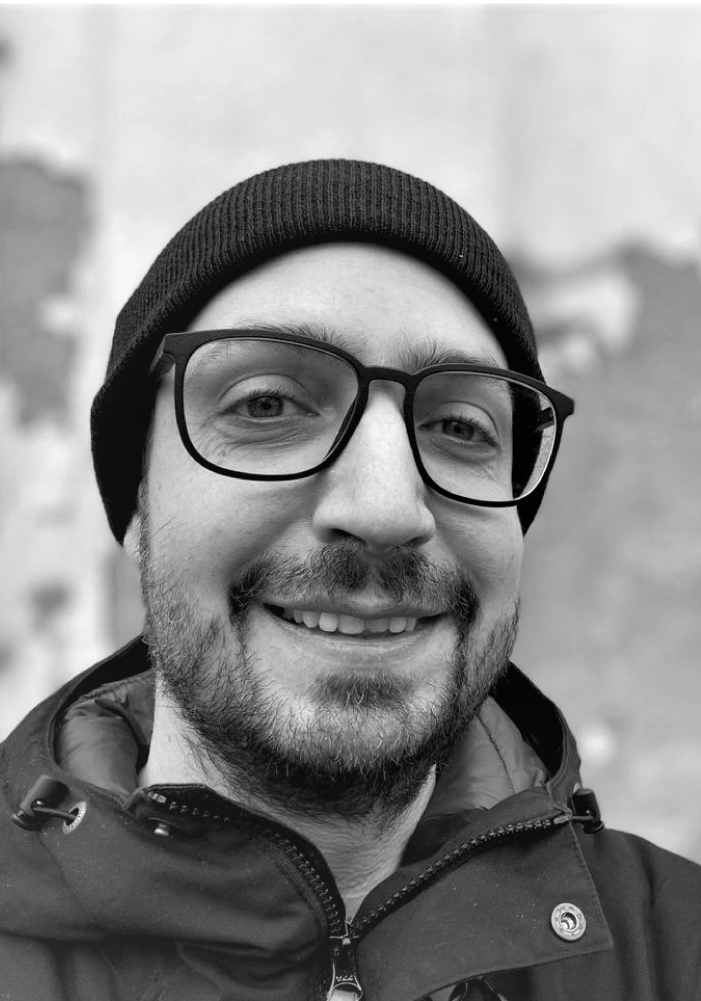
Maxim Romanov heads 'The Evolution of Islamic Societies' project at University of Hamburg's Asia-Africa-Institut, funded by DFG's Emmy Noether Program. Former positions include senior research fellow at KITAB Project and University of Vienna. Research reconstructs social history of Islamic world (c.600-1600 CE) through computational analysis of Arabic chronicles and biographical collections. Research Focus: Digital humanities approaches to premodern Islamic history including OCR development for Arabic manuscripts, corpus linguistics, and geospatial modeling of historical data. Technical Contributions: Developed OpenITI corpus infrastructure, al-Ṯurayyā gazetteer system, and computational methods for large-scale historical text analysis. Recent work enhances NLP for classical Arabic with OCR accuracy exceeding 90%.
Prof. Dr. Julia Rieck is a Full Professor of Business Administration at the University of Hildesheim , leading the Department of Business Administration and Operations Research within the Faculty of Mathematics, Natural Sciences, Economics and Computer Science. As Dean of the Faculty , she oversees academic programs, quality management, and research initiatives. Her roles include academic advising for the Business Information Systems (B.Sc./M.Sc.) programs and active participation in examination boards and quality committees. Education: PhD in Political Science (Dr. rer. pol.) with summa cum laude (2008), Habilitation at Clausthal University of Technology (2014), and studies in Business Mathematics (Diploma, University of Hamburg, 2003) and Mathematics (Georg-August-University Göttingen, 2000). Research: Focuses on Operations Research , Supply Chain Management , Project Planning , and Logistics . Her work integrates mathematical modeling , machine learning , and real-world applications , particularly in disaster response , dynamic transportation , and sustainable e-commerce . Projects: Leads third-party funded initiatives like "IT für die sorgende Gesellschaft" (AI in healthcare/social sectors) and contributes to the HULLS real-lab (AI in aging societies). Collaborates with regional companies (e.g., Youco, ADITUS) and institutions (HAWK, University of Hannover). Teaching: Emphasizes practical application through case studies, industry partnerships, and the IT-Speed Dating event for student-company connections. Her courses cover project resource planning , logistics , and digital transformation . Labs & Teams: Active in the Institute of Business Administration & Business Information Systems , contributing to the KET Kompetenzwerkstatt (entrepreneurship support) and interdisciplinary teams in AI and sustainability research.
Prof. Dr. Bernd Möller is a faculty member at Europa-Universität Flensburg, specializing in sustainable energy systems management for developing countries. His research focuses on renewable energy integration, spatial analysis, and environmental planning, leveraging GIS tools for energy system transformation. Current position: Professor at Department Energy and Environmental Management Alumni of Flensburg University of Applied Sciences and Aalborg University (PhD in Energy Planning) Research interests encompass wind/solar/biomass systems, energy atlas development, and climate-resilient infrastructure. His work bridges technology, economics, and spatial planning in renewable transitions. Publications highlight trends in offshore wind modeling, biomass logistics, district heating expansion, and GIS-driven energy solutions. Key themes include decarbonization, resource constraints, and regional energy equity. Teaching involves applied GIS science, energy planning frameworks, and development cooperation. He leads the PhD program in Energy and Environmental Management for Developing Countries.
Professor Irene Peters, Ph.D., serves as a faculty member in the Infrastructure Planning and Urban Engineering department within the Urban Planning school at HafenCity University Hamburg. Her office is located at Henning-Voscherau-Platz 1, 20457 Hamburg, with contact number 040 42827-4571. She maintains an active research agenda focused on sustainable urban infrastructure systems and energy planning. Her research interests center on urban energy systems, with particular emphasis on heat demand and supply modeling, renewable energy integration, and decarbonization strategies for urban environments. Professor Peters employs microsimulation techniques to analyze neighborhood-level energy dynamics and has developed spatial models for urban heat mapping. Her work bridges technical infrastructure planning with sustainable urban development goals, addressing critical challenges in energy transition for cities. Professor Peters leads significant research initiatives including the GEWISS (Geographical Heat Information and Simulation System) project, which ran from 2014-2020 as part of the EnEff:Stadt program funded by the German Federal Ministry for Economy and Energy. This project created interactive tools for visualizing spatial heat demand and supply in Hamburg, with applications for urban energy planning. She has supervised an extensive portfolio of student research, with documented thesis supervision from 2007 through 2024 across bachelor's, master's, and doctoral levels. Her advising spans topics including photovoltaic integration, district heating systems, urban cooling strategies, waste-to-energy systems, and sustainable building materials. Professor Peters frequently collaborates with colleagues like Prof. Schiewe on interdisciplinary research projects. Her work integrates data science, urban modeling, and energy system analysis to address practical challenges in urban sustainability. Professor Peters' research has direct applications for municipal energy planning, particularly in the context of Germany's energy transition (Energiewende) and climate action goals.
Michael Nothnagel is a Professor at the University of Cologne, where he leads the Department of Statistical Genetics and Bioinformatics within the Cologne Center for Genomics (CCG). His work spans statistical genetics, genetic epidemiology, and forensic genetics, focusing on methodological development and large-scale genomic data analysis. His research interests encompass theoretical and applied statistical genetics, with emphasis on human genetic diversity, disease etiology, and forensic applications. Key areas include Y-chromosomal phylogeography, genome-wide association studies for complex diseases, development of statistical methods for variant interpretation, and forensic marker optimization. His group leverages next-generation sequencing data and specialized forensic markers to address questions in population history, disease mechanisms, and identification systems. Recent publications reveal a strong focus on computational approaches to genetic analysis, including spatial frequency interpolation for haplogroup mapping, polygenic risk score applications for behavioral traits, and advanced methods for variant classification. His work demonstrates consistent integration of statistical theory with practical applications in medical and forensic genetics, often through international collaborations like the VISAGE Consortium. Nothnagel maintains active involvement in the Cologne Center for Genomics, contributing to seminars and collaborative projects including the upcoming 34th International Genetic Epidemiology Society meeting. His research group operates at the intersection of computational biology and medicine, with particular strengths in handling complex genomic datasets and developing novel analytical frameworks for genetic epidemiology.
Dr. Frank Meyer is a researcher at the Leibniz Institute for Regional Geography (IfL) since April 2024, focusing on Geographies of Belonging and Difference within the Theory, Methodology, and History of Geography department. His career includes roles as a research associate at TU Dresden (2019–2024) and the Leibniz Institute for Regional Geography (2010–2019), alongside teaching at Leipzig University and Humboldt University Berlin. He holds a PhD from the University of Leipzig (2019) on subjective perceptions of territorial regulatory withdrawal in rural regions. Meyer specializes in qualitative social geography, global health geographies, and migration studies. Key research areas include transnational organ transplantation systems, regionalist movements, and socio-spatial stigmatization. He co-leads the 'Umbrüche und Transformationen' Leibniz Lab and contributes to the EEGA Science Campus. His work emphasizes innovative methods like improvisational theater for regional identity studies and qualitative visualization techniques. Recent projects include analyzing fiscal demands of regionalist parties and geopolitical impacts on healthcare systems in post-Dayton Bosnia. Meyer's publications span peer-reviewed journals (Geographische Zeitschrift, Erdkunde), edited volumes, and methodological guides for qualitative research. He co-edited 'Ins Feld und zurück' (2018) and organized the IMAJINE research project. His research bridges theoretical contributions (e.g., postsecularism) with applied studies on rural depopulation and transnational medical practices.
Laura Becker is an Assistant Professor at the Department of General Linguistics, University of Freiburg. Her research focuses on linguistic typology, quantitative methodology, and the role of coding efficiency in grammatical structures. She holds a PhD exploring article systems across languages and has contributed to cross-linguistic studies on syntax, morphology, and sociolinguistics. Her work emphasizes statistical rigor and computational tools, such as the glottospace R package for geospatial linguistic analysis. Recent projects include investigating phoneme inventories in Polynesian languages and socio-linguistic influences on conditional constructions. Publications highlight her expertise in morphosyntax, language contact, and corpus-based approaches. No scientific awards are explicitly mentioned in the provided materials. Dr. Becker has advised no recorded students in the available data and has not listed specific grants or labs. Her current research trends prioritize quantitative frameworks to address typological and evolutionary questions in linguistics.
Prof. Dr.-Ing. Philipp Lensing serves as a Professor in the Faculty of Engineering and Computer Science at Osnabrück University of Applied Sciences. His academic work focuses on cutting-edge developments in virtual and augmented reality systems, computer graphics, and game programming. His research interests span Virtual Reality , Augmented Reality , Mixed Reality , Game Programming , Computer Graphics , and Natural User Interfaces . Prof. Lensing has pioneered work in real-time global illumination techniques, avatar calibration systems, and the integration of virtual content with real environments. His research has been applied across diverse domains including landscape planning, physics education, medical rehabilitation, and industrial engineering. Prof. Lensing's recent publications reveal a strong trend toward practical applications of VR/AR technologies in scientific, educational, and industrial contexts. His work increasingly focuses on multimodal interaction, haptic feedback systems, and the integration of VR with complex scientific instrumentation like scanning probe microscopy. He has supervised numerous student projects focused on VR/AR applications, game development, and 3D modeling. His teaching includes courses on Computer Graphics, 3D Game Programming, Virtual and Augmented Realities, and 3D Modeling and Animation. Prof. Lensing leads several research projects including GROWTH (funded by BMBF), VRnano (BMBF), VRFlow Suite, VR-Physio-BOX, and MoDal-MR, all exploring innovative applications of immersive technologies in various practical contexts.
René Westerholt is a Juniorprofessor (Assistant Professor) at the Department of Spatial Planning of TU Dortmund University, Germany. His research focuses on statistical methods for spatiotemporal and place-based analysis, including spatial autocorrelation, hotspot detection, and spatial regression. He also specializes in formalizing place-based information and its integration with urban analytics. Education : Ph.D. in Geography (2013-2018), Heidelberg University M.Sc. Geoinformatics (2010-2012), Osnabrück University B.Sc. Geoinformatics (2007-2010), Osnabrück University Research Themes : Spatial analysis (user-generated data, spatial weights, autocorrelation) Place-based formalization (perception, geometric footprints) Empirical geographical studies (urban heat exposure, mobility services) Teaching : Digital Geographies, Spatial Statistics, Computer Science for Planners, and Urban Analytics at TU Dortmund University. He has also taught nationally and internationally in German and English. Awards : Dissertation Award Geoinformatics (2019) CDRC Data Challenge First Prize (2018) Young Researchers Award (2014) Contact : Office at TU Dortmund University, Room GBIII/318. Email: rene.westerholt@tu-dortmund.de
Sofia Gavrilova is a Researcher at the Leibniz Institute for Regional Geography (IfL) in Leipzig, Germany, since August 2020. Her academic background includes a DPhil from the University of Oxford (2019) and a PhD in GIS and Cartography from Moscow State University (2013). Her research focuses on Geovisualisations, Soviet atlases, and spatial knowledge, with particular attention to historical geographies, mobilities, and memory studies. She has contributed to projects like the Mapping the Gulag (ERC-funded) and the National Atlas of Russia analysis. Her work explores how spatial representation shapes national and regional identities, particularly in post-Soviet contexts. Key research areas include the role of museums in representing Soviet history, the use of GIS in disaster prediction, and the geopolitical implications of mapping. She has published widely in journals like Problems of Post-Communism and Eurasian Geography and Economics . Gavrilova also coordinates interdisciplinary initiatives, such as the 'Terraforming' workshop series and the ScienceCampus EEGA. She teaches at the University of Leipzig and the Higher School of Economics, Moscow, focusing on GIS methods, digital humanities, and spatial analysis. Her recent publications address contemporary issues like Russian-Georgian civil society tensions and spatial representations of the Russo-Ukrainian war. She actively engages in knowledge transfer through blogs (e.g., ifl.blog) and public lectures. Her current projects include 'Occupied and Erased: Stories of Ukraine’s Lost Homes' and exploring non-territorial spatial formats through cartographic analysis.
Karl Schmid is a W3 Professor of Crop Plant Biodiversity and Breeding Informatics at the University of Hohenheim's Institute of Plant Breeding, Seed Science and Population Genetics within the College of Agricultural Sciences. His research integrates evolutionary genetics, population genomics, and machine learning to address agricultural challenges. Ph.D. in Biology, University of Munich (1996) Postdoctoral Research, Cornell University (1997-1999) Emmy-Noether Research Group, Max Planck Institute of Chemical Ecology (2000-2006) Group Leader, Leibniz Institute of Plant Genetics (2006-2008) Professor of Genetics, Swedish Agricultural University (2008) His research focuses on crop biodiversity conservation, evolutionary genetics of plant pathogens, and breeding informatics applications. Current work leverages deep learning for phenotyping (quinoa panicles, barley genomics) and analyzes pathogen evolution (Exserohilum turcicum in maize). His team actively develops computational tools like GGoutlieR for geo-genetic pattern detection. Recent publications demonstrate strong trends in applying AI to agricultural genomics, particularly in quinoa improvement and pathogen surveillance. His group leads the EU H2020 INVITE project on molecular markers in plant variety protection and organizes international symposia like the 2024 Quinoa Symposium at Hohenheim. Head of Crop Biodiversity and Breeding Informatics Group Principal Investigator, EU H2020 INVITE project Organizer, International Quinoa Symposium 2024
Boris Michel is Professor of Digital Geography at the Martin Luther University Halle-Wittenberg since 2021. His academic journey includes an Acting Professorship at the University of Bremen (2019), a Visiting Assistant Professor position at the University of British Columbia, Vancouver (2014), and research assistant roles at FAU Erlangen-Nuremberg. He completed his doctorate at the University of Münster in 2010 and achieved his Habilitation in Geography at FAU Erlangen-Nuremberg in 2017. Michel also serves as liaison lecturer of the Hans Böckler Foundation since 2013. Michel's educational background includes: Habilitation in Geography, FAU Erlangen-Nuremberg (2017) Doctorate, University of Münster (2010) His research spans three interconnected domains that reflect both historical depth and contemporary relevance in geographical scholarship. Focusing on urban geography, Michel critically examines neoliberal and post-political governance of cities, with particular attention to cities in the Global South. His work on critical cartography investigates participatory mapping practices and the theoretical challenges posed by digital transformation to cartographic knowledge production. In the history of geography, Michel explores how geography negotiated issues of visibility, representation, and visuality throughout the 20th century, with special interest in the Quantitative Revolution in German-speaking geography and its connections to current digital geography debates. Michel's scholarly contributions reveal a consistent focus on the politics of representation, whether examining contemporary digital geographies or historical developments in geographical thought. His recent publications demonstrate how historical perspectives on the Quantitative Revolution inform current discussions about AI, geodata commons, and digital infrastructures. This historical approach enables innovative connections between past geographical practices and emerging digital methodologies. Michel serves as editor for "sub\urban. zeitschrift für kritische stadtforschung" and leads several research projects including "narcotic.city," which investigates urban governance of drug cultures, and "Inclusion and Exclusion in Volunteered Geographic Information after Digital Humanitarianism," which examines geodata in crisis and conflict mapping contexts. His work consistently bridges theoretical inquiry with practical engagement, as evidenced by his contributions to critical cartography handbooks and counter-cartography initiatives like "This Is Not an Atlas." His academic leadership extends to collaborative research networks focused on the history of geography, particularly through the platform "historische-geographien.de." Michel's approach emphasizes the importance of historical context in understanding contemporary geographical challenges, creating productive dialogues between past and present geographical practices.
Johannes Schöning is a Professor of Human-Computer Interaction at the University of St. Gallen, where he leads a research group focused on developing novel user interfaces that empower individuals and communities with data-driven decision capabilities. His work bridges rapidly advancing technologies with human needs across diverse contexts including geographic information science, public health, medical applications, and extreme environments such as space missions. He publishes extensively at premier HCI venues including ACM CHI, MobileHCI, and DIS, as well as in interdisciplinary journals like NATURE and PLOS ONE. Professor Schöning's research interests center on understanding the interplay between technology and human activities through rigorous methods from AI, computer graphics, and cognitive psychology. His work emphasizes user-centered design methodologies and mixed methods approaches to create interfaces that fit both technological possibilities and human requirements. Key focus areas include virtual and augmented reality applications, accessibility solutions, navigation technologies, and the social implications of digital interfaces in everyday life. His research mission prioritizes theoretical and practice-based inquiry to develop disruptive solutions for real-world problems. Analysis of his recent publications reveals strong trends in virtual reality applications for emotional regulation and accessibility, with increasing emphasis on generative AI integration, environmental awareness, and space-related HCI challenges. His work consistently demonstrates interdisciplinary collaboration across computer science, psychology, geography, and medical fields, with publications showing growing interest in social implications of technology, particularly regarding navigation systems and their externalities. His scientific contributions have been recognized with numerous awards including: Best Presentation Award at IEEE VR 2023 Best Paper Award & Accessibility Award at Interact 2019 10 Year Impact Award 2021 Multiple Honorable Mention Awards at top conferences Professor Schöning actively mentors students across bachelor, master, and PhD levels, with his lab seeking candidates interested in the intersection of HCI, geoinformatics, and ubiquitous computing technologies. He emphasizes creating a 'detox-free academic environment' that focuses on meaningful teaching and research outcomes rather than academic pressures. His group frequently collaborates with international researchers and institutions on projects spanning medical applications, space exploration interfaces, and public health technologies. The research laboratory led by Professor Schöning maintains strong interdisciplinary connections across multiple domains. Current projects include developing AI-powered wearables for blind and low vision users, exploring VR applications for emotional regulation, investigating navigation technologies' social impacts, and creating interfaces for space mission contexts. The lab's work on CubeSat control software and plant visualization for space greenhouses demonstrates their unique focus on extreme environment applications, while their research on citizen participation through generative AI shows engagement with contemporary societal challenges.
Prof. Dr. Ulrike Egelhaaf-Gaiser is a leading scholar in Classical Philology at the University of Göttingen since 2008, specializing in Roman literature from the early Imperial to Late Antique periods. Her research bridges cultural history, religion, and literary form with focus on narrative genres, symposium literature, and intertextuality. Current Research: Biographical self-representation in Roman letters (Horace, Seneca), genre innovation in Flavian epic, materiality of texts, intermediality in ancient literature Key Projects: Epistolary Visions of Transformational Leadership (Co-PI, DASHE funded), Religious Knowledge in Educational Compendia (SFB 1136), Heroes and Spheres in Aeneis (STRATA) Her award-winning scholarship includes two monographs on Apuleius and symposion literature, with a strong focus on religious communication, urban cult spaces, and textual hybridity. Recent articles explore Vergil's intertextual triumphs, Horace's authorial strategies, and Late Antique textual memory practices. She has lectured internationally (France, Greece, Italy, USA) and contributed to major academic edited volumes. Her teaching includes Erasmus exchanges in Thessaloniki and Crete. Scientific Awards: Wolfgang-Mittermaier-Preis for teaching excellence (2005)
Klaus von Gadow is a Professor with a focus on forest ecology and management. He has supervised numerous doctoral theses across diverse topics in forestry, including GIS visualization, biomass estimation, and silvicultural strategies. Research Areas : Forest Management, Ecology, Biomass Estimation, GIS Applications, Population Genetics, and Tropical Forestry. Advisory Role : Supervised 18 theses from 2000–2015, covering topics like invasive species monitoring, dry savanna ecosystems, and fire succession. Key Projects : Development of k-NN methods for biomass analysis, simulation of mixed-species forest treatment pathways, and sustainable management of tropical watersheds. Trends in Publications : Recent works emphasize ecological resilience, technical innovations in forestry machinery, and data-driven forest planning. Earlier articles focus on genetic studies and post-fire succession dynamics. Advising Legacy : His supervised research has driven advancements in forest inventory systems, silvicultural modeling, and sustainable resource use.