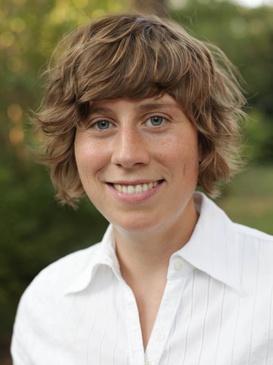
Sandrine Maljean-Dubois is a Researcher at Aix-Marseille Université and Deputy Scientific Director of the CNRS Section 36 (INSHS). Her expertise lies in public law, with a focus on environmental and climate governance. She has organized numerous international colloquia on topics such as ocean law, climate litigation, and biodiversity protection. Her research addresses the intersection of international law, ecological urgency, and institutional accountability. She supervises doctoral students exploring climate policy, marine governance, and environmental justice. Key activities include co-organizing events like 'Gouverner la société internationale par les chiffres' (2025) and 'Le rôle des juridictions internationales dans la protection du climat' (2024). Her work bridges legal frameworks with scientific challenges, emphasizing interdisciplinary approaches to global environmental crises.
Francesco Furini is a Research Fellow at the University of Hamburg's Faculty of Business, Economics and Social Sciences, affiliated with the Department of Socioeconomics and the Environmental Economics chair. His work focuses on environmental and climate economics, particularly game theoretical modeling of International Environmental Agreements and voluntary public goods provision. He collaborates with scholars like Prof. Dr. Grischa Perino and Dr. Thorsten Pampel. Research Interests: Francesco's research addresses strategic challenges in climate cooperation, including non-cooperative game theory applications to environmental governance. He analyzes mechanisms for stabilizing international agreements and the implications of solar geoengineering for global climate policy. Article Trends: His recent publications (2021-2024) emphasize game theory, public goods modeling, and geoengineering governance. Key topics include Barrett’s Paradox, Stackelberg/Nash-Cournot dynamics, and fixed-cost allocation in global public good agreements. Contact: He can be reached at room 4.14, Welckerstraße 8, Hamburg, via phone +49 40 42838-8609, or email francesco.furini@uni-hamburg.de.
Klaus Wallmann is a Professor and Head of the Research Unit Marine Geosystems at GEOMAR Helmholtz Centre for Ocean Research Kiel and the Christian-Albrechts-University (CAU) Kiel. His research focuses on marine biogeochemistry, particularly gas hydrates, fluid flow, nutrient cycling, and the geochemical evolution of oceans and atmosphere. He leads major research initiatives including the Cluster of Excellence 'The Future Ocean' and coordinates EU projects such as MIGRATE and GEOSTOR. Dipl. Chemistry, Philipps University of Marburg (1986) Dr. Ing., TU Hamburg-Harburg (1990) PD Dr. habil (Geosciences), CAU Kiel (1999) His research interests center on marine biogeochemical processes, including the microbial degradation of organic matter, gas hydrate formation, nutrient recycling, isotopic trends in marine carbonates, and numerical modeling of ocean-atmosphere evolution. He investigates cold seeps, mud volcanoes, and subduction zones to understand volatile cycling and seafloor dynamics. His recent publications reveal a strong focus on carbon cycling and climate mitigation, particularly through sub-seabed CO₂ storage, seafloor alkalinity enhancement, and the impact of anthropogenic activities on marine carbon storage. His work combines field observations, experimental data, and advanced numerical models to explore long-term geochemical trends and modern environmental challenges. Scholarship from the Evangelical Study Foundation, Haus Villigst (1982–1986) Wallmann has supervised numerous students and collaborators, contributing to major discoveries in marine methane dynamics, gas hydrate systems, and ocean deoxygenation. His research is supported by extensive fieldwork, ocean expeditions, and leadership in collaborative programs such as SFB 574 and SFB 754. He has played a central role in assessing the environmental impacts of CO₂ storage and natural gas hydrate exploitation. He leads research in marine geosystems at GEOMAR, focusing on biogeochemical feedbacks, fluid-sediment interactions, and climate-relevant gas cycling. His team integrates geochemical data, isotopic analyses, and modeling to study processes from molecular to global scales.
Jun.Prof. Dr. Anca Balietti is an Assistant Professor of Economics at Heidelberg University, where she has been since December 2018. Previously, she was a Post-doctoral fellow at the Harvard Kennedy School (2016–2018). She holds a PhD in Economics from the University of Zurich (2015), an MSc in Finance from the University of Lausanne (2010), and a BSc in Finance from the Bucharest Academy of Economic Studies (2008). Her research focuses on environmental economics, development economics, health economics, and climate policy, with a particular emphasis on understanding how individuals and institutions interact with environmental challenges. PhD in Economics, University of Zurich (2015) MSc in Finance, University of Lausanne (2010) BSc in Finance, Bucharest Academy of Economic Studies (2008) Her research interests span environmental public goods, such as air pollution and climate change, examining their socio-economic impacts and policy solutions. She employs experimental and quasi-experimental methods to explore topics like the effects of air pollution on child development, the volatility of carbon markets, and the design of climate policies. Recent projects include field experiments on green product usage in rural India and analyses of long-term agricultural investment strategies under climate uncertainty. In terms of grants and funding, she has secured support from institutions including the Federal Ministry of Education and Research (Germany, €180,000), the Andrea von Braun Foundation (€40,000), and the Joachim Herz Foundation (€15,000). Her work has also been commissioned by organizations like the Dutch Development Bank and the Swiss Office for Meteorology and Climatology. Teaching responsibilities include courses on Environmental Economics, The Economics of Carbon Pricing, and Applied Empirical Methods. She collaborates with international teams on projects such as evaluating green products in India and studying the quinoa market in Peru. Anca is part of the Environmental Economics team at Heidelberg University, contributing to interdisciplinary research addressing global environmental challenges.
Andreas Oschlies is a Professor of Marine Biogeochemical Modeling at GEOMAR Helmholtz Centre for Ocean Research Kiel, where he leads the Biogeochemical Modeling Research Unit. He has held faculty positions since 2006 at GEOMAR and previously at the National Oceanography Centre Southampton. His research spans ocean carbon and oxygen cycles, climate change impacts, and marine carbon dioxide removal (CDR), with a strong emphasis on Earth system modeling and biogeochemical processes. His primary research interests include marine biogeochemical modeling, ocean deoxygenation, climate engineering, carbon dioxide removal, ocean modeling, and the marine nitrogen cycle. His work integrates numerical modeling, data assimilation, and interdisciplinary policy-relevant science to assess climate intervention strategies and their biogeochemical consequences. The 15 most recent articles highlight a strong focus on marine carbon dioxide removal, particularly ocean alkalinity enhancement and artificial upwelling, as well as ocean deoxygenation, carbon cycle feedbacks, and Earth system modeling. His publications frequently appear in high-impact journals such as Nature Communications , Environmental Research Letters , and Biogeosciences , reflecting a consistent trend toward understanding climate intervention technologies and their environmental trade-offs. Scientific Awards: Georg-Wüst Preis (2011) Andreas Oschlies has played key advisory and leadership roles in national and international scientific initiatives. He has coordinated the DAM Research Mission 'Marine Carbon sinks in Decarbonization Pathways', the Global Ocean Oxygen Decade (GOOD) under the UN Ocean Decade, and the European Marine Board Working Group on Marine Carbon Dioxide Removal. He was coordinator of the DFG SPP 1689 on Climate Engineering and has served on scientific advisory boards for institutions including the Leibniz Institute for Baltic Sea Research and the Institute for Chemistry and Biology of the Sea. He has also co-edited journals such as Ocean Modelling and JAMES , underscoring his influence in the modeling community. He leads a major research unit at GEOMAR focused on developing and applying biogeochemical models to study ocean-climate interactions. His team works on data assimilation, parameter optimization, and the representation of mixing processes in numerical models, contributing to global efforts in climate prediction and carbon cycle assessment.
Frank Keutsch is the Stonington Professor of Engineering and Atmospheric Science in the Paulson School of Engineering and Applied Sciences and Professor of Chemistry and Chemical Biology at Harvard University. He holds a joint appointment in both departments and is also a Hans Fischer Senior Fellow at the Technical University of Munich's Institute for Advanced Study (TUM-IAS), where he collaborates with Prof. Jia Chen on air pollution and climate research since 2021. Dr. Keutsch received his PhD in Physical Chemistry from the University of California Berkeley and his Diplom in Chemistry from TU Munich. His academic journey bridges European and American institutions, reflecting his international research perspective and expertise in both fundamental chemistry and applied environmental science. Professor Keutsch's research focuses on understanding atmospheric chemical processes, particularly those related to air quality and climate change. His work combines laboratory experiments, field observations, and modeling to investigate fundamental mechanisms of anthropogenic influence on atmospheric composition. He specializes in photochemical oxidation processes of volatile organic compounds (VOCs) that produce tropospheric ozone and secondary organic aerosols (SOA), which affect human health and climate. His research spans from urban areas to remote tropical forests, from tropical oceans to polar regions, addressing critical environmental challenges across diverse spatial and temporal scales. His recent publications demonstrate a strong focus on air pollution monitoring, climate intervention strategies, and the development of novel measurement techniques. The research shows an increasing integration of machine learning approaches with traditional atmospheric science methods, as well as a growing emphasis on global applications of pollution monitoring technologies and the health impacts of atmospheric pollutants. 2015, LFUI Guest Professorship 2014, Vilas Mid-Career Investigator Award 2013, Vilas Associate Award 2012, Honored Instructor Award 2006, Camille and Henry Dreyfus Award Postdoctoral Program in Environmental Chemistry 2005, Camille and Henry Dreyfus New Faculty Award Hans Fischer Senior Fellowship (2021) As an active mentor, Professor Keutsch is accepting graduate students into his research group. His laboratory develops cutting-edge instrumentation for atmospheric measurements, including the FILIF (Formaldehyde Instrument using Laser-Induced Fluorescence), CHOCHO LIP (Laser-Induced Phosphorescence), EDB-MS (Electrodynamic Balance Mass Spectrometry), and DPOPS systems. These instruments have been deployed in numerous field campaigns across diverse environments worldwide, from forests in Michigan and Colorado to the Amazon rainforest and even Antarctica. His group's work on stratospheric aerosols, particularly related to climate intervention strategies, has gained significant attention in the scientific community.
Götz Gresser is a Professor at the Institute for Textile and Fiber Technologies (ITFT) , affiliated with the University of Stuttgart . He serves as Principal Investigator in the Integrative Computational Design and Construction for Architecture (IntCDC) cluster and Director of the German Institutes for Textile and Fiber Research Denkendorf (DITF) . His work spans technical textiles, fiber-reinforced composites, and adaptive architectural systems. Experience in textile value chain research Focus on coreless filament winding and bio-inspired compliant mechanisms Developed adaptive façades with integrated photovoltaics (FlectoSol, Flexafold) Contributed to planetary sunshade concepts for climate mitigation Research Trends : His recent publications emphasize coreless filament winding for lightweight structures pneumatically actuated adaptive systems integration of sensors and feedback in composite manufacturing space-based applications of fiber composites digital fabrication workflows sustainable material systems
Henning Franke is a Researcher (Postdoc) at the Max Planck Institute for Meteorology's Department of Climate Physics, focusing on the Climate Surface Interaction group. His research leverages km-scale general circulation models to explore atmospheric circulation systems, from thunderstorms to global wind patterns. He investigates processes like gravity waves and their role in phenomena like the Quasi-Biennial Oscillation (QBO), while advancing model development to address climate change impacts. Education PhD in Earth System Sciences (2020–2024): Max Planck Institute for Meteorology M.Sc. Meteorology (2017–2020): University of Hamburg B.Sc. Meteorology (2014–2018): University of Hamburg Research Focus His work emphasizes understanding climate dynamics through high-resolution modeling, particularly the QBO's behavior under global warming and interactions between ocean mesoscale structures and tropical convection. He explores model dependencies and aerosol effects on atmospheric circulation. Publications Recent studies highlight advancements in QBO simulation accuracy, effects of global warming on gravity waves, and stratospheric aerosol modeling during volcanic eruptions. His work bridges theoretical insights with computational innovations, such as GPU-based climate modeling frameworks. Labs/Teams He contributes to the Climate Surface Interaction group and collaborates on projects like the ICON model development and RV SONNE ocean-atmosphere measurement campaigns.
Prof. Gregor Rehder is Professor of Marine Chemistry and Deputy Head of the Marine Chemistry Section at the Leibniz Institute for Baltic Sea Research Warnemünde (IOW), an institute affiliated with the University of Rostock. Since 2006, he has led the Biogeochemistry of Environmentally Relevant Gases Working Group, focusing on greenhouse gas dynamics in marine systems. His work spans Research Priority 1 and 2 of the IOW program, emphasizing Baltic Sea biogeochemistry. Rehder holds a Diploma (1993) from the University of Bayreuth and a Ph.D. (1996) from the University of Kiel. His career includes positions at GEOMAR Kiel and Monterey Bay Aquarium Research Institute. Research interests center on marine greenhouse gases (CH₄, N₂O, CO₂), carbon cycling, and ocean acidification. He develops advanced sensors for gas monitoring and studies land-sea interactions affecting coastal biogeochemistry. Recent work explores methane leakage impacts, carbon dioxide removal technologies, and Baltic Sea acidification. Publications (2018-2025) show strong emphasis on: Baltic Sea greenhouse gas fluxes and carbon dynamics Coastal peatland rewetting effects Ocean alkalinity enhancement strategies Nord Stream methane leak impacts In-situ sensor development for marine gases He actively advises doctoral students, with 10+ completed PhD supervisions on topics like methane fluxes, ocean acidification, and trace gas liberation. Current projects include: RINGO (ICOS readiness for global observations) BONUS INTEGRAL (Baltic carbon/gas monitoring) EVAR (Benguela Upwelling System under climate change) Baltic Transcoast (land-sea matter flows) Rehder coordinates equipment on the VOS Finnmaid research vessel (ICOS infrastructure) and collaborates in international networks including ICOS-Oceans and the American Geophysical Union.
Dr. Anne Kantel is a Researcher at the Fraunhofer Institute for Systems and Innovation Research ISI, specializing in Energy Policy and Energy Markets. She holds a PhD in International Relations from American University (2019), with a dissertation analyzing de-legitimization processes in Ugandan fisheries and land policies. Her career includes adjunct faculty roles at American University, work as a social policy advisor, and long-term field research in Uganda. She currently focuses on energy transition challenges, environmental justice, and participatory methodologies. Education: Bachelor of Arts in Governance and Public Policy (University of Passau) Master's in Political Science (Freie Universität Berlin) Master's in International Affairs (American University) Research Interests: Her work addresses global energy governance, equity in energy transitions, and the intersection of policy and participatory practices. Recent projects explore green hydrogen economies, public acceptance of new energy technologies, and geopolitical implications of resource dependencies. Key Projects: HouseInc: Examining energy citizenship frameworks INTEGER: Analyzing CCUS technology readiness GRETA: Assessing hydrogen import acceptability Award Status: No scientific awards explicitly mentioned in provided texts.
Frédéric Gazeau serves as a Research Director at the French National Centre for Scientific Research (CNRS) and Senior Scientist at the Villefranche Oceanographic Laboratory (LOV), a joint unit (UMR 7093) of CNRS and Sorbonne University within the Institut de la Mer de Villefranche (IMEV). Leading the CHOC DIRECTION team, he focuses on climate change impacts on marine ecosystems with emphasis on ocean acidification and warming. His academic foundation includes a PhD in Marine Biology from Université Pierre et Marie Curie (UPMC) and Université de Liège (ULg) in 2004, followed by a postdoctoral fellowship at the Netherlands Institute of Ecology (NIOO-KNAW) until 2009, and a Habilitation à diriger des recherches (HDR) in 2022. Gazeau's research explores multi-stressor effects on calcifying organisms, kelp communities, and bivalves using mesocosm experiments and field studies. His work addresses critical questions in marine biogeochemistry, carbonate chemistry, and ecosystem resilience across polar and Mediterranean regions, with particular attention to physiological tipping points and community-level responses. Analysis of his recent publications reveals dominant themes in biological responses to ocean acidification and warming, especially in Antarctic and Arctic ecosystems. Key contributions include debunking carbon sink myths in bivalve farming, developing ocean alkalinity datasets (SNAPO-CO2), and investigating kelp community tolerance to marine heatwaves through duration-magnitude tradeoffs. No scientific awards were explicitly documented in the source materials. He directs major research initiatives including 4Oceans, C-BLUES, CocoriCO2, FACE-IT, MITIC, ORCA, PEACETIME, POMP, PREVENT, Pyroplankton, Repairs, and TONGA projects, securing substantial funding for multi-stressor climate impact studies and coastal monitoring networks. His grant portfolio emphasizes experimental infrastructure development and international collaboration. Gazeau manages the CHOC DIRECTION team at LOV, overseeing CLIMATOR as Scientific Manager and the CocoriCO2 French coastal carbonate monitoring network. His facilities include advanced carbonate chemistry laboratories and mesocosm systems for simulating complex climate scenarios on marine organisms.
Jason Chilvers is a Professor of Environment & Society at the School of Environmental Sciences, University of East Anglia. He is Chair of the Science, Society and Sustainability (3S) Research Group and Head of Social Science in the School. His research focuses on participatory practices, climate change governance, energy transitions, and the social dimensions of emerging technologies. He serves as Co-Director of the UK Energy Research Centre (UKERC) and directs its Public Engagement Observatory. Chilvers holds editorial board roles for Nature and Culture (2021–2026) and Annals of the American Association of Geographers (2020–2023). His work bridges Science and Technology Studies (STS) with human geography, emphasizing relational approaches to public participation. Key contributions include Remaking Participation (2016), which received the 2018 EASST Amsterdamska Award. Current projects include the FAB-GGR initiative on greenhouse gas removal, Natural England’s public engagement mapping, and Triple Carbon Reduction studies on smart water technologies. Chilvers advises UK government bodies like Defra and BEIS, and international organizations such as the Royal Society and UNEP. He teaches modules on science-society-sustainability linkages at UEA and serves as external examiner at the University of Manchester.
Malte Juerchott is a researcher at GEOMAR - Helmholtz Centre for Ocean Research Kiel , affiliated with the Department of Marine Biogeochemistry since 2024. His work focuses on carbon dioxide removal (CDR) strategies, particularly artificial upwelling and its impact on ocean carbon cycles. He is involved in the CDRmare: Test ArtUp project, aiming to assess marine climate intervention techniques using Earth system models. Education: B.Sc. in Geosciences (2014–2018, Christian-Albrechts-Universität zu Kiel) M.Sc. in Geosciences (2018–2021, CAU Kiel) Doctorate (2021–2024, CAU Kiel / GEOMAR) Research Interests revolve around marine biogeochemical processes, climate change mitigation via ocean-based geoengineering, and modeling the long-term effects of artificial upwelling. His work bridges computational simulations with real-world feasibility for carbon sequestration in Germany's marine environment. Publications highlight his expertise in assessing CDR technologies like Stommel-Pipe systems and combined iron fertilization methods. Key trends include quantifying CO2 uptake efficiency, evaluating environmental trade-offs, and refining marine geoengineering narratives through interdisciplinary models. Labs & Teams: Collaborates with the Biogeochemical Modeling group and contributes to the CDRmare consortium, focusing on scalable marine carbon removal solutions.
Jessica Strefler is a Working Group Leader and Senior Scientist at the Potsdam Institute for Climate Impact Research (PIK) and an Assistant Professor at Aarhus University. She leads the Integrated Assessment Modelling Group and the Carbon Management Team within PIK’s Research Department 3 (Transformation Pathways), focusing on carbon dioxide removal (CDR) , climate change mitigation strategies , and energy systems modeling . Her work involves developing the hybrid energy-economy model REMIND and analyzing the integration of CDR technologies like CCUS and enhanced weathering into global climate policy. Education: Physics (Heidelberg, Hamburg, Berlin), Doctorate in non-CO 2 emissions from TU Berlin. Key Research Areas: CDR technologies, climate policy, integrated assessment modeling, marine carbon sequestration, planetary boundaries, and the socio-economic implications of net-zero emissions. Her recent publications analyze the complementary roles of technology availability, sector policies, and behavioral change in achieving net-zero emissions, marine alkalinization for carbon removal , and policy fragmentation risks in bioenergy land-use change . She has served as a judge in the XPRIZE Carbon Removal competition and contributed to the Planetary Health Check report on global tipping points.
Prof. Dr. Klaus Reicherter is a University Professor in Neotectonics and Geohazards at the RWTH Aachen University , holding an appointment in the Faculty of Geoengineering and Materials Technology . He serves as Deputy Dean (Prodekan) of the faculty and leads the research group focusing on earthquake geology, natural hazards, tsunami science, and remote sensing applications. His work spans global field studies, including investigations in Albania, Greece, Japan, and Portugal. Research Interests: Neotectonics and Active Faulting Paleoseismicity and Earthquake Recurrence Tsunami and Coastal Hazards Remote Sensing Techniques (LiDAR, InSAR, Seismic Imaging) Geomorphology and Landscape Evolution Awards : Received the 2023 Award from the German Geological Society (DGGV) for outstanding contributions to geoscience research. Advising & Team: Leads a research team of ~15 doctoral students and staff across global projects, collaborating with institutions in Tajikistan, Iran, and Pakistan. His lab focuses on integrating field observations with numerical modeling for hazard mitigation. Labs/Teams: Co-directs the Neotectonics and Geohazards (NUG) group at RWTH Aachen, alongside Jun.-Prof. Dr. Nicole Richter's Remote Sensing of Natural Hazards team.