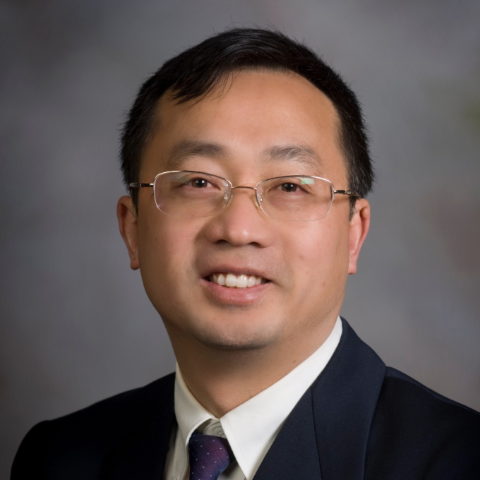
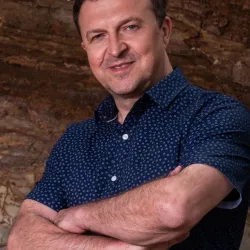
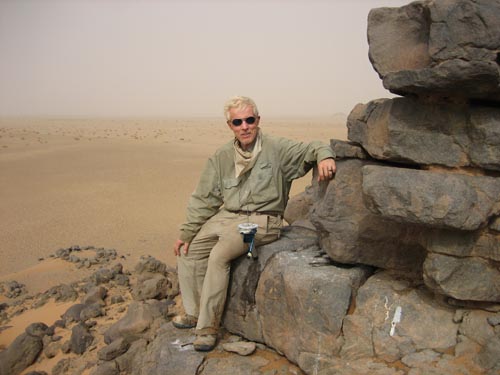
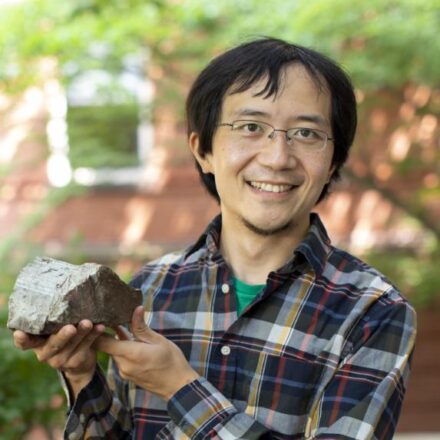
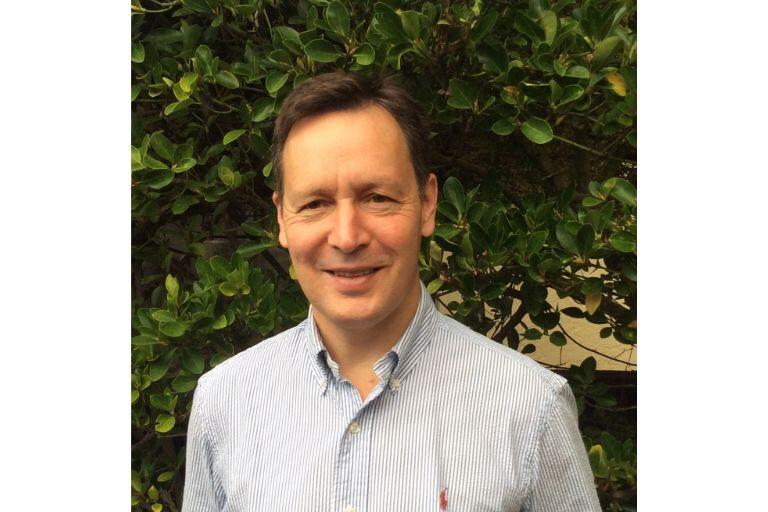
Dr. Jung-Fu Lin is a Professor of Earth and Planetary Sciences at the Jackson School of Geosciences, University of Texas at Austin, holding the Dave P. Carlton Centennial Professorship. His research focuses on understanding planetary interiors through high-pressure experiments, particularly using diamond anvil cells and synchrotron facilities. Key areas include mineral physics, Earth's core dynamics, and the role of water in mantle processes. Expertise: High-pressure mineral physics, X-ray spectroscopy, and planetary materials science. Current projects: Investigating iron alloys in Earth's core, thermal conductivity of mantle minerals, and carbon storage mechanisms. Research highlights include discoveries on iron spin transitions, elasticity of bridgmanite, and Martian core dynamics. Awards include the NSF CAREER Award and Fulbright Scholarship. Lin supervises graduate students in experimental petrology and mentors postdocs globally. Teaches courses on Earth materials and mineral physics. Active in international collaborations, including with Okayama University (Japan) and Adam Mickiewicz University (Poland). His lab develops advanced laser heating systems and Raman spectroscopy tools for high-pressure studies.
Peter C. Lippert is an Associate Professor in the Department of Geology & Geophysics at the University of Utah , with research spanning paleomagnetism, tectonics, and environmental magnetism. His work connects geological time scales to climate dynamics, orogenic processes, and urban pollution monitoring. BS (2003) and PhD (2010) in Earth sciences Postdoctoral training at University of Arizona and UC Santa Cruz Research focuses include: Antarctic ice age cyclicity and Earth's orbital influences Hydrothermal alteration effects on paleomagnetic records in Tibet Magmatism during Mongol-Okhotsk Ocean closure Magnetofossils as climate proxies for rapid warming events Evergreen needle magnetization for urban pollution mapping Recent publications highlight collaborations across 50+ international institutions , with methodological innovations in site-level paleomagnetic analysis and FORC-PCA magnetofossil discrimination. His 15 most recent articles (2020–2024) address tectonic reconstructions, geomagnetic field evolution, and climate-ocean interactions. He serves on the Magnetics Information Consortium (MagIC) Steering Committee and has received the Taft-Nicholson Summer Faculty Fellow award. Teaching emphasizes Earth science as a philosophy, with courses on structural geology, dynamic Earth systems, and field research.
Dr. Ashley Willis is a Senior Lecturer in Fluid Dynamics at the University of Sheffield's School of Mathematical and Physical Sciences. He holds roles including Admissions Head and Programme Leader for Study Abroad. His research focuses on fluid dynamics, turbulence, astrophysical flows, and magnetohydrodynamics, with applications in clean energy and planetary systems. Willis completed his Ph.D. in Applied Mathematics at Newcastle University (2002) and has held postdoctoral positions at the University of Bristol, Leeds, and a Marie Curie Fellowship at Ecole Polytechnique, Paris. He leads the Fluid Dynamics Group and is part of the cross-faculty Sheffield Fluid Mechanics Group. His research interests include transition to turbulence, nonlinear dynamics, and magnetic field generation in planetary interiors. He supervises PhD students like Shijun Chu and collaborates with industry on projects like turbulence suppression in pipe flows. Key contributions include the open-source Openpipeflow simulation code and studies on dynamo action in geophysical flows. Publications highlight work on turbulent transition mechanisms, optimal flow configurations, and dynamo theory. His teaching includes courses on mechanics, fluid dynamics, and mathematical modeling of natural systems.
Dr. Peter L. Olson is a Research Professor at Johns Hopkins University's Department of Earth and Planetary Sciences. His research examines Earth's deep interior dynamics including core-mantle interactions, geomagnetic field generation, and planetary evolution processes. Research Focus: Combines theoretical models, numerical simulations, and laboratory experiments to study core dynamics, geodynamo processes, and mantle convection. Current investigations include the slow carbon cycle and polar ice shelf dynamics through interdisciplinary collaborations. Publications: Recent work explores geomagnetic reversal mechanisms, core-mantle boundary interactions, and planetary dynamo diversity using advanced computational models and fluid dynamics experiments. Education: Ph.D. from University of California, Berkeley
Dr. Gregory Ryskin is an Associate Professor in the Department of Chemical and Biological Engineering at Northwestern University. His research spans cosmology, geophysics, fluid dynamics, and theoretical physics, with a recent focus on cosmological models addressing dark energy and vacuum energy. He holds dual PhDs in Chemical Engineering (Caltech) and Theoretical Physics (St. Petersburg Polytechnic Institute). Research interests include cosmic expansion mechanisms, Earth's magnetic field generation, catastrophic geological events, and fundamental physics problems like Hawking radiation. His interdisciplinary work connects astrophysics with geophysical phenomena through fluid dynamical principles. Publications include theoretical studies of vanishing vacuum energy (2020), cosmic repulsion (2015), and Hawking radiation (2014), alongside earlier contributions to fluid dynamics of polymers and liquid crystals. His 2010 paper on abrupt Earth events received recognition from paleontologist David Raup. Dr. Ryskin's current work develops physics-based explanations for cosmological observations, providing alternatives to standard dark energy models through modified gravitational theories.
Shuhai Xiao is a Professor of Geobiology in the Department of Geosciences, College of Science, at Virginia Tech. His research integrates paleobiology, sedimentology, and geochemistry to investigate Earth-life co-evolution during critical transitions, particularly the Ediacaran-Cambrian period. He directs the Geobiology Lab, advising PhD students on projects ranging from Siberian Ediacaran fossils to Tonian eukaryote evolution. Education: Ph.D., Organismic and Evolutionary Biology, Harvard University, 1998 M.A., Organismic and Evolutionary Biology, Harvard University, 1996 M.Sc., Geology, Peking University, 1991 B.Sc., Geology, Peking University, 1988 Research Interests: Dr. Xiao explores the environmental drivers of evolutionary innovations—such as the rise of eukaryotes, multicellularity, and animals—and their feedback effects on Earth's systems. His work combines field geology, geochemical analysis, and taphonomic experiments to decode ancient biosphere-environment interactions, with emphasis on the Ediacaran-Cambrian transition. Publications: Recent articles (2024–2025) focus on Ediacaran-Cambrian paleobiology, geochemical proxies (δ 13 C, Li, Ba isotopes), and global-scale events (Shuram Excursion, Marinoan glaciation). Key themes include microfossil preservation, biomineralization origins, redox fluctuations, and geomagnetic influences on early animal radiation. Awards: National Academy of Sciences Member (2023) Mary Clark Thompson Medal (2021) Guggenheim Fellowship (2010) Charles Schuchert Award (2006) AAAS Fellow (2019) Lab & Outreach: Leads a team studying Ediacaran fossils, taphonomy, and geochemistry. Actively contributes to the Virginia Tech Museum of Geosciences and conducts workshops for K–12 educators internationally.
Professor Hrvoje Tkalčić is a renowned geophysicist at The Australian National University's Research School of Earth Sciences, specializing in global seismology and deep Earth structure. As Head of Geophysics and Director of the Warramunga Seismic & Infrasound Facility, he leads research into Earth's core-mantle dynamics, planetary seismology, and seismic source physics. His work integrates advanced observational techniques and computational models to explore Earth's interior and other planetary bodies. Affiliations: ANU since 2007; Elected Fellow of the Australian Academy of Science (2024); Member of the IUGG/IASPEI Executive Committee (2023–2027). Education: PhD in Geophysics from UC Berkeley (2001); Diploma in Physics from University of Zagreb (1996). Research Interests: Focus on the Earth's inner core anisotropy, planetary core imaging, and lithospheric structure using seismic and correlation wavefields. Recent breakthroughs include discoveries of distinct anisotropy in the innermost inner core and Mars' core structure using InSight mission data. Grants & Awards: Recipient of the 2023 CAS Distinguished Scientist Fellowship, Royal Astronomical Society Price Medal (2022), and multiple ARC grants. His team's work has advanced seismic inversion techniques and global core-mantle boundary imaging. Labs/Teams: Leads the Warramunga Array Facility and collaborates with international teams on Mars seismology (InSight) and Antarctic seismic deployments. Supervises a dynamic group of PhD students and postdocs exploring Earth's deep structure and planetary processes.
John A. Tarduno is a Professor of Geophysics in the Department of Earth and Environmental Sciences and holds a dual appointment as Professor of Physics & Astronomy at the University of Rochester. He founded the university's paleomagnetism laboratory and has led expeditions to the Arctic, Sahara, and Southern Africa. His research focuses on paleomagnetism, geomagnetism, and geodynamics, particularly the evolution of Earth's magnetic field and hotspot dynamics. Tarduno earned his BS from Lehigh University and MS/PhD from Stanford University after postdoctoral work at Stanford and ETH-Zurich. He served as chair of the Department of Earth and Environmental Sciences from 1998 to 2006. Research interests include the geodynamo, mantle plume migration, and ancient magnetic field behavior. Notable contributions include challenging the fixed hotspot hypothesis via the Hawaiian-Emperor seamount study and discovering Earth's magnetic field existed as early as 4.2 billion years ago using zircon crystals. His work has been recognized with the Price Medal (Royal Astronomical Society), Petrus Peregrinus Medal (EGU), and Guggenheim Fellowship. Tarduno has authored over 100 publications, including studies in Science , Nature , and PNAS . He mentors students in fieldwork and laboratory research, emphasizing Arctic and Pacific expeditions. Beyond academia, he is an avid cyclist, duathlete, and trail runner.
Aleksey V. Smirnov serves as Professor and Chair of the Department of Geological and Mining Engineering and Sciences at Michigan Technological University, with an additional affiliation as Professor of Physics. His research focuses on Earth's magnetic field evolution, geodynamics, and rock magnetism, leading the Earth and Environmental Magnetism Laboratory (EEML). PhD, University of Rochester, 2002 MS, University of Rochester, 2000 Postdoctoral, University of Rochester, 2002-2004 Postdoctoral, Yale University, 2005-2007 Smirnov's research explores the long-term evolution of Earth's magnetic field, geodynamics and global plate tectonics, magnetism of rocks and minerals, environmental magnetism, and development of new paleomagnetic techniques. His work connects magnetic field behavior to deep Earth processes and geological evolution. The Earth and Environmental Magnetism Laboratory he directs features state-of-the-art equipment including multiple SQUID magnetometers, thermal demagnetizers, and specialized measurement systems for comprehensive magnetic analysis. His recent publications reveal consistent focus on paleointensity studies across geological time, from the Hadean to the Ediacaran periods, with particular emphasis on geodynamo evolution, inner core formation, and connections between magnetic field behavior and planetary evolution. His work often bridges paleomagnetism with geodynamics, mineral physics, and planetary science. Fellow of the Geological Society of America Associate Editor for the Journal of Geophysical Research (2005-2021) Safe Place Ally Smirnov has mentored numerous graduate and undergraduate students through the Earth and Environmental Magnetism Laboratory. His research program combines field work, laboratory analysis, and theoretical modeling to investigate Earth's magnetic history. Current projects include studies of ancient magnetic fields, development of new measurement techniques, and investigations of planetary magnetic field evolution. The laboratory serves as a hub for both fundamental research and educational activities, supporting student research and collaborative projects. The Earth and Environmental Magnetism Laboratory (EEML) houses world-class instrumentation including multiple SQUID magnetometers within magnetically shielded rooms, thermal demagnetizers, alternating gradient field magnetometers, and specialized equipment for comprehensive rock magnetic analysis. The lab supports research on paleomagnetism, environmental magnetism, and development of new measurement techniques, serving as a regional resource for magnetic studies.
Roger Fu is a Professor of Earth and Planetary Sciences at Harvard University, leading the Paleomagnetics Lab since 2017. He holds a PhD in planetary sciences from MIT and specializes in paleomagnetism, studying planetary magnetism, tectonic reconstructions, and early Earth history. His research integrates geodynamical modeling with advanced tools like the quantum diamond microscope (QDM), enabling high-resolution magnetic imaging of geological samples. Education: BS from Harvard University (2009, Earth and Planetary Sciences & Astrophysics), PhD from MIT (planetary sciences). Post-PhD research included living with the Mapuche people of Chile to study traditional astronomy. His work focuses on Earth's geodynamo, Martian crustal magnetism, and the solar nebula's magnetic fields. Research interests span planetary formation, early Earth dynamics, and the application of QDM technology to study magnetic minerals. Notable contributions include detecting early plate motions and a reversing geodynamo by 3.5 Ga, and analyzing Martian meteorite magnetism to infer crustal cooling processes. His articles emphasize interdisciplinary approaches, linking paleomagnetic data with geodynamic models to address questions about planetary interiors and climate history. The QDM has been pivotal in visualizing magnetic mineral distributions, enhancing confidence in paleomagnetic interpretations. Labs/Teams: Director of Harvard's Paleomagnetics Lab. Collaborates with applied physics groups to advance QDM technology. Research group includes the Fu Group and the QDM development team.
Bruce Buffett is a Professor at the University of California, Berkeley, with his office located in McCone Hall (Room 383). His research spans planetary interiors, geomagnetism, and climate-related geophysics. His primary research interests include: Dynamics and evolution of planetary interiors Mantle convection and plate tectonics Planetary dynamos and geomagnetic field variability Physical modeling of gas hydrates and implications for climate change Buffett employs stochastic and numerical models to investigate core dynamics, including studies on topographic torque at the core-mantle boundary, inner core anisotropy, and stable stratification. His work on gas hydrates focuses on submarine groundwater discharge and its role in hydrate stability on continental shelves, particularly in the Arctic. Analysis of his recent publications (2023-2025) reveals a strong emphasis on geomagnetic field modeling, with recurring themes of: Uncertainty quantification in geomagnetic time series Core-mantle boundary interactions Inner core structure and flow Application of advanced statistical methods to geomagnetic data Buffett's research is supported by grants such as the NSF-SNSF collaborative project on Earth's core dynamics under the plesio-geostrophy paradigm.
Joseph Meert is a Professor and Undergraduate Coordinator in the Department of Geological Sciences at the University of Florida. His research integrates paleomagnetism and geochronology to reconstruct Proterozoic supercontinents (Columbia/Rodinia) and their influence on Earth’s climatic and biological evolution. Research focuses on paleogeographic modeling using paleomagnetic data from ancient cratons, geomagnetic field behavior, and strategies to enhance geoscience diversity. Fieldwork is central to his methodology, emphasizing cratonic stability and tectonic evolution. Publications demonstrate advances in Precambrian tectonics, notably in India, Tibet, and Africa. Recent work refines models for Rodinia's assembly/breakup and quantifies Proterozoic geomagnetic intensity. Teaching includes field-based courses and graduate seminars on paleomagnetism. He advocates for expanding underrepresented groups in geosciences.
Dr. Lennart de Groot is an Associate Professor at Utrecht University's Faculty of Geosciences, Department of Earth Sciences, leading the Paleomagnetic Laboratory at Fort Hoofddijk. His academic journey includes a BSc (2007), MSc (2008), PhD (2013, Cum Laude), and postdoctoral research at Utrecht University. Specializing in geomagnetism and paleomagnetism, his work focuses on understanding rapid fluctuations in Earth's magnetic field using advanced techniques like micromagnetic tomography and multi-method paleointensity approaches. Research Interests: Geomagnetic field dynamics, paleointensity determination, rock magnetism, and micromagnetic analysis. Key Projects: Development of pymaginverse for geomagnetic modeling, study of Mid-Miocene geomagnetic reversals, and analysis of Devonian volcanic records. His articles highlight innovations in paleomagnetic measurement techniques and their applications to ancient geomagnetic field behavior. Notable awards include the ERC Starting Grant (2019), NWO-Vidi (2019), and the William Gilbert Award (2018). He advises on grants and mentors researchers in geophysics and rock magnetism, contributing to the UN Sustainable Development Goals through Earth science research. Lab affiliations include the Paleomagnetic Laboratory Fort Hoofddijk, where cutting-edge equipment enables high-resolution studies of magnetic minerals and their paleoenvironmental records.
Eric G. Blackman is a Professor of Physics and Astronomy at the University of Rochester and a Senior Scientist at the Laboratory for Laser Energetics. His research focuses on theoretical astrophysics and plasma physics, with interdisciplinary interests in planetary and geophysical systems. He holds a BS from MIT, a Part III Tripos from Cambridge, and a PhD from Harvard. Blackman has pioneered studies on accretion disks, jets, magnetic fields, and common envelope evolution. He collaborates extensively with experimentalists at the Laboratory for Laser Energetics to bridge astrophysical and laboratory plasmas. His awards include a DOE Faculty Development Award (2000–2003) and APS Fellow (2005). Blackman has mentored numerous students and postdocs across astrophysics and related fields. Education: MIT (BS Physics/Math, 1990), Cambridge (M.A.S., 1991), Harvard (PhD Theoretical Astrophysics, 1995) Research Themes: Plasma astrophysics, stellar dynamics, planetary magnetization, and laboratory astrophysics. Labs & Collaborations: Laboratory for Laser Energetics (Inertial Confinement Fusion), interdisciplinary projects on brain injury physics.
Sarah Cassie Burnett is a Hedrick Assistant Adjunct Professor at the University of California, Los Angeles (UCLA), Department of Mathematics. Her research focuses on fluid dynamics, machine learning, and data assimilation, with emphasis on experimental and computational studies of geophysical fluid dynamics, particularly in the context of the Three-Meter Spherical Couette experiment. She holds a PhD from the University of Maryland and has conducted post-baccalaureate research at Los Alamos National Laboratory. Her work integrates numerical methods, nonlinear modeling, and experimental validation in dynamo flows and particle-laden systems. Education: B.S. in Applied Math and B.A. in Physics from University of North Carolina at Chapel Hill (summa cum laude). PhD in Applied Mathematics, Statistics, and Scientific Computing from University of Maryland. Post-baccalaureate studies at Los Alamos National Laboratory and research collaborations at ISTerre (Grenoble, France) and Lathrop Lab. Research interests include: computational fluid dynamics, magnetohydrodynamics, granular flow modeling, and data-driven approaches for geophysical systems. She has pioneered studies on particle-laden thin-film flows, bidisperse system separation, and dynamo experiments simulating Earth's core dynamics. Recent work emphasizes fluid dynamics visualization through the APS Gallery of Fluid Motion and explores instrumentation optimization for spherical Couette experiments. Teaching includes programming courses (PIC series) and applied mathematics modules at UCLA. Awards: NSF Graduate Fellowship, L'Oréal For Women in STEM Postdoc Fellowship, George A. Snow Memorial Award Outreach: Directed Girls Talk Math summer program at UMD, promoting STEM equity through media and mentorship Grants: NSF GROW Award, Wylie Dissertation Fellowship Labs/Teams: Principal researcher in UCLA Mathematics Department's fluid dynamics group. Collaborator with Lathrop Nonlinear Dynamics Lab and ISTerre.