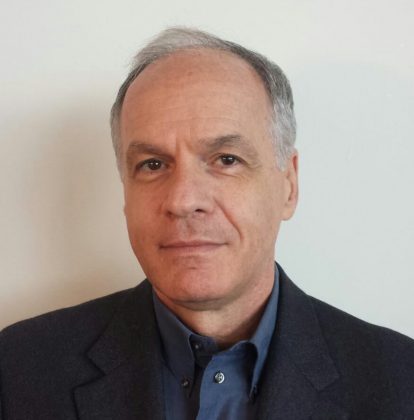
Alessandro M. Forte is Professor of Geophysics at the University of Florida, specializing in computational modeling of Earth's deep interior dynamics. His research employs high-performance computing to simulate mantle convection processes, linking deep-Earth mass and heat movement to surface phenomena including plate tectonics, continental drift, gravity anomalies, and sea-level variations. Current investigations focus on the relationship between mantle dynamics and paleoclimate signals recorded in geological markers, particularly sea-level changes during warm periods and Milankovitch cycles in cyclostratigraphic data. Dr. Forte collaborates internationally with the Institut de Physique du Globe de Paris to map spatio-temporal connections between internal Earth dynamics and climate proxies. Research applications include explaining continental topography evolution, ocean basin formation, and interpreting seismic tomography through geodynamic constraints. His work advances understanding of how convection-driven processes manifest in Earth's gravitational field, rotational behavior, and long-term surface deformation patterns.
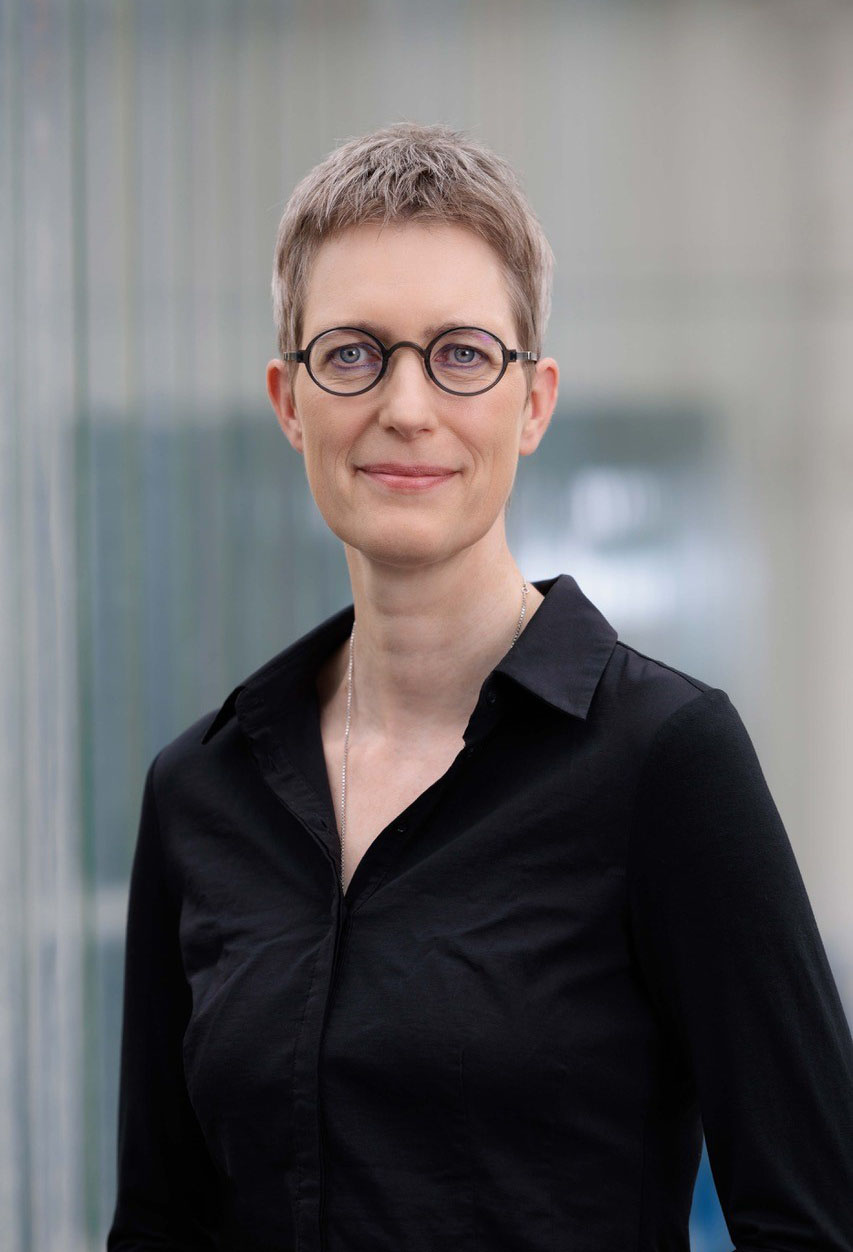
Prof. Dr. Susanne Buiter is Scientific Executive Director and Spokesperson of the GFZ German Research Centre for Geosciences in Potsdam, Germany, and Professor of Tectonics and Geodynamics at RWTH Aachen University since 2020. Her career spans roles in Norway, Canada, and Switzerland, including leadership at the Geological Survey of Norway (2006-2020) and adjunct professorship at Oslo University. PhD in Tectonophysics from Utrecht University Specialist in numerical modeling of crustal deformation Developer of 2D/3D software SULEC Research Focus Buiter's work centers on geodynamic processes across scales, including: Quantitative deformation analysis in crust and lithosphere Subduction zone dynamics and continental collision Wilson Cycle modeling (subduction, collision, rifting) Rifted continental margin evolution Benchmarking numerical and analogue tectonic models Her research integrates computational methods with geological observations to study processes from sedimentary basin inversion to mantle plume effects on continental breakup. Scientific Leadership Vice-President, Helmholtz Research Field 'Earth and Environment' (2024-2025) Union Service Award, European Geosciences Union (2022) Marie Skłodowska-Curie Doctoral Network 'Talents' Co-PI (2023) Editorial leadership at Solid Earth (2019-present) Young Outstanding Scientist Award, Norwegian Research Council (2007) As Executive Editor of Solid Earth and organizer of 8 international workshops, she actively shapes geodynamic research and open science initiatives.
Dr. Thea Hincks is a Senior Research Fellow at the University of Southampton's School of Geography & Environmental Science. Her research focuses on statistical and numerical modeling of geologic processes, probabilistic hazard assessment, and decision-making under uncertainty. She specializes in Bayesian Network analysis using UNINET software and employs programming tools like R and C++ for data analysis. Current projects include the FELS-funded study on induced seismicity sensitivity and the NERC-funded GLOSS project analyzing global sediment flux drivers. Her work integrates geospatial analysis with interdisciplinary approaches to address environmental challenges such as climate change impacts and anthropogenic influences on Earth systems. Expertise: Geostatistical modeling, Monte Carlo simulation, geospatial analysis (QGIS/GRASS/SAGA GIS) Key collaborations: UK NDA, World Bank, DFID Advising: Supervising PhD student Sayon Jyoti Beura in Ocean & Earth Sciences. Future research will explore sediment flux dynamics and climate-land use interactions through remote sensing data analysis.
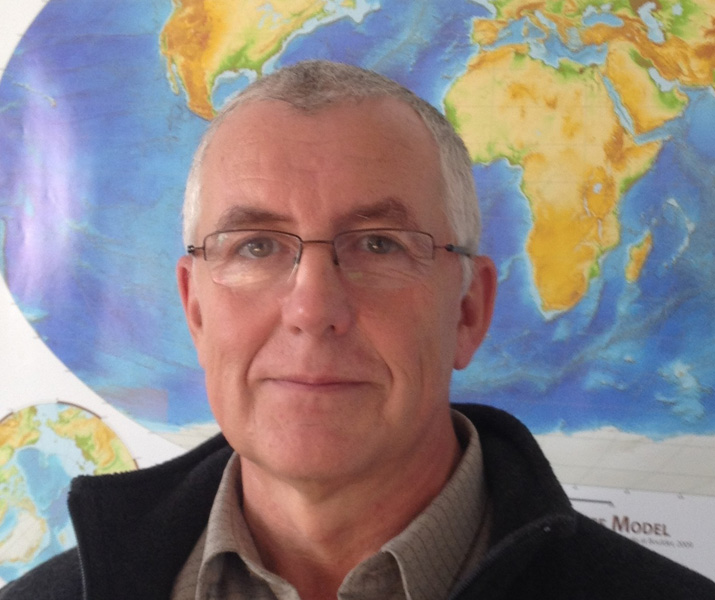
Niklas Werner is a Lecturer in Economics at the University of Westminster (since October 2022) and concurrently pursues a Doctorate in Geophysics at ETH Zürich's Department of Environmental Systems Science (D-EAPS). His academic journey includes a PhD in Economics from Loughborough University (2019–2022), an MA in International Business from Shanghai University of Finance and Economics (2017–2019), an MSc in Investment and Finance from Queen Mary University of London (2017–2018), and a BA in Business Administration from Shanghai University of Finance and Economics (2013–2016). Research interests span Economics and adjacent fields, including econometrics, development economics, and climate economics. While his doctoral work at ETH Zürich focuses on geophysical modeling and climate dynamics, his role at the University of Westminster emphasizes economic theory and policy. Recent publications highlight interdisciplinary work in geophysics and glaciology, addressing topics like paleogeographic reconstructions, mantle convection modeling, and glacial dynamics. These studies contribute to understanding climate evolution and environmental processes across timescales. No scientific awards have been listed in the provided materials. His doctoral research at ETH Zürich is centered at the Institut für Geophysik, with affiliations in both academic and applied research contexts.
Qian Yuan is an incoming Assistant Professor in the Department of Geology and Geophysics at Texas A&M University. Their research focuses on mantle dynamics, planetary-scale geodynamics, and the interplay between tectonic processes and geochemical signatures. They lead the IMPACT Lab , which explores topics such as the origins of Large Low Shear Velocity Provinces (LLSVPs), subduction initiation, and lithospheric evolution. Key research interests include: Geophysical modeling of mantle plumes and slab dynamics Lithium isotope geochemistry in ultramafic rocks Magmatic evolution of anorthosites and carbonatite complexes Zircon geochronology and metamorphic processes Recent work has emphasized the giant impact hypothesis for LLSVP origins and the role of slab avalanches in mantle structure. Articles published in high-impact journals like Nature highlight their contributions to planetary dynamics and mantle convection studies. Contact: qianyuan.geo@gmail.com
Dr. Lorenzo Candioti is a Researcher at the Institute of Geochemistry and Petrology, part of the D-EAPS (Earth and Planetary Sciences) department at ETH Zurich. His work focuses on geochemical and petrological processes within tectonic systems, particularly in understanding mountain-building (orogenesis), subduction dynamics, and metamorphic evolution. He contributes to projects modeling the interplay between thermal regimes, mechanical forces, and geological structures in convergent settings like the Alps and Pyrenees. His research integrates field observations with numerical simulations to address questions about subduction initiation, orogenic wedge mechanics, and metamorphic facies distribution. Key topics include how thermal softening and mantle convection influence tectonic processes, as well as the role of buoyancy and shear forces in shaping orogenic systems. Dr. Candioti's publications emphasize interdisciplinary approaches, combining petrology with geodynamic modeling. He collaborates on projects analyzing slab detachment mechanisms and the thermomechanical evolution of continental margins. His work is published in journals like Rock Mechanics and Rock Engineering and Geophysical Research Letters .
Amir Khan is a Senior Lecturer and Privatdozent at ETH Zurich's Department of Earth and Planetary Sciences, affiliated with the Institute of Geochemistry and Petrology and the Institute of Geophysics. His research focuses on non-linear inverse problems, geophysical data analysis, and the structure of terrestrial planets, particularly Mars and Earth. He holds a PhD in Geophysics from the University of Copenhagen and a Habilitation from ETH Zurich. Khan teaches courses such as 'Physics of Planetary Interiors' and 'Potential Field Theory'. His work integrates seismology, electromagnetic sounding, and gravity data to study planetary interiors, with notable contributions to the InSight Mars mission, including Martian core detection and mantle structure analysis. Collaborative projects span lunar geophysics, exoplanet interiors, and tidal evolution of celestial bodies. Education: Ph.D., Geophysics (2003, University of Copenhagen); M.Sc., Physics (1998, Odense University); Habilitation (2014, ETH Zurich). Research Interests: Planetary seismology, mantle composition, inverse problem methodologies, and exoplanet studies. His work often combines geophysical modeling with mineral physics, addressing questions about planetary formation and evolution. Teaching includes advanced geophysical courses at ETH Zurich, emphasizing theoretical and computational aspects of potential field theory and planetary interior physics.
Jérôme André Roland Noir is a Privatdozent (Professor) in the Department of Earth and Planetary Sciences at ETH Zürich, affiliated with the Institut für Geophysik. His research focuses on geophysical fluid dynamics, particularly in rotating and stratified flows influenced by topography, planetary core dynamics, and subsurface ocean processes. He contributes to experimental and theoretical studies of planetary fluid layers, combining laboratory experiments with numerical simulations. Key research areas include precession-driven flows, core-mantle coupling, and rotational instabilities in non-axisymmetric geometries. Recent work explores the interplay between topography and fluid dynamics in planetary cores, as well as the impact of libration on resonant fluid modes. His articles highlight experimental and computational advancements in understanding geophysical flows, including studies on Length of Day variations and fractal energy structures in librating spheres. He co-edited a special issue on precession and libration-driven flows. Current projects are funded by grants such as 'Roughness and large scale topography enhanced coupling in planetary cores and subsurface oceans' and 'Unravelling Earth’s magnetic history and processes.' Dr. Noir’s work bridges fluid mechanics with geophysics, addressing fundamental questions in planetary dynamics and Earth’s rotational behavior. His lab facilities at ETH Zürich support experimental investigations of complex fluid systems.
Stephan Sobolev serves as Professor of Geodynamics at the University of Potsdam's Institute of Geosciences with a joint appointment at GFZ Potsdam since 2015, currently leading the ERC Synergy Grant Project MEET as Principal Investigator since 2020. Education: PhD in physics/mathematics (1980), Schmidt Institute of Physics of the Earth, Russian Academy of Sciences MSc in Geophysics with distinction (1976), Novosibirsk State University Research Interests: Professor Sobolev's work centers on computational geodynamics, deep Earth physics, and numerical modeling of tectonic processes. His research integrates seismology and geophysical data to simulate mantle convection and lithospheric deformation, with significant contributions published in Nature, Science, and Nature Communications. Scientific Awards: Member of Academia Europaea (2021) ERC Synergy Grant (2019) GFZ-Senior Researcher Award (2004) Alexander von Humboldt Research Fellowship (1992) Academy of Sciences, USSR Medal (1987) Advising and Grants: He has supervised 10 completed and 2 current PhD students plus 8 completed and 3 current postdocs since 1991. His secured funding totals approximately €5.8 million since 2009, highlighted by the prestigious ERC Synergy Grant. Labs and Teams: Founder and former Head (2007-2019) of GFZ Potsdam's Section of Geodynamic Modelling, he now leads the interdisciplinary ERC MEET project team advancing computational geoscience methodologies.
Patrick Cordier is a Professor at the Université de Lille , affiliated with the Faculty of Sciences and the Department of Earth Sciences. He has been a faculty member since 1989 and leads cutting-edge research in the rheology and plastic deformation of Earth materials, particularly mantle minerals such as olivine, bridgmanite, and MgO. His work bridges atomistic simulations and continuum mechanics to model deformation across scales. His research focuses on: Dislocation dynamics and creep mechanisms in deep Earth minerals Grain boundary and disclination modeling High-pressure rheology and plasticity Multiscale modeling from atomistic to continuum levels Electron tomography and microstructural analysis His recent publications span topics such as strain-rate effects in mantle creep, amorphous olivine films, and dislocation climb in quartz, appearing in top journals like Nature , Science Advances , and Acta Materialia . The trend in his articles reveals a strong emphasis on integrating experimental data with computational models to understand mantle dynamics under extreme conditions. He has received prestigious European Research Council (ERC) grants , including the Advanced Grant for the RheoMan project (Grant 787198) and a prior ERC grant (290424), underscoring his leadership in the field. His peer review activities include contributions for Nature and Nature Materials . Patrick Cordier has advised several PhD students, including Riccardo Reali , Billy Clitton Nzogang , and Alexandre Mussi , and collaborates extensively with researchers in France and internationally. He is also associated with the RheoMan compute cluster, a high-performance computing resource dedicated to modeling Earth’s mantle rheology. He maintains an active research presence through project websites (RheoMan, TimeMan) and is verified on ORCID, with a consistent publication record up to 2025.
Laurent G. J. Montési is a Professor in the Department of Geology at the University of Maryland. His research focuses on planetary geodynamics, particularly deformation patterns on terrestrial planets and icy moons. He specializes in fault localization, mountain belt formation, and tectonic processes on Venus, Mars, Europa, and Earth. Education: Ph.D. in Geology from MIT (2002). Laboratory: Geodynamics Laboratory. He explores topics such as corona structures on Venus, lava tube detection on the Moon, and mantle dynamics in subduction zones. Recent work highlights include developing models for Venusian plume tectonics, analyzing lunar lava tube stability, and investigating melt migration in planetary lithospheres. His research integrates geophysical data, numerical simulations, and field observations. Key contributions span planetary surface processes, structural geology, and the interplay between tectonic stresses and melt dynamics. His studies inform missions to explore icy moons and terrestrial planets.
Rainer Abart is a Full Professor of Theoretical and Experimental Petrology at the University of Vienna's Department of Lithospheric Research, where he has been employed since 2009. His research spans mineral physics, thermodynamics, geochemistry, and petrology, with particular expertise in diffusion kinetics and phase transformations in minerals like alkali feldspar. Education: PhD in Petrology, ETH Zurich (1994) Diploma in Geology, University of Vienna (1988) His investigations focus on microstructural evolution in geomaterials, combining experimental approaches with atomistic simulations. Abart's recent work examines diffusion-controlled reactions, mineral surface interactions, and the thermodynamics of solid solutions, frequently employing advanced techniques like atom probe tomography and neural network potentials. Abart's publication trends (2023-2025) reveal a strong focus on mineral kinetics, featuring studies on diffusion mechanisms, crystal growth zoning, exsolution microstructures, and mineral-fluid interactions. His research consistently integrates experimental petrology with computational methods. Scientific Awards: Felix-Machatschki Award (1999) Full Member, Austrian Academy of Sciences (2022) Corresponding Member, Austrian Academy of Sciences (2013) Schrödinger Scholarship He leads multiple FWF-funded projects including studies on diffusion in alkali feldspar and Fe-Ti oxide inclusions in oceanic gabbro. Abart coordinates international collaborations with institutions like the Karlsruhe Institute of Technology and Jozef Stefan Institute.
Dr. Joyce Shi Sim is an Assistant Professor at the Georgia Institute of Technology , affiliated with the School of Earth and Atmospheric Sciences. Her research integrates fluid dynamics, geochemistry, and numerical modeling to study Earth and planetary processes. Education Ph.D., Earth Science, University of California, San Diego (2018) M.Sc., Mechanical Engineering, UC San Diego (2013) B.S.(Honors), Earth Science, UC San Diego (2011) Research Focus Dr. Sim investigates melt transport at mid-ocean ridges and subduction zones , combining two-phase flow modeling with geochemical thermodynamics . Her work explores planetary formation , including Martian magma oceans, and tectonic boundary evolution through Earth's history. Scientific Contributions Recent articles highlight her expertise in magma-rich wave dynamics , subglacial hydrology , and planetary differentiation . She leads NSF-funded projects on lithospheric foundering and subduction zone devolatilization . Honors & Grants NSF Tectonics Grant EAR 2420822 (co-PI, $375k, 2024-2027) NSF Geophysics/Petrology Grant EAR 2323318 (PI, $385k, 2023-2025) AGU Outstanding Student Paper Award (2010) Paul G. Silver Young Scholar Award (2015) CIG Distinguished Speaker (2025-2026) Advising & Outreach She mentors PhD/MSc/Undergraduate students and participates in DEI initiatives like First Gen Faculty and PROGRESS mentorship . Her lab ( Sim Lab ) fosters inclusive scientific collaboration.
Katrin Huhn-Frehrs is a Full Professor at MARUM – Center for Marine Environmental Sciences and the Department of Geosciences, University of Bremen, Germany. She has been a leading figure in marine geosciences since joining the institution in 2003, advancing to Full Professor in 2010. Her work is centered at MARUM, an internationally recognized research center focused on ocean floor processes, climate, natural hazards, and marine biodiversity. Position: Full Professor, Department of Geosciences Institution: MARUM – Center for Marine Environmental Sciences, University of Bremen Research Group: Modeling of Sedimentation Processes Contact: khuhn@marum.de | Phone: +49 421 218-65860 Her research expertise lies in the modeling of sedimentation processes, particularly focusing on submarine landslides, slope stability, and sediment transport mechanisms. She employs advanced numerical techniques such as the discrete element method (PFC), finite element (FLAC), and computational fluid dynamics (OpenFOAM, COMSOL) to simulate sediment behavior under dynamic conditions. Her work integrates geophysical data and sediment core analyses to better understand seafloor stability and geohazard risks in a changing climate. Prof. Huhn-Frehrs has led and coordinated several major international research networks, including the Marie-Curie European Training Network SLATE and the MSCA EU Doctoral Network POSEIDON, emphasizing training and resilience of offshore infrastructure. She has also served as Speaker of the International Research Training Group INTERCOAST, fostering collaboration with the University of Waikato, New Zealand. Her leadership extends to institutional governance as a former Faculty Board member and board member of the MARUM excellence cluster, as well as the German Geophysical Society. She has supervised numerous doctoral researchers and contributed significantly to capacity building in marine geosciences. While specific publication titles are not listed in the source text, her research output is aligned with themes of geohazards, sediment dynamics, and numerical modeling. She continues to be actively involved in cutting-edge marine research through EU-funded projects and international collaborations. Lead of WP 'Training', MSCA EU Doctoral Network POSEIDON Coordinator, Marie-Curie ETN SLATE (2017–2022) Speaker, IRTG INTERCOAST (2019–present) Board Member, German Geophysical Society (2016–present) Her laboratory and research group benefit from MARUM’s state-of-the-art infrastructure, including high-performance computing, geophysical modeling tools, and access to ocean drilling data via PANGAEA and IODP repositories. She plays a vital role in training the next generation of marine scientists and advancing interdisciplinary research on Earth’s ocean margins.
Jacques Déverchère is a Professor of Seismo-geology at the University of Brest (France), affiliated with the European University Institute of the Sea (IUEM) and the Geo-Ocean Joint Research Unit 6538. He holds dual deputy director roles as Deputy Director for Training at IUEM and Deputy Director of the ISblue University Research School, while coordinating the Hubert Curien Maghreb Partnership. His expertise spans seismicity analysis, tectonic inversion, salt tectonics, and paleoseismology with active fieldwork in Algeria, Liguria, Tanzania, and the Mediterranean Basin. Research focuses on continental margin evolution, crustal structure analysis, and geodynamic processes combining seismic data interpretation, numerical modeling, and field observations. Notable projects include the SPIRAL and SEFASILS cruises investigating Algerian and Ligurian basin structures. He also explores educational innovations using immersive VR for marine science training. Over 100+ publications span 1986–2024, emphasizing: (1) Tectonic inversion mechanisms in convergent margins (Algerian margin), (2) Messinian salt dynamics and their seismic implications, (3) Rift basin evolution in East Africa and South America, and (4) Machine learning applications to seismicity declustering. Active in international committees including CNRS-INSU, Hcéres, and ANR evaluations.