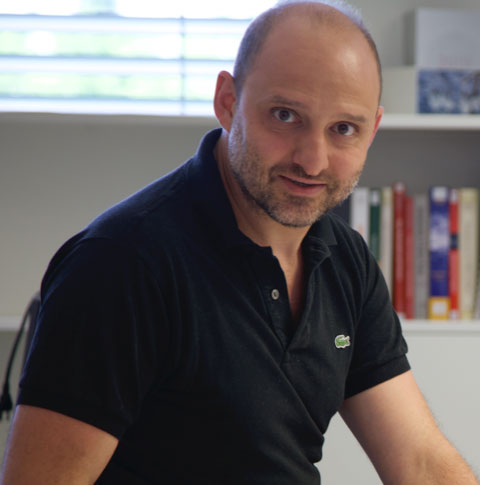
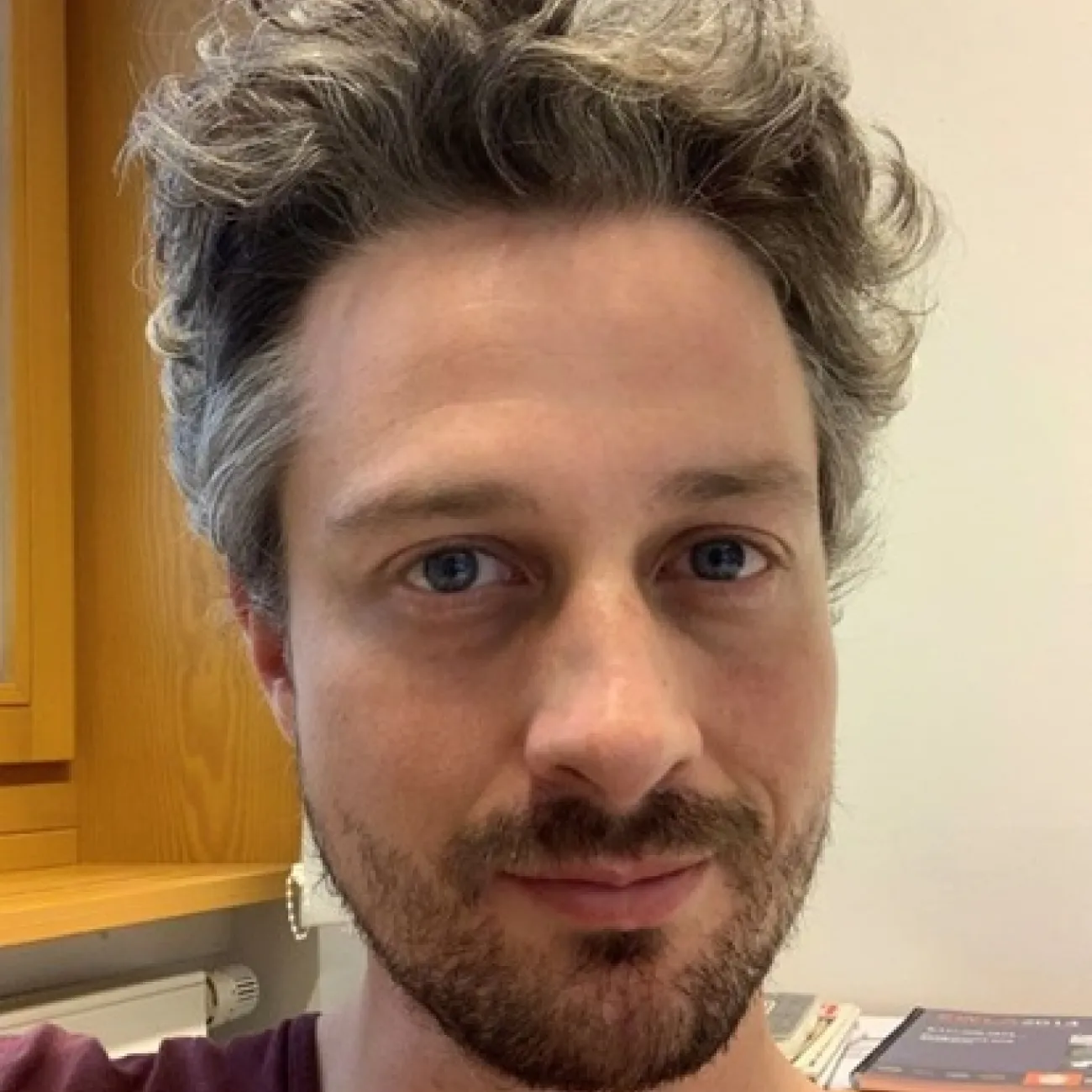
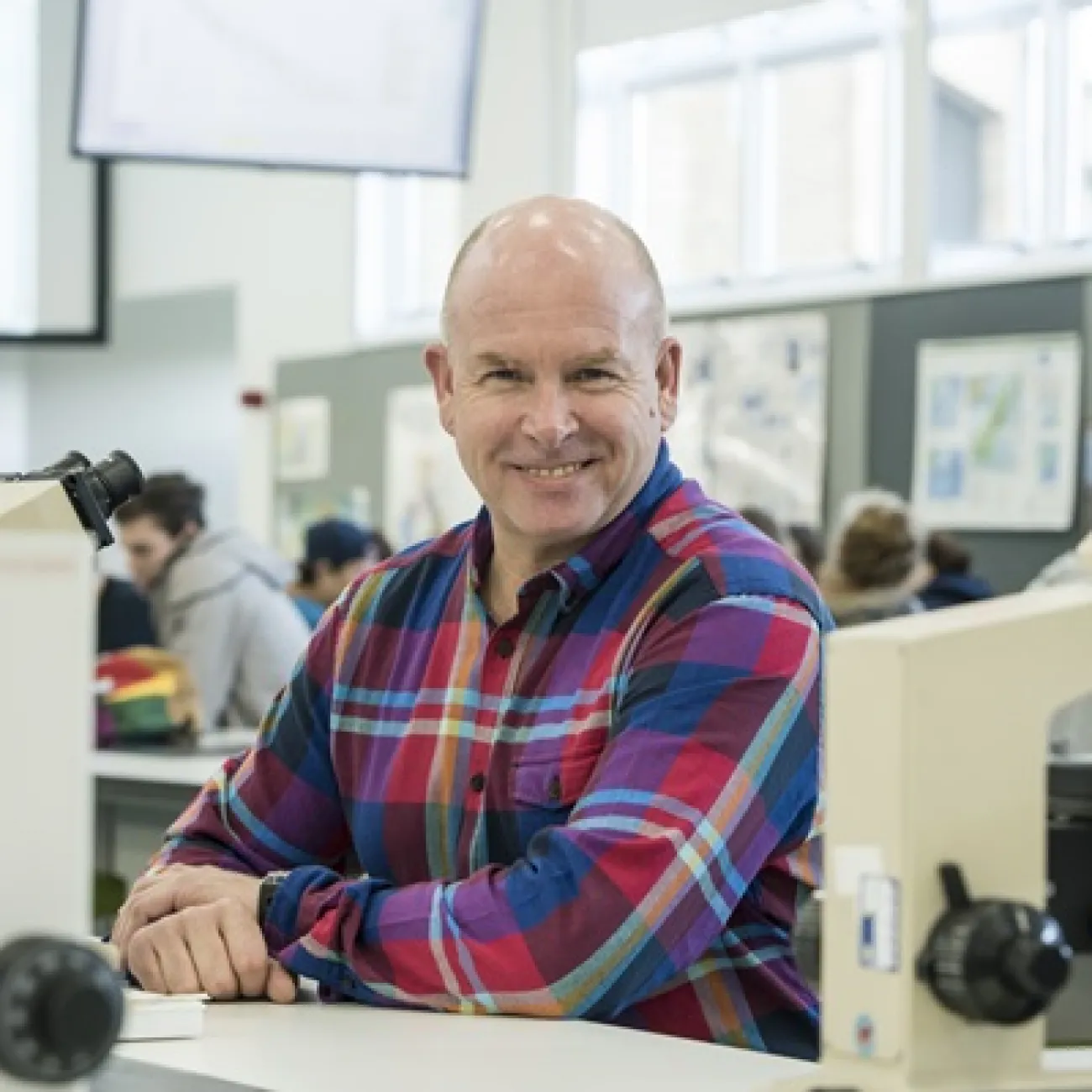
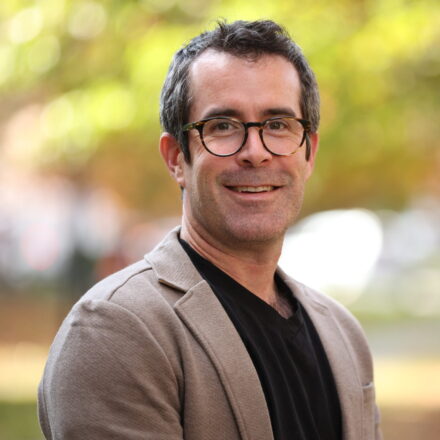
Robert M. Holt is a Professor in the Department of Geology and Geological Engineering at the University of Mississippi. His research focuses on geological CO2 sequestration, fluid transport in porous media, and hydrogeological characterization for nuclear waste disposal. Holt investigates how fluid behavior in heterogeneous geological formations impacts environmental processes ranging from carbon storage to groundwater contamination. His work examines the fundamental physics governing multiphase flow through porous and fractured geological media, with applications to contaminant transport, energy resources, and waste isolation. Holt has developed experimental methods for visualizing and modeling fluid behavior in heterogeneous subsurface environments, improving understanding of capillary processes and flow dynamics. Holt's research includes field studies of evaporite karst systems, geochemical assessments of aquifer systems, and investigations of hydraulic properties in low-permeability mudrocks. His work on CO2 injection monitoring has contributed to safer implementation of carbon sequestration technologies.
Eric Slessarev is an Assistant Professor at Yale University , affiliated with the Department of Ecology and Evolutionary Biology and the Yale Center for Natural Carbon Capture. His research focuses on soil biogeochemistry, particularly how soil properties influence carbon and nutrient cycling in terrestrial ecosystems, with applications to climate change mitigation strategies like enhanced rock weathering and perennial grass cultivation. Teaches Ecology of Landforms and General Ecology Labs located at KGL 318 (research) and KGL 417 (office) His recent publications highlight interdisciplinary approaches to understanding mineral-organic matter interactions, microbial controls on carbon cycling, and policy implications for soil-based carbon removal strategies. Key methodologies include global data synthesis, isotope tracing, and experimental manipulation of soil-plant systems across depth profiles. Notably, his 2025 work demonstrates drought impacts on carbon persistence, microbial harnessing for CO2 removal, and economic modeling of reversible carbon storage. 2024 studies explore deep-rooted plant effects on carbon fractions, calcium's role in mollisol formation, and policy optimization for carbon sequestration.
Jon Hawkings is an Assistant Professor in the Department of Earth and Environmental Science at the University of Pennsylvania School of Arts & Sciences. His research focuses on biogeochemical cycles in glacial environments, particularly the role of glacial meltwater in downstream ecosystems and coastal oceans. He investigates processes such as subglacial weathering, nutrient mobilization, and contaminant transport, with fieldwork conducted in the Arctic, Patagonia, Himalayas, and Antarctica. Education: PhD in Biogeochemistry (University of Bristol, 2015); MSci in Physical Geography (University of Bristol, 2009). Research Interests: Aqueous biogeochemistry and elemental cycles Chemical weathering and mineral dissolution Contaminant transport (e.g., mercury, arsenic) Glaciology and ice sheet dynamics Environmental impacts of glacial meltwater He collaborates on projects such as the Salsa-Antarctica subglacial lake drilling initiative. His work integrates field observations, electrochemical sensing, and lab analyses to address pressing questions in cryosphere science. Awards: None explicitly listed, but active in professional societies like the American Geophysical Union. Advising/Grants: No student advisees listed; funding sources include grants for fieldwork and analytical studies in glacial systems. Labs/Teams: Leads field research groups in remote polar and mountainous regions, emphasizing interdisciplinary collaborations between geochemistry, glaciology, and environmental science.
Mark Abbott is a Professor at the University of Pittsburgh, specializing in paleoclimatology and environmental science. He holds a PhD from the University of Minnesota (1997) and conducted postdoctoral research at the University of Massachusetts. His research integrates stratigraphy, geochemistry, and isotopic analysis to study climate change impacts on human societies and environmental systems. Abbott leads projects recovering lake sediment cores to document Holocene climate variability, focusing on annual-resolution records for temperature and drought reconstructions. He has authored over 50 peer-reviewed articles, with recent work emphasizing monsoon dynamics, Arctic mercury deposition, and tropical Andean glacial retreat. His fieldwork spans North America, South America, and Asia, including collaborative projects in Alaska, Peru, and India. Education: PhD in Geology (Minnesota, 1997), MS (Colorado, 1991), BA in Biology (Colorado, 1987) Postdoctoral Training: Climate System Research Center (UMass) Research interests include reconstructing past environmental changes via lacustrine archives, with emphasis on human-environment interactions. His lab analyzes stable isotopes, organic biomarkers, and sedimentology to address critical climate questions. Recent studies highlight climate-vegetation-fire linkages in the Pacific Northwest and Holocene lake-level changes in Canada/Yunnan. Recent articles focus on decadal-to-millennial climate shifts in mountain regions, Arctic permafrost dynamics, and anthropogenic impacts on lake ecosystems. Abbott’s work is supported by grants from NOAA and the NSF, with field sites in the Canadian Rockies, Himalayas, and Alaskan Arctic.
Thomas Rüde is Universitätsprofessor for Hydrogeology at RWTH Aachen University , Germany, where he leads the Hydrogeology group within the Faculty of Georesources and Materials Engineering. Holding the chair since 2005, he also serves as Managing Director of the Vereinigung Aachener Geowissenschaftler e.V. and has previously been Vice-President (2008-2014) and Executive Council member (2000-2008) of the International Mine Water Association (IMWA). Education 2004 – Privatdozent (Dr. rer. nat. habil.), University of Munich 1995 – Dr. rer. nat., University of Karlsruhe 1991 – Diplom-Geologe, University of Karlsruhe Research focus Professor Rüde’s work centres on understanding and modelling flow and reactive transport in complex aquifer systems . Key themes include: Contaminant hydrogeology – behaviour of geogenic arsenic and uranium in groundwater Groundwater protection and remediation – risk assessment and mitigation strategies Mine-water management – acid mine drainage, dewatering-well clogging, post-mining landscapes Tracer and hydraulic testing – field experiments to quantify subsurface heterogeneity Numerical modelling – high-performance simulation of multi-aquifer systems and karst His research spans Europe (Germany, Austria, Netherlands), Latin America (Mexico, Indonesia) and South-East Asia, frequently in close collaboration with local universities and industry partners. Publication trends Since 2010, Rüde has published extensively on geogenic contamination (As, U, F) in sedimentary and volcanic aquifers, mine-water impacts , and karst hydraulics . Recent work (2022-24) highlights advanced environmental tracers (gadolinium), transboundary groundwater issues, and the sustainable management of post-mining landscapes under climate change. Numerical models range from site-scale dewatering optimisation to catchment-scale coupled flow-transport simulations. Scientific awards & recognition Best Teaching Award 2010 – RWTH Aachen University Best Teaching Award 2012 – RWTH Aachen University Best Teaching Award 2014 – RWTH Aachen University Supervision & academic service Since 1998 he has taught hydrogeology through lectures, seminars, laboratory and field courses, and computer-based modelling labs. To date he has supervised: 13 PhD candidates 34 Diploma students 57 MSc students 63 BSc students He is Chairman of the Study Commission for the BSc programme in Georesources Management at RWTH Aachen, ensuring curriculum development and quality assurance. Laboratory & field infrastructure His group operates modern hydrochemical laboratories for trace-element analyses and maintains field stations for tracer experiments in Germany, Mexico and Indonesia. High-performance computing resources (in collaboration with the Jülich Supercomputing Centre) enable large-scale groundwater modelling and Monte-Carlo uncertainty assessments.
Jonathan B. Martin is a Professor at the University of Florida's College of Liberal Arts and Sciences. His research focuses on hydrogeochemical processes in diverse environments including carbonate karst aquifers, coastal systems affected by sea-level change, and deglaciated watersheds in Greenland. He leads the Research Coordination Network on Carbonate Critical Zones and holds an NSF grant for Greenland watershed studies. Education: BA in Environmental Science, Wesleyan University (1980) MS in Geology, Duke University (1987) PhD in Earth Sciences, University of California, San Diego (Scripps Institution of Oceanography) (1993) Research Interests: Martin's work examines geochemical fluxes driven by biogeochemical reactions coupled with hydrological flow. This includes: (1) Water-solute-isotope dynamics in carbonate karst aquifers like Florida's Floridan Aquifer and Bahamian/Yucatan systems; (2) Coastal aquifer-estuary exchanges impacting metal mobilization and greenhouse gas fluxes; and (3) Weathering processes in deglaciated landscapes affecting global carbon cycles. His lab develops field methods to quantify submarine groundwater discharge and contaminant transport. Publications: Recent articles demonstrate strong emphasis on climate-aquifer interactions, with recurring themes including Greenland glacial meltwater biogeochemistry, coastal karst aquifer responses to sea-level rise, and carbonate mineral reactions in global carbon cycling. Work frequently integrates field measurements with geochemical modeling. Laboratory: Directs the Hydrogeochemistry Laboratory with capabilities including ion chromatography, cavity ring-down spectroscopy, nutrient autoanalysis, and fluorescence spectrometry for studies of water-rock interactions.
Professor Alex Copley holds the position of Professor of Tectonics at the Department of Earth Sciences, University of Cambridge. His research focuses on understanding Earth's crustal deformation, tectonic forces, and earthquake dynamics across scales from microcrystalline to continental. He employs integrated approaches combining field geology, geophysical data, numerical modeling, and petrological analysis. His work addresses key questions on earthquake controls, tectonic force origins, and crustal material properties, with global field projects spanning Asia, the Middle East, Europe, Africa, and South America. Research interests include: Earthquake mechanics and seismic hazard mitigation Continental tectonics and mountain belt evolution Crustal rheology and lithospheric dynamics Metamorphic petrology and continental collision processes Large-scale controls on critical mineral distributions Recent publications highlight studies on fault mechanics in Iran, Himalayan shortening, and the thermal evolution of mountain ranges. His work bridges fundamental geoscience with societal applications, including earthquake resilience and tectonic influences on resource formation. Affiliations include Bullard Laboratories and collaborations with global institutions. No formal awards are listed in the provided text, though his research has been published in high-impact journals like Nature and Geophysical Research Letters .
Pietro de Anna is an Associate Professor at the Institute of Earth Sciences (ISTE), University of Lausanne, since August 2021. He holds an Italian nationality and completed a Master's in Theoretical Physics (2009) at the University of Florence, followed by a PhD in Earth Sciences at the University of Rennes 1 (2012). His research focuses on reactive transport in porous media, filtration, and interactions between bacteriological activity and flow dynamics. He directs the Environmental Fluid Mechanics Laboratory since 2015, employing microfluidics, numerical simulations, and theoretical models to study coupled physical, biological, and chemical mechanisms in confined systems. He has published 21 peer-reviewed articles, teaches environmental science courses at the Bachelor's and Master's levels, and supervised two PhD theses and four postdoctoral researchers. His work includes investigations into microbial biomass accumulation in porous media, diffusion-limited mixing, and biocementation processes. Key research themes are spatial heterogeneity effects, chemotaxis, and quorum sensing in microbial systems. He has pioneered methods combining microfluidics with microscopy to analyze transport at pore scales.
Prof. Dr. Oliver Schilling is an Assistant Professor of Hydrogeology at the University of Basel and affiliated with Eawag , the Swiss Federal Institute of Aquatic Science and Technology. He leads research on surface water-groundwater interactions using integrated surface-subsurface hydrological models (ISSHM) and novel tracer techniques including dissolved atmospheric noble gases, environmental DNA, and radioactive tracers. Research Focus : Surface-subsurface hydrology, ecohydrology, groundwater-surface water interactions, tracer hydrogeology, climate change adaptation in water systems Key Projects : Integrated Hydrological Modeling for Operational Forecasting, Sustainable Nitrogen Fertilization, Slow Water Initiatives, Cryosphere-Groundwater Connectivity in Alpine Regions Scientific Contributions include developing HGS-PDAF (modular data assimilation framework), advancing microbial transport algorithms in HydroGeoSphere, and pioneering online flow cytometry for microbial analysis in high-turbidity environments. His work addresses drinking water production via bank filtration along alluvial rivers, critical for 30% of Swiss and 50% of European drinking water supply. Scientific Leadership : Editor, Hydrogeology Journal (since 2025) Associate Editor, Frontiers in Water (since 2021) Coordinator, Swiss Water-Earth Systems (WES) PhD School (2020–2022)
David F. Boutt is a Professor in the Department of Earth, Geographic, and Climate Sciences at the University of Massachusetts Amherst. He leads the Boutt Hydrology Group and holds several leadership roles, including Program Head of the 1-year Hydrogeology (MS) Program, Co-Director of the Environmental Science Program, and Major Coordinator for the Department of Geosciences. His research focuses on the subsurface component of the hydrologic cycle, with an emphasis on groundwater recharge, discharge, and its contribution to streamflow and springs. He investigates regional water availability across geologic time and employs isotopic and geochemical tracers to understand hydrological processes. Lithium & Arid Hydrology: Studies hydrogeology of salar and brine systems in Chile, Argentina, and the U.S. Great Basin, focusing on lithium enrichment processes. North-East Hydrology & Climate Change: Assesses climate change impacts on New England’s hydrological cycle, including precipitation, evaporation, and subsurface storage. Isotopic & Geochemical Tracers: Uses environmental tracers to constrain residence times and isotopic composition of waters, supported by funding from the Massachusetts Environmental Trust. Advanced Groundwater Modeling: Applies quantitative models to test hydrological hypotheses and predict impacts such as saltwater intrusion and groundwater flooding. His work has been featured in the Washington Post and Environmental Monitor, and he collaborates on international projects in Japan, Tobago, Chile, and Argentina. Research is funded by programs such as the Massachusetts Municipal Vulnerability Project. Dr. Boutt advises graduate students and leads a dynamic research group integrating fieldwork, modeling, and remote sensing. He is actively involved in academic leadership and research innovation.
Dr. David Evans is a Royal Society University Research Fellow at the University of Southampton with expertise in paleoclimate reconstruction and marine geochemistry. His research focuses on understanding climate-Earth surface interactions through geochemical proxies, experimental culturing of marine organisms, and numerical modeling. He leads several major projects funded by the Royal Society and UKRI aimed at refining paleoclimate reconstructions. Dr. Evans investigates Cenozoic warm periods (particularly the early Eocene) to evaluate climate model performance and understand climate-biosphere interactions. His work centers on: 1) Reconstructing boundary conditions affecting geochemical proxies, especially seawater composition; and 2) Understanding biomineralization processes in key archives like foraminifera to ensure accurate proxy applications through geologic time. His publications (2024-2025) predominantly focus on marine biomineralization, paleoclimate proxies, and carbonate geochemistry, with frequent applications of isotope techniques and experimental approaches. Research consistently emphasizes methodological improvements in geochemical analyses and proxy validation. He currently supervises four PhD students across biological sciences and oceanography. His research group is part of the Geochemistry unit and Southampton Marine and Maritime Institute. Major active projects include Horizon Europe's AMOEBA initiative and a correlative cryo-analytical center development.
Prof. Dr. Nadine Göppert is a University Professor (W3) of Hydrogeology at the Institute of Geological Sciences , Freie Universität Berlin , Germany. She previously served as an Akademische Rätin and Senior Scientist at the Karlsruhe Institute of Technology (KIT) from 2011–2024, and held research positions at the Weizmann Institute of Science (2009–2011) and University of Karlsruhe (2008–2009). Her academic background includes a Dr. rer. nat. (2008) and Diploma in Geology (2002) from the University of Karlsruhe. Education Doctorate in Hydrogeology (2008), University of Karlsruhe Diploma in Geology (2002), University of Karlsruhe Her research focuses on karst hydrology , groundwater tracing , particle transport dynamics , and water quality monitoring in alpine and subtropical karst systems. Recent publications analyze tracer experiments , microplastic transport , and hydrochemical variability across diverse karst environments. Her teaching portfolio includes Applied Hydrogeology , Field Methods , and Laboratory Techniques for students in Geosciences and Water Engineering. She has supervised numerous theses on topics like karst groundwater dynamics and fluorescence-based water quality analysis .
Rex N Taylor is a Professor in the School of Ocean and Earth Science at the University of Southampton. With over 20 years of academic experience, he has developed both undergraduate and postgraduate courses in geology and environmental geoscience, specializing in volcanology, igneous systems, and analytical geochemistry. His research takes him on fieldwork and research cruises across the globe, including a notable 2019 submersible dive to 5700m in the Philippine Sea to explore the earliest volcanoes of the Western Pacific. Taylor's research focuses on volcanic geochemistry, particularly using high-resolution Pb isotope studies to investigate magma evolution and catastrophic volcanic eruptions across diverse tectonic settings including mantle plumes, island arcs, and mid-ocean ridges. His work spans multiple continents and ocean basins, with significant contributions to understanding the geochemical processes in the Afar triple junction, Ethiopian Rift, Tenerife volcanic system, and Western Pacific subduction zones. Analysis of Taylor's recent publications (2022-2025) reveals a strong focus on mantle dynamics, magma evolution processes, and the geochemical signatures of different tectonic settings. His research combines field observations with advanced geochemical techniques, particularly isotope studies, to unravel complex volcanic systems. A recurring theme is the investigation of how deep Earth processes manifest in surface volcanic activity across various geological timescales. Taylor actively supervises PhD students including Morgan George Alun Bugler and Daniel Christopher Howcroft through the INSPIRE program. He has developed a Virtual Fieldwork portal that provides multi-scale visualization of geological field localities, from satellite imagery down to microscopic views, demonstrating his commitment to innovative teaching methods in earth sciences.
Vernon Phoenix is a Professor of Environmental Engineering Science at the University of Strathclyde 's Faculty of Engineering , specializing in the Department of Civil and Environmental Engineering . His research bridges environmental engineering, biotechnology, and geochemistry, focusing on green infrastructure, bio-inspired solutions, climate resilience, and pollution control. Expertise in sustainable water/stormwater technologies Leadership in biomaterials for civil engineering Initiatives in waste valorization and bioeconomy Pioneer in microplastics assessment across environmental media Recent projects include EPSRC-funded investigations into groundwater chemistry in transboundary basins and the development of sustainable urban drainage systems. His work aligns with UN Sustainable Development Goals (SDGs) for climate action and clean water.
David Johnston is a Full Professor in the Department of Earth and Planetary Sciences at Harvard University, affiliated with the Faculty of Arts and Sciences. He holds the Betty Wold Johnson Foundation Professorship and serves as Co-Director of Graduate Studies. Johnston's expertise spans Geobiology, Geochemistry, and Earth History, with a focus on using isotopic measurements to unravel Earth's geological and environmental evolution. His research integrates field geology, geochemical analysis, and microbial physiology, emphasizing marine and terrestrial processes. Johnston earned a BS in Environmental Studies and Philosophy from Bates College (2002) and a PhD in Geology from the University of Maryland, College Park (2007). He was a Microbial Sciences Institute Fellow at Harvard (2007–2009) before joining the Harvard faculty in 2009. His lab, the Johnston Lab, promotes inclusivity and equity in geosciences, particularly for underrepresented students. The lab operates on Harvard University’s land, historically inhabited by the Massachusett, Wampanoag, and Nipmuc peoples. Recent research highlights include studies on submarine hydrothermal systems’ influence on seawater sulfate, microbial control over marine oxygen isotopes, and Archean ocean-atmosphere dynamics. The lab’s work is published in journals like *Geochimica et Cosmochimica Acta*, *PNAS Nexus*, and *Earth and Planetary Science Letters*. Collaborative projects, such as the Sedimentary Geochemistry and Paleoenvironments Project, emphasize statistical methods for deep-time environmental reconstructions. Johnston’s lab is located at 20 Oxford Street, Cambridge, MA, with contact details available via johnston@eps.harvard.edu. The lab’s webpage (https://johnstonlab.fas.harvard.edu) provides further information on ongoing projects, publications, and outreach initiatives.