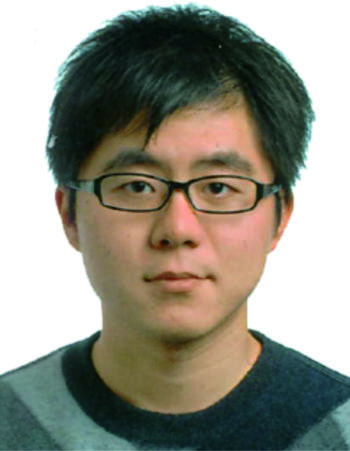
Thomas Lockwood is a Postdoctoral Research Fellow at the School of Mathematical and Physical Sciences , University of Technology Sydney (UTS). He specializes in analytical chemistry, particularly in mass spectrometry imaging and cheminformatics. His research integrates high-resolution mass spectrometry, laser ablation, and liquid chromatography to address environmental and biological challenges. Education: PhD in Analytical Chemistry (UTS, 2022); Bachelor of Science (Honours) in Applied Chemistry (UTS). Research Focus: Metal-tagged antibody conjugation for diagnostics Elemental manganese in brain tumours (radio-resistance assessment) Single-event mass spectrometry imaging Environmental nanoparticle characterization Current projects include developing open-source software for data analysis (e.g., SPCal, DGet!) and investigating phytoremediation of gasoline VOCs. He collaborates widely, with affiliations to the Hyphenated Mass Spectrometry Laboratory.
Dr. Xin Zhong is a Postdoctoral Researcher at the Department of Earth Sciences, Freie Universität Berlin, Germany, specializing in metamorphic petrology and geochemical processes. He holds a PhD from ETH Zurich (2017) and has conducted postdoctoral research at the University of Oslo (2017–2019). His work focuses on quantifying past pressure-temperature conditions in rocks using mineral inclusions and numerical modeling. Professional Affiliations: Member of European Geosciences Union (EGU) and American Geophysical Union (AGU). Research Highlights: Development of Raman thermobarometry techniques, analysis of mineral inclusion-host systems, and studies on fluid-rock interactions in subduction zones. Current projects explore residual stress preservation mechanisms in metamorphic rocks. Grant Support: Alexander von Humboldt Postdoctoral Fellowship (2020–2022).
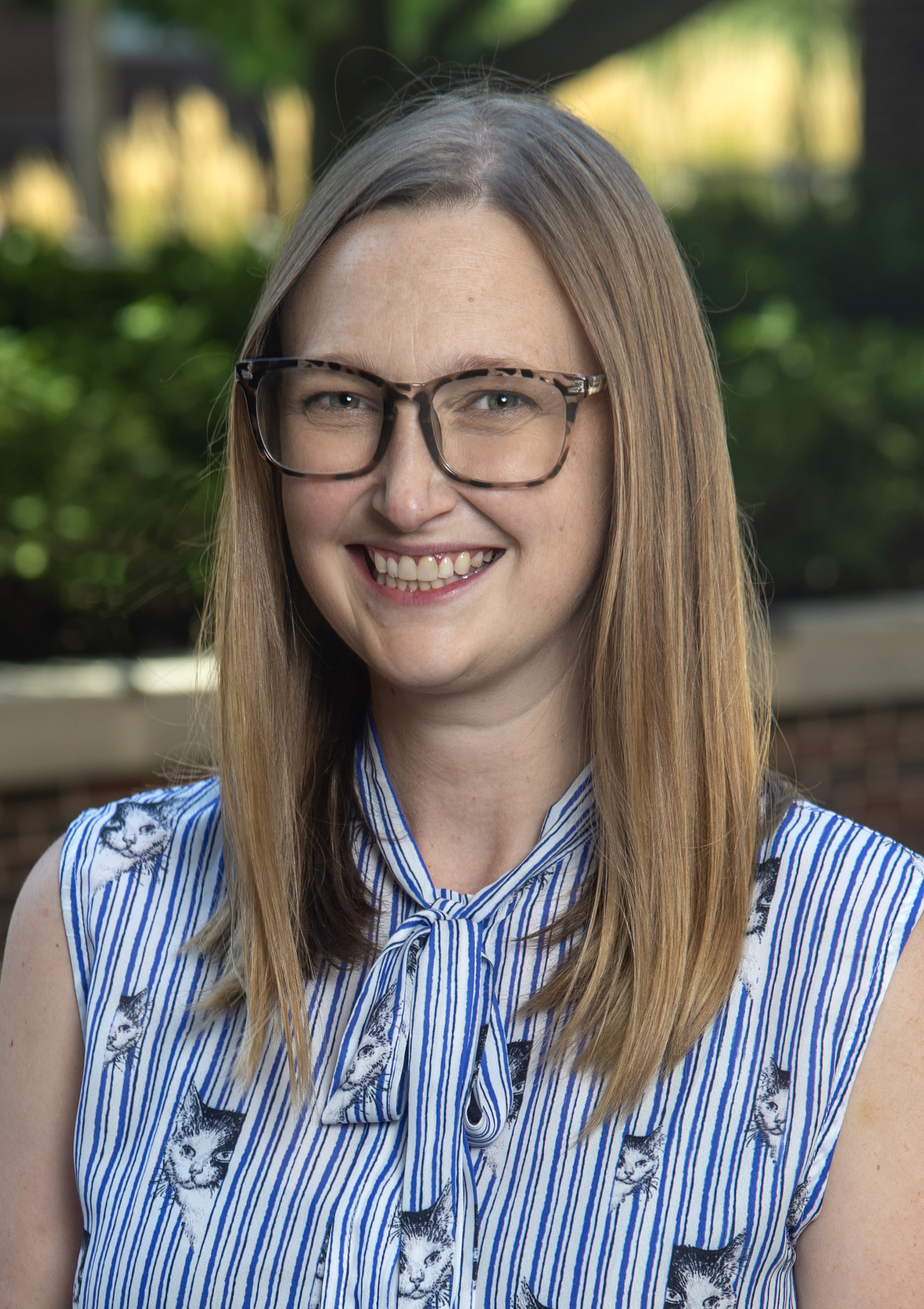
Dr. Stephanie Olson is an Assistant Professor in the Department of Earth, Atmospheric, and Planetary Sciences at Purdue University. Her research focuses on the co-evolution of life and environment on Earth, with applications to exoplanet habitability and life detection strategies. She holds a Ph.D. in Geochemistry from the University of California, Riverside (2018), an M.S. in Geosciences from Pennsylvania State University (2013), and dual B.S. degrees in Geology and Geophysics from the University of Minnesota (2011). Her research interests include Earth's oxygenation history, planetary habitability criteria, and computational modeling of exoplanetary environments. Key contributions include studies on methane cycling in Earth System Models, ocean dynamics on exoplanets like Proxima Centauri b, and the robustness of Gaian feedback mechanisms under climate perturbations. Dr. Olson has pioneered methods to identify biosignatures in exoplanet atmospheres through seasonal atmospheric variations. Her work has been recognized through awards such as the T.C. Chamberlin Postdoctoral Fellowship (University of Chicago, 2018-20) and the Chancellor's Distinguished Fellowship (UC system, 2013). She collaborates extensively with institutions like the NASA Astrobiology Institute and maintains active involvement in the Geology & Geophysics and Planetary Sciences communities. Recent publications (2020-2025) highlight advancements in exoplanet oceanography, Earth's mid-Proterozoic climate, and interdisciplinary approaches combining geobiology with astrobiology. Her research bridges geochemical analysis, computational modeling, and observational astronomy to address fundamental questions about life's potential beyond Earth.
Katherine D. Romanak is a Research Professor at the Bureau of Economic Geology within the Jackson School of Geosciences at The University of Texas at Austin. She specializes in geochemistry and carbon sequestration, focusing on soil-gas monitoring, microbial influences, and the fate of contaminants in subsurface environments. Her work includes large-scale projects like the Southeast Carbon Partnership and the Kerr Farm Assessment in Saskatchewan. Education: B.S. Geology, Southern Methodist University (1984) M.S. Geology, University of Texas at Arlington (1988) Ph.D. Geology, University of Texas at Austin (1997) Research interests emphasize carbon cycling dynamics, shallow subsurface monitoring, and CO2 storage safety. Notable contributions include developing process-based soil-gas methods to detect CO2 leakage and assessing environmental impacts of CO2 injection in oilfields. Her work integrates geochemical modeling with field experiments, as seen in studies at the Cranfield Mississippi site. Key awards include Jackson School Equipment Awards (2009, 2010) and a Career Development Publications Award (2009). She has led international initiatives, such as guest editing special issues on carbon storage and co-chairing global workshops on CO2 monitoring challenges. Professional activities span academic outreach, K-12 education, and stakeholder engagement. She collaborates with institutions like the Smithsonian Institution and the U.S. Department of Energy, advancing CCS technologies and policy alignment.
Wesley Scott is a Research Assistant Professor in the Department of Earth, Environmental, and Planetary Sciences at Northwestern University, affiliated with the Weinberg College of Arts & Sciences. His work focuses on geochemical proxies for climate reconstruction, environmental contaminant analysis (e.g., PFAS), and organic geochemical studies in soils, sediments, and biological systems. Research Interests Dr. Scott specializes in: Development and application of novel geochemical proxies (e.g., brGDGT lipids, bacterial fatty acids) Climate and environmental reconstructions using lacustrine sediments and plant waxes PFAS contamination dynamics in marine ecosystems and biological tissues Interlaboratory calibration of geochemical methods Key Article Trends Recent work emphasizes: High-resolution climate reconstructions for Patagonia and central Chile PFAS burden analysis in white sharks and other biological matrices Calibration of bacterial lipid proxies for temperature/pH estimation Grants & Advising No specific grants or advisees listed in provided materials. Collaborates with multidisciplinary teams across environmental and earth sciences. Labs/Teams Participates in Northwestern’s Earth and Planetary Sciences departmental research initiatives, focusing on organic geochemistry and environmental contaminant studies.
Dr. Bradley Stevenson is a Research Associate Professor in the Department of Earth, Environmental, and Planetary Sciences at Northwestern University. His research investigates microbial ecosystems in extreme subsurface environments, with applications to biogeochemistry, astrobiology, and public health surveillance. Current projects span: Deep subsurface microbial adaptations Wastewater-based epidemiology Biogeochemical cycling in cave systems Planetary analog environments Anthropogenic impacts on subsurface ecology Publications demonstrate dual focus on fundamental subsurface microbiology and applied environmental monitoring. Recent work includes wastewater surveillance for pathogens like SARS-CoV-2 and West Nile virus, deep biosphere characterization in geological formations, and astrobiological investigations in analog environments. Methodological approaches include stable isotope analysis, metagenomics, geochemical characterization, and development of novel surveillance techniques. Field sites encompass Mammoth Cave systems, Colorado Plateau aquifers, and urban wastewater infrastructure. Research contributes to understanding microbial life in energy-limited environments, planetary habitability models, and public health monitoring frameworks through environmental sampling and molecular analysis.
Dr Evangelos Mouchos is a Senior Research Associate at the School of Geographical Sciences, University of Bristol, United Kingdom. His research focuses on environmental geochemistry, phosphorus cycling in aquifers, rare earth element (REE) extraction from geological deposits, and biogeochemical processes. He holds a PhD and prior degrees in relevant fields. Key research areas include understanding anthropogenic and natural phosphorus dynamics in catchments, particularly in the Upper Greensand aquifer systems of the UK, and exploring REE resources in bauxite deposits and red muds. His work bridges environmental science, mineralogy, and sustainable resource management. Notable publications from 2024 address UK greenhouse gas removal strategies, while earlier studies (2016–2023) analyze phosphorus sources in water systems and REE potential in Greek and Turkish geological formations. He collaborates with experts like Dr Heather Buss (Biogeochemical Weathering) and Prof Penny Johnes (Biogeochemistry). No scientific awards are explicitly listed in the provided materials. While specific grants or advising roles are not detailed, his research aligns with environmental governance, sustainable resource development, and interdisciplinary geoscience collaborations.
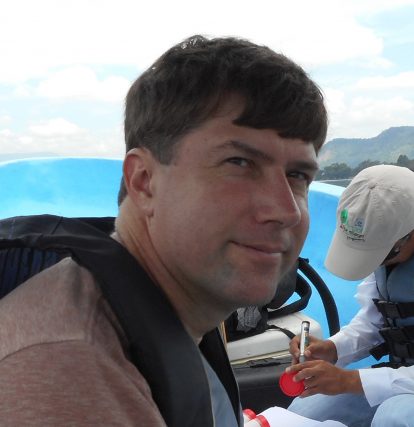
Dr. Jason H. Curtis serves as the manager of the Light Stable Isotope Mass Spectrometry Laboratory within the Department of Geological Sciences. His expertise focuses on paleoclimate reconstruction using lake sediment cores, particularly in the American tropics over the past 10,000 years. He specializes in sediment coring techniques, lab instrument maintenance, and training researchers in sample collection and analysis. Dr. Curtis holds a Ph.D. in Geology from the University of Florida (1997). His fieldwork spans 30 countries including Mexico, Guatemala, Colombia, and Madagascar, emphasizing tropical and subtropical regions. Research Interests: Paleoclimatology using stable isotope geochemistry Lake sediment archives as climate proxies Maya civilization environmental context Human-landscape interactions Coastal sediment dynamics Publications Trends: Recent work emphasizes Maya environmental history, Holocene climate variability, and methodological advances in isotope analysis. Over 50 published articles focus on tropical paleoenvironmental reconstruction, with a recurring theme of climate-human interaction in Mesoamerica. Laboratory Management: Directs the Isotope Lab's instrumental operations, supporting interdisciplinary research across geosciences and archaeology. Develops innovative sampling protocols for carbonate and water samples. Geographic Focus: Primarily Central America and the Caribbean, with significant contributions to understanding Holocene hydroclimate dynamics in lowland tropical regions.
Jillian Banfield is a Professor at UC Berkeley's Department of Environmental Science, Policy, and Management, with joint appointments in Earth and Planetary Science. She directs research on geomicrobiology, microbial community ecology, and viral evolution using metagenomics and advanced imaging techniques. Her work focuses on acid mine drainage biofilms, subsurface bioremediation, and soil microbiome responses to climate change. Education: Ph.D. Earth and Planetary Science, Johns Hopkins University (1990) Research Interests: Microbial control of environmental chemistry, microbe-mineral interactions, CRISPR systems in natural communities, and viral impacts on microbial evolution. Her group develops culture-independent approaches like community proteomics and nano-scale imaging. Publications: Over 200 publications in journals including Science and Nature, with recent work on CRISPR systems from metagenomic data and subsurface microbial ecosystems. Awards: National Academy of Sciences Member (2006) MacArthur Fellowship (1999) Dana Medal (2010) Guggenheim Fellowship (2000) Students and Grants: Advises PhD students on microbial ecology projects. Secured funding from NSF, NASA, and DOE for subsurface biogeochemistry and microbial carbon cycling research. Labs and Teams: Leads the Banfield Laboratory and participates in the Innovative Genomics Institute. Collaborates with Lawrence Berkeley National Laboratory on nanogeoscience projects.
Todd Dawson is Professor in the Department of Environmental Science, Policy, & Management at the University of California, Berkeley. His research examines plant-environment interactions using physiological ecology and stable isotope techniques, with particular focus on ecosystem responses to climate change. Research investigates plant water relations, carbon cycling, and nutrient dynamics across ecosystems including tropical forests, riparian zones, and Mediterranean climates. Current projects analyze drought impacts on vegetation, belowground biogeochemistry, and isotopic tracing of ecosystem processes. Publications demonstrate consistent focus on plant hydraulic function and isotope applications. Recent articles examine drought response mechanisms in tropical trees, riparian groundwater dependencies, and isotopic methods development. Research employs field measurements across global ecosystems combined with laboratory analyses. The Dawson Lab conducts interdisciplinary research linking plant physiology to ecosystem processes. Current work includes NSF-funded projects on deep soil biogeochemistry, tropical forest drought responses, and isotope clumping techniques for paleoclimate reconstruction.
Ariel Anbar is a President's Professor at Arizona State University (ASU), affiliated with the School of Earth and Space Exploration and the School of Molecular Sciences. He also holds roles as Distinguished Global Futures Scientist in the Julie Ann Wrigley Global Futures Laboratory, Affiliate Faculty in the Mary Lou Fulton College for Teaching and Learning Innovation, and member of the Center for Biodiversity Outcomes. Anbar leads the Center for Education Through Exploration and directs the Anbarlab, focusing on Earth's chemical evolution, astrobiology, and innovative education tools. With over 200 publications, he is a Fellow of major scientific societies and has received the GSA Donath Medal and AGU Carl Sagan Lecture. His research spans geochemical methods for studying ancient environments, marine oxygenation history, and developing virtual learning platforms like Polar Explorer. He holds degrees from Harvard and Caltech, previously taught at the University of Rochester, and has led ASU's Astrobiology Program and education initiatives. Education: PhD: California Institute of Technology (Caltech) Bachelor's Degree: Harvard University Research Interests: Anbar's work integrates geochemistry, astrobiology, and education. Key areas include: Early Earth atmospheric/oceanic evolution Biogeochemical cycles and redox proxies (e.g., molybdenum, uranium isotopes) Exoplanet habitability and life detection strategies Virtual field experiences for geoscience education His lab develops novel techniques to trace environmental changes, such as analyzing conodont calcium isotopes for ocean acidification events. Grants & Awards: Over $2M NSF funding for Polar Explorer VR tools, NASA grants for exoplanet research, and HHMI Professorship supporting education innovation. Notable honors include AGU Fellowship and GSA Arthur L. Day Medal. Educational Initiatives: Founded the Center for Education Through Exploration, creating immersive digital tools like Infiniscope and Surviving Extinction. Collaborates with Native Hawaiian educators to develop culturally relevant virtual tours. Labs/Teams: Anbarlab (ASU) focuses on interdisciplinary projects, combining lab experiments, fieldwork, and computational modeling. Collaborates with institutions globally on paleoredox studies and astrobiology.
Lynda Williams is a Research Professor at Arizona State University's School of Earth and Space Exploration, with an affiliation in the Emeritus College. Her research focuses on the chemical composition and nanoscale structure of clay minerals to interpret Earth's geological processes. Key interests include biogeochemistry, geochemical cycles, and the interplay between minerals and organic matter in hydrothermal systems. Expertise areas encompass clay mineralogy, environmental geochemistry, and applications of minerals in medicine. She investigates antibacterial clay deposits and their mechanisms against pathogens, leveraging analytical techniques like secondary ion mass spectrometry (SIMS). Current projects involve tracing lithium and boron isotopes in kerogen, hydrothermal organic synthesis, and planetary geochemistry. Publications emphasize hydrothermal reaction networks, mineral-catalyzed organic transformations, and astrobiological studies in extraterrestrial environments. Her work bridges geology, chemistry, and medicine, addressing both fundamental and applied challenges in Earth and space science.
Professor Zenobia Jacobs is a leading academic in archaeological science and geochronology at the University of Wollongong, affiliated with the School of Earth, Atmospheric and Life Sciences (SEALS) and the ARC Centre of Excellence for Australian Biodiversity and Heritage (CABAH). She holds an ARC Future Fellowship and has pioneered advancements in single-grain optical dating techniques, enabling high-resolution chronologies for human evolution studies. Her work focuses on hominin dispersals, Paleolithic innovations, and environmental interactions across Africa, Asia, and Australia. Education: PhD (Aberystwyth University, UK), BA (Honours) and BA in Archaeology & Physical Geography (University of Stellenbosch, South Africa). Research interests include geochronology, archaeological science, and Quaternary environmental reconstruction. Key contributions: Developed luminescence dating methods for sediments; led projects on Denisova Cave (Siberia), South African coastal sites, and Australian prehistory. Notable awards include the Sir Nicholas Shackleton Medal (INQUA), Scopus Young Researcher Award, and ARC Fellowships. Grants & Leadership: Principal investigator for ARC-funded projects like 'Desert People: Australian Perspectives' and 'Dating Murujuga's Rock Art'. Directed the OSL dating laboratory at UOW and served as Head of School (2014-2016). Labs/Teams: CABAH, Centre for Archaeological Science, and international collaborations on Denisovan and Neanderthal chronologies.
Dr. Alexandru Codilean is a Senior Lecturer at the University of Wollongong (UOW) in the School of Earth, Atmospheric and Life Sciences (SEALS). He holds a PhD in Geomorphology from the University of Glasgow (2008) and a BSc (First Class Honours) in Environmental Science from Babeș-Bolyai University (2003). His research focuses on cosmogenic nuclides, denudation processes, and sediment fluxes, using isotope geochemistry and numerical modeling to study Earth surface evolution. Dr. Codilean's work examines interactions between erosion, mountain-building, and climate, with societal implications for soil erosion management. He has held positions at GFZ German Research Centre for Geosciences (2010–2013), Stockholm University (2009–2009), and the University of Glasgow (2008–2009). He currently supervises PhD students on topics like mountain erosion, sediment transfer, and Great Dividing Range denudation. His research projects include leading the Cosmogenic Isotope Sample Preparation Facility at UOW and contributing to the ARC Centre of Excellence for Australian Biodiversity and Heritage. He has secured grants totaling over AUD 2M, including projects on Quaternary denudation rates and Kimberley rock art dating. Dr. Codilean co-developed the OCTOPUS database system for cosmogenic isotope and luminescence data, advancing open science in Earth sciences. His lab focuses on high-precision elemental assay techniques for accelerator mass spectrometry (AMS) calibration. Key collaborations include ANSTO, Stockholm University, and international teams in Kyrgyzstan and the Himalayas. His research spans fieldwork in Australia, Asia, and Patagonia, emphasizing interdisciplinary approaches to landscape evolution.
Ali Kimbrough is an Associate Research Fellow at the University of Wollongong's School of Earth, Atmospheric and Life Sciences (SEALS). Their work focuses on speleothem paleoclimatology to reconstruct tropical climate dynamics and address gaps in climate system understanding. Kimbrough holds a Ph.D. in Paleoclimatology from the Research School of Earth Sciences (2012–2017) and a B.S. in Earth Systems Science from the University of Arizona (2006–2011). Research Interests Kimbrough investigates tropical climate transitions using stalagmite geochemistry, particularly focusing on MIS transitions, glacial-interglacial rainfall variability, and human-environment interactions. They specialize in integrating proxy data with climate models to study atmospheric methane dynamics, vegetation productivity changes, and hydroclimate shifts across the Indo-Pacific region. Funding & Projects Recent grants include projects on Indo-Pacific ENSO variability (2024), pilot stalagmite research in Papua New Guinea (2023), and collaborations with Indonesian institutions. Equipment grants supported lab infrastructure for high-precision geochemical analysis. Outreach & Leadership Led guest seminars at Hasanuddin University and public lectures at State University of Padang (2023). Active in science communication through creative works like 'Stalagmite memories of ancient rainfall' (2022) and interdisciplinary projects combining folklore with scientific discovery (e.g., Comic books for education grant, 2023). Key Contributions Developed the SISALv3 global speleothem database (2024), published on Flores' aridification linked to Homo floresiensis extinction (2024), and validated rainfall reconstructions in Sulawesi using multi-proxy methods (2023–2024).