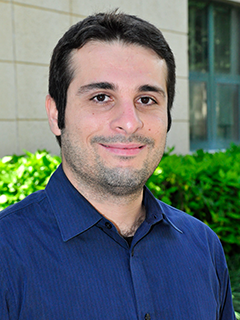
Ali Ghahremaninezhad is a Professor in the Department of Civil, Architectural, and Environmental Engineering at the University of Miami's College of Engineering. His research focuses on sustainable cementitious materials, self-healing concrete, and green additives like hydrogels and biochar. Current research explores molecular-level interactions between surfactants and cement microstructure to enhance durability. Key areas include carbonation curing, freeze-thaw resistance, and organic coatings for marine carbonate minerals. Recent publications highlight his work on using biochar for internal curing, hydrogels for crack repair, and triblock copolymers to reduce autogenous shrinkage. His studies integrate experimental methods (TGA, FTIR, SEM) and predictive modeling. Findings demonstrate improved mechanical strength and reduced water sorption in modified cement systems. Applications span marine carbon cycle understanding and sustainable construction practices.
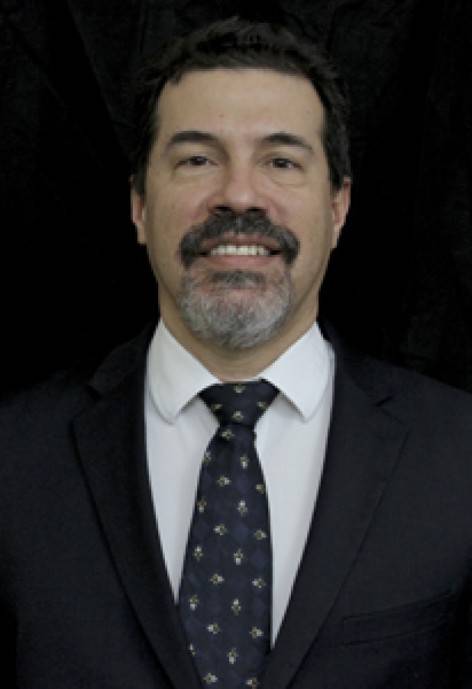
Vladimir Alvarado is a Professor and Interim Department Head at the Department of Chemical and Biomedical Engineering , University of Wyoming . His research focuses on Enhanced Oil Recovery (EOR) and transport in porous media , integrating data mining, analytical simulations, and experimental techniques. Education : Ph.D. in Chemical Engineering (University of Minnesota, 1996), Master in Exploration and Production (IFP School, 2002), B.S. in Physics (Universidad Central de Venezuela, 1987) Key research areas include CO2 sequestration , shale geomechanics , and nanoparticle applications in oil recovery . Recent publications highlight advancements in NMR methods for fluid characterization, stimulation fluid impacts on shale , and dynamic interfacial phenomena relevant to EOR and carbon storage. His work combines pore-scale modeling with reservoir simulation to optimize fluid recovery strategies.
Priv.Doz.Dr. Daniel Tunega is a Senior Lecturer at the Institute of Soil Research within the University of Natural Resources and Life Sciences, Vienna (BOKU) . His research focuses on molecular-scale interactions between environmental pollutants and soil components, with a particular emphasis on clay minerals and iron-based nanoparticles. Principal Investigator on projects funded by the Austrian Science Fund (FWF) Active in interdisciplinary research combining soil science, computational chemistry, and environmental engineering Research Interests include: Theoretical modeling of: Adsorption mechanisms of hydrophobic organic chemicals on mineral surfaces Reductive dechlorination processes using modified nanomaterials Mechanical properties of clay minerals and hybrids Wettability and surface interactions in soil systems Environmental fate of persistent pollutants Geochemical reaction pathways His publication portfolio demonstrates expertise in Density Functional Theory (DFT) calculations, molecular dynamics simulations, and experimental validation through collaborations. Key themes across his 2023-2025 publications include: Pollutant adsorption on modified clays Nanoparticle-mediated contaminant degradation Soil mineral-water interactions Organic-inorganic composite materials Scientific Presentations reveal continuous engagement with international conferences like Goldschmidt, Euroclay, EGU General Assembly, and World Congress of Soil Science, focusing on: Mechanistic soil pollution remediation Molecular-scale interface analysis Computational environmental chemistry
Justin Hutchison, Ph.D., is an Assistant Professor in the Department of Civil, Environmental, and Architectural Engineering at the University of Kansas. His research bridges biocatalysis, water treatment, and sustainable design, with a focus on protein-based solutions for contaminant removal. Associated Tracks: BioMolecular Engineering, Biomaterials and Tissue Engineering Key Research Areas: Biocatalytics, Sustainability Analysis, Quantitative Sustainable Design Recent work explores PFAS sorption on zeolites, phosphorus recovery from wastewater, and microbial risk assessment in karst basins. His projects emphasize environmental health, equity in water distribution, and innovative bioremediation technologies. Scientific awards include the NSF CAREER Award (2023) for thermal proteome profiling in soil contaminant monitoring. His lab develops hybrid nanoreactors and enzymatic systems for perchlorate and nitrate removal in drinking water.
Tatiana Kuznetsova is a Professor at the University of Bergen's Department of Physics and Technology. She leads the Theoretical Physics Research Group, focusing on gas hydrates, molecular dynamics, and thermodynamics. Her work addresses energy challenges like CO₂ sequestration and flow assurance. She collaborates with the FME-SUCCESS consortium and NORCE Energy. Her research spans: Hydrate formation/dissociation kinetics Interfacial properties of CO₂/water systems Thermodynamic modeling of phase transitions Surfactant applications in flow assurance Recent publications emphasize hydrate stability in sediments, thermodynamic frameworks for energy systems, and molecular-scale interactions in multiphase environments. Her work integrates simulations with experimental validation. She actively mentors graduate students in hydrate physics and computational methods, contributing to Norway's energy research initiatives. Lab activities include collaborative projects on Arctic gas hydrates and carbon capture.
David Dempsey is an Associate Professor in the Department of Civil and Environmental Engineering at the University of Canterbury's Faculty of Engineering, where he has been affiliated since December 2020. He leads the Subsurface Engineering Group, addressing critical challenges for a low-emissions future. His research integrates geomechanics, machine learning, and fluid dynamics across four key areas: Carbon Dioxide Removal : Designing systems to combust forestry waste and sequester CO₂ in geothermal reservoirs. Underground Hydrogen Storage : Modeling hydrogen injection/recovery in depleted gas fields. Volcanic Forecasting : Developing real-time ML systems for eruption prediction using seismic data. Induced Seismicity : Quantifying earthquake risks from energy projects. His recent publications (2021-2025) show a strong focus on machine learning applications in geohazards and energy storage, with themes including seismic forecasting, CO₂-hydrogen geostorage, and wildfire prediction. Numerical modeling and data-driven approaches dominate his methodology. He actively supervises 13+ graduate students on projects such as hydrogen geostorage, volcanic forecasting, and flood prediction. His group collaborates with industry on geothermal and seismic risk projects, leveraging real-time data from networks like GeoNet.
Chris Mundy is a Lab Fellow and Physicist at Pacific Northwest National Laboratory (PNNL), specializing in theoretical and computational approaches to complex interfacial systems. His research integrates statistical mechanics and molecular simulations to address fundamental challenges in electrolyte behavior, solvation phenomena, and energy-related materials science under the Department of Energy's Basic Energy Sciences portfolio. His educational background includes a PhD in Chemistry from the University of California, Berkeley (1992) and a BS in Chemistry from Montana State University (1988). Mundy has held significant leadership roles including Chair of the Gordon Research Conference on 'Chemistry and Physics of Liquids' (2025), Chair of the Theoretical Chemistry Subdivision of the American Chemical Society (2022), and Vice Chair (2020-2021). Mundy's research focuses on bridging molecular-scale phenomena to macroscopic outcomes in electrolytes and interfacial systems. His work spans computational modeling of ion hydration, solvation dynamics, and nanoscale assembly processes relevant to energy storage and environmental systems. Recent publications demonstrate strong emphasis on advanced simulation techniques applied to battery electrolytes, biomimetic materials, and aqueous interfaces. His 15 most recent publications reveal consistent focus on computational chemistry methods applied to interfacial phenomena, with growing integration of machine learning and advanced spectroscopy techniques. Key themes include ion-specific effects at interfaces, solvation structure characterization, and predictive modeling of electrolyte behavior across concentration regimes. American Physical Society Fellow (2014) Mundy actively contributes to professional service through leadership in Gordon Research Conferences and ACS subdivisions. His work at PNNL connects fundamental theoretical chemistry to Department of Energy mission areas including energy storage, environmental remediation, and materials science. Current research leverages high-performance computing resources to develop predictive frameworks for complex fluid systems. As a senior researcher at PNNL, Mundy collaborates extensively across national laboratory teams and academic institutions, focusing on theoretical development that informs experimental design in interfacial science and electrochemistry. His group utilizes advanced molecular simulation techniques to probe systems ranging from battery electrolytes to biological interfaces.
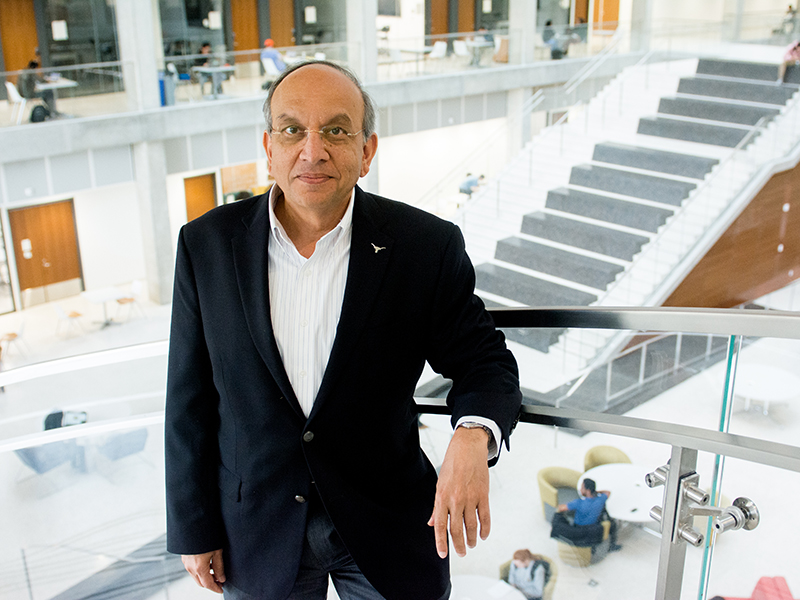
Mukul Sharma is a Professor and holds the W.A. (Tex) Moncrief, Jr. Centennial Endowed Chair in the Department of Petroleum and Geosystems Engineering at the University of Texas at Austin, where he has been for over 27 years. He previously served as Chairman of the Department from 2001 to 2005. His research focuses on hydraulic fracturing, improved oil recovery, injection water management, formation damage, and petrophysics. Dr. Sharma's educational background includes: Ph.D. in Petroleum Engineering from the University of Southern California (1985) M.S. in Chemical Engineering from the University of Southern California (1981) B.S. in Chemical Engineering from the Indian Institute of Technology, Kanpur (1980) His research interests span across several critical areas in petroleum engineering and geosciences. Dr. Sharma has made significant contributions to understanding solid and fluid mechanics of porous materials, water and waste injection processes, surface and colloid chemistry, multi-phase fluid flow in porous media, natural gas engineering, and geothermal energy systems. His work bridges fundamental science with practical applications in the energy industry, particularly in developing innovative solutions for hydraulic fracturing design, formation damage prevention, and water management in oil and gas operations. Analysis of Dr. Sharma's recent publications (2020-2024) reveals a strong focus on advanced reservoir characterization, fracture network modeling, and geothermal energy applications. His research increasingly integrates multiple disciplines including geomechanics, fluid dynamics, and geochemistry to develop comprehensive models for complex subsurface systems. A notable trend is the application of these models to both conventional petroleum reservoirs and emerging geothermal energy systems, demonstrating the cross-cutting nature of his work. Dr. Sharma has received numerous prestigious awards throughout his career, including: Member of the National Academy of Engineering (2018) SPE Honorary Member (2018) SPE John Franklin Carll Award (2017) SPE Anthony F. Lucas Gold Medal (2009) Lester C. Uren Award from SPE (2003) SPE Formation Evaluation Award (1998) As an educator, Dr. Sharma has taught numerous courses including Hydraulic Fracturing Design & Evaluation, Advanced Fluid Flow in Porous Media, and Petrophysics and Fluid Flow Laboratory. He has also developed and taught industry short courses on hydraulic fracturing, formation damage, and oilfield water management. His research group has published over 250 journal articles and conference proceedings and holds 15 patents. Dr. Sharma has consulted for over 50 companies worldwide and co-founded both Austin Geotech Services (a consulting company) and Layline Petroleum (a private E&P company).