Bhuvan Urgaonkar is a Professor in the Department of Computer Science and Engineering at Penn State University's College of Engineering. His research centers on optimizing cloud computing systems through innovative approaches to resource allocation, cost efficiency, and energy management. Current research focuses on Burstable Instance Scaling Serverless Computing Optimization Distributed Storage Systems Multi-resource Fair Allocation Cloud Economics Recent publications highlight advancements in autoscaling techniques, serverless architecture design, and trace modeling for high-load scenarios. These works emphasize practical solutions for cost-effective resource utilization in public cloud environments. Scientific Awards: CNS: Core: Small: Consistent, Geo-Distributed Data Stores on the Public Cloud (NSF, 2022-2025) CNS Core: Small: Principled Methodologies for Automated Cost-Effective Service Blending (NSF, 2021-2024) PPoSS: Cross-Layer Design for HPC in the Cloud (NSF, 2020-2022) CSR: Burstable Instances for Cost-Efficacy (NSF, 2017-2020) CSR: Student Travel Support for SIGMETRICS (NSF, 2016-2017)
Guillaume Pierre is a Professor and research leader at Univ Rennes, affiliated with Inria, CNRS, and IRISA, where he leads the Magellan research team. He is based at the Institute of Science and Technology of Information and Communication (ISTIC), Department of Computer Science and Electronics. His research focuses on fog computing, cloud computing, and large-scale distributed systems, with applications in scalable web hosting and edge intelligence. Research Interests: Fog and Edge Computing Cloud Computing and Resource Management Scalable Web Application Hosting Peer-to-Peer and Decentralized Systems Stream Processing and Kubernetes Orchestration Elasticity and Energy Efficiency in Distributed Environments His recent publications highlight a strong trend in geo-distributed systems, particularly focusing on Kubernetes cluster federation, fog-based environmental monitoring, and elasticity in stream processing. His work bridges theoretical advances with practical implementations in real-world fog and cloud infrastructures. Scientific Awards: Best Paper Award, IEEE International Symposium on Applications and the Internet (2005) Best Paper Award, IEEE International Conference on Cloud Engineering (IC2E 2014) Guillaume Pierre has advised numerous PhD students, many of whom now hold positions at Google, Amazon, Ericsson, and Ansys. He has coordinated major research projects such as the H2020 FogGuru initiative and the DiPET project on distributed data stream processing. His work is supported by EU funding and institutional collaborations. Labs and Teams: He leads the Magellan research team at the INRIA/IRISA lab, which is at the forefront of innovation in fog and cloud computing technologies.
Srinivas Narayana is an Assistant Professor in the Department of Computer Science at Rutgers University, specializing in programmable networking, formal verification, and systems research. He holds a PhD from Princeton University and a B.Tech from IIT Madras, with postdoctoral work at MIT. His research focuses on building safe, high-performance networks through optimizing compilers, verified programming, and distributed system monitoring. He has received NSF grants, the CGO 2022 Distinguished Paper Award, and the 2017 SIGCOMM Best Paper Award. Education: PhD and MA in Computer Science, Princeton University (2016) B.Tech in Computer Science, IIT Madras (2010) Postdoctoral Research, MIT (2018) Research Interests: His work bridges networking and systems with a focus on compilers, formal methods, and programmable hardware. Notable projects include K2 compiler for eBPF, the eBPF verifier soundness work, and congestion control mechanisms like CCP. He explores parallel packet processing, privacy-preserving analytics, and load balancing strategies. Grants & Awards: NSF Awards #2422076, #1910796, #2019302 eBPF Foundation Grant Facebook Networking Research Award Network Programming Initiative (NPI) Funding Lab & Teams: Leads the NetSys group at Rutgers, collaborating with teams on projects like the eBPF verifier, verified packet processing, and network monitoring tools like Marple. His lab emphasizes open-source contributions and industry collaboration.
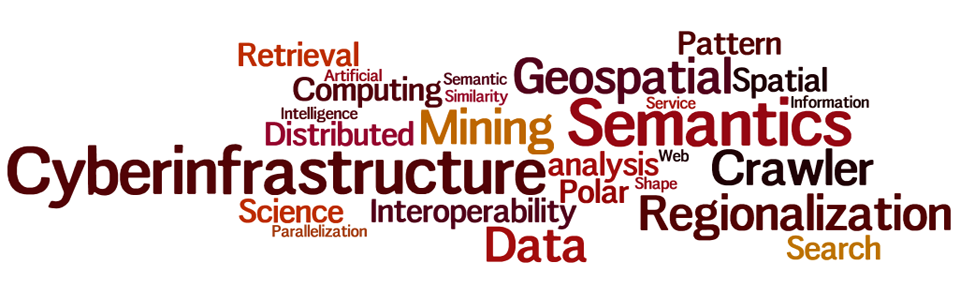
Wenwen Li is a Professor at Arizona State University (ASU), holding roles as Director of the CyberInfrastructure and Computation Intelligence (CICI) Lab and Research Director at the Spatial Analysis Research Center (SPARC). She specializes in geographic information science, cyberinfrastructure, and geospatial big data. Her work focuses on developing intelligent cyberinfrastructure for environmental and urban studies, leveraging AI and semantic technologies. Li's research has been supported by NSF, USGS, and Google.org, among others. Education: Ph.D. in Earth System and Geoinformation Science (George Mason University, 2010), M.S. in Signal and Information Processing (Chinese Academy of Sciences, 2007), and B.S. in Computer Science (Beijing Normal University, 2004). Research Interests : Cyberinfrastructure, spatial-temporal data mining, semantic interoperability, GeoAI applications in climate science, and urban studies. Her lab, CICI, pioneers projects like the Arctic Permafrost Thaw analysis and disaster response systems. Awards : 2023 AAG and UCGIS Fellowships, 2021 NSF Mid-Career Award, 2015 NSF CAREER Award, and the 2024 Greg Leptoukh Lecture Award (AGU). She chairs AAG's Cyberinfrastructure Specialty Group and serves on editorial boards of key journals. Grants & Service : Leads NSF-funded projects on GeoAI, climate modeling, and Arctic science. Active in AAG leadership roles and global initiatives like the Polar Cyberinfrastructure Portal. Recruits Ph.D. students in Geography and Computer Science. Labs & Teams : Directs the CICI Lab, advancing interdisciplinary GeoAI research and training. Collaborates with global partners on environmental and computational geography projects.
Craig Knoblock serves as Keston Executive Director of the Information Sciences Institute (ISI) at the University of Southern California (USC), Vice Dean of the USC Viterbi School of Engineering, and Research Professor of Computer Science and Spatial Sciences. He also directs the Data Science Program and the Center on Knowledge Graphs at USC. His educational background includes a Ph.D. and M.S. in Computer Science from Carnegie Mellon University (1991, 1988) and a B.S. with honors in Computer Science from Syracuse University (1984). Knoblock's research focuses on data semantics , specializing in source modeling, schema and ontology alignment, entity and record linkage, data cleaning, Web data extraction, and knowledge graph construction. His work bridges computer science, geospatial analysis, and artificial intelligence to solve complex data integration challenges. Recent projects emphasize historical map digitization, geospatial knowledge graphs, and smart city applications. His 300+ publications demonstrate consistent contributions to knowledge graphs and geospatial data integration, with a growing emphasis on historical map analysis and urban applications. The research trajectory shows increasing interdisciplinary collaboration across computer vision, geoinformatics, and domain-specific applications. IEEE Fellow (2020) ACM Fellow (2017) AAAI Fellow (2004) Robert S. Engelmore Memorial Lecture Award (2014) Donald E. Walker Distinguished Service Award (IJCAI, 2018) Use-Inspired Research Award (USC Viterbi, 2018) As Executive Director of ISI, Knoblock oversees one of USC's premier research centers with significant federal funding. His leadership extends to directing the Center on Knowledge Graphs and the Data Science Program. While specific grant details aren't provided, his extensive publication record and leadership roles indicate substantial research funding across data integration, knowledge representation, and geospatial applications. His work bridges theoretical computer science with practical applications in historical preservation, urban planning, and resource management through collaborative projects with government agencies and industry partners. Knoblock leads the Center on Knowledge Graphs at USC, focusing on developing techniques for building and utilizing knowledge graphs across diverse domains. His team combines expertise in artificial intelligence, geospatial analysis, and data integration to tackle challenges in historical map digitization, urban applications, and resource discovery. The research group maintains strong connections with both academic and government partners through the Information Sciences Institute's extensive network.
Alva L. Couch is an Associate Professor at Tufts University's School of Engineering, Department of Computer Science, with a career spanning over 30 years. His work bridges network/system administration, autonomic computing, and hydrologic data science, focusing on scalable solutions for data management and automated system administration. Education: Ph.D. in Mathematics (1988), B.S. in Architecture (1978), and B.A. in Bassoon/Contrabassoon Performance (1978). Research Interests His research centers on: Network and System Administration: Tools like SLINK, Maelstrom, and Babble for dependency analysis, cloud migration, and policy enforcement. Geo-informatics: MEDFORD metadata language and HydroShare platform for hydrologic data curation and discovery. Autonomic Computing: Promise theory, convergent operators, and closure models for self-managing systems. Recent Work Trends His 2024-2018 publications emphasize: Cloud-based hydrologic data management (AnVILMEDFORD, HydroShare) Metadata standards for interdisciplinary research Machine learning for system administration Agent-based resource sharing models Scientific Awards Liebner Teaching Award (1996) Seymour Simches Advising Award (2017) Best Paper Awards: LISA 1996, AIMS 2008, LISA 2001 LISA 2000 Best Student Paper (with Michael Gilfix) Contributions He developed key software like Peep (network auralization) and Slink (configuration management), supported by NSF grants and industry partnerships. His work with CUAHSI's Water Data Center shapes national hydrologic data infrastructure. He also advocates for science education and privacy in computing.
Dr. Ali Grami is an Associate Professor in the Department of Electrical, Computer and Software Engineering at Ontario Tech University, within the Faculty of Engineering and Applied Science. He holds a PhD in Electrical Engineering from the University of Toronto (1986), an MEng from McGill University (1980), and a BSc from the University of Manitoba (1978). His research focuses on satellite communications, digital transmission systems, and wireless networks. He has extensive industrial experience, including roles at Telesat Canada and Nortel Networks, and has contributed to pioneering projects like Canada's Anik-F2 Ka-Band satellite system. Dr. Grami has authored several textbooks, including Introduction to Digital Communications and Discrete Mathematics: Essentials and Applications . His work spans theoretical advancements (e.g., beamforming algorithms, spectrum access protocols) and practical applications in broadband satellite systems and cognitive radio networks. Awards include the United Nations TOKTEN Award (1995) and Nortel Award of Excellence (1989). He has designed academic programs at Ontario Tech, including the BEng, MASc/MEng, and PhD in ECE, and contributed to IT security programs. His teaching spans undergraduate and graduate courses in digital transmission, communication systems, and signal processing.
Professor Ahmed Karmouch is a faculty member at the University of Ottawa's School of Electrical Engineering and Computer Science. He holds a Ph.D. and specializes in advanced networking research, including Network Slicing, Software Defined Networks (SDN), Named Data Networking (NDN), and Cloud Computing. His IMAGINE Lab focuses on developing innovative solutions for autonomic and cognitive networks, emphasizing programmable data planes and in-network computing. Research Interests: Network Slicing Software Defined Networking Named Data Networking Programmable Data Plane Intelligence In-Network Computing Ambient Intelligence & IoT Publications reflect a focus on SDN, NDN, and cloud infrastructure optimization. His work often bridges theory and practical implementation, addressing challenges in network efficiency, reliability, and scalability. Supervised over 30 graduate students, contributing to advancements in edge computing, virtual networks, and autonomic systems. Labs/Teams: Leads the IMAGINE Lab, dedicated to research in mobile autonomic networks, context-aware systems, and future broadband infrastructure. Projects include WiMAX security, policy-based overlay networks, and semantic resource discovery.
Piotr Jankowski is a Professor of Geography and Director of the Joint Doctoral Program in Geography between San Diego State University (SDSU) and the University of California, Santa Barbara. He holds a Ph.D. from the University of Washington and has held faculty positions at institutions in the U.S., Germany, and Poland. His research focuses on spatial decision support systems, participatory GIS, and sensitivity analysis in spatial models. He has authored/co-authored over 100 peer-reviewed publications and two books on GIS applications in urban planning and decision-making. Education: Ph.D. (1989, University of Washington), M.S. (1979, Poznań University of Economics and Business). Positions include Professor at SDSU since 2003, Director of the Joint Doctoral Program since 2019, and Coordinator of the GIS Certificate Program. He has led international collaborations in Austria, Brazil, Germany, Ireland, Italy, New Zealand, and Poland. Research interests span spatial decision support systems, participatory GIS methodologies, and sensitivity analysis in spatial models. His work emphasizes bridging GIS technology with urban planning and environmental decision-making. Recent publications explore AI-enabled participatory planning, uncertainty in spatial models, and geodiversity assessment. Awards: 2018/19 SDSU Alumni Distinguished Faculty Award. Grants and advising involve spatial optimization, urban sustainability, and environmental modeling. He leads the Center for Earth Systems Analysis Research and has pioneered tools like the Geo-questionnaire for public participation in planning.
Özge Öner serves as Associate Professor in Spatial Economics and Real Estate at the University of Cambridge's Department of Land Economy and holds a Fellowship at Sidney Sussex College, where she additionally serves as Vice Master and Director of Studies. Her institutional affiliations extend to research fellowships at Stockholm's Institute of Retail Economics and Jönköping's Centre for Entrepreneurship and Spatial Economics (CEnSE). Her academic foundation includes a 2014 PhD in Economics with specialization in Urban and Regional Economics from Jönköping International Business School, complemented by doctoral research at the University of Illinois' Regional Economics Applications Laboratory (REAL). Prior academic appointments include Assistant Professor at Jönköping International Business School and Researcher at Stockholm's Research Institute of Industrial Economics (IFN). Research Interests: Öner's scholarly work critically examines migration dynamics, labor mobility patterns, micro-geographic segregation mechanisms, ethnic enclave formation, retail/service geography, urban amenity distribution, entrepreneurial geography, and political spatial organization. Her methodological approach heavily leverages geocoded register data and spatial econometric techniques to investigate how geographic context shapes economic behavior, with particular emphasis on Swedish and European urban systems. This interdisciplinary framework bridges spatial economics, economic geography, and migration studies through rigorous quantitative analysis of neighborhood-level phenomena. Publication Trends: Her recent output (2023-2025) demonstrates evolving focus toward infrastructure-impact analysis (tramway effects on commercial vitality), refugee labor market integration pathways, and micro-scale retail/ethnic enclave dynamics. Methodologically, she increasingly employs synthetic control approaches and granular geospatial data to isolate causal mechanisms in urban economic processes, while maintaining strong connections to policy-relevant questions about segregation, integration, and commercial geography. Scientific Awards: Handelsbanken Wallander postdoctoral scholarship (2015) Young Investigator Award in Italy (2018) Young Researcher Award in Sweden (2019) from the Swedish Entrepreneurship Forum Advising and Public Engagement: As Director of Studies at Sidney Sussex College, Öner oversees academic progression for undergraduate students. She actively translates research into public discourse through monthly columns in Svenska Dagbladet (The Swedish Daily News), where she analyzes contemporary socioeconomic issues through her spatial economics lens. While specific doctoral advisees aren't documented in source materials, her leadership roles indicate significant mentoring responsibilities. Research Networks: Öner maintains active collaboration through dual research fellowships: at Stockholm's Handelns Forskninginstitut (Institute of Retail Economics) where she examines commercial geography, and at Jönköping's CEnSE focusing on spatial entrepreneurship patterns. These positions facilitate cross-institutional research on retail dynamics, migration geography, and urban economic structures using Scandinavian longitudinal datasets.
Professor Anne Pitcher holds dual appointments as the Joel Samoff Collegiate Professor in Political Science and Afroamerican and African Studies at the University of Michigan. She is also the Associate Chair of the Department of Afroamerican and African Studies and Director of Graduate Studies. Her research focuses on the political economy of urban development, authoritarian governance, and regulatory institutions in Africa, with fieldwork in Mozambique, Angola, South Africa, and Zambia. She serves as President of the African Studies Association and leads projects like the geo-coding of Luanda’s residential developments. Education: Duke University (B.A. Political Science and History), Oxford University (M.Phil. and D.Phil. in Politics). Research Interests: Urban political economy, distribution under authoritarianism, privatization agencies, and comparative party politics. She has built datasets analyzing 29 African countries’ privatization frameworks and is currently studying Luanda and Nairobi’s urban development through a 2018 Stellenbosch Institute fellowship. Awards: Honorable Mention for Best Book (2012), Dudley Seers Prize (2017). She co-edits the African Perspectives book series at the University of Michigan Press. Teaching & Affiliations: Courses include African Politics, Business and Politics in Developing Countries. Affiliated with the Center for Political Studies, African Studies Center, and Program in International and Comparative Studies.
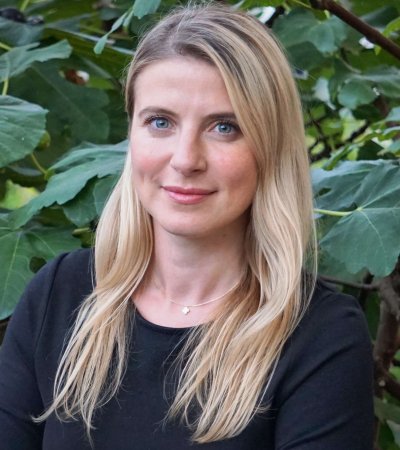
Dr Ritika Tiwari is a Senior Lecturer in Public Health at the York St John University London Campus. She holds over 14 years of experience in public health across South Asia, Africa, and Europe, with prior affiliations to India’s National Health Mission, South Africa’s Stellenbosch University, and the UK’s University of Greenwich. At York St John, she serves as Semester Lead for the MSc Public Health program, leading modules on Health Economics and Public Health for an Ageing Population. Her research focuses on Human Resources for Health (HRH), emphasizing equitable health workforce distribution and universal health coverage. Key areas include geo-spatial inequities in healthcare access, workforce planning models, and policy interventions. Her work has contributed to South Africa’s 2030 HRH Strategy and analyses of dentist shortages, nephrologist deficits, and health workforce trends in India and South Africa. Publications span journals, policy reports (e.g., South African Health Reforms, 2022), and media features on oral health crises and health worker shortages. Dr Tiwari’s academic contributions bridge policy, education, and practice, aiming to strengthen health systems through evidence-based strategies.
Volker Markl is a Professor at Technische Universität Berlin in the Institute of Software Engineering and Theoretical Computer Science, with additional affiliations at the Berlin Institute for the Foundations of Learning and Data (BIFOLD) and the German Research Center for Artificial Intelligence (DFKI). His research spans database systems, stream processing, and distributed data management with significant contributions to both theoretical foundations and practical implementations. Markl's research interests focus on next-generation data management systems, particularly for streaming and IoT environments. His work addresses critical challenges in distributed query processing, system integration, and performance optimization. He has pioneered approaches for stream processing in volatile infrastructures and developed innovative techniques for GPU-accelerated database operations. His NebulaStream project represents a major contribution to distributed stream processing systems. His publication record demonstrates consistent impact across top database venues including VLDB, SIGMOD, and ICDE. Recent work shows increasing focus on machine learning integration with database systems, privacy-preserving query processing, and educational approaches for teaching large-scale data management. Markl has mentored numerous researchers who have become prominent in the database community, with frequent collaborators including Steffen Zeuch, Tilmann Rabl, and Philipp Grulich. His leadership extends to major research initiatives and collaborations across European institutions.
Alysson Neves Bessani is an Associate Professor at the Informatics Department of Faculdade de Ciências da Universidade de Lisboa, Portugal, and a member of the LaSIGE research group. His work focuses on distributed systems, Byzantine fault tolerance, and cybersecurity, with significant contributions to blockchain consensus and intrusion-tolerant architectures. Academic Rank: Associate Professor University: Universidade de Lisboa School: Faculdade de Ciências Department: Informatics Department Research Groups: LaSIGE, Navigators Research Interests span distributed systems design, Byzantine fault tolerance, adaptive consensus protocols, and secure multi-cloud storage. His work bridges theoretical foundations with practical implementations like the BFT-SMaRt library and the Vawlt startup. Scientific Awards include multiple Test-of-Time Awards (DSN'24, DSN'21), IBM Faculty Award (2017), and Best Student Paper at Middleware'19. He has advised numerous PhD and Master’s students, contributing to advancements in fault-tolerant systems. Publications (15 most recent) reveal trends in Byzantine consensus optimization, blockchain integration, and AI-driven threat detection. His interdisciplinary work combines distributed computing with genomics and IoT security, reflecting a broad impact across computer science.
Elizabeth M. Belding is a Professor in the Department of Computer Science at the University of California, Santa Barbara (UCSB) and Associate Director of the Center for Information Technology and Society. She holds a Ph.D. (2000) and M.S. (1997) in Electrical and Computer Engineering from UCSB. Co-developer of AODV routing protocol (basis for IEEE 802.11s and Zigbee) Director of the Mobility Management and Networking (MOMENT) Laboratory Associate Dean and Faculty Equity Advisor, College of Engineering Her research focuses on mobile and wireless communication networks , including network performance analysis , digital equity , and information and communication technologies for development (ICTD) . She specializes in improving internet access for marginalized communities including Native American reservations, refugee camps, and rural areas in Zambia, South Africa, and Mongolia. Recent research trends include: Accurate broadband measurement in the U.S. using crowdsourced data Development of wireless solutions for underserved regions Analysis of 5G performance variability and GEO satellite latency Mapping cellular network evolution and infrastructure criticality Evaluating federal broadband funding programs (CAF, BEAD, NSF) Quantifying video streaming quality of experience (QoE) Scientific honors include: ACM Fellow (2018) IEEE Fellow (2014) AAAS Fellow ACM SIGMOBILE Test of Time Award (2018) NCWIT Harrold and Notkin Award (2015) UCSB Outstanding Graduate Mentor Award (2012) IRTF Applied Networking Research Prize (2024) She has advised 22 Ph.D. graduates from the MOMENT Lab, including Jiamo Liu (2024) and Udit Paul (2023). Current research receives funding from NSF, Bill & Melinda Gates Foundation, and industry partners like ViaSat, with emphasis on broadband deployment analysis and network solutions for challenged environments.


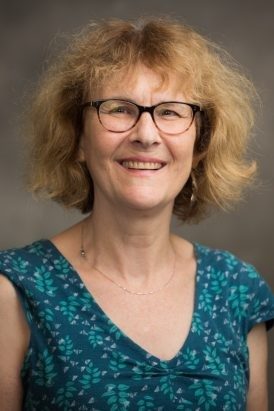
/prod01/yorksjacuk/media/content-assets/staff-profile-images/Ritika-Tiwari.jpg)