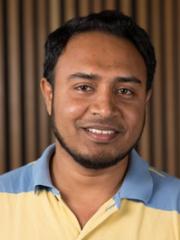
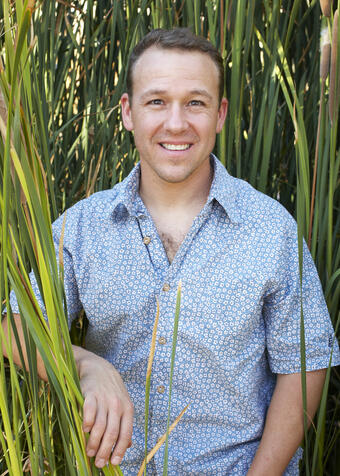
Kunal Agrawal is a Professor in the Department of Computer Science & Engineering at the McKelvey School of Engineering, Washington University in St. Louis. She holds a PhD from MIT (2009), an MS from the National University of Singapore (2002), and a BE from Mumbai University (2001). Her research focuses on parallel computing, runtime systems for parallel programming, scheduling, transactional memory, and cache-aware/streaming algorithms. She joined WashU in 2009 after working with MIT's Supercomputing Technologies Group. Her 2012 NSF CAREER Award supports developing concurrency platforms for high-throughput parallel programs. Collaborative projects include enhancing atmospheric simulation software (GEOS-Chem) and studying novel computer memory properties. She also contributed to an NSF-funded study on interactive parallel applications. Her lab explores foundational challenges in parallel system design. Lab Website: Link Google Scholar Profile: Link Research emphasizes bridging theoretical guarantees with practical efficiency in parallel systems, addressing scalability and resource management in real-time environments.
Yong Zhang is a Professor in the Department of Geological Sciences at the University of Alabama, serving as Undergraduate Program Director. His research focuses on stochastic hydrology, contaminant transport in soil/water/aquifers (including heavy metals, PFAS, microplastics, and antibiotics), and surface water-groundwater interaction. He has held postdoctoral positions at the University of California, Davis; Desert Research Institute; and Colorado School of Mines. Current research includes the 'Groundwater 2070' project in Baldwin County, Alabama, addressing climate change impacts and seawater intrusion. Education: BS in Hydrogeology and Geo-Engineering (Nanjing University, 1993), PhD in Hydrology and Water Resources (Nanjing University, 1998). He teaches courses like GEO 101, GEO 306, and specialized topics such as Fractional Calculus and Hydrogeophysics. His work integrates fractional calculus with hydrogeology, yielding models for non-Fickian transport and pollutant source identification. Students under his advisement include Jonathan Frame, Chaloemporn Ponprasit, and Hossein Gholizadeh. Research outputs emphasize environmental geochemistry, numerical modeling, and groundwater sustainability. Notable collaborations involve Dr. Geoff Tick on co-advised PhD students.
Garrett Warnell is a Visiting Researcher in the Department of Computer Science at The University of Texas at Austin, specializing in artificial intelligence, computer vision, and robotics with applications in autonomous navigation systems. Education: PhD in Electrical Engineering, University of Maryland Master's in Electrical Engineering, University of Maryland B.S. in Computer Engineering, Michigan State University Research Interests: Dr. Warnell's work focuses on machine learning for robotic control , computer vision for scene understanding , and autonomous navigation in challenging environments . His contributions span imitation learning with limited demonstrations, preference-aware path planning, and off-road mobility. Recent research integrates vision-language models and transformer architectures for social navigation and terrain adaptation, emphasizing human-robot collaboration and robustness in constrained spaces. Publication Trends: Analysis of Dr. Warnell's 2023-2025 publications reveals dominant themes in off-road navigation robustness, with emphasis on particle filtering, diffusion models, and transformer networks for geo-localization and terrain adaptation. A significant trend involves human preference alignment through extrapolation techniques and open-vocabulary models for costmap generation, reflecting growing integration of natural language understanding in robotic systems. Scientific Awards: No awards specified in available documentation. Advising and Grants: Public records indicate no listed advisees or grant funding details. Labs and Teams: Affiliated with UT Austin's Computer Science Department, though specific research group affiliations remain undocumented in provided materials.
Dieu Tien Bui is a Full Professor in the Department of Business and IT at the University of South-Eastern Norway (USN) School of Business. His research focuses on Geospatial Artificial Intelligence Machine Learning GIS and Remote Sensing Natural Hazard Modeling Environmental Problems (landslides, floods, soil salinity, biomass) . He has contributed to over 15 recent publications in journals like Science of the Total Environment , Remote Sensing , and Geomorphology , emphasizing hybrid AI models for landslide and flood susceptibility. His work spans Vietnam, India, China, and Iran with applications in climate change adaptation and disaster management. Scientific Awards: Global Highly Cited Researcher PhD Supervision: He has supervised 8 PhD students at institutions including USN, NTNU, and Vietnamese universities.
Martin Saunders is an Associate Professor and leader of the Physical Science Electron Microscopy Platform at the University of Western Australia's Centre for Microscopy, Characterisation & Analysis (CMCA). He holds leadership roles in national microscopy consortia, including Microscopy Australia and the National Imaging Facility. His academic career spans over 20 years, with roles as Deputy Director and Acting Director of CMCA, and President of the Australian Microscopy and Microanalysis Society (AMMS). Saunders earned a PhD in Physics from the University of Bath (UK) and postdoctoral experience at institutions including the University of Bristol and the US Naval Postgraduate School. His research focuses on advanced electron microscopy techniques, including TEM, STEM, EELS, and tomography, applied across physical, biological, and geo sciences. Education: PhD in Physics (University of Bath, 1994), BSc in Applied Physics (University of Bath, 1990). Research interests include structural and chemical analysis of nanomaterials, biominerals, and geological samples. He collaborates globally, contributing to high-impact journals like Nature and Advanced Materials . Saunders has secured over $25M in grants from ARC, NHMRC, and NCRIS, funding cutting-edge microscopy infrastructure. Awards: Inaugural AMMS Fellow (2025), Life Membership (AMMS), Fellow of the UK Institute of Physics (2012). Teaching: Coordinates materials characterization courses for biomedical engineering and nanotechnology programs. Provides training in electron microscopy for researchers and postgraduates. Labs/Infrastructure: Manages state-of-the-art facilities including FEI Titan G2 80-200 TEM/STEM and DualBeam FIB-SEM systems at CMCA.
Bhuvan Urgaonkar is a Professor in the Department of Computer Science and Engineering at Penn State University's College of Engineering. His research centers on optimizing cloud computing systems through innovative approaches to resource allocation, cost efficiency, and energy management. Current research focuses on Burstable Instance Scaling Serverless Computing Optimization Distributed Storage Systems Multi-resource Fair Allocation Cloud Economics Recent publications highlight advancements in autoscaling techniques, serverless architecture design, and trace modeling for high-load scenarios. These works emphasize practical solutions for cost-effective resource utilization in public cloud environments. Scientific Awards: CNS: Core: Small: Consistent, Geo-Distributed Data Stores on the Public Cloud (NSF, 2022-2025) CNS Core: Small: Principled Methodologies for Automated Cost-Effective Service Blending (NSF, 2021-2024) PPoSS: Cross-Layer Design for HPC in the Cloud (NSF, 2020-2022) CSR: Burstable Instances for Cost-Efficacy (NSF, 2017-2020) CSR: Student Travel Support for SIGMETRICS (NSF, 2016-2017)
Tom Beucler is a Conditional Pre-Tenure Assistant Professor in Geo-Environmental Data Science at the University of Lausanne’s Institute for Earth Surface Dynamics (IDYST). He holds a Master’s degree in Science and Mechanics from École Polytechnique (2014) and a PhD in Atmospheric Science from MIT (2019). Postdoctoral research at Columbia University and UC Irvine focused on machine learning applications in climate science under Professors Pierre Gentine and Michael Pritchard. Research Interests: Climate informatics, atmospheric physics, fluid dynamics, tropical meteorology, and integrating machine learning into climate models for extreme weather prediction and hydrological cycle modeling. Collaborations: Works with environmental scientists and computer engineers to improve climate models using neural networks and causal discovery methods. Initiatives: Organizes weekly brainstorming sessions to promote machine learning adoption in environmental sciences. Publications span climate-invariant machine learning, data-driven parameterizations, and hybrid AI-climate modeling frameworks like ClimSim. His work emphasizes causal consistency and generalizability across climate conditions.
Kenan Li, Ph.D., is an Associate Professor in the Department of Epidemiology and Biostatistics at Saint Louis University’s College for Public Health and Social Justice. He joined SLU in August 2022 and teaches courses such as Statistical Learning, R for Spatial Analysis, and Environmental Determinants of Health. His research bridges data science, GIS, and public health, focusing on spatial computation, environmental exposures, and community resilience. Ph.D. in Environmental Sciences, Louisiana State University M.S. in Environmental Sciences, Louisiana State University B.S. in Environmental Sciences and Applied Mathematics, Nankai University, China Dr. Li’s research interests lie at the intersection of spatial computation, environmental health, and community resilience . He develops geo-AI frameworks , integrated geo-cyber-infrastructures , and biostatistics algorithms using big data, deep learning, and sensor data. His work emphasizes understanding human-environment interactions, urban sustainability, and health disparities. His recent publications from 2023 to 2015 reveal a strong trend in spatial modeling of population dynamics , machine learning for environmental exposure analysis , and resilience assessment in vulnerable coastal regions. He has pioneered methods like Dynamic Time Warping Self-Organizing Maps and Wavelet-based Shapelet Discovery to extract meaningful patterns from high-frequency sensor data. His scientific awards include the Taylor Geospatial Institute Seed Grant (2023) , the Saint Louis University 2023 Health Research Grant , and selection for the Scholarly Undergraduate Research Grants and Experiences . He has secured funding from NSF, NIH, USC Keck School of Medicine, and the US Army Corps of Engineers. Dr. Li has advised and collaborated on numerous research projects, particularly in interdisciplinary teams studying the Mississippi River Delta and urban health interventions. He has been involved in NIH/NIBIB-funded projects and led research on emergency management of trail systems in Los Angeles County. He is actively involved in building research labs and teams focused on spatial data science and public health analytics , having previously worked at USC’s Spatial Sciences Institute and Population and Public Health Sciences Department.
Guillaume Pierre is a Professor and research leader at Univ Rennes, affiliated with Inria, CNRS, and IRISA, where he leads the Magellan research team. He is based at the Institute of Science and Technology of Information and Communication (ISTIC), Department of Computer Science and Electronics. His research focuses on fog computing, cloud computing, and large-scale distributed systems, with applications in scalable web hosting and edge intelligence. Research Interests: Fog and Edge Computing Cloud Computing and Resource Management Scalable Web Application Hosting Peer-to-Peer and Decentralized Systems Stream Processing and Kubernetes Orchestration Elasticity and Energy Efficiency in Distributed Environments His recent publications highlight a strong trend in geo-distributed systems, particularly focusing on Kubernetes cluster federation, fog-based environmental monitoring, and elasticity in stream processing. His work bridges theoretical advances with practical implementations in real-world fog and cloud infrastructures. Scientific Awards: Best Paper Award, IEEE International Symposium on Applications and the Internet (2005) Best Paper Award, IEEE International Conference on Cloud Engineering (IC2E 2014) Guillaume Pierre has advised numerous PhD students, many of whom now hold positions at Google, Amazon, Ericsson, and Ansys. He has coordinated major research projects such as the H2020 FogGuru initiative and the DiPET project on distributed data stream processing. His work is supported by EU funding and institutional collaborations. Labs and Teams: He leads the Magellan research team at the INRIA/IRISA lab, which is at the forefront of innovation in fog and cloud computing technologies.
Mark C. Chen is a Professor of Physics at Queen's University, holding the Gordon and Patricia Gray Chair in Particle Astrophysics and serving as a CIFAR Senior Fellow. He leads research in neutrino physics, geo neutrinos, and particle astrophysics, with a focus on experiments like SNO+ and the Sudbury Neutrino Observatory (SNO). His work addresses fundamental questions in particle physics, Earth's composition, and dark matter detection. Affiliations: Queen's University, CIFAR Roles: Chairholder, Senior Fellow, Department Head Chen's research spans neutrino oscillations, geo neutrino detection, and novel scintillator technologies. He contributed to SNO's discovery of neutrino flavor oscillations and pioneered SNO+'s liquid scintillator design to explore low-energy neutrinos, neutrinoless double beta decay, and Earth's radiogenic heat. His work bridges particle physics and geoscience, seeking answers to questions like neutrino mass and dark matter properties. His teaching includes advanced courses in mechanics, experimental physics, and astroparticle physics (PHYS 225-844). He has published extensively on neutrino experiments and collaborates internationally on projects like Borexino and SNO+. Awards: Gordon & Patricia Gray Chair, CIFAR Senior Fellowship Chen's grants and collaborations fund detector development, neutrino studies, and outreach. He co-leads SNO+ and advises on low-background environments for dark matter detectors. His lab focuses on scintillator optimization and neutrino detection technologies.
Dr Md Habibullah Bhuyan is an Adjunct Lecturer at the School of Civil Engineering, The University of Queensland, Australia. His research focuses on geotechnical engineering with an emphasis on soil mechanics, electromagnetic measurement methods, and pavement material characterization. He can be contacted at h.bhuyan@uq.edu.au . PhD, Geotechnical Engineering, The University of Queensland (2018) Masters, Geotechnical Engineering, Saitama University (2013) Bachelor, Civil Engineering, BUET (2006) His expertise includes non-destructive testing of unbound granular materials, geo-hydraulic characterization of soft soils in saline environments, and electromagnetic monitoring of soil moisture, density, and deformation. He investigates drained/undrained shear strength, unsaturated soil mechanics, and phase transitions in granular media such as erosion and liquefaction. Recent publications highlight railway ballast deformation (2025), tailings consolidation (2023), TDR sensor challenges (2022), and applications of electromagnetic methods in pavement and coastal engineering. Key themes span unsaturated soil behavior, erosion processes, and advanced geotechnical instrumentation. His teaching spans 12 years across Australia, Japan, and Bangladesh, covering Soil Mechanics , Geotechnical Engineering , Advanced Soil Mechanics , and Transportation Engineering .
Professor Chris Perry is a leading academic in Tropical Coastal Geoscience at the University of Exeter, affiliated with the Department of Geography within the College of Engineering, Mathematics and Physical Sciences. He is based in the Amory Building and leads innovative research on coral reefs and reef islands, focusing on their response to climate change and environmental stressors. Research Interests: His work centers on coral reef geomorphology, carbonate production, sediment dynamics, and the geo-ecological functions of tropical marine ecosystems. He specializes in assessing how coral bleaching and environmental change impact reef growth, structural complexity, and island resilience. His research spans the Indo-Pacific and Caribbean regions, including field sites in Australia, Chagos, Maldives, Jamaica, and Belize. Methodological Contributions: Perry developed ReefBudget and SedBudget—census-based tools for quantifying carbonate and sediment budgets on coral reefs. These tools are now integrated into broader reef monitoring programs and have been pivotal in assessing post-bleaching reef degradation and island sediment supply. Publication and Research Trends: His recent publications reflect a strong focus on climate change impacts, carbonate budget dynamics, reef resilience, and sediment production. Themes across his work include biodiversity shifts, reef structural integrity, and adaptation of reef islands to sea-level rise. Funding Bodies: UK Research Councils (NERC) The Bertarelli Foundation The Leverhulme Trust The Royal Society Nuffield Foundation Research Networks: He is actively involved with the Global Systems Institute and Exeter Marine, contributing to interdisciplinary climate and marine research. His work supports policy-relevant assessments of reef island vulnerability and coastal adaptation strategies.
Dr. Ronald Maria Siebes serves as Assistant Professor at the Faculty of Science, Vrije Universiteit Amsterdam, with affiliations to the Network Institute and Business Web and Media department. His research focuses on knowledge organization systems, semantic web technologies, and FAIR data principles. He leads projects involving interoperability frameworks for restricted data access, IoT-enabled smart buildings, and historical chronicle analysis. Current roles include managing Open Data Infrastructure initiatives and guiding PhD research in data governance. Education details are not explicitly provided in the text. Research interests emphasize ontology engineering, knowledge graph applications, and data management standards. Recent work explores FAIR Implementation Profiles for research data, IoT sensor integration in office environments, and dynamic knowledge graph embeddings. Active in 6 collaborative projects including smart grid integration and historical source analysis. Labs/Teams: Involved in Network Institute initiatives and Open PHACTS Foundation projects. Supervised 2 PhD theses (names not specified in text). Grant activities span €2.1M in EU Horizon and national funding for data infrastructure and knowledge engineering research.
Brian Hedlund is a Professor in the Department of Life Sciences at the University of Nevada, Las Vegas (UNLV). His research focuses on microbial ecology and genomics, particularly in extremophilic environments such as geothermal springs. He leads studies exploring microbial biodiversity, including 'dark' lineages of bacteria that remain underexplored. Hedlund employs advanced techniques like single-cell genomics, metagenomics, and stable isotope analysis to understand microbial roles in ecological processes. His work bridges fundamental research with applied biotechnology, including biofuels development and disease diagnostics. Hedlund’s research is funded by major agencies like NSF, NASA, DOE, and NIH. He co-authored the SeqCode, a nomenclatural system for naming uncultivated prokaryotes based on genomic data, and serves on grant review panels for national funding bodies. Education: Ph.D., Microbiology, University of Washington B.S., Biology, University of Illinois Research Interests: Microbial biodiversity in extreme environments Functional genomics of uncultivated microorganisms Applications in astrobiology and biotechnology International collaborations, particularly with China Grants & Funding: Major support from NSF, NASA, DOE, and NIH SeqCode development and microbial naming initiatives Labs & Teams: Hedlund collaborates with industrial and academic partners on projects ranging from biofuels to human microbiome studies, emphasizing interdisciplinary approaches.
Volker Markl is a Professor at Technische Universität Berlin in the Institute of Software Engineering and Theoretical Computer Science, with additional affiliations at the Berlin Institute for the Foundations of Learning and Data (BIFOLD) and the German Research Center for Artificial Intelligence (DFKI). His research spans database systems, stream processing, and distributed data management with significant contributions to both theoretical foundations and practical implementations. Markl's research interests focus on next-generation data management systems, particularly for streaming and IoT environments. His work addresses critical challenges in distributed query processing, system integration, and performance optimization. He has pioneered approaches for stream processing in volatile infrastructures and developed innovative techniques for GPU-accelerated database operations. His NebulaStream project represents a major contribution to distributed stream processing systems. His publication record demonstrates consistent impact across top database venues including VLDB, SIGMOD, and ICDE. Recent work shows increasing focus on machine learning integration with database systems, privacy-preserving query processing, and educational approaches for teaching large-scale data management. Markl has mentored numerous researchers who have become prominent in the database community, with frequent collaborators including Steffen Zeuch, Tilmann Rabl, and Philipp Grulich. His leadership extends to major research initiatives and collaborations across European institutions.