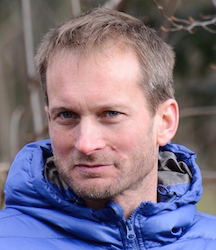
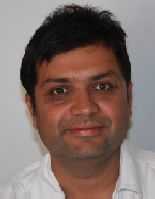
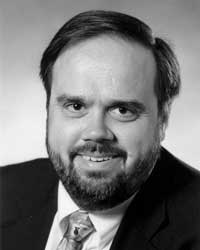
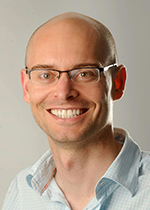
Pascal Frossard is a Full Professor at the Department of Electrical Engineering in the School of Engineering (STI) at EPFL, with a courtesy appointment in the School of Computer and Communication Sciences. He founded and directs the LTS4 laboratory since 2003, co-leads the EPFL AI Center and Swiss Data Science Center, and serves as Associate Dean for Research at STI. Research Focus: Machine Learning, Graph Signal Processing, AI Applications in Healthcare, Computer Vision Academic Leadership: IEEE Fellow, ELLIS Fellow, Conference Chair roles Key Projects: Digital Pathology for Oncology, Cardiac Digital Twins, Robust Machine Learning Research Interests: His work bridges signal processing, machine learning, and applied mathematics, emphasizing biomedical applications. Recent research includes adversarial robustness in classifiers, network representation learning, and 360-degree video analysis. Scientific Awards: IEEE Fellow ELLIS Fellow Leadership in IEEE technical committees Advising & Grants: Supervised 20+ PhD students and postdocs. Secured major grants from PHRT, Hasler Foundation, FNS-Sinergia, Armasuisse, Google, and Cisco.
Dr. Jimeng Sun is a Health Innovation Professor at the Siebel School of Computing and Data Science and Carle Illinois College of Medicine at the University of Illinois Urbana-Champaign. Co-founder of Keiji AI , he leads groundbreaking research at the intersection of artificial intelligence and healthcare, actively deploying clinical AI systems and developing frameworks like PyHealth and Therapeutics Data Commons . His research spans four major areas: Clinical AI Systems : Developing interpretable models (e.g., RETAIN) for patient similarity, temporal event prediction, medication recommendation, and clinical outcome forecasting Drug Discovery : Creating molecular optimization frameworks, drug-target interaction models, and AI-driven platforms Clinical Trials : Pioneering patient-trial matching, outcome prediction, and optimization frameworks using deep learning and graph neural networks Biosignal Analysis : Advancing sleep staging, seizure classification, and automated EEG/Cardiac monitoring systems With over 500 top-tier publications (including in Nature , NEJM AI , and leading AI conferences) and an h-index of 99, his work has been recognized with the Top 100 AI Leaders in Drug Discovery and Advanced Healthcare award. He maintains active collaborations with institutions like Massachusetts General Hospital , Medidata Solutions , and OSF Healthcare . His recent publications reveal a strong focus on: Reinforcement learning applications in medical data analysis Large language model adaptation for clinical tasks Knowledge graph integration with AI systems Synthetic data generation for healthcare Multi-modal learning in clinical contexts Explainable AI for medical applications Dr. Sun's lab ( Sunlab ) emphasizes practical impact over theoretical work, actively collaborating with hospitals and healthtech companies. He welcomes contributions from clinicians, researchers, and industry partners through initiatives like his AI for Health webinar series .
Suhas Diggavi is a Professor in the Department of Electrical and Computer Engineering at the University of California, Los Angeles, within the Henry Samueli School of Engineering and Applied Science. His primary research area is Signals and Systems, with a strong focus on information theory and its interdisciplinary applications. His research interests span Information Theory , Machine Learning , Differential Privacy , Federated Learning , Cyber-Physical Systems , and Bio-informatics . He investigates fundamental limits and practical algorithms for secure, efficient, and robust data processing in distributed and networked environments. The recent publications highlight a strong trend in privacy-preserving machine learning, particularly in the shuffled model of differential privacy , communication-efficient distributed SGD , and robust optimization . His work bridges theoretical information-theoretic foundations with real-world applications in federated learning, wireless networks, and genomic data analysis. Notable scientific awards include: Guggenheim Foundation Fellow (2021) ACM CCS Best Paper Award (2021) IEEE Fellow (2013) IEEE Donald G. Fink Prize Paper Award (2006) Multiple Google, Amazon, and Facebook Research Awards Suhas Diggavi actively advises graduate students and leads a research group focused on learning, information, and optimization. His work is supported by major industry grants and collaborations, particularly in privacy and distributed learning. He has made significant contributions to information-theoretic models in bio-sequencing and wireless security. He leads the LIOS (Learning, Information, Optimization, and Stochastic Systems) research group at UCLA, where his team develops theoretical frameworks and practical algorithms for next-generation data-driven systems.
Martin T. Wells is the Charles A. Alexander Professor of Statistical Sciences at Cornell University, with joint appointments in the Department of Statistical Science, Department of Biological Statistics and Computational Biology, Department of Social Statistics, and as Professor of Clinical Epidemiology and Health Services Research at Weill Medical School. He serves as Editor-in-Chief of the ASA-SIAM Book Series and Co-Editor of the Journal of Empirical Legal Studies. Cornell University, Ithaca, NY Weill Cornell Medical College Research Interests span applied and theoretical statistics, Bayesian methods, biostatistics, clinical epidemiology, and computational biology. His work bridges disciplines like finance, legal studies, and health services research. Article Trends highlight advancements in Bayesian modeling, quantum cognition machine learning, tensor analysis, and misclassification correction, with applications in genomics, finance, and public health. Fellow of the American Statistical Association Fellow of the Royal Statistical Society Contributions include developing statistical software (e.g., rTensor), methodological innovations in clinical trials, and empirical legal studies on civil rights and the death penalty.
Pierre Vandergheynst is a Full Professor at the Swiss Federal Institute of Technology Lausanne (EPFL) in the Department of Electrical Engineering, with a courtesy appointment in Computer and Communication Sciences. He serves as EPFL’s Vice-Provost for Education since 2015 and leads the Signal Processing Laboratory 2 (LTS2). His research spans harmonic analysis, sparse approximations, mathematical data processing, and applications in signal/image processing, computer vision, machine learning, and graph-based data analysis. PhD in Mathematical Physics (1998), Université catholique de Louvain Postdoctoral Researcher at EPFL (1998-2001) Assistant Professor at EPFL (2002-2007) His research explores geometry/symmetry in high-dimensional data, redundant dictionaries for dimensionality reduction, and computational harmonic analysis on manifolds. Recent work focuses on protein structure modeling, geometric deep learning, and graph-based signal processing. Key article trends include graph neural networks for protein analysis, geometric deep learning in neuroscience, and structured knowledge priors in neural models. His 2023-2025 publications emphasize interpretable AI, long-range dependencies in graphs, and molecular representation learning. Scientific Awards: IEEE Signal Processing Magazine Best Paper Award (2023) Signal Processing Society Best Paper Award (2022) Apple ARTS Award (2007) De Boelpaepe Prize, Royal Academy of Sciences of Belgium (2009-2010) He has supervised over 30 PhD theses and contributed to foundational work in graph signal processing, compressive sensing, and geometric deep learning. His lab develops tools for data science on non-Euclidean structures, with applications in medicine, astronomy, and wireless systems.
Pieter Abbeel is a Professor in the Department of Electrical Engineering and Computer Sciences (EECS) at the University of California, Berkeley. He leads the Berkeley Robot Learning Lab and co-directs the Berkeley Artificial Intelligence Research (BAIR) Lab. His work focuses on advancing AI and robotics through deep reinforcement learning, imitation learning, and unsupervised learning, with applications in automation, healthcare, and education. Abbeel's research also explores the societal implications of AI and its potential to revolutionize other scientific and engineering fields. Education: Ph.D. in Computer Science, Stanford University (2008) M.S. in Electrical Engineering, KU Leuven, Belgium (2000) Research Interests: Robotics, AI, Machine Learning, Reinforcement Learning, Autonomous Systems, and Applications in Surgery, Manufacturing, and Education. Recent Article Trends: Focus on multimodal learning, robot manipulation, protein structure prediction, and scalable AI systems. Key areas include sim-to-real transfer, embodied AI, and foundation models for decision-making. Awards & Honors: IEEE Kiyo Tomiyasu Award (2022) ACM Prize in Computing (2021) IEEE Fellow (2018) MIT Tech Review TR35 (2011) Advising & Grants: Advises startups and has received grants from NSF, DARPA, and industry partnerships. Notable students include those advancing robotics, reinforcement learning, and bioAI. Labs & Initiatives: Berkeley Robot Learning Lab, BAIR Lab, and collaborations with the Center for Human-Compatible AI (CHAI). Founded companies include Gradescope, Covariant, and Berkeley Open Arms.
Gail E. Kaiser is a Professor of Computer Science and the Director of the Programming Systems Laboratory (PSL) in the Computer Science Department at Columbia University. She has been with Columbia University since 1985, becoming a full Professor in 1998. Prof. Kaiser's research spans software engineering, program analysis, software testing, and software security, with recent focus on addressing challenges in AI/ML systems testing and security. Prof. Kaiser received her PhD in Computer Science from Carnegie Mellon University in 1985 and her ScB in Computer Science and Engineering from MIT in 1979. Her dissertation at CMU was titled "Semantics for Structure Editing Environments" under advisor Nico Habermann, and at MIT she completed "Automatic Extension of an Augmented Transition Network Grammar for Morse Code Conversations" under advisor Al Vezza. Prof. Kaiser's research interests primarily focus on software engineering following a systems building approach, with recent emphasis on static and dynamic program analysis techniques to improve software reliability and security. Since 2005, she has investigated testing "non-testable" programs, particularly in machine learning, data mining, and scientific computing applications where traditional testing oracles are insufficient. She has developed novel techniques and tools for detecting bugs and verifying repairs in complex systems. Concurrently, she has worked on collaboration environments for computational scientists, creating knowledge sharing and domain-aware environments to support scientific workflows. Prof. Kaiser's recent publications demonstrate a strong focus on the intersection of software engineering and artificial intelligence. Her work addresses critical challenges in testing AI systems, code understanding through deep learning, vulnerability detection, and educational tools for computational thinking. There's a clear evolution from traditional software engineering topics toward AI/ML applications, with particular emphasis on metamorphic testing for non-testable systems, code similarity analysis, and educational applications. Prof. Kaiser has received numerous prestigious awards throughout her career: Distinguished Journal Award (10 Years) from 18th IEEE International Conference on Software Testing, Verification and Validation (ICST), April 2025 Best Research Paper Award at 24th IEEE International Conference on Source Code Analysis & Manipulation (SCAM), October 2024 Distinguished Reviewer Awards for ASE 2024 and FSE 2024 ACM SIGSOFT Distinguished Paper Award for "CONCORD: Clone-aware Contrastive Learning for Source Code", July 2023 Best Student Paper Award at ICCE 2021 Multiple ACM SIGSOFT Distinguished Paper Awards dating back to 2014 Presidential Young Investigator in Software Engineering and Software Systems from NSF (1988-1993) Prof. Kaiser has chaired Columbia's doctoral program since 1997 and served on editorial boards including IEEE Internet Computing and as a founding associate editor of ACM Transactions on Software Engineering and Methodology. Her lab has been continuously funded by major agencies including NSF, NIH, DARPA, ONR, NASA, and numerous companies. Current grants include significant NSF funding for secure containers architecture, learning semantics of code for software assurance, and finding semantic security bugs. As Director of the Programming Systems Laboratory (PSL), Prof. Kaiser leads research in software systems, program analysis, and software testing. The lab has developed numerous tools and techniques for software reliability and security, with recent focus on challenges in AI/ML systems. Her work bridges theoretical foundations with practical applications, often resulting in deployable tools that address real-world software engineering challenges.
Emmanuel J. Candès is the Barnum-Simons Chair in Mathematics and Statistics at Stanford University, with joint appointments in the Institute of Computational and Mathematical Engineering and as Professor of Statistics and Electrical Engineering (by courtesy). His research spans mathematical signal processing , high-dimensional statistics , and data science , focusing on compressive sensing, inverse problems, and applications to imaging sciences. 2021 IEEE Jack S. Kilby Signal Processing Medal 2020 Princess of Asturias Award for Technical and Scientific Research 2017 MacArthur Fellow His recent work on conformal prediction and uncertainty quantification has advanced machine learning reliability, particularly in high-dimensional settings. Publications include breakthroughs in medical imaging, gravitational wave detection, and AI validation frameworks. Key collaborations include Terence Tao (UCLA) and Justin Romberg (Georgia Tech) for IEEE Kilby Medal recognition. He serves as Co-chair of Stanford's Data Science Institute and previously as Statistics Department Chair (2016–2019).
Harri Lähdesmäki is an Associate Professor (tenured) at the Department of Computer Science, Aalto University, where he leads the Computational Systems Biology research group. His work focuses on probabilistic machine learning and deep generative models with applications in biomedicine and molecular biology. Key Research Interests: Probabilistic machine learning, deep generative models, computational biology, bioinformatics, longitudinal data modeling Contact: harri.lahdesmaki@aalto.fi | Konemiehentie 2, 02150 Espoo, Finland His recent publications highlight advancements in: Gaussian process priors for scalable deep generative models Single-cell analysis of immune repertoires in leukemia and diabetes Probabilistic deconvolution methods for RNA-seq data Epigenetic analysis using hidden Markov and mixed models Transformer-based survival prediction and missing data handling Harri’s work integrates mechanistic modeling with Bayesian inference, particularly applied to immunology, cancer biology, and early disease prediction.
Volodymyr Kuleshov is an Assistant Professor at Cornell Tech and Cornell University's Department of Computer Science. His research focuses on machine learning, particularly generative models, probabilistic methods, and applications in health and sustainability. He co-founded Afresh, an AI startup reducing food waste, and has commercialized genome sequencing work via Moleculo (now part of Illumina). Kuleshov earned his PhD from Stanford University, advised by prominent figures like Stefano Ermon and Serafim Batzoglou. He teaches courses like CS 5785 (Applied Machine Learning) and CS 6785 (Advanced Topics in Machine Learning). His awards include the NSF CAREER Award and Arthur Samuel Best Thesis Award. Education: PhD in Computer Science from Stanford University (2018), advised by Stefano Ermon, Serafim Batzoglou, Michael Snyder, Christopher Re, and Percy Liang. Research Interests: Core ML (generative models, approximate inference), health tech (genome sequencing, clinical decision support), sustainability (AI-driven food waste reduction). Notable projects include Caduceus for DNA sequence modeling and Diffusion Duality theory. Awards: Google Research Scholar Award (2025), Outstanding Paper Award (EMNLP 2023), NIH MIRA Award (2023). Students/Advising: Over 20 advisees across PhD, Master’s, and undergraduate programs, including Edgar Marroquin (PhD) and Charlie Marx (Stanford). Alumni include Allan Bishop (Bloomberg) and Yong Huang (UCI PhD). Labs/Teams: Leads research groups at Cornell Tech focusing on generative AI and its real-world applications. Collaborates with institutions like MILA (Montreal) and DeepMind.
Dr. Amin Sakzad is an Associate Professor in the Department of Software Systems & Cybersecurity at Monash University's Faculty of Information Technology. His research focuses on lattice-based cryptography, wireless communications, and post-quantum security protocols. He holds a PhD in Applied Mathematics from Amirkabir University of Technology (2011) and has held academic roles at Carleton University and Monash since 2012. Dr. Sakzad’s expertise spans lattice coding theory, MIMO systems, and privacy-preserving technologies for genomic databases and blockchain applications. He leads multiple ARC-funded projects, including work on secure databases (SRDBMS) and post-quantum cryptographic primitives for FinTech and energy sectors. His research has been recognized through awards such as the FIT Dean’s Award for Teaching Excellence (2021). Key collaborations include projects on blockchain security (CollinStar Lab), genomic data privacy, and energy market cybersecurity. His work addresses UN SDGs through contributions to quality education (SDG 4) and industry innovation (SDG 9). Recent publications highlight advancements in lattice-based cryptography (e.g., CRYSTALS-Kyber variants), privacy-preserving energy trading, and secure blockchain protocols like FPPW watchtower systems. His research bridges theoretical cryptography with practical implementations in embedded systems and 5G telecommunications. Grants: 16 active/completed projects including $1.2M in ARC funding Advising: Supervising PhD projects on lattice applications in post-quantum crypto and blockchain Labs: Core member of Monash’s Software Defined Telecommunications (SDT) Lab and CollinStar Lab
Pengtao Xie is an Associate Professor (with tenure as of June 2025) in the Department of Electrical and Computer Engineering at the University of California San Diego. He also serves as Associate Adjunct Professor in the Division of Biomedical Informatics, Department of Medicine, and holds affiliate appointments with the Halıcıoğlu Data Science Institute, School of Biological Sciences, Shu Chien-Gene Lay Department of Bioengineering, Skaggs School of Pharmacy and Pharmaceutical Sciences, and multiple research institutes including the AI Group, Center for Machine-Intelligence, Computing and Security, Institute of Engineering in Medicine, and Institute for Genomic Medicine. Education: PhD in Machine Learning, School of Computer Science, Carnegie Mellon University Research Interests: His research focuses on machine learning inspired by human learning skills, such as self-explanation, small-group learning, and learning by teaching. He applies these techniques to large language models, foundation models, healthcare, and biomedicine. His work spans generative AI, medical imaging, protein modeling, and drug discovery. Recent Research Trends: His 2024–2025 publications emphasize generative AI for ultra-low-data medical image segmentation, multimodal large language models for biomedical applications, protein function prediction, and novel training strategies like task-adaptive pretraining and bi-level optimization for model adaptation. Scientific Awards: NIH MIRA Award (2025) NSF CAREER Award (2024) Best Graduate Teacher Award – UCSD ECE (2023) ICLR Notable-Top-5% Paper (2023) Global Top-100 Chinese Young Scholars in AI (2022) UCSD Faculty Career Development Award (2022) Tencent Faculty Award (2021) Outstanding Reviewer – ICLR (2021) AMIA Doctoral Dissertation Award Finalist (2020) Amazon AWS Research Award (2020) Tencent AI-Lab Faculty Award (2020) Innovator Award – Pittsburgh Business Times (2018) Siebel Scholarship (2014) Advising and Grants: He currently advises PhD students, postdocs, and master’s students. He has received major grants including the NIH MIRA and NSF CAREER awards, and actively mentors Schmidt AI in Science postdocs and graduate students. Teaching and Labs: He teaches ECE285 Deep Generative Models and ECE175B Probabilistic Reasoning and Graphical Models . His lab focuses on foundational and translational AI research with applications in biomedicine and healthcare.
Ozcan Ozturk is a Professor in the Computer Science and Engineering and Electronics Engineering programs at Sabancı University's Faculty of Engineering and Natural Sciences. Previously, he held professorships at Bilkent University and adjunct roles at North Carolina State University. His expertise spans heterogeneous computing, parallel systems, processor architecture, and compiler optimization. He earned his Ph.D. from Penn State University, with prior academic roles at the University of Florida and internships at Intel and Marvell. Education: Ph.D. in Computer Science and Engineering (2007), Pennsylvania State University M.S. in Computer Engineering (2002), University of Florida B.Sc. in Computer Engineering (2000), Bogazici University Research interests include accelerator technologies, GPU-based systems, multicore processors, and compiler optimizations. His work focuses on improving parallelization efficiency, energy optimization, and reliability in heterogeneous architectures. He leads funded projects like 'Machine Learning for Compiler Flags' and 'Graph Accelerator Design'. Notable awards include the Bilkent Teaching Award (2019), BAGEP (2018), and HiPEAC Paper Award (2016). He serves on editorial boards of IEEE and ACM journals and chairs major conferences like ASPLOS and ICS. Grants and collaborations include partnerships with Huawei, Intel, NVIDIA, and TÜBİTAK. He advises over 20 students and has supervised projects in safety-critical systems, FPGA accelerators, and compiler-directed optimizations. His lab develops domain-specific architectures, including RISC-V extensions for graph processing.
Andrea Montanari is a Professor of Mathematics and Statistics at Stanford University, affiliated with the Department of Mathematics and Statistics. His research focuses on high-dimensional statistics, machine learning theory, optimization algorithms, and statistical physics, with applications to neural networks and complex systems. He has contributed extensively to understanding generalization in overparametrized models, spin glass theory, and algorithmic methods like approximate message passing. His work bridges theoretical computer science and mathematical physics, addressing challenges in data analysis and learning from high-dimensional datasets. Notable themes include analyzing neural network dynamics, optimizing high-dimensional landscapes, and developing efficient algorithms for sparse and low-rank matrix estimation. Montanari’s publications explore topics such as the interplay between statistical and computational limits, the behavior of gradient-based methods, and the theoretical foundations of modern machine learning. His recent research demonstrates a focus on fundamental questions in learning theory, including the study of phase transitions in statistical estimation, the role of overparametrization in generalization, and the mathematical underpinnings of contemporary algorithms. While no specific awards are listed here, his contributions reflect significant impact in interdisciplinary fields.
Ameet Talwalkar is an Associate Professor in the Machine Learning Department at Carnegie Mellon University and Chief Scientist at Datadog. He holds a PhD from the Courant Institute at NYU (2010) where he received the Janet Fabri Prize for Best Thesis. His professional achievements include co-founding Determined AI (acquired by HPE), creating MLlib in Apache Spark, co-authoring the textbook 'Foundations of Machine Learning,' and spearheading the MLSys conference. Talwalkar's research focuses on fundamental challenges in machine learning systems, including distributed ML, federated learning, neural architecture search, and human-AI interaction. His work bridges theoretical foundations with practical applications across domains like computational biology, PDE solving, and code generation. Current interests include AI for science, specialized model development, and agent-based systems. His publications demonstrate strong focus on ML systems optimization, foundation model evaluation, and interpretable AI. Recent works investigate specialized foundation models, PDE-solving frameworks, code generation tools, and human-AI interaction paradigms. The research consistently targets efficiency, scalability, and practical deployment challenges. Best Paper Award at EAAMO 2023 Best Student Paper at NYAS ML Symposium 2009 Runner-up for Best Real-world Application at Socal ML Symposium 2017 Janet Fabri Prize for Best PhD Thesis (2010) Talwalkar leads the CMU MLSys Lab focused on scalable ML systems and has served as Board President for the MLSys conference series. His educational contributions include developing courses like 'Machine Learning with Large Datasets' and creating the LEAF benchmark for federated learning and NAS-Bench-360 for neural architecture search.