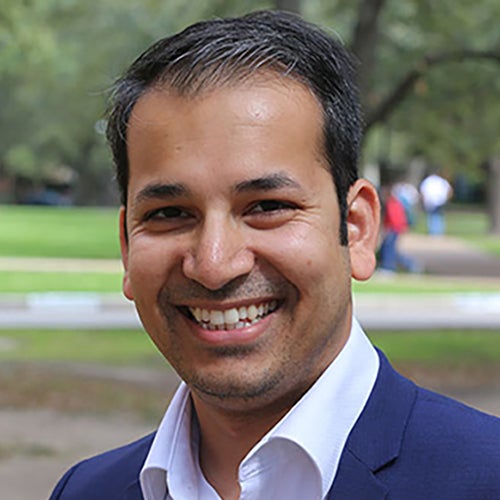
Ameet Talwalkar is an Associate Professor in the Machine Learning Department at Carnegie Mellon University and Chief Scientist at Datadog. He holds a PhD from the Courant Institute at NYU (2010) where he received the Janet Fabri Prize for Best Thesis. His professional achievements include co-founding Determined AI (acquired by HPE), creating MLlib in Apache Spark, co-authoring the textbook 'Foundations of Machine Learning,' and spearheading the MLSys conference. Talwalkar's research focuses on fundamental challenges in machine learning systems, including distributed ML, federated learning, neural architecture search, and human-AI interaction. His work bridges theoretical foundations with practical applications across domains like computational biology, PDE solving, and code generation. Current interests include AI for science, specialized model development, and agent-based systems. His publications demonstrate strong focus on ML systems optimization, foundation model evaluation, and interpretable AI. Recent works investigate specialized foundation models, PDE-solving frameworks, code generation tools, and human-AI interaction paradigms. The research consistently targets efficiency, scalability, and practical deployment challenges. Best Paper Award at EAAMO 2023 Best Student Paper at NYAS ML Symposium 2009 Runner-up for Best Real-world Application at Socal ML Symposium 2017 Janet Fabri Prize for Best PhD Thesis (2010) Talwalkar leads the CMU MLSys Lab focused on scalable ML systems and has served as Board President for the MLSys conference series. His educational contributions include developing courses like 'Machine Learning with Large Datasets' and creating the LEAF benchmark for federated learning and NAS-Bench-360 for neural architecture search.
Kenneth Ross is a Professor in the Computer Science Department at Columbia University in New York City. His primary appointment is within the Department of Computer Science, with affiliations including the Foundations of Data Science Committee. His work bridges theoretical database research and practical system implementation. His research focuses on database systems with particular expertise in query processing, query language design, data warehousing, and architecture-sensitive database system design. Additional research spans computational biology, especially analysis of large genomic data sets. Current projects include Linear Algebra Operators in Databases for machine learning workloads and Repeats and Somatic Mutation analysis in genomics. His work consistently addresses the intersection of hardware capabilities and database system design. Ross leads the Database Research Lab at Columbia, which has produced significant work on query optimization, GPU database processing, and hardware-conscious database systems. His recent publications demonstrate strong focus on adapting database systems to modern hardware including GPUs, SIMD processors, and persistent memory. His scientific recognition includes: Packard Foundation Fellowship Sloan Foundation Fellowship NSF Young Investigator Award Distinguished Faculty Teaching Award (2008) Ross actively advises undergraduate engineering students (juniors with last names P-Z) and has taught foundational courses including Introduction to Databases and Programming and Problem Solving for over two decades. His teaching portfolio shows consistent engagement with both theoretical concepts and practical implementation challenges in computer science education.
Helen Xu is an Assistant Professor at Georgia Tech's School of Computational Science and Engineering (College of Computing). She holds a Ph.D. from MIT (2022) under Charles E. Leiserson and was a Grace Hopper Postdoctoral Fellow at Lawrence Berkeley National Lab (2022). Her research focuses on parallel algorithms, cache-efficient data structures, and high-performance computing. Xu has interned at Microsoft Research, NVIDIA Research, and Sandia National Laboratories, and her work has been supported by prestigious fellowships including the National Physical Sciences Consortium and Chateaubriand awards. **Education**: Ph.D., Computer Science, MIT, 2022 Postdoctoral Research, Lawrence Berkeley National Lab (2022) **Research Interests**: Parallel and cache-friendly algorithms Dynamic graph and data structure optimization Algorithm performance engineering Sparse matrix/tensor operations **Awards**: Grace Hopper Postdoctoral Scholar (2022), Best Artifact Award (PPoPP 2024), National Physical Sciences Consortium Fellowship, Chateaubriand Fellowship. **Advising & Teaching**: Advises PhD/M.S. students in parallel computing and high-performance systems. Teaches courses like CSE 6220 (Introduction to HPC) and CSE 6230 (HPC Tools). Supervised MIT M.Eng. projects on BP-Trees and parallel prefix sums. **Labs/Teams**: Active in Georgia Tech's High-Performance Computing community, collaborating with researchers like Aydın Buluç and Prashant Pandey on graph containers and dynamic data structures.
Mohammed Aledhari is an Assistant Professor at the University of North Texas, specializing in cybersecurity, machine learning, and data science. His research focuses on applications in computational medicine, bioinformatics, and autonomous systems. He holds a Ph.D. from Western Michigan University and degrees from the University of Basrah and the University of Anbar. His research interests include social cybersecurity techniques, federated learning in IoT, and AI-driven solutions for healthcare and transportation. Recent work explores blockchain-enabled digital twins, DDoS attack detection, and equitable ASD diagnostics using machine learning. His publications span cybersecurity frameworks, autonomous vehicle communication protocols, and biomedical IoT innovations. Notable contributions include optimizing intrusion detection in IoMT networks and developing interpretable machine learning models for healthcare. While no formal awards or grants are listed, his work emphasizes interdisciplinary applications of AI in healthcare, transportation, and energy markets. His email is Mohammed.Aledhari@unt.edu .
Michela Becchi is an Associate Professor in the Department of Electrical and Computer Engineering at North Carolina State University. She specializes in computer architecture, systems software, and applications, with a focus on heterogeneous systems, parallel algorithms, and acceleration techniques for bioinformatics, pattern recognition, and quantum computing. Her work spans multi-core CPUs, GPUs, FPGAs, and distributed clusters, emphasizing the boundary between hardware and software design. Dr. Becchi holds a Ph.D. and Master’s degree in Computer Engineering from Washington University in St. Louis (2009) and a Bachelor’s degree in Computer Engineering from Politecnico di Milano, Italy (2000). Her research has been recognized with prestigious awards, including the NSF CAREER Award (2015) and the University of Missouri System President Award for Early Career Excellence (2016). Her research interests include compiler and runtime techniques for heterogeneous systems, acceleration of bioinformatics algorithms, and high-speed networking applications. She has pioneered frameworks for efficient data transformation, GPU-accelerated compression, and memory-efficient graph algorithms for quantum computing. Her work also explores thread coarsening, mixed-precision auto-tuning, and secure multi-core processor design. Key contributions include the PILOT runtime system for GPU memory management, the GPU-FPtuner auto-tuner for floating-point applications, and innovative approaches to automata processors for genomic analysis. Her publications emphasize reproducible accuracy in scientific simulations and the optimization of irregular applications on many-core platforms.
Salim El Rouayheb is an Associate Professor in the Department of Electrical and Computer Engineering at Rutgers University. He leads the Coding and Securing Information (CSI) Lab, which focuses on information-theoretic security and privacy in distributed systems. His research spans multiple areas including secure machine learning, private information retrieval, and data synchronization. Dr. El Rouayheb received his Ph.D. in Electrical Engineering from Texas A&M University in 2009. Prior to joining Rutgers, he was an Assistant Professor at the Illinois Institute of Technology (2013-2017), a Research Scholar at Princeton University (2012-2013), and a Postdoctoral Researcher at UC Berkeley (2010-2011). His research interests focus on information-theoretic security in distributed systems, private information retrieval and search, secure machine learning algorithms, and data synchronization in distributed systems. He has made significant contributions to developing frameworks that provide information-theoretic privacy guarantees in various contexts including federated learning, genomic data analysis, and decentralized networks. His work often bridges theoretical foundations with practical applications, particularly in the areas of secure distributed computing and privacy-preserving algorithms. His recent publications demonstrate a strong trend toward applying information-theoretic principles to address privacy and security challenges in machine learning systems, particularly in federated and decentralized settings. Many of his papers explore random walk approaches for decentralized learning, secure matrix multiplication techniques, and privacy mechanisms that can be toggled "on and off" based on correlation patterns in data. His work spans both theoretical contributions in information theory and practical implementations for real-world systems. Dr. El Rouayheb has received several prestigious awards including the NSF CAREER Award (2016), Google Faculty Research Award (2018), and the Rutgers University Walter Tyson Junior Faculty Chair (2019). He has successfully secured multiple research grants including NSF SaTC, NSF CAREER, Google Faculty Research Awards, and Army Research Lab funding. His lab, the Coding and Securing Information (CSI) Lab, currently includes postdoc Xingran Chen, PhD student Zonghong Liu, and undergraduate researchers. The CSI Lab maintains an active research agenda with regular publications in top-tier venues and hosts the Shannon Channel, a series of online talks related to information theory. Dr. El Rouayheb is also involved in organizing workshops on coding theory and information security.
Anshumali Shrivastava is an Associate Professor of Computer Science, Electrical and Computer Engineering, and Statistics at Rice University, affiliated with the George R. Brown School of Engineering. His research focuses on large-scale machine learning, randomized algorithms for big data, and graph mining. He holds a PhD from Cornell University (2015) and an MSc from the Indian Institute of Technology Kharagpur (2008). His research interests span scalable deep learning, efficient neural network inference, and probabilistic algorithms. He has pioneered techniques in compressed learning, hashing-based search, and distributed optimization for handling massive datasets. Notable contributions include methods for accelerating LLM inference, memory-efficient quantization, and graph processing algorithms. Teaching: Probabilistic Algorithms, Large-Scale ML, and Machine Learning Seminars Awards: Charles W. Duncan Jr. Achievement Award (2023), Young Faculty Research Award (2021), NSF CAREER Award (2017), and multiple best paper awards His work bridges algorithm design with practical applications in recommendation systems, genomics, and edge computing. Current efforts focus on sustainable AI, hardware-aware compression, and efficient training/inference pipelines for large models.
Ji Hwan Park is an Assistant Professor in the School of Interactive Games and Media at RIT's Golisano College of Computing and Information Sciences (GCCIS). He holds a PhD from Stony Brook University under Prof. Arie Kaufman. His research focuses on accessible data visualization, digital twins, human-AI collaboration, and VR/AR applications. Notable contributions include developing tools for ADHD-friendly visualizations and interactive protein motif identification. He has received funding from the Department of Defense for biomedical research and earned an Honorable Mention at CHI 2024. Current teaching includes courses on game design and advanced algorithms. Research activities span medical imaging analytics (e.g., CMed framework for crowd-sourced diagnostics), climate modeling through Bayesian deep learning, and creative visualization techniques like Graphoto. His work bridges technical innovation with human-centered design principles, particularly in healthcare and neurodivergent accessibility contexts.
Jian Peng is an Assistant Professor in the Department of Computer Science at the University of Illinois at Urbana-Champaign. His research focuses on computational biology, machine learning, and their applications to protein structure prediction, drug design, and molecular modeling. He has contributed to advancements in antibody engineering, protein-ligand docking, and generative models for biological systems. Key research areas include: Machine Learning for Molecular Modeling Protein Structure Prediction Antibody and Peptide Design Genomics and Single-Cell Analysis Structure-Based Drug Discovery His work emphasizes integrating deep learning techniques with biological datasets to address challenges in precision medicine, drug development, and systems biology. Notable achievements include developing the FastFold system to accelerate AlphaFold training and pioneering flow-based methods for antibody design. Awards include the Overton Prize (2020), recognizing contributions to computational biology. His research has been published in top journals and conferences, spanning topics from protein mutation prediction to geodesic-based immune complex modeling.
David Blaauw is the Kensall D. Wise Collegiate Professor of Electrical Engineering and Computer Science (EECS) at the University of Michigan. His research focuses on ultra-low-power analog/mixed-signal circuits, mm-scale sensors, neural networks, and biomedical applications. He leads the Blaauw Lab, which has pioneered innovations like the Michigan Micro Mote (M^3) and neural recording probes. His work emphasizes real-world deployability, with applications in environmental monitoring (e.g., monarch butterflies), medical devices, and robotics. Education: B.S. in Physics and Computer Science, Duke University (1986) Ph.D. in Computer Science, University of Illinois Urbana-Champaign (1991) Research Interests: Blaauw’s lab explores ultra-low-power computing, mm-scale systems, RF communication, in-memory computing, and genomics acceleration. Key projects include: Millimeter-scale computers (e.g., 0.04mm³ temperature sensors) Wireless neural interfaces for brain-machine communication Energy-efficient accelerators for edge AI and genomics Micro-robotics with sensing/actuation/computation Awards: IEEE Fellow 2016 SIA-SRC Faculty Award Motorola Innovation Award Best Paper Awards at ISSCC, ISCA, and RFIC Advising & Impact: Over 600 publications, 65 patents, and 4 startup companies spun from his lab. Current research includes genome sequencing accelerators (GenAx) and neural recording dust for brain mapping. He directs the Michigan Integrated Circuits Lab and chairs major conferences like ISSCC and DAC. Labs/Teams: Blaauw Lab (University of Michigan) Michigan Integrated Circuits Lab (MICAL)
Melissa C. Smith is a Professor of Electrical and Computer Engineering and Associate Dean for Graduate Studies at Clemson University. She holds a Ph.D. from the University of Tennessee and degrees from Florida State University. Her research focuses on machine learning, reconfigurable computing, and high-performance systems, with applications in embedded systems and interdisciplinary scientific advancements. Before joining Clemson in 2006, she was a research associate at Oak Ridge National Laboratory (ORNL), contributing to projects like the Spallation Neutron Source and PHENIX experiments. Education: Ph.D., Electrical and Computer Engineering, University of Tennessee M.S., Electrical Engineering, Florida State University B.S., Electrical Engineering, Florida State University Research Interests: Machine Learning and AI High-Performance and Reconfigurable Computing System Performance Modeling Embedded Systems Articles Summary: Her recent work spans machine learning applications, GPU/FPGA architectures, speech enhancement, and medical systems. Key themes include optimizing heterogeneous computing for real-time and scientific workloads, and advancing interdisciplinary solutions through architecture-application co-design. Lab & Collaborations: Leads the Future Computing Technologies Lab and collaborates with ORNL and national labs on projects like GEMmaker and HPC-enabled medical systems.
Kunihiko Kaneko is a Professor at the Niels Bohr Institute, University of Copenhagen, with a distinguished career in theoretical biophysics and complex systems. He received his PhD and MSc in Physics from the University of Tokyo, and has held leadership roles at the Universal Biology Institute and Center for Complex Systems Biology. PhD Physics, 1984 - University of Tokyo MSc Physics, 1981 - University of Tokyo His research spans five primary areas: Universal Biology, Evolutionary Constraints, Ecosystem Dynamics, Neural Cognition, and Universal Anthropology. He has published extensively on multi-level consistency principles, dimensional reduction in biological systems, and reciprocity between robustness and plasticity across scales. Recent publications show strong focus on microbial ecosystems (2025), evolutionary game theory (2025), neural modular architectures (2024), and dimensional reduction in cellular systems (2024). His work bridges physics and biology through dynamical systems theory applied to diverse phenomena from protocells to human societies.
Bonnie Berger is the Simons Professor of Mathematics at the Massachusetts Institute of Technology and head of the Computation and Biology group at MIT's Computer Science and AI Lab. She holds additional appointments as an Associate Member of the Broad Institute, Faculty member of Harvard/MIT Health Science & Technology, and Affiliated Faculty of Harvard Medical School. Her career has been dedicated to pioneering computational approaches in molecular biology, where she has been instrumental in defining the field. Professor Berger's research focuses on designing algorithms to extract biological insights from large-scale data sets. Her work spans Compressive Genomics, Network Inference, Structural Bioinformatics, Genomic Privacy, and Medical Genomics. She actively collaborates with experimental biologists to maximize the power of computation for biological discovery, developing methods that address the challenges of modern high-throughput biological data. Her recent publications demonstrate a strong trend toward integrating machine learning with structural biology and genomic privacy. The articles show increasing sophistication in using deep learning for protein structure prediction, developing privacy-preserving techniques for genomic data sharing, and creating efficient algorithms for massive biological data sets. Her work bridges theoretical computer science with practical biological applications. Professor Berger's scientific recognition includes: Election to the National Academy of Sciences (2021) ISCB Accomplishments by a Senior Scientist Award SIAM Sonya Kovalevsky Lecture Prize Fellowships in ACM, ISCB, AMS, and other prestigious societies Multiple RECOMB Test of Time Awards NIH Margaret Pittman Director's Award She has mentored numerous students who have gone on to make significant contributions in computational biology, including Ellen Zhong, Yun William Yu, and Hyunghoon Cho. Her lab receives substantial research funding supporting projects in genomic privacy, structural bioinformatics, and compressive algorithms for biological data. Professor Berger serves on the Executive Editorial Board of the Journal of Computational Biology and multiple other editorial boards. The Computation and Biology group at MIT CSAIL, which she leads, is at the forefront of developing computational methods for biological discovery. The group combines expertise in algorithms, machine learning, and biology to tackle fundamental challenges in genomics and structural biology. They are currently organizing the Machine Learning in Structural Biology workshop at NeurIPS 2025, highlighting their leadership in this rapidly evolving interdisciplinary field.
Professor David Taubman is a distinguished academic serving as Professor and Deputy Head of School (Research) at the School of Electrical Engineering and Telecommunications (EE&T) at the University of New South Wales (UNSW) in Sydney, Australia. He is also co-director of Kakadu Software Pty. Ltd. and its affiliates Kakadu R&D and Kakadu GPU. With a career spanning over three decades, Professor Taubman has made significant contributions to the field of image and video compression, most notably as the author of the EBCOT coding algorithm adopted in the JPEG2000 international standard. Professor Taubman earned his B.Sc. in Mathematics and Computer Science (1986) and B.E. (Medal) in Electrical Engineering (1988) from the University of Sydney, followed by an M.Sc. (1992) and Ph.D. (1994) in Electrical Engineering from the University of California at Berkeley. His professional journey includes engineering work at the Electricity Commission of N.S.W. (1988-1990), research positions at Hewlett-Packard Laboratories in Palo Alto (1994-1998), and an academic career at UNSW where he progressed from Senior Lecturer (1998-2003) to Associate Professor (2004-2009) and finally to Professor (2009-present). He has held various leadership roles including Head of the EE&T Telecommunications Research Group (2003-2014), Head of the EE&T Signal Processing Research Group (2014-present), Director of Research for the School of EE&T (2011-2016), and Deputy Head of School (Research) since 2017. Professor Taubman's research interests center on image and video compression, with particular expertise in JPEG2000 standards and implementations. His work spans signal processing, wavelet transforms, scalable video coding, motion modeling, and multimedia systems. He has pioneered numerous compression algorithms and frameworks, including the EBCOT coding algorithm that became central to the JPEG2000 standard. His recent research focuses on efficient motion modeling with cuboidal partitioning, learned lifting-based transform structures, and high-throughput implementations of JPEG2000 for video applications. His work bridges theoretical foundations with practical implementations, as evidenced by the commercially successful Kakadu Software tools that have garnered around 500 commercial licensees. Analysis of Professor Taubman's recent publications reveals a consistent focus on advancing compression technologies with particular emphasis on scalability, efficiency, and adaptability. His work spans traditional image compression (JPEG2000 extensions), video coding (cuboid-based partitioning for UHD/360-degree video), and emerging applications (nanopore sequencing data compression). A notable trend is the integration of machine learning techniques with traditional compression frameworks, as seen in his work on learned lifting-based transform structures. His research maintains strong connections to real-world applications across diverse domains including medical imaging, astronomical data processing, and genomic sequencing. IEEE Fellow Engineers Australia Fellow (by invitation) Professor Taubman has served as Associate Editor for the IEEE Transactions on Image Processing for two four-year appointments (2003-2005 and 2010-2013). He has been actively involved in numerous research grants focused on image and video compression technologies, particularly those related to the JPEG2000 standard and its extensions. His work has received significant industry support, reflected in his consultancy with various U.S., Japanese, and Australian corporations. He has also contributed to international standards development as a member of Standards Australia Technical Committee MS-065 (mirroring ISO TC42 on Digital Photography) and as a constitutional member of Standards Australia Technical Committee IT-029 (Coded Representation of Picture, Audio and Multimedia/Hypermedia Information). Professor Taubman co-directs Kakadu Software Pty. Ltd. and its research affiliates Kakadu R&D and Kakadu GPU, which have developed the commercially successful Kakadu Software tools for JPEG2000. His research group at UNSW focuses on advanced image and video compression techniques, with particular expertise in wavelet-based methods, scalable coding, and motion modeling. The group maintains strong industry connections and has contributed significantly to the development and standardization of image compression technologies worldwide.
Rob Patro is an Associate Professor in the Department of Computer Science at the University of Maryland, with an appointment at the University of Maryland Institute for Advanced Computer Studies. His work bridges computational biology and computer science, focusing on algorithm design and data structures for genomics applications. Education: Ph.D. in Computer Science, University of Maryland, College Park (2012) B.S. in Computer Science, University of Maryland, College Park (2006) with academic and departmental honors Patro’s research centers on developing computational methods for analyzing high-throughput genomics data, combining algorithmic innovation with statistical inference. His work extends to programming languages, parallel computing, and machine learning applications in biology. His publications at ISMB, RECOMB, and in journals like Nature Methods and Cell Systems highlight advancements in RNA-seq quantification, metagenomic analysis, and compressed genomic representations. These contributions emphasize efficiency and scalability in genomic data processing.