Dr. Leandro Rodrigues Santiago is a Postdoctoral Research Assistant at the Wolfson Institute of Population Health, Queen Mary University of London. He holds a PhD in Bioinformatics and specializes in using advanced computational tools to analyze large genomic datasets. His research focuses on understanding genetic and epigenetic mechanisms underlying aging and cancer, leveraging expertise in data processing, statistics, and systems biology. Research Interests: Genomics, transcriptomics, and epigenomics Bioinformatics applications in cancer research Analyzing genetic mechanisms in aging Prior Work: Santiago has extensively studied population genetics of bees and wasps, including analyses of microsatellite markers, mitochondrial DNA, and hybridization patterns. This work has contributed to understanding biodiversity and conservation strategies for stingless bees and other social insects. Grants & Advising: No specific grants or advisees are listed in the provided information. Labs/Teams: Active within the Wolfson Institute of Population Health, though specific lab affiliations are not detailed.
Sandra Orchard is a Team Leader at EMBL-EBI, specializing in Protein Function Content. Her role involves leading a team responsible for curating the UniProt database and annotating the Gene Ontology. She plays a key role in advancing protein data standards and resources, including the Complex Portal and Enzyme Portal. As a member and Treasurer of the International Society for Biocuration, she actively contributes to biocuration practices and standards. Her research focuses on integrating molecular interaction data, enhancing protein annotation methodologies, and developing tools for exploring protein function. She has co-authored numerous papers on topics such as proteomics, data integration, and the impact of biological data resources. Her work spans collaborations with global initiatives like HUPO and IMEx, emphasizing data sharing and standardization. Sandra's team develops value-added interfaces for protein data exploration and supports training in bioinformatics resources. Her contributions include advancing the Complex Portal for macromolecular complexes and improving the accessibility of molecular interaction data through standardized formats like PSI-MI. She advocates for open science and reproducible research practices.
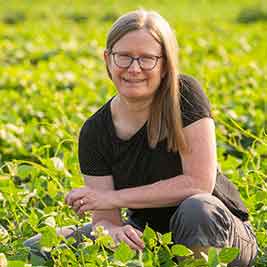
Kirstin Bett is a Professor in the Department of Plant Sciences and Crop Development Centre at the University of Saskatchewan's College of Agriculture and Bioresources. Her research focuses on pulse crop genomics and dry bean breeding, with an emphasis on leveraging wild lentil germplasm to improve cultivated varieties. She holds a Ph.D. from the University of Saskatchewan and completed her M.Sc. and B.Sc. at the University of Guelph. Her work integrates genomic tools, phenotyping technologies, and breeding strategies to address challenges in crop adaptation, seed quality, and disease resistance. She has pioneered platforms like BELT and phenoSEED for seed trait analysis and developed UAV-based methods for crop growth monitoring. Dr. Bett has been recognized with awards including the 2019 North American Pulse Improvement Association Meritorious Service Award and the 2020 Dean’s Award for Research Excellence. Her teaching portfolio includes advanced courses in plant breeding, population genetics, and digital phenotyping. She actively contributes to international initiatives such as the LenGen lentil genome sequencing project and the INCREASE program for legume genetic resource mobilization.
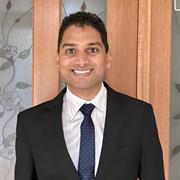
Professor Nitin Mantri is a faculty member at RMIT University's School of Science, holding the rank of Professor. He leads The Pangenomics Lab and manages the Master of Biotechnology program. His primary research focuses on plant functional genomics, traditional medicine, and functional foods, with over 110 peer-reviewed articles and $12 million in research funding. He collaborates with industries like GRDC, Horticulture Australia, and MGC Pharmaceuticals. Research interests span crop genetics, medicinal plants, and nanotechnology applications. Notable achievements include developing microbial detection kits for Skybury Coffee and establishing the 'International Library of Cannabinoids.' Awards include RMIT Dean’s Research Excellence Awards (2013, 2019) and the Teaching Achievement Award (2016). Key Projects: Microbial profiling of hot springs for wellness industries Development of cannabis databases for clinical use Rapid detection assays for agricultural pathogens Awards & Roles: 2021 Chair of International Conference on Traditional Medicine Adjunct Associate Professor at University of Western Australia Recipient of multiple RMIT excellence awards His recent articles emphasize nanoparticle-based food packaging, cannabinoid drug delivery, and plant stress genomics. He actively supervises research on topics like antimicrobial compounds and CRISPR-based gene editing in pomegranates.
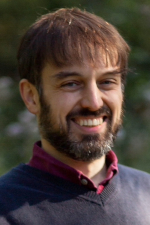
Jeremy Wideman is an Assistant Professor at Arizona State University's School of Life Sciences. His research focuses on evolutionary biology, mitochondrial evolution, protistology, and comparative genomics. He investigates fundamental questions about eukaryotic evolution, including mitochondrial genome diversity, organelle biogenesis, and the evolutionary relationships among protists. Professor Wideman's research explores cellular evolution through advanced genomic and proteomic approaches. His work spans mitochondrial dynamics, endosymbiotic theory validation, and the development of computational tools for phylogenetic analysis. Recent investigations focus on cristae architecture formation and the evolutionary trajectories of mitochondrial protein complexes across diverse eukaryotic lineages. His publications consistently demonstrate a strong emphasis on developing genomic databases (EukProt), advancing single-cell analysis techniques for protists, and reconstructing ancestral cellular states. The research integrates experimental biology with bioinformatic approaches to understand organelle evolution and cellular complexity.
Matthew N. McCall is an Associate Professor of Biostatistics and Computational Biology at the University of Rochester, with a secondary appointment in Biomedical Genetics and affiliation with the Goergen Institute for Data Science. He directs the Statistics PhD program and co-leads the Wilmot Cancer Institute's Biostatistics and Bioinformatics Shared Resource. His research focuses on statistical genomics, bioinformatics, and biomedical data science, with an emphasis on developing methods for analyzing miRNA-seq data, gene regulatory networks from Perturb-seq, cellular composition effects on gene expression, and microglia imaging. Education: PhD in Biostatistics (Johns Hopkins University, 2010), MH.S. in Bioinformatics (Johns Hopkins, 2010), B.S. in Statistics (University of Michigan, 2004). Research interests include systems biology, cancer genomics, and statistical methodologies for high-throughput data. Key contributions span microRNA profiling, qPCR data analysis, and computational tools for genomic studies. He leads collaborative projects on respiratory virus severity and tumor biology, with funding from NIH and other agencies. Awards and recognitions include tenure at the University of Rochester. His work has been published in NAR Genomics and Bioinformatics , PLoS Computational Biology , Cell Reports , and others. He advises students in biostatistics and computational biology, and oversees grants related to environmental health and cancer research.
Céline Dormoy is a Researcher at the Institut Pasteur within the Structural Biology and Chemistry department. She is actively involved in organizing academic events such as the 2024 EPFL-Institut Pasteur Symposium and the 'AI in Structural Biology: What’s Next' conference, highlighting her focus on integrating artificial intelligence with structural biology research. Her work centers on protein-protein interactions, ligand binding pockets, and computational drug discovery. Key contributions include developing the Protein Interaction Explorer (PIE) platform and co-curating the iPPI-DB database, which support drug discovery efforts through advanced bioinformatics tools and community resources. Céline collaborates closely with researchers like Michael Nilges and Olivier Sperandio, advancing structural biology methodologies and applying machine learning to address challenges in molecular modeling and drug design.
Ornella Calderini is a Senior Researcher at the Institute of Biosciences and BioResources (IBBR), part of the National Research Council of Italy (CNR) in Perugia. Her work focuses on plant molecular biology, functional genomics, and bioenergy crops, with a strong emphasis on model and crop legumes such as Medicago truncatula and Paspalum simplex . Institution: National Research Council of Italy (CNR) Research Institute: Institute of Biosciences and BioResources (IBBR) Division: Perugia Role: Senior Researcher Email: ornella.calderini@cnr.it Her research spans plant cell cycle regulation, meiosis, signal transduction via MAPK pathways, and functional genomics. She has contributed extensively to the understanding of apomixis, saponin biosynthesis, and triterpenoid pathways in plants. Her expertise includes molecular biology, cytogenetics, gene cloning, plant transformation, and mutant collection development. Dr. Calderini curates a large Medicago truncatula mutant collection at CNR IBBR and has been involved in numerous international collaborations, including research visits to institutions in Germany, Spain, Norway, the USA, and France. She has served as an editor for journals such as Biologia Plantarum , Plants (MDPI), and PeerJ . The recent publications highlight a strong trend in plant secondary metabolism, particularly in olive triterpenoids and secoiridoids, as well as legume functional genomics and sustainable bioenergy crops like alfalfa. Her work integrates molecular biology, genomics, and environmental assessment, reflecting a multidisciplinary approach to plant science and agricultural sustainability. Scientific Awards and Recognition: No specific awards are listed in the provided text. Advising and Grants: Dr. Calderini actively mentors PhD, fellowship, and undergraduate students. She has extensive experience in grant writing for Italian and EU funding agencies and has led or participated in multiple collaborative research projects. Her editorial and peer-review activities further underscore her leadership in the scientific community. Laboratories and Research Teams: She leads research activities within the CNR IBBR Perugia division, where she manages a Medicago truncatula mutant collection and collaborates with national and international scientists. Her lab focuses on gene function, plant development, and metabolic engineering for agricultural improvement.
Ross King is a Professor in the Department of Systems Biology at Chalmers University of Technology. He specializes in leveraging artificial intelligence, machine learning, and automation to advance scientific research. His work focuses on developing autonomous laboratory systems and AI-driven methodologies to accelerate discoveries in drug development, systems biology, and metabolic modeling. Key projects include Genesis, a database for autonomous systems, and AutonoMS for metabolomic analysis. His research emphasizes reproducibility, hypothesis generation via large language models, and integrating robotics with computational tools. King's contributions span interdisciplinary fields, combining computational methods with experimental validation. He leads efforts to automate scientific workflows, exemplified by his Robot Scientists (Adam and Eve), which autonomously design and execute experiments. His recent work explores extrapolation challenges in machine learning, ethical AI in science, and personalized medicine through predictive modeling. He has published extensively in journals like PNAS , Nature Machine Intelligence , and Scientific Reports , with a focus on AI ethics, closed-loop discovery systems, and translational applications in healthcare. His research bridges theoretical computer science with practical biomedical and environmental challenges.
Erman Ayday is an Associate Professor at the Department of Computer and Data Sciences within the Case School of Engineering at Case Western Reserve University. His research focuses on privacy-enhancing technologies, data security, and applied cryptography, with a particular emphasis on genomic privacy, cybersecurity in smart grids, and trust management in ad-hoc networks. He holds a PhD, MS, and BS in Electrical and Computer Engineering from Georgia Institute of Technology (2011) and Middle East Technical University (2005). Education: PhD in Electrical and Computer Engineering, Georgia Institute of Technology (2011) MS in Electrical and Computer Engineering, Georgia Institute of Technology (2007) BS in Electrical and Electronics Engineering, Middle East Technical University (2005) Research Interests: Dr. Ayday’s work addresses privacy challenges in genomic data sharing, secure collaborative learning, and trust management in wireless networks. He explores cryptographic solutions for genomic data protection, inference attack mitigation, and privacy-preserving frameworks for location-based services. His contributions span publications in top-tier journals and conferences, including IEEE Transactions on Dependable and Secure Computing and Bioinformatics. Key Research Trends: His articles highlight advancements in differential privacy for genomic data, secure watermarking techniques, and re-identification attack mitigation. Recent work emphasizes the intersection of machine learning, cryptography, and ethical genomic data use. Grants & Advising: While specific grants are not listed, his publications indicate sustained engagement with funding bodies in cybersecurity and genomics. He advises on projects related to privacy-preserving technologies and has collaborated with institutions like ETH Zurich and IBM Research. Labs & Teams: He leads research initiatives at the Case School of Engineering focused on privacy in big data and cybersecurity for emerging technologies like smart grids and M2M networks.
Philipp Zerbe is an Assistant Professor in the Department of Plant Biology at the University of California, Davis. His research focuses on the discovery, characterization, and engineering of specialized metabolic pathways in medicinal, bioenergy, and food plants, with particular emphasis on terpenoids and their roles in plant adaptation and biomanufacturing.
Gerald Wyckoff is a Professor of Molecular Biology and Biochemistry with joint affiliations at K-State Olathe and the University of Missouri-Kansas City. He leads the 1Data initiative, focusing on large-scale biological data integration and analysis. His research centers on molecular evolutionary genetics, particularly identifying signatures of positive selection in genomic data. His work bridges genomics, proteomics, and bioinformatics, with applications in structural biology and drug discovery. He has contributed to software development for mass spectrometry and cross-linking analysis, and created integrative databases for chemical and biological data across species including fish and humans. His expertise lies in extracting meaningful signals from high-noise biological datasets, with a focus on evolutionary approaches to big data in animal and human health. He collaborates with structural biology researchers to apply large-scale screening techniques to complex biological problems. Dr. Wyckoff is actively engaged in translational research, with recent software developments being commercialized for use in drug discovery pipelines. Director, 1Data He has no listed scientific awards or formal advisees in the provided text.
Thomas Tørring is an Associate Professor at Aarhus University's Department of Biological and Chemical Engineering within the AU Engineering faculty. His research focuses on biosynthetic pathways, antimicrobial agents, and metabolic engineering applications. He has contributed to projects like adapting Tiny Earth for high school education and advancing MIBiG databases for gene cluster curation. Key research interests include lasso peptide synthesis, stereochemistry-independent antibiotic activity, and hypoxia-triggered specialized metabolism. His work bridges chemical synthesis with biological systems, emphasizing practical applications in drug discovery and biotechnology. Current projects (2023–2026) involve molecular networking for metabolic studies and continued development of educational outreach programs. No notable awards are highlighted in the profile, though his publications demonstrate active collaboration with global research networks.
Ronald Buyl is a Guest Professor at the SOMT University of Physiotherapy since October 2010, actively contributing to research in public health, digital medicine, and musculoskeletal disorders. His work focuses on pain management (especially lumbar radiculopathy), telemedicine, and interprofessional education in healthcare. He leads projects addressing aging populations, drug resistance in tuberculosis, and digital literacy for adults. Research Interests: Pain Neuroscience Education - Developing interventions to improve surgical outcomes for lumbar radiculopathy patients Gerontology - Co-leading the Gerontopole Brussels initiative for healthy aging Digital Health - Evaluating technologies for older adults and caregivers through projects like InfoReady Systematic Reviews - Analyzing fear avoidance beliefs in spinal surgery outcomes Recent Article Trends: His 2025 works emphasize maternal mental health during childbirth, midwifery education collaboration, and paternal perinatal depression awareness. Earlier studies (2022-2024) focus on lumbar radiculopathy treatment efficacy and genetic studies of drug-resistant tuberculosis. Grants & Projects: Currently involved in 6 funded projects including EU-funded InfoReady (digital literacy) and the Gerontopole Brussels (healthy aging). Supervised 12 academic works, including RCTs on pain education and pandemic pregnancy experiences. Labs/Teams: Collaborates with multidisciplinary teams on datasets like B2aSic (lumbar radiculopathy trials) and contributes to international networks in tuberculosis research through projects like FWOTM1083.
Dr. Keri Lydon is a Clinical Assistant Professor in the Department of Environmental Health Science at the University of Georgia's College of Public Health. Her research focuses on environmental microbiology, seafood safety, and aquatic pathogens. Prior to her academic role, she conducted microbial seafood safety research at the FDA's Gulf Coast Seafood Lab. She holds a campus address at 142 Environmental Health Science Building. Her work emphasizes Vibrio species behavior in marine environments, food safety protocols for shellfish, and microbial responses to environmental stressors like temperature and chemical contaminants. Research highlights include studying triclosan resistance in Vibrionaceae and genomic analyses of pathogenic Vibrio strains. Dr. Lydon’s publications (2015-2024) consistently address Vibrio spp. ecology, food safety interventions, and microbial community dynamics in coastal ecosystems. While no explicit awards are listed, her contributions to microbial risk assessment in seafood and wastewater impacts on coastal microbiomes reflect impactful work in environmental public health. Her current role involves teaching and guiding students in environmental health science, though no specific advisees are documented here. Ongoing research likely continues exploring microbial threats in aquatic systems and evidence-based solutions for public health protection.