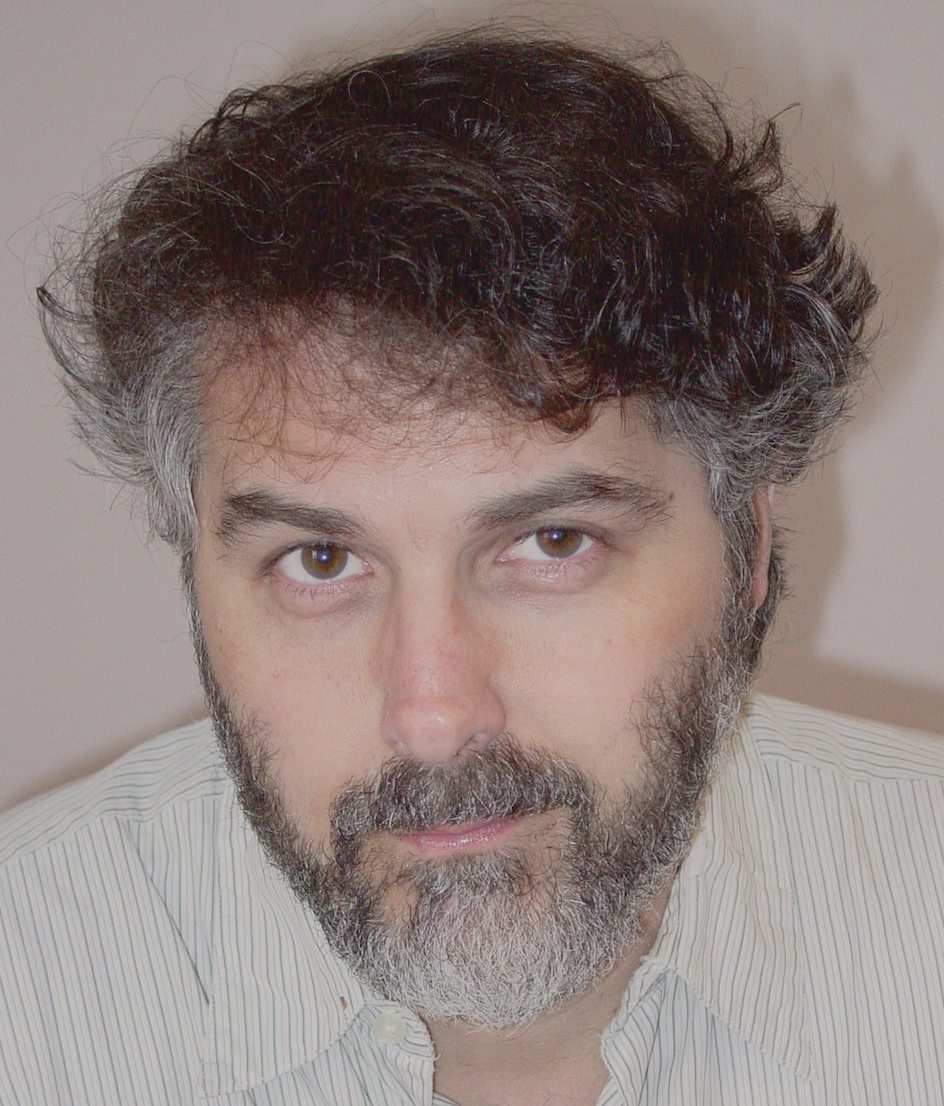
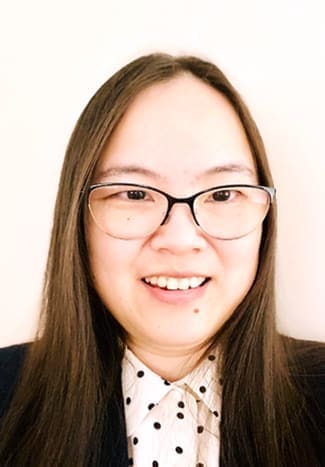
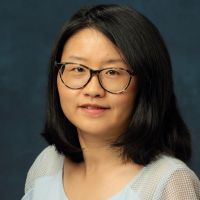
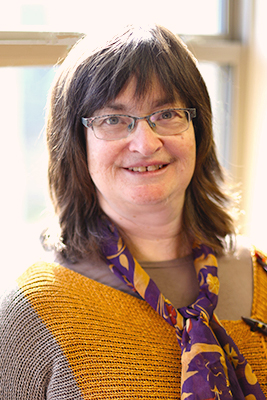
Nancy Margaret Reid is a University Professor of Statistical Sciences at the University of Toronto, holding the Canada Research Chair in Statistical Theory and Applications. She has served as Scientific Director of the Canadian Statistical Sciences Institute (2015–2019) and led the Department of Statistical Sciences as Chair (1997–2002). Her research focuses on theoretical statistics, particularly likelihood inference and foundational aspects of statistical methodology. Reid earned her PhD from Stanford University (1979) under Rupert G. Miller, with Brad Efron and Vernon Johns on her committee. Reid's accolades include Fellowships from the Royal Society, Royal Society of Canada, and National Academy of Sciences, as well as the Guy Medal in Gold (2022) and David R. Cox Award (2023). She has authored influential books like *Theory of the Design of Experiments* and contributed to courses on mathematical statistics and likelihood inference. Active in academic service, she teaches graduate-level courses and has advised numerous students and postdocs in theoretical and applied statistical research.
Daniel Finley is a Professor of Cell Biology at Harvard Medical School (HMS), leading the Finley Lab focused on the ubiquitin-proteasome pathway and related regulatory mechanisms. He holds academic appointments within the Department of Cell Biology and sits on the Scientific Advisory Boards of Proteostasis and X-Chem Pharmaceuticals. His research investigates proteasome function, ubiquitin-like proteins, and proteostasis roles in diseases like Alzheimer’s and ALS. Dr. Finley earned his undergraduate degree in biochemistry from Harvard University and a Ph.D. in molecular biology from MIT. After postdoctoral training at MIT, he joined HMS in 1988. His lab explores topics including erythroid proteome remodeling, mitochondrial dysfunction, and neurodegenerative disease mechanisms. Key research areas include: (1) Ubiquitin-proteasome pathway regulation, (2) Proteasome structure/function, (3) Nonproteolytic roles of ubiquitination, and (4) Pathophysiological roles of proteostasis defects in diseases. His work bridges basic cell biology with translational medicine, particularly in neurodegeneration and anemia. Finley has secured NIH funding for projects like 'Regulation of Proteasome Activity' (R35GM145246) and 'Erythrocyte maturation through global proteome remodeling' (R01HL153970). Collaborations with industry and academic partners extend his impact in drug discovery and proteasome-targeted therapies. His lab’s contributions include defining ubiquitin chain editing mechanisms, identifying USP14’s role in mitophagy, and elucidating proteostasis defects in Alzheimer's models. Research tools developed include advanced cryo-EM analyses of proteasomal structures and functional assays for ubiquitin system enzymes.
Florentina Bunea is a Professor in the Department of Statistics and Data Science at Cornell University’s Bowers College of Computing and Information Science, and an active member of the Graduate Fields of Statistics, Applied Mathematics, and Computer Science. She also serves on the Diversity and Inclusion Council of her college, championing workforce diversity in data-science disciplines. Education & Institutional Roles Professor, Department of Statistics and Data Science, Cornell University Member, Graduate Fields of Statistics, Applied Mathematics, Computer Science Member, Diversity and Inclusion Council, Bowers College of Computing and Information Science Research Interests Professor Bunea’s research lies at the intersection of statistical machine-learning theory and high-dimensional inference. She develops rigorous methodology supported by sharp theoretical guarantees to tackle core problems in modern data science. Recent themes include: Soft-max mixtures for understanding large-language-model/AI algorithms Optimal transport for high-dimensional mixture distributions Wasserstein-distance inference for sparse mixing measures in topic models Latent-space clustering and cluster-based inference in high dimensions Network modeling and hidden-structure inference Applications spanning genetics, systems immunology, neuroscience, sociology, and economics Research Funding & Awards Her work is supported by grants from the National Science Foundation (NSF-DMS). She is a Fellow of the Institute of Mathematical Statistics and a recipient of the IMS Medallion Award. Editorial & Service Contributions Associate Editor: Annals of Statistics, Bernoulli, JASA, JRSS-B, EJS, Annals of Applied Statistics Co-Editor: Chapman & Hall/CRC Statistics and Applied Probability Monograph Series Advising & Collaboration Professor Bunea has mentored numerous doctoral and post-doctoral researchers, including Xin Bing, Shuyu Liu, Seth Strimas-Mackey, and Yang Ning, among others. Collaborative projects extend across Cornell and external institutions, producing widely-used software packages and high-impact publications. Contact Office: 1184 Comstock Hall, Cornell University Email: fb238@cornell.edu Phone: (607) 255-8449
Alexis Battle is an Associate Professor at Johns Hopkins University with appointments in Biomedical Engineering , Computer Science , and Genetic Medicine (secondary). She directs the Malone Center for Engineering in Healthcare and serves as Deputy Director of the Data Science and AI Institute . Educated at Stanford University (PhD in Computer Science, 2013), Battle transitioned to academia after leadership roles at Google. Research Focus: Battle’s work bridges genomics and machine learning , emphasizing the impact of genetic variation on human health. Her lab develops tools like Watershed to predict functional effects of rare variants, aiming to enhance rare disease diagnosis. Key themes include non-coding DNA analysis , personalized genomics , and systems biology , with applications in cardiovascular disease and neurodegenerative disorders . Publications & Awards: Over 60 peer-reviewed articles in journals like Nature , Science , and Genome Biology , with recent emphasis on single-cell transcriptomics , multiomics integration , and telomere biology . Recipient of the President’s Frontier Award (2022), Microsoft Investigator Fellowship (2019), and Searle Scholar (2016). Scientific Awards: 2022 President’s Frontier Award 2019 Microsoft Investigator Fellowship 2019 Johns Hopkins Discovery Award 2017 Johns Hopkins Catalyst Award 2016 Searle Scholar Advising & Funding: Mentors 11 PhD students, 3 undergraduates, and postdoctoral fellows. Her research is funded by NIH, Searle Scholars, and institutional grants. The Battle Lab collaborates on projects like the GTEx Consortium , focusing on gene regulation and clinical genomics .
Martin T. Wells is the Charles A. Alexander Professor of Statistical Sciences at Cornell University, with joint appointments in the Department of Statistical Science, Department of Biological Statistics and Computational Biology, Department of Social Statistics, and as Professor of Clinical Epidemiology and Health Services Research at Weill Medical School. He serves as Editor-in-Chief of the ASA-SIAM Book Series and Co-Editor of the Journal of Empirical Legal Studies. Cornell University, Ithaca, NY Weill Cornell Medical College Research Interests span applied and theoretical statistics, Bayesian methods, biostatistics, clinical epidemiology, and computational biology. His work bridges disciplines like finance, legal studies, and health services research. Article Trends highlight advancements in Bayesian modeling, quantum cognition machine learning, tensor analysis, and misclassification correction, with applications in genomics, finance, and public health. Fellow of the American Statistical Association Fellow of the Royal Statistical Society Contributions include developing statistical software (e.g., rTensor), methodological innovations in clinical trials, and empirical legal studies on civil rights and the death penalty.
James B. Kaper is a Professor and Chair of the Department of Microbiology & Immunology at the University of Maryland School of Medicine. He serves as Vice Dean for Academic Affairs and previously held leadership roles as Senior Associate Dean (2014–2019) and Chair (2007–present). His research focuses on the molecular pathogenesis of diarrheagenic Escherichia coli and Vibrio cholerae , including vaccine development and bacterial-host interactions. Education: BS (1973) and PhD (1979) in Microbiology from University of Maryland; Postdoc in Molecular Pathogenesis at University of Washington (1979–1981) Dr. Kaper’s work has led to the creation of live attenuated cholera vaccines, including CVD 103-HgR, the first licensed recombinant bacterial vaccine. His lab investigates bacterial genetics, intestinal colonization, and immune system activation, particularly TLR5 response to V. cholerae flagellin. He has authored 303 peer-reviewed articles and 68 book chapters. His research has been funded continuously by NIAID since 1982. Key publications include foundational work on V. cholerae vaccines (1984), genomic structure (1998), and quorum sensing in EHEC/EPEC (1999). His lab’s recent studies focus on phosphotyrosine proteomics (2013) and pathogenicity island regulation (2007). Scientific awards: Fellow, American Academy of Microbiology (1994); NIH Merit Award (2004); ASM DC White Award (2019) Editorial roles: Editor-in-Chief, EcoSal (2006–present); Associate Editor, International Journal of Medical Microbiology (2000–present) As an academic leader, Dr. Kaper has mentored over 60 graduate students and postdoctoral fellows. He holds multiple patents for cholera vaccines and E. coli diagnostics, including U.S. Patents 4,935,364; 5,399,494; and 6,204,004. His lab at UMSOM combines basic science with translational applications for enteric disease prevention.
Susan Pfeiffer is a Research Professor of Anthropology at the University of Toronto, affiliated with the Department of Anthropology within the Faculty of Arts and Science. Her research focuses on bioarchaeology, skeletal biology of past populations, and repatriation of human remains, particularly among Southern African Khoe-San and North American Great Lakes communities. She holds a Ph.D. (1976), M.A. (1972), and B.A. (1968) in Anthropology and Religion from the University of Toronto and the University of Iowa. Education: Ph.D. in Anthropology, University of Toronto (1976) M.A. in Anthropology, University of Toronto (1972) B.A. in Religion, University of Iowa (1968) Her research interests include paleopathology, adult age estimation, evolutionary theory, and collaborations with Indigenous communities. Notable works include her 2022 book Osteobiographies , which explores repatriation frameworks globally, and studies on Huron-Wendat ancestral repatriation and Southern African skeletal analysis. Dr. Pfeiffer has received prestigious awards such as the 2019 AAAS Fellowship and the 2016 J. Norman Emerson Medal. Her publications bridge bioarchaeological methodological advancements with ethical repatriation practices, emphasizing cross-cultural collaboration in anthropology. Key Awards: AAAS Anthropology Section Fellowship (2019) Ontario Archaeological Association Medal (2016) University of Toronto Teaching Excellence Award (2001) Her work integrates skeletal analysis with community partnerships, addressing both scientific and cultural dimensions of human remains research. Collaborations with First Nations and African groups highlight her commitment to ethical, culturally sensitive archaeology.
Frank Corsetti is a Professor of Earth Sciences at the University of Southern California (USC), leading the Corsetti Lab. His research focuses on the co-evolution of Earth and its biosphere, particularly during extreme events like the 'Snowball Earth' glaciation and mass extinctions. He holds a Ph.D. in Geological Sciences from UC Santa Barbara (1998) and a B.S. in Geology from UC Davis (1989). Research Interests: Corsetti studies geobiological processes such as stromatolite formation, microbial carbonate systems, and the environmental impacts of mass extinctions. His lab investigates biosignatures, diagenetic processes, and astrobiological applications. Current projects include the end-Triassic mass extinction and microbial interactions in extreme environments. Advising & Grants: He mentors a team of PhD students (including Reena Joubert, Alison Cribb, and others) and has secured funding from NASA for projects like stromatolite carbonate formation studies. His work bridges paleontology, geochemistry, and microbiology, contributing to understanding Earth’s long-term climate and life history. Labs/Teams: The Corsetti Lab at USC explores stromatolites, microbial mats, and ancient Earth systems. Collaborations involve institutions like JPL and international universities.
Liping Liu is a Professor in the Department of Management at The University of Akron's College of Business. He holds a Ph.D. in Business from the University of Kansas (1995), Master of Engineering in Systems Engineering (1991), and dual bachelor's degrees in Applied Mathematics (1986) and River Dynamics (1987). Ph.D., University of Kansas MS, Huazhong University of Science and Technology B.E., Wuhan University BS, Huazhong University of Science and Technology His research spans Artificial Intelligence , Electronic Business , Systems Analysis , Data Quality , and Belief Function Theory . He pioneered coarse utility theory and linear belief functions , now taught in top Ph.D. programs across multiple disciplines. Key trends in his publications include Belief Function Applications (2012-2024), Medical Data Systems (2003-2015), and Decision Theory (2004-2014). Recent works focus on Gamma Belief Functions (2024) and computational improvements in linear belief function operations (2019-2016). Scientific contributions recognized via: Microsoft Azure Educator Grant (2014-2016) Inclusion in Who's Who in America (2010-2013) and Who's Who in the World (2011-2013) As an editor and committee member for major conferences (INFORMS, AMCIS, Belief Functions conferences), he bridges academic research with practical systems implementation in e-business and healthcare domains.
New Jersey Institute of Technology (NJIT)United States
Steven I-Jy Chien serves as Professor and Director of the Transportation Program within the Department of Civil and Environmental Engineering at the New Jersey Institute of Technology (NJIT). His career spans academia, government, and industry with significant contributions to transportation engineering research and practice. His educational credentials include: Ph.D. in Civil and Environmental Engineering from University of Maryland-College Park (1995) M.S. in Civil and Environmental Engineering from University of Maryland-College Park (1991) B.S. in Civil Engineering from Tamkang University (1983) Professor Chien's research focuses on transportation system resilience, sustainable transit operations, and advanced traffic modeling. His work addresses critical challenges in urban rail networks, demand-responsive transit services, and energy-efficient transportation systems. He employs sophisticated computational methods including genetic algorithms, machine learning, and Bayesian approaches to solve complex transportation problems involving network vulnerability, passenger behavior, and infrastructure optimization under uncertainty. Analysis of his recent publications reveals strong emphasis on transportation resilience against cascading failures, sustainable operations for electric transit systems, and pandemic-responsive aviation scheduling. His research spans diverse geographic contexts including major Chinese metropolitan areas and U.S. transportation networks, demonstrating global applicability of his methodologies. His professional recognition includes: 2024 Keynote Speaker at Union-Tech Lecture, National Taiwan Ocean University 2022 Keynote Speaker at International Conference of Chinese Institute of Transportation 2022 Best Poster Award from New Jersey Department of Transportation Professor Chien has secured research funding from federal agencies including the Federal Highway Administration (FHWA) where he contributed to CORSIM traffic simulation software development. His industry experience with China Engineering Consultants Inc. and Information Dynamic Inc. informs his practical approach to transportation challenges. As Transportation Program Director, he oversees curriculum development and industry partnerships that prepare students for transportation sector careers. He maintains active collaboration with transportation agencies globally, particularly through his leadership in the Transportation Program at NJIT which serves as a hub for innovation in urban mobility solutions.
Yaojun Zhang is an Assistant Professor in the Department of Physics & Astronomy and the Department of Biophysics at Johns Hopkins University. She earned her PhD in Physics from the University of California, San Diego (2015), followed by postdoctoral fellowships at the Princeton Center for Theoretical Science (2015-2018) and the Princeton Center for the Physics of Biological Function (2018-2021). Her research focuses on biological physics, particularly the complex behaviors of biomolecules and their assemblies across scales—from single-molecule folding to intracellular transport and biomolecular phase separation. She employs theoretical, mathematical, and computational tools to bridge biological questions with physical principles. Education PhD in Physics, University of California, San Diego (2015) Postdoctoral Fellowships: Princeton University (2015-2021) Research Interests Her group studies biomolecular condensates and liquid-liquid phase separation, exploring how microscopic interactions determine macroscopic properties of cellular compartments. Key areas include: Biomolecular condensate formation and dynamics Phase separation in cellular environments Interactions between biomolecules and cellular components Biophysics of intracellular transport Collaborations & Tools Zhang collaborates with experimentalists to validate theoretical models and develops frameworks for understanding condensate functions, such as surface tension, stoichiometry, and phase diagrams. Her work addresses challenges like condensate stability, molecular exclusion, and biological function regulation. Labs & Resources She leads the Zhang Lab , which integrates experimental and computational approaches. Her team’s research is supported by resources at the Bloomberg Center for Physics and Astronomy.
Yin Bao is an Assistant Professor in Plant and Soil Sciences and Mechanical Engineering at the University of Delaware since 2023, previously holding the same position at Auburn University's Department of Biosystems Engineering (2019-2023). He holds a BE in Mechanical Engineering from China Agricultural University (2012) and a PhD in Agricultural and Biosystems Engineering from Iowa State University (2018), followed by postdoctoral research there until 2019. His research focuses on automation technology for agriculture and forestry, leveraging robotics, machine learning, and sensing systems to develop tools for precision farming and plant phenotyping. Key areas include unmanned systems (UGVs/UAVs), spectral imaging, and AI-driven predictive models for crop and livestock management. Recent work emphasizes automated inventory systems for forest nurseries, UAV-based vegetation assessment, and machine learning applications in crop yield prediction. His publications span robotic guidance systems, root segmentation in X-ray CT scans, and equine gait analysis using deep learning. Notable projects include the Robotic Assay for Drought (RoAD) system and the 'smart canopy' sorghum initiative. Collaborative efforts involve integrating multifrequency microwave sensing and electronic nose technologies for crop quality analysis.
Ning Zhang is an Assistant Professor in the Biology Department at James Madison University (JMU), joining in 2024. Her research focuses on enhancing crop resilience through molecular and biochemical studies of plant defense mechanisms against bacterial pathogens, alongside developing genome editing technologies for trait improvement. She holds a PhD in Horticulture and Crop Science from The Ohio State University (2016), an MS in Silviculture from Zhejiang Agriculture and Forestry University (2011), and a BS in Landscape Architecture from Shandong Agricultural University (2008). Research Interests: Dr. Zhang's lab investigates plant immunity pathways, CRISPR/Cas9 genome editing applications, and engineering crops for disease resistance. Her work integrates molecular biology, genetics, and biochemistry to tackle challenges posed by climate change and biotic/abiotic stresses. Recent Trends in Publications: Her articles concentrate on MAPK signaling pathways, NLR protein interactions, PP2C phosphatase regulation, and bacterial effector mechanisms in tomato and other crops. Key themes include immune system activation, pathogen recognition diversity, and transgenic plant development. Lab Information: The Zhang Lab at JMU is part of the Department of Biology, focusing on plant biotechnology solutions for agricultural sustainability. They collaborate on projects involving CRISPR-based gene editing and stress tolerance research.
Anna Berge is a Professor of Linguistics at the University of Alaska Fairbanks, directing the Alaska Native Language Archive. She holds a PhD from the University of California, Berkeley (1997), specializing in the documentation, description, and historical analysis of Eskimo-Aleut languages, particularly Unangam Tunuu (Aleut). Her research integrates linguistics with archaeology, genetics, and environmental studies to explore prehistoric language contact and divergence patterns along the North Pacific Coast. Her work focuses on morphosyntax, discourse analysis, and language revitalization for highly endangered languages. She teaches courses in Morphology, Field Methods, Community Language Documentation, and Eskimo-Aleut Linguistics, emphasizing practical skills for language preservation. Berge's multidisciplinary approach addresses Aleut language divergence from Eskimoan branches, leveraging data from multiple disciplines to reconstruct linguistic prehistory. She actively collaborates with Indigenous communities in Russia, Alaska, Canada, and Greenland to archive linguistic materials and support language maintenance initiatives.
University of California , Santa Barbara (UCSB)United States
Frank L. Brown is a Professor of Chemistry & Biochemistry at the University of California, Santa Barbara, with a joint appointment in Physics and the Biomolecular Sciences & Engineering (BMSE) program. His research focuses on theoretical and computational studies at the interface of physical chemistry and biophysics, particularly biomembrane dynamics and spectroscopy. Dr. Brown received his B.S. in Chemistry and B.A. in Applied Mathematics from UC Berkeley, followed by a Ph.D. in Physical Chemistry from MIT. He has held postdoctoral appointments at UC San Diego and the University of Chicago before joining UCSB in 2001. He is the recipient of prestigious awards including the Alfred P. Sloan Research Fellowship and the Presidential Early Career Award in Science and Engineering. His laboratory employs tools from statistical mechanics, hydrodynamics, and quantum mechanics to study biomembrane structure, dynamics, and interactions with embedded proteins. Key research areas include lipid bilayer fluctuations, membrane protein diffusion, and interpretation of spectroscopic techniques like single-molecule fluorescence and neutron spin echo. Dr. Brown has mentored numerous graduate students and postdoctoral researchers, with notable alumni including Brian Camley, Max Watson, and Golan Bel. His research is supported by grants from agencies such as the National Science Foundation and the Department of Energy. He directs the Brown Research Group, which collaborates with institutions like the CNSI Center for Scientific Computing. His work bridges computational modeling and experimental biophysics, advancing understanding of membrane systems in health and disease.