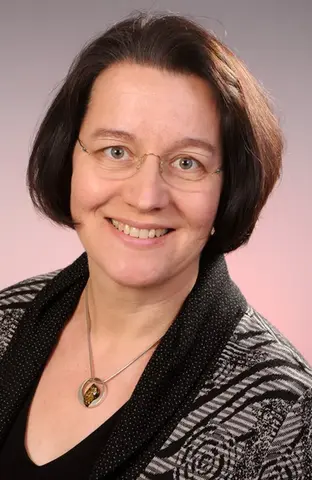
Anne Dahl is a Professor at the Norwegian University of Science and Technology (NTNU), holding roles in the Department of Language and Literature and the Faculty of Humanities. She serves as Program Director for the Associate Professorship in Language Studies (grades 8–13) and chairs the National Professional Body for English. Her academic affiliations include the Center for Language, Brain and Learning (C-LaBL) at UiT The Arctic University of Norway as a Professor II. Her research focuses on second and third language acquisition, multilingualism, and age-related language learning. Key areas include cross-linguistic influence in multilingual contexts, multilingual education, and the role of explicit vs. implicit learning. She leads research groups such as ForMAAL (Formal, Mental, and Acquisitional Approaches to Language) and FANT (Forskergruppe for andre- og tredjespråk). Her recent articles explore topics like genericity in Norwegian syntax, third language verb placement, and L2 English reading skills. She has coordinated projects such as CLIMA (Cross-linguistic Influence in Multilingual Acquisition) and ADIM (Across-domain investigations in multilingualism). Her work bridges theoretical linguistics with applied educational contexts. She edits the journal ELLA Research and contributes to projects like the Great Norwegian Lexicon. Her teaching emphasizes language acquisition theories and multilingual pedagogy at both undergraduate and PhD levels.
Lonneke van der Plas is an Associate Professor at the Institute of Argumentation, Linguistics and Semiotics within the Faculty of Communication, Culture and Society at Università della Svizzera italiana (USI), and an Adjunct Professor at the Faculty of Informatics, USI, since October 2024. She also serves as the group leader of the Computation, Cognition & Language research group at the Idiap Research Institute in Martigny, a position she has held since February 2021. Her academic background includes: PhD in Humanities Computing, University of Groningen M.Phil in Computer Speech and Language Processing, University of Cambridge Postdoctoral research at the University of Geneva (CLASSiC project) Junior Professor at the University of Stuttgart (IMS, SFB 732) Associate Professor at the University of Malta (2014–2020) Her research interests span Natural Language Processing , Computational Linguistics , Distributional Semantics , Multilingual NLP , Computational Creativity , and Low-Resource Languages . She integrates insights from cognitive science, linguistics, and computer science to model language as a tool for creative thinking and reasoning. Her work includes semantic role labeling, cross-lingual transfer, medical question answering, and lexical innovation. The 15 most recent publications reflect a strong trend in interdisciplinary NLP research, combining linguistic theory with machine learning. Topics include lexical innovation, multilingual financial NLP, skill extraction, multi-modal fact checking, and cognitive modeling. The articles demonstrate expertise in both theoretical and applied NLP, with applications in healthcare, finance, education, and AI ethics. Key subfields include semantic role labeling, cross-lingual transfer, bootstrapping for low-resource languages, and structured knowledge integration. Scientific recognitions include: DSI Fellow, University of Zurich (2019–2020) Erasmus Mundus LCT Visiting Scholar at Shanghai Jiao Tong University and University of Melbourne (2016) Visiting Academic at Macquarie University, Sydney (2007) She has advised multiple PhD students including Stefan Müller, Patrick Ziering, Molly Petersen, Mete Ismayilzada, and Diego Rossini. She currently leads several major funded projects: NCCR Evolving Language (SNSF, PI), C-LING (SNSF, PI), SEM24 (Innosuisse, PI), and FactCheck (Hasler Foundation, co-PI). These grants support postdoctoral researchers, developers, and PhD students, and involve collaborations with institutions like EPFL, EHL, and ARCA24. Her research bridges academia and industry, with applications in HR, finance, and healthcare. Lonneke leads the Computation, Cognition & Language group at Idiap, which conducts highly interdisciplinary research involving collaborations with social scientists, cognitive scientists, linguists, and professionals in health, finance, and business. The group focuses on modeling language as a cognitive and creative tool, using computational methods to explore lexical innovation, diachronic change, and reasoning. Open PhD positions are available in areas such as NLP for cognitive modeling, multilingual NLP, and mental health applications.
Prof Ian James Miguel is a Professor and Head of the School of Computer Science at the University of St Andrews, a position he has held since 2004. He specializes in Artificial Intelligence, particularly in solving combinatorial optimization problems using Constraint Programming and SAT techniques. His research emphasizes automated constraint modeling, including the development of the Constraint Modelling Pipeline, which translates high-level problem descriptions into solver-ready models. He teaches courses on Constraint Programming and Video Games. His research focuses on advancing constraint modeling techniques, including automated reformulation, tabulation, and the exploration of constraint models via graph transformations. Notable contributions include the Athanor system for local search over constraint specifications and the TabID framework for subproblem identification. His work frequently addresses challenges in combinatorial optimization, such as multi-task learning and algorithm selection. Prof Miguel leads projects funded by EPSRC and others, including initiatives on automated constraint modeling tools like Conjure and Savile Row. He has supervised PhD students in areas like constraint modeling, automated algorithm selection, and planning under constraints. His research extends to interdisciplinary applications, such as ecological modeling and computational algebra, through collaborations with centers like the Sir James Mackenzie Institute. His recent publications emphasize automated reformulation techniques, streamlined constraint solving, and the integration of machine learning into constraint-based systems. His work aims to enhance solver efficiency and broaden the applicability of constraint programming across diverse domains.
Timothy Duff is Professor of Greek at the University of Reading, Department of Classics, within the Faculty of Arts, Humanities and Social Sciences. He serves as Director of Postgraduate Research, Director of the Centre for Hellenic Studies, and Coordinator of Modern Greek in the Department of Languages and Cultures. He is also the University’s academic lead for Arts and Humanities Research Council (AHRC)-funded doctoral awards. His academic qualifications include an MA and PhD from the University of Cambridge, Christ's College. He is a Fellow of the Royal Historical Society (FRHistS) and a Senior Member of Wolfson College, Cambridge. Professor Duff's research centers on Greek history, historiography, and prose literature of the Roman Imperial period, with a particular focus on Plutarch. His work explores narrative structure, intertextuality, generic enrichment, moral philosophy, and the educational function of ancient biography. He examines how Plutarch constructs character, uses language, and engages with philosophical and literary traditions to shape the reader's moral and political understanding. His recent publications reveal a sustained scholarly engagement with Plutarch’s narrative techniques, ethical aims, and literary complexity. Themes such as the role of comparison (syncrisis), the construction of the reader, the use of tense and aspect, and the blending of genres are recurrent in his work. His research demonstrates a deep command of both philological detail and broader literary theory. Visiting Professorship at Shanghai University (2016) Visiting Professorship at Princeton University's Seeger Center for Hellenic Studies (2016) Research Fellowship at Freie Universität Berlin (2007–2009, Alexander von Humboldt Foundation) Research Fellowship at the Australian National University (2006) Visiting Fellowship at Wolfson College, Cambridge (2005) Research Fellowship at Harvard University's Center for Hellenic Studies (2004) Research Fellowship at the University of Cincinnati (2002) UK AHRC Research Leave Award (1999–2000) Fellow of the Royal Historical Society Senior Member of Wolfson College, Cambridge Professor Duff actively supervises postgraduate research students in his areas of expertise. He has held significant leadership roles in research funding and academic coordination. His work bridges classical scholarship with contemporary literary and philosophical inquiry, contributing to both specialized and interdisciplinary audiences. He is associated with the Centre for Hellenic Studies at the University of Reading, which promotes research and public engagement in Greek language, history, and culture across periods. His collaborative projects and editorial work reflect a commitment to advancing the field through international scholarly networks.
Joe Pater is a Professor in the Department of Linguistics at the University of Massachusetts Amherst and Co-Director of the Computational Phonology Laboratory. He holds a Ph.D. in Linguistics from McGill University (1997), with postdoctoral training at the University of British Columbia and the University of Alberta. His research focuses on phonology, language acquisition, and computational modeling, emphasizing weighted constraints and their role in phonological learning. Pater’s work is supported by ongoing National Science Foundation (NSF) grants, including a current collaboration on stress representation and neural networks. Key research interests include phonological typology, experimental phonology, and the integration of cognitive science with formal linguistic theory. He co-founded the Annual Meeting on Phonology and the Society for Computation in Linguistics, serving as managing editor for their open-access proceedings. Pater teaches courses such as ‘Sounds of Englishes’ and supervises research on phonological acquisition and computational methods. His contributions span over 50 publications, with recent work addressing neural network models of phonology, gradient learning, and ERP evidence for phonological abstraction. Pater also collaborates on agent-based modeling of linguistic typology and has pioneered methodologies linking formal grammatical frameworks to empirical learning experiments.
Sadaf Munshi is a Professor in the Department of Linguistics at the University of North Texas. Her research focuses on language documentation, historical linguistics, and language contact, particularly in South Asian languages like Burushaski and Indo-Aryan languages. Education: PhD in Linguistics from University of Texas at Austin (2006), MPhil and MA in Linguistics from University of Delhi, India (2001/1999), BS in Biosciences from University of Kashmir, India (1996). Research Interests: Language documentation of endangered languages (Burushaski), comparative linguistic analysis, language contact phenomena, and grammatical theory development. Ongoing projects include the Burushaski Language Corpus and Kashmir Oral History Project. Teaching: Courses in Historical Linguistics, Phonology, Field Methods, and World Englishes. Her work bridges theoretical linguistics with applied documentation efforts. Key Projects: Burushaski Language Documentation Project Kashmir Oral History Project
Eugen Munteanu is a renowned Romanian linguist, philologist, translator, and essayist, specializing in biblical studies and the philosophy of language. He holds the rank of Professor at the Alexandru Ioan Cuza University of Iași, where he has been affiliated since 1978, initially as a lecturer and later as a professor. He also served as the Director of the Romanian Filological Institute „A. Philippide“ (2009–2013) and currently leads the „Monumenta linguae Dacoromanorum“ Biblical-Philological Studies Center. His academic career includes visiting professorships at Sorbonne University (1997–1999), Friedrich Schiller University of Jena (1999–2001), and the University of Vienna (2006–2010). Education: PhD in Philology (1993), thesis on the influence of classical models on 17th-century Romanian translations. Professional Roles: Editor of academic journals, coordinator of national and international research projects (e.g., Septuaginta translation project), and founder of the Romanian Association for Biblical Philology and Hermeneutics. Research Interests: Focused on Romanian linguistic history, biblical lexicology, and the interplay between Latin, Greek, and Slavic influences on Romanian. His work emphasizes historical linguistics, translation studies, and the cultural significance of early Romanian texts. Key areas include the study of the 1688 Bible, medieval manuscripts, and the evolution of religious terminology. Publications: Over 30 authored/co-authored books, including Lexicologie biblică românească (2008) and Aeterna Latinitas (1997). His translations of classical works (e.g., Augustine’s De Magistro ) and scholarly editions of biblical texts are highly regarded. Awards: Recipient of the Timotei Cipariu Prize (1995), Konstantin Jireček Medal (2020), and honorary titles such as „Cetățean de onoare al Municipiului Iași“ (2021). His contributions to Romanian philology and cultural heritage have been widely recognized nationally and internationally. Grants & Projects: Led major initiatives like the Septuaginta critical edition and the Etnonimia românească historical dictionary project. Collaborated internationally on projects such as the Dictionnaire Etimologique Roman (DERom). Labs/Teams: Director of research centers focusing on biblical philology, historical linguistics, and cultural heritage preservation. Supervised over 35 doctoral students, fostering a new generation of scholars in Romanian studies.
Milagros Aleza Izquierdo is a Professor in the Department of Spanish Philology at the Universitat de València, affiliated with the Faculty of Philology, Translation and Communication. She has been a researcher and professor since 1980, specializing in Spanish language and linguistics. She is a member of the ELEAM research group, focusing on Spanish language studies in Latin America. University: Universitat de València School: Faculty of Philology, Translation and Communication Department: Department of Spanish Philology Research Group: ELEAM (Spanish Language Studies in Latin America) Her research interests include Hispanic linguistics, sociolinguistics, Spanish dialectology, Caribbean Spanish (especially Cuban, Puerto Rican, and Dominican varieties), corpus linguistics, morphology, syntax, and orthographic norms. She has conducted in-depth analyses of grammatical variation, pronominal usage, verb constructions, and diminutive formation in spoken Caribbean Spanish. Her work often involves corpus-based methodologies to examine syntactic change and language use across generations. The recent publications highlight her focus on syntactic and morphological variation in Caribbean Spanish dialects. Key themes include the pluralization of impersonal 'haber' in Puerto Rican Spanish, clitic pronoun usage in Cuban Spanish, diminutive suffixes in Dominican Spanish, and orthographic standards in Spanish writing. Her work bridges descriptive linguistics with practical applications in language teaching and publishing. Scientific Awards: No scientific awards mentioned in the provided text. Advising and Grants: No information available regarding students, advising, or grant funding. Labs and Teams: She is actively involved in the ELEAM (Spanish Language Studies in Latin America) research group, which supports collaborative linguistic research on Latin American Spanish varieties.
Uwe Egbert Wolter is an Associate Professor in the Department of Informatics at the University of Bergen, Faculty of Mathematics and Natural Sciences. He is actively engaged in research at the intersection of theoretical computer science, category theory, and formal methods in software engineering. His research interests include: Theoretical Computer Science Category Theory Algebraic Specification Graph Transformations Formal Methods Coalgebras Diagrammatic Modeling Model-Driven Engineering Multilevel Modeling Logic in Computer Science Wolter’s recent publications focus on diagrammatic specification frameworks, generalized sketches, and coalgebraic modeling. His work explores the use of categorical and algebraic structures to formalize software models, knowledge representation, and logical systems. He frequently collaborates with researchers such as Harald König, Adrian Rutle, Zinovy Diskin, and Alfio Martini. The research trends show a consistent focus on unifying logical and structural aspects of systems using category-theoretic tools. He has no listed scientific awards in the provided text. Wolter has advised or collaborated with several researchers, though formal students are not explicitly listed. His work has been supported through academic collaborations and research projects, including funding from the Research Council of Norway (e.g., project 194521). He has contributed to workshops and conferences in formal methods, algebraic development techniques, and model-driven engineering. He is involved in research groups and collaborative efforts centered on formal modeling, particularly through the Diagram Predicate Framework and multilevel typed graph transformations. His work contributes to foundational aspects of software specification and knowledge representation.
Elia Dal Corso is a Researcher in the Department of Asian and North African Studies at Ca' Foscari University of Venice. His work centers on the linguistic and cultural study of endangered East Asian languages, particularly the Ainu language of Hokkaidō and Sakhalin, as well as broader Japanese and Korean linguistics. His research interests include linguistics, endangered languages, Ainu language, Japanese and Korean linguistics, phonetics, phonology, morphosyntax, evidentiality, language revitalization, historical linguistics, sociolinguistics, and folklore studies . He employs philological and linguistic methodologies to analyze historical corpora, especially those of Bronisław Piłsudski, to document and preserve vanishing languages. The recent publications reflect a consistent focus on the structural and functional analysis of Sakhalin Ainu, exploring topics such as inferential markers, clause linking, negation, phonology, and the role of linguists in language revival. His editorial work further highlights his leadership in advancing scholarship on endangered languages of East Asia. Scientific Awards: No awards mentioned in the text. Elia Dal Corso teaches courses on the Ainu language and culture, Japanese linguistics, and general linguistics at the undergraduate level. He supervises bachelor's and master's theses on Ainu-related topics and supports students by providing access to rare publications from his personal collection. There is no mention of research grants or external funding in the provided materials. He is actively involved in research and publication, contributing both as an author and editor to major works on East Asian endangered languages. While no formal lab or research team is mentioned, his collaborative editorial projects suggest active engagement with an international network of scholars in the field.
Dr. Steffen Eger is a professor at the Technical University of Darmstadt, focusing on Natural Language Processing, Machine Translation, and Computational Linguistics. His work spans both theoretical and applied aspects of NLP, including adversarial robustness, evaluation metrics, and creative text generation. Key Contributions: • Pioneering research in LLM-based evaluation metrics • Development of efficient translation quality frameworks • Analysis of social solidarity in historical discourse • Exploration of poetic creativity through neural models His recent publications demonstrate expertise in: - Human-Aware Translation Evaluation - Summarization of Historical Texts - Adversarial Defense Mechanisms - Explainable AI for Generation Metrics While no explicit awards or student supervision details are provided, his collaborative work appears across major NLP venues like ACL, EMNLP, and COLING. His research frequently intersects with human-centric NLP tasks, emphasizing reproducibility and robustness in system design.
Martin Alois Rohrmeier is an Associate Professor at École Polytechnique Fédérale de Lausanne (EPFL), affiliated with the College of Humanities and the Digital and Cognitive Musicology Lab (DCML). He holds multiple leadership roles, including Director of the Doctoral Program in Digital Humanities and member of the Doctoral School Committee. His academic presence spans teaching in Digital Humanities, Humanities and Social Sciences, and specialized music courses. Associate Professor, Digital and Cognitive Musicology Lab (DCML), EPFL Director, Doctoral Program in Digital Humanities, EPFL Member, Doctoral School Committee, EPFL Teaching roles in SODH, SHS, and EDDH programs His research lies at the intersection of music, cognition, and computation. He investigates the structural foundations of music—particularly harmony, rhythm, melody, and form—through computational modeling and cognitive science. His work explores how humans perceive, produce, and understand music by building models that simulate cognitive processes. The recent publications reflect a strong focus on modeling tonal harmony, rhythmic expectations, musical closure, and key perception. These studies combine corpus analysis of large music datasets with cognitive and probabilistic modeling, contributing to both music theory and cognitive science. His research trends emphasize empirical validation of theoretical constructs using computational tools and large-scale data. Rohrmeier actively supervises PhD students in digital musicology and cognitive modeling. His leadership in the Doctoral Program in Digital Humanities underscores his commitment to interdisciplinary training and research advancement in the field. PhD Students: Borsodi-Benson Marina Barbara, Guan Xinyi, Meng Shuxin, Ren Zeng, Wang Xiaoxuan Past PhD Students: Cecchetti Gabriele, Finkensiep Christoph, Harasim Daniel, Hentschel Johannes, Moss Fabian Claude He teaches courses such as Digital Musicology and Musical Theory and Creativity , which integrate theoretical instruction with hands-on projects, fostering both analytical and creative skills in students. The Digital and Cognitive Musicology Lab (DCML) at EPFL serves as the central research environment, promoting interdisciplinary collaboration between musicologists, cognitive scientists, computer scientists, and engineers to advance the scientific understanding of music.
Beate Hampe is a Professor of Language and its Structure (English Linguistics) at the Department of Linguistics, Faculty of Philosophy, University of Erfurt. She serves as Vice President for International Affairs and Founders Service Representative at the university. Academic Focus: Cognitive Linguistics, Construction Grammar, Corpus Linguistics, Metaphor Theory, Embodied Cognition, and Discourse Studies. Leadership: Associate Editor of Cognitive Semantics (2019-2022), Board Member of the Yearbook of the German Cognitive Linguistics Association (GLCA), and active reviewer for major linguistic journals and funding bodies like the Humboldt Foundation and DFG. Research Trends: Her recent publications examine the intersection of embodiment, constructional networks, and corpus-driven analyses of syntactic patterns. She investigates multimodal constructions, metaphor dynamics, and quantitative approaches to constructional polysemy. Advising: Supervised Ph.D. students Matthias Altmann (ongoing), Volodymyr Dekalo (2018), and Susanne Hoppe (2013). She has conducted external reviews for Ph.D. and Habilitation theses at multiple institutions. Collaborative Work: Engaged in cross-institutional research groups like "Kulturtechniken des Sammelns" and "Medienvertrauen in der digitalen Welt," with collaborations involving Irene Mittelberg, Peter Uhrig, and Mark Turner on multimodal constructions.
Ian Stark is a Senior Lecturer in Computer Science at the School of Informatics , The University of Edinburgh , and a key member of the Laboratory for Foundations of Computer Science (LFCS) . His research centers on mathematical models of programming languages and concurrent systems, with a focus on reasoning about name generation and secure mobile code. Research Interests: Ian Stark's work lies at the intersection of theoretical computer science and programming language semantics. He investigates foundational models such as the π-calculus and nu-calculus, applying them to problems in security, resource management, and systems biology. His research in denotational and operational semantics provides rigorous frameworks for understanding program behavior, particularly in systems with dynamic name creation and local state. He has made significant contributions to proof-carrying code and resource guarantees for mobile and embedded systems, ensuring safety and security through formal methods. The trends in his publications over the last 15 years show a consistent focus on foundational models for concurrency and security. Early work established semantic models for the π-calculus, while later research applied these to practical domains like mobile code security and systems biology. His articles frequently appear in top venues like LICS, FOSSACS, and TCS, reflecting a strong theoretical grounding with applications in verification and language design. Scientific Recognition: Advising and Funding: Stark has supervised several PhD students, including Marek Kwiatkowski, Chris Banks, Uli Schöpp, Sam Lindley, and Tom Chothia. He has been involved in major collaborative research projects such as REMS (Rigorous Engineering for Mainstream Systems), App Guarden (Resilient Application Stores), CerCo (Certified Complexity), and Mobius (Proof-Carrying Code), funded by the EPSRC and the European Union. He actively recruits PhD students, particularly through the Centre for Doctoral Training in Pervasive Parallelism. Labs and Teams: He is a core member of the Laboratory for Foundations of Computer Science (LFCS) , a world-renowned research group at the University of Edinburgh focused on the mathematical foundations of computing. His work often involves collaboration with researchers across Europe in the areas of programming languages, semantics, and formal verification.
Rita Kopeczky is an Assistant Professor at the Faculty of Humanities and Social Sciences , Károli Gáspár Reformed University , with a focus on Ancient Religious History and Classical Translation Studies . She previously served as an Assistant Professor at Eötvös Loránd University (ELTE BTK). Her research integrates Latin Literature , Ancient Greek , and Biblical Hebrew to analyze ancient translation practices and religious ideologies. Honors : 2014 Publication of the Year (KRE BTK) Key Projects : Co-editor of Vallásfogalmak sokfélesége (2012) and Orpheus Noster (2013), organizer of the Ábel Jenő National Latin Competition (since 2003) Her publications span topics like: Ancient Translation : Examining Cicero's translation techniques and Homer's Latin adaptations Military and Cultural Studies : Analyzing gladiatorial games and Hannibal's symbolic portrayal Religious Analysis : Investigating Mithraic rituals and definitions of 'atheism' in antiquity Language Expertise : Intermediate proficiency in English , German , and Italian (C-type state exams). Academic Service : Active member of the Hungarian Society for Ancient Studies ' Audit Committee and contributor to the Digital Latin Textbook (2004–2011).