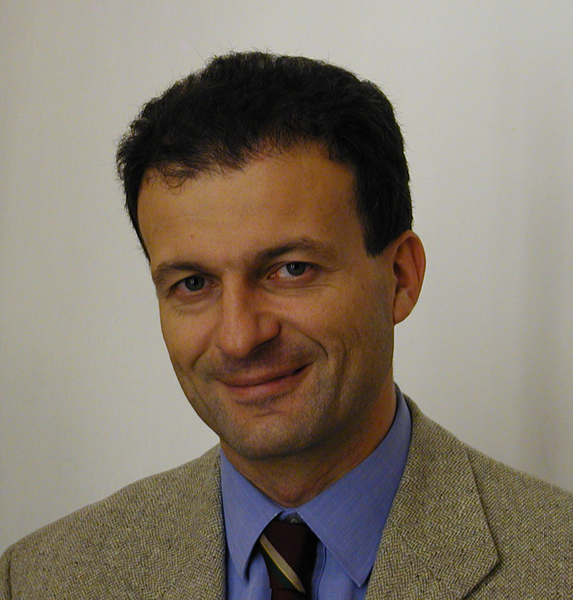
Michele Loporcaro is a Full Professor of Romance Linguistics (Italian Historical Linguistics) at the University of Zurich since 2000. He previously held academic positions at the University of Zurich, University of Calabria, and University of Padua. Romanische Seminar, University of Zurich Scuola Normale Superiore, Pisa Research interests include: Comparative Romance Linguistics Italian Dialectology (phonology, morphology, syntax) Historical Linguistics and Language Contact Phonological, Morphological and Syntactic Theory Linguistic Historiography Notable publications span topics like grammatical gender systems, vowel length evolution, and morphosyntactic variation in Italo-Romance dialects. His 2018 book Gender from Latin to Romance was a finalist for the AAP Prose Awards. Scientific recognition : Premio Borgia (1989) Premio Antonio Feltrinelli (2012) Fellow of Academia Europaea (2011–) Visiting Fellow at Wissenschaftskolleg zu Berlin (2013-14) Research leadership includes directing the Zurich Database of Agreement in Italo-Romance (SNSF-funded), co-editing major linguistic journals, and organizing international conferences on Romance linguistics. He has supervised 25+ PhD students and led fieldwork in Sardinia, Sicily, and other Romance-speaking regions.
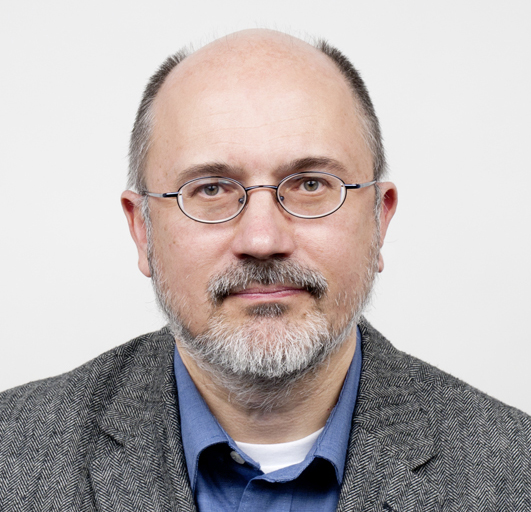
Andrej Malchukov is an active Apl. Professor (Außerplanmäßiger Professor) at the Department of English and General Linguistics, Johannes Gutenberg University Mainz, and an affiliated Senior Researcher at the St.-Petersburg Institute for Linguistic Research (Russian Academy of Sciences). His academic journey began with Germanic philology and linguistics studies at St-Petersburg University, followed by a candidate thesis (1990) and habilitation thesis (2002) focusing on the morpho-syntax of North Tungusic Even. His research spans multiple domains of linguistic inquiry with particular emphasis on linguistic typology , morpho-syntactic structures , and Siberian languages . Malchukov's scholarly work demonstrates exceptional depth in analyzing grammatical phenomena across diverse language families, especially concerning case systems, argument structure, and grammaticalization processes. Malchukov's publication record reveals consistent contributions to theoretical linguistics, with significant focus on typological patterns across languages. His work shows increasing specialization in grammaticalization scenarios and cross-linguistic variation, particularly evident in his recent publications on Ewen (North-Tungusic) and verbal category hierarchies. The research demonstrates strong methodological rigor through systematic cross-linguistic comparison and development of typological frameworks. Member of Academia Europaea (2022) Alexander von Humboldt Research Fellow (1994-1996) JSPS fellowship at Kobe University, Japan (2004) Visiting Professorship at NINJAL, Tokyo (2010) Malchukov has served on numerous PhD examination boards across European institutions including University of Mainz, University of Helsinki, and University of Amsterdam. His collaborative research has been supported by multiple DFG-funded projects, particularly the long-term collaboration with Bernard Comrie and Martin Haspelmath on ditransitive constructions and valency classes. He currently coordinates the DFG-supported project 'Universal and areal patterns in grammaticalization' with Walter Bisang, involving an international research team. Malchukov is also a member of the St-Petersburg Typology Group and serves on editorial boards for several major linguistics journals including Journal of Linguistics and Linguistic Typology.
Denis Delfitto is a Full Professor in General Linguistics at the University of Verona's Faculty of Humanities since November 2001. He previously served as Associate Professor of Italian Linguistics (1990-2001) and coordinated the syntax/semantics research group at Utrecht Institute of Linguistics OTS (1996-2001). His academic career includes visiting professorships at ZAS Berlin, University of Geneva, and LaBRI Bordeaux. PhD in General Linguistics, Scuola Normale Superiore (1990) Graduate in Philosophy, University of Pisa (1985) Diploma in Humanities (Logic and Formal Linguistics), Scuola Normale Superiore (1985) His research focuses on the syntax-semantics interface, morphology-semantics interactions, temporal and aspectual semantics, and the philosophy of language. He explores how linguistic structures encode reference mechanisms and self-representation in syntax. Professor Delfitto served as Vice-rector for International Relations at the University of Verona (2005-2011). His work spans formal linguistics, cognitive science, and semiotics. 2014 NWO Visiting Fellow 2008 LaBRI Fellow 1997 NIAS Fellow 1988 Fulbright Fellow
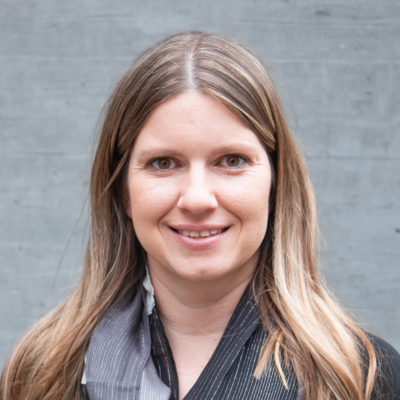
Bettina Könighofer is an Assistant Professor at the Technische Universität Graz (TU Graz), affiliated with the Institute of Information Security. Her academic background includes a BSc, Dipl.-Ing. (Diplom-Ingenieur), and Dr.techn. (Technical Doctorate). She specializes in formal methods applied to AI safety, reinforcement learning, and autonomous systems. Her research emphasizes ensuring safety and ethical compliance in decision-making systems through techniques like shield synthesis and formal verification. Research Interests: Safe Reinforcement Learning Algorithmic Fairness and Ethical AI Formal Verification of Learning Systems Autonomous Systems Safety Legal Accountability in Automated Decision-Making Her recent work explores safety shields for real-time decision enforcement, tools for legal accountability (e.g., soid ), and adaptive architectures for safety-critical systems. Notable projects include contributions to QComp verification competitions and Dagstuhl seminars on trustworthy AI. She holds a leadership role in academic conferences, including co-chairing the AISoLA 2023 Track C2. Her research often intersects with practical applications in mobility systems and regulatory compliance.
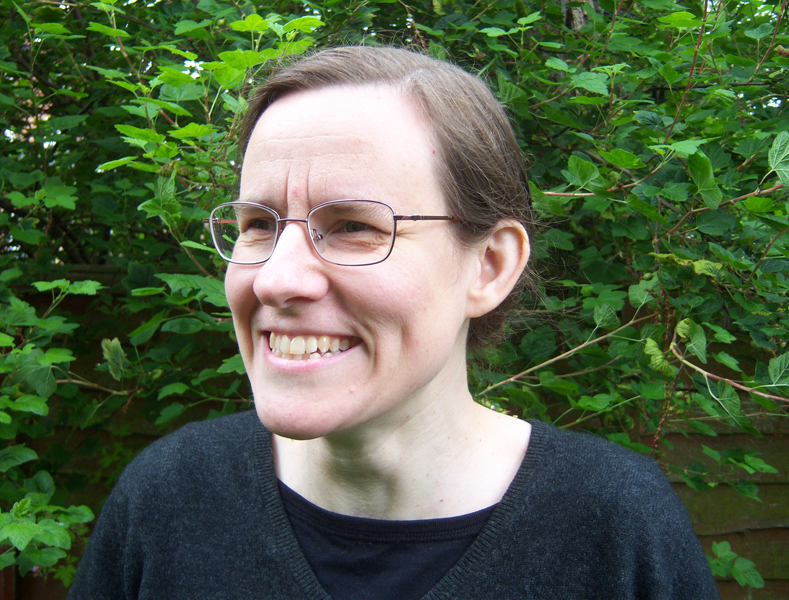
Philomen Probert serves as University Lecturer in Classical Philology and Linguistics at the University of Oxford and Fellow of Wolfson College since 1999. Her academic home resides within the Faculty of Classics, specifically in linguistics-focused departments as evidenced by her homepage and research profile. Her research spans multiple dimensions of historical linguistics with particular emphasis on Greek, Latin, and Indo-European languages. Key interests include linguistic theory (especially prosody), Indo-European historical and comparative linguistics, diachronic syntax, history of linguistics (focusing on Greek and Latin grammarians), and Greek, Latin, and Anatolian languages and literatures. Her work bridges philological traditions with modern linguistic theory. Probert's publication record demonstrates consistent scholarly output since 2002, with significant monographs published by Oxford University Press including Ancient Greek Accentuation (2006) and Early Greek Relative Clauses (2015). Her most recent work shows increasing focus on prosody, relative clauses, and the intersection of historical linguistics with classical scholarship. AHRC Leadership Fellowship (2015-2017) for 'Ancient Greek Thought on Prosody: Through Time and Latin Eyes' British Academy Mid-Career Fellowship (2012) for 'Early Greek Relative Clauses' Fellowship at Center for Hellenic Studies of Harvard University (2006-2007) Teaching Award from Oxford Learning Institute (2006) Conington Prize (2002) for Oxford dissertation While specific student supervision details aren't documented in the provided materials, Probert has secured significant research funding through prestigious fellowships including AHRC and British Academy awards. Her work appears consistently in top linguistics and classics journals, demonstrating sustained scholarly impact in both philological and linguistic communities.
Ian Roberts is a Professor of Linguistics at the University of Cambridge since 2000, with a focus on generative and comparative syntax across Germanic, Romance, English, and Celtic languages. He is also a Professorial Fellow at Downing College, Cambridge. Education : Ph.D. in Linguistics from the University of Southern California (1985) Research Interests Central areas: Generative syntax, Comparative syntax, Historical/diachronic syntax Language families: Germanic, Romance, English, Celtic Scientific Awards Prix Latsis from the University of Geneva (1989) Ordinary Fellow of the British Academy (2007) Member of the Academia Europaea (2008)
Shalom Lappin is a Professor of Computational Linguistics at the University of Gothenburg and King’s College London. He has held multiple academic roles, including Director of the Centre for Linguistic Theory and Studies in Probability at Gothenburg since 2015. Ph.D. in Philosophy, Brandeis University (1975) M.A. in Philosophy, Brandeis University (1973) B.A. in Philosophy, York University (1970) Lappin’s research focuses on the intersection of syntax, semantics, and computational modeling of linguistic knowledge. He explores probabilistic approaches to grammar induction, the philosophy of language, and the application of machine learning in understanding linguistic structures. His publications highlight trends in syntactic theory, anaphora resolution, and computational linguistics. Notable works include critiques of the Minimalist Program and foundational contributions to natural language processing algorithms. ESRC Professorial Fellowship (2012-2015) Elected Chair of the British Academy’s Linguistics and Philology Section (2011-2014) Fellow of the British Academy (2010) Lappin has led research teams and centers, notably the Centre for Linguistic Theory and Studies in Probability at Gothenburg. His career spans institutions like Tel Aviv University, University of London, and IBM Watson Research Center, with grants supporting interdisciplinary research in linguistics and cognition.
Irina Nikolaeva is a Professor of Linguistics at the University of London's School of Oriental and African Studies (SOAS), where she joined in 2007 as Lecturer in Endangered Languages and was promoted to professor in 2011. She served as Head of the Linguistics Department from 2012 to 2017. Her academic journey includes positions at the University of Oxford (Research Fellow and Tutor in Linguistics, 2004–2007), University of Konstanz (Research Fellow, 2000–2004), Central European University (Tutor in Linguistics, 1993–1995), and the Institute of Linguistics at the Russian Academy of Sciences (Research Fellow, 1990–1993). Education: BA and MA from Moscow, Candidate degree (equivalent to PhD) from Moscow, ABD from San Diego, PhD from Leiden. Nikolaeva's research focuses on linguistic typology, theoretical morphosyntax, and the documentation of endangered Siberian languages. She has produced reference grammars, dictionaries, text collections, and teaching materials for minority communities in the Russian North. Her publications span topics like finiteness, TAM marking on nouns, and information structure across languages. Scientific Awards : Women of Discovery Award (2008) Fellow of the British Academy (2019) Her work emphasizes empirical data from understudied languages to inform universal linguistic theories. She has collaborated with institutions in Hungary, Germany, and the UK, contributing to both academic scholarship and public-facing linguistic resources.
Milena Žic Fuchs is a Full Professor at the Department of English, Faculty of Humanities and Social Sciences, University of Zagreb. She has held prominent roles including Chair of Linguistics (2002–2011), Croatian Minister of Science and Technology (1999–2000), and Chair of the Standing Committee for the Humanities of the European Science Foundation (2009–2012). She is a Full Member of the Croatian Academy of Sciences and Arts (2010) and Academia Europaea (2013). Education: B.A. in English Language/Literature and Ethnology (1977, University of Zagreb), M.A. in Linguistics (1982), Ph.D. in Cognitive Linguistics (1989). She taught at SUNY Buffalo as a Fulbright scholar (1995/96). Research focuses on cognitive linguistics, discourse analysis, and language structure. Notable works include Cognitive Linguistics and Language Structures: the English Present Perfect (2009), which earned the 2011 National Science Award. She has authored/co-authored books on semantics, cognitive linguistics, and acronyms. Awards include ERC Scientific Council membership (2020), Academia Europaea membership, and leadership roles in European science policy bodies like the European Research Council (ERC) and Joint Research Centre (JRC). Her contributions span academic leadership, European science governance, and interdisciplinary research promotion. She has advised on EU research programs and chairs international boards such as the Croatian Academy’s International Board and University of Helsinki’s International Advisory Board.
Claudia Elisabeth Pichler is a Senior Lecturer at the Institute of Romance Studies, Faculty of Humanities, Alpen-Adria-Universität Klagenfurt. She is actively involved in teaching and research, with consultation hours available by appointment via email. Her work is centered on Romance linguistics and language education. Her research interests span multiple areas in linguistics and humanities education, including: General and Applied Linguistics Romance Studies, with focus on French and Italian linguistics Historical syntax and word order phenomena Information structure in spoken and written language Language teaching methodology and didactics The thematic focus of her scholarly work emphasizes structural and pedagogical aspects of Romance languages, particularly Italian and French, within both theoretical and classroom contexts. There are no listed scientific awards or honors in the available text. Claudia Elisabeth Pichler supervises students, though no specific advisees are listed. There is no mention of external grants or funded research projects. She contributes to academic life through her teaching and research activities at AAU. She is affiliated with the Institute of Romance Studies, where she conducts research and offers courses in linguistics and language education. No separate lab or research team is mentioned.
Christian Winkler is a Senior Lecturer at the Institute for Romance Studies and the Institute for Applied Informatics at the University of Klagenfurt (Alpen-Adria-Universität Klagenfurt). He has been actively involved in interdisciplinary research and teaching since 1994, bridging the fields of linguistics and computer science. His academic affiliations include the Faculty of Cultural Sciences (KUWI) and the Faculty of Technical Sciences (TEWI), where he contributes to programs in Romance studies, Anglistics, and computer linguistics. Education: Studied Romanistics, Anglistics, and Linguistics at the University of Klagenfurt. Languages: Fluent in English, Italian, French, Spanish, and Portuguese. Winkler's research is centered on the intersection of natural language and information systems. His primary interests include computational linguistics, natural language processing (NLP), requirements engineering, syntactic theory (especially infinitive constructions in European languages), and the application of linguistic principles to software engineering. He has made significant contributions to the development of linguistic tools for conceptual modeling and text analysis, particularly through the long-running NIBA (Natürlichsprachliche Informationsbedarfsanalyse) project. The 15 most recent publications reflect a strong trend in applying linguistic analysis to software and information systems. Key themes include natural language-based requirements engineering, text summarization, semantic tagging, ontology integration, and enterprise search optimization. These works are predominantly published in the ICSSEA and NLDB conference series, indicating a sustained focus on the practical application of linguistics in computing contexts. Subfields span AI-driven text evaluation, verb phrase similarity, collaborative knowledge repositories, and mobile instructional applications. Scientific Awards: No awards or fellowships are mentioned in the provided text. Christian Winkler has played a significant role in academic advising and research collaboration, particularly through his long-term involvement in major research projects. The NIBA project, ongoing since 1995 and funded by the Klaus Tschira Stiftung and the Austrian National Bank, represents a major collaborative effort in linguistically based requirements engineering. He has also contributed to numerous grants and initiatives in natural language processing and software engineering. While no formal advisees are listed, his co-authorship with students and researchers suggests mentoring and collaborative supervision. Labs and Research Teams: NIBA Project Team: Core member since 1995, focusing on natural language analysis for information systems. ICSSEA Conference Series: Regular participant and contributor, indicating integration into a broader European research network in software and systems engineering. Natural Language and Information Systems (NLIS) Community: Active in program committees, showing leadership in the academic community.
Friedrich Neubarth is a lecturer at the University of Vienna, affiliated with the Department of German Studies and the Department of Philosophy. His work bridges theoretical linguistics and computational approaches to language processing. Research Focus: Speech synthesis for dialectal varieties, computational modeling of morphology/syntax, phonological representation primitives, and prosodic correlates of information structure. Key Projects: VSDS (Viennese Dialect Synthesis), MLT4MLV (Machine Learning for Language Varieties), LEGO Audio & Braille Building Instructions, and MAGNIFICENT (Multifaceted News Analysis). Academic Contributions: 15-year publication record (2008-2023) spanning speech technology, dialectal machine translation, crossmodal word learning, and formal syntactic theory. Notable collaborations with Brigitte Krenn, Harald Trost, and Michael Pucher. Teaching: Delivers courses in linguistics and grammar at the University of Vienna, including exercise courses and lecture+exercise combinations since at least 2003. Technical Expertise: Development of spoken dialogue systems incorporating Viennese dialect synthesis, creation of multimodal language learning frameworks, and construction of annotated linguistic corpora for research.
Martin Haspelmath is a Senior Researcher at the Max Planck Institute for Evolutionary Anthropology and an Honorary Professor at the University of Leipzig. His academic career spans multiple institutions, including Freie Universität Berlin and Moscow State University. Education: Habilitation in General and Comparative Linguistics, Freie Universität Berlin (1996) Ph.D. in Linguistics, Freie Universität Berlin (1993) M.A. in Slavic Studies, Linguistics, and Indo-European Studies, Universität zu Köln (1989) M.A. in Linguistics, State University of New York at Buffalo (1988) Haspelmath's research focuses on language typology, syntax, morphology, diachronic linguistics, and language contact. His work bridges comparative linguistics and evolutionary anthropology, emphasizing cross-linguistic variation and historical change. Scientific awards and honors include: Academy Prize of the Berlin Brandenburg Academy of Sciences (2007) Heisenberg Fellowship (1997-1998) German Academic Exchange Service Fellowship (1989) Evangelisches Studienwerk fellowship (1983-1989) He has held positions such as Visiting Scholar at the Università di Pavia (1997-1998) and Scientific Assistant at Freie Universität Berlin (1994-1996), contributing to academic programs like the European Science Foundation's Language Typology initiative.
Veronika Mattes is an Associate Professor at the Institute of Linguistics, University of Graz, where she is actively involved in research and teaching. Her academic work focuses on general and applied linguistics, with a strong foundation in theoretical frameworks. Her research interests span multiple areas within linguistics, including syntax, semantics, and applied language analysis. These interests are reflected in her teaching authorization and academic supervision of final theses. No recent publications or scientific awards were listed in the provided text. She advises students on their final theses, indicating an active role in academic mentoring, though specific advisees are not named. There is no mention of external grants or funded research projects. Veronika Mattes is based at the Institute of Linguistics, University of Graz, located at Merangasse 70/III, Room 0033030044, Graz, Austria.
Dr. Daniel Büring is a Professor at the Department of Linguistics, Faculty of Philological and Cultural Studies, University of Vienna. His research focuses on syntax, semantics, and pragmatics, particularly on cross-linguistic focus marking and discourse particles. He has led research projects such as "Unalternativen-Bedingungen im S..." (2016-2020) and published extensively on topics like morphosyntactic focus marking and phonological phrase correspondence. His work appears in journals like Linguistic Inquiry and edited volumes. Recent activities include keynote speeches at international conferences (e.g., Crosslinguistic Relational Focus Semantics, 2021) and collaborative presentations on focus interpretation mechanisms.