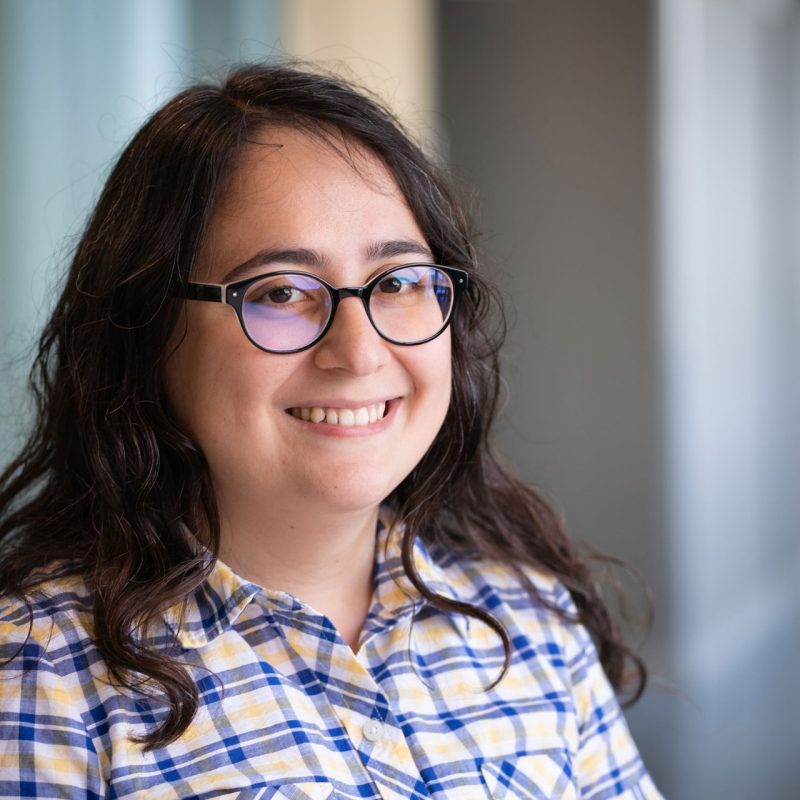
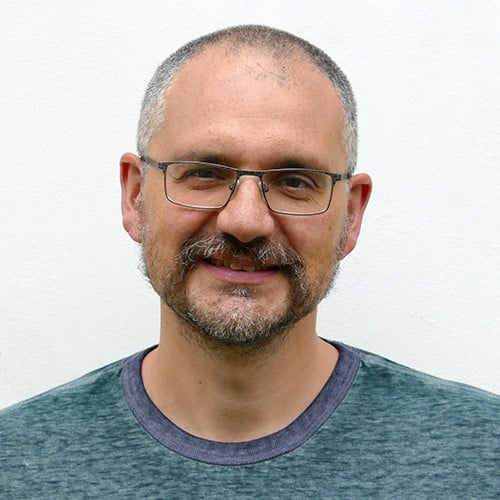
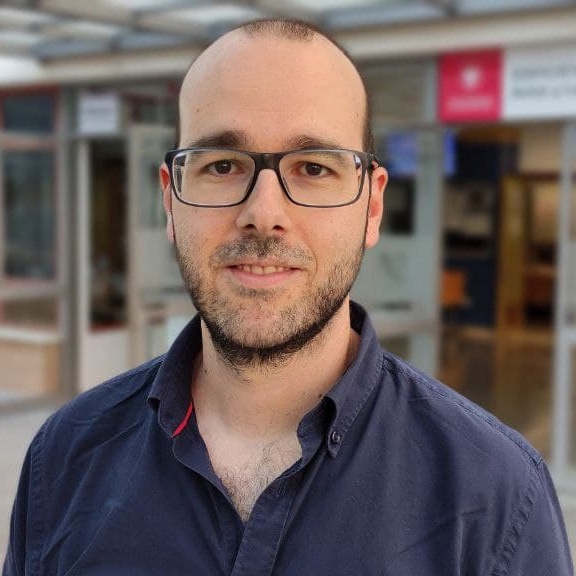
Iain Giblin is a Lecturer in the Department of Linguistics at Macquarie University, affiliated with the Centre for Language Sciences (CLaS). His research focuses on generative syntax, language acquisition, and music, situated within the Universal Grammar framework. He investigates how computational features of the mind structure human experience. He has been involved in major research projects including 'Unexpected Wide Scope Phenomena in Child Language' (2020-2022), 'CLaS: Centre for Language Sciences (CLaS) - MQRC 2019' (2019-2021), and 'Child-friendly mobile eye-trackers' (2018). His work spans theoretical linguistics and applied research in education. Key research contributions include studies on genre theory in education, recursive grammar acquisition in children, and experimental investigations into verb processing and event semantics. He received the 2024 FMHHS Education Excellence Award for teaching excellence.
Kyrre Harald Glette is a Professor in the Department for Informatics at the University of Oslo , affiliated with the Robotics and Intelligent Systems Research Group and the RITMO Centre for Interdisciplinary Studies in Rhythm, Time and Motion . His research focuses on the co-design of robot morphology and control using evolutionary and bio-inspired artificial intelligence methods. Research Interests: Robotics and Intelligent Systems Evolutionary Robotics and Co-Design of Morphology and Control Artificial Intelligence and Machine Learning Evolvable Hardware and Embodied Computation Computational Creativity and Music-AI Interaction Human-Robot Interaction and Swarm Robotics His recent publications (2023–2025) reflect a strong interdisciplinary trend, combining robotics, evolutionary computation, and music technology. Key themes include evolutionary design of modular robots , real-time adaptation in bio-inspired systems , interactive sonification , and AI-driven music generation . His work often involves the DyRET robotic platform, emphasizing real-world evolution and embodied learning. Scientific Contributions: Extensive publications in top venues like Frontiers in Robotics and AI , IEEE ICRA , GECCO , and Nature Machine Intelligence . Development of open-source robotic platforms and frameworks for evolutionary robotics. Interdisciplinary work bridging AI, neuroscience, and music. Advising and Projects: He supervises MSc students in evolutionary robotics, robot locomotion, and musical robot swarms. He is involved in several research projects including Predictive and Intuitive Robot Companion (PIRC) , Modeling and Robots , Multimodal Elderly Care Systems (MECS) , Musical Human-Machine Interaction , and Neurophysiological Mechanisms of Human Auditory Predictions (AudioPred) . Labs and Research Groups: He is a key member of the Robotics and Intelligent Systems (ROBIN) group, the RITMO Centre of Excellence , and the Creative Computing Hub Oslo (C2HO) . These groups support interdisciplinary research in AI, robotics, music, and human interaction.
Anne Helene Kveim Lie is a Professor at the Department of Community Medicine and Global Health, Faculty of Medicine, University of Oslo. She has been a faculty member since 2011, promoted to full professor in 2023. Her interdisciplinary work bridges medical history, anthropology, and social medicine, with strong focus on antibiotic resistance, global health, and climate change. She maintains clinical practice as a General Practitioner in Northern Norway and with underserved migrant populations. MD, University of Oslo (1998) PhD in Medical History, University of Oslo (2008) Her research explores the historical, social, and political dimensions of healthcare, particularly in Scandinavian welfare states. She examines infectious diseases, pharmaceuticals, and the evolution of public health policies. Her teaching integrates medical humanities into medical education, emphasizing interdisciplinary understanding. She led the community medicine program (2012–2022) and is currently head of teaching at the Institute of Health and Society. Her recent publications analyze antimicrobial use in refugee settings, historical shifts in disease classification, and critiques of addiction models. She has collaborated with institutions in Berlin, Philadelphia, and Baltimore, and leads interdisciplinary research groups on antimicrobial resistance and medical humanities. One of the 10 best academic teachers in Norway (2016) University of Oslo Education Award (2018) Olav Thon Foundation's National Award for Excellence in Teaching (2021) Lie has supervised curriculum development and led national reforms in medical education. She has held leadership in the European Association for the History of Medicine and Health, serving as President (2021–2023) and current Chair of the Board. She is actively involved in public health advocacy and knowledge translation, particularly in areas of migration, equity, and planetary health.
Kayvan Karim is an Assistant Professor at the School of Mathematical & Computer Sciences, Heriot-Watt University, Dubai. He serves as Program Director for the MSc Software Engineering and MSc IT Software Systems programs, combining over two decades of industry experience in software engineering and architecture with academic leadership. His research centers on Natural Language Processing (NLP) , Large Language Models (LLMs) , and their applications in network security , software engineering , and sustainable technology . He explores innovative intersections of AI with usability testing, music generation, fashion design, and no-code platforms, contributing to broader goals in artificial intelligence and sustainable development. The recent publications highlight a strong trend in applied AI , focusing on automated systems , multi-agent frameworks , and domain-specific fine-tuning of generative models. These works span human-computer interaction, cinematic AI, sustainable production, and enterprise solutions, demonstrating a versatile and impactful research agenda. Scientific Awards: No scientific awards mentioned in the provided text. Advising and Grants: Kayvan Karim supervises research projects, as evidenced by co-authored papers with junior researchers and students such as Tahir Kadegaonkar, M. Sartaee, Ilham Ghori, and others. While formal advising roles or grant funding details are not explicitly stated, his leadership in research output and program direction suggests active mentorship and potential grant involvement. Labs and Research Teams: Though no specific lab or team name is mentioned, Kayvan Karim is actively involved in a collaborative research network focusing on AI applications, as reflected in co-authored works and interdisciplinary projects. His contributions align with AI innovation hubs at Heriot-Watt University, particularly in Dubai, where applied research in software systems and intelligent technologies is emphasized.
Pinar Acar is an Associate Professor in the Department of Mechanical Engineering at Virginia Polytechnic Institute and State University (Virginia Tech), within the College of Engineering. She leads the Advanced STRuctures and Optimization (ASTRO) Lab, focusing on computational multi-scale modeling, design optimization, uncertainty quantification, and machine learning for advanced materials. Education: Ph.D. in Aerospace Engineering, University of Michigan, 2017 M.Sc. in Aerospace Engineering, Istanbul Technical University, Turkey, 2012 B.Sc. in Astronautical Engineering, Istanbul Technical University, Turkey, 2010 Her research centers on the computational design of materials, particularly smart materials, nanomaterials, and metamaterials, with emphasis on micro-architectural topology, forward and inverse modeling, and uncertainty-aware simulations. She integrates mathematical analysis and data-driven techniques to solve complex material design problems across multiple length scales, from microstructure to component-level performance. Her group explores innovative applications such as sonifying material data (Shape-to-Music project) to enhance understanding and education. Dr. Acar's recent publications reflect a strong trend in combining machine learning with uncertainty quantification to enable robust, inverse design of functionally graded materials, magnetic systems, and metamaterials. Her work spans aerospace, defense, and extreme environment applications, often involving high-fidelity numerical frameworks and reduced-order modeling for efficiency. Scientific Awards: NSF CAREER Award (2023) Frontiers of Materials Award, TMS (2023) Best Paper Award, AIAA SciTech Forum (2022) Dean's Award for Excellence: Outstanding New Assistant Professor, Virginia Tech (2021) AFOSR Young Investigator Award (2020) Amelia Earhart Fellowship, Zonta International (2016) Dr. Acar actively advises graduate students and leads funded research projects, including those supported by the National Science Foundation and the Air Force Office of Scientific Research. Her lab, ASTRO Lab, fosters interdisciplinary collaboration and innovation in materials design. The team has presented at major conferences such as AIAA SciTech and TMS Annual Meetings, and has published in high-impact journals. Current efforts include developing digital material databases, exploring phase transitions in magnetic materials, and creating educational tools that bridge engineering and music. The lab maintains active collaborations and hosts visiting researchers, contributing to the broader materials science community through open science and outreach initiatives.
Álvaro Corral is a researcher at the Centre de Recerca Matemàtica (CRM) in Barcelona, where he leads the Complex-Systems Group. He is associated with the Mathematics Department of the Universitat Autònoma de Barcelona and is a member of the Barcelona Graduate School of Mathematics and the network complexitat.cat. His research lies at the intersection of statistical physics, geophysics, and data science, focusing on complex systems such as natural hazards (earthquakes, hurricanes, geomagnetic storms) and human-generated systems (language, music). He specializes in power laws, scaling laws, Zipf’s law, and finite-size effects , applying rigorous statistical methods to model and predict extreme events. The analysis of his recent publications reveals a strong interdisciplinary trend, combining physics-based modeling with data analytics in domains ranging from urban population clustering to classical music harmony. His work often bridges theoretical frameworks with real-world datasets, emphasizing the universality of scaling phenomena across diverse systems. Scientific Awards and Recognitions: Ramon y Cajal Fellow Lorenz Lecturer, 2011 American Geophysical Union Fall Meeting Álvaro is deeply committed to the training of young researchers, having organized multiple summer schools. Although no formal advisees are listed, his leadership of a research group and active publication record indicate significant mentorship and collaborative grant activities. His research has been supported through various institutional and national funding mechanisms, enabling high-impact publications across physics, geoscience, and data science journals. He leads the Complex-Systems Group at CRM, fostering interdisciplinary collaborations on topics such as urban sustainability, extreme-event modeling, and the statistical structure of human culture.
Thales Reis Alecrim is a doctoral candidate in Culture Studies at the Universidade Católica Portuguesa's Faculty of Human Sciences, affiliated with the Research Centre for Communication and Culture (CECC). Holding a scholarship from the Fundação para Ciência e Tecnologia (FCT), he possesses advanced degrees in History (BA 2017, MA 2020) from Universidade Estadual Paulista (UNESP) and an MBA in Communication, Material Culture, and Consumption from Universidade de São Paulo (USP, 2021). His academic work critically examines intersections between culture, history, literature, and music within neoliberal frameworks. Education: PhD in Culture Studies (ongoing, UCP) MA in History (2020, UNESP) BA in History (2017, UNESP) MBA in Communication, Material Culture, and Consumption (2021, USP) Research Focus combines cultural theory with historical analysis, particularly exploring: Metal and reggae music as cultural critique Neoliberalism's impact on artistic production Postcolonial memory construction in Brazil Intermedial dialogues between literature and music Material culture's role in identity formation Contemporary re-readings of historical myths His 16+ research outputs since 2017 demonstrate diverse engagement with: Comparative analysis of Bob Marley and Sepultura Carnation Revolution's cultural legacy Primitive futurism in metal music Dependency theory in Brazilian cultural debates Adorno's critical theory applications Digital preservation of cultural memories Laboratory Affiliation: Research Centre for Communication and Culture (CECC), Universidade Católica Portuguesa
Simon Emmerson is a Professor in Music, Technology & Innovation at De Montfort University’s Leicester Media School , with a career spanning nearly five decades. He founded the Electroacoustic Music Association of Great Britain (EMAS) and served on Sonic Arts Network/Sound and Music boards. His DAAD Edgard Varese Visiting Professorship at TU Berlin and Silver Jubilee Visiting Professorship at Western Australian Academy of Performing Arts highlight his global influence. Current research student supervisor at DMU Co-PI on AHRC-funded project New Multimedia Tools for Electroacoustic Music Analysis Editorial Board member for Organised Sound , Radical Musicology , and Journal of Sonic Studies His research focuses on electroacoustic music’s live performance practices, spatial composition, gender dynamics in electronic music institutions, and machine-human listening symbiosis. He pioneered ‘concert installation’ formats like Aeolian , where looping structures create non-linear temporal experiences. Key publications include foundational texts The Language of Electroacoustic Music (1986), Living Electronic Music (2007), and The Routledge Research Companion to Electronic Music (2018). His AHRC-supported project (2010-2013) produced innovative analysis tools for hybrid genres. Scientific contributions: 2019 Oxford Handbook chapter on imagination in performance 2018 ICLI collaboration on crossadaptive processing 2016 EMAS institutional history analysis 2015 Organised Sound article on machine listening 2007 Living Electronic Music monograph As composer, he has created over 50 electroacoustic works performed at festivals in Paris, Berlin, Lisbon, and Birmingham. His advising includes supervising PhD/Masters students at DMU, though specific names aren’t listed. He maintains active performance presence with concerts in 2020 celebrating his 70th birthday.
Manuel Serrano is a senior research scientist at Inria (French Institute for Research in Computer Science and Automation) affiliated with University of Côte d'Azur, based at the Sophia Antipolis research center in the indes team. He has been active in the programming languages research community since at least 2000, serving in numerous leadership roles across major conferences. His research focuses on programming languages, particularly JavaScript and Scheme implementations, compiler design for dynamic languages, web programming, and synchronous reactive programming. His work bridges theoretical language design with practical implementation concerns, with a strong emphasis on performance optimization of dynamic languages. He has made significant contributions to the understanding and improvement of JavaScript compilation techniques, particularly through his work on ahead-of-time compilation. His publication record shows consistent output in top venues including PLDI, OOPSLA, ICFP, and ECOOP, with a recent focus on JavaScript optimization, sealed classes, type system verification, and synchronous reactive programming through his HipHop.js language. His work demonstrates a progression from foundational Scheme compilation (Bigloo) to modern web technologies and JavaScript optimization. He has served as General Chair for the Programming conference in 2018, Program Co-Chair for Programming 2024-2025, and is currently serving as PC Chair for ICFP 2026. His conference service spans over two decades across numerous programming language venues including ICFP, SPLASH, ECOOP, and specialized workshops on Scheme and dynamic languages. As a creator of multiple programming tools and languages, he has developed Bigloo (an optimizing Scheme compiler), Hop (a language for web 2.0 programming), HipHop (an asynchronous programming language), and Flyspell (an on-the-fly Emacs spell checker). His Cold project with University of Montreal focuses on compilation and optimization techniques for dynamic languages like JavaScript and Python.
Prof. Dr. Ahmet KOC is a full-time Professor at Marmara University's Faculty of Theology, Department of Philosophy and Religious Sciences (Religious Education). He has held academic positions since 1994, becoming an Associate Professor in 2006 and Professor in 2011. His career includes roles at Recep Tayyip Erdoğan University (1994-2012) and Marmara University (2012-2020). He has engaged in projects at the Ministry of National Education and Diyanet İşleri Başkanlığı (Presidency of Religious Affairs). Education Background: Bachelor's Degree: Marmara University Faculty of Theology (1983) Master's Thesis: "Values in Necip Fazıl" (Marmara University, 1993) Doctoral Thesis: "Philosophy of Education of the Ihvan-ı Safa" (Marmara University Institute of Social Sciences, 1996) Research Interests focus on Islamic Thought, Religious Education in Turkey's Republican Era, family and school-based religious instruction, effective communication in education, and the role of Diyanet in disseminating religious education. His work analyzes themes like Quranic education methods, curriculum development, and cross-cultural religious pedagogy. Publications span over 70 articles and books since 1993, addressing topics from medieval Islamic educational philosophy to modern challenges in religious education systems. Notable contributions include studies on Turkish religious education policy debates, Quran courses (Kur'an Kursu) efficacy, and comparative analysis of religious education frameworks in Germany and Türkiye. Awards: No specific honors mentioned in provided texts. Grants & Advising: Extensive involvement in government projects related to religious education but no specific grants listed. Supervised numerous studies on religious education methodologies without explicit student names provided. Labs/Teams: Active in Marmara University's theology faculty research programs, contributing to institutional journal analyses and policy evaluations.
Dr. Ali Bashashati is an Associate Professor at the University of British Columbia (UBC), affiliated with the School of Biomedical Engineering and the Department of Pathology and Laboratory Medicine. He leads the Artificial Intelligence in Medicine (AIM) Lab, focusing on advancing healthcare through AI-driven solutions in computational pathology and omics data integration. His research combines machine learning, signal processing, and software engineering to address challenges in cancer diagnosis and treatment, particularly in breast, ovarian, and lymphoid cancers. Dr. Bashashati’s work emphasizes multi-modal data analysis, including histopathology imaging and genomics, to improve cancer subtyping and treatment stratification. He has pioneered frameworks like VOLTA for context-aware cell representation learning, enhancing AI models’ performance in histopathology analysis. His contributions to cancer genomics include studies on clonal evolution, tumor heterogeneity, and genomic instability mechanisms. He is the principal investigator of the NSERC CREATE MUSIC training program, a $1.65M initiative fostering next-generation biomedical engineers skilled in AI, biotechnology, and disease biology. This program integrates courses on medical imaging data analysis, applied machine learning, and multi-scale computing for healthcare innovation. Awarded the NSERC CREATE Grant, Dr. Bashashati’s lab collaborates with industry and academia to translate AI innovations into clinical practice, with over 200 peer-reviewed publications in top-tier journals like Nature and Nature Genetics. His team’s work spans from fundamental research to applied tools for precision oncology.
Wolfgang Kogert is a Professor of Organ at the Mozarteum University Salzburg since 2015 and holds a concurrent professorship at the Freiburg University of Music since 2020. He serves as organist for the Vienna Hofburgkapelle and has performed globally with orchestras like the Vienna Radio Symphony Orchestra and Sydney Symphony Orchestra. Education includes studies in Vienna, Stuttgart, and Detmold. Notable accolades include winning the 2006 International Wedstrijd Musica Antiqua and a 2013 residency at Paris' Cité Internationale des Arts. His research focuses on bridging early music traditions (medieval to baroque) with contemporary compositions, particularly in electroacoustic and algorithmic domains. Recent work emphasizes premiering new organ works by Cerha, Lang, and Essl, often integrating electronics and spatial soundscapes. Collaborations with composers like Mitterer and Pagh-Paan highlight experimental techniques. Recordings span Hindemith's Sancta Susanna to algorithmic works like ORGANO/LOGICS. Publications include critical editions of Josef Matthias Hauer's organ music and essays on Friedrich Cerha's compositions. He frequently discusses organ pedagogy and 21st-century repertoire expansion in journals like Das Orgelforum.
Dr. Miguel Molina-Solana is an Associate Professor (Prof. Titular) at the Department of Computer Science and AI, Universidad de Granada (Spain) and Honorary Research Fellow at Imperial College London's Data Science Institute. He holds a PhD in Computer Science and AI from Universidad de Granada (2008-2012) and an MSc in Computer Science from the same institution (2002-2007). His academic journey includes roles as Marie Curie Research Fellow (2017-2019 at Imperial College), Research Associate at the Data Science Institute (2015-2017), and postdoctoral researcher at UGR (2012-2015). Research focuses on Artificial Intelligence , Data Science , Energy Management , and Disinformation Analysis . Notable projects include SINERGY (deep learning for energy simulation), IBERIFIER (EU-funded disinformation observatory), and IA4TES (AI applications for sustainable energy transition). He co-leads the SAIL Lab at UGR and has led research groups in visualization and energy systems. Publications span Angewandte Chemie , Energy and Buildings , and Applied Soft Computing , covering topics like physics-informed neural networks, HVAC control optimization, and Telegram-based disinformation analysis. His work bridges machine learning with domain-specific challenges in energy, music informatics, and smart built environments. Outreach activities include science communication projects (e.g., 'The Sound of Mars' art installation) and education initiatives through Native Scientist. Current roles involve advising PhD students on energy and AI projects, with active grants from Spanish and EU programs. Labs/Teams: SAIL Lab (Universidad de Granada), Data Science Institute (Imperial College London collaborations), and interdisciplinary teams in energy and disinformation research.
Timothy Polashek is a Professor of Music Technology and Composition at Transylvania University, specializing in electro-acoustic music, interactive performance systems, and computational sound synthesis. He holds a D.M.A. from Columbia University (2002), M.A. from Dartmouth College (1996), and B.A. from Grinnell College (1994). Teaches courses including Audio Recording Technology, Music Cognition, and Computational Sound Synthesis. Research focuses on text/sound composition and audio synthesis, published in Leonardo Music Journal and Journal of the Society of Electro-Acoustic Music . Work featured internationally at festivals like the International Computer Music Conference and Icelandic Festival of Electronic Arts. Polashek's compositions are released on Wood and Wire (Albany Records) and Electric Music Collective albums. His interactive music systems are cited in major academic references like The Oxford History of Western Music .
Lynnwood Yates is an Instructor of Mathematics at Warner University, serving since January 2023. He holds an Associate of Science in Electronics from Galvin College, a Bachelor of Science in General Science from Grace College, and a Master of Applied Science in Aeronautical Science from Embry-Riddle Aeronautical University. Prior to academia, he served as a retired US Navy Submarine Force Master Chief (STCM/SS), Reliability Engineer for Navy and Air Force aircraft, and an Aerospace Engineer for the Air Force. His career spans technical and military roles, blending engineering expertise with educational leadership. Personal interests include golf, playing musical instruments, and family life with six children, twelve grandchildren, and three great-grandchildren. He emphasizes faith, citing Ephesians 2:8-9 as a guiding principle.