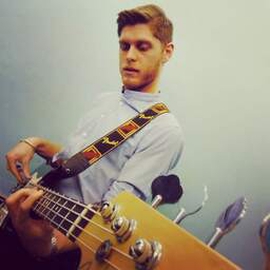
Erin Truesdell is an Assistant Professor in the Department of Informatics at New Jersey Institute of Technology (NJIT). She holds a Ph.D. and M.S. in Digital Media from Georgia Institute of Technology (2023 and 2021, respectively) and a B.S. in Game Design and Production from Drexel University (2019). Her research focuses on collaborative systems, embodied play, and AI-driven educational technologies. She explores topics such as controller design for collaborative gameplay, automated creativity assessment in music remixing, and interdisciplinary healthcare solutions like infection prevention in neonatal intensive care units (NICUs). Dr. Truesdell’s work bridges game design, human-computer interaction, and health informatics. Recent projects include analyzing barriers to infection control in clinical settings and developing curve-based level generation for full-body VR rhythm games. Her co-creative AI agents aim to enhance music and code education through human-AI collaboration. Office hours are held by appointment via Calendly , and her personal website is erinjktruesdell.com .
Dr. David P. Lewis serves as a Professor of Music Education within the Fine Arts Department at Glenville State College, a position he has held since 2008 after transitioning from 24 years of high school music teaching in Pennsylvania. His instructional portfolio encompasses foundational courses including Music Theory, Music History, Class Piano, and Instrumental Methods, shaping the next generation of music educators through comprehensive pedagogical training. His academic credentials feature a Doctor of Musical Arts in Music Education from Shenandoah University (2007), supplemented by a Master of Arts (1994) and Bachelor of Science (1981) in Music Education from Indiana University of Pennsylvania, establishing deep expertise in educational methodology and musical scholarship. Dr. Lewis's research program centers on instrumental music education with emphatic focus on curriculum architecture and historical context. He pioneers frameworks for developing comprehensive band curricula tailored to middle-level and small high school programs, investigates improvisation pedagogy within standards-based rehearsals, and documents the evolutionary trajectory of wind band repertoire. His scholarship bridges theoretical knowledge with practical classroom application, addressing systemic challenges in music education through evidence-based solutions. His 2011-2013 publication sequence reveals a cohesive scholarly arc examining curriculum design, historical foundations, and innovative teaching techniques in wind band education. These works collectively advance understanding of musicianship development, repertoire selection, and standards implementation, establishing him as a significant contributor to music education literature with practical implications for band directors nationwide. Dr. Lewis actively engages with Glenville State College's musical ecosystem through original compositions including "The Hills of Armagh" for Concert Band (2013) and "Romance for Woodwinds and Piano" for Woodwind Ensemble (2014), demonstrating his dual commitment to scholarly contribution and artistic creation within the campus community.
Aileen Benedict is a Lecturer and PhD candidate in the Department of Computer Science at the University of North Carolina at Charlotte. She holds Bachelor's and Master's degrees from UNC Charlotte and is a recipient of the GAANN Fellowship. Her academic appointment combines doctoral research with teaching responsibilities. Research Focus: Benedict's work bridges artificial intelligence and human-centered applications. Primary domains include: Healthcare AI : Developing music therapy recommendation systems using action rules and data mining Educational Technology : Creating recommender systems to enhance CS1 instruction and foster student belonging AI Ethics : Exploring societal implications of intelligent systems Her dissertation focuses on personalized music therapy systems in collaboration with clinical practitioners. Publication Trends: Recent works demonstrate strong emphasis on educational recommender systems (7 papers) and data-driven healthcare applications (4 papers), with consistent focus on interpretable AI techniques. Methodologically, 60% employ rule-based mining approaches while 40% focus on collaborative filtering and clustering techniques. Awards: GAANN Fellowship (Graduate Assistance in Areas of National Need) Academic Service: Contributes to CS education innovation through course scaffolding techniques and active learning frameworks. Current projects include developing tools for curriculum visualization and automated assignment generation.
Michele Mancusi is a Senior Research Scientist at Sony and holds a Ph.D. in Computer Science from Sapienza University of Rome, where he remains affiliated with the GLADIA research group under Prof. Emanuele Rodolà. He earned dual degrees in Physics (Quantum Information) from Sapienza, blending computational and theoretical expertise. His research focuses on deep learning applications in audio signal processing, including source separation techniques for music and ecological monitoring. Notable contributions include data-driven methods for marine biodiversity assessment via fish vocalization analysis and innovations in diffusion models for high-resolution audio generation. His work bridges academia and industry, with publications in top venues like ISMIR, ICASSP, and ICLR. Research interests emphasize generative models (autoregressive/diffusion), music technology, and interdisciplinary applications in environmental science. Recent efforts explore coherence-oriented audio representation learning (COCOLA) and inference-time optimizations for music mastering processors (ITO-Master). Publications reflect a trend toward real-world impact, such as accelerating transformer-based translation systems and developing latent diffusion techniques for timbre transfer. Collaborations include cross-disciplinary projects with marine biologists to advance biodiversity tracking through passive acoustic monitoring.
Amy Hoover is an Assistant Professor in the Informatics department at New Jersey Institute of Technology (NJIT). Her research focuses on artificial intelligence, procedural content generation, and the intersection of AI with creative domains such as music composition and video game design. She explores topics like evolutionary algorithms, open-ended learning systems, and ethical considerations in AI applications. Her work spans contributions to procedural content generation (PCG) in games, including automated deckbuilding for Hearthstone and generative level design. She also investigates peer learning dynamics in AI systems and the application of large language models (LLMs) for creative tasks. Hoover’s research often bridges computational methods with human-centric design, such as curriculum development in AI education and fostering creativity through interactive tools. Her publications reflect collaborations in AI-driven game design, music composition, and educational technology. Media coverage highlights her work on ethical risks in mixed-reality gaming and AI’s role in mental health support through gaming communities. Notable contributions include frameworks like Watts for open-ended learning, ensemble learning methodologies inspired by human collaboration, and studies on transfer dynamics in evolutionary curricula. Her work emphasizes practical applications of AI in both technical and creative fields.
Nuria Bonet is a Lecturer in Music at the School of Society & Culture within the Faculty of Arts, Humanities and Business at the University of Plymouth. Her teaching encompasses Music History, Electroacoustic Composition, Songwriting, Sonification, Psychology of Music, Psychoacoustics, Music Therapy, and Research Skills. Her research focuses on innovative applications of sonification in creative practices, the intersection of music and technology, and the psychological dimensions of musical perception. Her work bridges traditional musicological studies with cutting-edge technologies, particularly in areas like data sonification, electroacoustic composition, and the mechanics of wind instruments. Notable contributions include explorations of Chinese Suona shawms, the development of the Tenora hybrid instrument, and the use of sonification in urban and astrophysical contexts. Recent publications (2016–2024) reflect her interdisciplinary approach, blending music theory, computational creativity, and cross-cultural instrument studies. No scientific awards or grants are explicitly mentioned in the provided data. Her professional networks likely span music academia, sound art communities, and interdisciplinary research groups. Nuria collaborates with institutions and artists globally, though specific lab affiliations remain unspecified.
Professor Paul Dean holds the Kinnane Chair of Music at The University of Queensland's School of Music. His academic roles include teaching, research, and leadership in music performance and composition. He actively contributes to interdisciplinary projects, including collaborative works with physicists investigating terahertz quantum cascade lasers (2017-2021) while maintaining a strong presence in music ensembles like the Southern Cross Soloists. Dean's creative works span chamber music, orchestral arrangements, and culturally significant performances addressing Australia's historical narratives. Research interests bridge music performance practices, contemporary composition techniques, and the intersection of art with technology. His work includes innovative adaptations of classical repertoire (e.g., Grieg's Peer Gynt Suite) and explorations of Australian Indigenous musical heritage through projects like Taken: Listening to Australia's Stolen Generations (2002). Dean has collaborated with institutions such as the Queensland Performing Arts Centre and Bangalow Music Festival, contributing to ensemble development and audience engagement initiatives. While no formal student advisees are listed, his creative works reflect mentorship through ensemble collaborations and festival curation. No scientific awards are explicitly mentioned in the provided text, though his contributions to music education and interdisciplinary research indicate significant institutional recognition.
Dr. Tolly Bradford is a Professor and Chair of the Department of Social Sciences at Concordia University of Edmonton’s Faculty of Arts. He specializes in cultural and political histories of colonialism in western Canada, British imperialism, and the Hudson’s Bay Company. His research explores intersections between Indigenous communities and colonial institutions, particularly through the lens of religion and corporate governance. Bradford holds a PhD in History from the University of Alberta (2009), a BEd from the University of Ottawa (2001), an MA from McGill University (2000), and a BA (Hons.) in History from the University of Guelph (1999). His teaching focuses on World History, Canadian Indigenous History, and historical methodologies. Notable works include Prophetic Identities: Indigenous Missionaries on British Colonial Frontiers, 1850-75 (2012), shortlisted for the Aboriginal History Prize, and co-edited Mixed Blessings: Indigenous Encounters with Christianity in Canada (2016). His scholarship frequently examines how Indigenous individuals navigated and contested colonial systems through religious and political agency. Recent research projects include analyses of the Hudson’s Bay Company’s transformation during the Fur Trade War and its global trade linkages with Jamaica. Bradford’s work is widely published in journals like Canadian Journal of History and Prairie History , reflecting his focus on transnational and comparative colonial histories. Awards include recognition for Prophetic Identities from the Canadian Historical Association. His contributions bridge historical inquiry with contemporary debates on reconciliation and colonial legacies in Canada.
Professor Kellyn O. McGee is an Associate Professor of Law and Faculty Director of the Center for Equity and Justice at Widener Law Commonwealth, part of Widener University. She holds a JD from Howard University Law School and has served in roles such as Director of the Transition In Law Practice Program at the State Bar of Georgia and Associate Dean of Students at Savannah Law School. Her expertise spans legal ethics, professionalism, mindfulness in legal education, and the integration of pop culture into pedagogy. McGee is actively involved in professional organizations, including the American Bar Association’s Standing Committee on Professionalism and the Georgia Association of Black Women Attorneys. Beyond academia, she mediates disputes, practices yoga, and writes fiction/nonfiction on topics like lawyer regulation and cultural analysis. Her research emphasizes social justice and equitable legal practices. Education: BBA from Howard University School of Business and Public Administration, JD from Howard University School of Law. Professional History: Prior to Widener, she worked as Assistant General Counsel for the State Bar of Georgia, litigating disciplinary cases and advising on ethics. She also served on boards for Georgia Court Appointed Special Advocates and the Atlanta Bar Association’s CLE committee. Research Interests: Legal ethics, mindfulness in law schools, and the representation of legal professionals in media. Her work explores how pop culture tools enhance legal education and advocate for systemic equity in the legal profession. Awards and Recognition: While no specific awards are listed, her leadership roles and publications reflect recognition in legal ethics and education.
Xiang Fei is an Assistant Professor in the Department of Computing at Coventry University, affiliated with the CEES School of Science. He holds a PhD in Computer Science and Engineering from Southeast University China (1999), following BSc (1992) and MSc (1995) degrees from the same institution. His research focuses on wireless internetworking, middleware for wireless sensor networks (WSN), and packet scheduling, with applications in data center optimization, machine learning, and cyber security. Professional Experience: Prior to his current role, Fei worked on European IST projects (WINE, Euro6IX) and the EPSRC-funded PROSEN project. He joined Cogent as a Research Fellow in 2008. He actively participates in academic events, organizing conferences like SENSORCOMM (2009-2011) and the International Conference on Automation and Computing (2010-2011). Research Interests: His work spans network analysis (community detection, graph embeddings), data stream processing, and cross-domain applications such as music information retrieval for stock market analysis. He has published extensively in IEEE journals and conferences, with notable contributions to nonnegative matrix factorization techniques and deep learning approaches for network problems. Teaching & Mentoring: Currently accepting PhD students in computing-related fields. His research has been supported by industry collaborations and grant-funded projects, reflecting his expertise in both theoretical and applied computing domains.
Dr Christopher Hobbs is an Assistant Professor in Music Composition at Coventry University, recognized as a pioneer of Systemic Music in Britain. He holds a PhD from De Montfort University and has held teaching positions including at The Drama Centre, London (1973-1991) and guest lectureships at Redlands University, California. His research focuses on algorithmic composition using Sudoku grids and revival of Erik Satie's works. Current projects include a CD of experimental vocal works funded by CU INTIME and a 2012 paper on Satie's music. Notable contributions include a celebrated 1971 performance of Satie's Vexations with Gavin Bryars, and premiering Satie's Le Fils des Etoiles in 1989. His recordings span works like Sudoku Music (2006) and collaborations with SCHH (2008). Hobbs has also curated the Experimental Music Catalogue since 1968. His artistic outputs blend historical revival with technological innovation, exemplified by over 125 GarageBand-based compositions since 2005. His work frequently intersects with interdisciplinary practices, dance, and experimental soundscapes.
Jereme Wilroy is an Associate Professor in the Department of Physical Medicine & Rehabilitation at the University of Alabama at Birmingham's School of Medicine, with secondary appointments in the School of Health Professions (Physical Therapy) and School of Public Health (Health Behavior). He serves as an Associate Scientist in multiple research centers including the Center for Clinical and Translational Science, Center for Outcomes and Effectiveness Research, and Nutrition Obesity Research Center. His academic qualifications include: Ph.D. in Health Care Related, Public Health Education and Promotion (University of Alabama, 2016) Master of Health Related, Health and Wellness/General (University of Alabama, 2013) Bachelor of Science in Kinesiology and Exercise Science (University of Alabama, 2011) Implementation Science Certification (University of California - San Francisco, 2021) Dr. Wilroy's research focuses on developing and evaluating telehealth exercise interventions for populations with mobility disabilities. His work integrates implementation science to create accessible physical activity programs for conditions including spinal cord injury, multiple sclerosis, and cerebral palsy. Key research domains encompass cardiometabolic health optimization, tele-exercise adherence mechanisms, adaptive behavioral interventions, and disability-specific physical activity promotion. His interdisciplinary approach bridges rehabilitation science, public health, and behavioral psychology. Analysis of recent publications (2023-2025) reveals consistent research trends in tele-rehabilitation, with 80% of articles focusing on virtual exercise interventions for neurological and mobility impairments. Methodologically, his work emphasizes randomized controlled trials (60%) and mixed-methods designs (20%), with strong themes of implementation science, adaptive behavioral support, and technology-enabled health promotion. Geographic accessibility and individualized exercise prescription emerge as cross-cutting priorities across studies. Dr. Wilroy has secured substantial research funding including: Spinal Cord Injury Model Systems (Administration for Community Living/DHHS, 2023) RERC on Recreation, Sport, and Exercise Technologies (Administration for Community Living/DHHS, 2022) Cardiometabolic Outcomes in Wheelchair Users (NICHD/NIH/DHHS, 2022) Acceptance and Commitment Therapy for SCI (Paralyzed Veterans of America, 2022) Adaptive Exercise for SCI (Craig H. Neilsen Foundation, 2020) His teaching portfolio includes graduate courses in Disabilities and Public Health, Implementation Science, and Disability Health. He mentors doctoral students through dissertation committees and teaches research methods courses. Professional collaborations span multiple UAB research centers and national rehabilitation networks focused on disability health outcomes.
Stephen Gibson is an Associate Professor in Innovative Digital Media at Northumbria University, Newcastle. His research focuses on transdisciplinary collaborations between art, design, and computing, with specializations in tactile interfaces, motion-tracking systems, and live visual performance. He has led projects such as the ERDF-funded Northern Dance audio-visual collaboration ( Ephemera ) and co-authored Live Visuals: History, Theory, Practice (Routledge, 2022). Education: PhD in Other Technologies (1992), MA in Music (1987), BA in Music (1984). Professional roles include Curator/Director of Interactive Futures (2002–2007) and Creative Director of Limbic Media Corporation (2007–2014). He has exhibited globally at venues like Ars Electronica and the Whitney Museum. Key research areas include real-time visuals, motion-tracking technologies, and physical computing interfaces designed to foster healthier human-technology interaction. His work explores gesture-based control systems, immersive environments, and the theoretical implications of live audio-visual performance. Grants include AHRC funding for a real-time visuals research network (2013–14) and multiple ERDF grants with Northern Dance. Supervised PhD student Emily Kirwan’s project on virtual reality dance performances. Active in academic service: editorial roles, conference organization (e.g., Extended Senses Symposium 2022), and advisory boards for journals like Sonic Scope .
Florian Müller is an Associate Professor at the Institute for Teaching and School Development (IUS) at Alpen-Adria University Klagenfurt. His research focuses on learning motivation, interest, and emotions in education, with a particular emphasis on teacher training and university pedagogy. He has led key projects like Career Counselling for Teachers (CCT) and contributes to understanding the intersection of autonomy support, basic psychological needs, and educational outcomes. Education: Master's in Educational Sciences (University of Munich), Ph.D. (Habilitation) in Educational Science. Roles: Former Head of IUS (2020-2023), Chair of the Austrian Society for Research and Development in Education (ÖFEB) (2015-2019), and active in editorial boards for journals like Journal for Educational Research Online . Müller’s work bridges self-determination theory with practical applications in teacher education, including methodological training and statistics. His recent publications analyze motivation in music instruction, pandemic-related remote learning, and longitudinal trends in pre-service teacher retention, often employing person-centered approaches to identify motivational profiles. He is involved in advisory roles for educational initiatives such as the Austrian Social Data Archive (AUSSDA) and structured doctoral programs like 'Education & Transformation.' His leadership in projects like eLABoration Wood and TEDCA underscores his commitment to evidence-based educational reform.
Tettamanti Tamás is a Full Professor and Deputy Head of the Department of Control for Transportation and Vehicle Systems at the Budapest University of Technology and Economics (Faculty of Transportation Engineering and Vehicle Engineering). He holds a DSc from the Hungarian Academy of Sciences and has extensive experience in academic roles, progressing from PhD student (2007–2010) to Associate Professor (2019–2024) and Full Professor (2025–present). His research focuses on road traffic modeling, control systems, and intelligent transportation solutions, with significant contributions to automated transport and emission analysis. Education highlights include a PhD in 2013 and habilitation in 2023, alongside a jazz trumpet diploma from Kőbánya Music Studio. He has led major projects like the EU-funded MoveCit initiative and collaborated with institutions like the HUN-REN Institute and BME ITS Ltd. His work spans academic leadership, industry partnerships, and international research networks (e.g., COST Actions TU1305 and CA162222). Key research interests include traffic simulation tools (SUMO, VISSIM), autonomous vehicle integration, and urban mobility optimization. He has developed Python tools for traffic emission analysis and co-authored manuals for simulation software. His awards include the BME Jubilee Medal (2023), Michelberger Price (2022), and repeated recognition as a 'Best 100 Professor'. Tettamanti has held editorial roles at IEEE Access and Communications in Transportation Research, and contributed to conferences like the European Control Conference and Transport Research Arena. His interdisciplinary approach bridges engineering, computer science, and environmental sustainability, addressing challenges in smart cities and automated driving systems.