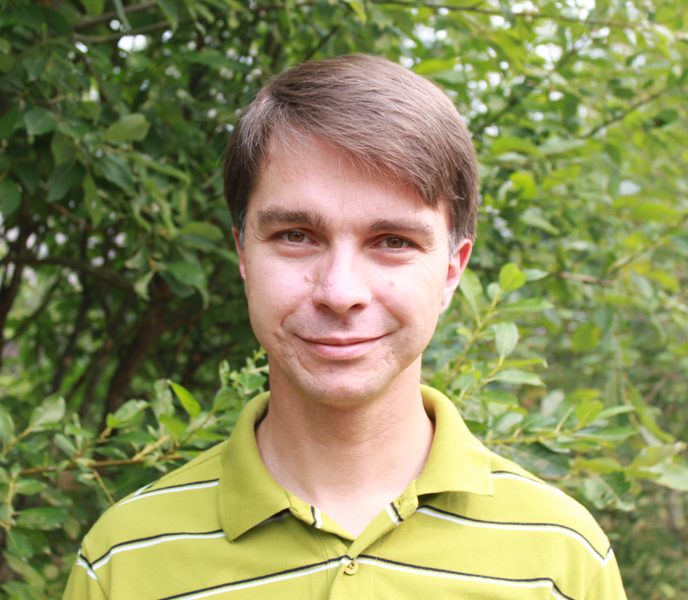
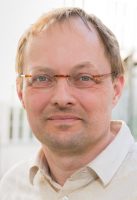
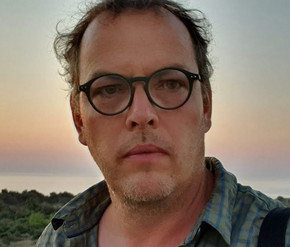
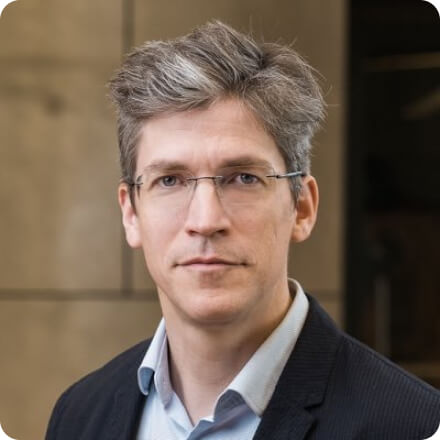
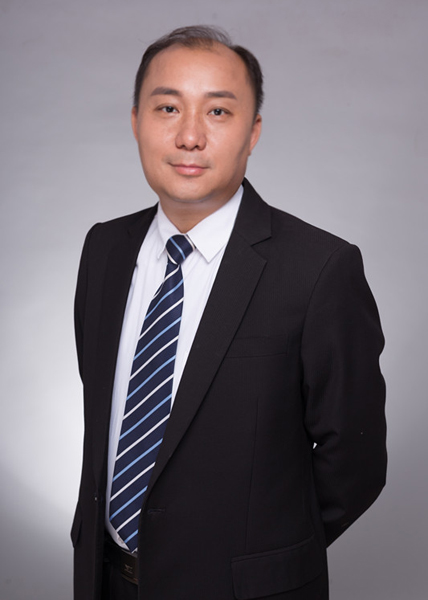
Adam Jatowt is a Professor and Head of the Data Science group at the Department of Computer Science, University of Innsbruck. He also serves as Deputy Head of the Digital Science Center and Research Center for Digital Humanities. His academic career spans roles at Kyoto University (2010-2020), National Institute of Advanced Industrial Science and Technology (AIST), and visiting positions at Karlsruhe Institute of Technology, University of La Rochelle, and University of California Berkeley. Research interests focus on temporal aspects of NLP/IR, computational history, large language models, and future forecasting. He leads projects combining digital humanities with advanced AI techniques, including temporal validity assessment and hint generation systems. Recent publications (2025) emphasize LLM applications in temporal analysis, QA systems, and energy sector digitalization. His work has been recognized through awards like the Friedrich Wilhelm Bessel Research Award (2024) and top-cited paper distinction in Information Sciences. He actively organizes conferences like ECIR 2026 and Text2Story workshops. Key contributions include developing WikiHint dataset, PlausibleQA framework, and tools like Rankify. His research also addresses societal challenges through ESG rating prediction and medical LLM applications.
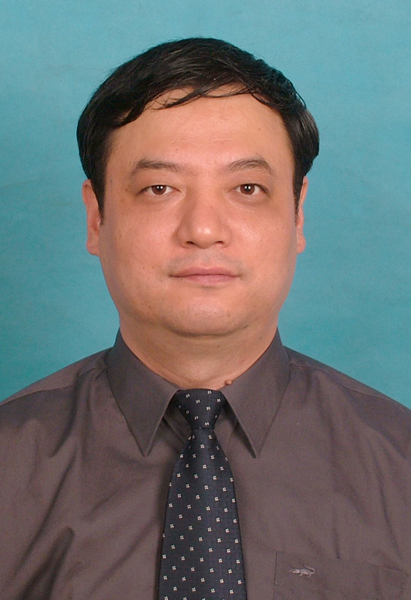
Stanislav Smirnov is a Professor at the University of Geneva and holds a part-time position at the Chebyshev Laboratory of St. Petersburg State University. A leading figure in mathematical physics, he works on probability, complex analysis, and dynamical systems, with significant contributions to conformal invariance in statistical mechanics models.
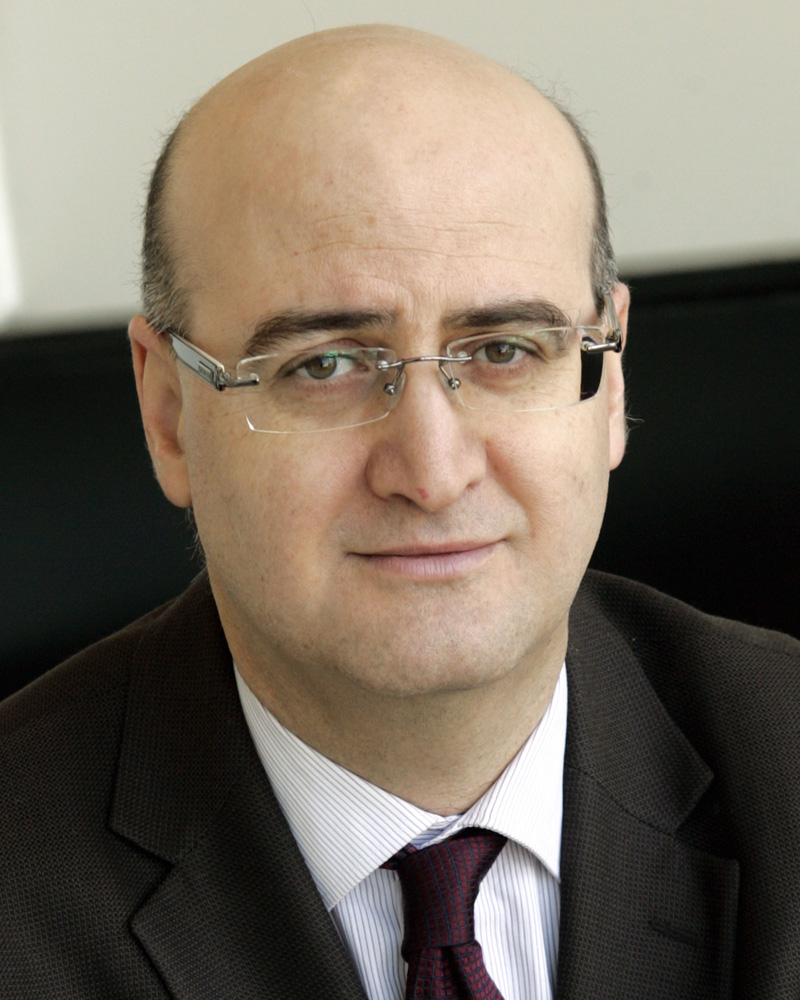
Professor Moncef Gabbouj is a distinguished academic and researcher currently serving as Professor of Signal Processing at the Department of Computing Sciences, Faculty of Information Technology and Communication Sciences, Tampere University, Finland. Previously, he held the same position at Tampere University of Technology before the merger in 2019. He has also held visiting professorships at prestigious institutions including Hong Kong University of Technology and Science, University of Southern California, and Purdue University. Ph.D. and MSc. in Electrical Engineering from Purdue University, USA (1989 and 1986) B.Sc. in Electrical Engineering from Oklahoma State University, USA (1985) Prof. Gabbouj's research spans multiple domains within signal and image processing, with a strong focus on machine learning applications. His primary research interests include artificial intelligence, machine learning, Big Data analytics, multimedia content-based analysis, indexing and retrieval, nonlinear signal and image processing, voice conversion, and video processing and coding. His work bridges theoretical advancements with practical applications across various industries, particularly in multimedia communications and biomedical applications. His extensive publication record demonstrates a clear evolution from traditional signal processing techniques toward more sophisticated machine learning and deep learning approaches. Recent work shows increasing focus on convolutional neural networks for various applications including ECG classification, video processing, financial time-series analysis, and image recognition tasks, reflecting the broader trend in the field toward deep learning methodologies while maintaining strong foundations in signal processing theory. IEEE Fellow (2011) Member, Finnish Academy of Science and Letters (2014) Knight, First Class, of the Order of the White Rose of Finland (2006) Nokia Foundation Recognition Award (2005) Nokia Foundation Visiting Professor Award (2012) Finnish Cultural Foundation for Art and Science Award (2017) TUT Foundation Grand Award (2015) Prof. Gabbouj has supervised 64 doctoral and 72 Master's theses, demonstrating his significant contribution to academic mentoring. His research has been supported by substantial funding, including research grants totaling 8.5 million Euro (2001-2015). He has served as Academy of Finland Professor during 2011-2015 and has been involved in numerous EU research projects including Horizon, ESPRIT, HCM, IST, COST, Tempus and Erasmus programs. As Editor, Guest Editor or member of the Editorial Board of 6 international scientific journals, he has significantly influenced the academic discourse in his field. He leads the Signal Analysis and Machine Intelligence (SAMI) research group at Tampere University and serves as the Finland Site Director of the NSF IUCRC funded Center for Visual and Decision Informatics. His research unit focuses on applying advanced machine learning techniques to solve complex problems in signal processing, computer vision, and multimedia analytics, with applications ranging from healthcare to multimedia communications and financial analysis.
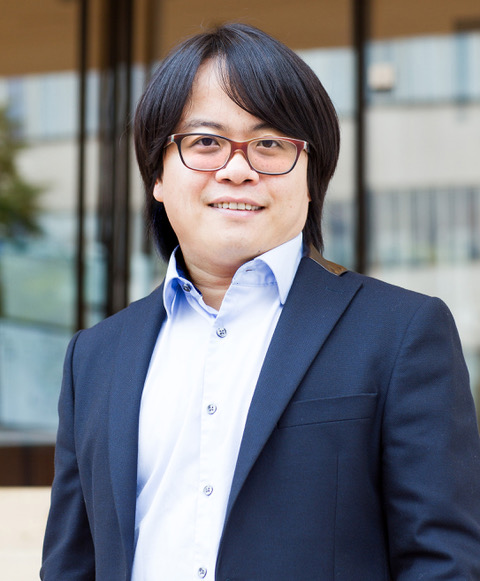
Hui Pan is a distinguished academic holding dual positions as Nokia Chair in Data Science and Professor of Computer Science at the University of Helsinki, and Chair Professor of Computational Media and Arts at the Hong Kong University of Science and Technology (HKUST). His research spans networking, mobile computing, augmented reality, and computational social science. He earned his Ph.D. in Computer Science from the University of Cambridge in 2007. His work bridges social networks with mobile systems, pioneering fields like mobile social networks and opportunistic forwarding algorithms. Research interests include data science, complex networks, and innovative applications of augmented reality. His recent publications focus on low-latency AR frameworks, blockchain for computation offloading, and mobile web visualization. He has received prestigious awards, including IEEE Fellow (2018), ACM Distinguished Scientist (2016), and the Nokia Chair Endowment (2017). He has supervised over 15 PhD and 12 MPhil graduates, with 13 current Ph.D. students and 2 MPhil students. His editorial roles include Associate Editorships at IEEE Transactions journals and guest editorships at top venues like IEEE JSAC and ACM Transactions. He has organized conferences such as WWW Track Chair and ExtremeCom General Chair.
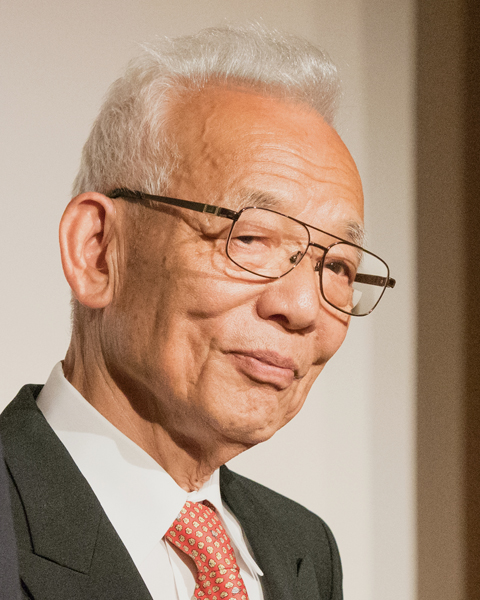
Syukuro Manabe is a renowned climate scientist affiliated with Princeton University's Atmospheric and Oceanic Sciences Program as a Professor . He has held various prestigious roles, including Director of the Global Warming Research Program at the Frontier Research System for Global Change (1997–2001) and Senior Scientist at the Geophysical Fluid Dynamics Laboratory (GFDL) of NOAA (1995–1997). Education: BS, Tokyo University (1953) MS, Tokyo University (1955) PhD, Tokyo University (1958) Research Interests: Manabe pioneered the development of radiative-convective models of the atmosphere in the early 1960s, focusing on greenhouse gases' role in climate change. His work with Kirk Bryan in the late 1960s on coupled atmosphere-ocean-land general circulation models revolutionized climate simulation, enabling studies of global warming and natural climate variability across time scales. He also explores past climate changes using models of varying complexity. Scientific Awards and Honors: Nobel Prize in Physics (2021) for physical modeling of Earth's climate and predicting global warming Carl-Gustaf Rossby Research Medal (1992) Blue Planet Prize (1992) Volvo Environmental Prize (1997) William Bowie Medal (2010) Franklin Institute Awards (2015) Professional Memberships: Member, National Academy of Sciences (1990–) Foreign Member, Academia Europaea (1994–) Fellow, American Meteorological Society (1997–) Fellow, American Geophysical Union (since 1967)
Markus Vincze is an Associate Professor at the Institute of Automation and Control Engineering (ACIN) at Vienna University of Technology (TU Wien). He founded the Vision for Robotics (V4R) group in 1996 to advance robotic perception, particularly in real-world environments and homes. His work focuses on cognitive computer vision techniques for robotics. Education: Diplom in Mechanical Engineering (1988) and PhD (1993) from TU Wien; M.Sc. (1990) from Rensselaer Polytechnic Institute. V4R coordinates EU projects like ActIPret, robots@home, HOBBIT, and national initiatives like vision@home. Markus has edited a book on Robust Vision with Gregory Hager and authored 62 peer-reviewed journal articles and over 400 reviewed publications. His recent research explores zero-shot 6D pose estimation, sim-to-real transfer, and transparent object detection. Markus has served as program chair for ICRA 2013 and organized HRI 2017 in Vienna. He has advised numerous students and secured grants from the Austrian Academy of Sciences for work at HelpMate Robotics and Yale's Vision Laboratory. The V4R group leads innovations in robotic vision, including frameworks for synthetic data generation (Unrealgensyn), depth completion (CAGT), and educational robotics applications for sustainability. Their work spans household robotics (RH3), agricultural robotics (EdgeSoil), and human-robot collaboration.
Prof. Maosong Sun is a Professor at the Department of Computer Science and Technology, Tsinghua University, China. He holds additional leadership roles including Executive Vice Dean of the Institute for Artificial Intelligence and Deputy Director of the National Engineering Laboratory for Cyberlearning and Intelligent Technology. His research focuses on natural language processing (NLP), artificial intelligence, machine learning, and computational education. He leads interdisciplinary projects in computational humanities, knowledge graphs, and MOOC platforms like XuetangX, which has over 58.8 million registered learners. Key contributions include pioneering work in Chinese NLP tools, poetry generation systems like Jiuge, and large-scale research initiatives funded by Chinese and Singaporean programs. Awards include the Tsinghua University Education Award (2019) and the National Outstanding Practitioner Award (2007). Established NLP and Computational Humanities & Social Sciences Lab (2008) Co-director of the Joint Research Center for Extreme Search (2011-present) Over 200 publications with 11,000+ citations (h-index 47)
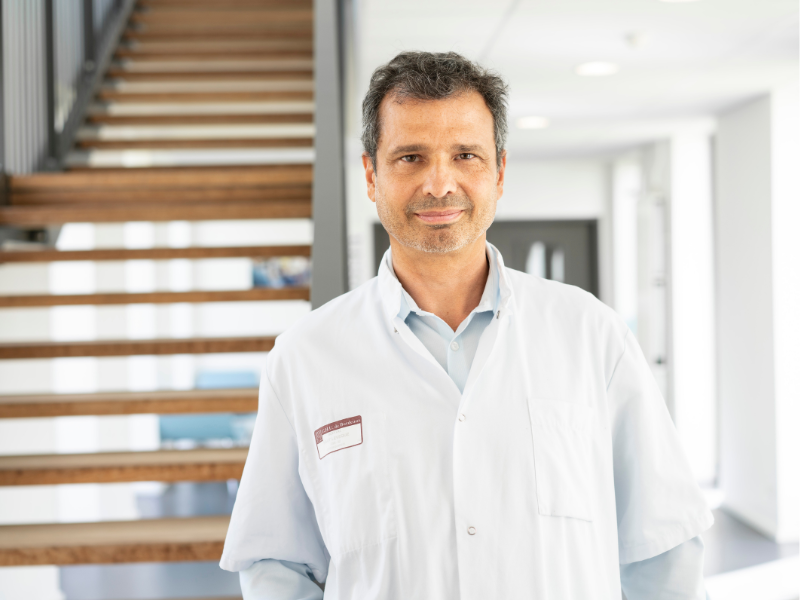
Prof. Pierre Jaïs serves as University Professor in Cardiology and Cardiac Electrophysiology at the University of Bordeaux and Head of the Electrophysiology Unit at Bordeaux University Hospital. He concurrently leads the Electrophysiology and Heart Modeling Institute (LIRYC) as CEO since 2021, driving innovation in cardiac rhythm disorder treatments through multidisciplinary research. His research revolutionized cardiac electrophysiology by identifying pulmonary veins as primary sources of atrial fibrillation, establishing pulmonary vein isolation as the global treatment standard. Current work focuses on pulsed field ablation—a non-thermal technique with potential to replace conventional ablation—and developing advanced imaging for precise arrhythmia targeting, reflecting his commitment to translating scientific discovery into clinical solutions. Analysis of recent publications (2017-2021) reveals dominant trends in pulsed field ablation optimization, comparative ablation techniques, and AI integration in cardiovascular imaging. These works consistently address atrial fibrillation treatment efficacy, safety profiles, and technological innovation, positioning him at the forefront of electrophysiology advancement. His distinguished contributions are recognized through prestigious awards including: 2019: Eli S. Gang Most Innovative Abstract Award (Heart Rhythm Society) 2018: Eric N. Prystowsky Lectureship Award 2012: Academy of Medicine Membership (Paris) 2009: Circulation Best Paper Award Multiple National Academy of Medicine honors Prof. Jaïs actively mentors electrophysiology trainees and secures substantial research funding, notably leading an EU-funded randomized trial comparing pulsed field versus thermal ablation. His LIRYC institute integrates cardiology, engineering, and computational expertise to accelerate therapeutic innovation. The LIRYC institute operates as a collaborative hub where clinicians, biomedical engineers, and data scientists develop next-generation electrophysiology tools. Current projects include real-time arrhythmia mapping systems, tissue-selective ablation protocols, and AI-driven predictive models for treatment personalization, fostering seamless translation from bench to bedside.
Marco Di Renzo is a CNRS Professor (Directeur de Recherche Titulaire) at University of Paris-Saclay, affiliated with CentraleSupelec and the Signals and Systems Laboratory (L2S). He serves as Coordinator of the Communications Networks Area at the DigiCosme Laboratory of Excellence and Editor-in-Chief of IEEE Communications Letters. His academic leadership includes membership in the Ph.D. School on ICT Admission Committee at Paris-Saclay University. His educational background includes a Laurea (cum laude) and Ph.D. in Electrical Engineering from University of L'Aquila, Italy (2003, 2007), and a Habilitation à Diriger des Recherches from University Paris-Sud (2013). Laurea (cum laude), Electrical Engineering, University of L'Aquila (2003) Ph.D., Electrical Engineering, University of L'Aquila (2007) Habilitation à Diriger des Recherches, University Paris-Sud (2013) Di Renzo's research focuses on next-generation wireless communications, particularly reconfigurable intelligent surfaces (RIS), 6G technologies, and stochastic geometry modeling. His work bridges theoretical communication theory with practical implementations in cellular networks, millimeter-wave communications, and ultra-wide band systems. Recent publications demonstrate leadership in holographic metasurfaces, integrated sensing and communication (ISAC), and AI-empowered network design, establishing him as a pioneer in electromagnetic wave manipulation for future networks. His award-winning publications span RIS-aided communications, channel modeling, and security frameworks. Analysis of his recent work reveals consistent focus on three pillars: (1) fundamental electromagnetic theory for wave manipulation, (2) practical RIS implementations across frequency bands, and (3) integration with AI for network optimization. His articles frequently address industrial applications including factory automation and space-air-ground networks. Di Renzo's scientific recognition includes: IEEE Fellow (2020) and IET Fellow (2020) Highly Cited Researcher (Web of Science, 2019) SEE-IEEE Alain Glavieux Award (2017) Multiple Best Paper Awards (IEEE ICC, EURASIP) Nokia Foundation Visiting Professorship (2020) As Principal Investigator for CNRS, he coordinates multiple Horizon 2020 projects including SURFER, PathFinder, and MetaWireless. His leadership extends to serving as Project Coordinator for H2020 5Gwireless, 5Gaura, MAPNET, and REDESIGN. With over 350 publications, 17,000+ citations, and h-index of 66+, his research group maintains strong industry partnerships with Nokia and other telecommunications leaders. Di Renzo directs the Signals and Systems Laboratory (L2S) at Paris-Saclay and coordinates the DigiCosme Excellence Lab's Communications Networks Area. His team specializes in electromagnetic modeling for wireless networks and has pioneered the European Telecommunications Standards Institute (ETSI) Industry Specification Group on RIS. The group maintains active collaborations with Aalto University (Finland), University of Technology Sydney (Australia), and University of L'Aquila (Italy).
Ulrich Berger is a Professor of Economics at the Department of Economics of WU Vienna University of Economics and Business (WU Vienna). He serves as Editor-in-Chief of the journal Games and is actively involved in promoting science through the Vienna Skeptics Society. His research focuses on game theory, including non-cooperative, evolutionary, behavioral, and experimental variants. He has been recognized with multiple awards, including the WU Best Paper Award and an Outstanding Reviewer Award. His work explores dynamics of cooperation, reputation systems, and strategic behavior in economic contexts. Key research areas include evolutionary stability in reputation games, indirect reciprocity, and cognitive hierarchies in strategic interactions. His publications span peer-reviewed journals like PLoS ONE and Scientific Reports , as well as popular science articles in outlets like derStandard.at . Berger has led research projects on topics such as cognitive hierarchies in minimizer games and has contributed to policy discussions on access pricing in telecommunications. His academic contributions reflect a blend of theoretical rigor and practical engagement, with recent work emphasizing evolutionary mechanisms of deterrence and experimental validation of equilibrium concepts.
Miklós Koren is a Professor of Economics at Central European University and Senior Research Fellow at the HUN-REN Centre for Economic and Regional Studies. His work bridges international trade , economic development , and managerial economics , focusing on trade policy, productivity spillovers, and the role of managers in development. Ph.D., Harvard University (2005) M.A., Central European University (2000) M.Sc., Budapest University of Economics (1999) His research explores trade facilitation , managerial impact on firm performance , and technological diversification . Recent work includes studies on expatriate managers, pandemic-related business disruptions, and the legacy of communist-era management practices. Key trends in his publications (2020–2024) emphasize managerial mobility and firm productivity (2024) machine learning vs. gravity models (2024) trade volatility and development (2023) data transparency standards (2022) Scientific awards include ERC Starting Grant (2012) Nicholas Káldor Prize (2014) Young Economist Award (2002, 2004) As Data Editor for Review of Economic Studies and Associate Editor for Journal of International Economics , he shapes methodological rigor in empirical research. His 2013 paper on technological diversification remains foundational for understanding volatility in developing economies.
Roman Obermaisser is a Professor at the Vienna University of Technology (TU Wien), affiliated with the Cyber-Physical Systems department. His research focuses on real-time systems, system architectures, communication protocols, safety-critical systems, distributed algorithms, and fault-tolerance. He holds a PhD in Computer Science from TU Wien, awarded in 2003 for his work on integrated architectures for control paradigms. His academic contributions span over two decades, with publications in top-tier conferences and journals. Key research themes include time-triggered architectures (TTA), fault containment in embedded systems, and integration of heterogeneous communication protocols like CAN and Ethernet. He has supervised numerous graduate students, contributing to advancements in system-on-chip (SoC) design, transient-resilient architectures, and diagnostic frameworks for real-time systems. Obermaisser’s work emphasizes practical applications in automotive and industrial systems, addressing challenges such as scalability, reliability, and composability. His involvement in projects like GENESYS and DECOS highlights his role in developing cross-domain reference architectures for embedded systems. Recent efforts include evaluating ontology-based reconfiguration and COTS-based Ethernet solutions for safety-critical networks. His articles reflect a focus on real-time communication protocols, fault-tolerant design, and system integration, with applications ranging from automotive networks to smart transducers. Advising over 20 students underscores his commitment to nurturing the next generation of embedded systems researchers.
Emanuel Sallinger is a Full Professor at TU Wien's Databases and Artificial Intelligence Group and Vice Dean of Academic Affairs for Business Informatics and Data Science. He leads the Knowledge Graph Lab, focusing on scalable knowledge-based systems, reasoning in knowledge graphs, and AI integration. His research spans computational logic, database theory, and blockchain applications. Education: PhD in Computer Science (awarded 'sub auspiciis praesidentis rei publicae'), Master's degrees in Computational Intelligence and Informatics Management, and a Bachelor's in Software and Information Engineering. Research Interests: Knowledge graphs (construction, reasoning, scalability), logic-based systems, AI/ML integration with databases, enterprise architecture modeling, and financial knowledge systems. His work emphasizes practical applications like enterprise modeling, sustainable waste management, and regulatory compliance. Grants & Projects: Lead Vienna Science and Technology Fund (WWTF)-funded Knowledge Graph Lab. Involved in projects like 'Knowledge Graph-driven Tour Management' (sustainability), 'SustainGraph' (waste processing), and 'Enterprise Architecture Knowledge Graphs'. Teaching: Offers courses on Knowledge Graphs, Generative AI, Database Systems, and research methodology. Supervises doctoral and master's students in AI, databases, and knowledge representation. Labs/Teams: Knowledge Graph Lab at TU Wien, collaborating with industry on blockchain-based systems, financial AI, and enterprise architecture frameworks.
Hongbo Jiang is a Distinguished Professor and Vice Dean of the College of Computer Science and Electronic Engineering at Hunan University, China. He holds concurrent roles as Director of the Trusted Systems and Networking Key Laboratory of Hunan Province and Director of the Hunan International Technical Cooperation Base for High-Performance Computing and Distributed Systems. His academic journey includes tenures as a Professor at Huazhong University of Science and Technology and a Hong Kong Scholar Research Fellow at The Chinese University of Hong Kong. Education: PhD in Computer Science (Case Western Reserve University, 2008), B.S./M.S. in Mathematics (Huazhong University of Science and Technology, 2002). Research Interests: Distributed systems, mobile computing, smart sensing, wireless networks, IoT, and edge computing. Ongoing projects include mobile/wireless applications, data science in IoT, and edge computing platforms. His work emphasizes practical implementations such as DriverSonar for driving safety and SmileAuth for biometric authentication. Key Achievements: Elected Member of Academia Europaea (2022), Fellow of AAIA, IET, and BCS. Notable awards include the Wu Wenjun Science and Technology Award (2020) and multiple best paper recognitions. Over 100+ publications in top venues like ACM MobiCom, IEEE/ACM Transactions. Professional Contributions: Editorial roles across 8+ journals including IEEE Transactions on Mobile Computing and ACM Transactions on Sensor Networks. Conference leadership includes co-founding ACM TURC and EAI ICECI. Active in technical committees for INFOCOM, MOBIHOC, and ICDCS. Labs/Teams: Leads research groups focused on networking, IoT, and edge computing. Current openings for PhD/MSc students and PostDoc researchers with strong mathematical and systems backgrounds.
Michael J. Schlosser is a faculty member at the Faculty of Mathematics , University of Vienna. His research focuses on combinatorics, number theory, and special functions, with a particular emphasis on hypergeometric and q-series, elliptic extensions, and rook theory. He has authored numerous publications in collaboration with prominent mathematicians such as Victor Guo, Meesue Yoo, and Christian Krattenthaler. Research Interests : Combinatorics and hypergeometric series Elliptic functions and their applications Partition theory and supercongruences Matrix inversions and determinant evaluations Students : Josef Küstner (Ph.D., 2022) Christian Stump (Ph.D., 2008) Editorial Roles : Associate Editor, Journal of Mathematical Analysis and Applications Editorial Board Member, The Ramanujan Journal Editorial Board Member, Journal of Algebraic Combinatorics