K.P. Subbalakshmi is a Professor in the Department of Electrical and Computer Engineering at Stevens Institute of Technology, where she directs research on trustworthy AI, cybersecurity, and NLP applications in mental health. A Fellow of the National Academy of Inventors and Jefferson Science Fellow, she develops interpretable AI systems for healthcare and security domains. Her research bridges fundamental AI principles and practical applications, with recent work on causal synthetic data generation, Alzheimer's detection from speech, suicide prediction from social media, and explainable rumor detection. These projects focus on model transparency and real-world reliability. Awards and Honors: Fellow, National Academy of Inventors (2018) Jefferson Science Fellowship (2016) AFOSR Summer Faculty Fellow (2024, 2025) New Jersey Inventors Hall of Fame Innovator Award (2012) Dr. Subbalakshmi founded the Stevens Institute for Artificial Intelligence and holds leadership roles in IEEE COMSOC's Cognitive Networks committee. She has commercialized technologies through startups Dynamic Spectrum LLC and Jaasuz.
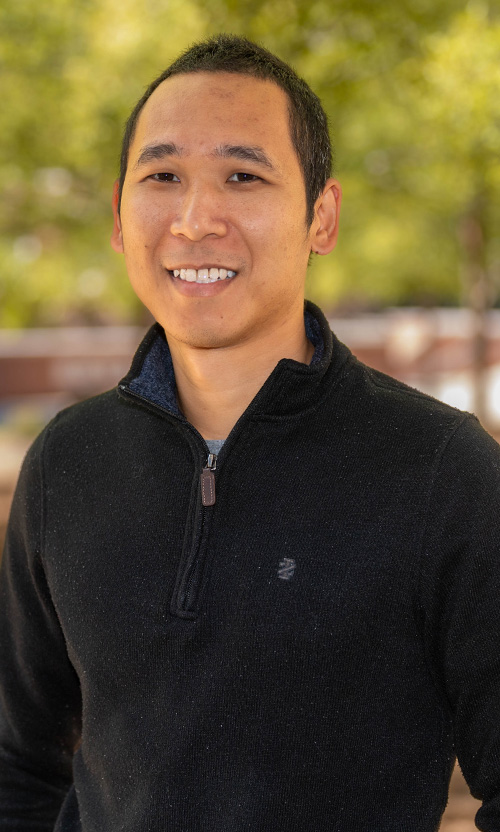
Anh Nguyen is an Associate Professor in the Department of Computer Science and Software Engineering at Auburn University, affiliated with the Samuel Ginn College of Engineering. His work focuses on deep learning, computer vision, and explainable AI. He holds a Ph.D. from the University of Wyoming and a B.S. from Assumption University. Research highlights include developing methods to improve AI robustness, analyzing biases in large language models, and creating tools for visual correspondence in image processing. He leads the Center for Artificial Intelligence and Cybersecurity Engineering and directs Auburn's first K-6 AI education program through his AI Club after-school initiative. Recipient of a $460,736 NSF CAREER Award for AI innovation Developed the AI@AU lecture series and multiple benchmark datasets (e.g., ImageNet-Hard) Collaborates with industry partners on real-world AI applications Recent projects explore multimodal model limitations (Zerobench), medical imaging (LiteGPT for chest X-rays), and interactive AI systems that incorporate human feedback. His work bridges theoretical advancements with practical implementations in healthcare, wildlife monitoring, and education.
Wang Fengjiao is an Assistant Professor and Lecturer at the Kahlert School of Computing, University of Utah. Her research focuses on machine learning, data mining, and social network analysis, with notable contributions to semi-supervised learning, generative models, and social media analysis. She holds a position in one of the founding institutions of the internet (ARPANET), leveraging computational advancements for interdisciplinary challenges. Her work spans theoretical innovations and applied systems, including algorithms for tabular data, image generation via Fréchet distance minimization, and probabilistic text recommendation models. Recent trends in her publications emphasize scalable learning frameworks, spatial-temporal event modeling, and privacy-preserving techniques in multi-platform social networks. Wang's research has addressed challenges such as user geolocation inference, collaborative co-clustering in heterogeneous data, and steering information diffusion under attention constraints. Her contributions to content-aware POI recommendations and distance-based social discovery further highlight her expertise in integrating machine learning with real-world social systems. No scientific awards or grants are explicitly mentioned in the provided materials. Contact information is available at fengjiao@cs.utah.edu, and her office is located in MEB 3102.
Professor Venet Osmani is a leading academic in Clinical AI and Machine Learning at Queen Mary University of London (QMUL), where he heads the Osmani Lab within the Digital Environment Research Institute (DERI). He concurrently serves as a Visiting Professor at the University of Sheffield, previously directing the Health Informatics Research Group and contributing to initiatives like the Healthy Lifespan Flagship Institute (HELSI). His interdisciplinary research focuses on analyzing large-scale clinical and behavioral data to optimize healthcare strategies, leveraging methodologies like generative architectures (GANs, VAEs), explainable AI, and sample complexity. Key areas include predictive modeling in chronic diseases (e.g., neurodegenerative conditions, cancer), mental health, and critical care, with a strong emphasis on mitigating health inequities and integrating wearable device data. Funded by major bodies including UKRI’s MRC, EPSRC, and NIHR, his work has been featured in high-impact journals and media outlets like MIT Technology Review and Forbes. Notable achievements include a Best Paper Award at NeurIPS 2022 for synthetic health data research and recognition as a World’s top 2% scientist (Elsevier, 2023) . Collaborations: Mayo Clinic, Cleveland Clinic, Mount Sinai Hospital, Great Ormond Street Hospital, and Insigneo Institute. Grants: Over £10M secured from UK and EU research councils. Key projects include the NeuroArtP3 initiative for Parkinson’s disease and a mental health research hub studying borderline personality disorder. His lab also explores synthetic clinical data to democratize access and address algorithmic bias.
Dr. Catarina Pinto Moreira is an Adjunct Associate Professor in the School of Computer Science at Queensland University of Technology (QUT). She holds a PhD in Information Systems and Computer Engineering from the University of Lisbon and specializes in quantum probabilistic models, machine learning, and explainable AI. Her research focuses on developing non-classical probabilistic graphical models for decision-making, particularly in medical and cognitive contexts. She has been recognized with awards such as the Dean's Award for Excellence in Teaching (2018) and the Centre for Data Science 2020 Excellence Award. Dr. Moreira is an Associate Editor for BMC Bioinformatics' 'Artificial Intelligence in Bioinformatics' section, emphasizing applications of machine learning in biological data. She actively supervises PhD students in areas like interpretable AI and predictive process analytics. Her academic roles include teaching at QUT and the University of Leicester, where she contributed to courses in information systems, finance, and artificial intelligence. Her work bridges quantum cognition, medical decision support, and human-centered AI, with publications spanning journals like Behavioral and Brain Sciences and Entropy . She has secured grants totaling $20,000 for research in Explainable AI and causality. Dr. Moreira's contributions to AI ethics, multimodal learning, and adversarial attacks reflect her commitment to advancing trustworthy AI systems.
Christos Tachtatzis is a Professor in Applied Artificial Intelligence in the Department of Electronic and Electrical Engineering at the University of Strathclyde. He rejoined the university in 2011, was awarded a Chancellor’s Fellow in 2016, promoted to Senior Lecturer in 2018, Reader in 2021, and Professor in 2024. He leads key strategic initiatives including the Measurement, Digital and Enabling Technologies (MDET) Strategic Theme, co-directs the Laboratory for Innovation in Autism, and serves as Strathclyde lead for the UKRI AI CDT SUSTAIN. He is also a member of the HealthTech Cluster and advises The Data Lab and the Scottish Government on AI applications in agriculture and natural resources. Research Interests: His research spans applied AI with focus on computer vision, multimodal learning, domain adaptation, and explainability. These are applied to sustainable agri-food systems (livestock and arable), digital health, advanced manufacturing, and cybersecurity. His technical expertise includes deep learning, time series analysis, anomaly detection, remote sensing, hyperspectral imaging, and edge/cloud computing analytics. Recent Research Trends: His recent publications reflect a strong trend toward interdisciplinary AI applications, including environmental monitoring via satellite imagery inpainting, urban CO2 emission modeling, synthetic data generation for power grids, infant behavioral analysis, and precision livestock farming using monocular depth estimation. These works highlight his focus on real-world, data-driven solutions across environmental, health, and industrial domains. Scientific Awards: Innovate UK KTP Engineering Excellence Award (2021) Finalist, Herald Higher Education Awards – Outstanding Business Engagement (2022) Strathclyde Team Medal for Innovation in Autism (2018) SIN 2014 Best Paper Award Advising and Grants: He is actively involved in supervising research and leading externally funded projects from UKRI, InnovateUK, and H2020. He is Principal Investigator on multiple grants including Deep Learning for Woodland Soil Biodiversity, FLORA-SAGE (federated learning in agriculture), and the UKRI AI CDT SUSTAIN. He is a co-investigator on projects in digital dairy, infant interaction, and species assessment. He welcomes PhD students and regularly advertises opportunities through SUSTAIN and his professional networks. Labs and Teams: He co-directs the Laboratory for Innovation in Autism and leads the MDET Strategic Theme. He is embedded in the SUSTAIN CDT and collaborates extensively with the HealthTech Cluster, contributing to interdisciplinary research at the intersection of AI, engineering, and societal challenges.
Professor Julie Wall is a faculty member at the University of West London, serving as Professor of AI and Advanced Computing in the School of Computing and Engineering. She is actively engaged in research, teaching, and professional service, including her role as an expert at the British Standards Institution (BSI) in the domain of artificial intelligence. Research Interests: Julie Wall's research is centered on the design and application of intelligent systems for processing and modeling temporal data, particularly in speech and language. She leverages neural network architectures—ranging from biologically inspired models to computationally efficient deep learning systems—to analyze diverse data types such as audio, video, images, tabular data, and 3D features. Her work extends to developing production-grade deep learning and natural language understanding systems for immersive environments like virtual and augmented reality. Publications and Research Trends: Her body of work, comprising over 50 high-quality papers and multiple patents, reflects a strong trajectory in AI systems that integrate multimodal data with temporal dynamics. The research spans core areas of machine learning, natural language processing, and applied AI, with increasing focus on real-world deployment, efficiency, and intelligent interaction in extended reality platforms. Scientific Awards: US Patent UK Patent Advising and Grants: Julie Wall supervises research students across disciplines including forensic science and artificial intelligence. She contributes extensively to academic programs, teaching courses such as BSc and MSc in Computer Science, Artificial Intelligence, Data Science, and specialized AI programs in cybercrime and criminal justice. While specific grant details are not listed, her patent holdings and publication volume suggest sustained research funding and project leadership. Labs and Teams: As a leading researcher in AI and advanced computing, she is likely involved in or leads research groups focused on intelligent systems, deep learning, and multimodal AI at the University of West London, though specific lab names are not mentioned in the text.
Nicolò Bellarmino is a Researcher at the Department of Control and Computer Science (DAUIN), Politecnico di Torino, where he also serves as an External Lecturer and Teaching Assistant. His work is centered on machine learning applications in electronic design automation, particularly in microcontroller performance screening and reliability assessment of deep learning hardware. His research interests include machine learning for embedded systems, feature selection, neural network testing, and reliability engineering. He employs techniques such as evolutionary algorithms, transfer learning, and fault injection to develop efficient and robust methodologies for semiconductor testing and DNN accelerator validation. The recent publications highlight a strong focus on data-efficient and automated approaches for performance prediction and reliability assessment, leveraging foundation models, unsupervised learning, and hierarchical modeling. These works span journals and top-tier conferences in computer-aided design, electronics, and machine learning. He has no listed scientific awards in the provided text. Bellarmino actively contributes to teaching in the Computer Engineering and Aerospace Engineering programs, collaborating on courses such as Systems Programming, System and Device Programming, and Future of Work. He is a member of the CAD - Electronic CAD & Reliability Group (DAUIN), contributing to cutting-edge research in EDA and hardware reliability. No grants or advising roles are mentioned.
Farzaneh Etminani is a Senior Lecturer at the School of Information Technology, Halmstad University. Her research focuses on Artificial Intelligence , Machine Learning , and Healthcare Informatics , with specific projects including CAISR Health , Evaluation of deep learning for LBD diagnosis , AIR – Artificially Intelligent use of Registers , and iMedA – Improving Medication Adherence . Her recent work includes explainable AI frameworks, synthetic electronic health records evaluation, and temporal modeling of clinical data. Key collaborations span neuroimaging, chronic disease prediction, and human-centered AI systems. She contributes to interdisciplinary research bridging computer science and clinical applications. Her publications cover topics such as: 3D deep learning for dementia diagnosis Transfer learning in neuroimaging Temporal fidelity in synthetic medical data Graph neural networks for clinical risk prediction Behavior change strategies in digital health interventions
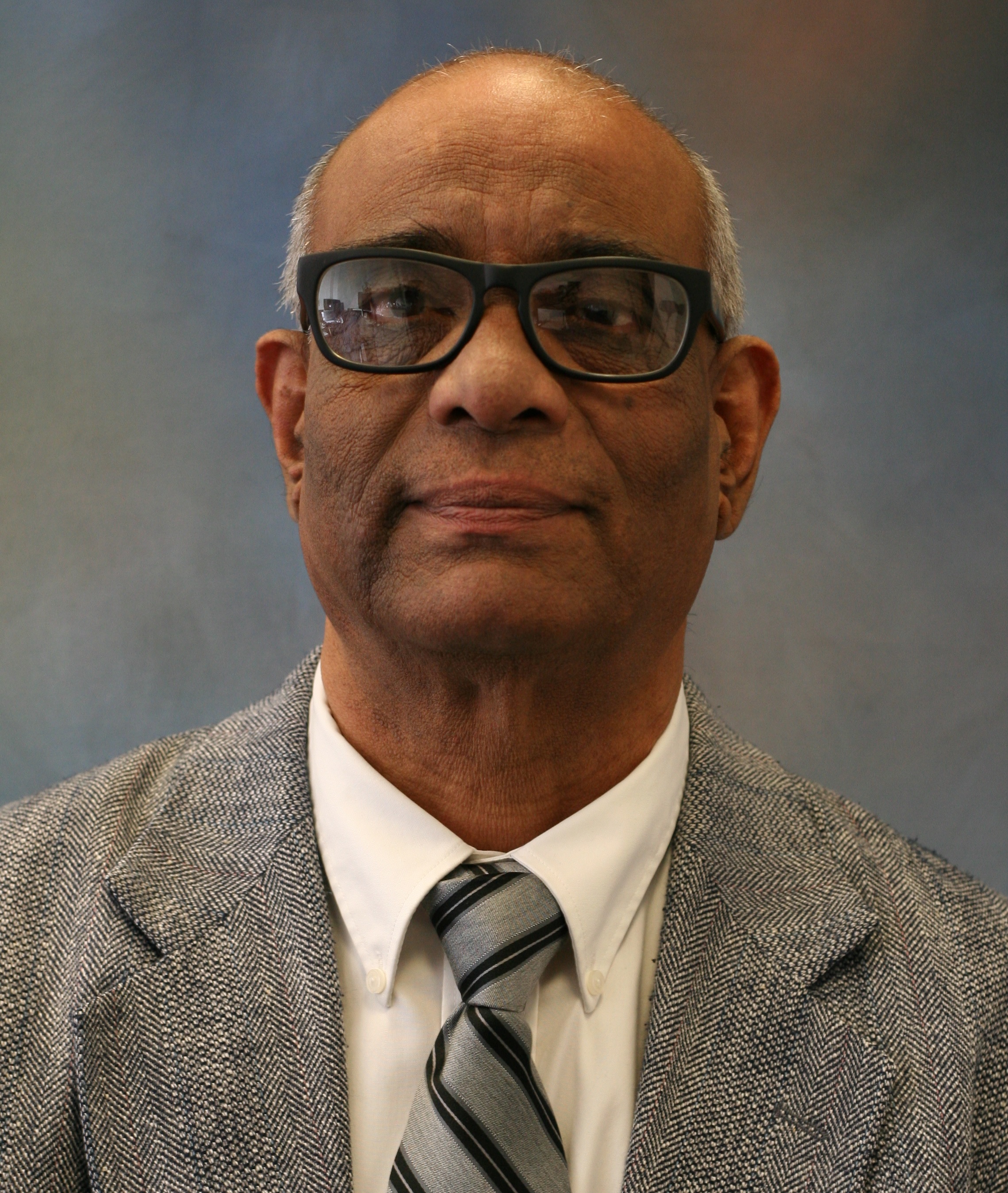
Dr. Arun D. Kulkarni is a Professor of Computer Science at the University of Texas at Tyler and Lead Graduate Advisor. He has been with the university since 1986, contributing over seventy refereed papers and two authored books. His research focuses on soft computing, data mining, machine learning, computer vision, and remote sensing. He has successfully completed eight research grants and holds notable awards, including the ONR Senior Summer Faculty Fellowship (2008), President's Scholarly Achievement Award (2005-2006), and Chancellor's Council Outstanding Teaching Award (2001-2002). Education: Ph.D. in Computer Science from the Indian Institute of Technology, Bombay Post-doctoral fellowship at Virginia Tech Research Interests: Dr. Kulkarni's work spans fuzzy neural networks for classification and pattern recognition, machine learning applications in cybersecurity and remote sensing, and computer vision techniques for image analysis. His recent research emphasizes deep learning and convolutional neural networks for tasks like phishing detection and multispectral image processing. Articles Trends: His publications reflect a strong focus on integrating fuzzy logic with neural networks, advancing image classification methods, and applying machine learning to environmental monitoring and security domains. Recent efforts highlight innovations in tabular data classification and hybrid models for complex decision-making. Awards: 2008 ONR Senior Summer Faculty Fellowship 2005–2006 President's Scholarly Achievement Award 2001–2002 Chancellor's Council Outstanding Teaching Award 1997 Piper Award Nominee 1984 Fulbright Fellowship Grants & Advising: Dr. Kulkarni has secured eight completed research grants, though specific grant details are not provided. He currently advises graduate students in computer science, though no named advisees are listed in the provided text.
Ahmet Soylu is Associate Professor in Data and Knowledge Management at the University of Oslo. His research develops semantic technologies and knowledge systems for applications in healthcare, cloud computing, and industrial domains. Research Focus Creates knowledge graph systems for data integration and analysis, with applications in medical diagnostics (cancer/brain tumor classification), cloud cost optimization, and industrial monitoring systems. Develops transformer-based models for SQL recommendation and data linking. Publication Trends Recent work shows strong emphasis on healthcare AI (particularly cancer diagnostics), cloud storage optimization, knowledge graph embeddings, and industrial applications at Bosch. Increasing focus on imbalanced learning techniques for medical data. Project Leadership Developed Koala-UI for tabular data linking Semantic systems for Bosch welding quality monitoring Open energy management systems for EV charging
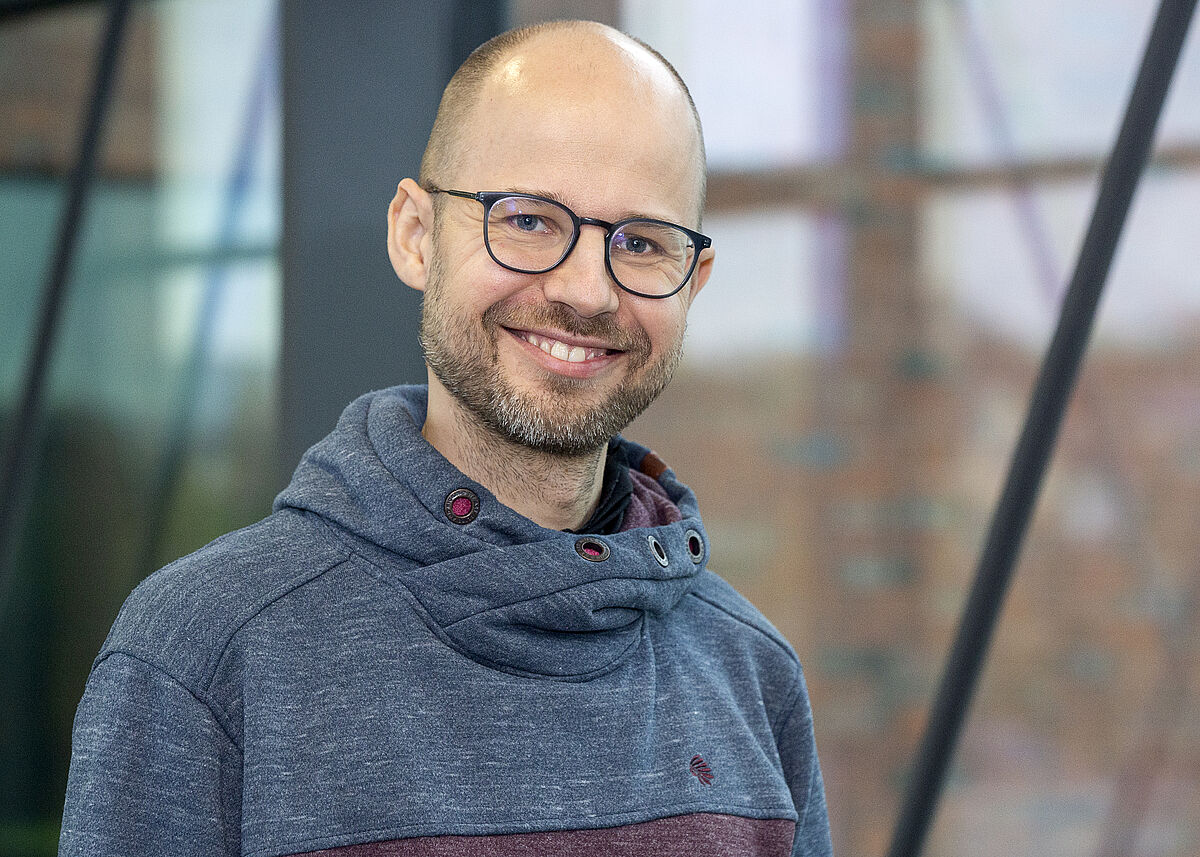
Dr. Tobias Strauß is a Lecturer at the Institute of Mathematics, Faculty of Mathematics and Natural Sciences, University of Rostock. He teaches courses such as Elementary Algebra and Number Theory and Analytical Geometry, focusing on foundational mathematical concepts and their applications. His research interests span historical document analysis, machine learning, and neural networks, with a particular emphasis on handwritten text recognition (HTR) and computational solutions for cultural heritage digitization. He actively contributes to the Mathematics Society RHO eV, supporting students in mathematics competitions and enrichment programs. Dr. Strauß’s research combines computer vision and machine learning to address challenges in document analysis, including text line detection, cursive script recognition, and keyword search in historical manuscripts. His work also explores semi-supervised learning techniques and neural network architectures tailored for HTR tasks. Through RHO eV, he promotes mathematics education through weekend seminars, district clubs, and game-based learning activities, fostering student engagement and problem-solving skills. His publications highlight advancements in HTR systems, such as the CITlab Recognition & Retrieval Engine, and address topics like regular expression-based decoding and Arabic handwriting recognition. These contributions underscore his expertise in bridging theoretical mathematics with practical applications in digital humanities and education. Dr. Strauß can be contacted via tobias.strauss@uni-rostock.de or through the university’s chat platform. No formal awards or grants are noted in the provided materials, though his involvement in international competitions (e.g., ICFHR, ICDAR) reflects his scholarly engagement.
Francesco Sanna Passino is an Associate Professor in Statistics at the Department of Mathematics, Imperial College London. His research focuses on Bayesian statistical methods for dynamic networks, latent variable models, and event-time data analysis. PhD in Statistics, Imperial College London (2021) MSc in Statistics, Imperial College London (2017) BSc in Statistics, University of Glasgow (2016) Laurea in Scienze Statistiche, University of Bologna (2016) His work spans dynamic network modeling, latent structure inference, and applications in cybersecurity, social networks, and urban mobility systems. Key methodologies include Bayesian inference , model-based clustering , and topic modeling . Applications extend to cybersecurity , music streaming , and bike-sharing systems . The 15 most recent publications emphasize dynamic network analysis using Bayesian frameworks, time series modeling, and applications to financial trends, cybersecurity, and mobility systems. Topics include changepoint detection, latent factor models, and synthetic data generation. He co-organizes the 2025 NetStat Workshop on 'Statistics and Machine Learning for Networks' and organizes an RSS webinar on cybersecurity methods.
C. Koutras is a researcher at the Data-Intensive Systems group within the School of Electrical Engineering, Mathematics and Computer Science at Delft University of Technology. His work focuses on data integration, schema matching, and machine learning applications in modern data systems. Research Areas: Data Integration, Schema Matching, Machine Learning, Data Lakes, Graph Neural Networks, Biomedical Data Systems Collaborations: Active collaborations with researchers including R. Hai, A. Katsifodimos, and M. Jarke. Recent work includes developing tools like Amalur and Valentine , which address challenges in data lake integration and scalable schema matching. His research leverages large language models and graph-based techniques for biomedical and distributed data environments. Despite significant contributions to data integration and machine learning, no explicit scientific awards or part-time status are documented in the provided materials. His 2024 dissertation at TU Delft highlights expertise in modern data challenges.
Eliana Pastor is a Fixed-term Assistant Professor at the Department of Control and Computer Engineering (DAUIN) , Politecnico di Torino , and a member of the SmartData@PoliTO - Big Data and Data Science Laboratory . She teaches courses including Explainable and Trustworthy AI (Computer Engineering) and Business Intelligence for Big Data (Management Engineering) across academic years 2023-2025. Scientific branch: IINF-05/A - Information Processing Systems (Area 0009 - Industrial and Information Engineering) ERC sectors: Algorithms, Artificial Intelligence, Machine Learning, Software Engineering, Web Systems Her research focuses on Algorithm Fairness , Explainable AI , and Trustworthy AI , with applications in speech processing, computer vision, and ethical AI systems. She leads the commercial research project Root Cause Analysis in Mechatronic Systems via Pattern Recognition and Causal AI (2024-2025) and supervises PhD students Eleonora Poeta (Safe and Trustworthy AI) and Alkis Koudounas (Speech Foundation Models). Recent publications address fairness in speech models, video LLMs for zero-shot summarization, and Kolmogorov-Arnold Networks for language understanding Collaborates with DBDM - Database and Data Mining Group (DAUIN) on AI ethics and data science projects


.jpeg)