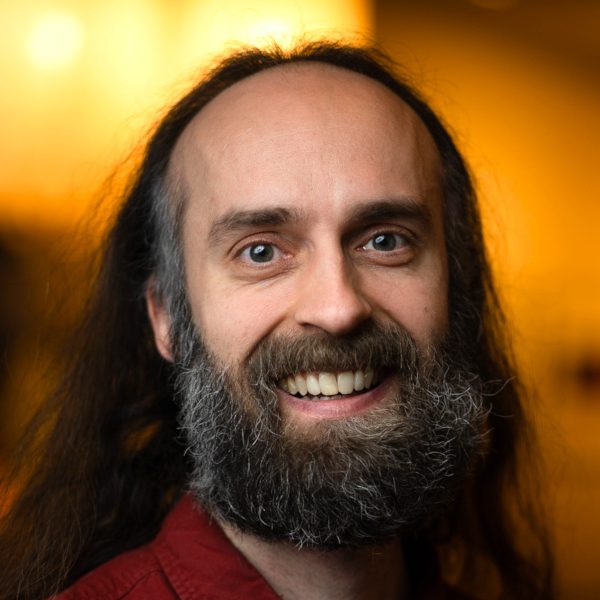
Mike Papadakis is an Associate Professor at the University of Luxembourg's Interdisciplinary Centre for Security, Reliability and Trust (SnT), where he leads the SerVal research group. His research focuses on software engineering, software security, and artificial intelligence. He holds a PhD in Software Testing and Verification from Athens University of Economics and Business, with an MSc and BSc from the same institution. His research explores mutation testing, machine learning applications in software development, and test optimization. Recent publications demonstrate a strong emphasis on AI robustness, flaky test analysis, and automated debugging techniques. Notable achievements include the IEEE TCSE Rising Star Award (2020) and 12 additional research awards. He has published over 100 peer-reviewed articles and delivered more than 30 invited talks globally.
Gustav Eje Henter is an Assistant Professor at KTH Royal Institute of Technology, holding roles as the Head of Research at Motorica AB and a Core Team Member of the Wallenberg Research Arena (WARA) for Media and Language. He is the Secretary of the ISCA SynSIG (Special Interest Group on Speech Synthesis) and a Co-Organiser of the GENEA Workshops on Embodied Agents' Non-Verbal Behavior. His research focuses on speech synthesis, gesture generation, and multimodal interaction, with contributions to TTS systems, neural networks, and embodied AI. He leads Digital Futures, a cross-disciplinary research center addressing societal challenges through digital technologies. This center is a collaboration between KTH, Stockholm University, and RISE. His work spans foundational research to industrial applications, emphasizing ethical AI, privacy in voice conversion, and human-robot interaction. Key research themes include causal reasoning in LLMs, adversarial privacy techniques, and benchmarking frameworks like the GENEA Leaderboard. He has organized international workshops (GENEA 2021-2024) and contributed to standards in TTS evaluation methodologies. His technical innovations include HiFi-Glot for formant synthesis and Matcha-TTS for fast waveform generation. His research integrates audio, gesture, and motion synthesis with deep learning, addressing challenges in spontaneous speech synthesis, multimodal coherence, and listener perception. He advocates for rigorous evaluation practices and open challenges to advance the field's reproducibility and real-world applicability.
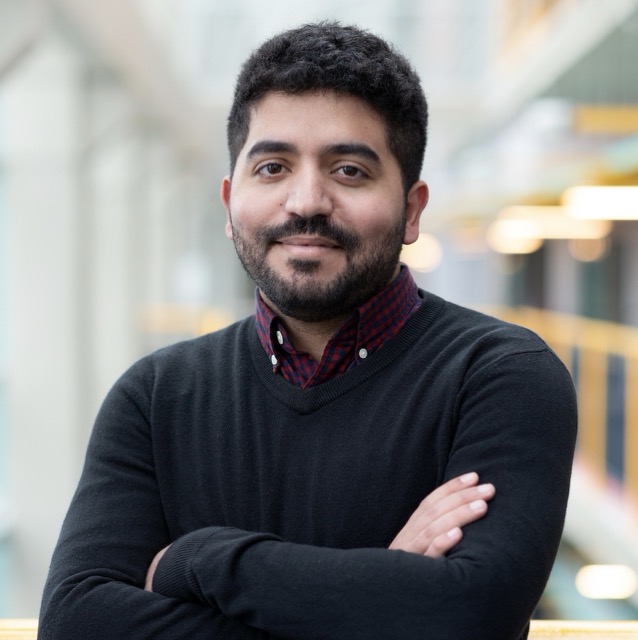
Amine Mhedhbi is an Assistant Professor at Polytechnique Montréal , where he leads the Data & AI Systems Lab . He earned his PhD in 2023 from the University of Waterloo. His work bridges data management , graph databases , and AI systems , with a focus on performance, debuggability, and user interface design for data applications. Education : PhD (University of Waterloo, 2023) Research Interests center on modern analytical data systems , including multimodal data management , language model integration , and graph query optimization . His projects like FLockMTL and GraphflowDB aim to combine semantic analysis, AI, and traditional database operations. Scientific Awards include the NSERC Discovery Grant , the Cheriton School Distinguished Dissertation Award , the VLDB Best Paper Award , and fellowships from Microsoft and Meta . Key Collaborations : Semih Salihoğlu, Jimmy Lin, Elena L. Glassman Labs & Teams : Affiliated with DAIS Lab , IVADO , and co-founded the applied research team at Distyl AI in 2023.
Raul Castro Fernandez is an Assistant Professor of Computer Science at the University of Chicago, where he researches data ecology, a concept he created to study how data shapes our world and how we can shape it back. He is the faculty co-lead of the Data Science Institute's Data Ecology Research Initiative and a member of ChiData, the data systems research group at the University of Chicago. He is also co-founder and Chief Research Officer at invocate and co-runs Chicago Data Night, a forum connecting industry and academia in Chicago. Castro Fernandez's research focuses on data ecology, data discovery, data markets, and data integration. He develops both theory and systems that help people and organizations find, evaluate, and use data effectively. His work often uses techniques from data management, statistics, and machine learning. He has pioneered concepts in data market design, understanding the economics of data, and building platforms to support markets of data. His research on data ecology frames how data moves through and transforms technological, economic, and social systems—and how to design interventions to make those ecosystems more valuable, equitable, and resilient. His publications reveal a strong focus on data markets, data discovery, and LLM applications for data management. Recent work includes Pneuma (leveraging LLMs for tabular data), Solo (data discovery using natural language), and Nexus (correlation discovery for spatio-temporal data). His research spans theoretical foundations of data value to practical systems for data sharing and discovery. SIGMOD Test of Time Award (2023) NSF CAREER Award (2024) Sloan Research Fellowship (2025) Castro Fernandez has advised numerous PhD, Master's, and undergraduate students who have gone on to pursue PhDs at institutions like University of Washington and Stony Brook, joined companies like Google, Anthropic, and Citadel, or founded startups. His teaching includes courses on The Value of Data, Ethics in Data Science, and Introduction to Databases. He serves on program committees for major conferences including SIGMOD, VLDB, and CIDR, and has been recognized as a Distinguished Reviewer by multiple venues.
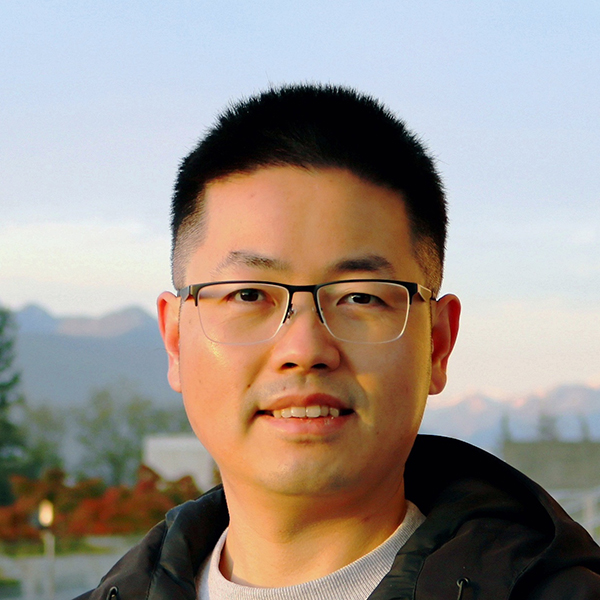
Lingyang Chu is an Assistant Professor at McMaster University's Department of Computing and Software, previously serving as a postdoc fellow at Simon Fraser University under Jian Pei. He earned his Ph.D. in Computer Science from the University of Chinese Academy of Sciences. Research interests span data mining , machine learning , and statistics , with focus on trustworthy AI (privacy, interpretability, security, robustness, fairness), federated learning , and graph-based machine learning . His work includes scalable data mining on large graphs and deploying systems like personalized federated learning on Huawei Cloud's Harmony OS devices. Publications emphasize adversarial attacks, medical AI, graph robustness, and federated learning frameworks. His advising record includes 28 mentees across Ph.D., M.Sc., and internship levels. Scientific achievements include Best paper candidate at ICME'13 Best demo award at ICMR'13 Academic service roles include: Program Committee: NeurIPS, SIGKDD, CVPR, ICML, and 12+ other top-tier conferences Journal Reviewer: IEEE TKDE, ACM Transactions on KDD, and 8+ journals Editorial Board: ACM Transactions on KDD (Associate Editor) Grant Reviewer: Hong Kong RGC Labs/teams: Maintained open-source ALID algorithm (VLDB'15) for dominant cluster detection, demonstrating technical leadership in scalable graph mining
Zohreh Shams is a Visiting Fellow at the Computer Laboratory, University of Cambridge, and Chief Scientific Officer at Leap Labs. Previously, she served as a Senior Research Associate at the University of Cambridge and held roles at Babylon Health as a Senior ML Scientist. Her research focuses on ML interpretability, explainable AI, knowledge discovery, and automated reasoning with applications in healthcare and safety-critical systems. Dr. Shams completed her PhD in Artificial Intelligence at the University of Bath, specializing in explanatory decision-making in multi-agent systems using Argumentation Theory. Her work bridges cognitive science and AI, collaborating with institutions like the University of Brighton on projects such as Accessible Reasoning with Diagrams , which explores explainable ontology reasoning systems. Her research interests include generative modeling, concept-based representations, and the integration of domain knowledge into AI systems. Notable contributions include developing frameworks like CGXplain for neural network explanations and REM for healthcare data analysis. Her publications span venues such as ECCV, AAAI, and TMLR. Shams has contributed to interdisciplinary projects, including the Integrated Cancer Medicine initiative, and maintains affiliations with Wolfson College as a former Junior Research Fellow. Her work emphasizes ethical AI practices, clinician collaboration, and the societal impact of explainable AI systems.
Chun Ouyang is a Professor at Queensland University of Technology (QUT) in the School of Computer Science within the Faculty of Science. With an extensive publication record spanning over two decades from 2002 to 2025, Professor Ouyang has established themselves as a leading researcher in Business Process Management, Process Mining, and Explainable AI. Their work bridges theoretical foundations with practical applications across healthcare, finance, and industrial sectors. Professor Ouyang's research interests primarily focus on Business Process Management systems, Process Mining techniques, Explainable Artificial Intelligence, and Healthcare Process Analysis. Their work has evolved from foundational BPMN/BPEL translation research in the early 2000s to sophisticated process mining approaches in the 2010s, and most recently to cutting-edge Explainable AI applications in clinical and business contexts. They have developed novel methodologies for process querying, predictive process analytics, and XAI evaluation frameworks that have significantly advanced the field. Their research consistently emphasizes practical applicability while maintaining strong theoretical foundations, with publications in top-tier journals and conferences including IEEE Transactions, Springer journals, and major BPM conferences. Analysis of Professor Ouyang's recent publications (2023-2025) reveals a strategic research trajectory that integrates traditional process mining with modern AI techniques, particularly focusing on explainability and trustworthiness. Their work demonstrates a consistent pattern of addressing real-world challenges through rigorous methodological development, with increasing emphasis on healthcare applications, clinical decision support systems, and the ethical implications of AI deployment. The publications show strong interdisciplinary collaboration patterns, particularly with medical researchers and industry partners. Professor Ouyang has mentored numerous PhD students and early-career researchers who have gone on to establish themselves in the BPM and AI communities. Their research group at QUT has secured multiple competitive grants supporting innovative work in process analytics and AI. They maintain active collaborations with leading researchers globally, including Catarina Pinto Moreira, Arthur ter Hofstede, and Moe Wynn. Professor Ouyang leads the Process Analytics Research Group at QUT, which focuses on developing advanced techniques for business process analysis, prediction, and optimization. The group maintains strong industry connections with healthcare providers, financial institutions, and government agencies, ensuring their research has practical impact. Current projects include developing trustworthy AI systems for clinical decision support, cross-organizational process analysis frameworks, and next-generation process mining techniques for complex, distributed systems.
Dr. Chenhao Ma is an Assistant Professor at the School of Data Science , The Chinese University of Hong Kong, Shenzhen , where he works on large-scale data management and data mining. Previously, he was a Postdoctoral Fellow at the University of Hong Kong (2021–2022) and earned his PhD in Computer Science from the University of Hong Kong (2021) and B.Eng. from Shandong University (2017). Current research focuses on graph computing (dense subgraph discovery, motif analysis, graph learning), AI+DB (Text-to-SQL, vector search), and traffic data mining (trajectory analysis, outlier detection). He has published over 40 papers in top venues including SIGMOD, PVLDB, KDD and received the ACM SIGMOD Research Highlight Award 2021 and Best of SIGMOD 2020 (4/458). Scientific Awards : ACM SIGMOD Research Highlight Award 2021 Best of SIGMOD 2020 (4/458) Presidential Young Fellow at CUHK-Shenzhen (2023) Hong Kong and China Gas Scholarship (2019-2020) Reaching Out Award (2019) HKU Postgraduate Scholarship (2017-2021) ACM-ICPC Gold Medal (2015) National Scholarship (2014, 2015) Advising and Research Team : He leads a team including Postdoc Dr. Yuanyuan Zeng, PhD students Lujie Ban, Yuwei Xu, and MPhil students Yi Yang, Yuyang Liang. Former mentees like Yichen Xu (PhD at Berkeley) and Jiayang Pang (Master at UC San Diego) have achieved academic placements. Professional Service : He has served as PC member/reviewer for VLDB, KDD, ICDE, WWW, NeurIPS, TKDE , and guest editor for Applied Sciences and Frontiers in Big Data . He chairs sessions at ICDE and VLDB.
Andrea Passerini is a Full Professor in the Department of Information Engineering and Computer Science at the University of Trento, Italy, where he also serves as Coordinator of the PhD programme in Information Engineering and Computer Science (Ministerial Decree 45/2013). His academic footprint spans multiple departments including Mathematics, Sociology, Cellular Biology, and Industrial Engineering, reflecting deep interdisciplinary engagement across computational sciences and life sciences. His research centers on Machine Learning and Data Mining with specialized expertise in Neuro-Symbolic AI , Probabilistic Reasoning , and Statistical Relational Learning . He pioneers methods for graph-based learning, medical AI applications, and explainable systems, with significant contributions to bioinformatics (particularly RNA-protein interactions) and healthcare diagnostics. His work bridges theoretical rigor with practical implementations in critical domains. Analysis of his 2025 publications reveals dominant trends in neuro-symbolic integration for graph data, human-AI collaboration in medical decision-making, and robust recommender systems. His research increasingly focuses on interpretable AI for high-stakes applications like surgical planning and physician support, while advancing foundational techniques in graph neural networks and concept-based modeling. As PhD programme Coordinator, Professor Passerini mentors doctoral candidates across AI and computer science disciplines. His collaborative network extends to medical researchers at CIBIO (Cellular, Computational and Integrative Biology department) and industrial partners, though specific lab structures aren't documented in available materials. Current projects emphasize medical AI validation, temporal network modeling, and LLM integration with structured reasoning frameworks.
Maxime CORDY is a Research Scientist at the Interdisciplinary Centre for Security, Reliability and Trust (SnT) , University of Luxembourg, within the Security, Design and Validation group (SerVal) . He holds a PhD from the University of Namur (Belgium, 2014) and specializes in software engineering, applied artificial intelligence, and cybersecurity. His work focuses on adversarial machine learning, deep learning robustness, and model checking for critical systems. Research interests include adversarial attacks on tabular data , energy system optimization , code understanding models , and software quality assurance . Recent projects address challenges in secure AI deployment, automated test generation, and fault detection in large language models. Publications emphasize empirical studies on adversarial defenses, data augmentation for code models, and energy consumption forecasting. He contributes to tools like Daedalux (variability-aware model checking) and benchmarks like Tabularbench for adversarial robustness evaluation. Current affiliations include leadership within the SerVal group and collaborations on interdisciplinary projects such as MALETSQUE (Machine Learning Techniques for Software Quality Evaluation). His work bridges theoretical computer science with practical applications in energy systems, medical imaging, and space program design.
Anil N. Hirani is a Professor in the Department of Mathematics at the University of Illinois at Urbana-Champaign (UIUC), affiliated with the College of Liberal Arts & Sciences. He holds a PhD from the California Institute of Technology (2003) in Computer Science with minors in Mathematics and Control and Dynamical Systems. His academic journey includes roles as Assistant Professor (Computer Science, UIUC, 2005–2013) and Associate Professor (Mathematics, UIUC, 2013–2022) before becoming a full Professor in 2022. His research focuses on the interplay between geometry/topology and algorithms, with emphasis on structure-preserving discretizations of exterior calculus and differential geometry. Key areas include Discrete Exterior Calculus (DEC), numerical methods for PDEs, computational topology, and machine learning applications. He has organized workshops, such as the 2025 Discrete Exterior Calculus workshop at IMSI, and contributed to software like PyDEC. Education: PhD, Caltech (2003); MS in Computer Science (Stanford); Undergraduate degree in Computer Science (BITS Pilani, India). Awards include the NSF CAREER Award (2007–2012). Teaching includes courses on Differential Geometry (MATH 423), Vector and Tensor Analysis (MATH 481), and Computational Mathematics (MATH 490). He has advised numerous PhD students, notable among them Kaushik Kalyanaraman and Vaibhav Karve. Articles span DEC applications in fluid dynamics, cohomology computations, and machine learning. His work bridges theoretical foundations with practical applications in engineering and computer science.
Jianxi Gao is an Associate Professor in the Department of Computer Science at Rensselaer Polytechnic Institute (RPI). His research focuses on network science, particularly network resilience, robustness, and control, integrating network theory, control theory, statistical physics, and operations research. He also explores the intersection of network science and AI, including applications of AI to network analysis and vice versa. His work aims to understand, predict, and control the resilience of complex systems against cascading failures. Key research areas include network resilience in transportation systems, quantum networks, and biological systems, with applications to pandemic response and infrastructure optimization. Gao's contributions span theoretical frameworks and computational tools, such as the NuRsE MATLAB package for network resilience analysis. His GitHub repositories (e.g., NuRsE and NON) showcase his open-source contributions to network science and computational methods. His recent publications address topics like AI-driven network analysis, quantum network percolation, and pandemic-induced healthcare system stress. He actively collaborates on interdisciplinary projects, emphasizing real-world applications of network science principles.
Bruce Stephen is a Senior Lecturer and Strathclyde Chancellor's Fellow in the Department of Electronic and Electrical Engineering at the University of Strathclyde, where he has been since 1999. His work lies at the intersection of data science and power systems engineering, with a strong focus on real-world industrial applications. His educational background includes a BSc in Aeronautical Engineering from the University of Glasgow (1997), an MSc from the University of Strathclyde (1998), and a PhD in Electronic and Electrical Engineering (2005) from the University of Strathclyde. Dr. Stephen's research centers on data-driven methodologies for solving complex engineering challenges in power systems, particularly under conditions of limited data or domain knowledge. His applications span the entire energy value chain—from generation (nuclear, wind, solar) to transmission, distribution, and end-use. He develops software solutions for condition assessment, anomaly detection, and predictive modeling to support asset management and future grid planning. Notably, he co-founded Silent Herdsman Ltd, a spin-out company applying intelligent systems to precision livestock farming. His recent publications highlight a strong trend toward advanced machine learning techniques such as transfer learning, surrogate modeling, and synthetic data generation (e.g., using CTGANs) to improve reliability and decision-making in power systems. These works emphasize explainability, uncertainty quantification, and scalability, particularly in renewable-rich and data-scarce environments. Dr. Stephen is currently the Principal Investigator on the EPSRC-funded Analytical Middleware for Informed Distribution Networks (AMIDiNe) project, aiming to identify barriers to Net Zero through improved data modeling of unmonitored networks. He has also contributed to major projects including EU FP7 ORIGIN, EPSRC APAtSCHE, AGILE, and Transactive Energy Supply Arrangements. He actively advises students and collaborates on interdisciplinary research. His professional activities include organizing the QFF Quarterly Forecasting Forum (2018) and delivering invited talks at industry workshops. He has supervised datasets and research involving structural health monitoring and industrial diagnostics. His work supports UN Sustainable Development Goals related to affordable and clean energy, industry innovation, and climate action.
Dr. Yanjie Fu is an Associate Professor in the School of Computing and AI at Arizona State University, part of the Ira A. Fulton Schools of Engineering. He maintains his office in BYENG 506 at the Tempe campus and can be reached at yanjie.fu@asu.edu. Dr. Fu received his Ph.D. from Rutgers University in 2016, the B.E. degree from the University of Science and Technology of China, and the M.E. degree from the Chinese Academy of Sciences. His industry research experience includes positions at Microsoft Research Asia and IBM Thomas J. Watson Research Center. His research focuses on developing disruption-robust machine intelligence that can handle imperfect and complex data. Dr. Fu's work spans two major efforts: Data for AI (D4AI), exploring how structure knowledge of data can guide AI, and AI for Data (AI4D), investigating how AI can augment, reprogram, and knowledgeize data. His current research interests include space-time intelligence, data-centric AI, sim2decision, multimodal reasoning, and LLM with agentic AI. His lab has contributed projects including D4AI-spatial, D4AI-timeseries, D4AI-causal outliers, AI4D-RL, AI4D-Gen, and AI4D-LLM. Dr. Fu's recent publications reveal a strong trend toward integrating causal reasoning with deep learning for robust anomaly detection, advancing time series forecasting with novel normalization techniques, and applying generative AI to urban planning. His work increasingly bridges traditional machine learning with large language models, particularly focusing on data-centric approaches for tabular data transformation and feature engineering. US NAE FOE early career engineer (2023) US NSF CAREER (2021) NSF CRII (2018) ACM KDD18 Best Student Paper Finalist IEEE ICDM Best Paper Finalist (2014, 2021, 2022) ACM SIGSpatial Best Paper Runner-up (2020) 2022 Baidu Scholar global top Chinese young scholars in AI 2021 Aminer.org AI 2000 Most Influential Scholar Award Honorable Mention Dr. Fu has successfully mentored multiple Ph.D. students who have secured tenure-track faculty positions at prestigious institutions including University of Kansas, Chinese Academy of Sciences, Great Bay University, Portland State University, and University of Macau. His research has been supported by significant grants including the NSF CAREER award, and he currently serves as Associate Editor of ACM Transactions on Knowledge Discovery from Data. He is also a senior member of both ACM and IEEE. Dr. Fu leads a research group focused on developing trusted and safe machine intelligence. The lab connects computing issues across representation learning, self-supervised learning, interactive learning, adaptive learning, and stream learning to build disruption-robust frameworks. The group executes two key steps: data representation construct (integrating structure knowledge, self-optimization, explainability) and learning strategy construct (integrating robust representations with adaptive and interactive learning).
Craig Knoblock serves as Keston Executive Director of the Information Sciences Institute (ISI) at the University of Southern California (USC), Vice Dean of the USC Viterbi School of Engineering, and Research Professor of Computer Science and Spatial Sciences. He also directs the Data Science Program and the Center on Knowledge Graphs at USC. His educational background includes a Ph.D. and M.S. in Computer Science from Carnegie Mellon University (1991, 1988) and a B.S. with honors in Computer Science from Syracuse University (1984). Knoblock's research focuses on data semantics , specializing in source modeling, schema and ontology alignment, entity and record linkage, data cleaning, Web data extraction, and knowledge graph construction. His work bridges computer science, geospatial analysis, and artificial intelligence to solve complex data integration challenges. Recent projects emphasize historical map digitization, geospatial knowledge graphs, and smart city applications. His 300+ publications demonstrate consistent contributions to knowledge graphs and geospatial data integration, with a growing emphasis on historical map analysis and urban applications. The research trajectory shows increasing interdisciplinary collaboration across computer vision, geoinformatics, and domain-specific applications. IEEE Fellow (2020) ACM Fellow (2017) AAAI Fellow (2004) Robert S. Engelmore Memorial Lecture Award (2014) Donald E. Walker Distinguished Service Award (IJCAI, 2018) Use-Inspired Research Award (USC Viterbi, 2018) As Executive Director of ISI, Knoblock oversees one of USC's premier research centers with significant federal funding. His leadership extends to directing the Center on Knowledge Graphs and the Data Science Program. While specific grant details aren't provided, his extensive publication record and leadership roles indicate substantial research funding across data integration, knowledge representation, and geospatial applications. His work bridges theoretical computer science with practical applications in historical preservation, urban planning, and resource management through collaborative projects with government agencies and industry partners. Knoblock leads the Center on Knowledge Graphs at USC, focusing on developing techniques for building and utilizing knowledge graphs across diverse domains. His team combines expertise in artificial intelligence, geospatial analysis, and data integration to tackle challenges in historical map digitization, urban applications, and resource discovery. The research group maintains strong connections with both academic and government partners through the Information Sciences Institute's extensive network.