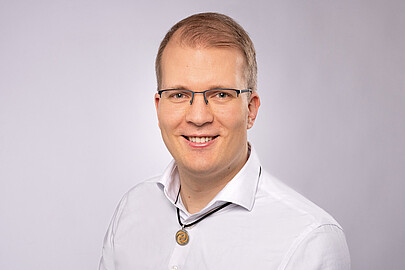
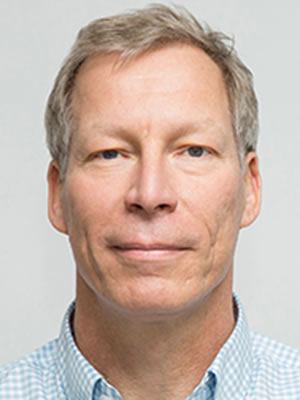
Scott Sanner is a Professor in the Department of Mechanical and Industrial Engineering at the University of Toronto's Faculty of Applied Science and Engineering. With an extensive publication record spanning over two decades, his research bridges artificial intelligence, machine learning, and engineering applications. His work demonstrates significant contributions across multiple top-tier conferences including AAAI, ICLR, NeurIPS, and SIGIR. Dr. Sanner's research interests encompass Reinforcement Learning, Knowledge Representation, Planning and Decision Making, Recommender Systems, and Large Language Models. His work shows a consistent focus on bridging symbolic and neural approaches to AI, with particular emphasis on commonsense reasoning, traffic signal control, and conversational recommendation systems. Recent publications demonstrate increasing integration of large language models with traditional AI techniques for complex reasoning tasks. Analysis of his recent publications reveals a strong trend toward leveraging large language models for knowledge representation and reasoning tasks, while maintaining his foundational work in reinforcement learning and planning. His research increasingly focuses on practical applications in transportation systems, recommendation technologies, and commonsense reasoning frameworks that combine neural and symbolic approaches. Dr. Sanner has mentored numerous graduate students who have become active researchers in the field, including Jihwan Jeong, Zheda Mai, Armin Toroghi, and Anton Korikov. His collaborative work spans multiple institutions and demonstrates strong industry and academic partnerships, particularly with researchers from Australian National University and various technology companies. His research group appears to focus on intelligent systems for decision making under uncertainty, with applications ranging from traffic management to personalized recommendation systems. Current projects show significant emphasis on integrating large language models with traditional AI techniques for more robust and explainable systems.