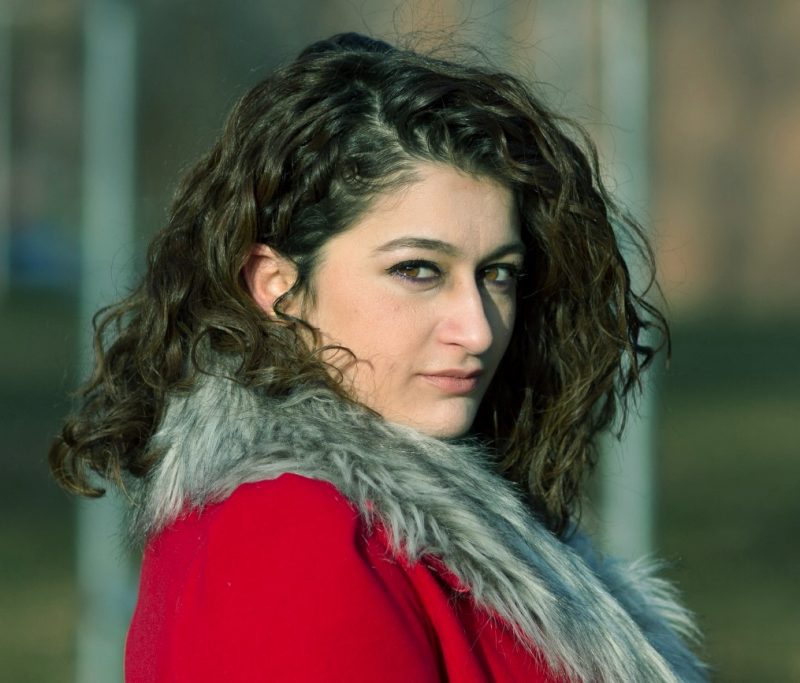
Pinar Yanardag is an Assistant Professor in the Department of Computer Science at Virginia Polytechnic Institute and State University (Virginia Tech), part of the College of Engineering. Her research focuses on advancing human-AI collaboration, augmented creativity, and deep learning techniques with an emphasis on diffusion models and submodular optimization. She holds a Ph.D. in Computer Science from Purdue University (2016), an M.S. in Computer Engineering from Bogazici University, Turkey (2010), and a B.S. in Computer Engineering from Canakkale Onsekiz Mart University, Turkey (2007). Her work explores interpretable directions in generative models, disentangled representations, and creative content generation. Notable contributions include frameworks like Crea for collaborative AI creativity, LoRAShop for training-free image editing, and FluxSpace for semantic manipulation in diffusion models. She also investigates bias mitigation in AI systems and cross-modal reasoning with vision-language models. Recent trends in her publications emphasize scalable adaptation of diffusion models, contrastive learning for customization, and explainability in AI. Her research bridges theoretical advancements with practical applications in creative industries and interactive systems. Dr. Yanardag's research is supported by grants focused on AI creativity, explainable AI, and generative modeling. She collaborates with industry partners on developing user-friendly tools for style exploration and content co-creation. Her lab actively engages in open-source projects to democratize access to advanced AI techniques.
Filippo Maggioli is a Postdoctoral Researcher at the University of Milano-Bicocca and an Adjunct Professor at Pegaso University. He completed his Ph.D. in Computer Science at Sapienza University of Rome, where he also served as a teaching assistant and postdoctoral researcher. His research focuses on interdisciplinary topics in Computer Graphics, Geometry Processing, and Numerical Simulations, with a strong emphasis on scalable algorithms and real-world applications. He has contributed to projects involving plant wilting simulation, shape correspondence, and procedural texturing. Maggioli advocates for open-source software and has published extensively in top-tier conferences such as ECCV. His teaching roles include courses on Computer Architecture and Networking at Pegaso University. Education: Ph.D. in Computer Science, Sapienza University of Rome (2019–2023) M.Sc. in Computer Science, Sapienza University of Rome (2018–2019) B.Sc. in Computer Science, Sapienza University of Rome (2014–2017) Research Interests: Maggioli’s work bridges computational geometry, numerical methods, and interdisciplinary applications. He explores topics such as functional maps for shape correspondence, physically-based simulation of natural phenomena, and GPU-optimized algorithms. His projects often integrate machine learning and procedural content generation to address challenges in 3D modeling and real-time applications. Awards & Contributions: Maggioli is a proponent of open-source software and has contributed to projects like SBML2Modelica. His research has led to impactful publications in areas like scalable geometry processing and fluid dynamics simulation.
Hyo Jeong Kang is an Assistant Professor at the University of Florida's Digital Worlds Institute, specializing in VR/AR interaction design for educational and workforce training applications. She holds a Ph.D. in Design Studies from the University of Wisconsin–Madison with a concentration in Virtual Reality, complemented by an M.S. from Seoul National University and a B.B.A. from Ewha Womans University. Her research develops intuitive VR interfaces for non-technical users, focusing on microelectronics training, autism support tools, and inclusive design addressing racial microaggressions. Dr. Kang leads multiple NSF-funded projects including semiconductor workforce development programs and VR training for microelectronics physical assurance. Her work bridges immersive technology with practical applications in industry training and social equity. Major Grants: NSF ExLENT: Preparing Autistic individuals for Semiconductor QA Engineering ($620,104) NSF SaTC:EDU: Next-Gen VR Training for Microelectronics ($497,905) NSF Engine: Central Florida Semiconductor Innovation Engine ($2.35M UF sub-award) US Army SCALE: Microelectronic Workforce Development ($450,000 UF sub-award)
Francesco De Pace is a PostDoc Researcher at the Institute of Visual Computing and Human-Centered Technology within the Faculty of Informatics at Vienna University of Technology (TU Wien). His research focuses on the intersection of augmented reality, virtual reality, and human-robot interaction, with particular emphasis on developing innovative interfaces for industrial applications. Dr. De Pace's research spans several key areas in immersive technologies and human-computer interaction. His primary interests include Augmented Reality (AR) and Virtual Reality (VR) systems, Human-Robot Interaction (HRI), Brain-Computer Interfaces (BCIs), and advanced tracking and localization techniques. He has made significant contributions to the development of AR/VR interfaces for industrial robots, outdoor tracking with Real-Time Kinematic GPS, and SLAM (Simultaneous Localization and Mapping) systems. His work bridges theoretical research with practical industrial applications, focusing on creating more intuitive and effective human-machine interfaces. Dr. De Pace's recent publications demonstrate a clear trajectory toward enhancing human-robot collaboration through immersive technologies. His research shows increasing sophistication in integrating multiple modalities (visual, spatial, and neural) to create more natural interaction paradigms. A notable trend is the application of AR/VR to industrial settings, particularly for assembly tasks, path planning, and training scenarios. His systematic evaluation of RTK-GPS for wearable AR represents important foundational work for outdoor AR applications, addressing critical challenges in positional accuracy across different environmental conditions. While specific awards are not prominently documented in the available information, Dr. De Pace's research has been supported by significant funding mechanisms, including grants from the Austrian Research Promotion Agency (FFG) under Grant Agreement No FO999886342 KIRAS MRespond, indicating recognition of the importance and potential impact of his work. Dr. De Pace appears to be actively involved in multiple research projects, including PostDisaster and MRespond as indicated in his profile. His collaborative approach is evident through his extensive co-authorship with researchers across institutions. While specific student advising information isn't detailed in the available materials, his role as a PostDoc Researcher likely involves mentoring junior researchers and contributing to the academic development of students working on related projects. Dr. De Pace is associated with the Mixed Reality Lab at TU Wien, as indicated in the website navigation. His research appears to be conducted within collaborative frameworks that include both academic and industry partners. His work on the MRespond project suggests engagement with emergency response applications of mixed reality technologies, indicating interdisciplinary team involvement spanning computer science, engineering, and potentially public safety domains.
Dr. Karen Eguiazarian is a Professor of Signal Processing at the Department of Computing Sciences , Tampere University . He leads the Computational Imaging research group and has served as head of the Signal Processing Research Community (SPRC) at Tampere University of Technology (2016-2018). Education: M.Sc. in Mathematics, Yerevan State University, Armenia (1981) Ph.D. in Physics and Mathematics, Moscow State University, Russia (1986) Doctor of Technology in Signal Processing, Tampere University of Technology, Finland (1994) His research focuses on Computational Imaging , Compressed Sensing , and Efficient Signal Processing Algorithms , with significant contributions to Image/Video Restoration and Compression . Recent work includes AI-driven phase imaging, hyperspectral reconstruction, and noise-robust algorithms for remote sensing and biomedical applications. Scientific Awards: Service Award from the Society for Imaging Science and Technology (IS&T) (2014) Honorary Doctoral Degree from Don State-Technical University, Russia (2015) Dr. Eguiazarian has supervised 25 doctoral theses and published over 650 papers. He serves as Editor-in-Chief of the Journal of Electronic Imaging and associate editor of the IEEE Transactions on Image Processing , while co-founding Noiseless Imaging Oy , a Tampere University spin-off.
Prof. Dr. Didier Stricker is a distinguished Professor of Computer Science at Rhineland-Palatinate University of Technology Kaiserslautern-Landau (RPTU) and serves as Scientific Director and Head of the Augmented Reality Research Department at the German Research Center for Artificial Intelligence (DFKI) in Kaiserslautern. He leads the Augmented Vision Group, which comprises approximately 30 researchers working across various domains of computer vision and augmented reality. His work bridges academic research with industrial applications through collaborations with major companies including Sony, Google, and John Deere. His educational background includes electrical engineering studies at the Polytechnic Institute of Grenoble and the Technical University of Karlsruhe. He earned his doctorate from the Technical University of Darmstadt in 2002 with a dissertation on "Computer Vision-Based Calibration and Tracking Methods for Augmented Reality Applications." Prof. Stricker's research spans virtual and augmented reality, computer vision, human-computer interaction, cognitive interfaces, and on-body sensor networks. His work focuses on developing practical applications that enhance human capabilities through advanced visual computing technologies. He has pioneered approaches in video and sensor analytics, particularly in creating cognitive interfaces that respond intelligently to user needs and environmental contexts. His recent publications reveal a strong emphasis on 3D scene understanding, real-time processing for augmented reality applications, and the integration of large language models with spatial reasoning capabilities. There's a clear trend toward more sophisticated multimodal approaches that combine vision, language, and spatial understanding to create more natural and intuitive human-computer interactions. Among his notable achievements: Innovation Prize of the German Society of Computer Science (2006) Organized the first IEEE & ACM International Symposium on Mixed and Augmented Reality (ISMAR) in 2002 Member of the ISMAR steering committee from 2000-2007 Multiple best paper and demonstration awards at major conferences Several registered patents in tracking and augmented reality technologies Prof. Stricker has supervised numerous PhD and Master's students through his leadership of the Augmented Vision Group. His research is supported by significant funding from both European and national research organizations, as well as through industrial partnerships. He serves as an expert reviewer for various research funding bodies and contributes to the academic community through editorial roles for journals and conferences in VR/AR and computer vision. The Augmented Vision Group under his direction maintains strong connections with industry partners and participates in numerous collaborative research projects including LUMINOUS, SHARESPACE, I-Nergy, BIONIC, and VIDETE. These projects span applications in language-augmented XR systems, social experiences in hybrid spaces, AI for energy systems, personalized body sensor networks, and 4D scene analysis.
ROI MENDEZ FERNANDEZ is a Professor at the University of Santiago de Compostela, affiliated with the Department of Communication Sciences within the Faculty of Communication Sciences. He is also part of the Institute of Studies and Development of Galicia (IDEGA) and the Audiovisual studies research group focused on audiovisual communication technologies. His academic career includes a doctoral thesis in 2017 titled Advanced visualization and interaction applied to virtual scenarios , supervised by Dr. Julian C. Flores González and Dr. Enrique Castelló Mayo. His research interests center on virtual TV set technologies , mixed reality applications in education , motion capture systems , and cloud-based educational platforms . Recent work explores the viability of tools like Cloudclass in primary education, telepresence in art education, and benchmarking human pose estimation solutions for virtual television. Notable contributions include developing distributed virtual TV architectures, cyclorama illumination calibration, and low-cost sensor integration for natural interaction systems. His projects often bridge academic research with practical applications in media production and educational technology. He actively collaborates with the COGRADE research group on computer graphics and data engineering.
Paritosh Sharma is a postdoctoral researcher at Inria Sophia Antipolis (Biovision team), focusing on deep generative approaches for personalized VR content in low-vision rehabilitation. He earned his Ph.D. from Université Paris-Saclay under the supervision of Michael Filhol, specializing in animating Sign Language descriptions using 3D avatars. His academic background includes a Master of Science in Informatics from Université Grenoble Alpes and a Bachelor of Technology in Computer Science and Engineering from SRM Institute of Science and Technology. Research Interests : Enhancing accessibility via VR, sign language animation, eye-tracking interfaces for cognitively disabled individuals, and computer graphics applications in data science. Teaching Experience : Courses in virtual world creation (Blender/Unity), computer graphics for data science, AI, and object-oriented programming at institutions like Polytech Sophia Antipolis and IUT d’Orsay. Projects : Creative3D (low-vision VR rehabilitation), GazePlay (eye interaction methods), and Qt3D backend development for KStars planetarium software. Scientific Awards : Bronze Medal at UGA i-Days 2020 for an interdisciplinary application idea in Nutrition, AI, and IoT targeting elderly Vitamin D deficiencies.
Mehmet Can Yavuz is an Assistant Professor at Işık University's Faculty of Engineering and Natural Sciences, Department of Computer Engineering. As Principal Investigator of the Multimedia Lab, he bridges machine learning with artistic expression through projects like Arky Multimedia, ConvergedMachine, and Duyukoru. His research spans biomedical imaging, human-computer interaction, and cross-modal analysis of multimedia storytelling. 2019-2023: PhD in Computer Science & Engineering, Sabancı University 2010-2016: MS in Physics, Boğaziçi University 2006-2010: BS in Physics, Işık University 2004-2010: BS in Electrical-Electronics Engineering, Işık University Current research explores: Advanced machine learning architectures (Variational Contrastive Learning, Cross-D Convolution) Biomedical imaging applications for disease detection Computational analysis of dramatic/literary works through graph theory and sentiment analysis AI-driven threat detection systems using sensor fusion Creative technology intersections in multimedia production His lab develops frameworks for: Noisy data processing in semi-supervised learning Cross-dimensional knowledge transfer Ensemble approaches in 2D/3D medical imaging Temporal-sentiment analysis of urban events Document embedding-based character analysis Projects include: ARKY MULTIMEDIA - Combining creative exploration with ML DUYUKORU - Machine learning-enhanced sensor threat detection CONVERGEDMACHINE - Multimodal ML research repository He oversees the Işık University Multimedia Lab , which integrates medical image computing with animation production, pushing boundaries in both scientific and artistic domains.
Dr. Soo Mi Choi is a distinguished Professor in the Department of Computer Science and Engineering at Sejong University's College of Engineering. She serves as Director of the Mobile Virtual Reality Research Center (ITRC), a Korean government-designated research facility, and leads the eXtended Reality Research Center. Her academic journey began at Ewha Womans University where she earned her B.S. (1993), M.S. (1995), and Ph.D. (2001). She has held prestigious positions including Visiting Researcher at Fraunhofer Institute for Computer Graphics Research in Germany (1998) and Visiting Professor at ETH Zurich in Switzerland (2008-2009). Ph.D., Ewha Womans University (2001) M.S., Ewha Womans University (1995) B.S., Ewha Womans University (1993) Professor Choi's research spans computer graphics, virtual reality, augmented reality, mixed reality, and their applications in healthcare, urban planning, and education. She has pioneered work in mobile VR content representation, sketch-based interfaces for facial features, virtual freeform architecture with stereo 3D rendering, and medical image analysis. Her recent focus integrates AI with XR technologies, particularly for education in the metaverse, environmental monitoring, and medical applications. Her work demonstrates exceptional interdisciplinary reach, connecting computer science with earth sciences, neuroscience, and education. Analysis of her recent publications reveals a strong trend toward applying extended reality technologies to environmental monitoring and disaster management, with numerous papers on flood susceptibility mapping, land subsidence, and pollution modeling using advanced AI techniques. She has also produced influential work on metaverse education frameworks and VR-assisted learning systems, reflecting her commitment to applying cutting-edge technology to educational challenges. Her research shows increasing integration of generative AI with virtual reality systems. Cum Laude Poster Award (SPIE2001) Korean HCI Society 2011 Excellent Paper Award KCC 2015 Best Paper Award KCC 2013 Best Paper Award KCC 2014 Excellent Presentation Paper Award Professor Choi actively mentors students, with numerous publications showing her as corresponding author guiding first-author students through significant research contributions. She leads international collaborations with institutions including ETH Zurich, Disney Research Studios, Samsung Seoul Hospital, and Seoul National University Hospital. Her Mobile Virtual Reality Research Center (ITRC) serves as a hub for government-funded research projects applying VR technologies to real-world problems. She has supervised numerous undergraduate and graduate students, many of whom have received awards for their collaborative work. As Director of the Mobile Virtual Reality Research Center and the eXtended Reality Research Center at Sejong University, Professor Choi leads a dynamic research team working on cutting-edge XR applications. Her labs collaborate internationally with Swiss institutions through Korea-Switzerland research projects and maintain strong ties with medical institutions for healthcare applications of VR technology. The centers focus on developing intelligent content creation tools for augmented and virtual reality, with applications spanning education, disaster management, and medical visualization.
Professor Ulrich Eisenecker serves as the Director of the Institute for Business Informatics at Leipzig University's Faculty of Economics and Business Administration. He holds the Chair of Business Informatics with specialization in software development for business and administration, a position he has maintained since October 2004. Prior to this, he served as Dean of the Faculty (2012-2016) and Pro-Dean (2008-2012). His academic journey includes professorships at Kaiserslautern University of Applied Sciences (1999-2004) and Heidelberg University of Applied Sciences (1995-1999), following research positions at Daimler-Benz Research Institute and Mannesmann Kienzle GmbH. Professor Eisenecker's research focuses on Generative Software Development , Software Product Lines , Software Visualization (including 2D, 3D, AR and VR applications), and E-Assessment systems . His work bridges theoretical computer science with practical business applications, particularly evident in his application of set theory to software features and product lines. He leads the ongoing 'Visual Software Analytics' project and has previously directed projects funded by the European Social Fund and German Federal Ministry of Education and Research. His publication record spans over two decades, highlighted by the influential 2000 book 'Generative Programming' co-authored with K. Czarnecki and the 2017 Most Influential Paper Award from the Software Product Line Conference. Recent work (2023-2025) continues to advance software engineering and educational technology, particularly in automated assessment systems using AI techniques. Notable recognition: Most Influential Paper Award from Software Product Line Conference 2017 (SPLC 2017) Professor Eisenecker supervises doctoral and master's students, with numerous successful completions including Dr. Richard Müller, Dr. Max Lillack, and Dr. Johannes Kristan. His research group includes several scientific staff members and regularly publishes with student co-authors. He teaches 'Introduction to Computer Science' for economics students, 'Programming,' and 'Software Engineering' courses, integrating his research in automated feedback systems into his pedagogy. His research group maintains strong connections between academic research and practical applications, particularly through open source initiatives and industry collaborations focused on software analytics and educational technology.