Chris Joslin is a Professor at the School of Computer Science, Carleton University. His office is located in 4302 Canal Building, and he can be reached at Chris.Joslin@carleton.ca. He specializes in interdisciplinary research areas including computer graphics, medical imaging, virtual reality, computer vision, and human-computer interaction. His work bridges theoretical advancements with practical applications in animation, 3D modeling, and medical visualization. Research interests include developing novel techniques for 3D editing, medical image processing, and immersive virtual environments. Notable contributions include advancements in 3D Gaussian splatting, AI-driven MRI analysis, and robust sensor fusion for autonomous systems. His publications span from foundational studies on motion retargeting to applied work in procedural audio generation for soft-body simulations. Recent trends in his articles emphasize integration of deep learning with traditional computer vision tasks, optimization of medical imaging workflows, and enhancing accessibility in virtual reality systems. Despite prolific output, no scientific awards are explicitly mentioned in the provided texts. Advising and grant details remain unspecified, though his involvement in collaborative projects like VPARK and ISIS suggests engagement with interdisciplinary teams. His work is anchored at Carleton’s Herzberg Laboratories, a hub for advanced computational research.
Professor Vladimir Risojević is a full professor at the Department of General Electrical Engineering, Faculty of Electrical Engineering, University of Banja Luka, Republic of Srpska, Bosnia and Herzegovina. With a prolific research career spanning over two decades, he has established himself as a leading expert in remote sensing, machine learning, and biohybrid systems. His work bridges theoretical advancements with practical applications in environmental monitoring, energy systems, and security technologies, with numerous publications in high-impact journals and conferences. Professor Risojević's research focuses primarily on remote sensing image classification , where he has made significant contributions to understanding the role of pre-training in specialized applications. His work in machine learning spans self-supervised learning, contrastive multiview coding, and efficient neural network architectures. Most notably, his pioneering research in biohybrid systems has developed innovative methods using honeybees as biosensors for landmine and explosive detection, creating a unique intersection between biology and engineering that has received international recognition. His research consistently demonstrates a commitment to solving real-world problems with practical engineering solutions. Analysis of his recent publications reveals a strategic expansion from his core expertise in remote sensing into complementary domains including energy systems (solar irradiance modeling and Li-ion battery monitoring), 3D human body modeling, and novel neural network architectures. A unifying theme throughout his work is the pursuit of computational efficiency, with multiple publications focusing on approximate computing techniques to make AI systems more energy-efficient for deployment in resource-constrained environments. His research demonstrates both depth in specialized areas and breadth across multiple engineering disciplines. Professor Risojević is actively involved in numerous significant research projects including: NATO Science for Peace and Security project valued at €300,415 on 'Biological Methods (Bees) for Explosive Detection' 'Obrada signala primjenom ugradjenih racunarskih sistema i masinskog ucenja' (Signal Processing using Embedded Computer Systems and Machine Learning) 'Masinsko ucenje u rubnom racunarstvu' (Machine Learning in Edge Computing) 'Elektronski sistem za daljinsko pracenje i analizu uticaja parametara zivotne sredine na aktivnost pcela' (Electronic System for Remote Monitoring of Environmental Parameters on Bee Activity) His laboratory has developed specialized video analysis systems for bee monitoring, with multiple publications detailing techniques for tracking bee activity, detecting pollen-bearing bees, and creating integrated sensor platforms for remote bee yard monitoring. This work has positioned him as a leader in applying computer vision techniques to biological monitoring systems with applications in both environmental science and security technologies.
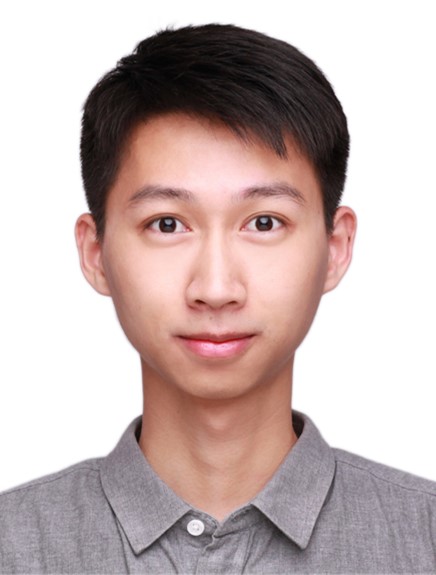
Haomiao Ni is an Assistant Professor in the Department of Computer Science at the University of Memphis. He holds a PhD in Informatics from Pennsylvania State University (2024), a Master's in Computer Science from the University of Chinese Academy of Sciences (2019), and a Bachelor's in Information Engineering from South China University of Technology (2016). His research focuses on computer vision and machine learning, with applications in generative AI, biomedical imaging, and healthcare technologies. Education : PhD in Informatics, Pennsylvania State University, 2024 Master of Computer Science and Technology, University of Chinese Academy of Sciences, 2019 Bachelor of Information Engineering, South China University of Technology, 2016 Research Interests : His work spans video-based computer-aided diagnosis, generative models for video editing, and deep learning for biomedical image analysis. Recent projects include privacy-preserving stroke triage systems and zero-shot text-to-video generation frameworks. Advising & Contributions : Currently advising PhD student Yanliang Qi. He serves as a reviewer for top journals (CVIU, MedIA, TPAMI) and conferences (MICCAI, CVPR, NeurIPS). His code repository CVPR23_LFDM demonstrates contributions to latent flow diffusion models for video generation. Labs & Teams : Leads research projects in generative AI and biomedical applications, leveraging tools like PyTorch and collaborative platforms for model development.
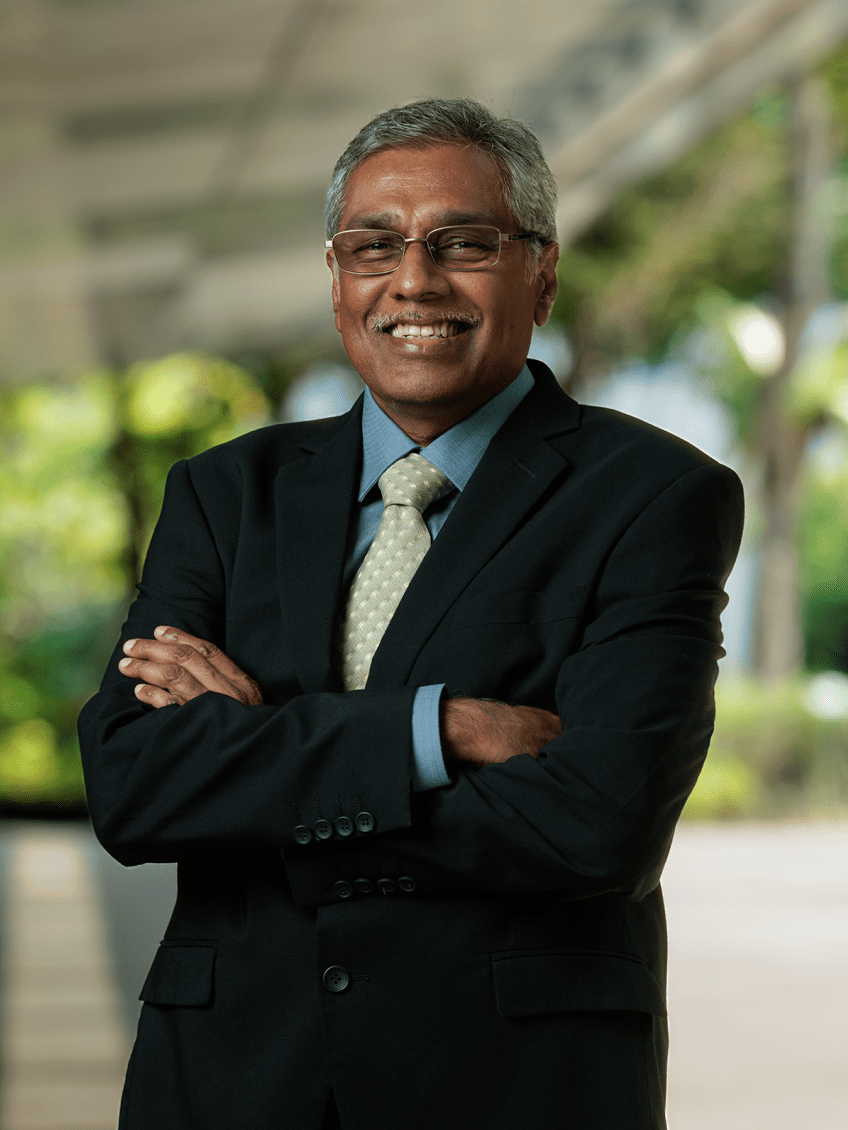
Ashraf A. Kassim is a Professor at the Singapore University of Technology and Design (SUTD) and serves as Associate Provost for the Office of Education and Innovation. He holds a PhD from Carnegie Mellon University and previously held positions including Professor of Electrical & Computer Engineering at the National University of Singapore (NUS), where he also served as Vice-Provost (Research) and Vice-Dean of Engineering. His industry experience includes research at Texas Instruments developing machine vision systems. His research spans computer vision , medical image analysis , machine learning , and deep learning . Key applications include diagnostic radiography, generative adversarial networks (GANs) for image synthesis, facial landmark detection, and attribute-based fashion retrieval systems. His work integrates advanced neural architectures with real-world challenges in healthcare and multimedia. Publications (170+ articles) emphasize deep learning-driven solutions: recent works focus on medical imaging (cell classification, radiograph analysis), generative models (text-to-image synthesis, GANs), and computer vision applications (facial analysis, fashion retrieval). Awards and Honors: Mendaki Foundation’s Anugerah Cemerlang (Academic Excellence Award) Institution of Engineers Singapore Award (2011) Public Administration Medal (Bronze, 2012) National Day Long Service Award (2018) NUS Annual Teaching Excellence Award Administrative service includes board memberships at Singapore Science Centre, Singapore Synchrotron Light Source, and Centre for Maritime Studies. He contributes to academic committees and journal editorial boards internationally.
Prof. Dr. Hasan Demirel is a faculty member in the Department of Electrical and Electronic Engineering at Eastern Mediterranean University (EMU). He holds a PhD in Electrical and Electronic Engineering from Imperial College London (2003), an MS in Computer Science from EMU (1993), and a BS in Electrical and Electronic Engineering from EMU (1992). His research focuses on image and video processing, facial expression recognition, pattern recognition, and biomedical applications. He has authored/co-authored over 100 peer-reviewed publications and supervised numerous PhD and MS students in areas such as Alzheimer's disease detection using MRI, SAR target recognition, and deep learning for emotion synthesis. Prof. Demirel's awards include multiple EMU Publication Citation Awards (2017–2021). He has led projects on multimodal emotion recognition and developed systems for real-time face recognition using robotics platforms like NAO humanoid robots. His work integrates machine learning techniques with medical imaging, remote sensing, and computer vision. He currently serves as a faculty member at EMU, contributing to academic programs and advising students in electrical engineering and biomedical engineering. His research labs focus on advancing AI-driven solutions for healthcare diagnostics and visual surveillance systems.
Dr. Karen Eguiazarian is a Professor of Signal Processing at the Department of Computing Sciences , Tampere University . He leads the Computational Imaging research group and has served as head of the Signal Processing Research Community (SPRC) at Tampere University of Technology (2016-2018). Education: M.Sc. in Mathematics, Yerevan State University, Armenia (1981) Ph.D. in Physics and Mathematics, Moscow State University, Russia (1986) Doctor of Technology in Signal Processing, Tampere University of Technology, Finland (1994) His research focuses on Computational Imaging , Compressed Sensing , and Efficient Signal Processing Algorithms , with significant contributions to Image/Video Restoration and Compression . Recent work includes AI-driven phase imaging, hyperspectral reconstruction, and noise-robust algorithms for remote sensing and biomedical applications. Scientific Awards: Service Award from the Society for Imaging Science and Technology (IS&T) (2014) Honorary Doctoral Degree from Don State-Technical University, Russia (2015) Dr. Eguiazarian has supervised 25 doctoral theses and published over 650 papers. He serves as Editor-in-Chief of the Journal of Electronic Imaging and associate editor of the IEEE Transactions on Image Processing , while co-founding Noiseless Imaging Oy , a Tampere University spin-off.
Srirangaraj (Ranga) Setlur is a Principal Research Scientist and Co-Director of the Center for Unified Biometrics and Sensors (CUBS) at the University at Buffalo. He also serves as the Associate Director of Community Engagement at the Institute for Artificial Intelligence and Data Science. His research focuses on AI, Machine Learning, Pattern Recognition, Computer Vision, and Information Retrieval with applications in biometrics, document analysis, and healthcare. Education: MS in Industrial Engineering, University at Buffalo (1995) Research Interests: Development of AI-driven systems for biometric authentication (e.g., fingerprint, facial recognition) Design of datasets for chart analysis (CHART-Info), gait recognition (DIOR), and cross-domain fingerprint analysis Applications in healthcare diagnostics (e.g., dyslexia screening via handwriting analysis) Advancements in multimodal fusion (e.g., audio-visual, physiological signals) Recent Research Trends: His recent work emphasizes cross-domain learning (e.g., Ridgeformer), sparse feature aggregation (Proxyfusion), and AI applications in social robotics (AutoMisty). He consistently addresses challenges in unconstrained environments and under-represented data scenarios. Awards: Senior Member, IEEE 2019 ICDAR Best Student Paper Award (F. Xu) 2010 IBM Best Student Paper Award (X. Peng) UB Visionary Innovator Award Labs/Teams: Leads research teams in CUBS and the Institute for AI & Data Science, focusing on biometric systems, surveillance optimization, and multimodal AI applications.
Ifeoma Nwogu is an Associate Professor in the Department of Computer Science and Engineering at the University at Buffalo. She holds an appointment in the School of Engineering and Applied Sciences, specializing in research areas including human behavior modeling, sign language understanding, and probabilistic modeling. Her work spans computer vision, robotics, and AI with applications in healthcare, education, and social signal processing. Her research focuses on advancing technologies for sign language interpretation, infant vocal analysis, and human-robot interaction. Key projects include developing automated code generation frameworks for social robots, 3D motion synthesis systems for sign language avatars, and methodologies for emotion recognition in facial interactions. She teaches courses such as CSE 455/555 (Pattern Recognition), CSE 610 (Special Topics), and CSE 706 (Seminars), reflecting her expertise in AI and machine learning. Nwogu's recent publications emphasize cross-disciplinary applications of machine learning, including medical imaging anonymization, multi-agent systems, and ethical considerations in data privacy. Her work bridges computational methods with societal needs, particularly in education accessibility for deaf communities and stroke rehabilitation technologies.
Prof. Dr. Didier Stricker is a distinguished Professor of Computer Science at Rhineland-Palatinate University of Technology Kaiserslautern-Landau (RPTU) and serves as Scientific Director and Head of the Augmented Reality Research Department at the German Research Center for Artificial Intelligence (DFKI) in Kaiserslautern. He leads the Augmented Vision Group, which comprises approximately 30 researchers working across various domains of computer vision and augmented reality. His work bridges academic research with industrial applications through collaborations with major companies including Sony, Google, and John Deere. His educational background includes electrical engineering studies at the Polytechnic Institute of Grenoble and the Technical University of Karlsruhe. He earned his doctorate from the Technical University of Darmstadt in 2002 with a dissertation on "Computer Vision-Based Calibration and Tracking Methods for Augmented Reality Applications." Prof. Stricker's research spans virtual and augmented reality, computer vision, human-computer interaction, cognitive interfaces, and on-body sensor networks. His work focuses on developing practical applications that enhance human capabilities through advanced visual computing technologies. He has pioneered approaches in video and sensor analytics, particularly in creating cognitive interfaces that respond intelligently to user needs and environmental contexts. His recent publications reveal a strong emphasis on 3D scene understanding, real-time processing for augmented reality applications, and the integration of large language models with spatial reasoning capabilities. There's a clear trend toward more sophisticated multimodal approaches that combine vision, language, and spatial understanding to create more natural and intuitive human-computer interactions. Among his notable achievements: Innovation Prize of the German Society of Computer Science (2006) Organized the first IEEE & ACM International Symposium on Mixed and Augmented Reality (ISMAR) in 2002 Member of the ISMAR steering committee from 2000-2007 Multiple best paper and demonstration awards at major conferences Several registered patents in tracking and augmented reality technologies Prof. Stricker has supervised numerous PhD and Master's students through his leadership of the Augmented Vision Group. His research is supported by significant funding from both European and national research organizations, as well as through industrial partnerships. He serves as an expert reviewer for various research funding bodies and contributes to the academic community through editorial roles for journals and conferences in VR/AR and computer vision. The Augmented Vision Group under his direction maintains strong connections with industry partners and participates in numerous collaborative research projects including LUMINOUS, SHARESPACE, I-Nergy, BIONIC, and VIDETE. These projects span applications in language-augmented XR systems, social experiences in hybrid spaces, AI for energy systems, personalized body sensor networks, and 4D scene analysis.
Kalin Stefanov is an ARC DECRA Fellow and Research Fellow in the Department of Human Centred Computing at Monash University. He holds a PhD in Computer Science from KTH Royal Institute of Technology and an MSc in Artificial Intelligence from the University of Amsterdam. His research focuses on Affective Computing, exploring systems that recognize and simulate human affects, with applications in social robotics, neurodiverse communication, and multimodal interaction. He has led projects on sign language translation and large-scale deepfake detection datasets. Key collaborations include work at the University of Southern California’s Institute for Creative Technologies and National Institute of Informatics. He has received accolades such as the Discovery Early Career Researcher Award (2023) and Best Paper Awards (2019, 2024). His research also contributes to UN SDG 4 (Quality Education) through accessible technologies for neurodiverse groups and visually impaired learners. Projects include the 'Active Generation of fingerspelling in Australian Sign Language' and 'Research Towards automated Australian Sign Language translation,' funded by the Australian Research Council. Stefanov’s work spans AI ethics, multimodal data platforms (e.g., OpenSense), and systems for social signal processing in human-robot interaction.
Peggy Chi is a Staff Research Scientist at Google DeepMind and a Visiting Associate Professor at National Taiwan University's Department of Computer Science and Information Engineering. She holds a Ph.D. in Computer Science from UC Berkeley and an M.S. from MIT Media Lab. Her research focuses on interactive systems, accessibility technologies, and AI-driven interfaces to enhance creativity and user experience in areas like video creation, non-visual access for visually impaired users, and cross-device interaction. Key research interests include Human-Computer Interaction (HCI), accessibility, and the application of AI in user-facing technologies. She has pioneered projects such as TacNote (tactile/audio note-taking for BVI users), Slide Gestalt (non-visual slide structure extraction), and Bespoke (LLM-based interface generation). Her work bridges theory and practice, with contributions to top venues like ACM CHI, UIST, and CVPR. Received a Best Paper Award at ACM CHI and a Google PhD Fellowship . Published over 20+ papers in HCI and AI, focusing on accessibility, video technology, and cross-device systems. Her research also extends to educational tools (e.g., MixT for mixed-media tutorials) and ubicomp systems for health and daily life, such as calorie-aware smart kitchens. Peggy collaborates with industry and academia to advance interactive technologies that empower users through innovation and inclusivity.
Zhang Fangyi is a research fellow at Queensland University of Technology's School of Electrical Engineering and Robotics, specializing in robotics, computer vision, and machine learning. With a PhD completed in 2018 titled 'Learning real-world visuo-motor policies from simulation,' Zhang has established a strong research trajectory focusing on bridging the gap between simulation and real-world robotics applications. Zhang's research interests center around robotic perception and manipulation, with particular expertise in sim-to-real transfer techniques, tactile sensing systems, and graph neural networks. Their work spans multiple domains including robotic grasping, fabric manipulation, face clustering algorithms, and graphene-based sensor development. A consistent theme throughout Zhang's research is the development of robust systems that can effectively transition from simulated environments to real-world applications. The publication record shows a clear evolution from foundational work in sim-to-real transfer (2015-2019) toward more specialized applications in tactile sensing and material science (2021-2024). Recent work demonstrates expanding interests into graphene-based sensor technology while maintaining core expertise in robotic perception. Zhang frequently collaborates with leading researchers at QUT including Peter Corke, with whom they've published multiple papers on robotic grasping and tactile sensing. Zhang's research has practical applications across multiple domains including assistive robotics, sensor development, and computer vision systems. Their work on laser-induced graphene sensors shows particular promise for next-generation tactile interfaces and wearable technology.