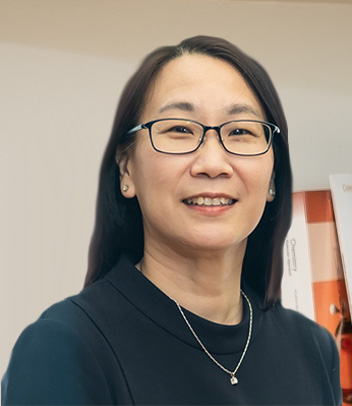
CHUA Lay-Lay is an Associate Professor in the Department of Chemistry at the National University of Singapore (NUS). She holds a joint professorship with the University of Cambridge and leads research in organic semiconductor materials. Her work focuses on polymer-based electronic materials and hybrid systems with graphene/SWCNTs for applications in LEDs, solar cells, and sensors. She has pioneered breakthroughs in multivalent anion-based electron donor materials and solution-processable organic electronics. Education: Ph.D., University of Cambridge (2007); B.Sc. Computational Chemistry, NUS (1995). Prior roles include Research Fellowships at NUS and Cavendish Lab, and industry experience at Bell Labs and Chartered Semiconductor. Research highlights include the 2019 Nature paper demonstrating multivalent anion electron donors, enabling air-stable low-work-function materials. Her group explores energy-level engineering and morphology-property relationships in organic electronics. Editorial roles: Associate editor of Journal of Materials Chemistry C . Awards include the NUS-Cambridge Dual Professorship (2008). Teaching: CM4254 Chemistry of Semiconductors (AY2022/2023). Laboratory affiliations: Organic Nano Device Laboratory (ONDL) focusing on plastic electronics innovation.
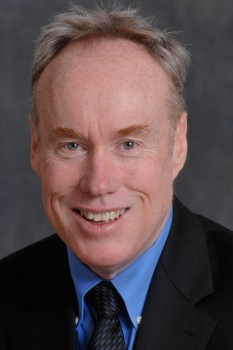
Brian D. Taylor is a Professor of Urban Planning and Public Policy at UCLA’s Luskin School of Public Affairs, and a Research Fellow at the Institute of Transportation Studies. His academic roles include Director of the UCLA Institute of Transportation Studies and former leadership of the Lewis Center for Regional Policy Studies. Education: PhD in Urban Planning (UCLA), MCP in City and Regional Planning (UC Berkeley), MS in Civil Engineering (UC Berkeley), and BA in Geography (UCLA). Research focuses on transportation equity, finance, policy, and behavior. Key areas include post-pandemic travel trends, transit ridership decline, transportation pricing, and the socio-political dimensions of urban mobility. Recent work explores falling public transit use, pandemic-induced activity changes, and equity impacts of new mobility systems. Publications highlight studies such as The Drive for Dollars (Oxford Press, 2023), analyzing freeway financing and urban transformation, and influential papers on congestion economics and transit fiscal challenges. Over 50 students advised, many now leading academics and practitioners. Awards include the YPT Excellence in Innovation Award (2021) and recognition as a Top 10 Transportation Thought Leader (2016). Teaching includes courses on transportation economics, land-use integration, and shared mobility policy. Administrative leadership roles span institutes and transportation centers across California.
Jishen Zhao is an Assistant Professor in the Department of Computer Science and Engineering at the University of California, San Diego (Jacobs School of Engineering). His research focuses on computer architecture, non-volatile memory systems, and deep learning acceleration. Dr. Zhao has published extensively in top venues including ISCA, MICRO, ASPLOS, and IEEE Transactions. He collaborates with researchers at UCSD and beyond to advance systems for emerging applications in AI and autonomous vehicles. Dr. Zhao's primary research areas include persistent memory systems, hardware/software co-design for deep learning, and safety-critical computing. He develops techniques for crash consistency, memory disaggregation, and efficient neural network deployment. His work on autonomous vehicles addresses scenario generation and perception-aware system design. Recent projects explore LLM applications for software engineering and hardware verification. Analysis of Dr. Zhao's 2024-2025 publications reveals a strong shift toward AI-integrated systems research. He applies large language models to tasks like RTL verification and software issue localization while continuing to innovate in memory systems for serverless computing. There is growing emphasis on safety-critical systems for autonomous vehicles and energy-efficient neural network training using novel hardware architectures. Information about Dr. Zhao's scientific awards, advising activities, grants, and laboratory facilities was not available in the provided documentation.
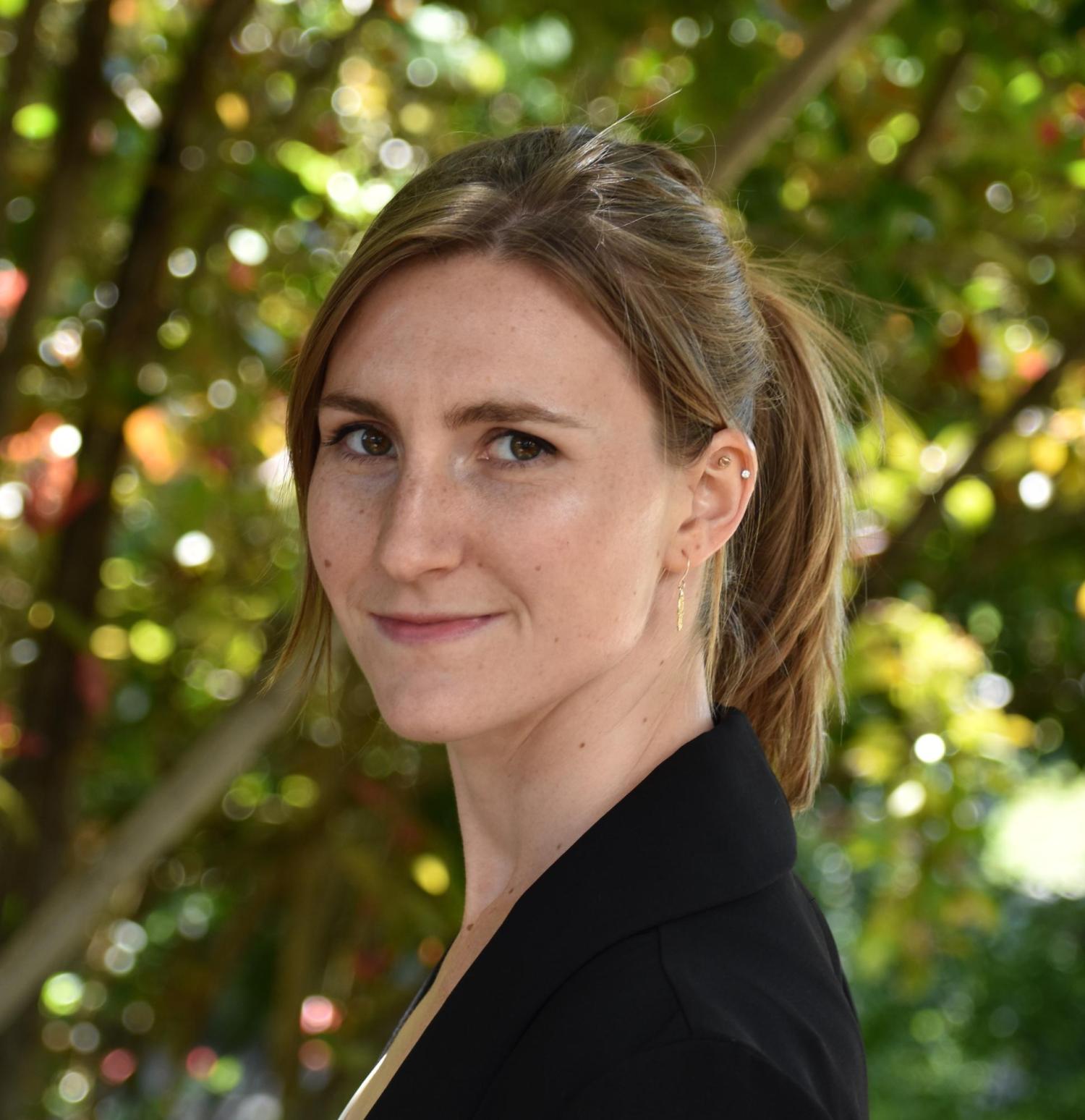
Esther Rolf is an Assistant Professor in the Department of Computer Science at the University of Colorado Boulder. Her research focuses on blending methodological and applied machine learning techniques to address social and environmental challenges, emphasizing usability, data-efficiency, and fairness. Her work includes developing algorithms for environmental monitoring with satellite imagery and advancing geospatial ML systems. Her research explores the multifaceted role of data representation in machine learning, particularly how spatial distribution and data acquisition impact model fairness and efficacy. Projects include formalizing representivity in training data and tackling evaluation challenges in geospatial ML applications. Recent publications highlight her expertise in satellite-based poverty mapping, multimodal data efficiency, and geospatial foundation models. She integrates specialized architectures and domain-specific benchmarks into her work. Best Paper Award, ICML (2018) Best Paper Award, NeurIPS Workshop on AI for Social Good (2019) NSF Graduate Research Fellowship Google Research Fellowship Esther's lab at CU Boulder recruits PhD students and postdocs interested in statistical/geospatial ML and context-driven research for real-world problems. She teaches graduate courses in machine learning and geospatial ML at CU Boulder.
Tal Simons is Professor of Organization Theory in the Department of Organisation and Personnel Management at Rotterdam School of Management (RSM), Erasmus University Rotterdam, and has been an ERIM Fellow since 2019. His research examines organizational responses to societal pressures through institutional and behavioral lenses. Simons' work centers on institutional theory applications in regulatory resistance, ideological dynamics, and organizational authenticity. He investigates how firms navigate social movements, media scrutiny, and moral legitimacy challenges across diverse sectors including tobacco, wine, and contemporary dance. His methodology blends historical analysis with qualitative case studies to uncover patterns in community cohesion, aesthetic innovation, and cross-cultural collaboration. Publication trends reveal an evolution from foundational studies on kibbutzim and Israeli wine industry transformation (1997-2010) toward contemporary analyses of CSR-media relationships, regulatory compliance, and authenticity construction (2015-2024). Recent work emphasizes ideological imperatives in news coverage and moral legitimacy frameworks, while maintaining consistent theoretical grounding in institutional logics and organizational ecology. Professional recognition includes: ERIM Fellow (2019–present) As an active doctoral supervisor, Simons mentors nine PhD candidates across organization theory and behavior domains. His advisees explore cross-cultural collaborations, multi-stakeholder organizing, sustainability-focused community enterprises, and societal change mechanisms. Supervision spans 2015 to present with roles as promotor and committee member, reflecting sustained commitment to developing organizational scholarship through next-generation researchers.
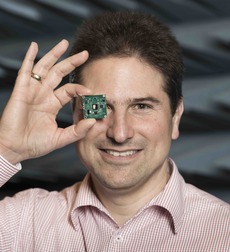
Prof. Dr.-Ing. Thomas Zwick is a full professor and director of the Institute of High Frequency Engineering and Electronics (IHE) at the Karlsruhe Institute of Technology (KIT). He holds a Dipl.-Ing. (M.S.E.E.) and Dr.-Ing. (Ph.D.E.E.) from the University of Karlsruhe. His career includes roles at IBM Research (2001–2004), Siemens AG (2004–2007 managing automotive radar teams), and KIT since 2007. He leads research in high-frequency technologies, antennas, radar systems, and wireless communications. Research interests include radio wave propagation, antenna design, automotive radar architectures, and millimeter-wave systems. He has authored/co-authored over 400 papers, 20 patents, and received IEEE Fellow status (2018), honorary doctorate from Budapest University (2022), and membership in the Heidelberg Academy and acatech. His work emphasizes integrating sensing and communication systems, 3D-printed RF components, and high-frequency measurement techniques. Teaching focuses on high-frequency engineering, electronic circuits, and radar systems. He oversees the IHE’s laboratories, including the Microwave Engineering Lab and Student Innovation Lab. Recent work explores sub-THz communication, RIS-aided ISAC systems, and beamforming for reduced EMF exposure in urban scenarios.
Professor David Clifton is the Royal Academy of Engineering Chair of Clinical Machine Learning at the University of Oxford’s Institute of Biomedical Engineering. He leads the Computational Health Informatics (CHI) Lab, focusing on AI-driven healthcare solutions with a strong emphasis on translational research in low- and middle-income countries (LMICs). His work spans digital health technologies, medical imaging analysis, and AI ethics. Clifton holds multiple fellowships, including from the Alan Turing Institute and Fudan University. Key affiliations include co-directorship of the Oxford-CityU Centre for Cardiovascular Engineering and involvement in the Wellcome Trust’s Flagship Centre in Vietnam. His research has been commercialized through spinouts like OBS Medical and Oxehealth. Notable projects include AI tools for non-invasive vital sign monitoring and pandemic response strategies using audio-based health data. Clifton’s awards include the IEEE Early Career Award (2022) and the Vice-Chancellor’s Innovation Prize. His lab’s Suzhou branch focuses on open-source digital health research using public datasets. Current research themes include multimodal data integration, generative AI in healthcare, and equitable AI deployment across global health systems.
Ruonan Han is a Professor of Electrical Engineering and Computer Science at MIT and serves as Associate Director of the Microsystems Technology Laboratories (MTL) and Director of the MIT-MTL Center for Integrated Circuits and Systems . His research focuses on ultra-high-frequency microelectronic circuits , particularly addressing the 'terahertz gap' in sensing, metrology, security, and communication. He leads the Terahertz Integrated Electronics Group at MIT's MTL, established in 2014. Education: B.S. in Microelectronics, Fudan University (2007) M.S. in Electrical Engineering, University of Florida (2009) Ph.D. in Electrical and Computer Engineering, Cornell University (2014) Research Interests: Terahertz (THz) integrated circuits and systems High-frequency CMOS technologies Quantum sensing and magnetometry RF systems for imaging, radar, and molecular sensing Energy-efficient communication systems His work bridges electronic circuits , electromagnetics , and quantum physics , with applications in defense, healthcare, and environmental monitoring. Awards & Recognition: 2023 IEEE SSCS New Frontier Award 2020 NSF CAREER Award 2019 Intel Outstanding Researcher Award 3× IEEE RFIC Best Student Paper Awards (2012, 2017, 2021) Advising & Leadership: Ph.D. advisor to over 10 students (many recipients of MIT MTL Dissertation Awards) Co-advises with Prof. Anantha Chandrakasan and Prof. Tomás Palacios Editorial roles at IEEE Transactions on Quantum Engineering and VLSI Systems Technical committee member for ISSCC, RFIC, and IMS Labs & Teams: Terahertz Integrated Electronics Group at MIT MTL: Focuses on chip-scale THz systems, quantum devices, and next-generation RF circuits Collaborations with industry (e.g., Apple, MediaTek) and academic groups (e.g., D. Englund's lab at MIT)
Dr. Hanbo Shim is an Assistant Professor in the Department of Management at The University of Texas at Arlington, College of Business. He holds a PhD in Industrial Relations and Human Resources from Rutgers University and a BA in Mathematics and Economics from the University of Illinois at Urbana-Champaign. His research and teaching focus on Human Resource Management, Organizational Behavior, and HR Analytics. PhD, Industrial Relations and Human Resources, Rutgers University (2022) MS, Industrial Relations and Human Resources, Rutgers University (2019) MA, Human Resource Management, Rutgers University (2016) BA, Mathematics and Economics, University of Illinois (2012) Dr. Shim's research explores the temporal dynamics of employee performance, compensation systems, emotional intelligence, and social networks in organizations. He uses longitudinal analysis, multilevel modeling, meta-analysis, and computer simulation to examine how individual and interpersonal factors influence organizational outcomes. His work bridges HR analytics with behavioral science. His recent publications span topics such as green HRM, pay policy dynamics, emotional intelligence, and HR analytics education. These works reflect a strong interdisciplinary approach integrating psychology, sustainability, data science, and strategic management. His research has been presented at leading conferences including the Academy of Management and European Reward Management Conference. Award highlights include: Ralph Alexander Best Dissertation Award (2024) Innovative Teaching Award, Academy of Management HR Division (2022) Best Student Convention Paper Award (2020) Best Doctoral Conference Paper Award, Samsung Economic Research Institute (2020) Dr. Shim actively advises students through capstone and honors projects and serves on PhD and graduate studies committees. He has collaborated with SL Corporation on HR analytics and developed open-source educational materials. His service includes editorial board membership for Compensation & Benefits Review and ad hoc reviewing for top journals. He is also engaged in professional development workshops and public speaking, including for the Society for Human Resource Management at UTA. His lab and research activities emphasize simulation-based methods and real-world HR analytics applications.
Prof. Dan Jiao is the Synopsys Professor of Electrical and Computer Engineering at Purdue University's Elmore Family School. She leads the Rapid-Heterogeneous Integration (Rapid-HI) Design Institute and serves as Editor-in-Chief of the IEEE Journal on Multiscale and Multiphysics Computational Techniques. Her research focuses on computational electromagnetics, multiphysics modeling, and AI-driven design automation for advanced integrated circuits and quantum systems. She has held academic positions since 2005, progressing from Assistant to Full Professor, and has extensive industry experience at Intel Corporation (2001–2005). Education: PhD in Electrical Engineering, University of Illinois at Urbana-Champaign (2001) Senior Staff Engineer at Intel Corporation (2001–2005) Research Interests: Fast numerical methods for large-scale electromagnetic analysis AI/ML integration in design automation (EDA/MDA) Quantum circuits and spin qubit systems Heterogeneous integration and advanced packaging Multiphysics co-simulation for nano-scale devices Signal/power integrity in high-speed systems Key Projects: Leads the NSTC AIDRFIC program (first NSTC R&D Jump Start project), the DARPA NGMM Rapid-HI Design Institute, and the GENIE-RFIC generative design tool initiative. Also directs the Consortium for Electromagnetic Science and Technology. Awards & Honors: 2022 ACES Computational Electromagnetics Award IEEE Fellow (2016) Intel Outstanding Researcher Award (2019) MTT-S Distinguished Microwave Lecturer (2020–2023) 2013 Schelkunoff Prize Paper Award Advising & Grants: Advised over 30 PhD/master's students and led projects funded by NSF, DARPA, Intel, SRC, and industry partnerships. Key grants include NSF CAREER (2008), ONR Young Investigator (2006), and multiple industry-sponsored initiatives. Labs & Teams: Rapid-HI Design Institute (DARPA NGMM) Quantum device co-design group Multiphysics modeling team
Stephen Robert Hanneke is an Assistant Professor in the Department of Computer Science at Purdue University, specializing in theoretical machine learning and statistical learning theory. His work focuses on reducing the number of training examples required for learning, with contributions to supervised, semi-supervised, active, and transfer learning. He joined Purdue in Fall 2021 after roles including Research Assistant Professor at the Toyota Technological Institute at Chicago (2018–2021), Visiting Lecturer at Princeton University (2018), and Visiting Assistant Professor at Carnegie Mellon University (2009–2012). Education: B.S. in Computer Science from the University of Illinois at Urbana-Champaign (2005), Ph.D. in Machine Learning from Carnegie Mellon University (2009). Research interests include statistical learning theory, machine learning foundations, algorithms, and quantum computing. Notable contributions explore the theoretical underpinnings of active learning, adversarial robustness, and universal learning frameworks. His research bridges disciplines like probability theory, philosophy of science, and algorithmic information theory. Key awards include the Best Paper Award at ALT 2021 for 'Stable Sample Compression Schemes' and runner-up for COLT 2021. He has also received the COLT 2020 Best Paper Award and an Honorable Mention for the ICML 2017 Test of Time Award. His work on 'A Bound on the Label Complexity of Agnostic Active Learning' (ICML 2007) received further recognition in 2017. Teaching includes courses on machine learning theory and data mining at Purdue, Princeton, and Carnegie Mellon. He has organized workshops like the ALT 2019 'When Smaller Sample Sizes Suffice for Learning' and chaired the program committee for ALT 2017. His research outputs span over 100 publications in top venues like COLT, NeurIPS, and JMLR, focusing on foundational questions in learning theory and algorithmic efficiency.
Angela Di Fulvio is an Associate Professor and Donald Biggar Willett Faculty Scholar at the University of Illinois at Urbana-Champaign, holding joint appointments in the Department of Nuclear, Plasma, and Radiological Engineering and the Center for Digital Agriculture at NCSA. She leads the Nuclear Measurement Laboratory (NML), focusing on radiation detection technologies for nonproliferation, medical physics, and nuclear security. Her academic journey includes a Ph.D. in Nuclear Engineering and Industrial Safety from the University of Pisa (2012), preceded by M.Sc. and B.Sc. degrees in Bioengineering. Her research emphasizes neutron detection instrumentation, radiation protection in therapy, and safeguards applications. Key areas include next-generation thermal neutron detectors, boron neutron capture therapy dosimetry, and spent nuclear fuel imaging. She has pioneered work on pulse shape discrimination using commercial ASICs and developed algorithms for neutron-gamma discrimination in harsh environments. Di Fulvio’s 15+ peer-reviewed articles span advanced detection systems, Monte Carlo modeling, and machine learning for radiation imaging. Notable contributions include a physics-based forward model for spent fuel imaging and variational autoencoder-based pulse discrimination. Her work has been recognized with the Dean’s Award for Excellence in Research. Professional roles include Associate Editor of Radiation Measurements and editorial board member of Nature Scientific Reports . She chairs APS’s Instrumentation and Measurement Science group and ANS’s Nuclear Nonproliferation Policy Division. Recent courses taught include NPRE 451-452 labs, Nuclear Safeguards, and Student Research Seminars.
Yuri Bazilevs is the E. Paul Sorensen Professor of Engineering at Brown University's School of Engineering and Co-Director of the Mechanics of Undersea Science and Engineering Center. His research focuses on computational mechanics, isogeometric analysis, fluid-structure interaction, and high-performance computing. Prior to Brown, he held positions at UC San Diego, where he advanced to Full Professor in 2014 after a rapid tenure. He earned his PhD in 2006 and postdoc training in computational engineering at UT Austin's ICES. Research interests span computational fluid dynamics, solid mechanics, and advanced discretization methods like isogeometric analysis (IGA) and meshfree approaches. He has developed novel formulations for complex phenomena such as underwater explosions, composite material failure, and hypersonic flow dynamics. His work integrates cutting-edge numerical methods with practical engineering applications in aerospace, energy, and biomedical systems. Recent publications highlight advancements in IGA for architected materials, RKPM-based crack modeling, and stabilized formulations for compressible flows. His contributions bridge theoretical mechanics with computational innovation, addressing challenges in multiphysics coupling and large-scale simulations. Collaborations span academia and industry, emphasizing practical validation and real-world impact. Bazilevs' expertise includes variational multiscale methods, peridynamics for fracture mechanics, and immersive particle methods for fluid-structure interaction. His work has been applied to wind turbine aerodynamics, gas turbine optimization, and cardiovascular flow analysis. He actively contributes to computational infrastructure development, such as the tIGAr software framework for IGA automation.
Mehmet Esat Belviranli is an Assistant Professor in the Computer Science Department at the Colorado School of Mines, where he directs the High Performance Systems and Software Lab (HyperSys). His research focuses on increasing resource utilization in heterogeneous architectures through runtime systems, scheduling algorithms, and performance modeling, with publications in top venues including MICRO, PPoPP, and SC. Education: Ph.D. in Computer Science, University of California, Riverside (2016) M.S. in Computer Science, Bilkent University (2009) B.S. in Computer Science, Bilkent University (2006) Belviranli's research spans heterogeneous architectures, runtime systems, performance modeling, parallel programming, autonomous computing, deep learning acceleration, cyber-physical systems, and edge-cloud platforms. His work develops analytical models and programming abstractions to address resource management, scheduling, and security challenges in diversely heterogeneous systems, with applications in edge computing, autonomous systems, and machine learning acceleration. Recent projects emphasize real-world constraints and security implications. His publication trends reveal increasing focus on edge-cloud resource management (e.g., HARNESS), security vulnerabilities in heterogeneous systems (e.g., MC3), and deep learning acceleration under resource constraints. Key themes include memory contention modeling, scheduling for cyber-physical systems, and concurrent DNN execution, reflecting a shift toward practical deployment in security-sensitive edge environments. Scientific Awards: U.S. Air Force Research Lab Summer Faculty Fellowship Award (2022) U.S. Air Force Research Lab Summer Faculty Fellowship Award (2021) Oak Ridge National Laboratory Significant Event Award (2019) Best Paper Finalist, IEEE HPEC 2018 Outstanding Paper Award, DATE 2024 Belviranli mentors Ph.D. students Ismet Dagli (MLCommons Rising Star 2024, CGO'24 SRC finalist) and Justin Davis (DATE'24 Outstanding Paper Award winner). He has secured $2M+ in funding from NSF, DoE, and SRC, including an NSF-SaTC grant on mobile security (2024), a DoE grant on superconductive systems (2023), and an NSF FuSe grant on graphene nanoribbons (2023), often leading multi-institutional teams from Rochester, Virginia, Arizona, and Minnesota. The HyperSys Lab develops ecosystems for high-performance heterogeneous systems, with recent projects including HARNESS for edge-cloud resource management and MC3 for mobile SoC security. The lab has received equipment donations from Google Coral.ai and Xilinx, and collaborates with national labs on security challenges and next-generation semiconductor technologies.
Dr. Muhammad Imran is a Reader and Lecturer in Mechanical, Biomedical & Design Engineering at Aston University, UK. He is affiliated with the Energy and Bioproducts Research Institute (EBRI) and the College of Engineering and Physical Sciences. His research focuses on energy efficiency, waste heat recovery, and low-temperature power cycles such as Organic Rankine Cycle (ORC) and Supercritical CO₂ systems. He has contributed to the commercialization of ORC systems and collaborates internationally on hybrid energy systems, solar-thermal integration, and district heating networks. Dr. Imran holds a PhD in Energy System Engineering (2016), MSc in Thermal Power Engineering (2012), and BEng in Mechanical Engineering (2009). He has held academic roles at institutions in Pakistan, South Korea, and Denmark, including a Marie Curie Fellowship at the Technical University of Denmark. His awards include the Marie Curie Fellowship (EU), Innovation Award (South Asia Triple Helix), and multiple Research Excellence Awards from South Korea. He leads funded projects on hybrid energy systems for agriculture, waste heat recovery in industries, and sustainable energy solutions in developing countries. His editorial roles include associate editorships in Frontiers in Thermal Engineering and Resources, Environment and Sustainability . He supervises PhD students in renewable energy and low-temperature thermodynamic systems, with ongoing projects on solid-state heat pumps and advanced ORC control strategies. Dr. Imran’s work bridges engineering, data science, and environmental science to address energy challenges. Notable collaborations include projects in Ethiopia, Kenya, Nigeria, and Sudan, focusing on off-grid cold storage, smart irrigation, and biomass energy systems. His research outputs include over 130 peer-reviewed articles, patents, and contributions to international conferences.