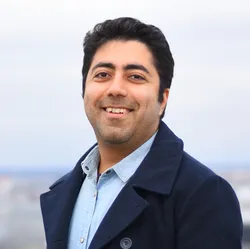
Kai Maaz is Managing Director of the DIPF | Leibniz Institute for Research and Information in Education and Professor of Sociology (educational systems and society) at Goethe University Frankfurt. His work focuses on social inequality in education, systemic school reform, and educational monitoring. He leads the 'Structure and Governance of Education' department at DIPF and is a central figure in the National Education Panel Study (NEPS) and Startchancen program research. Executive Director, DIPF | Leibniz Institute Professor of Educational Sociology, Goethe University Frankfurt Chair, German Society for Educational Administration Research interests include: Evaluation of educational reforms and programs Social disparities across educational trajectories School development in disadvantaged contexts Educational governance and policy implementation Recent publications emphasize national educational reporting, digital transformation in schools, and structural interventions to reduce inequality. His 2025 articles in Zeitschrift für Erziehungswissenschaft analyze collaborative governance and occupational aspirations linked to social background. Scientific awards: Ernst-Meumann Prize for Young Researchers (2010) Young Researchers Award for Educational Sociology (2008) Advising roles include leadership in the Startchancen program research network, spokesperson for the National Education Report author group, and membership in the Standing Scientific Commission of the Conference of Ministers of Education. His work spans policy evaluation, data synthesis, and longitudinal studies on educational equity.
Anne Nassauer is a Professor of Sociology, especially Political Sociology, at the Faculty of Economics, Law and Social Sciences of the University of Erfurt. She is a member of the diversity advisory board in the university's presidium and specializes in situational dynamics of violence, collective behavior, and video data analysis. Key Research Areas : Protest violence, school shootings, police use of force, video-based methodology, racial biases in policing, and ethical consumption tactics. Recent Publications : Focused on gun culture in school shootings (2025), dehumanization in police shootings (2024), and video data analysis challenges (2023). Awards : 2021: Outstanding Recent Contribution in Social Psychology Award (American Sociological Association) 2020: Charles Horton Cooley Book Award (Society for the Study of Symbolic Interaction) 2020: Honourable Mention, Outstanding Contribution to Political Sociology (American Sociological Association) Media Engagement : Regularly appears in podcasts (e.g., Back to School Shootings, 2025), documentaries (Terra X, 2023), and international media (Wall Street Journal, FiveThirtyEight, WIRED).
Prof. Dr. Sören Ohlhus is a Professor of Linguistics and Language Didactics at the University of Hildesheim , specifically within the Institute for German Language and Literature . His academic career spans institutions including TU Dortmund University, University of Hamburg, and Bielefeld University, reflecting a deep engagement with discourse studies and educational linguistics. Current position: Professor (since 2021) Prior roles: Junior Professor (2017–2021), Acting Professor (2014–2015), Temporary Academic Councillor (2012–2017) Ohlhus's research focuses on discourse acquisition , development of written language use , and multimodal communication in educational settings. His work examines how interactive learning processes shape narrative and argumentative competence, particularly in primary and secondary schools. He has led and contributed to interdisciplinary projects like 'Writing between Languages and Cultures' and 'The Role of Family Support in Discourse and Writing Skills', funded by the Volkswagen Foundation and Federal Ministry of Education and Research. His 15 most recent publications explore themes across oral and written narrative structures, classroom discourse, and semiotic resource integration. Notably, his 2019 work on perspectivity in learning processes and 2017 studies on multimodal resources in arithmetic education highlight his interdisciplinary approach. He has also co-edited special issues on classroom interaction and published monographs on topics like narrative as a process and knowledge generation in practice fields. Ohlhus has collaborated extensively, co-authoring with scholars such as Uta Quasthoff, Friederike Kern, and Miriam Morek. His projects often bridge theoretical linguistics with practical educational applications, emphasizing the role of interactive contexts in textual competence development.
Saibal Jana is a researcher at the Karlsruhe Institute of Technology (KIT) within the Multiscale Materials Modelling and Virtual Design research unit at the Institute of Nanotechnology. His work focuses on computational modeling and experimental analysis of advanced materials for energy storage, particularly in lithium-ion and calcium batteries, utilizing techniques like molecular dynamics simulations and spectroscopy. Research Areas: Energy storage materials, metal-organic frameworks, electrochemical modeling, and visible-light catalysis. Email: jana.saibal@kit.edu Recent publications highlight his contributions to understanding solid electrolyte interphase growth, designing redox-active cathodes, and exploring molecular self-assembly mechanisms. His work aligns with initiatives like BATTERY 2030+ for next-generation battery technology.
Prof. Dr. Britta Nestler serves as a Research Unit Chair at the Institute of Nanotechnology (INT) within the Karlsruhe Institute of Technology (KIT), Germany. Leading the Microstructure Simulations research group (INT-MSS), she focuses on computational modeling of mechanical and microstructural properties in materials, with significant contributions to phase-field methodologies for microstructure evolution and materials design. Her research spans computational materials science, phase-field modeling, and multiphysics simulations for energy storage systems. Key interests include chemo-mechanical coupling in multiphase systems, solid-state dewetting phenomena, battery electrode optimization, and microstructure-property relationships in polycrystalline materials. She integrates machine learning and data management frameworks to advance virtual materials design, particularly for post-lithium battery technologies. Recent publications reveal a strong emphasis on phase-field applications for energy materials, with 15+ 2025 articles addressing battery electrode design, structural optimization of porous materials, and multiphysics coupling in electro-chemo-mechanical systems. Her work bridges fundamental thermodynamics with industrial applications, notably in the POLiS Cluster of Excellence for post-lithium storage. Prof. Nestler actively shapes the field through leadership in the GAMM Workshop on phase-field modeling and the Materials/Microstructure Modeling conference. As part of KIT's Institute of Nanotechnology, her INT-MSS group collaborates on virtual materials design initiatives within the MaTeLiS Focus Field and NFDI4Ing research data infrastructure, driving digitalization in engineering sciences.
David Heller is an Assistant Professor for Entrepreneurship, Finance, and Innovation at the School of Management, Politecnico di Milano . He is also an Affiliated Research Fellow at the Max Planck Institute for Innovation and Competition (Innovation and Entrepreneurship Research) since October 2024 and an Academic Coordinator for the Innovation School at the Norwegian School of Economics. His research integrates innovation economics , corporate finance , and entrepreneurship , with a focus on innovation finance and SME finance . Ph.D. in Economics (summa cum laude), Goethe University Frankfurt M.Sc. in International Economics and Economic Policy, Goethe University Frankfurt B.A. in Foreign Trade and International Management, HAW Hamburg Heller's scholarly contributions examine the intersection of intellectual property and debt financing , particularly for small and medium enterprises . His work on generative AI and startup productivity reveals how technological experience and human capital interact to create competitive advantages. Heller has received multiple awards, including the European Investment Fund Best Paper Award 2025 , Giorgio Pagliarani Best Paper Award 2024 , and the Erasmus Scholarship 2010 . His research has been presented at major conferences across Europe , North America , and Asia . He has supervised 23 Bachelor and 4 Master theeses and taught courses ranging from Ph.D.-level Advanced Microeconomic Theory to undergraduate Economics of Innovation . Heller is actively involved in the Innovation Growth Lab research network and collaborates with institutions like the European Patent Office and Deutsche Bundesbank .
Dr. Beatriz Conde Gallego is a Senior Research Fellow at the Max Planck Institute for Innovation and Competition (Munich, Germany) since 2001. Her work focuses on European and international competition law, particularly the intersection with intellectual property rights. She holds a PhD from the University of Würzburg (2002) and an LL.M. from Julius-Maximilians-Universität Würzburg (1998). Her research explores how competition law interacts with IP rights across diverse contexts, including technology transfer agreements, digital markets regulation (DMA), and pharmaceutical sector dynamics. Key publications address standard essential patents (SEPs) in IoT, data licensing for AI development, and TRIPS Agreement interpretations. She advocates for flexible competition frameworks that balance innovation incentives with market fairness. Dr. Gallego co-authors position statements for the Max Planck Institute on EU regulatory proposals, contributes to edited volumes like Personal Data in Competition Law , and participates in global conferences analyzing SEP licensing, digital market fairness, and antitrust enforcement mechanisms. Her work bridges theoretical analysis with practical policy recommendations for EU institutions.
Dr. Monika Unterreiner serves as a part-time Lecturer in specialist practice at the Chair of Music Education within the Institute for Music Research at the University of Würzburg's Faculty of Philosophy. Since September 2022, she has contributed to music teacher education while maintaining connections to school practice. Education: MA in music education, modern and contemporary history, and history didactics from Ludwig Maximilian University of Munich Studies in school music at the University of Music and Performing Arts Munich Completed doctoral project in music education and school pedagogy in 2021 through the Bavarian State Ministry's 'Support for Young Academics' program Completed teaching internship in 2012 Dr. Unterreiner's research centers on recognition theory in music education, exploring how recognition mechanisms operate in heterogeneous classroom settings across primary, secondary, and special education contexts. Her work bridges theory and practice through design-based research approaches, with growing emphasis on digital media integration and AI applications in music education. She investigates community music practices, popular music didactics, and prejudice-conscious teaching approaches that address cultural participation and educational equity. Analysis of her recent publications (2020-2025) reveals a clear trajectory from foundational work on recognition theory toward contemporary challenges of digital transformation in music education. Her scholarship increasingly examines AI music generators, digital-analog tensions in teaching practice, and critical perspectives on whiteness and recognition in music classrooms. This evolution demonstrates her responsiveness to technological shifts while maintaining commitment to inclusive educational practices. As a practitioner-scholar, Dr. Unterreiner maintains strong connections between university teacher education and school practice. Her background as a secondary school teacher (2010-2017, 2020-2022) informs her research on bridging the gap between academic training and classroom realities. Her work with refugee populations and community music initiatives reflects commitment to music's role in social inclusion.
Prof. Dr. Christoph Jacke is Professor for Theory, Aesthetics and History of Popular Music within the 'Popular Music and Media' program at Paderborn University's Faculty of Arts and Humanities, specifically in the Institute for Art / Music / Textiles. Since 2023, he has served as Deputy Managing Director and Board Member of the C:POP Transdisciplinary Research Center for Popular Music Cultures and Creative Economies. He has led the Popular Music and Media BA/MA program since 2011 and chaired the Examination Board for Popular Music and Media since 2009. His academic career spans over two decades, with significant contributions to both scholarly research and practical applications in popular music culture. Jacke earned his Magister Artium in 1997 with a thesis on anti-celebrity cults in print media representation, following studies in Communication Science, English Philology, Political Science, and Geography at the University of Münster (1990-1997). He completed his doctorate in Communication Science in 2004 with a dissertation titled 'Media(sub)culture,' establishing his foundational interest in media and popular culture intersections. His research focuses on pop music cultures in texts and contexts , examining how music functions within broader cultural frameworks. He investigates journalism and popular music , analyzing reporting and critique across media platforms. His work on celebrity culture and advertising explores the commercial dimensions of fame. Drawing from media, communication and cultural theory , he applies interdisciplinary frameworks to understand popular music phenomena. A significant portion of his research addresses pop, memory and memories , examining how music serves as a repository of collective and personal recollection. His theoretical approach incorporates cultural studies perspectives to critically examine production, distribution, and reception of popular music. Jacke's recent publications demonstrate consistent focus on transdisciplinary approaches to popular music studies, with particular attention to celebrity culture, festival studies, and music industry transformation. His collaborative work with Beate Flath and other C:POP colleagues bridges academic research with practical industry insights. The publications reveal evolving interests in sustainability within music culture, the changing nature of music journalism, and shifting boundaries between high and low culture in contemporary society. Stellv. Geschäftsführender Direktor, C:POP Transdisciplinary Research Center Member of Arbeitskreis Studium Populärer Musik e. V. (ASPM)/GfPM since 1997 Member of International Association for the Study of Popular Music (IASPM) since 2006 Reviewer for European Journal of Cultural Studies (EJCS) since 2008 Chair of D-A-CH branch of IASPM (2016-2021) Member of Westphalian Art Association Münster since 2017 Member of Center for Comparative Theology and Cultural Studies (ZeKK) Prof. Jacke has supervised 12 completed PhD projects and currently mentors 10 doctoral candidates across diverse topics including music education, cultural heritage, decolonial perspectives, and music video theory. His supervision spans multiple institutions including Paderborn University, University of Amsterdam, University of Münster, and Leuphana University Lüneburg. His research is supported through the C:POP Research Center, which facilitates transdisciplinary collaborations between academic researchers, media professionals, and industry stakeholders. As a key figure in the C:POP Research Center, Jacke leads a dynamic team of scientific staff, project collaborators, and student assistants. The center serves as a hub for innovative research on popular music cultures, bringing together scholars from musicology, media studies, cultural studies, and related fields. C:POP's transdisciplinary approach enables research that bridges academic inquiry with practical applications in the music industry and cultural sector.
Detlef Behrmann is Professor of Educational Science/Adult and Continuing Education at Pädagogische Hochschule Schwäbisch Gmünd since 2007. He serves as Scientific Director of the Institute for Continuing Education and University Didactics (IWH) and is institutionally located at the Institute for Education, Profession and Technology (IBBT), while also functioning as scientific advisory board member of the Center for Knowledge Transfer (ZWPH). His educational background includes: Diplom in Pädagogik (1987) with distinction Promotion zum Dr. phil. (1998) with summa cum laude Habilitation in General Educational Science (2005) Professor Behrmann's research focuses on the relationality between (individual) action and (organizational) structures within educational contexts. His work emphasizes scientific yet application-oriented professionalization that contributes to scientifically grounded competence acquisition and reflective mediation between system levels. He particularly examines how to appropriately manage, design, and develop structural framework conditions and social spaces for adult education and organizational learning in diverse contexts. His publications reveal consistent research trajectories in organizational pedagogy, knowledge management, and professional development within continuing education. The most recent works demonstrate increasing focus on relational organizational research, the interplay between individual and organizational learning, and quality management systems within educational organizations. His scholarship bridges theoretical frameworks with practical applications in workplace education and continuing professional development. Professor Behrmann has led numerous research and development projects, including evaluations of workplace education methods, teacher training programs, and strategic development of scientific continuing education at universities. His projects often involve collaborations with governmental agencies, educational institutions, and private sector organizations across Germany and internationally. His work demonstrates strong engagement with organizational learning processes, particularly how knowledge is transformed between individual and organizational levels within educational contexts. He maintains an active role in developing frameworks for quality management in continuing education organizations and exploring the implementation of knowledge management systems within educational settings.
Professor Marcus Specht serves as Member of the Executive Board and Head of the research professorship "Learning Science in Higher Education" at CATALPA Research Center, FernUniversität in Hagen. He holds dual academic appointments as Chair of Learning Science at FernUniversität and Chair of Digital Education in the Faculty of Electrical Engineering, Mathematics and Computer Science at TU Delft. Additional affiliations include Erasmus University Rotterdam (Erasmus School of Social and Behavioural Sciences) and Leiden University (Institute for Advanced Computer Science). With an interdisciplinary background spanning cognitive psychology and computer science, Specht's research focuses on the intersection of learning sciences and technology. His work emphasizes personalized knowledge and competency development through Learning Analytics, Artificial Intelligence for Education, Digital Skills, and Computational Thinking. Current research directions include developing methods to support educators and learners in utilizing generative AI, creating prompt templates for educational applications, and designing collaborative learning environments that integrate peer-review with AI support. Specht's recent publications reveal a strong focus on AI-driven educational technologies, particularly conversational agents for goal-setting interventions, computational thinking assessment, and learning analytics applications. His work bridges theoretical learning science with practical educational technology implementations, with increasing emphasis on mixed reality and hybrid learning environments. The publications demonstrate consistent collaboration with international researchers across European institutions. Specht holds leadership positions in major educational technology organizations including President of the European Association of Technology-Enhanced Learning (EATEL) and membership on scientific advisory boards for the Leibniz Institute for Science and Mathematics Education and Goethe Universität Frankfurt's Zukunft Lehre initiative. His career trajectory shows progressive leadership in educational technology, having previously directed the 4TU Centre for Engineering Education (2020-2024), served as Scientific Director of the Leiden-Delft-Erasmus Center for Education and Learning (2019-2024), and held professorial positions at Open Universiteit Nederland (2008-2020). His interdisciplinary approach integrates psychology, computer science, management sciences, and pedagogy to advance educational innovation. At CATALPA, Specht leverages the unique environment of 70,000 learners as a real-world laboratory for developing and implementing innovative distance learning methods across schools, colleges, and universities throughout Germany and North Rhine-Westphalia.
Dr. Vyacheslav Zakosarenko is a part-time researcher at the Leibniz Institute of Photonic Technology (IPHT) in Jena, Germany, specializing in superconducting quantum interference devices (SQUIDs) and cryogenic sensor systems. His work bridges quantum electronics with geophysical applications and particle beam diagnostics. As a key member of the Quantum Circuits group within the Quantum Systems department, he collaborates on advanced SQUID technologies for mineral exploration, magnetic field measurements, and accelerator physics. His research focuses on superconductivity , quantum sensor design , and noise optimization in cryogenic environments. Specific interests include Josephson junction fabrication, magnetic shielding geometry, and flux transformer configurations. He has contributed to innovations in long-baseline SQUID gradiometers , coreless cryogenic current comparators , and microwave SQUID multiplexers . Zakosarenko’s publications highlight trends in millikelvin superconducting electronics , airborne magnetic gradiometry , and high-inductance CCC systems . His work demonstrates the integration of quantum sensors into real-world applications, from mineral exploration to advanced particle accelerator diagnostics. Current projects include optimizing shield geometries and noise performance in Nb-based SQUID arrays. He has developed technologies for commercial SQUID-based airborne magnetic gradiometers and next-generation cryogenic current comparators for charged particle beamlines. His collaborations span institutions like CERN and GSI, and he employs finite element simulations, low-temperature LsR measurements, and flux noise analysis to advance sensor performance.
David Weilong König serves as a Research Associate and PhD Candidate at the Chair of Information Infrastructures (Prof. Sunyaev) at Technical University of Munich's Heilbronn Campus. His work bridges academic research and industry applications through active engagement with startup ecosystems. Education: Master’s in Information Systems, Karlsruhe Institute of Technology (KIT), specializing in (Gen)AI and Digital Transformation His research critically examines Generative AI adoption frameworks, Digital Health infrastructure design, and Autonomous Driving coordination systems. Current projects investigate blockchain suitability for decentralized applications and V2X-coordinated harm mitigation in self-driving vehicles, reflecting his focus on ethically aligned technological implementation. The publication portfolio demonstrates concentrated exploration of AI market dynamics and competitive structures within emerging technology landscapes. Advising & Grants: Previously supervised student theses on Digital Health, Generative AI, and Digital Transformation topics Currently unable to accept new thesis supervision due to capacity constraints Active connector for startup incubators PionierGarage and Fellow Ventures König operates within TUM's Information Infrastructures research environment, leveraging industry experience from KPMG (where he served as Team Lead in Finance and Auditing) to inform his academic work on real-world technology implementation challenges.
Mohammadhossein Malmir is a Researcher at the Chair of Robotics, Artificial Intelligence and Real-time Systems at Technische Universität München (TUM). He joined the chair in November 2019 and currently contributes to the A-IQ Ready project (successor of AI4DI ), focusing on learning algorithms for industrial manipulators and mobile robots in manufacturing and intralogistics tasks. Education B.Sc. in Electrical Engineering (Control Systems) from Amirkabir University of Technology (Tehran Polytechnic) (2014) M.Sc. in Automation and Control Engineering from Politecnico di Milano (2018) His research addresses Sim2Real Transfer , Reinforcement Learning , Robust Control , and Model Predictive Control for autonomous robotic systems. He has published extensively on sim2real policy transfer, domain randomization, and control algorithms for manipulation and navigation tasks. Recent publications highlight his work in dexterous grasping , continual domain adaptation , and deep reinforcement learning for trajectory optimization . His advising roles include supervising 13 master's students and interdisciplinary projects, with co-advisorship on topics like vision-based robotic grasping and socially compliant path planning . He teaches courses on Cognitive Systems and Cloud-Based/Simulation-Based Machine Learning in Robotics , emphasizing reinforcement learning and sim2real methodologies.
Dr. Carolin Heim serves as a Working Group Leader for the Analytical Laboratory at the Chair of Urban Water Management, Technical University of Munich since 2023. Her role involves leading analytical research in water treatment technologies, with a focus on electrochemical processes for water disinfection and contaminant removal. She works within the Department of Civil, Geo and Environmental Engineering at TUM's School of Engineering. Dr. Heim earned her Diplom (Dipl. Leb. Chem.) from Technische Universität Dresden in 2003, followed by her doctorate (Dr. rer. nat.) from Technical University of Munich in 2010. Her doctoral research focused on "Human plasma and peripheral blood mononuclear cell (PBMC) proteome databases for biomarker discovery studies in vivo." She completed her undergraduate studies in Food Chemistry at Technische Universität Dresden and Universität Karlsruhe. Dr. Heim's research centers on advanced water treatment technologies, particularly electrochemical oxidation processes using boron-doped diamond electrodes. Her work investigates pharmaceutical contaminant removal, water disinfection mechanisms, and transformation by-product analysis across various water matrices. She examines how different water qualities affect treatment efficiency and focuses on developing sustainable, eco-friendly water treatment solutions that address emerging contaminants while ensuring water safety. Her publication record demonstrates consistent contributions to environmental engineering, with a focus on electrochemical water treatment systems. Dr. Heim's research shows an evolution from fundamental analytical chemistry to applied environmental engineering, with increasing emphasis on practical water treatment solutions that address real-world challenges in water quality and safety. Dr. Heim leads the Analytical Laboratory at TUM's Chair of Urban Water Management, where her team conducts cutting-edge research on water treatment technologies. The laboratory specializes in electrochemical oxidation processes, pharmaceutical contaminant analysis, and water quality monitoring using advanced analytical techniques.