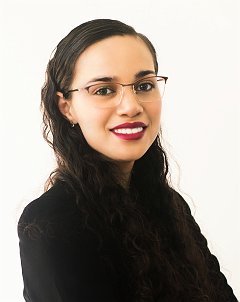
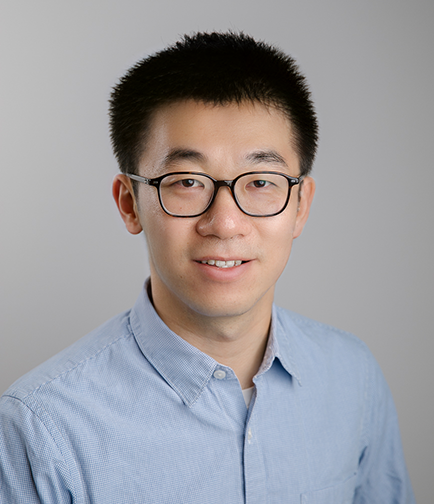
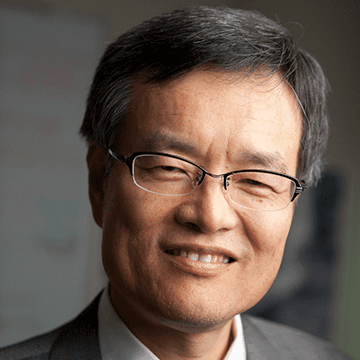
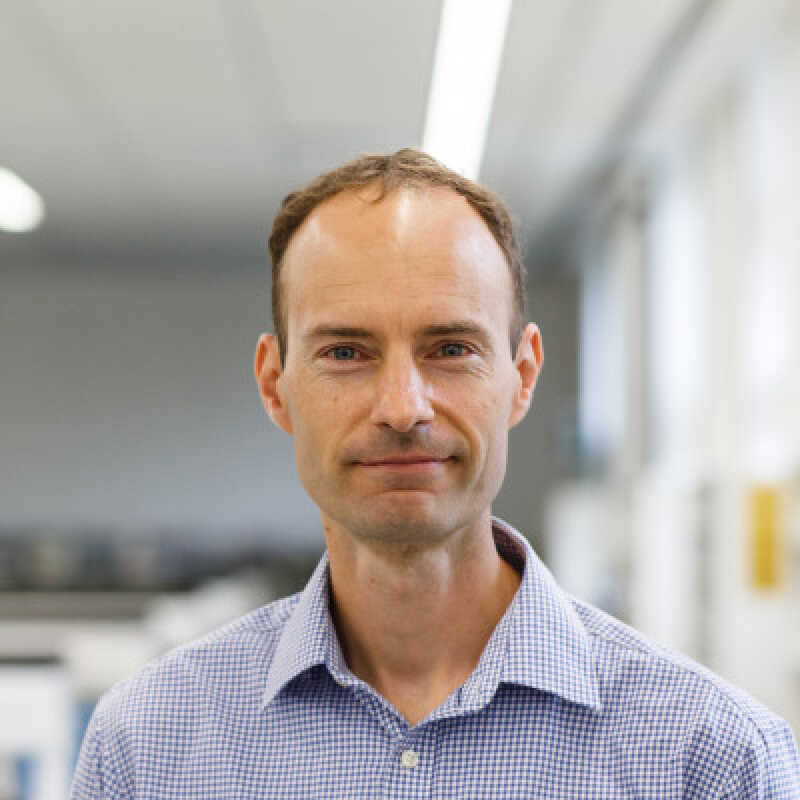
Dr. Hien Quoc Ngo is a Reader at Queen's University Belfast and a UKRI Future Leaders Fellow. He specializes in wireless communications, particularly in massive MIMO, cell-free massive MIMO, and cooperative systems. His research focuses on improving spectral efficiency, security, and energy efficiency in next-generation networks. Education: B.S., Electrical Engineering, Ho Chi Minh City University of Technology (2007) M.S., Electronics and Radio Engineering, Kyung Hee University (2010) Ph.D., Communication Systems, Linköping University (2015) Research Interests: Dr. Ngo's work spans massive MIMO systems, cell-free architectures, physical layer security, and millimeter-wave technologies. He has pioneered studies on channel estimation, power allocation, and interference management in distributed networks. Awards & Recognition: IEEE ComSoc Stephen O. Rice Prize (2015) IEEE ComSoc Leonard G. Abraham Prize (2017) Best PhD Award from EURASIP (2018) UKRI Future Leaders Fellowship (2019) Multiple AMiner Most Influential Scholar Awards (2022-2024) Grants & Projects: Lead on the Future Communications Hub in All-Spectrum Connectivity (UKRI-funded) Principal Investigator for Cell-Free Massive MIMO for ISAC Labs & Teams: He leads the Wireless Communications Research Group at Queen's University, focusing on 5G/6G technologies and intelligent systems.
Tania Cerquitelli is a Full Professor in the Department of Control and Computer Science (DAUIN) at Politecnico di Torino, where she leads research in data science, concept-drift management, and inclusive AI technologies. She is a member of SmartData@PoliTO, the GEDI Observatory for Gender Equality, and serves in leadership roles related to social affairs and community policies at the university level. She also acts as a scientific advisor for the partnership with Accenture. Her research interests span Data Science , Concept-Drift Management , Database Systems , Conversational Data Science , and Industry 4.0 . She applies AI and machine learning to industrial, societal, and ethical challenges, particularly in promoting inclusive communication and gender equality in research. The most recent publications highlight her work in explainable AI, concept drift detection, multimodal diagnostics, and AI for social good. Her research integrates machine learning, natural language processing, and computer vision to address real-world problems in manufacturing, healthcare, agriculture, and education. She is an Associate Editor for several prestigious journals including Expert Systems with Applications , Computer Networks , Future Generation Computer Systems , and Knowledge and Information Systems . She has served on the program committees of major conferences such as ECML PKDD, EDBT/ICDT, and ACM KDD, and has been a reviewer and selection committee member for ETH Zurich and EMPA. She actively supervises PhD students and teaches a wide range of courses including Data Science and Database Technologies, Business Intelligence for Big Data, and Gender and Diversity in Research. She is involved in multiple national and international research projects such as E-MIMIC, WEBFARE, and EnABLES, focusing on inclusive AI, smart data, and industrial applications. Her lab affiliations include the DBDM - Database and Data Mining Group (DAUIN) and the Interdepartmental Center SmartData@PoliTO - Big Data and Data Science Laboratory , where she contributes to advancing data science methodologies and their societal impact.
Joanna C. S. Santos is an Assistant Professor at the University of Notre Dame's Department of Computer Science and Engineering. She leads the Security and Software Engineering research lab (S²E) and focuses on Software Engineering, Security, and Program Analysis. Her work bridges empirical studies with practical tool development. PhD in Computing and Information Sciences (Rochester Institute of Technology) M.Sc. in Software Engineering (Rochester Institute of Technology) B.Sc. in Computer Engineering (Federal University of Sergipe) Her research spans Software Security (vulnerability detection, ReDoS), Code Generation (LLM evaluation, benchmarking), and Program Analysis (taint tracking, call graphs). Recent articles show a strong focus on LLM-generated code quality and quantum computing applications. Scientific Awards : 2023 - Distinguished Reviewer (ESEC/FSE) 2020 - Research Pitch Winner (JOBS @MICRO) 2017 - Best Paper (ICSA) 2014 - CAPES Scholarship 2013 - ERBASE 3rd Place She actively contributes to conference committees (OOPSLA, ICSE, SCAM) and collaborates across institutions. Her lab S²E drives research in secure software development and empirical cybersecurity validation.
Dr. Dong Gong is a Senior Lecturer and ARC DECRA Fellow (2023-2026) at the School of Computer Science and Engineering (CSE), UNSW. He holds an adjunct position at the Australian Institute for Machine Learning (AIML), University of Adelaide. His research focuses on machine learning challenges in dynamic environments, including continual learning, foundation models, generative models, and applications in interdisciplinary areas like mining and agriculture. Research interests include learning with non-ideal supervision, foundation model adaptation, generative models, and interdisciplinary problems combining CV/ML with domain-specific applications. His work often addresses real-world scenarios such as mineral exploration and soil trait analysis using CV/ML technologies. Outstanding Reviewer: NeurIPS 2018 Outstanding Area Chair: ACM MM 2024 ARC DECRA Fellowship (2023-2026) Advising and grants: Actively supervises PhD/MPhil students in computer vision and ML. Collaborates with industry and government on research projects. Utilizes advanced infrastructure like UNSW's Katana supercomputing cluster and Gadi (NCI). Labs/Teams: Involved in interdisciplinary research groups at UNSW CSE and AIML, focusing on dynamic learning paradigms and real-world applications of AI.
Hsiao-Dong Chiang is a Professor in the School of Electrical and Computer Engineering at Cornell University. He holds a Ph.D. in Electrical Engineering from the University of California, Berkeley, and has made significant contributions to nonlinear system theory and power system stability. His research spans theoretical development and practical applications in electric power systems, nonlinear optimization, and machine learning. B.S., Electrical Engineering, National Taiwan University, 1979 M.S., Electrical Engineering, National Taiwan University, 1981 Ph.D., Electrical Engineering, University of California, Berkeley, 1986 Chiang's research interests focus on nonlinear system theory , power system stability and control , nonlinear optimization , and their applications to modern power grids with high penetration of inverter-based resources. He is renowned for developing the BCU method and TRUST-TECH methodology , which have enabled fast direct stability assessment and global optimization in complex systems. His work bridges fundamental theory with industrial deployment through his companies, Bigwood Systems, Inc. and Global Optimal Technology, Inc. His recent publications (2024–2025) reflect a strong trend toward integrating machine learning and deep neural networks with power system analysis , particularly in state estimation, optimal power flow, and voltage control. There is a clear emphasis on handling uncertainty, non-convexity, and multi-scale dynamics in active distribution networks and integrated energy systems . His work increasingly focuses on resilience , real-time control , and user-centered methodologies for modern grid operations. Chiang has received numerous scientific honors, including: IEEE Fellow (1997) United States Presidential Young Investigator Award (1989) Multiple DOE Grid Optimization Challenge Awards (2020–2023) Best Paper Awards from IEEE Transactions and Conferences Outstanding Education Award, Cornell University (1990) He has successfully managed over 100 research projects and holds 28 U.S. and international patents. As the founder of Bigwood Systems, Inc., he has commercialized advanced software for utility companies across the U.S. and Japan. His team has published over 480 refereed papers and received more than 17,500 citations. He advises a large research group and leads innovations in computational methods for energy systems. His lab is actively involved in developing next-generation tools for grid security, optimization, and machine learning integration.
Jaron Mink is an Assistant Professor at Arizona State University's School of Computing and Augmented Intelligence, leading the Human Aspects in cyber Protections and Privacy Lab (Happy Lab). His research focuses on the intersection of usable security, machine learning, and system security, particularly exploring how human factors impact ML security. He holds a Magna Cum Laude from UCLA and completed graduate studies at the University of Illinois at Urbana-Champaign (UIUC), where he served as a Teaching Assistant and Guest Lecturer in Computer Security courses. Education: University of California, Los Angeles (UCLA) - Bachelors (Magna Cum Laude) University of Illinois at Urbana-Champaign (UIUC) - PhD in Computer Science Research Interests: Human-ML Interaction Dynamics Deepfake Detection and User Perception Adversarial ML Defense Adoption Barriers User Trust in Security Tools Privacy-Preserving Technology Design His work bridges technical security solutions with human-centric usability challenges, emphasizing real-world application in social media, fitness apps, and enterprise systems. Recent Publications: Focus on quantifying sociodemographic influences in security behaviors, analyzing deepfake moderation biases, and evaluating ML security tool usability across industries. Awards: Google Research Scholar Program NSF Graduate Research Fellowship Teaching: Instructs courses like Information Assurance and Trustworthy Human-ML Interaction at ASU, previously teaching Computer Security II at UIUC. Labs/Teams: Directs the Happy Lab, actively recruiting PhD students to tackle challenges in human-centric cybersecurity and privacy. Hobbies: Passionate about vintage dance styles (Lindy Hop, Blues, Balboa) and strategic board games like Spirit Island and War of the Ring .
Hamidreza Mahyar is an Assistant Professor at the Faculty of Engineering , McMaster University , and an Associate Member of the Computing and Software department. His academic journey includes postdoctoral work at Boston University and TU Wien , and a Ph.D. in Computer Science from Sharif University of Technology . Research Focus: Mahyar's work bridges machine learning and network science , emphasizing graph neural networks for applications in social networks , recommendation systems , drug discovery , and generative AI . His research spans industrial AI (Industry 4.0 projects at Infineon Technologies), biomedical engineering (organoid morphology analysis), and semiconductor manufacturing (wafermap modeling). Scientific Recognition: McMaster Teaching Merit Award (2022) Vector Scholarship in AI (2023) NSERC USRA Award (2022) Google Cloud Platform for Research Award (2018) Best Paper Selection, Complex Networks (2018) Academic Leadership: He mentors PhD students (Taraneh Ghandi) and MSc students (Reza Namazi, Mohammad Khodadad, Ali Shiraei), while leading AI initiatives at Mind Lab 56 and BrainMaven . Former mentees include industry leaders at Google, Accenture, and ETH Zurich.
Dr. Benjamin Evans is an Assistant Professor in Computer Science & AI (Informatics) at the University of Sussex , affiliated with the School of Engineering and Informatics . His research integrates computational neuroscience and artificial intelligence, focusing on biologically inspired neural networks. Current Position: Assistant Professor, Department of Informatics, University of Sussex Previous Roles: Research Associate at University of Bristol, University of Exeter, Imperial College London, and University of Oxford Education: DPhil in Computational Neuroscience (University of Oxford), MSc in Intelligent Systems (UCL), BA in Experimental Psychology (Oxford) His research centers on how neural systems self-organize to produce intelligent behavior, studied through both biological and computational modeling. He investigates spiking neural networks , convolutional neural networks , and the role of biological constraints in enhancing AI robustness and human-like perception. He is particularly interested in how spike-based information processing contributes to adaptive cognition in noisy environments. His recent publications reveal a strong trend in evaluating deep neural networks as models of human vision, questioning their biological plausibility while proposing bio-inspired improvements. He also works on optogenetics simulation (e.g., PyRhO platform), developmental biology modeling , and reproducible data science through containerization tools like Docker. His scientific contributions have been recognized through publications in high-impact journals such as Nature Communications , PLoS Computational Biology , and Behavioral and Brain Sciences . EPSRC Grant: "Exploring the multiple loci of learning and computation in simple artificial neural networks" (2023–2024) EPSRC Grant: "Using ant biology and natural environments to enhance models of vision and robot navigation" (2022–2026) Dr. Evans actively contributes to open science through GitHub repositories (e.g., PyRhO, DPE, BioNet) and promotes reproducible research. He has no listed advisees in the provided data, but leads funded research projects involving junior researchers. He is a core member of the Informatics research group at Sussex, contributing to both AI and neuroscience domains.
Sidonie Christophe is a Senior Researcher (Directrice de Recherche, DR1) at UMR LASTIG, a joint research unit of Université Gustave Eiffel, IGN-ENSG, and EIVP. She serves as co-director of the LASTIG laboratory and leads research in geovisualization, map design, and interactive spatial data exploration. She also holds a part-time advisory role (60%) at the French Ministry of Higher Education and Research in the domain of digital technology, environment, climate, and sustainable urban development. PhD in Geographic Information Sciences Senior Researcher, DR1, MTECT Co-Director, LASTIG Laboratory (since 2021) Former Team Leader, GEOVIS (Geovisualization, Interaction, and Immersion) Advisor, Environment and Urban Climate, French Ministry of Higher Education & Research Her research centers on innovative methods for 2D/3D and nD geospatial data visualization, with a focus on enabling spatio-temporal understanding through visual and non-visual spatial thinking. Her work integrates principles from geographic information science, human-computer interaction, and computer graphics. Key areas include urban climate visualization, tactile and augmented reality for accessibility, expressive cartographic rendering, and cognitive aspects of map design. She investigates how aesthetic and semiotic choices impact map comprehension and utility. The 15 most recent publications reflect a strong trend in interactive and accessible geovisualization, particularly for urban and environmental applications. Topics include neural map style transfer, 3D urban climate analysis, tactile maps for the visually impaired, augmented reality in geography, and visual analytics for crisis and climate data. There is a consistent emphasis on user-centered design, interdisciplinary integration, and the development of tools for decision-making under uncertainty. Scientific Recognition and Service: Invited speaker at major conferences (IEEEVIS, AGILE, ICC, CPGIS) Co-organizer of international workshops (e.g., GeoVIS, ISPRS AR/VR sessions) Leader of national research projects (ANR ORACLES, ANR ACTIVmap, ANR ECOCIM) Recipient of international mobility grants (AMICI I-SITE FUTURE) Contributor to national glossaries and research strategy (e.g., French photogrammetry glossary) Advising and Grants: Sidonie Christophe actively supervises PhD students and postdoctoral researchers, including Markie Jiang, Maria-Jesus Lobo, and Alexandre Mielniczek. She leads or participates in multiple funded research projects such as ANR ORACLES (marine flooding visualization), ANR ACTIVmap (tactile 3D maps), and ANR ECOCIM (eco-design of city information models). Her advisory role at the MESR involves shaping national research strategy in digital and environmental sciences. Labs and Research Teams: She is a core member of the GEOVIS team (Geovisualization, Interaction, and Immersion) at LASTIG and previously served as its leader. As co-director of LASTIG, she plays a central role in the leadership and strategic direction of the entire laboratory, which comprises over 100 researchers across four teams: ACTE, GEOVIS, MEIG, and STRUDEL.
Chen-Yu Wei is an Assistant Professor in the Department of Computer Science at the University of Virginia. He holds a Ph.D. from the University of Southern California (2022), and M.S. and B.S. degrees from National Taiwan University (2015, 2012). His research focuses on interactive machine learning, emphasizing robust and adaptive algorithms for non-stationary/adversarial environments, sample-efficient reinforcement learning, and decentralized multi-agent systems. Education: Ph.D., Computer Science, University of Southern California, 2022 M.S., Electrical Engineering, National Taiwan University, 2015 B.S., Electrical Engineering, National Taiwan University, 2012 Research interests include reinforcement learning, game theory, and algorithmic economics. He has received prestigious awards such as the COLT and ALT Best Paper Awards (2021-2022) and the Simons-Berkeley Research Fellowship (2022). His work bridges theory and practice, addressing challenges in adversarial environments and multi-agent coordination. Current research group members include Haolin Liu (PhD), Braham Snyder (PhD), Kingsley Kim (Undergraduate), and Rishik Balerao (Undergraduate). Teaching includes courses on Reinforcement Learning, Artificial Intelligence, and Algorithmic Economics. He co-organizes the RL Meetup and Theory Seminar at UVA.
Dr. Stuart Gibson is a Senior Lecturer in Physics and Astronomy at the School of Physics and Astronomy, University of Kent. He is the co-inventor of the EFIT-V facial composite system, widely adopted by UK police constabularies and international agencies. His academic contributions span interdisciplinary research bridging forensic science, computational methods, and machine learning. Research Interests: Forensic applications of digital image processing Machine learning in natural sciences Facial composites for criminal investigations Medical image analysis Computer vision with security applications Teaching: Stuart teaches numerical and computational methods, mathematical techniques for physical sciences, and digital forensics. His pedagogical focus integrates theoretical frameworks with practical forensic and computational tools. Publications & Collaborations: Over his career, Dr. Gibson has published extensively in journals such as Pattern Recognition Letters , ACS Nano , and Utilities Policy . His work includes innovations in evolutionary algorithms, facial composite systems, and applications of machine learning to muon spectroscopy and Raman spectroscopy.
Dong Kyoo Shin is a Professor at Sejong University's Department of Computer Science and Engineering, where he has been employed since 1998. He holds a Ph.D. from Texas A&M University (1997), an M.S. from Illinois Institute of Technology (1992), and a B.S. from Seoul National University (1986). His professional background includes roles as a Researcher at the Korea Institute of Defense Analyses (1986-1991) and Senior Researcher at Hyundai Electronics (1997-1998). Shin leads research in cybersecurity, machine learning, and ubiquitous systems , with specialized interests in intrusion detection, data mining, cyber warfare frameworks, and adversarial ML defense. His recent publications focus on AI-driven security solutions, ransomware analysis, and resilience quantification in critical infrastructure. He directs the Cyber Warfare Research Institute (established 2017) and the Multimedia & Internet Lab , focusing on defense technologies and smart systems. His team has executed projects for the Ministry of National Defense, ADD, and ETRI, including cyber threat response systems and military security frameworks. Service includes advisory roles for the Ministry of National Defense, Defense Acquisition Program Administration, and editorial duties for defense journals. He holds patents in malware detection, data encryption, and sensor-based interfaces.
Mauro Barni serves as a Full Professor in the Department of Information Engineering and Mathematical Sciences at the University of Siena, where he teaches Cybersecurity, Information Theory, and Mathematical Statistics. His office hours are held Fridays from 3:00 PM to 5:00 PM via online appointment, reflecting his active engagement with students. Professor Barni's research spans multimedia security and digital forensics, with emphasis on deep learning applications for digital watermarking, deepfake detection, and synthetic image attribution. His work addresses critical challenges in adversarial machine learning, steganography, and image manipulation detection, contributing significantly to cybersecurity and intellectual property protection frameworks. Analysis of his 2021-2025 publications reveals dominant trends in neural network watermarking robustness, synthetic media detection, and defenses against backdoor attacks. His research consistently bridges theoretical foundations with practical implementations, focusing on real-world applications like printer source attribution and physical-domain adversarial scenarios. He leads the VIPP (Vision, Image Processing, and Pattern Recognition) research group, which maintains dedicated virtual classrooms for collaborative projects in computer vision and multimedia security. The group actively develops methodologies for image forensics, synthetic media analysis, and security countermeasures against emerging threats.
Kanad Basu is an Associate Professor in the Department of Electrical, Computer, and Systems Engineering at The University of Texas at Dallas, Jonsson School of Engineering and Computer Science. He leads the Trustworthy and Intelligent Embedded Systems (TIES) lab, focusing on hardware security, reliability, and emerging computing paradigms. His research spans AI hardware, quantum computing, functional safety, and hardware-based security validation. Research Interests: His work emphasizes improving the trustworthiness of modern hardware systems. Key areas include hardware security (e.g., side-channel analysis, hardware trojans), functional safety in AI accelerators, quantum computing security and verification, and post-silicon validation techniques. He combines formal methods, machine learning, and hardware design to address vulnerabilities in SoCs, DNN accelerators, and quantum systems. Publication Trends: Recent publications (2023–2025) show a strong focus on interdisciplinary research, integrating AI/ML with hardware security, quantum computing, and functional safety. There is a growing emphasis on using large language models for assertion generation, symbolic execution for hardware fuzzing, and graph neural networks for quantum circuit analysis. His work frequently appears in top venues like DAC, DATE, HOST, ISVLSI, and IEEE journals. Scientific Awards: NSF CAREER Award, 2025 IEEE Top Picks in Test and Reliability, 2024 and 2023 Multiple Hack@DAC Prizes (2nd and 3rd) Best Paper Award at VLSI Design 2011 Assistant Professor Award at UTD Jonsson School, 2024 Nominated for Blavatnik Awards for Young Scientists, 2019 Advising and Grants: Dr. Basu has mentored numerous PhD, MS, and undergraduate students, many of whom have published in top-tier venues. He leads the TIES lab, which has received significant recognition, including the NSF CAREER Award. He actively collaborates across disciplines, advising students on topics ranging from quantum computing to AI hardware and functional safety. His lab produces high-impact research with real-world applications in automotive, cloud, and embedded systems. Labs and Teams: He leads the Trustworthy and Intelligent Embedded Systems (TIES) lab at UT Dallas, which fosters innovation in hardware security and reliability. The lab has produced award-winning work, including second prize at HACK@DAC 2025. He also serves on technical committees for IEEE DATE and HOST, and acts as Hardware Hacking Chair for IEEE HOST, indicating strong leadership in the hardware security community.
Jamal Atif is a Professor at Paris-Dauphine University and holds multiple significant leadership positions including Project Manager for 'Data Science and Artificial Intelligence' at the Institute of Information Sciences and their Interactions (INS2I) of the CNRS, Deputy Scientific Director of 3IA PRAIRIE, Head of the MILES team/project at LAMSADE (UMR CNRS-Université Paris-Dauphine), Co-leader of the Transverse Artificial Intelligence Program at PSL University, and Director of the Dauphine Numérique program. Professor Atif's primary research focuses on the foundations of responsible artificial intelligence, with specific expertise in privacy preservation in machine learning, robustness of deep learning algorithms to malicious attacks, causality, and explainability. His work bridges theoretical foundations with practical applications in security and reliability of AI systems. He has developed innovative approaches to address adversarial vulnerabilities in machine learning models and has made significant contributions to privacy-preserving techniques in data analysis. His publication record demonstrates a consistent focus on robust and trustworthy AI systems, with recent work exploring differential privacy in clustering, adversarial robustness, and explainable AI. The research spans theoretical foundations in logic and knowledge representation to practical applications in finance, healthcare, and computer vision. His publications appear in top-tier venues including Machine Learning journal, Neural Information Processing Systems, and International Joint Conferences on Artificial Intelligence. Scientific Awards: Recipient of two awards from the North American Society of Radiology for his thesis work Professor Atif has co-supervised or is currently supervising around fifteen doctoral students, demonstrating his commitment to mentoring the next generation of AI researchers. His leadership extends to directing major institutional programs including Dauphine Numérique and the Transverse Artificial Intelligence Program at PSL University, where he shapes strategic research directions in AI. He leads the MILES team/project at LAMSADE, which focuses on foundational aspects of machine learning and artificial intelligence. The team's research spans theoretical aspects of learning algorithms to practical applications requiring robust and reliable AI systems, with particular emphasis on security and privacy considerations in modern machine learning deployments.