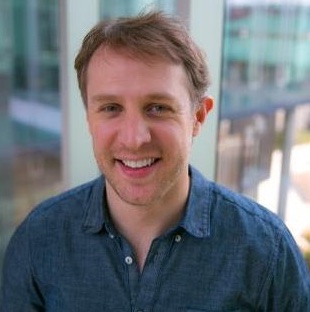
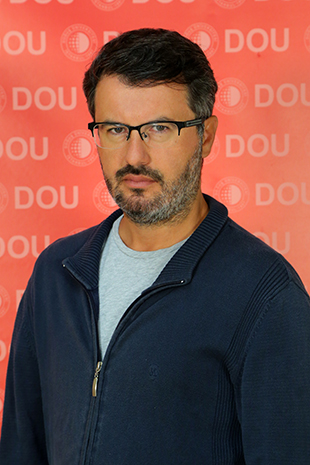
Steven Dow is a Professor in the Department of Cognitive Science and the Design Lab at UC San Diego. His research explores human-computer interaction, social computing, and tools to support creativity in individuals and groups. Research focuses on developing AI-assisted design workflows, social computing platforms, and creativity support tools. Recent work examines how generative AI transforms creative processes in product design. Publications demonstrate consistent themes in human-AI collaboration, with articles exploring text-to-image generation, cognitive aspects of design workflows, and social audio platforms. Work bridges cognitive science with practical design innovation. Leads research on socio-technical systems for collective problem-solving. Supervises PhD students investigating AI in design processes and creative workflows. Teaches courses on interaction design, social computing, and mobile service innovation. Maintains an active research lab exploring collaborative creativity and human-centered AI systems.
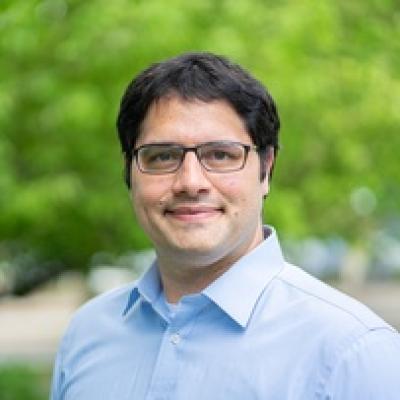
Gaetano Valenza is an Associate Professor of Bioengineering at the University of Pisa, Italy, where he leads the Neuro-Cardiovascular Intelligence Lab at the Enrico Piaggio Research Centre. He holds affiliations with the Neuroscience Statistics Research Laboratory at MIT and has served as a Research Fellow at Harvard Medical School and Massachusetts General Hospital. His academic work spans bioengineering, computational physiology, and affective computing. His research focuses on statistical and nonlinear biomedical signal and image processing , cardiovascular and neural modeling , and physiologically interpretable artificial intelligence . He develops wearable systems for physiological monitoring, with applications in autonomic nervous system assessment, brain-heart interactions, and mental health. His work has led to novel metrics such as the Sympathetic and Parasympathetic activity indices derived from ECG. The 15 most recent publications reflect a consistent trend in brain-heart interplay , complexity analysis of physiological signals , explainable AI in healthcare , and virtual reality applications in mental health . His work integrates advanced signal processing, nonlinear dynamics, and machine learning to decode emotional and cognitive states from physiological data. Dr. Valenza is a Senior Member of IEEE and serves on several technical committees. He is an active editorial leader, currently serving as Associate Editor for IEEE-EMBC , Plos One , Complexity , and Scientific Reports , and has guest-edited special issues in Philosophical Transactions of the Royal Society A and IEEE Journal of Biomedical and Health Informatics . He has led or participated in numerous international research projects, including FP7 and H2020 initiatives such as NEVERMIND and EXPERIENCE. He teaches courses in Biostatistics, Probability & Biostatistics, and Advanced Image Processing at the University of Pisa. As lab head and project coordinator, he leads a multidisciplinary team working on neuro-cardiovascular intelligence, wearable systems, and AI-driven mental health interventions.
Prof. Dr. Amelie Hagelauer holds a professorship in Micro- and Nanosystem Technology at the TUM School of Computation, Information and Technology, Technical University of Munich. Her work focuses on advanced electronics and systems integration across quantum computing hardware, resistive memory technologies, and high-frequency RF systems. She has contributed to innovations in superconducting qubit readout architectures, multi-level RRAM designs, and 3D-integrated CMOS-compatible quantum devices. Research interests span quantum hardware design, nanoelectronic devices, RF front-end systems, and emerging memory technologies. Her work emphasizes practical implementation challenges such as low-power operation, high-voltage handling in RF switches, and wafer-scale fabrication processes. Recent projects include D-band radar systems, energy-efficient 60 GHz transceivers, and antenna tuning solutions for 5G applications. Publications from 2023-2025 showcase advancements in resistive switching device characterization, mitigation of TLS losses in superconducting qubits, and reconfigurable AI accelerators using RRAM-based digital twins. Her work bridges theoretical device physics with practical integrated circuit design, addressing scalability and reliability in next-gen electronics. Awards and grants: None explicitly listed in provided texts. Active collaborations include EU-funded projects on quantum computing platforms and TUM's Electronic Photonic Integration initiatives. Leads research teams in microsystem technology with emphasis on cross-disciplinary approaches combining CMOS processes, MEMS, and quantum engineering.
Dr. Zara Ersozlu is a Senior Lecturer in Mathematics Education within the School of Education at the University of Newcastle, Australia. With a distinguished international career spanning multiple continents, she has held academic positions at prestigious institutions including North Carolina State University (USA), Gazi and Gaziosmanpasa Universities (Turkey), National Taiwan Normal University (Taiwan), The University of Western Australia, Murdoch University, and Deakin University. Her academic journey includes tenured positions as an Associate Professor and leadership roles as Department Head and Chair in teacher education disciplines. Currently, she teaches undergraduate and postgraduate courses in mathematics education, including Effective Pedagogies in Primary Mathematics, K-6 Mathematics, K-6 Numeracy, and Digitally Supported Learning. Dr. Ersozlu earned her Doctor of Philosophy from Firat University in Turkey and her Master of Art from Sakarya University. Her extensive academic preparation is complemented by five years of practical teaching experience in public schools prior to entering academia. This blend of theoretical knowledge and practical classroom experience informs her approach to teacher education and educational research. At the broadest level, Dr. Ersozlu's research investigates solutions to real-life problems impacting people's well-being, success, and capacity to achieve. Her scholarly work spans primary and secondary mathematics education, the psychology of mathematics (including metacognition, self-regulation, and anxiety), cross-cultural educational studies, teacher education, virtual simulated learning environments, and educational assessment. She has increasingly focused on the transformative potential of AI and machine learning in education, exploring how these technologies alter teaching, learning, and research processes. Her methodological expertise encompasses both quantitative and qualitative approaches, allowing her to effectively analyze both small and large educational datasets. Analysis of Dr. Ersozlu's recent publications reveals a strong emphasis on mathematics anxiety, teacher education, and the integration of technology in learning environments. Her work demonstrates a consistent focus on practical applications of educational research to address real-world challenges in mathematics education. The interdisciplinary nature of her research connects educational psychology, technology integration, and cross-cultural perspectives, with particular attention to how these elements intersect in teacher preparation and student learning outcomes. 2023 ATEA Research Recognition Award from the Australian Teacher Education Association 2021 Fellow of the Higher Education Academy (Advance HE, UK) 2010 Fellowship Program for Postdoctoral Researchers from the Council of Higher Education of Turkey Dr. Ersozlu is deeply committed to mentoring the next generation of scholars, currently supervising four PhD students and having successfully guided ten students to completion. Her grant portfolio includes significant funding for projects such as Best Practice Guidelines for RPL in Initial Teacher Education Programs ($60,000), Exploring the Reciprocal Relationship Between Mathematics Anxiety and Mathematical Resilience ($2,599), and multiple conference travel awards. She serves as an Associate Editor for several prominent journals including the International Electronic Journal of Mathematics Education and as Editor for Interdisciplinary STEM Education. Her editorial work reflects her standing as a respected voice in mathematics education research. Dr. Ersozlu's academic leadership extends to her role in developing innovative teaching approaches that integrate virtual simulation technology and learning analytics. Her work with TeachLivE™, a mixed-reality classroom simulation platform, demonstrates her commitment to creating authentic learning experiences for teacher education students. Through these initiatives, she bridges the gap between educational theory and classroom practice, preparing future educators to effectively implement evidence-based teaching strategies in diverse learning environments.
Michael Mühlebach is a Research Group Leader at the Max Planck Institute for Intelligent Systems in Tübingen, Germany, leading the independent Learning and Dynamical Systems group. His academic journey began at ETH Zurich where he earned his B.Sc. (2010) and M.Sc. (2013) in mechanical engineering, specializing in robotics, systems, and control. He completed his Ph.D. at ETH Zurich in 2018 under Prof. R. D'Andrea, followed by postdoctoral research at UC Berkeley with Prof. Michael I. Jordan. Dr. Mühlebach's research spans machine learning, dynamical systems, control theory, and optimization . His work bridges theoretical foundations with practical applications in robotics, developing methods that incorporate physical constraints and system dynamics into learning frameworks. His group focuses on online learning, physics-informed machine learning, and large-scale optimization for cyber-physical systems, with applications in electromagnetic navigation, robotic table tennis, and energy-efficient flight systems like the shape-changing robot Floaty . His publication record shows a strong focus on constrained optimization, with recent work exploring decision-dependent stochastic optimization, nonlinear feedback, and the theoretical foundations of reinforcement learning. His research integrates perspectives from control theory, dynamical systems, and optimization to develop algorithms with strong theoretical guarantees and practical performance. Outstanding D-MAVT Bachelor Award Willi-Studer prize for best Master's degree ETH Medal and HILTI prize for doctoral thesis Branco Weiss Fellow (2018) Emmy Noether Fellowship (2020) Amazon Fellowship (2024) Dr. Mühlebach actively mentors doctoral researchers and is seeking talented students for PhD and Master's projects. His research group has received funding from multiple prestigious fellowships and maintains collaborations across institutions including ETH Zurich, UC Berkeley, and various Max Planck research units. The group's work spans theoretical developments to practical implementations on robotic systems, demonstrating strong connections between mathematical theory and physical realization.
Maarten de Rijke is a Professor at the University of Amsterdam and affiliated with the Innovation Center for Artificial Intelligence (ICAI) . He is a leading expert in Information Retrieval , Recommender Systems , and Machine Learning , with over 500 publications and 10,000 citations. His work spans theoretical and applied domains, including conversational recommender systems , domain generalization , and neural ranking models . Research Pillars: Information retrieval, e-commerce search, learning to rank, and empathetic AI systems Awards: Best Paper (2x), Best Student Paper Community Roles: Organized workshops (MANILA25, SIGIR editions) His recent publications focus on robust recommendation systems , cross-domain contract extraction , and brain signal integration for query refinement. He leads the AIRLab (Amsterdam) and collaborates with institutions like Shandong University and the University of Chinese Academy of Sciences. Scientific Contributions : Over 500 publications in ACM Transactions, SIGIR proceedings, and journals Developed novel frameworks for learning-to-rank and user satisfaction modeling Pioneered research on conversational AI and adversarial attacks in retrieval He actively engages in community service, including organizing conferences and advocating for epilepsy research through initiatives like Emma’s collection box (over €24,448 raised). His work bridges theoretical rigor with real-world impact in search and recommendation technologies.
Ameet Talwalkar is an Associate Professor in the Machine Learning Department at Carnegie Mellon University and Chief Scientist at Datadog. He holds a PhD from the Courant Institute at NYU (2010) where he received the Janet Fabri Prize for Best Thesis. His professional achievements include co-founding Determined AI (acquired by HPE), creating MLlib in Apache Spark, co-authoring the textbook 'Foundations of Machine Learning,' and spearheading the MLSys conference. Talwalkar's research focuses on fundamental challenges in machine learning systems, including distributed ML, federated learning, neural architecture search, and human-AI interaction. His work bridges theoretical foundations with practical applications across domains like computational biology, PDE solving, and code generation. Current interests include AI for science, specialized model development, and agent-based systems. His publications demonstrate strong focus on ML systems optimization, foundation model evaluation, and interpretable AI. Recent works investigate specialized foundation models, PDE-solving frameworks, code generation tools, and human-AI interaction paradigms. The research consistently targets efficiency, scalability, and practical deployment challenges. Best Paper Award at EAAMO 2023 Best Student Paper at NYAS ML Symposium 2009 Runner-up for Best Real-world Application at Socal ML Symposium 2017 Janet Fabri Prize for Best PhD Thesis (2010) Talwalkar leads the CMU MLSys Lab focused on scalable ML systems and has served as Board President for the MLSys conference series. His educational contributions include developing courses like 'Machine Learning with Large Datasets' and creating the LEAF benchmark for federated learning and NAS-Bench-360 for neural architecture search.
Rui Li is an Associate Professor in the Ph.D. program at Rochester Institute of Technology's Golisano College of Computing and Information Sciences. She directs the Lab for Use-inspired Computational Intelligence (LUCI), focusing on AI applications in computational biology and medical imaging. Education includes: B.Sc. in Computer Science, Harbin Institute of Technology M.Sc. in Computer Science, Tianjin University of Technology Ph.D. in Computing and Information Sciences, RIT Research integrates statistical machine learning with computational biology, medical image analysis, and human visual attention modeling. Current projects include deep learning for histopathology, multimodal medical image registration, and gene network inference. Publications demonstrate consistent focus on medical AI applications, with recent advances in unsupervised image registration, interactive segmentation, and multimodal fusion techniques. Key trends include self-supervised learning, uncertainty-aware models, and human-AI collaboration frameworks. Awards include the NSF CAREER Award for developing adaptive machine intelligence systems. Advises multiple PhD students on projects spanning deep learning architectures, biomedical image analysis, and biological network modeling. Leads several NSF-funded projects including human-centered image understanding systems and gene-protein network inference tools. Directs LUCI lab investigating machine learning for healthcare applications and teaches graduate courses in Statistical Machine Learning and Deep Learning.
Philip Thomas is an Associate Professor and Doctoral Program Director at the Manning College of Information and Computer Sciences, University of Massachusetts Amherst. He leads the Autonomous Learning Lab (ALL) and co-founded the Reinforcement Learning Conference (RLC). His research focuses on reinforcement learning, AI safety, and algorithms that ensure safety guarantees for high-risk applications like healthcare and digital marketing. Education: PhD in Computer Science, University of Massachusetts Amherst (2015) MSc in Computer Science, Case Western Reserve University (2009) BSc in Computer Science, Case Western Reserve University (2008) Research Interests: Thomas specializes in designing biologically plausible reinforcement learning algorithms and ensuring safety through frameworks like Qualia Optimization and Seldonian Algorithms . His work emphasizes off-policy evaluation, fairness guarantees, and ethical AI. Recent projects include developing benchmarks for medical decision-making (e.g., ICU-Sepsis) and analyzing adversarial robustness in speech denoising models. Articles Trends: His recent work spans high-confidence policy evaluation, fairness metrics, and algorithmic safety. Key themes include improving benchmarking practices, rethinking eligibility traces, and leveraging state abstraction for consistent off-policy evaluation. Awards & Grants: Armstrong Award Co-PI on Army Research Grant (IoBT), NSF grant (FMitF) Significant funding from Adobe Research Advising & Grants: Thomas has overseen grants totaling millions and mentored students in reinforcement learning and AI safety. His current focus includes exploring qualia optimization for doctoral applications (2026-2027). Labs & Teams: He directs the Autonomous Learning Lab and collaborates on interdisciplinary projects at the Center for Data Science, emphasizing ethical AI and safe machine learning systems.
Amalia Foka is an Assistant Professor in Computer Science Applications for the Arts at the Department of Fine Arts & Art Sciences , School of Fine Arts , University of Ioannina , Greece. She has held academic positions at the University of Patras (2005-2013), University of Ioannina (2005-2008), and Computer Technology Institute & Press "Diophantus" (2014-2015). Her research bridges Artificial Intelligence with Digital Art , focusing on Generative AI , Social Media Mining , and Human-Computer Interaction within artistic contexts. Education: BEng in Computer Systems Engineering (1998) from the University of Manchester Institute of Science & Technology (UMIST) , UK MSc in Advanced Control (1999) from UMIST PhD in Robotics (2005) from the Department of Computer Science , University of Crete Her artistic research includes projects like Bushwalking (StyleGAN2 landscape generation), Breaking the Silence (NLP analysis of taboo topics), and The Invisible Structures of the Artworld (social media-driven network visualization). She leads the Multimedia Lab at the University of Ioannina, focusing on AI in Creative Processes and Digital Interaction methodologies.
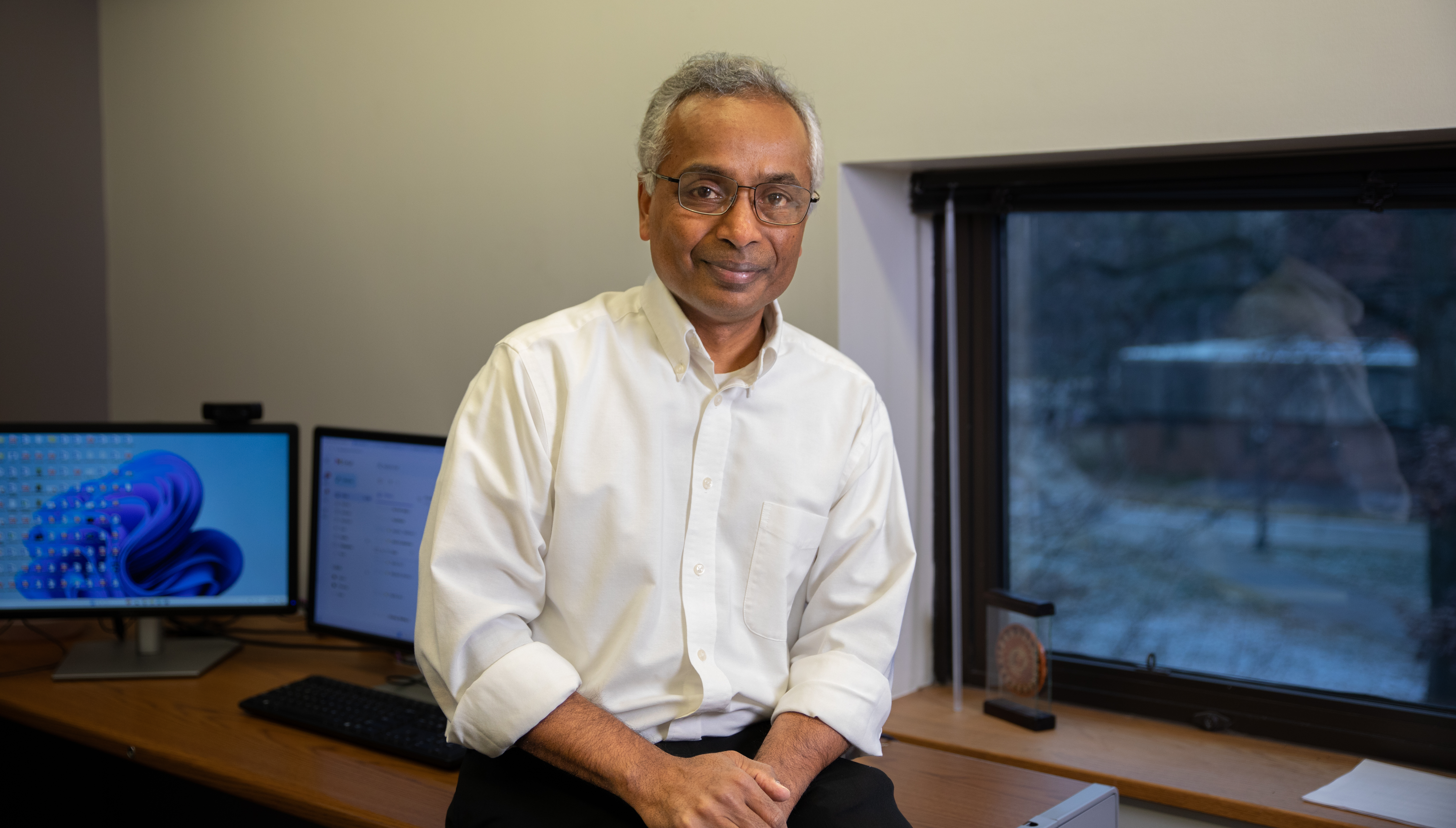
Ananth Grama is the Samuel D. Conte Distinguished Professor of Computer Science and Associate Director of the Center for Science of Information at Purdue University. He holds a faculty position in the Department of Computer Science, College of Science. His research focuses on parallel computing, distributed systems, machine learning, and their applications in complex systems such as materials modeling and clinical analytics. He teaches advanced courses like CS525 (Parallel Computing) and CS314 (Numerical Methods). Research interests span parallel algorithms, fault-tolerant learning, quantum machine learning, and data-driven healthcare analytics. Recent work addresses fundamental limits of generative models, online learning under noisy conditions, and clinical outcome predictions. His projects include DOE-funded research on critical element recovery and NIH grants for hearing assessment technologies. Notable contributions include over 50 peer-reviewed publications since 2022, with recent papers appearing at ICLR, NeurIPS, and ICML. Current postdocs include Changlong Wu (collaborating with Wojciech Szpankowski) and Luopin Wang (with Nadia Atallah). He advises seven graduate students and oversees multidisciplinary research teams.
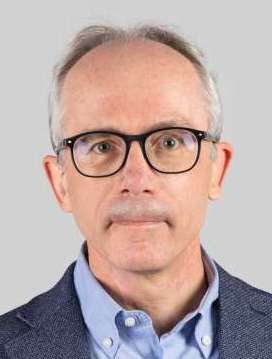
Paolo Tonella is a Full Professor and Director of the Software Institute at the Faculty of Informatics, Università della Svizzera italiana (USI) in Lugano, Switzerland. He also holds an Honorary Professorship at University College London (UK) and previously led the Software Engineering group at Fondazione Bruno Kessler (Italy). His research focuses on software testing, analysis, and AI-driven systems. He has authored over 200 peer-reviewed papers and 100 journal articles, with an H-index of 72. He teaches courses in Data and Software Engineering and Informatics, including Information Modeling, Probability & Statistics, and Knowledge Search. Key contributions include foundational work on web application testing (ICSE MIP award), evolutionary testing techniques (eToc/EvoSuite tools), and reverse engineering of object-oriented systems. He led the ERC-funded PRECRIME project on anticipatory testing. His recent work addresses AI dependability, autonomous systems testing, and deep learning fault analysis. Scientific awards include the ICSE MIP Award (2001) and ERC Advanced Grant (2018). He has served on editorial boards for major journals like IEEE Transactions on Software Engineering and ACM TOSEM. Current roles include leadership in the Software Institute and organizing the SIESTA summer school.
Assoc. Prof. Dr. Sema Alaçam Doğan has been affiliated with Istanbul Technical University since 2014, serving as an Associate Professor in the Department of Architecture . She has held administrative roles including Deputy Head of Department and Erasmus Coordinator. Education : PhD in Informatics in Architectural Design (2008-2014), MS in Informatics in Architectural Design (2005-2008), and BS in Architecture (1999-2005) from Istanbul Technical University. Her research explores Computational Design , Artificial Intelligence in Architecture , and Sustainable Material Innovation . She investigates digital tools for heritage preservation, daylight optimization in BIM, and cognitive development in architecture students. Recent publications analyze AI-assisted design literacy , machine learning for Sinan mosques , and environmental comfort in Harran houses . Her work integrates algorithmic frameworks with sustainable practices. Scientific awards include multiple ITU Publication and Performance Awards (2021-2024), FABFEST Prizes , and the 2024 Artemis Educator Award from NASA. Active projects like "Physical Computation in Architectural Drawing" and "Robotic Fabrication with Recycled Wind Turbine Blades" demonstrate her leadership in computational and sustainable research.
Angel Xuan Chang is an Associate Professor at Simon Fraser University's School of Computing Science, where she leads research at the intersection of natural language processing, computer vision, and 3D scene understanding. She holds the prestigious Canada CIFAR AI Chair position and is affiliated with multiple research groups including 3DLG, GrUVi, SFU NatLang, SFU AI/ML, and VINCI. PhD in Computer Science, Stanford University MSc in Computer Science, Stanford University M.Eng in Electrical Engineering and Computer Science, MIT BSc in Computer Science and Engineering, MIT Professor Chang's research primarily focuses on connecting language to 3D representations of shapes and scenes, with particular emphasis on grounding language for embodied agents in indoor environments. Her work spans natural language processing and understanding, linking natural language with visual and 3D representations, multimodal grounding of language, embodied AI, and machine learning applications for biodiversity monitoring through the BIOSCAN project. She has developed methods for synthesizing 3D scenes and shapes from natural language and created various datasets for 3D scene understanding. Her recent publications reveal a strong trend toward integrating language understanding with 3D scene generation and manipulation, with increasing focus on practical applications in embodied AI and biodiversity monitoring. The research shows progression from foundational work on text-to-3D scene generation to more sophisticated approaches for evaluating semantic coherence in generated scenes and developing efficient methods for zero-shot scene modeling. Canada CIFAR AI Chair TUM-IAS Hans Fischer Fellow (2018-2022) Best paper award at 3DV 2025 for 'An Object is Worth 64x64 Pixels: Generating 3D Object via Image Diffusion' Professor Chang actively advises numerous graduate students who appear as first authors on her publications, indicating a strong mentoring program. Her research is supported through multiple channels including the CIFAR AI Chair position and likely various research grants supporting her BIOSCAN-related work and 3D scene understanding projects. She has been involved in organizing multiple workshops at major conferences including ICML, CVPR, and ICLR. Her research is conducted through several interconnected groups: 3DLG (3D Language and Graphics), GrUVi (Graphics, Vision, and Interaction), SFU NatLang (Natural Language Processing), SFU AI/ML, and VINCI. These groups work collaboratively on problems spanning language grounding, 3D scene understanding, embodied AI, and biodiversity applications, creating a rich interdisciplinary research environment.
Prof. Dr. Barış ÇOBAN is a prominent academic and administrator at Doğuş Üniversitesi, serving as Dean of the Faculty of Arts and Sciences and Chair of the Department of Communication Sciences. He holds a PhD from İstanbul Üniversitesi (2004) and has held academic positions at multiple institutions since 1997, including roles as Assistant Professor at universities like Yeni Yüzyıl Üniversitesi and Okan Üniversitesi before becoming a full professor at Doğuş Üniversitesi in 2016. His academic journey also includes administrative roles like Dean (2018–present) and Department Chair at various institutions. His research focuses on alternative media, social movements, citizen journalism, and surveillance studies. Notable publications include works on digital journalism, Gezi Resistance activism, and counter-surveillance in Turkey. He has contributed to edited volumes such as Panoptikon 2.0 and Assault on Journalism , and his work frequently addresses media ethics, globalization impacts on communication, and the role of social media in societal change. Courses taught include 'Research in Mass Media,' 'Alternative Media,' and 'Media Ethics' in both Turkish and English. He has supervised over 10 master’s and doctoral theses on topics ranging from citizen journalism to media ethics in Turkey. His interdisciplinary approach bridges media theory with activism, emphasizing critical discourse analysis and media democratization efforts. Academic service includes roles on university boards, editorial work for journals like Communications , and contributions to international conferences on media freedom and journalist safety. His work highlights the intersection of technology, power dynamics, and media’s role in shaping societal narratives.