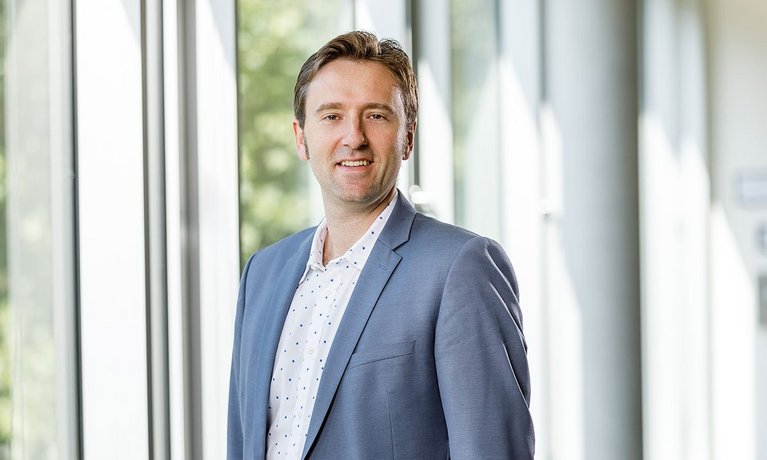
Prof. Dr. Dr. hc Frank Kirchner is a leading robotics expert and Managing Director of the DFKI Bremen since 2020. He holds the Chair of Robotics at the University of Bremen's Faculty of Mathematics and Computer Science since 2002, leading the Robotics Innovation Center with over 100 employees. His career spans academic leadership, industry innovation, and international collaboration. Doctorate (Dr. rer. nat) from University of Bonn (1999) Diploma in Informatics and Neurobiology from University of Bonn (1994) His research focuses on biologically inspired robotics, autonomous systems, and AI, with applications in space exploration, maritime technologies, and industrial automation. He pioneered the Soft Robotics Priority Program at DFG and co-founded institutions like the Brazilian Institute of Robotics and MarTech. His recent work includes AI-driven robotic ecosystems for marine conservation and transformer-based adaptive control systems. Selected projects: AI-REEFSHIELD : AI-driven robot learning for marine habitat monitoring ActGPT : Generative AI in robot control FieldCoBots : Human-robot collaboration in agriculture Scientific recognition includes an honorary doctorate (2017), Research Fellow at Tsinghua University (2018), and membership in the Berlin-Brandenburg Academy of Sciences (2015). He has supervised over 65 doctoral theses and authored 350+ publications.
Christian Schorr is a Professor at the German Research Center for Artificial Intelligence (DFKI) in the Department of Agents and Simulated Reality. His work focuses on artificial intelligence applications in industrial quality control and medical research, particularly through synthetic data generation and explainable AI frameworks. Phone: +49 681 85775 5314 Email: Christian.Schorr@dfki.de Address: Building D3 4, Stuhlsatzenhausweg 3, 66123 Saarbrücken, Germany His research spans machine learning , synthetic data generation , and explainable AI , with applications in automated optical inspection and medical imaging . Current projects include ML-SYNTHOM (AI-driven quality assurance for novel components) and PHARMOPRO-KI (pharmacokinetic modeling of Propofol using AI). Recent publications emphasize scalable synthetic data pipelines, deep learning for industrial billet detection, and tools for neural network interpretability. His work bridges theoretical AI advancements with practical implementations in manufacturing and healthcare domains.
Helmholtz Centre Potsdam - German Research Centre for GeosciencesGermany
Dr. Jing Wei is an Assistant Research Scientist affiliated with the Earth System Science Interdisciplinary Center (ESSIC) and the Department of Atmospheric and Oceanic Science at the University of Maryland, College Park. She also holds appointments at NASA Goddard Space Flight Center and the Cooperative Institute for Satellite Earth System Studies (CISESS). Her research focuses on air quality monitoring through satellite remote sensing, big data analytics, and artificial intelligence applications. Dr. Wei specializes in atmospheric aerosols, particulate matter (PM) and chemical composition, and trace gases, utilizing satellite remote sensing, big data, and AI to assess the impacts of air pollution and extreme weather on the environment, health, and climate. Her work has resulted in the development of high-resolution air pollutant datasets for China (CHAP), the United States (USHAP), and globally (GHAP), which have been widely used in over 350 applied publications. Her research has produced over 100 SCI papers as (co-)first or corresponding author in leading journals including Nature Communications and The Lancet Planetary Health, with 7 ESI Hot papers (Top AGU James R. Holton Award (2022) Remote Sensing Young Investigator Award (2023) Stanford University List of the World's Top 2% Scientists since 2021 Top 0.1% highly cited authors in Atmospheric Sciences Dr. Wei serves as Editor of Earth System Science Data and Associate Editor of Journal of Geophysical Research: Atmospheres. She has secured research funding from NASA Earth Sciences and other organizations. Her work has been featured in major media outlets including CBS News, Yahoo News, US News, and The Hill.
Thorsten Holz is a Professor and Head of the Chair for System Security at Ruhr-University Bochum's Faculty of Computer Science. His research team focuses on critical areas of cybersecurity including binary analysis, automated vulnerability discovery (fuzzing), embedded systems security, and privacy compliance (GDPR). Research Focus: His work spans: Binary analysis & reverse engineering techniques Software security with emphasis on fuzzing and automated vulnerability assessment Security of embedded/IoT systems Privacy mechanisms and GDPR implementation Network and internet security protocols Publication Trends: Recent works (2024-2025) demonstrate strong emphasis on: Advanced fuzzing methodologies for software/hardware systems Security of satellite and aerospace systems Detection of AI-generated media (deepfakes) and LLM vulnerabilities Trusted execution environments (TEEs) and memory corruption defenses Social media/platform security abuses He leads a research group developing cutting-edge tools for vulnerability discovery and security validation, with significant real-world impact in both academic and industry domains.
Prof. Günter Neumann is a Professor of Computational Linguistics at Saarland University and a Research Fellow at the German Research Center for Artificial Intelligence (DFKI) . He has over 30 years of experience in research software development, with a focus on language technology , information extraction , and question answering systems . PhD in Computer Science (1994) and Venia Legendi in Computational Linguistics (2004) from Saarland University Visiting researcher at Stanford , CMU , and MIT His research spans computational linguistics , artificial intelligence , and their applications in defence , healthcare , and education . He leads projects like AtLaS (AI-based NLP for low-quality data in defence), PRECISE4Q (predictive modeling in stroke medicine), and iREAD (personalized reading apps). Recent publications focus on low-resource language retrieval , cross-lingual transfer , and graph-based reasoning in biomedical domains. He has participated in numerous program committees (ACL, AAAI, LREC) and contributed to advancements in multilingual question answering , knowledge graph reasoning , and medical text de-identification . He has collaborated with institutions like Fondazione Bruno Kessler , econob , and NICE Systems . Current tools developed with his team power semantic search services for Informationsdienst Wissenschaft and the Deutsche Allianz Meeresforschung portal.
Dr. Katja Witte serves as a Postdoctoral Researcher (Research Fellow) at the Institute of Psychology within Humboldt University of Berlin's Faculty of Life Sciences. She is affiliated with the Chair of Psychological Assessment under Prof. Dr. Matthias Ziegler, conducting research and teaching from her office at Rudower Chaussee 18, Room 4'113. Her work focuses on advancing psychological assessment methodologies in educational contexts. Dr. Witte's academic credentials from Humboldt University of Berlin include: Doctorate (Dr. rer. nat.) in Psychology (2025) Master of Science in Psychology (2020) Bachelor of Science in Psychology (2017) Her research integrates psychological assessment with motivational theory to develop innovative diagnostic tools. Specializing in achievement motivation dynamics and digital assessment solutions, she bridges educational psychology and test construction. Current projects examine state-trait interactions in learning environments and develop aptitude tests for psychology programs, emphasizing practical applications in higher education. Recent publications reveal a cohesive research trajectory centered on valid assessment design. The 2024 study dissects motivational state dynamics in learning contexts, while the 2023 BSF-P publication establishes standardized evaluation frameworks for psychology applicants. Together, these works demonstrate methodological rigor in measuring complex psychological constructs for educational decision-making. Dr. Witte secures competitive funding from entities including the State of Berlin (BSF-P development), Media Commission of the AS (digital self-assessment tools), and Bertelsmann Stiftung (AI in continuing education). Her project portfolio reflects strategic alignment with institutional priorities in educational innovation. As an active member of the Chair of Psychological Assessment research group, she contributes to collaborative initiatives including the BaPsy-DGPs national testing framework and participates in professional development through the WiNS mentoring program and DPPD Doctoral Workshops.
Dr. Marie Hornberger is a Research Associate at the Technical University of Munich (TUM) School of Social Sciences and Technology , focusing on AI literacy and educational technology. Her work bridges artificial intelligence and pedagogical practices in higher education. M.Sc. Psychology (University of Tübingen, 2020) B.Sc. Psychology (University of Tübingen, 2016) Research Interests: AI literacy frameworks for university students Teacher training in artificial intelligence Impact of AI on science education Development of assessment tools for digital competencies Recent Publications (2023–2025) demonstrate her expertise in AI literacy testing , with a focus on international validation, self-efficacy models, and pedagogical integration of generative AI. Her work appears in Computers and Education: Artificial Intelligence and Learning and Individual Differences . Conference Contributions: Presented validation studies of AI literacy tests at annual conferences of the Society for Empirical Educational Research (2023–2025) Poster session on AI literacy measurement at the 2023 Essen conference Current Projects: Lead researcher in the Doctoral project 'Measuring and Promoting AI Literacy in Higher Education' and contributor to the KI-CP@TUM initiative on AI study programs.
Bernhard Saske serves as a Research Associate at the Chair of Virtual Product Development within Dresden University of Technology, where he has been affiliated since completing his mechanical engineering studies in 2002. Holding a doctorate (Dr.-Ing.) earned in 2008 for research on 'Augmented Reality in Maintenance,' he specializes in virtual and augmented reality applications integrated with product lifecycle management systems. His academic credentials include: Master's degree in Mechanical Engineering from Dresden University of Technology (2002) Doctorate (Dr.-Ing.) from Dresden University of Technology (2008) focusing on Augmented Reality in Maintenance Saske's research centers on digital transformation in engineering workflows, with core expertise in virtual/augmented reality implementation, product lifecycle management (PLM), and model-based systems engineering (MBSE). Recent investigations address generative AI applications in CAD processes, sustainable product development frameworks, and component reuse optimization in industrial plant design. His work consistently bridges theoretical methodologies with practical industry implementation challenges. Analysis of his 2023-2025 publications reveals a strategic shift toward artificial intelligence integration in engineering design, particularly generative models for CAD and computer vision systems. Concurrently, his research maintains strong emphasis on sustainability-driven PLM strategies and MBSE adaptation for circular economy principles, reflecting evolving industry priorities in resource efficiency and digitalization. Scientific Awards: No documented awards, fellowships, or major honors were identified in the source materials. Dr. Saske actively contributes to collaborative research projects within the Chair of Virtual Product Development, frequently co-authoring with Prof. Paetzold-Byhain and interdisciplinary teams. While specific student supervision is unrecorded, his publications indicate mentorship roles in conference papers and journal articles. Project funding appears aligned with German academic-industry partnerships focused on digital engineering solutions, though grant details remain unspecified. As a core member of the Chair of Virtual Product Development, Saske operates within a research ecosystem dedicated to advancing virtual prototyping, digital twin technologies, and immersive maintenance solutions. The chair maintains active industry collaborations to implement VR/AR methodologies in real-world manufacturing and product development contexts across European industrial partners.
Professor Sebastian Mueller is a faculty member at the TUM School of Management, Technical University of Munich, Campus Heilbronn. He holds a PhD in Finance from the University of Mannheim and has served as Professor of Corporate Finance at the German Graduate School of Management and Law (Heilbronn) and as Assistant Professor in Finance at the University of Mannheim. His research focuses on asset pricing, digital finance, sustainable finance, and investor behavior. PhD in Finance (summa cum laude), University of Mannheim His empirical research combines quantitative methods with machine learning, text analysis, and generative AI to analyze financial market anomalies, economic linkages, and media impacts on investor decision-making. He teaches finance courses across TUM's Bachelor, Master, and Executive Education programs, including Corporate Finance, Digital Finance, and Sustainable Finance. His awards include the SUERF/UniCredit Foundation Research Prize (2019), Acatis Value Awards (2015, 2018), and the VHB Young Talent Award (2015). He supervises finance students through seminars and thesis projects while leading research initiatives at the Center for Digital Transformation and Global Center for Family Enterprise.
Dr. Deborah Mateja is a Researcher at the University of Mannheim , affiliated with the Business School and Department of Information Systems . Her work centers on Generative Artificial Intelligence , Computational Creativity , and Human-AI Interaction , with involvement in projects like Cloud Mall Baden-Württemberg and LogoAI (AI innovation competition BW). She has presented at conferences and contributed to academic publications. Education : B.Sc. and M.Sc. in Business Informatics from the University of Mannheim and Baden-Wuerttemberg Cooperative State University (DHBW) Mannheim. Professional Experience : Internships at McKinsey & Company and SAP Deutschland SE & Co. KG, including a dual study program. Teaching : Delivered courses at both Bachelor's and Master's levels, including Introduction to Business Information Systems (Fall 2022) and Applied IT Management in the Digital Age (2020–2021). Awards : fwi Science Prize 2019 Bronnbacher Scholarship from the Cultural Circle of the German Economy Research Trends : Focus on leveraging AI for creative processes, integrating generative models into business workflows, and enhancing human-AI collaboration in digital transformation contexts.
Johannes Voichtleitner is a Researcher at the Chair of Theoretical Information Technology within the Technical University of Munich (TUM). His work focuses on Physical Layer Security , Quantum Communication , and Communication Engineering , contributing to the development of secure communication protocols and wireless network security frameworks. Research Areas: Physical Layer Security Quantum Communication Wireless Networks Communication Engineering Publications: Recent works include Security in presence of AI (Demo) (2025), Joint Communication and Sensing Meets Physical Layer Security (Demo) (2025), and Statistical Verification of Physical Layer Security (2024), emphasizing secure communication bounds and AI-driven security protocols. Earlier contributions explore Modular Coding Schemes (2021-2023) and Semantic Secrecy in 5G mmWave systems.
Rhenish Friedrich Wilhelm University of BonnGermany
Bastian Bohn is a Researcher at the Institute for Numerical Simulation (University of Bonn). He focuses on Mathematics of Machine Learning , Approximation Theory , and High-dimensional Discretizations . His work bridges Sparse Grid Methods Numerical Analysis Scientific Computing with modern ML applications. His recent publication Algorithmic Mathematics in Machine Learning (2024) consolidates his work on algorithmic foundations for high-dimensional data analysis. Earlier studies investigate Deep Kernel Learning Explainable AI Dimensionality Reduction using sparse grid frameworks.
Jan Mendling is a Professor of Process Science at the Department of Computer Science, Humboldt University of Berlin, Germany. He also holds adjunct professorships at Vienna University of Economics and Business, Austria, and serves as a Principle Investigator at the Weizenbaum Institute, Berlin. Additionally, he co-founded Noreja Intelligence GmbH. University: Humboldt University of Berlin Department: Department of Computer Science Other Affiliations: Weizenbaum Institute, Vienna University of Economics and Business His research spans business process management, process mining, information systems, and sustainability compliance. He has authored over 500 publications and co-authored textbooks including Fundamentals of Business Process Management and Wirtschaftsinformatik . Recent research trends focus on timeline-based process discovery, event sequence analysis, and leveraging large language models (LLMs) for business process sustainability. His work integrates temporal analytics, resource analysis, and contextual frameworks for process mining. Scientific Awards: Runner-Up for Best Paper at ICPM 2024 Winner of Best Paper at EdbA 2024 Best Paper at ER 2021 Best Forum Paper at PoEM 2020 Excellence in Teaching Awards (2016, 2017) He leads projects funded by the Einstein Foundation Berlin, BMBF, EU FP7, Horizon 2020, Erasmus+, and FFG. His editorial roles include founding co-Editor-in-Chief of Process Science and memberships on boards like Software and Systems Modeling and Business Process Management Journal .
Sadaf Gulshad is a Postdoctoral Researcher in Machine Learning and Computer Vision at MultixLab, University of Amsterdam. She completed her PhD (2022) in Computer Science at the University of Amsterdam under Prof. Dr. Arnold Smeulders, and holds a Master's degree in Electrical Engineering from KAIST (South Korea, 2017) and a Bachelor's in Electrical and Computer Engineering from COMSATS Institute (Pakistan, 2015). Research Interests: Sadaf focuses on improving AI transparency and robustness through explainable models. Her work addresses challenges like adversarial examples, medical imaging imperfections, and uncertainty estimation in clinical data. Key contributions include hierarchical prototype explainers (HIPE), transform-augmented networks, and attribute-based reasoning frameworks. Recent Publications: Her research spans explainable AI (CVPR 2023), robustness (NeurIPS 2021), medical imaging analysis (Medical Physics 2023), and uncertainty estimation (European Heart Journal 2021). She develops methods that bridge human cognition with machine learning explainability. Teaching & Supervision: Sadaf has served as Teaching Assistant for courses including "Applied Machine Learning" and "Multimedia Analytics" at the University of Amsterdam. She supervised multiple Master's theses on topics like green roof distribution analysis, semantic segmentation, and interpretable representation learning in collaboration with institutions such as UMC Utrecht and VU Medical Center.
Markus Huff serves as a Full Professor of Applied Cognitive Psychology and head of the Applied Cognitive Psychology group at the Eberhard Karls University of Tübingen since 2020. He concurrently leads the Perception and Action research group at the Leibniz Institute for Knowledge Media (IWM). His research program investigates perception and action processes within digital environments through a perception-oriented framework that examines how media-mediated content influences human cognition and behavior. Dr. Huff earned his academic foundation in psychology, mathematics, and computer science at the University of Tübingen. Following his psychology degree, he completed his doctorate (Dr. rer. nat.) at the IWM and University of Tübingen with groundbreaking research on verbal influence on visual memory, which earned him the prestigious Leibniz Young Researcher Award in 2007. His academic trajectory includes postdoctoral positions at IWM, University of Tübingen, and Washington University in St. Louis, followed by a junior professorship in general psychology at Tübingen before heading the Department of Research Infrastructures at the German Institute for Adult Education. Professor Huff's research spans four primary interconnected domains. His Multimodal Perception research investigates how humans process and mentally organize media content across various formats including texts, images, comics, and videos. The Perception and Interaction in Social Networks focus examines the complex interplay between attitudes, knowledge, and metacognition during information reception and social interaction in digital spaces. His work on Perception and Action with Digital Agents explores human-AI communication dynamics, while his research on Risk Perception of Artificial Intelligence addresses the psychological dimensions of human responses to emerging digital technologies. Additionally, he conducts significant metascientific research examining policy effectiveness in the research process, with notable findings on research data policies. Analysis of Professor Huff's recent publication record reveals a clear trajectory toward increasingly sophisticated investigations at the intersection of cognitive psychology and digital technology. His work demonstrates methodological rigor across visual perception, audio-visual integration, event comprehension, and the cognitive impacts of digital environments. A particularly noteworthy trend is his expanding focus on AI-related perception and risk assessment, reflecting the growing importance of human-AI interaction in contemporary cognitive science. His research consistently bridges theoretical cognitive frameworks with practical applications in educational technology, health communication, and digital media design. Leibniz Young Researcher Award by the Leibniz Association (2007) Professor Huff directs a multidisciplinary research group comprising members from both the Applied Cognitive Psychology group at the University's Department of Psychology and the Perception and Action group at the Leibniz Institute for Knowledge Media. His research program has secured substantial funding, evidenced by his prolific publication record in high-impact journals spanning psychology, cognitive science, human-computer interaction, and educational technology. His grant portfolio reflects strong interest in understanding human cognition in digital contexts, with particular emphasis on educational applications, health communication, and human-AI interaction. His laboratory work employs advanced experimental methodologies including eye-tracking, behavioral experiments, and computational modeling to investigate how people process information across various media formats and interact with increasingly sophisticated digital agents. The research environment fosters collaboration between cognitive psychologists, computer scientists, and educational researchers, creating a rich interdisciplinary context for advancing understanding of human perception and action in our rapidly evolving digital landscape.