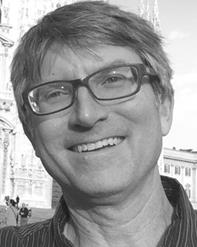
Henrik von Coler is an Assistant Professor at Georgia Institute of Technology's School of Music within the College of Design. His work bridges engineering, electronic music, and empirical research, focusing on spatial audio systems, live electronics, and human-computer interaction in musical contexts. He joined Georgia Tech in 2023 after serving as director of the TU Studio for Electronic Music at Technische Universität Berlin from 2015 to 2023, where he founded the Electronic Orchestra Charlottenburg (EOC) to explore live electronic ensembles in multichannel environments. His research emphasizes the integration of sound, space, and HCI to enhance compositional and performative expressiveness. Notable projects include immersive audio installations, virtual instrument design, and AI-assisted composition. Coler has performed globally on immersive audio systems and curated international concerts. His technical contributions span spatial sound synthesis algorithms, networked music systems, and real-time signal processing tools. Key areas of exploration include volumetric music performances in metaverse environments, hybrid spatial interaction via ARCube, and statistical models for spectral synthesis. He has developed open-source systems like Orchestra (for metaverse performances) and SPRAWL (for ensemble interaction). Coler’s work often combines empirical research with artistic practice, aiming to redefine the boundaries of live electronic music through technological innovation. His academic output spans over 30 peer-reviewed articles since 2011, with recent focus on metaverse applications, AI-human collaboration, and immersive audio design. While no formal awards are listed, his leadership roles and project outcomes highlight significant contributions to music technology and spatial audio engineering.
Jiebo Luo is the Albert Arendt Hopeman Professor of Engineering and Professor of Computer Science at the Hajim School of Engineering & Applied Sciences, University of Rochester. He holds a PhD and has been affiliated with the Department of Computer Science since 2011, following a 15-year career at Kodak Research. His research spans computer vision, natural language processing, machine learning, data mining, computational social science, and digital health. Luo is an ACM Fellow, AAAI Fellow, IEEE Fellow, SPIE Fellow, and IAPR Fellow. Education: PhD (specific discipline not explicitly stated in text). Research interests include computer vision, machine learning, data mining, social media analysis, biomedical informatics, human-computer interaction, and ubiquitous computing. He co-authored the book Deep Neural Network for Medical Image Computing: Principles and Applications (Elsevier, 2022). His work has led to nearly 600 technical papers and 90+ U.S. patents. Research Trends: Recent work focuses on large language models (LLMs), multimodal systems, AI-driven social media analysis, and healthcare applications. Key areas include bias analysis in political simulations, video understanding, and benchmark development for AI-generated content evaluation. His research bridges theoretical advancements with practical applications in healthcare, social sciences, and multimedia systems. Awards: ACM SIGMM Technical Achievement Award (2021), IEEE Region 1 Technological Innovation Award (2018), Eastman Innovation Award (2004), and multiple best-paper recognitions at top conferences. Service & Leadership: Served as program co-chair for ACM Multimedia 2010, IEEE CVPR 2012, ACM ICMR 2016, and IEEE ICIP 2017. Currently Editor-in-Chief of IEEE Transactions on Multimedia (2020–2022). Editorial board roles include several IEEE Transactions journals and conferences. Labs & Teams: Leads research groups in computer vision and multimodal computing at the University of Rochester, collaborating on projects like UroSAM (kidney stone classification) and computational social science initiatives.
Jeyavijayan 'JV' Rajendran is an Associate Professor in the Department of Electrical and Computer Engineering at Texas A&M University, part of the College of Engineering. He is an ASCEND Fellow and leads the Secure and Trustworthy Hardware (SETH) Lab. His research focuses on hardware security, computer security, and novel applications of AI in secure hardware design. Education: PhD in Electrical Engineering (NYU 2015), MS in Computer Engineering (NYU Tandon 2010), BE in Electronics and Communication Engineering (Anna University 2008). Research Interests: Hardware Security, Computer Security, Logic Locking, Hardware IP Protection, and Reinforcement Learning for Security. He explores AI-driven approaches to detect vulnerabilities, protect intellectual property, and enhance secure hardware design through fuzzing, obfuscation, and formal verification. Notable Awards: 2022 Office of Naval Research Young Investigator Award, 2021 IEEE CEDA Ernest Kuh Early Career Award, 2017 NSF CAREER Award. Lab and Teams: The SETH Lab focuses on trustworthy hardware design, developing techniques to secure integrated circuits against reverse engineering and IP theft. Current projects include LLM-based hardware code generation, formal approaches for hardware fuzzing, and AI-driven vulnerability detection.
Graham Dove is an Assistant Professor at New York University (NYU) , affiliated with the Center for Urban Science and Progress (CUSP) . His work focuses on human-centered design approaches to AI , data-enabled products , and community science initiatives . He co-directs the Human-Centered Technology, Innovation, and Design PhD program and teaches courses like Digital Civics for Social Innovation and Design for Innovation with AI and ML . His research spans healthcare technology (e.g., MS care design with clinicians), urban environmental advocacy (e.g., NYC Chinatown air quality projects), and open data applications in civic innovation. He emphasizes participatory design and has collaborated with organizations like NYC Open Technology Institute (OTI) and BetaNYC. Currently, he explores how technology can address societal challenges through civic quality of life , remote patient monitoring , and environmental resilience . His lab ( People+Technology Lab ) integrates interdisciplinary methods to create equitable tech solutions. Notable projects include SONYC Urban Sound Tagging (sonic data for city planning) and community science frameworks to mitigate environmental risks. He advocates for transparency in smart city deployments and ethical AI design .
Maria Antoniak is a Visiting Professor in Computer Science at the University of Colorado Boulder, with an upcoming tenure-track appointment as Assistant Professor starting Fall 2025. She holds affiliations with both the Department of Computer Science and the Department of Information Science. Her research bridges Natural Language Processing (NLP), cultural analytics, and healthcare, emphasizing interdisciplinary collaboration with humanities and clinical fields. Education: PhD in Information Science from Cornell University (advisor: David Mimno), MA in Computational Linguistics from the University of Washington, and BA in Liberal Studies from the University of Notre Dame. She completed postdoctoral work at the Pioneer Centre for AI (Copenhagen) and was a Young Investigator at the Allen Institute for AI. Research focuses on narrative analysis (e.g., birth stories, online healthcare communities), NLP tool reliability, and ethical AI applications. Her work includes developing tools like Riveter for power dynamics analysis and Little Mallet Wrapper for topic modeling. Current projects explore cultural contexts in LLMs and maternal healthcare narratives. Teaching includes courses on NLP for Cultural Analytics and guest lectures globally. She organizes initiatives like the AI for Humanists workshop series and maintains resources for computational humanities. Maria advocates for inclusive academia through initiatives like Grads for Gender Inclusion in Computing and Ukrainian academic support efforts. Her upcoming roles include faculty appointments at CU Boulder and active participation in global conferences (e.g., ACL, COLING). Research spans computational humanities, healthcare informatics, and AI ethics, with a focus on societal impact and methodological rigor.
Donna Gallo is an Assistant Professor of Music Education at the University of Illinois Urbana-Champaign (UIUC), School of Music. She previously held faculty positions at Westminster Choir College, where she coordinated the Kodály Certification program, and taught K-6 general/choral music in Fairfax County Public Schools (VA) and Simsbury Public Schools (CT). Gallo’s academic background includes a Ph.D. from Northwestern University, an MME from Silver Lake College, a BME from Indiana University, and training at the Kodály Institute in Hungary, where she received the International Kodály Society Scholarship . Her research focuses on: Inservice teacher learning through collaborative professional development structures. Creative music-making and the integration of popular music practices in elementary education. Community partnerships as critical experiences for preservice teacher training. Quantitative research methodologies in music education. Educational equity through culturally responsive teaching and service learning. Teaching strategies for neurodivergent and physically divergent students. Gallo has secured grants for professional development programs and community partnerships with local music educators and school districts. Notably, she collaborated with the School of Music and College of Engineering on a UIUC grant to address systemic racism and social injustice. She has published in leading journals such as the Journal of Research in Music Education , Music Education Research , and International Journal of Music Education , and authored book chapters in The Routledge Companion to Creativities in Music Education and Toward Equity in School Music . Scientific Awards: International Kodály Society Scholarship (Kodály Institute, Hungary). In advising and grants, Gallo emphasizes culturally responsive teaching and first-year teacher support through service learning. Her work bridges music education with interdisciplinary initiatives, leveraging technology and partnerships to drive equity-focused innovation. She is actively involved in editorial roles, including past editor of AOSA Echo (2012–2016) and current editorial board member of the Music Educators Journal . Her collaborations span the UIUC School of Music and College of Engineering, as well as local schools and community artist mentors. Gallo’s efforts aim to transform music education through inclusive curricula, technology integration, and systemic change.
Ryo Suzuki is an Assistant Professor at the ATLAS Institute within the University of Colorado Boulder's Computer Science department. His research focuses on innovative intersections of Human-Computer Interaction (HCI), Augmented Reality (AR), and robotics. He explores systems that blend AI, haptics, and shape-changing interfaces to create enriched user experiences. Key areas of investigation include embedding interactivity into static educational materials (e.g., textbooks), developing AI-driven AR tools for procedural instruction, and creating shape-changing robotics for tactile feedback. His work often emphasizes practical applications in education, remote collaboration, and creative industries. Recent projects include MapStory (LLM-driven map animation), RealityEffects (3D volumetric video augmentation), and HoloDevice (holographic cross-device collaboration).
Professor Peta Mitchell is a leading scholar in digital media and geographies at Queensland University of Technology (QUT), where she holds a Professorship in the School of Communication and the Digital Media Research Centre (DMRC). She leads the Urban Media and Digital Geographies Research Group and serves as Director of Research Training for QUT's Faculty of Creative Industries, Education, and Social Justice. In 2023, Professor Mitchell was appointed to serve a three-year term on the Australian Research Council's College of Experts, recognizing her significant contributions to research in digital media and geographies. Professor Mitchell earned her Doctor of Philosophy from the University of Queensland. Her academic journey has established her as a prominent voice in the interdisciplinary field bridging geography, media studies, and digital culture. She has received prestigious fellowships including a Vice Chancellor's Research Fellowship from QUT (2014-2018) and a visiting fellowship from the Institute for Advanced Studies in the Humanities at the University of Edinburgh (2009). Professor Mitchell's research explores the complex connections among space, place, society, and the digital. Her work focuses on digital and media geographies, everyday digital and data cultures, digital inclusion, and network contagion. She has made significant contributions to understanding how digital technologies reshape our relationship with space and place, particularly in urban environments. Her research examines how location-aware technologies influence social dynamics, cultural practices, and power relations, with particular attention to issues of inclusion, privacy, and justice in digital contexts. Professor Mitchell has investigated how digital media practices shape experiences of belonging, particularly among marginalized communities, and how geospatial data is produced, circulated, and contested in contemporary society. Her extensive publication record reveals a trajectory of increasingly interdisciplinary work that bridges humanities, social sciences, and spatial sciences. Recent publications show a growing focus on the intersection of digital technologies with environmental concerns, multispecies justice, and urban governance. Professor Mitchell's work has evolved to address emerging challenges related to generative AI, smart city technologies, and the ethical implications of location-aware applications. Her research consistently engages with questions of power, equity, and social justice in digital spaces, making significant contributions to both theoretical frameworks and practical applications in the field. Vice Chancellor's Research Fellowship, Queensland University of Technology (2014-2018) Faculty research fellowship, Centre for Critical and Cultural Studies, University of Queensland Visiting fellowship, Institute for Advanced Studies in the Humanities (IASH), University of Edinburgh (2009) Professor Mitchell has successfully supervised numerous doctoral students whose research explores diverse aspects of digital media and geographies. Her current and former students have investigated topics including smart urban governance, digital privacy, diaspora media practices, digital inclusion, and the cultural dimensions of location-based technologies. She has secured substantial research funding through competitive grants, including multiple ARC Discovery and Linkage Projects. Her current projects include "Generative AI and the Future of Academic Writing and Publishing" (2025-2028) and "Promoting Low-Income Parents' Digital Media Literacies" (2025-2028), demonstrating her ongoing commitment to addressing pressing contemporary issues at the intersection of technology, society, and space. As leader of the Urban Media and Digital Geographies Research Group within QUT's Digital Media Research Centre, Professor Mitchell fosters interdisciplinary collaboration among researchers examining how digital technologies reshape urban spaces and social relations. Her research group brings together scholars from geography, communication, design, computer science, and the humanities to investigate the spatial dimensions of digital culture. The group's work has particular relevance for understanding the implications of smart city technologies, location-aware applications, and digital inclusion initiatives in contemporary urban contexts.
Rachel Devorah Wood Rome is an Assistant Professor in the Electronic Production and Design (EPD) department at Berklee College of Music, where she teaches creative coding, live coding, and music technology. Her work bridges electronic music, improvisation, and critical theory, with a focus on sonic cyberfeminism, archival practices, and the social meanings of sound and space. Ph.D. in Music Composition and Computer Technologies, University of Virginia (2018) M.L.I.S., San José State University (2017) M.A. in Music Composition, Mills College (2013) B.Mus. in Horn Performance, CUNY Queens College (2007) Her research explores superhuman prolongation, opaque complexity, and the re-signification of archaic tools in sonic media. She values machines for their patience and memory, and her creative practice emphasizes critical agency in technology design and use. She performs under the name 'mehetabel' when using archival materials in improvised electronic music. The most recent publications and performances reflect a deep engagement with AI and music, live coding, feminist media theory, and spatialized sound. Her works often involve real-time data processing, generative systems, and collaborative improvisation, situating sound within broader social, political, and technological contexts. Ruth Anderson Installation Prize (IAWM) New Music USA Grant Fellowships from MIT OpenDocLab, Adrian Piper Foundation, Ina GRM, New Museum, and Jefferson Scholars Foundation Residencies at EMS Stockholm, STEIM Amsterdam, MassMoCA, and Cove Park Rome advises emerging artists in electronic music and creative coding, many of whom have gone on to establish their own practices. She is also active in academic service, including curriculum development, faculty governance, and labor organizing as a Councilor for the Berklee Faculty Union. She leads initiatives in DEI, sound design, and coding pedagogy within the EPD department. She has been involved in interdisciplinary collaborations with artists, technologists, and institutions worldwide, presenting work in galleries, festivals, and academic conferences across North America, Europe, and Asia. Her leadership extends to nonprofit arts organizations, where she has served as Executive Director and grantwriter.
FURUZUKI, Takayuki is a Professor at Waseda University's Faculty of Science and Engineering, Graduate School of Information, Production, and Systems. He holds a PhD from Kyushu Institute of Technology and maintains the NCLab research group (http://nclab.w.waseda.jp/nclab/). His professional memberships include the Institute of Electronics, Information and Communication Engineers, Institute of Electrical Engineers of Japan, Society of Instrument and Control Engineers, and IEEE. His educational background includes a PhD in Information Science from Kyushu Institute of Technology (1994-1997), a Master's degree in Electronics Engineering from Sun Yat-Sen University (1983-1986), and a Bachelor's degree in Electrical & Electronic Systems Engineering from Sun Yat-Sen University (1979-1983). Professor FURUZUKI's research spans neural networks, genetic algorithms, system identification and control, complex systems, bioinformatics, and combinatorial optimization. His work integrates soft computing techniques with medical informatics and control systems engineering, developing innovative approaches for problems ranging from brain tumor segmentation to music information retrieval. His research methodology often combines theoretical foundations with practical applications in healthcare, energy systems, and intelligent transportation. His recent publication record shows a strong focus on sequential recommendation systems, graph neural networks for medical imaging, music information retrieval, and power systems analysis. The consistent thread across his work is the application of advanced machine learning techniques to solve complex, real-world problems across diverse domains, with particular emphasis on handling missing data, improving model efficiency, and enhancing prediction accuracy. His scientific achievements have been recognized with several prestigious awards: ISCIIA2008 Excellent Paper Award (2008) Institute of Electrical Engineers of Japan Excellent Paper Award (2001) Guangdong Province Higher Education Science and Technology Progress Second Prize (1991) Guangdong Province Higher Education Science and Technology Progress Second Prize (1989) Chinese Ministry of Education Scientific and Technological Achievements Second Prize (1986) Professor FURUZUKI has maintained continuous research activity since joining Waseda University in 2003, with significant contributions to multiple research projects spanning neural computation, soft computing, and system engineering. His work demonstrates strong international collaboration, with publications involving researchers from various institutions worldwide. His research output includes over 410 papers with 3,623 citations and an h-index of 23 according to Scopus data. The NCLab research group, which he leads, focuses on neural computation and related areas, providing a platform for interdisciplinary research that bridges theoretical foundations with practical applications in healthcare, energy systems, and intelligent transportation. His laboratory environment fosters innovation in machine learning algorithms and their application to real-world problems, with particular emphasis on developing efficient, robust solutions for complex data analysis tasks.
Patrick C. Shih is an Associate Professor of Informatics at Indiana University Bloomington's Luddy School of Informatics, Computing, and Engineering, where he directs the Societal Computing Lab (SoCo Lab). He holds leadership roles as Director of Graduate Studies for Data Science and Co-Director of the Animal Informatics MS/PhD track. His affiliations include core faculty positions in Health Informatics and Animal-Computer Interaction programs. Education: Ph.D. in Information and Computer Science (UC Irvine), M.S. in Information Networking (Carnegie Mellon University), B.S. in Computer Science and Engineering (UCLA). Previously held research positions at Microsoft Research and IBM Research. Research Focus: Develops sociotechnical systems to support health/wellbeing in underserved populations, including older adults, autistic individuals, and communities affected by health disparities. Designs technologies for animal-assisted interventions, animal welfare enhancement, and empathy cultivation. Major projects include mobile health interventions for stress management, Alzheimer's disease tools for African American communities, and physical activity promotion for autistic adults. Publication Trends: Recent work (2023-2025) emphasizes AI-driven health tools for vulnerable groups, including generative AI for Alzheimer's education, mobile apps for chronic disease management, and culturally tailored interventions. Research spans HCI, health informatics, and community-based participatory design, with strong focus on real-world applicability and health equity. Awards & Honors: ACM Senior Member (2020) NSF CAREER Award (2022) Multiple Indiana University teaching/mentoring awards (2016-2019) Euroinvent Silver Medal Award Best Paper Awards at ACM CSCW, ISCRAM Grants & Projects: $3.7M NIH grant for studying environmental stressors and cognitive decline in older adults (2024) NSF-funded mobile stress measurement app for midlife adults (2023) Mobile 'just-in-time' stress intervention for breast cancer survivors (2022) Labs & Teams: Leads the Societal Computing Lab (SoCo Lab) focusing on community-centered technology design. Collaborates with healthcare institutions, zoos, and community organizations. Develops interdisciplinary research teams for projects in health informatics, animal-computer interaction, and crisis response technologies.
Jason Nelson is a Professor of Digital Culture in the Department of Linguistic, Literary and Aesthetic Studies at the University of Bergen, Norway. He is a creator of digital poems and fictions, builder of surrealist and politically focused art games and digital creatures. His work is exhibited widely in galleries and journals around the globe at FILE, ACM, LEA, ISEA, SIGGRAPH, ELO and numerous other venues. Nelson serves on organizational boards including the Australia Council Literature Board and the Electronic Literature Organization. Nelson's research focuses on the intersection of digital technology, creative writing, and artistic expression. He explores how AI and machine learning can be harnessed for creative purposes, developing new forms of digital literature and interactive art. His work often involves building expansive visual worlds through collaborative AI processes, creating interactive digital poetry, and developing novel approaches to digital narrative. Nelson's research spans digital humanities, electronic literature, AI-generated art, and interactive media, with particular emphasis on how these technologies transform creative processes and experiences. Over the past decade, Nelson's work has increasingly focused on the creative potential of AI technologies, especially in the areas of text-to-image generation and multimodal authorship. His projects often blend game engines with poetic expression, creating immersive experiences that challenge traditional boundaries between human and machine creativity. Recent works explore themes of multispecies futures, time perception, and the transformation of physical spaces through augmented reality. Nelson has received numerous scientific awards and fellowships including: Fulbright Fellowship at the University of Bergen Moore Fellowship at the National University of Ireland Winner of the Digital Writing Prize, Queensland Literary Awards (15,000 AUD) Winner of the Woollahra Library Digital Poetry Prize (5,000 AUD) Runner-Up Prize at the Videomedeja digital art exhibition Finalist for the Turn-on Literature Prize Finalist for the Queensland Literary Awards, Digital Writing Category Multiple finalist nominations for the New Media Writing Prize Nelson actively participates in academic advising and has secured significant research funding, including a 125,000 AUD grant from the Australia Council of the Arts, Literature Board for his project "Cube Cryptext and Nomencluster," which was recognized as the world's largest interactive art-game. His work "Nine Billion Branches" received multiple awards including the Digital Writing Prize from the Queensland Literary Awards. He has also received a 75,000 NOK grant for the "Flood Mosaic Artwork" project featured in the Floodlines Exhibition at the State Library of Queensland. Nelson is affiliated with the Center for Digital Narrative at the University of Bergen, where he collaborates with researchers like Scott Robert Rettberg and Alinta Krauth. Together they form EphemerLab, exploring new creative processes that move beyond simple "ask and generate" AI methods. Their work involves stitching together hundreds of individual image fragments and components into cohesive visual and narrative concepts, pushing the boundaries of what's possible with current AI technologies.
Jonathan Gratch is a Research Professor at the University of Southern California (USC) with joint appointments in Computer Science , Psychology , and Media Arts and Practice . He serves as Director for Virtual Human Research at USC's Institute for Creative Technologies and leads the USC Affective Computing Group . His work focuses on computational models of human cognitive and social processes, particularly emotions, and their applications to virtual environments. Education: Ph.D. in Computer Science from the University of Illinois at Urbana-Champaign (1995) Gratch's research spans Affective Computing , Cognitive Modeling , and Human-Computer Interaction , with a focus on creating emotionally intelligent virtual agents. His projects include the development of computational emotion models (e.g., EMA) and virtual human systems for training, healthcare, and social interaction studies. Key applications include the Mission Rehearsal Exercise and Stability and Support Operations prototypes. Recent publications (2023) highlight his exploration of LLM-based emotion modeling , social influence dynamics in human-agent interactions, and ethical implications of AI assistants . Earlier work (2014-2015) established foundational frameworks for automated negotiation and rapport-building virtual agents . His methodological contributions include parasocial consensus sampling and appraisal theory-based emotion architectures. Scientific honors include Fellowships from AAAI, AAAC, and the Cognitive Science Society, the SIGART Autonomous Agents Award , and Senior Membership in IEEE . As founding Editor-in-Chief of IEEE Transactions on Affective Computing , he has significantly shaped the field's academic discourse. Gratch's virtual humans leverage immersive audio-visual environments (8'x30' screens, 10.2-channel audio) to study socio-emotional dynamics. His team's work demonstrates that anthropomorphism in machines can enhance interaction but may produce unintended consequences, informing design principles for effective human-machine collaboration.
Jan Cudzik is an Assistant professor at the Gdańsk University of Technology's Department of Urban Architecture and Waterscapes, Faculty of Architecture. He leads the Digital Technology Laboratory and focuses on integrating computational methods with architectural design and conservation. His research spans parametric design, generative systems, artificial intelligence, and sustainable construction practices. Education details are not explicitly provided in the texts, but his academic roles indicate advanced training in architecture and engineering. Research interests include: AI-driven design processes Generative design using swarm intelligence 3D printing in construction Energy-efficient building lifecycle assessment Traditional-conservation/digital-fabrication hybrids Key publication trends emphasize: Public space sustainability (lighting, greenery) Machine learning applications in architecture Historical structure preservation He contributes to projects like ENACT 15mC, focusing on urban community development. His work bridges digital innovation with ecological and cultural heritage concerns. Labs/Teams: Director of the Digital Technology Laboratory, active in architectural education reform using AI tools.
Dr. João Henriques is a Research Fellow of the Royal Academy of Engineering (RAEng) at the Visual Geometry Group (VGG), University of Oxford. His research focuses on advancing computer vision, deep learning, and robotics, particularly in areas like 3D scene understanding, reinforcement learning, and multi-agent systems. He is renowned for developing the KCF and SiameseFC visual trackers, which won the VOT Challenge and are deployed in consumer hardware. His work spans 3D geometry, self-supervised learning, causal inference, and neuro-symbolic systems. Key contributions include methods for egocentric video analysis, unsupervised reconstruction, and robot navigation. He leads the VGG's research on neural feature fields, hierarchical scene understanding, and real-time 3D perception. Recent publications emphasize 3D-aware segmentation, universal place recognition, and neuro-symbolic world modeling for robotics. His research often bridges theoretical guarantees with practical applications, such as medical imaging and autonomous systems. Dr. Henriques collaborates with industry and academia on AI ethics, friendly AI, and interpretable learning. His lab hosts DPhil students advancing creative AI applications, such as generative models for gameplay design and LLM evaluations in real-world editorial workflows.