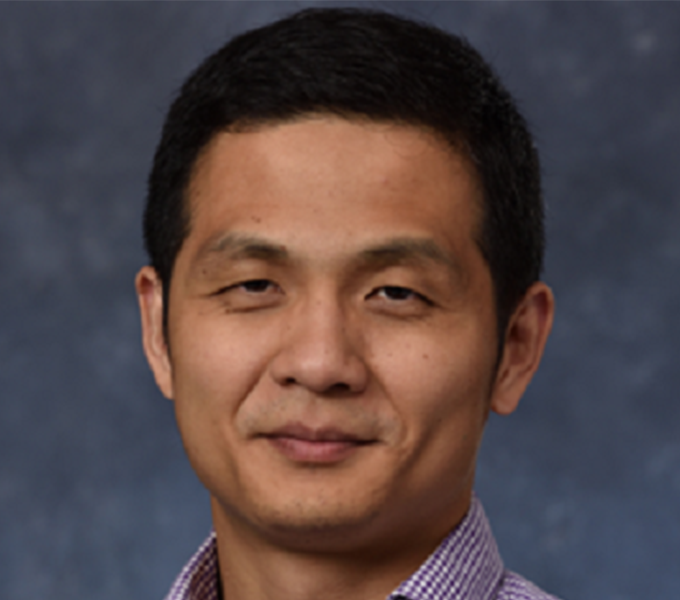
Dr. Muhammad Azmi UMER is a Lecturer at DHA Suffa University and a Ph.D. Scholar at Karachi Institute of Economics and Technology, Pakistan. His research focuses on Machine Learning applications in Cyber Physical Systems (CPS), particularly intrusion detection in industrial control systems like the SWaT testbed. He holds a Master’s in Computer Science from Karachi Institute of Economics and Technology and a Bachelor’s from the University of Karachi. His academic work emphasizes cybersecurity challenges in smart grids, IoT healthcare systems, and adversarial machine learning techniques. Key contributions include developing decision tree-based intrusion detection frameworks and adversarial attack simulations for industrial systems. He collaborates with researchers like Dr. Jit BISWAS and Dr. Eyasu G. CHEKOLE within interdisciplinary teams. Publications span machine learning applications in smart cities, CPS security protocols, and IoT conceptual frameworks. His research bridges theoretical models with practical implementations in critical infrastructure security and urban technology systems.
Kaidi Xu is an Assistant Professor in the Department of Computer Science at Drexel University's College of Computing & Informatics. His research focuses on Trustworthy AI, with expertise in formal verification of neural networks, adversarial attacks (especially in the physical world), and certified defenses. He actively publishes in top-tier conferences including NeurIPS, ICML, ICLR, CVPR, and AAAI, and leads the award-winning research team 'alpha-beta-crown'. PhD in Computer Science, Northeastern University (2021) MS in Computer Science, University of Florida (2017) BS in Computer Science, Sichuan University (2015) Dr. Xu's research spans critical areas in AI security and robustness. He investigates formal methods to verify neural network behavior, develops techniques to defend against real-world adversarial manipulations (such as the famous 'Adversarial T-shirt'), and explores model compression and explainability. His work bridges theoretical guarantees with practical applications in healthcare, material science, and autonomous systems. His recent publications reflect a strong trend toward certified robustness, interdisciplinary applications, and formal verification across vision, language, and multimodal systems. He has consistently published at NeurIPS, ICML, CVPR, and ACL, demonstrating sustained impact in both machine learning and computer vision communities. Winner of VNN-COMP'21 with highest score Three-time VNN-COMP champion (2021–2023) with team alpha-beta-crown Faculty Research Excellence Award, CCI@Drexel (2024) Recipient of multiple Carleone Faculty Awards (2025) NSF grant recipient for projects on transit systems and material synthesis Dr. Xu advises PhD students, including Jinhao, and has secured significant external and internal funding, including multiple NSF grants and Drexel internal awards. He is actively recruiting motivated students with strong machine learning backgrounds. He also contributes to the academic community as an Area Chair for NeurIPS 2025, organizer of workshops like GenAI4Health@AAAI 2025, and frequent program committee member. He leads the 'alpha-beta-crown' research team, known for its leadership in neural network verification and repeated success in the VNN-COMP competitions. The team focuses on developing scalable, sound, and complete verification tools for deep learning models, pushing the frontier of AI safety and reliability.
Dr hab. Krzysztof Węcel serves as Professor and current Head of the Department of Economic Informatics at Poznan University of Economics and Business (UEP), appointed on October 4, 2024. His primary affiliation spans over 25 years with UEP's Department of Economic Informatics, which maintains one of Poland's longest-running academic websites since 1998. He holds dual recognition through habilitation from University of Potsdam (2020) and professorship conferred by UEP (June 24, 2020). His academic milestones: Habilitation degree in Economic Informatics, University of Potsdam (2020) Professor title, Poznan University of Economics and Business (2020) Węcel's research centers on Semantic Technologies and data quality assessment across multilingual Wikipedia, with emphasis on company information verification, citation analysis, and open data applications. His work bridges Big Data analytics with practical business solutions, particularly in maritime logistics where he pioneered evolutionary algorithm-based AIS data processing. Current investigations focus on generative AI's dual role in creating and combating disinformation, including ChatGPT's impact on academic writing and fake news propagation. Recent publications (2022-2025) reveal three dominant trends: First, systematic analysis of Wikipedia's reliability across languages during crises like the pandemic and Ukraine war. Second, development of AI-driven fact-checking frameworks (e.g., OpenFact project's CLEF 2023 victory). Third, exploration of generative AI's societal impact ranging from student creativity to disinformation campaigns. Scientific awards received: Best Paper Award at ICIST 2017 Conference Award for most innovative article at NATCON 2018 conference Microsoft Azure for Research Award (2016) As academic advisor, he leads the 'Semantic Technologies' diploma seminar attracting high-achieving students, with participants winning the 29th UEP Foundation Competition (2025) and Eurostat's Web Intelligence Challenge (2024). His grant portfolio includes the 'Maritime Big Brother' project (2017) for ship voyage prediction using AIS data and Microsoft Azure funding for Wikipedia quality enhancement. Ongoing initiatives include OpenFact (fake news detection) and GOBLIN projects. He actively collaborates with SKN Data Science student circle (evidenced by 2024/2025 inaugural meeting) and international consortia like CLEF and QOD workshops. Departmental leadership involves managing the OpenFact research team that achieved top results in CheckThat! Lab competitions, alongside maritime data analytics groups applying evolutionary algorithms to shipping networks.
Prof. Ahmed Al-Dubai is a Professor at the School of Computing, Engineering and the Built Environment, Edinburgh Napier University, where he leads the IoT and Networked Systems Research Group and serves as Cybersecurity and Cyber Physical Systems Research Lead. His interdisciplinary research spans Multi-access Edge Computing, High-Performance Networks, Cognitive IoT Systems, VANETs, AI, E-Health, Smart Cities, and Security . He earned his PhD in Computing Science from the University of Glasgow in 2004. His recent publications focus on edge computing architectures, digital twin security, Arabic NLP, wireless energy harvesting, and vehicular communication . His work has been recognized with IEEE Outstanding Service Award, Best Paper Awards at IEEE IUCC 2015 and ACM MoMM 2013 , and fellowships like Senior IEEE Member and British Higher Education Academy Fellow . He supervises 20+ PhD students and has served on 60+ IEEE/ACM conference committees. Current projects include AI-driven fish identification (Innovate UK £265K) , secure IoT protocols (Royal Society £12K) , and COG-MHEAR (EPSRC £3.26M) . He has held visiting professorships at Universite de Valenciennes, University of Sydney, and University of Shenyang.
Abhik Roychoudhury is a Provost's Chair Professor of Computer Science at the National University of Singapore (NUS), leading the Trustworthy and Secure Software (TSS) research group since 2001. His work focuses on automated program repair, software testing, security, and agentic AI. He is a Senior Advisor at SonarSource following the acquisition of his startup AutoCodeRover. He holds an ACM Fellowship and has received the ICSE Most Influential Paper Award for program repair research. Education: M.S. and Ph.D. in Computer Science from State University of New York at Stony Brook (1997-2000). Research interests include program analysis, software security, and AI-driven software engineering. His team has pioneered techniques like SemFix and Angelix for program repair, and AFLNet for protocol fuzzing. He has served as editor-in-chief of ACM TOSEM and conference chair for ICSE and FSE. Awards include the NUS Outstanding Graduate Mentor Award (inaugural recipient) and IEEE New Directions Award. His work bridges academia and industry, with contributions to projects like the DesCartes initiative for critical urban systems. Key collaborations include Microsoft on API repair and IBM on AI research centers. His recent focus includes agentic AI for software engineering, reflected in AutoCodeRover's acquisition by SonarSource.
David Opderbeck is a Professor of Law and Co-Director of the Gibbons Institute of Law, Science & Technology and Institute for Privacy Protection at Seton Hall University School of Law. His expertise spans artificial intelligence compliance, cybersecurity, data privacy, intellectual property law, and the intersection of law with theology and neuroscience. He teaches courses such as Cybersecurity Law and Policy, AI and the Law, and leads the Data Privacy and Security Compliance Program. Additionally, he holds affiliations with Seton Hall's Department of Religion and is a Faculty Associate at Harvard's Berkman-Klein Center for Internet & Society. Education: JD from Seton Hall University School of Law; LLM from NYU Law School; PhD and MA in Systematic and Philosophical Theology from the University of Nottingham and Fuller Theological Seminary. Research focuses on AI ethics, cybersecurity policy, and theological dimensions of law. Notable works include Law and Theology: Classic Questions and Contemporary Perspectives (2019), The End of the Law? Law, Theology, and Neuroscience (2021), and the upcoming Faithful Exchange: The Economy as It's Meant to Be (2025). His recent articles address AI training data rights, regulatory frameworks for biotech innovation, and encryption policy dilemmas. Service roles include Co-Director of the Gibbons Institute since 2003 and arbitrator for the American Arbitration Association in tech-related disputes. His work bridges legal scholarship with practical policy solutions for emerging technologies.
Paul R. Genssler is a Dr.-Ing. researcher at the Chair of AI Processor Design (AI-Pro) within the Technical University of Munich (TUM), actively advancing hardware solutions for artificial intelligence under Prof. Hussam Amrouch. His work bridges computer engineering and emerging technologies, focusing on overcoming fundamental limitations in conventional computing architectures through brain-inspired paradigms. His research spans critical domains in next-generation computing: Hyperdimensional Computing for robust pattern recognition and bioinformatics applications Neuromorphic and In-Memory Computing architectures for energy efficiency Reliability engineering for emerging memory technologies (FeFET, etc.) Quantum computing support systems including cryogenic embedded electronics Machine learning-driven transistor aging prediction and mitigation Analysis of his 15 most recent publications (2023-2024) reveals a dominant trend toward hyperdimensional computing as a unifying framework for addressing reliability challenges in emerging technologies. His work consistently integrates in-memory computing techniques to bypass von Neumann bottlenecks while targeting real-world applications like genome matching and unsupervised learning. A significant portion focuses on error-resilient implementations for unreliable nanoscale devices, demonstrating exceptional cross-stack expertise from transistor physics to algorithm design. As a core member of TUM's AI Processor Design group affiliated with the Munich Institute of Robotics and Machine Intelligence (MIRMI), Genssler collaborates extensively on projects spanning cryogenic quantum control systems, FPGA-based AI resilience, and monolithic 3D integration. The team operates at the intersection of semiconductor physics, computer architecture, and machine learning, with strong industry connections evident through publications at DATE, ASP-DAC, and ICCAD.
Dr. Marc Schmitt serves as a Research Associate in the Department of Computer Science at the University of Oxford while concurrently leading as Managing Director of the DEIM Research Institute in Germany. His interdisciplinary work bridges academic research and industry applications across artificial intelligence, cybersecurity, and financial systems. Academic Background: PhD in Computer and Information Sciences (AI in Finance), University of Strathclyde MSc in Quantitative Finance, University of Strathclyde MSc in Software Engineering, University of Oxford BA in Business Administration, Technische Hochschule Nürnberg Georg Simon Ohm Dr. Schmitt's research focuses on AI-driven decision-making at the intersection of finance, business analytics, and cybersecurity. His work examines how intelligent systems integrate into organizational structures while addressing systemic risks in digital ecosystems. Recent investigations include generative AI threats in social engineering, no-code AutoML applications, and policy frameworks for AI-enhanced security systems. His publications demonstrate consistent methodological innovation across theoretical and applied domains. Analysis of his publication trajectory reveals growing emphasis on generative AI security implications (2024-2025), with foundational work in business analytics applications (2023). The research shows strong interdisciplinary connections between computer science, financial economics, and human-centered design principles, reflecting his unique background spanning technical and business domains. Prior to academia, Dr. Schmitt held strategic positions including Senior IT Partner for Equity Finance at Siemens Financial Services and management consulting roles at d-fine and Deloitte, where he advised Fortune 500 companies on digital transformation and risk management. His industry experience directly informs his research approach, emphasizing practical implementation challenges alongside theoretical innovation.
Yan Huang is an Associate Professor in the Department of Software Engineering and Game Development at Kennesaw State University (KSU). His work bridges Federated Learning (FL) and Cybersecurity Education , with a focus on personalization and privacy in distributed systems. Research spans Machine Learning , Extended Reality (XR) , and Data Privacy . He has served as Editor of WCMC and Program Co-Chair for CyberSciTech 2020-2024. Research Trends: Recent publications emphasize Federated Learning for non-IID data, VR-based Cybersecurity Education , and Privacy-Preserving Algorithms in IoT and social media analytics. Key subfields include personalized learning architectures, graph learning, and game-theoretic privacy frameworks. Scientific Awards: Excellent Paper Award (Tsinghua Science and Technology, 2021) Best Paper Award (Future Generation Computer Systems, 2019) Best Paper Awards at IEEE SmartWorld 2021, COCOA 2019, and WASA 2019 Grants: Led over $600,000 in NSF and NSA-funded projects, including VR cybersecurity education for K-12 and XR engineering curricula. His lab recruits VR/AR Research Assistants via industry partnerships.
Abhinav Dhall is an Associate Professor in the Department of Data Science & AI at Monash University. His research focuses on computer vision, affective computing, and human-centered AI, with a particular emphasis on deepfake detection, multimodal analysis, and ethical AI applications. He is actively involved in organizing workshops like the Multimodal and Responsible Affective Computing (MRAC) and chairs conferences such as ACCV. Dhall accepts PhD students and has contributed significantly to datasets like AV-Deepfake1M and EmotiW challenges. His work spans topics including HDR imaging, facial expression recognition, and AI ethics in multimedia systems.
Tommy Löfstedt is an Associate Professor at Umeå University , affiliated with the Department of Computing Science and the Department of Mathematics and Mathematical Statistics. His research focuses on machine learning , computer vision , and medical image analysis , with applications in life sciences, radiation therapy, and biomedical imaging. He leads multiple research projects, including AI-driven delineation in radiation therapy, quantitative MRI for radiotherapy, and machine learning for plant nutrient uptake. Current research emphasizes structured regularization methods to improve model interpretability and robustness. Key applications include medical image segmentation , Alzheimer's classification , and uncertainty estimation in MRI . Recent publications highlight his work on morphological regularization , adversarial attack mitigation , and multi-task learning in medical imaging contexts. His projects span 2022–2026 with funding for pediatric oncology automation and gynecological cancer staging. Affiliated with both computing and mathematical departments, he bridges algorithm development with applied mathematical frameworks in medical and life science domains.
Tasos Dagiuklas is a Professor in the Department of Computer Science and Technology within the School of Engineering and Technology at the University of Bedfordshire. With over 168 publications spanning from 1995 to 2025, he has established himself as a leading researcher in telecommunications and network systems. His extensive publication record demonstrates continuous scholarly contribution across multiple decades in the field. Professor Dagiuklas' research focuses on wireless communications, edge computing, 5G/6G networks, quality of experience (QoE), and federated learning . His work bridges theoretical networking concepts with practical applications, particularly in multimedia delivery and security. He has developed significant expertise in video streaming optimization, network security mechanisms, and resource management in emerging network architectures. His research consistently addresses the evolving challenges of modern communication systems, with recent work increasingly focusing on AI integration in networking. Analysis of his recent publications (2023-2025) reveals a strong trend toward edge computing, federated learning, and security applications in next-generation networks. His work demonstrates a strategic shift from traditional networking concerns to more complex systems involving AI integration, energy efficiency, and heterogeneous environments. The publications show consistent collaboration with researchers across multiple institutions, with particularly strong partnerships with Muddesar Iqbal, Ilias Politis, and Stavros Kotsopoulos. Professor Dagiuklas has made substantial contributions to the academic community through his extensive publication record in high-impact venues including IEEE journals and conferences. His work has evolved from foundational networking research to cutting-edge investigations of AI-enhanced communication systems, reflecting the broader trajectory of the field itself. His research demonstrates both technical depth in specific networking challenges and breadth across multiple application domains.
Dr. Andrzej Ożadowicz is a University Professor at the Department of Power Electronics and Automation of Energy Conversion Systems within the Faculty of Electrical Engineering, Automatics, Computer Science and Biomedical Engineering at AGH University of Science and Technology in Kraków, Poland. His office is located in room 510, building C-1, with contact details including phone +48 12 617 50 11 and email ozadow@agh.edu.pl. He holds PhD, DSc, and Engineering degrees, reflecting his dual expertise in academic research and practical engineering applications. His research spans Power Electronics, Building Automation, Smart Grids, and IoT-driven energy systems. Key interests include energy efficiency optimization through digital twins and BIM, distributed energy resource integration , and AI-enhanced demand management . Notably, he pioneers applications of deep reinforcement learning in home energy systems and develops frameworks for Smart Readiness Indicator implementation. His work bridges theoretical innovation with practical case studies in building thermal modeling and dynamic façade systems. Recent publications (2021-2025) reveal three dominant trends: (1) Convergence of digital twin technology with building automation for real-time energy management; (2) Critical analysis of IoT security and interoperability in smart infrastructure; (3) Pedagogical innovations in engineering education through blended learning methodologies post-COVID-19. His scholarly output demonstrates consistent focus on energy transition challenges and smart grid evolution. Professor Ożadowicz actively contributes to the Discipline Council for Automation, Electronics, Electrical Engineering and Space Technologies at AGH. He is instrumental in the AutBudNet initiative —a network of certified laboratories for energy efficiency assessment that implements "learning by doing" principles in building automation education. His work with this consortium emphasizes practical validation of smart grid technologies and demand response systems.
Bo An is a President's Chair Professor and Head of the Division of Artificial Intelligence at the College of Computing and Data Science , Nanyang Technological University, Singapore . He also holds a courtesy appointment as Professor at the School of Physical & Mathematical Sciences and serves as Director of the Centre of AI-for-X. Previously, he was a Nanyang Assistant Professor (2014-2018), Associate Professor at the Chinese Academy of Sciences (2012-2013), and Postdoctoral Researcher at the University of Southern California (2010-2012). His academic journey began with B.Sc. and M.Sc. degrees from Chongqing University, followed by a Ph.D. in Computer Science from the University of Massachusetts, Amherst (advised by Victor Lesser). Research Interests : Artificial Intelligence Multiagent Systems Computational Game Theory Reinforcement Learning Automated Negotiation Optimization Research Impact : Applications in infrastructure security (deployed by US Coast Guard and Federal Air Marshals), e-commerce, sensor networks, and financial technology. Over 150 publications in top venues like AAMAS, IJCAI, AAAI, ICML, NeurIPS, KDD, and ACM/IEEE Transactions. Scientific Recognition : 2010 IFAAMAS Victor Lesser Distinguished Dissertation Award 2012 INFORMS Wagner Prize 2018 & 2022 Nanyang Research Awards 2017 Microsoft Collaborative AI Challenge IEEE Intelligent Systems 'AI's 10 to Watch' (2018) Leadership Roles : Editor-in-Chief of IEEE Intelligent Systems, Associate Editor for AIJ, JAAMAS, and ACM Transactions. Served as General Co-Chair for AAMAS'23 and Program Chair for IJCAI'27.
Wei Gao is an Associate Professor at the Swanson School of Engineering, University of Pittsburgh. His research focuses on the design, deployment, analysis and measurement of on-device AI architectures and algorithms on mobile, embedded and networked systems. He has strong interests in unveiling analytical principles underneath practical AI deployment problems, and designing systems based on these principles. The developed AI and system solutions are widely applied to various application scenarios, including Internet of Things, edge computing and smart health. Dr. Gao received his PhD from Pennsylvania State University in 2012 and his B.E. from the University of Science and Technology of China in 2005. Dr. Gao's research spans across Cyber-Physical Systems , Infrastructure Security , High Performance Computing , and the Distributed Governance of Information . His work particularly emphasizes on-device AI architectures and algorithms for mobile and embedded systems. He explores how to deploy AI efficiently on resource-constrained devices, with applications in Internet of Things, edge computing, and smart health. His research aims to bridge theoretical principles with practical system implementations, focusing on creating efficient, secure, and reliable AI solutions for real-world deployment scenarios. His recent work has increasingly focused on bringing Large Language Models to edge devices while maintaining performance and security. Analysis of Dr. Gao's recent publications (2021-2025) reveals a strong focus on on-device AI, particularly around Large Language Models for resource-constrained environments. His work addresses critical challenges including model personalization, security against illegal adaptation, sparse activation techniques, and physics-grounded generation. Much of his research targets making AI more efficient, secure, and practical for deployment on edge devices with limited computational resources, while also exploring applications in health monitoring and power systems. Dr. Gao has received significant recognition for his research, including: NSF Faculty Early Career Development (CAREER) Award (2016) Dr. Gao mentors numerous graduate students who contribute to his research in mobile computing, embedded systems, and on-device AI. His research has been supported by various grants, most notably the NSF CAREER award, enabling his team to explore innovative approaches to mobile and embedded AI systems. His lab investigates how to optimize AI for resource-constrained environments while maintaining performance and security, with particular focus on balancing computational efficiency with model accuracy. Dr. Gao leads a research group focused on mobile and embedded AI systems, with particular emphasis on making AI practical for deployment on everyday devices. His team explores novel techniques for model compression, efficient inference, and secure deployment of AI models on edge devices, with applications ranging from health monitoring to smart infrastructure.