Michalis Vazirgiannis is a Professor at LIX, École Polytechnique (France) leading the Data Science and Mining (DaSciM) group. With academic backgrounds in Physics (Athens University), AI (Heriot-Watt University), and Informatics (Athens University), he has conducted research at Fraunhofer, Max Planck MPI, and INRIA/FUTURS while teaching at institutions across Greece, France, China, and Spain. His research spans Machine/Deep Learning for Graphs (GNNs, graph kernels, embeddings) Text Mining & NLP (Graph-of-Words, biomedical text analysis) Combinatorial Optimization for pandemic forecasting and energy systems Event/Anomaly Detection in time series and sensory data Industrial collaborations with Airbus, Google, Tencent, and BNP . He has supervised 29 completed PhD theses, published over 250 papers, and received prestigious awards including Marie Curie and Tencent Rhino-Bird Fellowships. His team leads the ANR-HELAS Chair (2020-2025) focusing on heterogeneous data deep learning.
Daniele Ielmini is a Professor at the Department of Electronics, Information and Bioengineering at Politecnico di Milano, Italy, where he leads research in non-volatile memory technologies and neuromorphic computing. He received his Laurea (with merit) and Ph.D. in Nuclear Engineering from Politecnico di Milano in 1995 and 2000, respectively, and has held visiting positions at Intel Corporation (2006), Stanford University (2006), and the University of Illinois at Urbana-Champaign (2010). His research focuses on the modeling and characterization of non-volatile memories, including nanocrystal memory, charge trap memory, phase change memory (PCM), resistive switching memory (RRAM), and spin-transfer torque magnetic memory (STT-MRAM). He has co-edited the book 'Resistive switching – from fundamental redox-processes to device applications' and published over 300 papers with more than 10,000 citations and an H-index of 69 (Scopus, September 2023). Prof. Ielmini's recent publications demonstrate a strong trend toward in-memory computing and neuromorphic applications, with particular emphasis on closed-loop analog computing architectures, reservoir computing with 2D materials, and hardware security implementations using emerging memory technologies. His work bridges fundamental device physics with practical computing applications, especially for energy-efficient AI acceleration. Intel Outstanding Researcher Award (2013) ERC Consolidator Grant (2014) IEEE-EDS Paul Rappaport Award (2015) Fellow of the IEEE Prof. Ielmini leads multiple ERC-funded projects including SHANNON (Secure Hardware with Advanced Nonvolatile memories), NEURO2D (neuromorphic systems based on reservoir computing in MoS2), and ANIMATE (closed-loop in-memory computing). His research group includes post-doctoral researchers, PhD students, and M.Sc. students working on various aspects of emerging memory technologies and their applications. He serves as Associate Editor for IEEE Trans. Nanotechnology and Semiconductor Science and Technology (IOP), and has served in several Technical Subcommittees of international conferences including IEEE-IEDM, IEEE-IRPS, and IEEE-ISCAS. His laboratory at Politecnico di Milano is equipped with advanced semiconductor device testing equipment including probe-stations, semiconductor parameter analyzers, high-speed waveform generators, and other specialized instruments for nano-electronic research. The lab collaborates with major semiconductor companies including Micron Technology Inc. and STMicroelectronics, as well as participating in national and international research projects.
Carlos Fernandez-Granda is an Associate Professor of Mathematics and Data Science at New York University, holding joint appointments at the Courant Institute of Mathematical Science and the Center for Data Science. He currently serves as the Interim Director of the Center for Data Science. His academic career spans over a decade at NYU, where he has taught probability and statistics to data-science students. Dr. Fernandez-Granda's research focuses on designing and analyzing data-science methodology, with current emphasis on machine learning applications in medicine, climate science, and scientific imaging. His work bridges theoretical foundations with practical applications across multiple domains. His notable contributions include: Development of the COBRA (COnfidence-Based chaRacterization of Anomalies) score for automatic assessment of impairment and disease severity Applications of machine learning to improve climate projections through the M2LInES project Research on magnetic resonance fingerprinting for quantitative tissue parameter estimation Development of AI systems for medical diagnostics including Alzheimer's detection and breast cancer diagnosis Dr. Fernandez-Granda is the author of the book "Probability and Statistics for Data Science," published by Cambridge University Press. The book serves as a comprehensive guide to the two pillars of data science, featuring real-world datasets and addressing fundamental challenges like overfitting, the curse of dimensionality, and causal inference. His research has been supported by grants from the National Science Foundation (Division of Mathematical Sciences, grants 1616340 and 2009752) and the Alzheimer's Association (grant AARG-NTF-21-848627). Dr. Fernandez-Granda is actively involved in several collaborative projects: M2LInES project: An international collaboration focused on improving climate projections using machine learning to capture unaccounted physical processes at the air-sea-ice interface Math and Data group: Exploring the intersection of mathematical theory and data science applications
Daniel Kifer is a Professor in the Computer Science and Engineering department at Pennsylvania State University, with affiliations to the Huck Institutes of the Life Sciences. His work bridges computer science, privacy-preserving machine learning, and geoscience applications. With over 10,000 citations and a high h-index, he focuses on methods to unify theoretical and applied research. Research Interests: Differential Privacy, Privacy-Preserving Machine Learning, Physics-Informed Neural Networks, Landslide Prediction, and Formal Verification of Privacy Systems. Recent projects include grants from the National Science Foundation: SaTC: CORE: Small (2024): privacy-preserving user data embedding in machine learning pipelines. SaTC: CORE: Medium (2017-2023): formal methods for differential privacy and accuracy optimization. His research outputs span domains like geoscience, database systems, and policy analysis, emphasizing precision and scalability of privacy-preserving algorithms.
John Psarras is a Professor at the National Technical University of Athens (NTUA) in the School of Electrical and Computer Engineering, specifically within the Division of Industrial Electric Devices and Decision Systems. He serves as the Director of the Decision Support Systems Laboratory (DSSlab) and the University Research Institute of Communication and Computer Systems. He holds a Diploma in Mechanical Engineering (1982) and a Ph.D. in Electrical and Computer Engineering (1989), both from NTUA. His research specializes in decision support systems with applications in energy management, environmental analysis, and information systems. Key areas include: Multi-criteria analysis for energy policy and renewable integration AI-driven optimization of smart grids and building efficiency Sustainable finance mechanisms for green projects Blockchain applications in education and data security His recent publications (2023–2025) demonstrate a strong focus on AI-enhanced decision tools for energy transitions, smart infrastructure, healthcare diagnostics, and cross-border renewable cooperation, reflecting interdisciplinary innovation. He has supervised 22 PhD theses and coordinates EU-funded projects in energy policy, clean technology, and capacity building. No scientific awards are listed in available sources. He leads the Decision Support Systems Laboratory (DSSlab), advancing research in energy analytics, and directs the University Research Institute of Communication and Computer Systems, facilitating large-scale interdisciplinary collaborations.
Dr. Gabriella Pizzuto is a Lecturer in Robotics and Chemistry Automation at the University of Liverpool's Faculty of Science and Engineering, jointly appointed in the Departments of Computer Science and Chemistry. She leads the Pizzuto Group and joined the university in 2021 after completing her PhD at the University of Manchester. Born in Malta, she obtained her undergraduate degree from the University of Malta. Her research focuses on intelligent robotic systems for laboratory automation, specializing in: Contact-based robot skill learning for chemistry labs Failure recovery methods in experimental environments Safe human-robot collaboration frameworks Physics-constrained machine learning Machine vision for laboratory workflows Her work aims to develop robotic scientists that accelerate material discovery through autonomous experimentation. Publication analysis reveals strong emphasis on robotic manipulation (70%), laboratory automation (60%), and machine learning applications (40%), with recent work showing increased focus on multi-modal sensing and physics-informed learning. Her most frequent collaborators include Prof. Andy Cooper and Prof. Michael Mistry. Awards and Fellowships: Royal Academy of Engineering Research Fellowship (2023-2028) Marie Skłodowska-Curie Doctoral Scholarship EPSRC New Investigator Award (2025) Advising and Grants: Currently supervising 4 PhD students and 2 postdoctoral researchers Principal Investigator: £1.2M RAEng Fellowship for 'Upskilling Robotic Scientists' Co-Investigator: £12M EPSRC AI for Chemistry Hub (AIChemy) Lead Researcher: €8M ERC Synergy ADAM project Recipient of Google DeepMind Research Ready Grant (2024) Leads the Autonomous Robotic Chemistry Lab at Liverpool's Leverhulme Research Centre for Functional Materials. Her group combines expertise in robotics, computer science, chemistry, and engineering to develop next-generation robotic scientists.
Dr. Benjamin Busam is a Senior Research Scientist at the Technical University of Munich , affiliated with the Chair for Computer Science Applications in Medicine under Prof. Nassir Navab. Starting September 2025, he will hold the Professorship for Photogrammetry and Remote Sensing at TUM. His career includes leadership roles at FRAMOS Imaging Systems and Huawei Research in London. Education: Mathematics (TUM), Mathematics and Physics (ParisTech, University of Melbourne), PhD in Mathematics (TUM, 2014) His research focuses on 3D computer vision , multi-modal sensor fusion , and their applications in collaborative robotics and augmented reality . He specializes in projective geometry , 6D pose estimation , and neural radiance fields , with a particular emphasis on photometrically challenging environments. Recent publications highlight advancements in 3D scene understanding , neural rendering , and medical imaging , often leveraging machine learning and vision-language models . His work has been recognized through awards like the EMVA Young Professional Award (2015) and Innovation Pioneer of the Year (2019) , along with multiple Outstanding Reviewer distinctions at leading conferences. Dr. Busam has supervised numerous PhD and MSc students on topics including 6D pose estimation , medical augmented reality , and robotic ultrasound , collaborating with institutions like MIT , École Polytechnique , and University of Padova .
Taylor Sparks is a Professor of Materials Science and Engineering at the University of Utah, where he also serves as Director of Graduate Affairs for the John and Marcia Price College of Engineering. He holds a PhD in Applied Physics from Harvard University, an MS in Materials from the University of California, Santa Barbara, and a BS in Materials Science & Engineering from the University of Utah. His research focuses on advancing materials discovery using machine learning to streamline and optimize material design, with applications in energy materials, dental materials, and sustainable engineering. His work integrates big data and materials informatics to explore new synthetic techniques, structure-property relationships, and sustainable materials that balance performance with economic factors. The Sparks Research Group has secured funding from agencies including DOE, NSF, DOD, and various industry partners. Sparks' recent research output demonstrates a strong trend toward leveraging artificial intelligence and machine learning to accelerate materials discovery, with particular emphasis on large language models for materials science, Bayesian optimization for experimental design, and novel approaches to crystal structure prediction. His work bridges the gap between theoretical predictions and experimental validation in materials science. NSF CAREER Award Royal Society Wolfson Visiting Fellow Acta Materialia Outstanding Reviewer Award for 2020 Honorary Outstanding Faculty Teaching Award of 2020-2021 Materials Science & Engineering Department Research Award for 2023 John G. Francis Prize for Undergraduate Student Mentoring Sparks has advised numerous graduate students who have gone on to successful careers in academia and industry. His research has been supported by significant grants from NSF, DOE, DOD, Army Research Office, and industry partners. His group has developed innovative tools including the Materialism Podcast, a materials science YouTube channel, and the Honegumi interface for Bayesian optimization, demonstrating his commitment to both research excellence and science communication. The Sparks Research Group operates multiple laboratories focused on materials characterization, synthesis, and informatics. They collaborate extensively with other institutions globally, host visiting researchers, and run outreach initiatives including the Materialism Podcast and YouTube channel to make materials science more accessible to broader audiences.
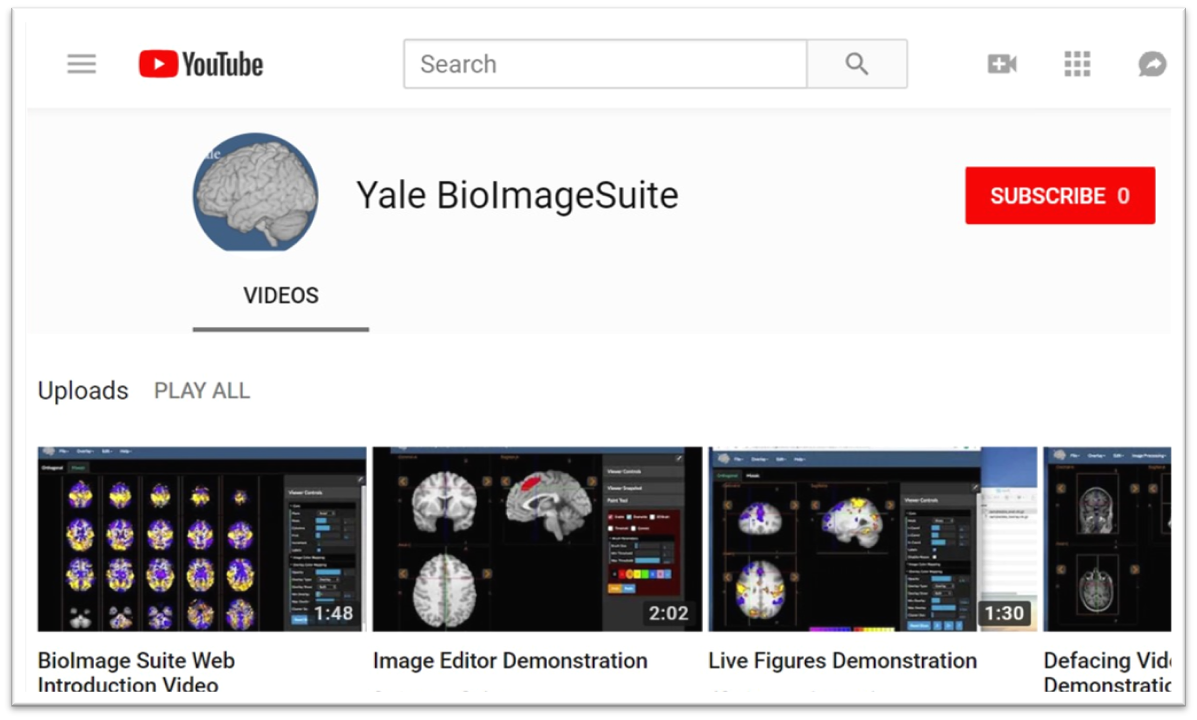
Xenophon Papademetris is a Professor of Biomedical Informatics & Data Science and Radiology & Biomedical Imaging at Yale School of Medicine. He serves as Associate Director of Biomedical Imaging Data Sciences at Yale Biomedical Imaging Institute and directs the Medical Software and Medical Artificial Intelligence Certificate Program. PhD in Electrical and Information Sciences from Yale University (2000) BA from Cambridge University (1994) Postdoctoral Fellowship at Yale University (2002) His research focuses on medical image analysis, machine learning, and biomedical software development. He has developed tools like BioImage Suite Web and contributed to standards committees at the Association for the Advancement of Medical Instrumentation (AAMI). His work spans modalities including MRI, CT, PET, and optical imaging. Recent publications emphasize neuroimaging analysis, explainable AI in healthcare, and multimodal data integration across species. He leads NIH-funded research under the BRAIN Initiative (R24 MH114805) and has authored a textbook on Medical Software published by Cambridge University Press. IEEE Senior Member Yale Brown-Coxe Postdoctoral Fellowship Harding Bliss Prize for Excellence in Engineering He directs the BioImage Suite Project, creating web-based image analysis tools using JavaScript and WebAssembly. His teaching includes both academic courses and a Coursera program on Medical Software with over 14,000 enrollments.
Jun-Yan Zhu is an Assistant Professor at Carnegie Mellon University's School of Computer Science, affiliated with the Robotics Institute and Computer Science Department. His research focuses on generative models, computer vision, and graphics. He holds a B.E. from Tsinghua University and a Ph.D. from UC Berkeley, with postdoctoral work at MIT CSAIL. Zhu leads the Generative Intelligence Lab, exploring human-creator collaboration with generative models. Affiliations: Robotics Institute, CMU Graphics Lab, CMU Computer Vision Group Education: B.E. (Tsinghua), Ph.D. (UC Berkeley) Research Interests: Generative AI, image/video synthesis, neural rendering, tactile sensing integration Notable contributions include CycleGAN, pix2pix, and GAN compression techniques. His work has been commercialized in Adobe's Firefly and NVIDIA's Canvas tools. Awards: ACM SIGGRAPH Dissertation Award, David J. Sakrison Prize, CVPR Best Paper Finalist Lab Members: 10+ PhD students and researchers Current projects include LEGO design synthesis, tactile-driven 3D generation, and generative model personalization.
Dr. John Reynolds is a Professor of Chemistry and Biochemistry at the Georgia Institute of Technology with a 40-year legacy in polymer chemistry. He serves as founding Director of the Georgia Tech Polymer Network (GTPN) and a member of the Center for Organic Photonics and Electronics (COPE). Research spans conjugated polymers, electrochromism, organic LEDs, photovoltaics, and bioelectronics Expert in optoelectronic and redox properties of electroactive materials Co-editor of the Handbook of Conducting Polymers His group has published over 450 peer-reviewed papers and holds ~45 issued patents. Recent research focuses on: Advanced electrochromic materials for visible and infrared applications Next-generation organic solar cells with green processing techniques Supercapacitor and electrochemical transistor materials Space exploration polymer applications Scientific recognition includes: ACS Cope Scholar Award (2020) ACS Florida Award (2019) ACS Applied Polymer Science Award (2012) Fellowships from Royal Society of Chemistry, Materials Research Society, and PMSE (2013) His editorial contributions include serving on boards for multiple prestigious journals including ACS Central Science and Chemistry of Materials . The Reynolds Group actively trains PhD and postdoctoral researchers, with recent members advancing to positions at University of Michigan, ExxonMobil, Northwestern, and Intel.
Laura Toni is an Associate Professor in the Department of Electronic and Electrical Engineering at University College London's Faculty of Engineering Sciences. She serves as the leader of a research team focused on advanced signal processing and machine learning applications, documented at https://lasp-ucl.github.io . Additionally, she holds prestigious affiliations as an ELLIS (European Laboratory for Learning and Intelligent Systems) Member and Turing Fellow Alumni. PhD in Electrical Engineering, University of Bologna (2009) MS in Electrical Engineering, University of Bologna (2005) Professor Toni's research spans theoretical and applied aspects of machine learning with particular emphasis on graph-based approaches. Her work integrates signal processing techniques with modern AI methodologies to address complex problems in communication systems, multimedia processing, and scientific discovery. She has made significant contributions to reinforcement learning theory, graph signal processing, and their applications across diverse domains including drug discovery and immersive technologies. Analysis of her recent publications reveals a strong focus on graph-based machine learning approaches, with increasing emphasis on reinforcement learning applications. Her work demonstrates a progression from theoretical foundations to practical implementations, particularly in multimedia processing, network science, and drug discovery applications. Many of her recent papers combine graph neural networks with diffusion models and reinforcement learning for complex prediction and generation tasks. Professor Toni has received notable recognition through her ELLIS membership and Turing Fellow Alumni status, which represent significant achievements in the European AI research community. ELLIS (European Laboratory for Learning and Intelligent Systems) Member Turing Fellow Alumni As an academic leader, Professor Toni supervises postgraduate students and leads a research team at UCL, focusing on cutting-edge projects at the intersection of signal processing and machine learning. Her team has secured research funding through various channels including European initiatives and industry partnerships, enabling them to pursue ambitious projects in graph learning, reinforcement learning, and multimedia processing. The team actively collaborates with institutions worldwide, including previous connections with UCSD and EPFL. Professor Toni leads the LASP research group at UCL (https://lasp-ucl.github.io), which focuses on Large-scale Adaptive Signal Processing for intelligent systems. The team comprises researchers working on graph signal processing, reinforcement learning, and multimedia applications, with strong connections to both theoretical foundations and practical implementations across various domains including healthcare, communications, and immersive technologies.
Chanchal K. Roy is Professor of Software Engineering/Computer Science at the University of Saskatchewan and Co-Director of the Software Research Lab. He leads an NSERC CREATE graduate program on Software Analytics Research and co-leads the Data Management group for an NSERC CFREF project on Food Security, with over 170 publications cited 6,000+ times. His research centers on software clone detection using the widely adopted NICAD system, software evolution, empirical studies, and AI-driven software analytics. Recent work integrates large language models for code generation, clone detection in the AI era, and developer interactions with tools like ChatGPT, emphasizing practical applications in maintenance and analytics. Analysis of his 15 most recent publications reveals a strong trend toward AI/ML integration in software engineering: 12 of 15 articles (2025) explore LLMs, quantum computing, or deep learning for tasks like bug localization, code snippet generation, and feature-toggle analysis. Key themes include empirical validation of AI tools, Stack Overflow data mining, and cross-domain frameworks for Society 5.0. His scientific awards include: Most Influential Paper Awards (SANER 2018, ICPC 2018) Outstanding Young Computer Science Researcher Award (CS-Can/Info-Can, 2018) New Researcher Award (University of Saskatchewan, 2019) New Scientist Research Award (College of Arts and Science, 2019) As lead of the NSERC CREATE program and CFREF data group, he mentors graduate students in software analytics while securing major grants. He actively serves on program committees for ASE, ICSE, and FSE, reviewing journals and organizing workshops on clone detection and empirical methods. His lab focuses on real-world applications in food security data management and software evolution. The Software Research Lab, co-directed by Roy, drives projects like NICAD and the NSERC CREATE initiative, emphasizing open-source contributions and industry collaboration. Current efforts include quantum-SE integration and AI-augmented maintenance tools under the CFREF food security mandate.
Xia Ben Hu is a Professor in the Department of Computer Science at Rice University's Brown School of Engineering. He leads research in automated and interpretable machine learning algorithms with applications across social informatics, health informatics, and information security. His work has resulted in widely adopted systems including AutoKeras, TODS, and RLCard. Education: PhD from Arizona State University (supervised by Dr. Huan Liu) Master and Bachelor degrees from Beihang University Prof. Hu's research focuses on developing automated and interpretable machine learning algorithms for large-scale, networked, dynamic and sparse data. His work spans automated machine learning (AutoML), deep learning, fairness in AI, time series analysis, and interpretable AI. He has made significant contributions to neural architecture search, collaborative filtering, anomaly detection, and reinforcement learning in imperfect information games. His publication record shows a clear progression from foundational work in network embedding and collaborative filtering (2017) to more recent work on LLM optimization, quantization, and extending context windows (2024). A consistent thread throughout his research is the focus on making complex machine learning systems more accessible, efficient, and interpretable. Selected Awards: ACM SIGKDD Rising Star Award (2021) NSF CAREER Award (2018) Teaching + Research Excellence Award, Rice University (2023) Multiple Best Paper Awards at top venues including ICML, CIKM, and AMIA Prof. Hu has successfully mentored numerous graduate students, with recent graduates securing tenure-track positions at major universities. His research is generously supported by federal agencies including DARPA (XAI, D3M, NGS2), NSF (CAREER, III, SaTC), NIH, and industrial sponsors such as Adobe, Apple, Google, LinkedIn, and JP Morgan. He has served as General Co-Chair for WSDM 2020 and ICHI 2023, and Program Chair for AIHC 2024. He leads the DATA Lab at Rice University, which develops open-source systems for automated machine learning and reinforcement learning. The lab's AutoKeras system has over 8,000 GitHub stars and 1,000 forks, and their work has been integrated into TensorFlow, Apple production systems, and Bing production systems.
Yves-Alexandre de Montjoye is an Associate Professor of Applied Mathematics and Computer Science at Imperial College London, where he leads the Computational Privacy Group. He holds a joint affiliation between the Department of Computing and the Data Science Institute. His roles include serving as a Special Adviser on AI and Data Protection to the EC Justice Commissioner Didier Reynders, a Parliament-appointed Commissioner for the Belgian Data Protection Agency, and a Special Adviser to EC Competition Commissioner Margrethe Vestager, co-authoring the 'Competition Policy for the Digital Era' report. He earned his PhD from MIT in 2015 under Alex 'Sandy' Pentland. His master's degrees include an M.Sc. in Applied Mathematics from UCLouvain, an M.Sc. (Centralien) from École Centrale Paris, and an M.Sc. in Mathematical Engineering from KU Leuven. He also holds a B.Sc. in Engineering from UCLouvain. His research interests focus on computational privacy, anonymization techniques, AI safety, and machine learning attacks. He develops methods to 'red team' AI systems and create privacy-preserving mechanisms. His work addresses vulnerabilities such as membership inference, attribute inference, and re-identification risks in datasets, with applications to location tracking, synthetic data, and LLMs. His articles analyze adversarial attacks against privacy systems, emphasizing robustness and practical guarantees. He advocates for privacy-by-design approaches in big data analytics and has explored ethical AI, competition policy in digital markets, and humanitarian uses of mobile data. While no scientific awards are explicitly listed, his contributions have been widely covered in media. He is currently recruiting motivated PhD students for his group at Imperial College. His advising and grants narrative includes work on privacy-preserving technologies and policy implications of AI, with collaborations across academia and public institutions. He is affiliated with the Computational Privacy Group and contributes to platforms like OPAL for privacy analytics. His office is in the ACE Extension building (ACEX 259), accessible via Exhibition Road.