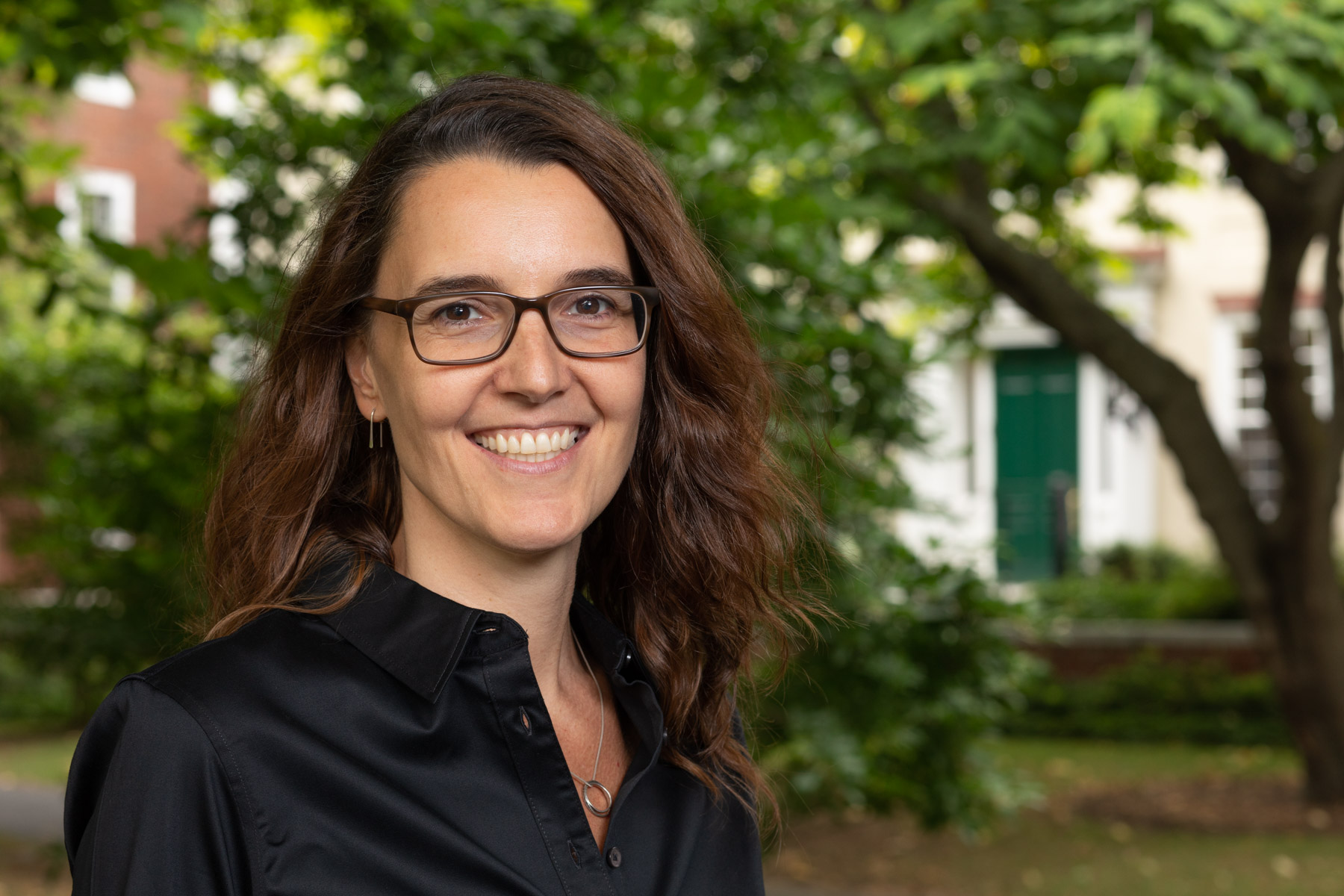
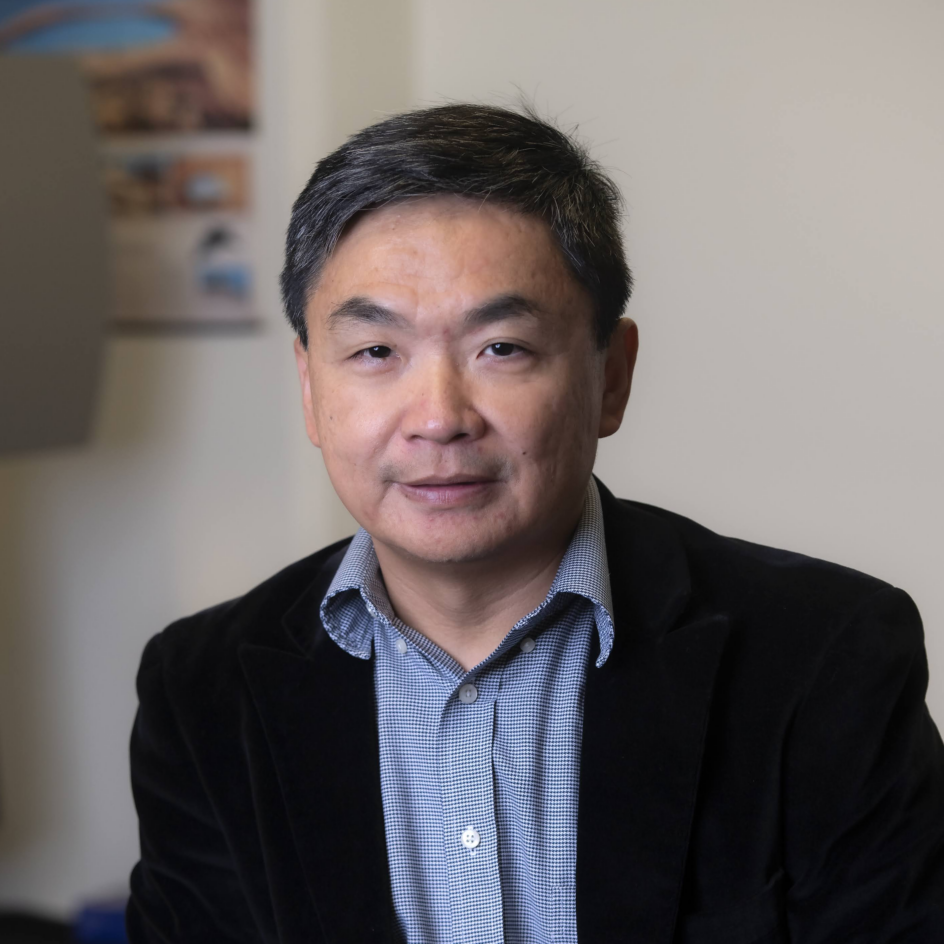
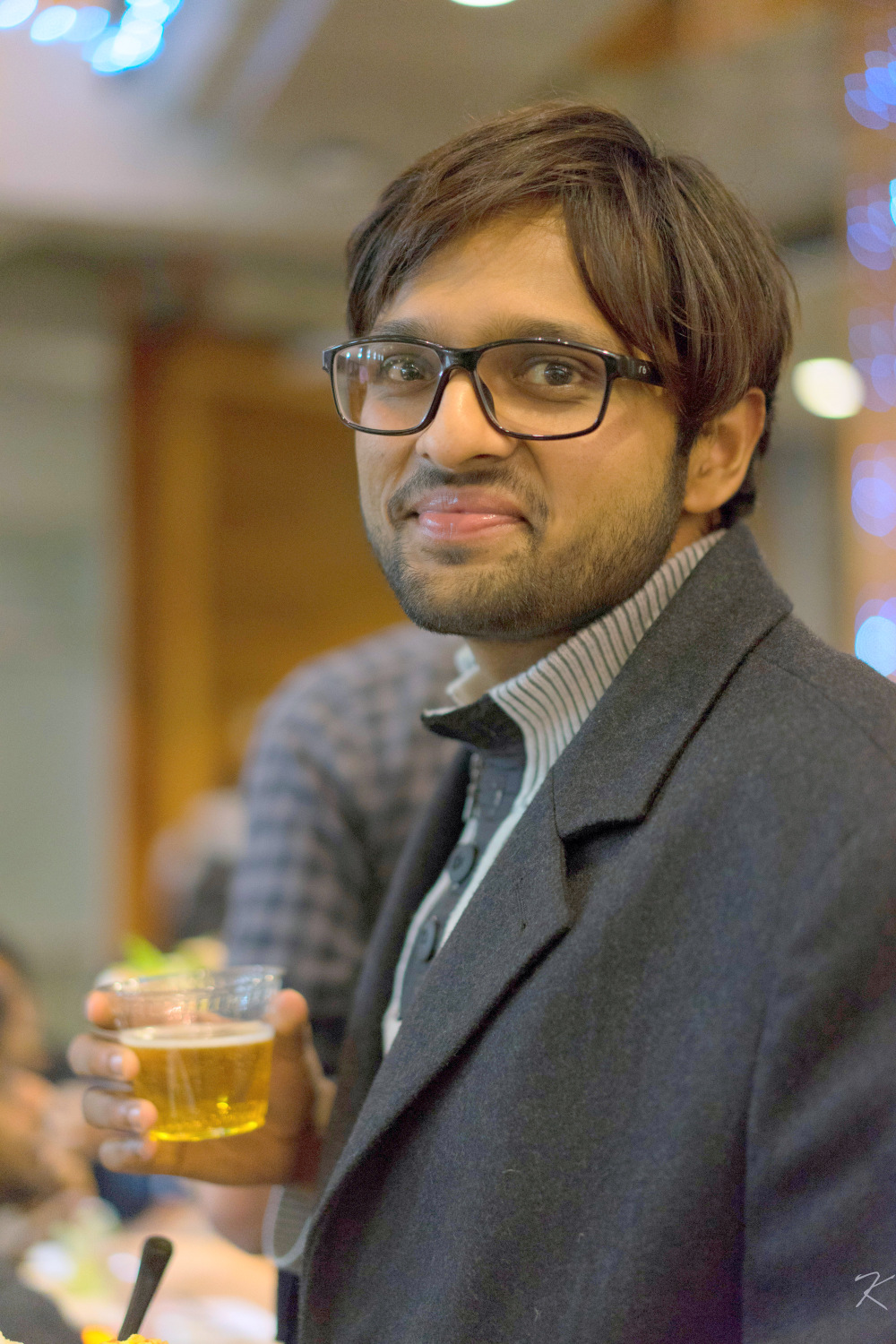
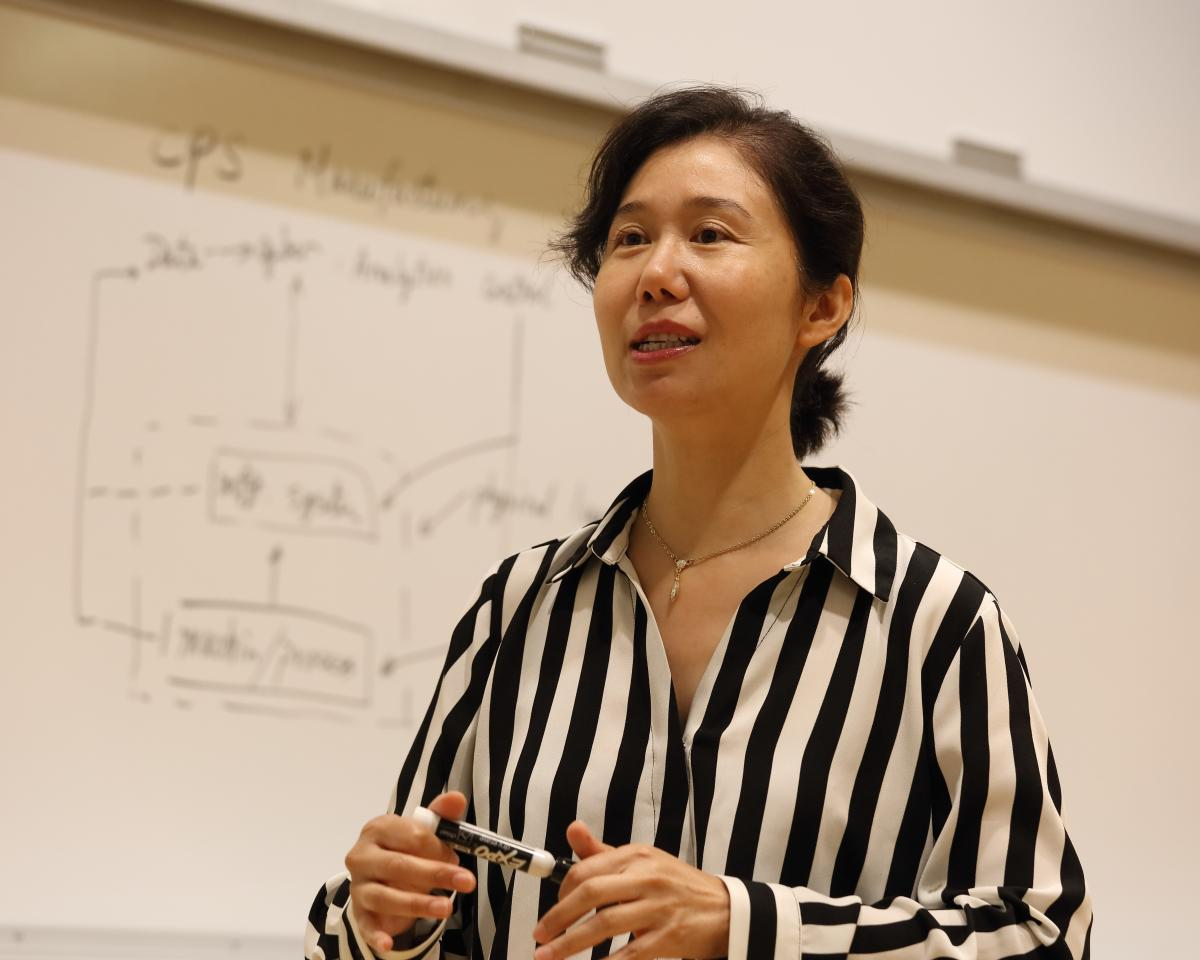
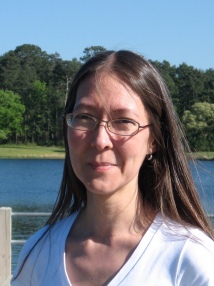
Prof. Harry Hyungryul Baik is a Tenured Associate Professor at KAIST's Department of Mathematical Sciences since 2017. He holds a PhD from Cornell University (2014) and a B.S. from KAIST (2009), advised by William Thurston, John Hubbard, and Dylan Thurston. His research focuses on geometric topology, geometric group theory, and low-dimensional topology, with notable contributions to mapping class groups, Kleinian groups, and Teichmüller theory. Education: PhD in Mathematics (Cornell, 2014), B.S. in Mathematics (KAIST, 2009). Key research areas include asymptotic translation lengths, laminar groups, and circular orders of groups. He co-leads the KAIST-KIAS joint research group 2K-GATE as Director, emphasizing collaboration between topologists. Research highlights: Characterization of Fuchsian groups via laminations, unsmoothability of mapping class group actions on 1-manifolds, and exponential torsion growth in random 3-manifolds. His work bridges topology with dynamical systems and geometric group theory, often involving collaborations with institutions like KIAS and MPIM. Awards include the Sangsan Prize (2018), Young-KAST membership (2020–2023), and multiple grants from Samsung and POSCO. He advises 7 PhD students and has mentored 15+ alumni, many of whom hold postdoc positions globally. His lab actively hosts conferences like the KAIST Geometric Topology Fair. Labs/Teams: Director of 2K-GATE (KAIST-KIAS), core member of the KAIST Topology Research Group, collaborator with international networks including the Harvard-MIT-Princeton topology axis.
Zakia Hammal is an Assistant Research Professor with dual appointments at Carnegie Mellon University, holding positions in the Robotics Institute within the School of Computer Science and the Department of Biomedical Engineering in the College of Engineering. Her work bridges computer science, machine learning, artificial intelligence, and social/behavioral psychology to advance computational models for human behavior analysis. Dr. Hammal's educational background includes a PhD in Computer Science, a Master of Artificial Intelligence and Algorithmic with specialization in Image Processing, and an Engineer's degree in Computer Science with specialization in Computer Systems. Her academic journey has positioned her at the intersection of technical expertise and healthcare applications. Her research focuses on multimodal human behavior modeling in social interaction, with particular emphasis on health informatics and affective computing (Emotion AI). Dr. Hammal's work has pioneered computational models for multimodal assessment of psychiatric disorders, including depression severity evaluation, automatic pain intensity measurement, assessment of expressiveness in children with facial abnormalities, analysis of non-verbal communication in mother-infant interaction, and identification of behavioral markers in autism spectrum disorder. Her approach integrates computer vision, machine learning, and behavioral psychology to create systems that can objectively measure human behaviors that are often subjective in clinical settings. Analysis of her recent publications reveals a consistent trajectory toward more sophisticated multimodal approaches to healthcare challenges, particularly in pain assessment and mental health diagnostics. Her work increasingly emphasizes interpretable AI models that can translate complex behavioral patterns into clinically meaningful insights, with growing attention to applications for vulnerable populations including infants, elderly patients, and those with craniofacial abnormalities or autism spectrum disorder. Women in AI Awards North America 2023 – AI Researcher of the Year Award Outstanding Reviewer Award at FG 2015 Best Paper award at ACII 2015 Outstanding Paper award at ICMI 2012 Dr. Hammal has secured significant research funding, primarily from the U.S. National Institutes of Health, including an R01 grant for developing a Multimodal Behavioral AI platform for pain assessment and management, and additional grants for automatic pain assessment in older adults with dementia. Her leadership extends to mentoring through her involvement in organizing workshops and conferences that train the next generation of researchers in affective computing and health informatics. As an active leader in her field, Dr. Hammal serves as ACM ICMI Steering Board Committee Member, Associate Editor for IEEE Transactions on Affective Computing and IEEE Transactions on Multimedia, and has organized numerous influential workshops including the International Workshop on Automated Assessment of Pain and Face and Gesture Analysis for Health Informatics. She is set to serve as Program Chair for FG 2025, ACII 2025, and ICMI 2026, demonstrating her growing influence in shaping the future direction of research in multimodal interaction and affective computing.
Eva Ascarza is a Professor of Business Administration in the Marketing Unit at Harvard Business School (HBS) . She co-founded the Customer Intelligence Lab at HBS's D 3 Institute, focusing on responsible and effective customer data utilization. Research Interests include: Customer retention and churn analysis Algorithmic bias in marketing AI Field experimentation (A/B testing) for targeting optimization Customer lifetime value (CLV) modeling Dynamic personalization strategies Scientific Awards and Recognitions: 2023 Weitz-Winer-O'Dell Award (winner) 2022 Paul E. Green Award (PNAS publication) 2020 Marketing Science Institute (MSI) Scholar 2019 Erin Anderson Award for Emerging Female Scholar 2018 Paul E. Green Award (JMR publication) 2014 Frank M. Bass Outstanding Dissertation Award Her articles demonstrate cutting-edge applications of statistical modeling , Bayesian methods , and fair AI frameworks in modern marketing challenges.
Neil Selwyn is a Professor in the Faculty of Education at Monash University with over 30 years of research experience focusing on the integration of digital technology into educational settings. His work centers on the 'real-life' constraints and problems faced when implementing technology-based education, with expertise in AI, automation, data-driven education, and digital degrowth. His primary research interests span digital technology and society, the use of digital technologies in educational settings, digital sociology of education, and environmental sustainability issues associated with digital technology use. Professor Selwyn is recognized internationally for his critical approach to educational technology and has led numerous nationally-funded projects examining educational data, learning analytics, and AI technologies. His recent publications reflect a growing focus on the environmental implications of AI in education, digital degrowth, and the practical challenges teachers face when implementing AI tools in classrooms. This work demonstrates a shift toward examining the sustainability and ethical dimensions of educational technology. Fellow of the Academy of Social Sciences in Australia (2024) Professor Selwyn serves as a media commentator for major outlets including the NYT, WSJ, CNN, Guardian, BBC, and ABC, and hosts the 'Education Technology Society' podcast. He maintains significant international collaborations, currently holding visiting positions at Lund University (2025), University of Oxford (2023-2027), and previously at the University of Gothenburg (2016-2017).
Chen Li is a Professor in the Department of Computer Science at the University of California, Irvine (UCI), affiliated with the Donald Bren School of Information and Computer Sciences (ICS). He holds a Ph.D. from Stanford University and bachelor's and master's degrees from Tsinghua University. His research focuses on data management, including databases, query optimization, machine learning systems, and open-source tools like AsterixDB and Texera. He has received prestigious awards such as the NSF CAREER Award and IEEE Fellow recognition. Li is also a board member of the VLDB Endowment and the former Faculty Director of UCI's ICS Master of Computer Science Program. Education: Ph.D., Computer Science, Stanford University M.S. and B.S., Computer Science, Tsinghua University Research interests span next-generation databases, approximate query processing, and AI-driven data analytics. Notable contributions include the Texera system for collaborative data science workflows and the Apache AsterixDB project. He has led NIH-funded initiatives in diabetes research and pandemic prediction, emphasizing real-world applications of data science. Professional roles include PC co-chair of VLDB 2015, General Co-chair of SIGMOD 2027, and a visiting research scientist at Google. His awards highlight his impact in both academia and industry. Advising and mentoring are central to his career, with a focus on graduate education. He has pioneered outreach programs like DS4ALL to teach high-school students data science using Texera.
Dhruv Jain is an Assistant Professor in the Computer Science and Engineering Department at the University of Michigan , with affiliations in the School of Information and Michigan Medicine . He leads the Soundability Lab , focusing on transforming hearing into a programmable interface through human-centered AI systems. PhD from University of Washington MS from MIT Media Lab Formerly worked at Microsoft Research, Google, and Apple Research Interests intersect Human-Computer Interaction (HCI) , Audio AI , Accessibility , and Hearing Health . His work develops systems like SoundWatch (smartwatch-based sound awareness) and HomeSound (IoT sound visualization) to expand auditory access for DHH individuals and other domains. Recent Publications (2023–2025) span top venues like CHI , ASSETS , and ICMI , with trends including generative AI for real-time captioning , adaptive soundscapes , and clinical communication tools . SIGCHI Outstanding Dissertation Award (2023) William Chan Memorial Dissertation Award (2023) Best Poster Award at ASSETS 2024 Google Academic Research Award (2024) NIH Grant ($450k, 2023) William Demant Foundation Grant ($740k, 2025) Teaching includes Accessible Computing (undergraduate) and Advanced Accessibility (graduate), alongside global DIY workshops in five countries. The Soundability Lab collaborates with neuroscientists, clinicians, and Deaf scholars to create deployable systems like clinical communication tools now at Michigan Medicine and features integrated into Apple devices.
Stephen J. Stedman is a Senior Fellow at the Freeman Spogli Institute for International Studies (FSI) and the Center on Democracy, Development and the Rule of Law (CDDRL) at Stanford University. He serves as Professor of Political Science (by courtesy) and Director of CDDRL's Fisher Family Honors Program in Democracy, Development and Rule of Law. Effective Fall 2025, he will assume the position of faculty director for the Program on International Relations in the School of Humanities and Sciences. Additionally, he is an affiliated faculty member at the Center for International Security and Cooperation (CISAC). Professor Stedman's extensive professional background includes serving as Director for the Global Commission on Elections, Democracy, and Security (2011-12), Research Director of the United Nations High-level Panel on Threats, Challenges and Change (2003-04), and Assistant Secretary-General and Special Advisor to the UN Secretary-General (2005). His work has significantly influenced international policy frameworks, including the creation of UN entities such as the Peacebuilding Support Office and Counter Terrorism Task Force. His research focuses on international relations, democracy studies, and conflict resolution, with particular expertise in elections, security studies, and the rule of law. Professor Stedman has examined critical issues related to electoral integrity in digital environments and health in conflict settings, bridging theoretical frameworks with practical policy applications in global governance. His work demonstrates consistent engagement with contemporary challenges in international democracy and security. Professor Stedman has authored significant publications including the book "Power and Responsibility: Creating International Order in an Era of Transnational Threats" (2009) with Bruce Jones and Carlos Pascual. His recent work includes co-authoring the "Lancet Series on Women's and Children's Health in Conflict Settings" (2021) and the influential "Protecting Electoral Integrity in the Digital Age" report (2020) for the Kofi Annan Commission. As Director of the Fisher Family Honors Program, Professor Stedman oversees a program that provides students with direct engagement opportunities with top-level policy makers, as evidenced by the program's annual Honors College in Washington, D.C., where students gain firsthand exposure to how federal government, policy organizations, and think tanks advance democracy and development worldwide.
Qing (Cindy) Chang is a Professor in the Department of Mechanical and Aerospace Engineering at the University of Virginia, where she directs the Intelligent Systems Lab. She joined UVA in 2019 after serving as an associate professor at Stony Brook University. Prior to academia, she spent a decade at General Motors R&D, receiving their highest innovation awards. Education: M.S. from University of Wisconsin-Madison Ph.D. in Manufacturing from University of Michigan Research Focus: Chang's work integrates math-based modeling and data-driven methods to optimize manufacturing systems. Key areas include: Adaptive control and machine learning for production efficiency Human-robot collaboration frameworks Sustainable manufacturing through energy management Real-time control of cyber-physical production systems Reinforcement learning applications in industrial automation Research Trends: Her recent publications (2024-2025) demonstrate strong focus on AI-driven manufacturing optimization, with 80% leveraging reinforcement learning/LLMs for robotic control. Key themes include multi-agent coordination (67% of papers), energy efficiency (53%), and flexible production systems (47%). Awards & Recognition: Inducted as SME Scholar (2024) 20 Most Influential Professors in Smart Manufacturing - SME (2020) NSF CAREER Award (2014) Three-time GM Boss Kettering Award winner (2005,2006,2008) ASME and SME Fellow Leadership & Funding: Serves on NAMRI/SME Board of Directors with editorial roles across ASME/IEEE/SME journals. Research supported by NSF (including CAREER), Department of Energy, and multiple industry partners. Leads projects on human-robot collaboration and sustainable manufacturing. Lab & Collaboration: Directs the Intelligent Systems Lab at UVA, focusing on industrial AI applications. Collaborates with automotive and energy sectors to translate research into practical solutions for smart factories.
Professor Fay Dowker is a leading theoretical physicist at Imperial College London's Department of Physics, affiliated with the Faculty of Natural Sciences. Her research focuses on quantum gravity, causal set theory, and the nature of spacetime. She explores the granular structure of spacetime at Planck scales, emphasizing causal relationships and the interplay between relativity and quantum mechanics. Dowker's work addresses foundational questions such as the cosmological constant problem, the passage of time, and the relationship between spacetime discreteness and consciousness. Her contributions include seminal lectures like A Meditation on General Relativity and Spacetime Atoms and the Unity of Physics , as well as public debates on parallel universes and the hard problem of consciousness. She has held roles such as organizing events for Einstein's general relativity centenary and contributes to outreach via BBC Radio 4 and the Royal Institution. Her Orcid identifier is 0000-0002-6652-1058, and she is part of interdisciplinary teams like Physics of Universe and Quantum Engineering, Science, and Technology. Dowker’s research bridges physics and philosophy, tackling dichotomies such as continuity vs. atomicity, locality vs. non-locality, and objectivity vs. subjectivity. Her work on causal set theory challenges traditional views of spacetime and offers novel insights into quantum gravity and cosmology.
Raquel Fernández is Full Professor of Computational Linguistics and Dialogue Systems at the University of Amsterdam, where she leads the Dialogue Modelling Group at the Institute for Logic, Language & Computation (ILLC). As Vice-Director for Research at ILLC and a Fellow of the ELLIS Society, she bridges computational linguistics, cognitive science, and artificial intelligence through her research on language use in multimodal and conversational contexts. PhD in Computational Linguistics from King's College London Prior research positions at University of Potsdam and Stanford University's CSLI Her work explores how cognitive constraints, social interaction, and perception shape language use, with a focus on: Visually-grounded language processing Multimodal dialogue modeling Model uncertainty and calibration Language grounding in multimodal data Language learning and semantic change Dialogue reference resolution Recent publications analyze multimodal reasoning limitations, cross-lingual knowledge consistency, and uncertainty modeling in dialogue systems. She has received multiple accolades including an ERC Consolidator Grant , NWO VENI/VIDI/Aspasia fellowships , and EMNLP/GenBench awards . Outstanding Paper Award (EMNLP 2023) Best Data Award (GenBench Workshop 2023) ELLIS Society Fellow ERC Consolidator Grant #819455 recipient NWO VENI/VIDI/Aspasia awardee As a leader in academic service, she serves on the SIGDAT Executive Committee and chairs multiple conference committees. Her lab develops models for multimodal dialogue, visual storytelling, and grounded language understanding.
Annie S. Adamian serves as an Associate Professor in the School of Education at California State University, Chico since 2016, with her office located in THMA 437. Her contact details include phone (530-898-4154) and email (aadamian@csuchico.edu). Her academic credentials feature: Ed.D. in International & Multicultural Education (Human Rights Education emphasis), University of San Francisco, 2016 M.A. in Curriculum & Instruction, California State University, Chico, 2010 Single Subject Teaching Credential, California State University, Chico, 2001 B.S. in Geosciences (Science Education concentration), California State University, Chico, 2000 A.A. & A.S. in General Education, Pasadena City College, 1997 Dr. Adamian's research interrogates race evasiveness through the lens of educational equity, examining how teacher/student agency and healing-centered practices can transform relationships and outcomes for oppressed communities. Her work integrates critical race theory with human rights frameworks to challenge systemic inequities across educational settings. Recent publications (2021-2024) reveal consistent focus on dismantling racial hierarchies in diverse contexts—from science classrooms to cafeteria dynamics—with recurring themes of community building, whiteness deconstruction, and participatory action research methodologies. Her scholarship bridges theoretical rigor with practical classroom applications for racial justice.
Prof. Dr.-Ing. Rüdiger Daub serves as Professor and Chair of Production Engineering and Energy Storage Systems at the Technical University of Munich (TUM), operating within the Department of Mechanical Engineering. His leadership encompasses research direction, academic supervision, and strategic development of battery production technologies at TUM's Garching campus (Boltzmannstr. 15), with active industry collaborations driving innovation in sustainable manufacturing. Daub's research program pioneers advanced production methodologies for lithium-ion and solid-state batteries, focusing on electrode manufacturing, electrolyte filling, and cell assembly processes. His work investigates critical parameter interdependencies affecting battery safety and performance, developing inline monitoring systems and digital twin technologies for real-time process optimization. Key contributions include moisture control in electrode production, electrochemo-mechanical characterization of solid-state systems, and robotics solutions for deformable object assembly, all integrated with machine learning for quality assurance in industrial settings. Analysis of his 2023-2025 publications reveals a dominant research trajectory toward solving production bottlenecks in next-generation energy storage. The work demonstrates increasing integration of computational modeling with empirical validation, particularly in solid-state battery manufacturing and high-voltage electrolyte systems. A notable trend is the cross-pollination of robotics, computer vision, and uncertainty quantification techniques to address complex assembly challenges and distribution shifts in quality monitoring, reflecting industry's urgent need for adaptable, data-driven production systems. Leading TUM's specialized laboratories for battery cell production, Daub's team maintains comprehensive facilities for electrode calendering, electrolyte filling, and cell assembly with integrated tracking and tracing capabilities. The research infrastructure supports collaborative projects with automotive OEMs and battery manufacturers to develop scalable production processes, emphasizing environmental sustainability through water-based electrode production and footprint optimization. Current initiatives focus on digital factory modeling and prelithiation technologies for next-generation battery systems.
Kay Jin Lim serves as Senior Lecturer and Director of the MSc (Analytics) program at Nanyang Technological University's School of Physical & Mathematical Sciences, where he contributes significantly to both academic leadership and mathematical research within the Division of Mathematical Sciences. His educational foundation includes a B.Sc. (2005), M.Sc. (2007), and Ph.D. (2009) from the National University of Singapore, followed by doctoral research at the University of Aberdeen under David John Benson's supervision. Lim's research centers on representation theory of finite dimensional algebras, with deep connections to algebraic combinatorics and algebraic geometry. His work explores modular representation theory of symmetric groups, Specht modules, and Lie modules, emphasizing combinatorial structures and geometric interpretations in positive characteristic settings. This specialized focus has established him as a contributor to advanced algebraic frameworks. Analysis of his publication trajectory (2013-2025) reveals consistent advancement in understanding module complexities, rank varieties, and symmetric group representations, with increasing emphasis on interdisciplinary connections between algebraic combinatorics and geometric methods. His collaborative approach with international researchers like Karin Erdmann and David Benson demonstrates engagement with cutting-edge developments in the field. Scientific awards: No awards, fellowships, or major prizes are documented in the available information. Lim maintains an active supervisory role with four doctoral students: Yu Jiang (graduated May 5, 2021), Jialin Wang (graduated March 31, 2024), and current candidates Kua Hao Yan Manzu and Chen Siyuan. His teaching portfolio spans foundational to advanced algebra courses including MH2220 Algebra I, MH3220 Algebra II, and specialized topics in Homological Algebra, reflecting his commitment to mathematical education at multiple levels. He operates within NTU's vibrant mathematical research ecosystem, maintaining significant collaborations with leading algebraists globally while directing the MSc (Analytics) program to integrate theoretical mathematics with practical analytical applications.
Madelon Hulsebos is a Researcher at CWI in Amsterdam, where she leads the Table Representation Learning (TRL) Lab and contributes to the Database Architectures group. She is also a faculty member of the European Laboratory for Learning and Intelligent Systems (ELLIS) Amsterdam unit. Her career bridges academia and industry, including a postdoctoral fellowship at UC Berkeley and prior industry experience in automating data analysis pipelines with ML. Education : PhD in Computer Science (University of Amsterdam, 2023), with research at Sigma Computing and MIT; Postdoctoral Fellow (UC Berkeley, 2024). Her research focuses on establishing tabular data as a key AI modality through Table Representation Learning , generative models for relational data, and robust systems for data analysis. Key interests include: Relational Table Embeddings LLMs for QA/text2SQL and data wrangling Retrieval over Data Lakes and Databases Agentic Systems for Data Science Democratizing insights from structured data Recent work highlights trends in benchmarking table retrieval (TARGET), semantic column detection (AdaTyper, Sherlock), and large-scale tabular data curation (GitTables, SchemaPile). These projects address challenges in metadata utilization, data lake search, and end-to-end systems for structured data. She has secured significant funding, including the NWO AiNed Fellowship Grant ($1M) for her 5-year DataLibra project. Madelon organizes workshops at NeurIPS , SIGMOD , and ACL , and reviews for top venues like VLDB and NeurIPS. Scientific Awards : NWO AiNed Fellowship Grant ($1M) She actively mentors students and collaborates on European AI initiatives, including monthly TRL seminars and workshops. Her lab's tools (GitTables, TARGET) are widely adopted for training foundation models on tabular data.
Joseph Eremondi is an Assistant Professor in the Department of Computer Science at the University of Regina, Faculty of Science, Canada. He began his tenure in 2024 after serving as a Royal Society Newton International Fellow at the University of Edinburgh, where he conducted postdoctoral research with Ohad Kammar in the Laboratory for Foundations of Computer Science. He earned his PhD from the University of British Columbia (UBC) under the supervision of Ron Garcia at the UBC Software Practices Laboratory. His research is centered on programming languages theory, with a strong focus on type systems that enhance software reliability and usability. He is particularly known for his work in dependent types, gradual typing, and the integration of both paradigms. His research interests include: Dependent pattern matching and its semantic foundations Gradual dependent types and approximate normalization Error message generation and usability in dependently typed languages Static analysis using set constraints and SMT solvers Theoretical properties of reversal-bounded counter automata and shuffle operations His recent publications, appearing in premier venues like POPL, ICFP, and CPP, reflect a consistent trajectory toward making advanced type systems more accessible and practical. Key themes include coverage semantics for dependent pattern matching, formal models of gradual dependent typing, and improving the developer experience through better tooling and error diagnostics. Notable scientific recognitions include the NSERC Discovery Grant (awarded in 2025) and the prestigious Royal Society Newton International Fellowship. These awards underscore the impact and promise of his research program on the usability of dependently typed programming languages. Joseph is actively mentoring and recruiting graduate students, particularly in areas such as dependently typed programming (Lean, Agda, Idris, Coq), gradual typing, live programming environments, and static analysis. He emphasizes close collaboration within a small, focused research group. He has also served on program committees, including for TyDe and POPL Artifact Evaluation, demonstrating active engagement in the programming languages community. His work bridges theoretical rigor with practical implementation, evident in his artifact releases on GitHub and integration with tools like Ott and DrRacket. He maintains a personal website and open-source repositories that support reproducibility and community involvement.